
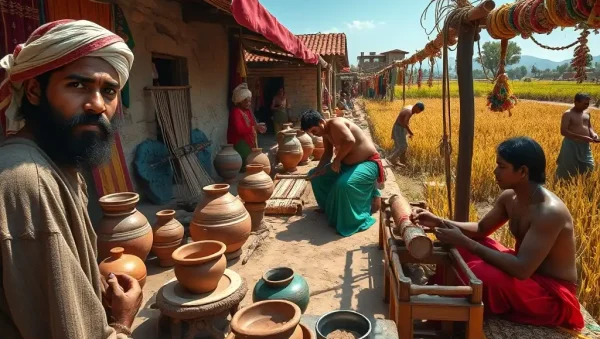
Social Structure and Caste System

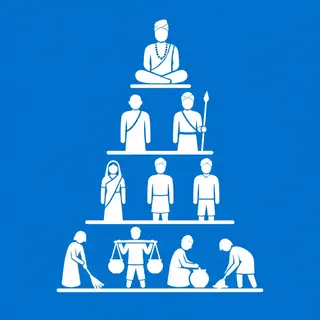
Social Structure and Caste System
51 articles in this topic
Start here
- Social Structure and Caste SystemHow Trade Routes Influenced the Caste System in Ancient Indian Society
- Social Structure and Caste SystemThe Role of Women in the Social Structure of Ancient Indian Civilizations
- Social Structure and Caste SystemCaste, Class, and Power: A Triad in Ancient Indian Society
Read more about this topic
Explore the social structure and caste system of ancient India, from the varna framework and jati communities to the roles, duties, occupations, and everyday experiences that shaped society. Discover how social organization influenced family life, education, religion, governance, and cultural traditions across civilizations from the Indus Valley to the Gupta Empire.
More in Social Structure and Caste System
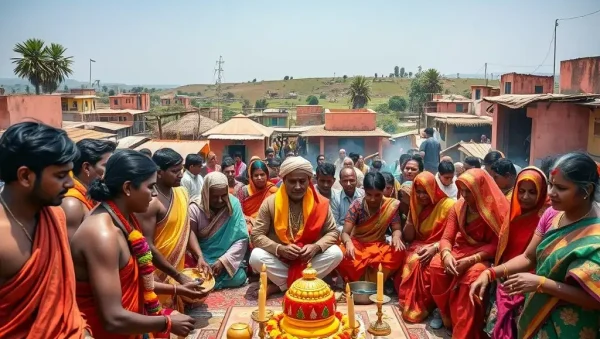
Social Structure and Caste System
The Role of Rituals and Customs in Maintaining Caste Distinctions
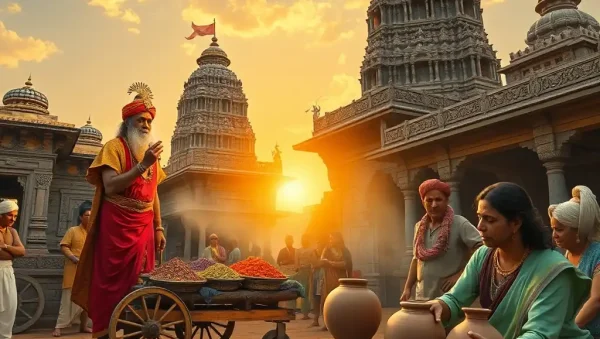
Social Structure and Caste System
The Interplay of Religion and Caste in Ancient Indian Culture
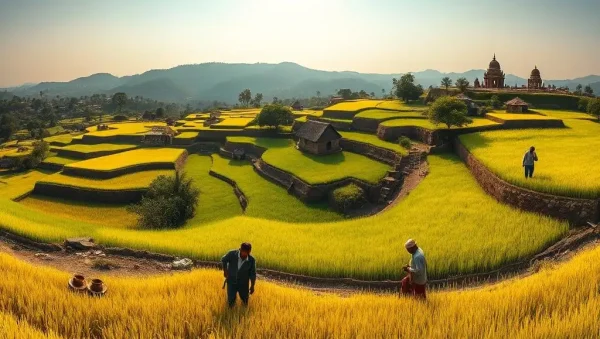
Social Structure and Caste System
The Role of Agriculture in Shaping Caste Dynamics in Ancient India
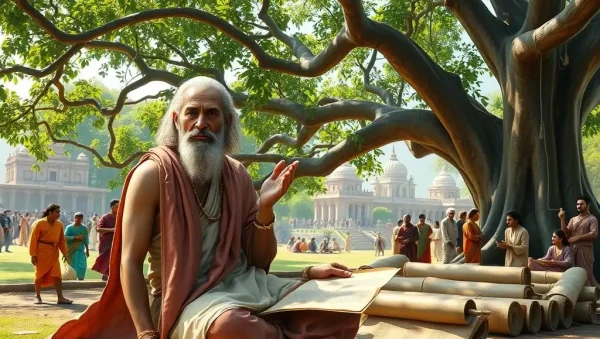
Social Structure and Caste System
How Ancient Indian Philosophers Viewed the Caste System
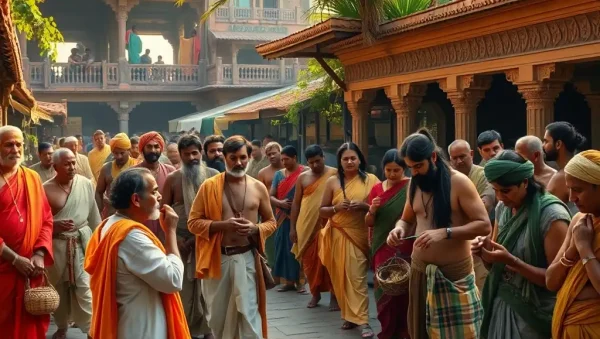
Social Structure and Caste System
From Brahmins to Shudras: The Complex Hierarchy of Ancient Indian Society
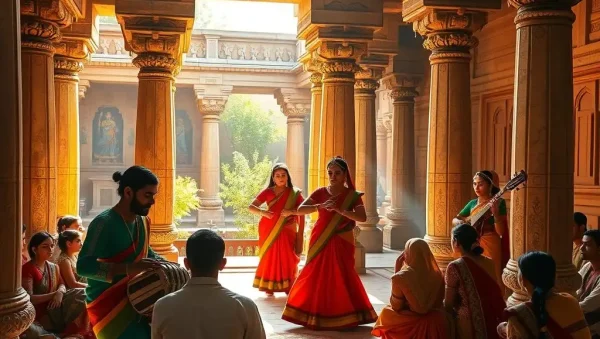
Social Structure and Caste System
The Role of Music and Dance in Caste Identity in Ancient Indian Culture
Social Structure and Caste System
Exploring the Impact of the Caste System on Ancient Indian Economy
Social Structure and Caste System
The Social Dynamics of CasteBased Communities in Ancient Indian Cities
🏛️ Social Structure and Caste System in Ancient India
Explore the social structure and caste system in ancient India through carefully researched articles on varna, jati, family life, occupations, social customs, and community organization. This subcategory examines how society developed from the Indus Valley Civilization through the Vedic period, Mauryan Empire, and Gupta Empire, revealing the complex relationships between religion, economics, law, and everyday life. Discover how social identity shaped education, marriage, work, political participation, and religious practice while also learning about debates, regional differences, and changes over time.
📜 Origins of Varna and Social Organization
Learn how early Indian society was described through the concept of varna, traditionally associated with Brahmins, Kshatriyas, Vaishyas, and Shudras. Articles in this section explain the historical background of the varna system, its connection with Vedic literature, and the ways scholars interpret social classifications in ancient India.
Readers can also explore the difference between idealized social theory and historical reality. Ancient Indian society was not uniform; regional communities, tribal groups, occupational associations, enslaved people, women, and marginalized populations experienced social life in different ways across time and place.
👥 Jati, Community, and Social Identity
Discover the meaning of jati and its relationship to occupation, kinship, locality, marriage customs, and inherited status. This section explains how thousands of local communities contributed to the development of social organization beyond the fourfold varna model.
Content will examine how social groups maintained identity through shared traditions, food practices, rituals, occupations, and rules of interaction. You will also learn why the caste system should be studied as a changing historical institution rather than as a single, unchanging structure.
🏠 Family, Marriage, and Household Life
Explore the role of the family and household in ancient Indian society. Articles cover joint families, patriarchal traditions, inheritance, kinship networks, marriage ceremonies, arranged marriages, widowhood, and the responsibilities of householders in Vedic and later Indian traditions.
This section also considers differences in family life based on social class, gender, occupation, wealth, and region. Readers will gain insight into how domestic life connected with religious duties, property ownership, education, childbirth, and the wider social order.
⚒️ Occupations, Labor, and Economic Roles
Learn about the occupations that supported ancient Indian civilization, including farming, trade, craft production, metalworking, weaving, administration, teaching, priesthood, military service, and transport. These articles show how work influenced social position and community identity.
Discover the importance of guilds, merchants, artisans, peasants, servants, and laborers in the economy of ancient India. Evidence from inscriptions, archaeological sites, religious texts, and classical literature helps explain how economic life shaped social relationships.
⚖️ Law, Duty, and Social Hierarchy
Examine the role of dharma, customary law, and social duties in regulating ancient Indian life. Sources such as the Dharmashastras and other legal and religious texts describe expectations connected with caste, gender, age, occupation, family, and religious responsibility.
At the same time, this section encourages a critical reading of historical sources. Prescriptive texts often describe ideals rather than everyday behavior, so inscriptions, archaeology, Buddhist and Jain literature, and foreign accounts are essential for understanding how social hierarchy functioned in practice.
🧘 Buddhism, Jainism, and Challenges to Social Hierarchy
Explore how Buddhism and Jainism questioned aspects of Brahmanical authority and emphasized ethical conduct, discipline, and spiritual achievement. Articles discuss monastic communities, the participation of merchants and rulers, and the role of religious movements in transforming ancient Indian society.
Readers will learn that these traditions did not simply erase social divisions, but they created new spaces for religious participation and offered alternative ideas about merit, karma, renunciation, and liberation. This provides a broader view of social change in ancient India.
👩 Women, Gender, and Social Status
Discover the experiences and social roles of women in ancient India, including education, marriage, property, motherhood, religious activity, royal influence, and labor. The section examines evidence from Vedic texts, epics, Buddhist and Jain writings, inscriptions, and archaeological discoveries.
Ancient Indian women did not share one universal experience. Their lives differed according to period, region, caste, wealth, and family background. By comparing multiple sources, readers can better understand both restrictions and opportunities within ancient Indian gender relations.
🏺 Social Life from the Indus Valley to the Gupta Empire
Trace the evolution of social organization from the urban communities of the Indus Valley Civilization to the Vedic age and the large states of the Mauryan and Gupta periods. Archaeological evidence from cities, settlements, burials, seals, houses, and craft centers reveals patterns of inequality and community life.
This historical approach highlights continuity and change across more than two thousand years. Learn how urbanization, agriculture, long-distance trade, imperial administration, religious movements, and cultural exchange influenced the social history of ancient India.
❓ Frequently Asked Questions About Social Structure and Caste System
What was the caste system in ancient India?
The caste system was a complex form of social organization associated with varna and jati. Varna described broad ideal categories, while jati referred to numerous local communities often connected with occupation, marriage, ancestry, and regional traditions. Its form changed across different periods and regions.
What is the difference between varna and jati?
Varna is the fourfold theoretical model of Brahmins, Kshatriyas, Vaishyas, and Shudras found in certain religious texts. Jati refers to the many practical, local, and hereditary communities that shaped everyday social identity. The two terms are related but should not be treated as identical.
Did the caste system exist during the Indus Valley Civilization?
There is no definitive written evidence proving that the later caste system existed in the Indus Valley Civilization. Archaeology suggests differences in housing, occupations, burial practices, and access to resources, but scholars continue to debate how these patterns should be interpreted.
How did Buddhism and Jainism affect the caste system?
Buddhism and Jainism challenged the idea that spiritual value depended entirely on birth by emphasizing ethical behavior, discipline, karma, and personal effort. Their monastic communities included people from different social backgrounds, although wider society continued to contain social and occupational divisions.
What sources help historians study ancient Indian society?
Historians use a combination of archaeological evidence, inscriptions, coins, religious texts, legal literature, epics, Buddhist and Jain writings, foreign accounts, and material remains. Comparing these sources is important because many texts describe social ideals rather than the complete reality of everyday life.