
Caste and Occupation: A Look at the Division of Labor in Ancient India

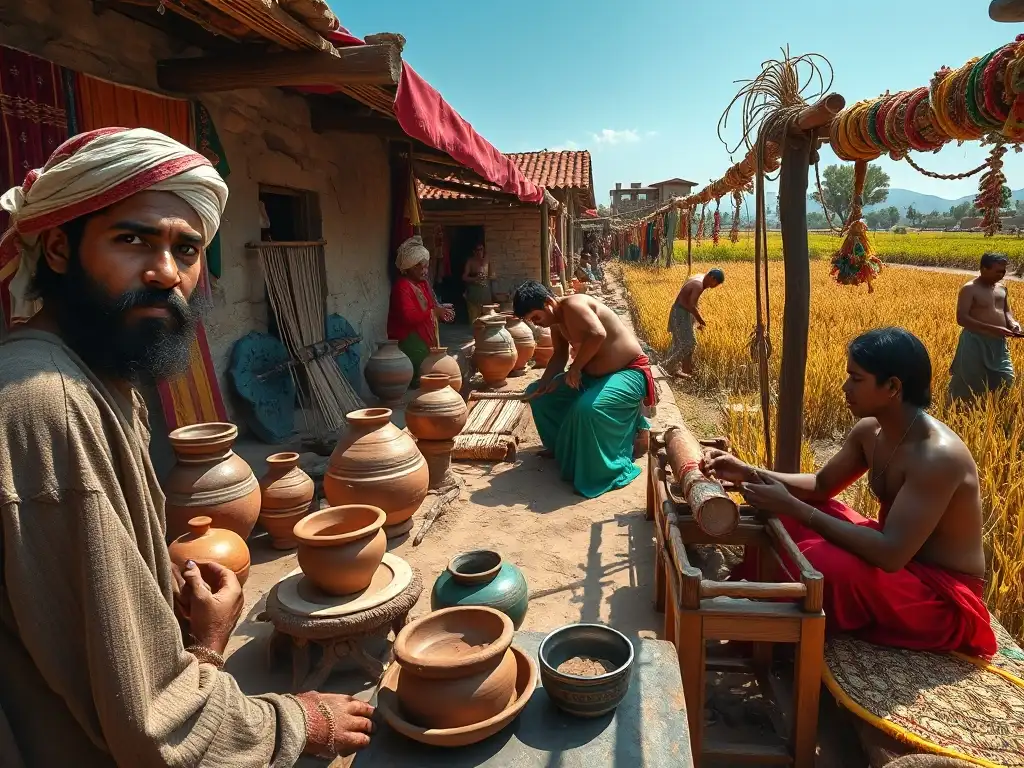
Welcome to Ancient India History, where we embark on a fascinating journey through the rich tapestry of ancient Indian civilizations! Delve into the intricate dynamics of daily life and society as we explore the division of labor in ancient India. In our featured article, "Caste and Occupation: A Look at the Division of Labor in Ancient India," discover how the unique caste system shaped not only occupations but also the very fabric of society.
Prepare to unlock the secrets of a bygone era and see how these ancient practices still resonate in today’s world. Your adventure into the depths of history starts here—let's dive in!
- Introduction to the Division of Labor in Ancient India
- Understanding the Caste System in Ancient India
- The Concept of Occupation and Its Relation to Caste
- The Division of Labor in Ancient Indian Society
- The Impact of the Caste System on the Division of Labor
- Case Studies: Regional Variations in the Division of Labor
- Conclusion: The Legacy of Caste and Occupation in Ancient India
- References for Further Reading on Division of Labor in Ancient India
- Frequently Asked Questions
- Final Reflection: Understanding the Division of Labor in Ancient India
- Unveil Your Place in History!
Introduction to the Division of Labor in Ancient India
The division of labor in ancient India was a fundamental aspect of its social structure, intricately woven into the fabric of daily life and culture. This system not only organized society into various occupational roles but also established a framework for social hierarchy that persists in various forms to this day.
Understanding this division of labor provides valuable insights into the complexities of ancient Indian civilization, from the highly sophisticated urban centers of the Indus Valley to the flourishing empires of the subsequent eras. The interplay between occupation and caste significantly influenced the social dynamics, economic practices, and cultural developments of the time, making it an essential area of study for anyone interested in the historical tapestry of ancient India.
Overview of Ancient Indian Society
Ancient Indian society was characterized by its rich diversity and complexity, shaped by various factors including geography, culture, and historical developments. The society was predominantly agrarian, with agriculture forming the backbone of the economy. This reliance on farming necessitated a structured approach to labor, leading to the emergence of a system that categorized individuals based on their occupations.
The division of labor was not arbitrary; it was closely linked to the caste system, which divided people into different groups, each assigned specific roles and responsibilities. The four primary varnas—Brahmins (priests and scholars), Kshatriyas (warriors and rulers), Vaishyas (merchants and farmers), and Shudras (laborers and service providers)—formed the foundation of this system. Each group had distinct duties, contributing to the overall functioning of society.
It's essential to note that while the varna system provided a broad framework, the actual practice of occupation was often more complex. Many sub-castes, or jatis, emerged over time, reflecting the local customs, skills, and community needs. This multilayered structure of labor distribution allowed ancient Indian society to thrive, fostering innovation and specialization in various fields.
The caste system was pivotal in maintaining order within ancient Indian society, creating a structured hierarchy that dictated social interactions and occupational roles. Each caste had its own set of rules, traditions, and duties, which were often inherited, resulting in a system that reinforced social stability and continuity.
The significance of caste extended beyond mere occupation; it permeated various aspects of life, including marriage, social status, and even spiritual practices. For instance, Brahmins held a revered position due to their association with knowledge and religious rituals, while Kshatriyas were respected for their roles as protectors and rulers. Conversely, Shudras, often engaged in manual labor and service, faced social stigmatization.
Understanding the importance of caste in the division of labor reveals the intricate relationship between social structure and economic productivity in ancient India. This system not only facilitated the efficient functioning of society but also shaped the cultural and spiritual landscape, influencing everything from art and literature to philosophy and religion. As we delve deeper into the specifics of labor division and its implications, we uncover a rich history that reflects the resilience and adaptability of ancient Indian civilizations.
Understanding the Caste System in Ancient India
Definition and Origins of the Caste System
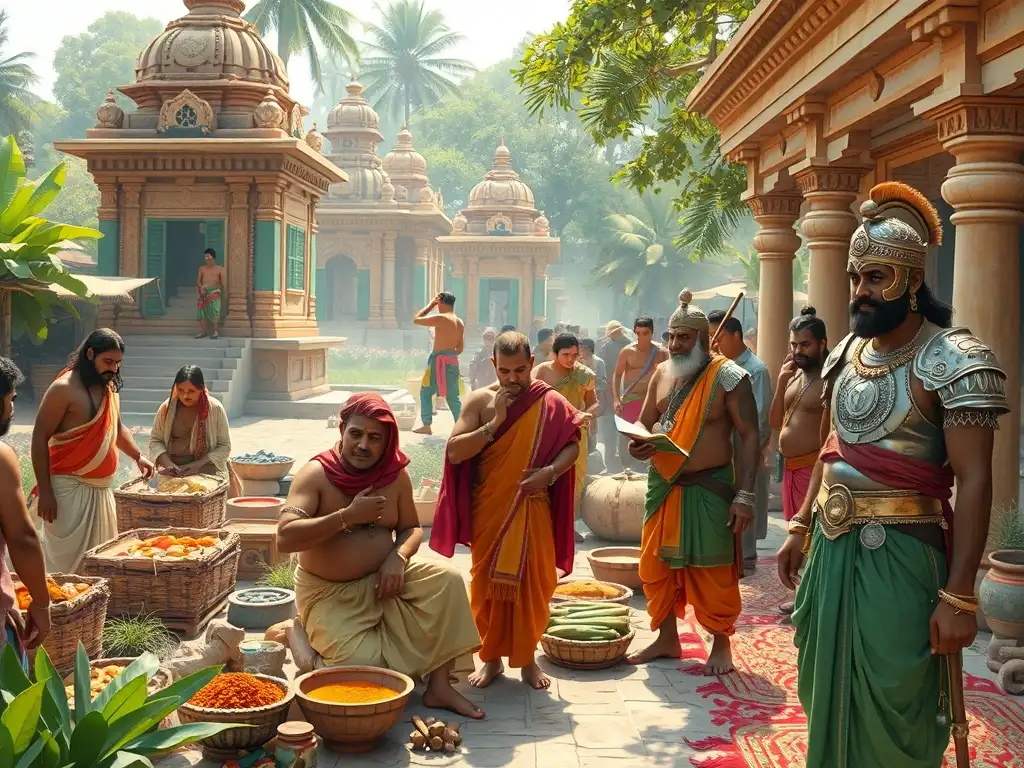
The caste system in ancient India, known as varna, represents a complex social hierarchy that has defined the societal structure for millennia. Its origins can be traced back to the Vedic texts, specifically the Rigveda, where the concept of varna is first mentioned. The term varna means "color" and reflects the societal divisions based on occupational roles and responsibilities, which eventually solidified into hereditary classes.
The roots of the caste system are not solely economic but are deeply intertwined with religious and cultural beliefs. The ancient texts describe the emergence of the four primary varnas, each associated with specific duties and functions, which later became more rigid and stratified into numerous sub-castes, or jatis. This evolution was influenced by various factors including agrarian economies, urbanization, and the influx of new communities into the Indian subcontinent.
The Four Main Varnas and Their Roles
The caste system is traditionally divided into four main varnas, each with distinct roles and responsibilities that contribute to the dharma, or moral order, of society. Understanding these varnas is crucial for comprehending the division of labor in ancient India.
Brahmins: The Priestly Class
Brahmins were at the top of the social hierarchy and primarily served as priests, scholars, and teachers. Their role was to perform rituals and sacrifices, preserve sacred texts, and provide spiritual guidance. The influence of Brahmins extended beyond religion; they were also involved in administration and governance, as their knowledge and wisdom were highly valued.
- Key Responsibilities:
- Conducting religious ceremonies and rituals.
- Teaching and preserving Vedic knowledge.
- Advising kings and rulers on moral and ethical governance.
Brahmins were expected to adhere to strict codes of conduct and engage in a lifestyle of austerity and purity. Their elevated status was often justified by the belief that they were the custodians of spiritual knowledge, thus maintaining societal order.
Kshatriyas: The Warrior Class
The Kshatriyas occupied the second tier of the caste hierarchy and were primarily responsible for governance, protection, and warfare. They were the ruling class, including kings and nobles, tasked with defending the realm and administering justice.
- Key Responsibilities:
- Protecting the kingdom from external threats through military service.
- Upholding law and order within society.
- Engaging in political and administrative duties.
Kshatriyas were expected to embody valor and duty, often engaging in battles to defend their territories. Their contributions were critical in maintaining the stability and security of ancient Indian states.
Vaishyas: The Merchant Class
The Vaishyas formed the third varna and were predominantly engaged in agriculture, trade, and commerce. As the economic backbone of society, they played a vital role in the distribution of goods and services.
- Key Responsibilities:
- Cultivating land and producing food.
- Engaging in trade and commerce, both locally and internationally.
- Managing the economy through various business ventures.
The prosperity of ancient Indian civilizations was significantly influenced by the Vaishyas, as their economic activities facilitated the growth of towns and urban centers.
Shudras: The Laboring Class
The Shudras, at the bottom of the caste hierarchy, were primarily responsible for serving the other three varnas. This class included artisans, laborers, and service providers who performed the essential tasks that kept society functioning.
- Key Responsibilities:
- Engaging in manual labor and craftsmanship.
- Providing services to the higher varnas, including agriculture and household tasks.
- Contributing to community welfare through various forms of labor.
While often marginalized, the Shudras were indispensable to the functioning of society. Their work allowed the other classes to engage in their respective duties, highlighting the interconnectedness of the division of labor in ancient India.
The division of labor within these varnas not only structured social interactions but also shaped the economic landscape of ancient India, laying the groundwork for the diverse and complex society that emerged over centuries.
The Concept of Occupation and Its Relation to Caste
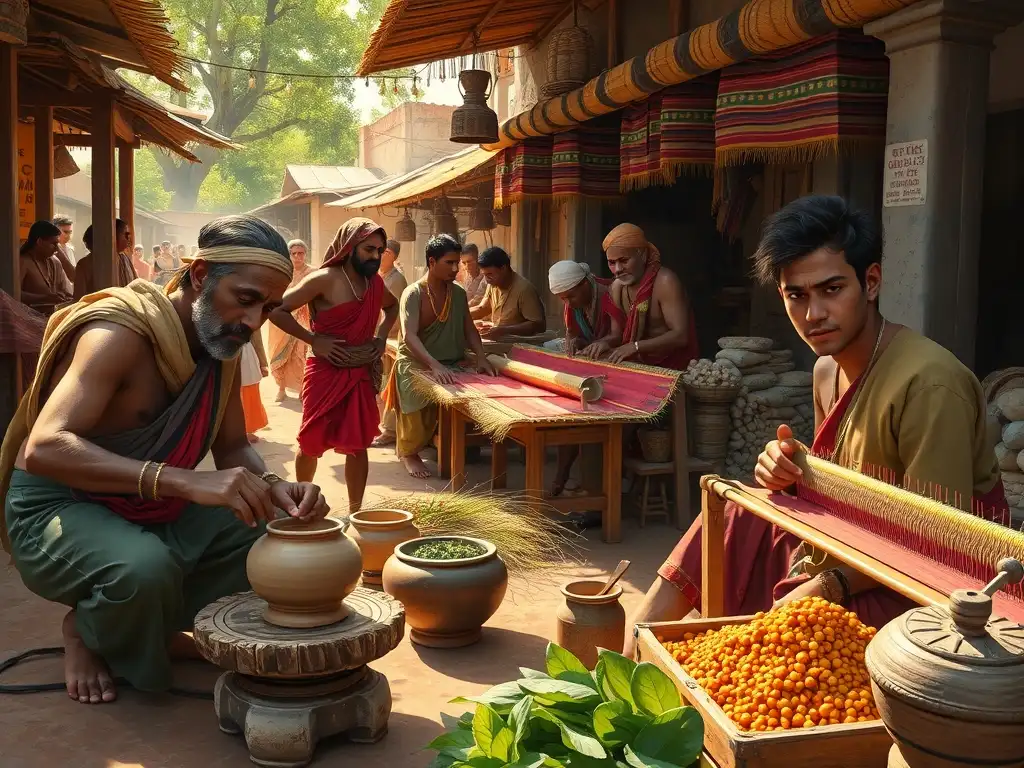
In ancient India, the concept of occupation was deeply intertwined with the caste system, which structured society into rigid social groups, each with designated roles and responsibilities. This system, known as Varna, classified society into four primary categories: Brahmins (priests and scholars), Kshatriyas (warriors and rulers), Vaishyas (merchants and landowners), and Shudras (laborers and service providers). Each caste had specific occupations that were passed down through generations, creating a framework for the division of labor in ancient India.
The relation between caste and occupation was not merely a matter of social organization; it also encompassed religious, cultural, and economic dimensions. For instance, Brahmins were tasked with performing religious rituals and preserving sacred knowledge, while Kshatriyas were expected to protect and govern society. This division was believed to be divinely ordained, creating a sense of duty and purpose aligned with one's caste.
Occupational Specialization in Ancient India
Occupational specialization in ancient India was a hallmark of its societal structure, promoting efficiency and expertise in various trades and crafts. This specialization was evident in several key areas:
- Agriculture: The backbone of ancient Indian economy, agriculture involved various occupations such as farming, irrigation management, and animal husbandry. The Vaishyas played a crucial role in this sector, helping to manage land, crops, and trade.
- Craftsmanship: Skilled artisans and craftsmen were essential for producing goods ranging from textiles to metalwork. Each trade was typically associated with a specific caste; for example, weavers belonged to the Vaisya caste, while potters were often part of the Shudra caste.
- Trade and Commerce: Ancient Indian society saw the emergence of specialized merchants who facilitated trade routes, both domestically and internationally. These merchants, mostly from the Vaishya caste, engaged in the exchange of goods such as spices, textiles, and precious stones, contributing significantly to the economy.
- Religious and Educational Roles: Brahmins, as custodians of knowledge and religion, had specific roles in teaching, performing rituals, and preserving texts. Their occupation required extensive education and training, often conducted in gurukuls (ancient schools).
- Military and Governance: Kshatriyas were responsible for defense and governance, leading armies and administering lands. This occupation involved rigorous training in combat and strategy, which was often passed down within families.
The diversity of occupations not only reflected the skills and talents of individuals but also served to reinforce social order and stability within ancient Indian civilization.
How Caste Determined Occupation Choices
The caste system in ancient India was a powerful determinant of occupational choices, often limiting individuals to the roles and professions associated with their caste. This system had several implications for the division of labor in ancient India:
- Rigid Boundaries: Caste boundaries were strictly enforced, often preventing individuals from changing their occupations. For example, a Brahmin could not engage in trade, while a Shudra was typically barred from pursuing scholarly or religious roles.
- Hereditary Occupations: Occupations were generally inherited, leading to a continuity of skills within families. This practice ensured that specialized knowledge and techniques were passed down, contributing to the development of various crafts and trades over generations.
- Social Mobility Constraints: The caste system imposed limitations on social mobility. Individuals born into lower castes often found it challenging to ascend the social ladder, as their occupational options were predetermined by their caste status.
- Economic Impact: While the division of labor facilitated economic productivity, it also reinforced economic disparities. Higher castes often controlled wealth and resources, while lower castes faced economic limitations due to their designated occupations.
- Cultural Significance: The connection between caste and occupation extended beyond economics; it permeated cultural practices and social interactions. Caste identities influenced marriage, social gatherings, and community relations, creating a complex web of social dynamics.
The caste system was a fundamental aspect of ancient Indian society, shaping not only individual identities but also the broader economic and cultural landscape. The division of labor in ancient India was thus a reflection of these intricate social structures, with lasting impacts on the civilization and its legacy.
The Division of Labor in Ancient Indian Society
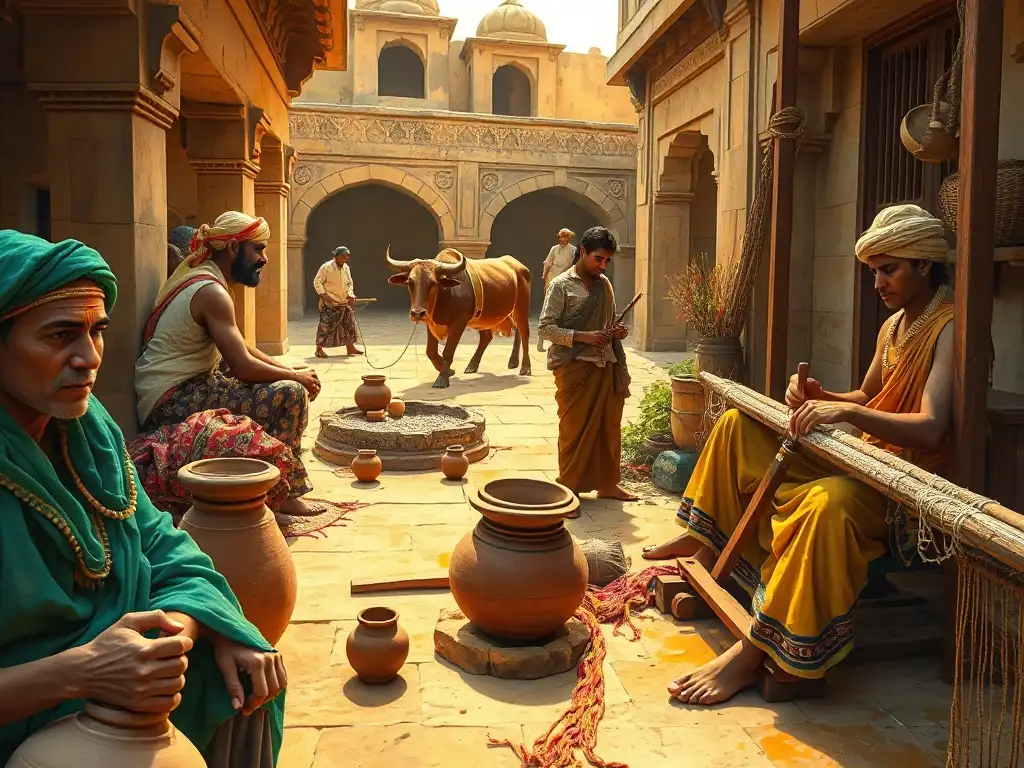
The division of labor in ancient India was a complex and multifaceted system deeply rooted in the social structure of the time. This division was largely influenced by the caste system, which was not merely a social hierarchy but also a framework for organizing various occupations. The caste system categorized individuals into specific groups based on their birth, which subsequently determined their roles in society, including their occupations. This hierarchical approach facilitated a structured distribution of labor, ensuring that essential tasks were performed efficiently and effectively across different sectors of society.
Structure of Labor: A Hierarchical Approach
The labor structure in ancient India was organized into four primary varnas (categories): Brahmins, Kshatriyas, Vaishyas, and Shudras. Each varna had specific duties and responsibilities, forming a rigid yet functional social framework.
- Brahmins: At the top of the hierarchy, the Brahmins were primarily priests, scholars, and teachers. They were responsible for religious rituals, education, and the preservation of sacred texts. Their role was pivotal in maintaining the spiritual and intellectual fabric of society.
- Kshatriyas: The Kshatriyas, or warriors and rulers, occupied the second tier. Their primary duty was to protect and govern the land. They were involved in military activities and administration, ensuring societal stability and security.
- Vaishyas: This group encompassed traders, merchants, and agriculturalists. The Vaishyas played a critical role in the economy, engaging in trade and commerce, which was vital for the prosperity of ancient Indian civilization.
- Shudras: At the bottom of the hierarchy were the Shudras, who performed labor-intensive tasks. They were engaged in various menial jobs, including service roles and manual labor, contributing significantly to the daily functioning of society.
This hierarchical arrangement was not only a reflection of social status but also a practical means of organizing labor, with each varna contributing to the overall stability and productivity of ancient Indian society.
Examples of Occupations Within Each Caste
The division of labor in ancient India resulted in a diverse array of occupations, each vital to the sustenance and development of society. Below are examples of occupations associated with each caste:
Agricultural Practices and the Role of Farmers
Agriculture was the backbone of ancient Indian society, and farmers (often part of the Vaishya caste) played a crucial role in sustaining the population. They cultivated a variety of crops, including rice, wheat, barley, and pulses, employing traditional techniques and tools. In addition to crop production, farmers also engaged in:
- Irrigation: Developing irrigation systems to manage water resources effectively.
- Animal Husbandry: Raising livestock for labor, milk, and other products.
- Crop Rotation: Implementing methods to maintain soil fertility and increase yield.
Farmers were essential for the agrarian economy, ensuring food security and contributing to trade through surplus production.
Artisans and Craftsmen in Ancient India
Artisans and craftsmen were integral to the cultural and economic landscape of ancient India. Often belonging to specific sub-castes within the Shudra varna, they specialized in various crafts, including:
- Weaving: Producing textiles and garments, known for their intricate designs and quality.
- Metalwork: Crafting tools, weapons, and ornaments from metals such as iron and gold.
- Pottery: Creating earthenware and decorative pottery, which were significant for both utility and art.
These artisans not only catered to local needs but also contributed to trade, with their crafts being sought after in distant lands.
Trade and Commerce: Vaishya Contributions
The Vaishyas played a pivotal role in the trade and commerce of ancient India. They were involved in various activities, including:
- Merchant Activities: Trading goods, both locally and internationally, facilitating the exchange of commodities such as spices, textiles, and precious stones.
- Banking: Engaging in financial transactions and lending, which supported economic growth and development.
- Market Organization: Establishing markets and trade routes, influencing the economic landscape of ancient India.
The contributions of the Vaishyas were critical in promoting economic prosperity and cultural exchange, making them a cornerstone of the ancient Indian economy.
The division of labor in ancient India thus reflects a well-structured societal framework where each caste played a distinct role, contributing to the rich tapestry of Indian civilization. The interplay of roles within this hierarchy not only shaped the economy but also influenced cultural practices and social interactions, leaving a lasting legacy on subsequent generations.
The Impact of the Caste System on the Division of Labor
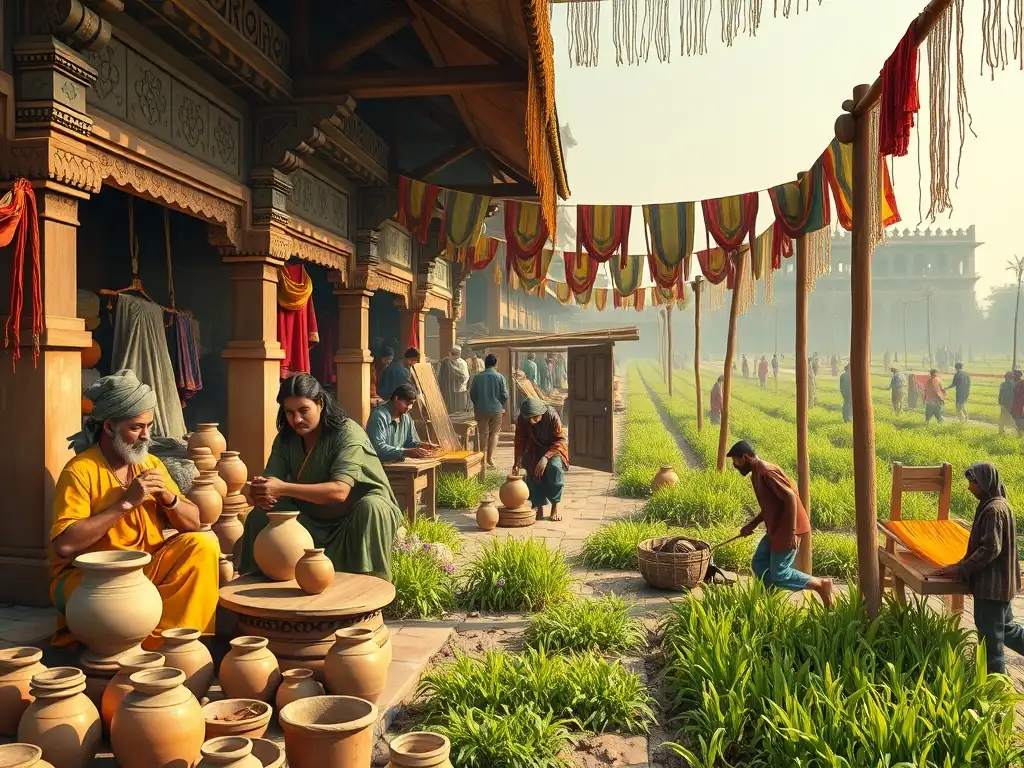
The caste system in ancient India played a pivotal role in shaping the division of labor, influencing economic, social, and cultural dynamics within society. This hierarchical classification not only defined personal and social identities but also determined the types of occupations individuals could pursue. The implications of this system were profound, as it created a structured framework for economic activities while simultaneously restricting social mobility and perpetuating inequalities.
Economic Implications of Caste-Based Occupations
The caste system established a clear division of labor that categorized individuals into specific occupational groups, each with its distinct roles and responsibilities. This classification can be understood through the traditional four varnas:
- Brahmins: Scholars and priests responsible for religious rituals, education, and intellectual pursuits.
- Kshatriyas: Warriors and rulers tasked with protection and governance.
- Vaishyas: Merchants and farmers engaged in trade, agriculture, and economic development.
- Shudras: Laborers and service providers who performed menial jobs.
This system ensured that each caste fulfilled its economic function, contributing to the overall productivity of society. However, it also led to significant economic stratification. For instance, Brahmins often accumulated wealth and power due to their roles in religious and educational institutions, while Shudras remained economically marginalized.
The economic implications of caste-based occupations were evident in the following ways:
- Specialization: Each caste specialized in specific trades, leading to a division of labor that enhanced productivity. For example, artisans, weavers, and blacksmiths were typically from lower castes, honing their skills over generations.
- Economic Interdependence: The reliance on caste-specific occupations created an interdependent economic framework. For example, farmers (Vaishyas) depended on blacksmiths (Shudras) for tools, while blacksmiths relied on farmers for sustenance.
- Trade and Commerce: The emergence of guilds facilitated trade among different castes, contributing to the economic landscape of ancient India. Merchants played a crucial role in the economy, often transcending caste boundaries to foster commerce.
Social mobility in ancient India was largely constrained by the rigid structure of the caste system. Individuals were predominantly born into their caste, which defined their social status and occupational opportunities. This static nature of caste had several implications:
- Limited Opportunities: The inability to shift from one caste to another restricted individuals from pursuing different occupations. For instance, a person born into the Shudra caste had minimal chances of becoming a Brahmin or Kshatriya, regardless of personal abilities or aspirations.
- Marriage Restrictions: Inter-caste marriages were often frowned upon, reinforcing the barriers between castes and perpetuating the social order. This further limited social mobility as marriages were typically arranged within the same caste.
- Cultural Capital: Access to education and resources was heavily influenced by caste, with higher castes enjoying greater privileges. This disparity in educational opportunities perpetuated the cycle of inequality, making it difficult for lower castes to elevate their status.
While there were instances of upward mobility, such as through exceptional achievements or royal favor, these were exceptions rather than the norm. Overall, the caste system created a social environment where mobility was limited, fostering a sense of permanence within the caste framework.
Cultural Contributions of Each Caste to Society
Despite the constraints of the caste system, each caste made significant contributions to the cultural fabric of ancient India. The diversity of skills and traditions enriched society as a whole. Key contributions include:
- Brahmins: As custodians of knowledge, Brahmins contributed to the preservation of ancient texts, philosophy, and religion. Their role in rituals and education shaped cultural practices and societal norms.
- Kshatriyas: The warrior caste played a crucial role in the establishment of kingdoms, governance, and the code of chivalry. Their contributions to literature and art, often commemorating heroic deeds, enriched cultural narratives.
- Vaishyas: Merchants and traders fostered cultural exchange through commerce, introducing various goods, ideas, and innovations. Their interactions with other cultures facilitated the spread of art, religion, and technology.
- Shudras: Artisans and laborers contributed to the material culture of ancient India, from architecture to textiles. Their craftsmanship in pottery, weaving, and metalwork showcased skilled artistry that was essential for daily life.
While the caste system profoundly influenced the division of labor in ancient India, it also created a complex social landscape where each caste contributed uniquely to the cultural and economic development of society. The interplay between caste and occupation not only shaped individual lives but also defined the very essence of ancient Indian civilization.
Case Studies: Regional Variations in the Division of Labor
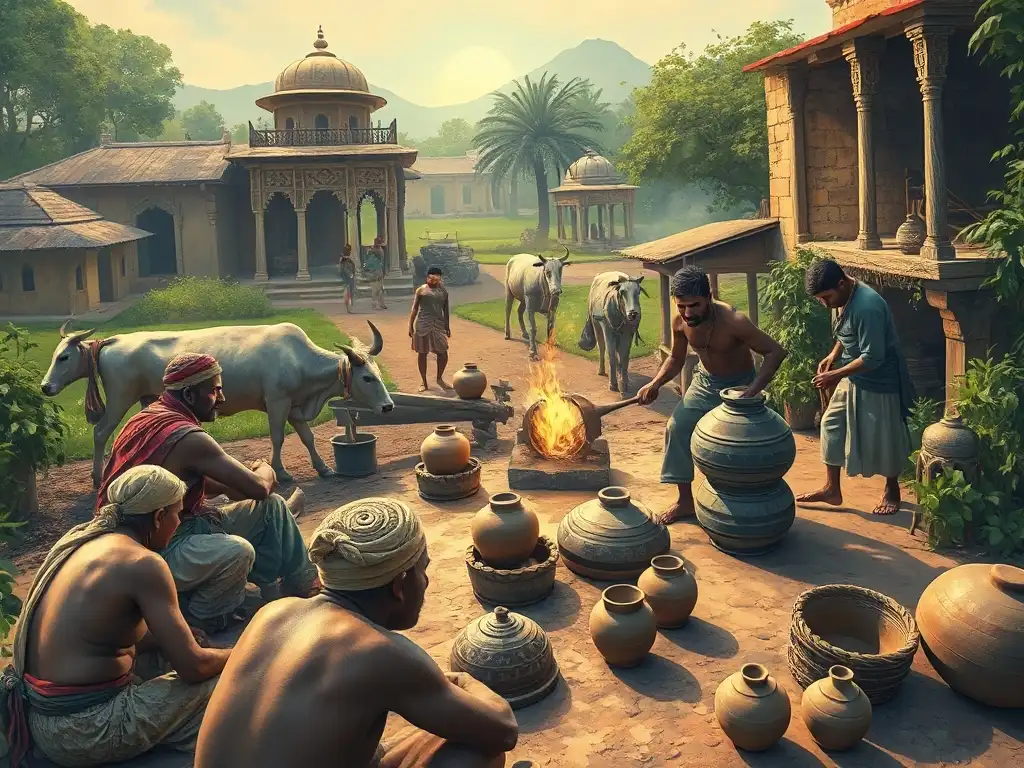
The Indus Valley Civilization: Early Examples of Labor Division
The Indus Valley Civilization, flourishing around 2500 BCE in present-day Pakistan and northwest India, offers some of the earliest evidence of the division of labor in ancient India. Archaeological findings suggest a highly organized society with specialized crafts and trades.
Key Features of Labor Division
- Urban Planning: Cities like Harappa and Mohenjo-Daro were meticulously planned, indicating a division of labor in construction and urban management. Streets were laid out in a grid pattern, and drainage systems were advanced for that era.
- Specialized Crafts: Evidence of specialized crafts such as pottery, bead-making, and metallurgy has been uncovered. For instance, archaeologists discovered workshops dedicated to the production of terracotta figurines and intricate jewelry.
- Agricultural Practices: The agriculture sector was also divided, with specific roles assigned for irrigation, crop cultivation, and animal husbandry. This specialization enhanced productivity and trade.
Social Implications
The division of labor in the Indus Valley also had social implications, as it likely contributed to the stratification of society. Different crafts and occupations could have led to the emergence of distinct social groups, which laid the foundation for later caste systems.
The Maurya and Gupta Empires: Evolution of Occupations
During the Maurya (322-185 BCE) and Gupta Empires (c. 320-550 CE), the division of labor in ancient India evolved significantly. These empires were marked by robust economic structures and a complex social hierarchy that influenced occupational roles.
Economic Developments
- Trade and Commerce: The Mauryan Empire established extensive trade networks, both inland and overseas. Different guilds emerged, specializing in various trades such as textiles, metalwork, and spices. This diversification of occupations was crucial for economic prosperity.
- Agricultural Innovations: The introduction of new agricultural techniques and tools led to increased agricultural productivity. This allowed some individuals to specialize as farmers while others took on roles in trade, administration, or the military.
Caste System Codification
As these empires grew, the division of labor became more codified within the caste system:
- Brahmins: Occupied roles in religious and scholarly pursuits.
- Kshatriyas: Engaged in warfare and governance.
- Vaishyas: Focused on agriculture and trade.
- Shudras: Performed manual labor and served the higher castes.
This formalization of roles not only structured society but also reinforced social hierarchy and occupational boundaries.
Conclusion
The evolution of the division of labor in ancient India, particularly during the Maurya and Gupta Empires, illustrates a complex interplay between economic needs and social organization. The specialization of occupations contributed to the intricate tapestry of ancient Indian society, laying the groundwork for the caste system that would dominate social structure for centuries to come.
Conclusion: The Legacy of Caste and Occupation in Ancient India
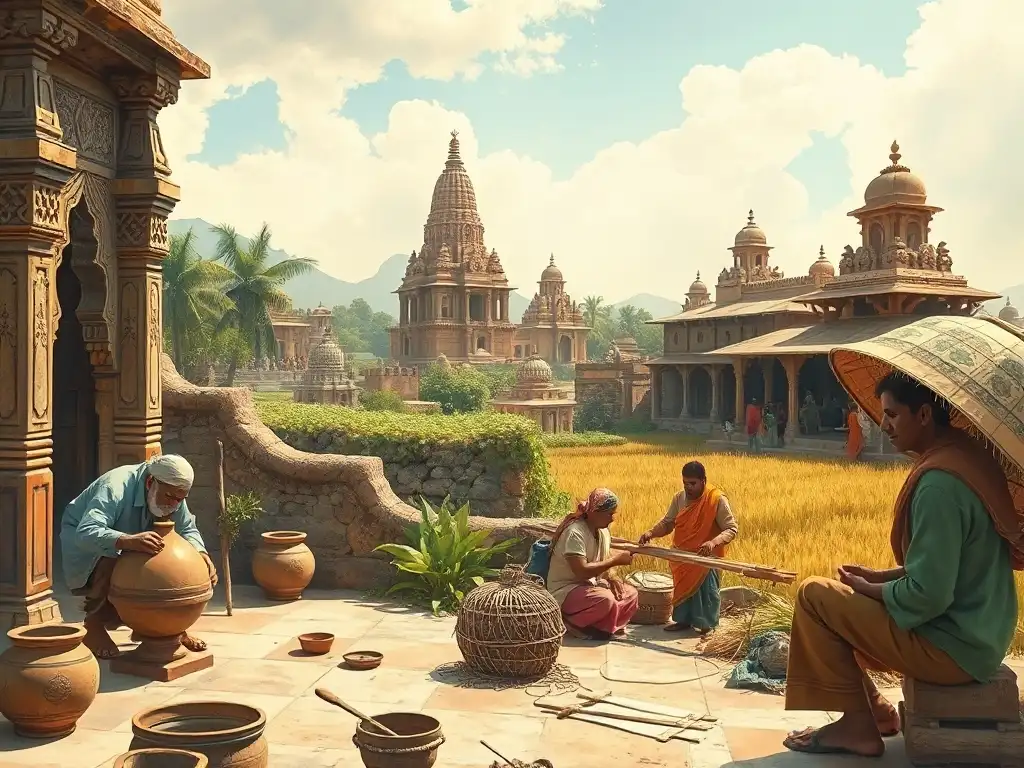
The division of labor in ancient India played a crucial role in shaping the socio-economic landscape of the time. The caste system, deeply embedded within Indian society, not only organized individuals into hierarchical groups but also assigned specific occupations based on these classifications. This system facilitated the efficient functioning of society, ensuring that various tasks were carried out by designated groups, allowing for specialization and mastery in specific trades.
The legacy of this division is multifaceted, influencing not just the economic structures of ancient Indian civilizations but also leaving a lasting imprint on cultural practices, social norms, and religious beliefs. The intertwining of caste and occupation created a framework that supported the continuity of traditional roles across generations, establishing a sense of identity and belonging among individuals within their respective castes.
Lasting Influence on Modern Indian Society
The echoes of the caste system's division of labor can still be felt in contemporary Indian society. Despite modernization and the push for egalitarian principles, remnants of this ancient structure persist. Certain occupations remain closely associated with specific castes, influencing the socio-economic mobility of individuals and communities. For instance, traditional crafts, agricultural practices, and even professions such as medicine and law have historical ties to caste identities.
In urban areas, while opportunities have expanded, the caste framework still subtly influences social interactions and job opportunities. The impact of caste on employment can be observed in both visible and invisible ways, affecting recruitment processes and workplace dynamics. Moreover, the socio-political landscape of India continues to be shaped by caste-based considerations, as various groups advocate for their rights and recognition, often rooted in historical contexts.
Reflection on the Historical Significance of Labor Division
The division of labor in ancient India not only organized society but also contributed to the development of a complex economy. By assigning roles based on caste, ancient Indian civilizations could foster specialization, leading to advancements in agriculture, craftsmanship, and trade. This specialization paved the way for economic prosperity and cultural enrichment, as artisans and merchants contributed to the flourishing of cities and trade networks.
Furthermore, the historical significance of labor division extends beyond economics. It influenced the philosophical and spiritual dimensions of life in ancient India. The idea of "dharma" (duty) associated with one's caste underscored the moral responsibilities individuals had towards their roles. This concept reinforced social cohesion and a sense of purpose, as people engaged in their vocations with dedication, believing they were fulfilling divine mandates.
The division of labor in ancient India, framed by the caste system, has left an indelible mark on the social, economic, and cultural fabric of Indian society. Understanding this legacy is essential to grasp the complexities of modern India, where the shadows of the past continue to inform present realities.
References for Further Reading on Division of Labor in Ancient India
Key Texts and Archaeological Findings
Understanding the division of labor in ancient India is greatly enhanced by examining key texts and archaeological findings that shed light on the social structure and occupational roles of the time.
- Vedic Texts: The Vedas, particularly the Rigveda, provide insights into the early social structures. They mention various groups performing specific roles, indicating a rudimentary form of occupational division.
- Dharmashastras: Texts like the Manusmriti outline the responsibilities and duties of different castes, which directly correspond to the division of labor. The classification of society into four primary varnas—Brahmins, Kshatriyas, Vaishyas, and Shudras—reflects this division, with each group assigned specific occupations.
- Archaeological Sites: Excavations at sites such as Harappa and Mohenjo-Daro reveal evidence of specialized crafts and trades. Artifacts like pottery, tools, and seals indicate a complex economy where different groups engaged in various crafts, trade, and agriculture.
- Historical Accounts: Writings by travelers such as Fa-Hien and Xuanzang during the Gupta period provide descriptions of societal roles and economic activities, revealing the structured nature of labor divisions and trade practices.
- Numismatics: Coins from different periods exhibit inscriptions and symbols related to specific trades and communities, illustrating the economic interactions facilitated by the division of labor.
Suggested Articles and Resources for Deeper Understanding
For those looking to delve deeper into the division of labor in ancient India, the following articles and resources are invaluable:
- "The Social Structure of Ancient India": This article discusses the intricacies of the caste system and its implications on labor divisions, providing a comprehensive overview of social hierarchies.
- "Occupational Roles in Ancient Indian Society": An analytical piece that explores how various occupations were categorized and the societal implications of these roles.
- "Craft Specialization in the Indus Valley Civilization": A detailed examination of the archaeological findings that highlight specialized crafts and trade practices in one of the earliest civilizations in India.
- "Caste Dynamics and Economic Roles in Gupta Period": This resource looks into the economic landscape of the Gupta Empire, focusing on how the caste system influenced occupational roles.
- "Trade and Commerce in Ancient India": An exploration of how the division of labor facilitated trade practices, linking various regions and communities through economic activities.
By engaging with these texts and resources, readers can gain a more nuanced understanding of the division of labor in ancient India, its historical context, and its impact on social dynamics.
Frequently Asked Questions
What was the division of labor in ancient India?
The division of labor in ancient India was a system that organized society into various castes, each associated with specific occupations and roles. This structure ensured efficient economic production and social organization.
How did the caste system influence occupations?
The caste system created rigid social boundaries, where an individual's occupation was largely determined by their caste. This often limited social mobility and dictated the types of work individuals could pursue.
What were some key contributions of the castes to society?
Different castes contributed to society through specialized skills, such as artisanship, trade, and agriculture. This diversification of labor allowed for a more complex and interdependent economy.
How did the Gupta Empire impact the division of labor?
During the Gupta Empire, the division of labor became more pronounced, with urbanization leading to new professions and a flourishing of trade. This era saw the rise of craftsmen and merchants, enhancing economic complexity.
Is the concept of division of labor still relevant today?
Yes, the concept of division of labor remains relevant today, as it continues to shape modern economies and industries. Understanding its historical roots in ancient India can provide insight into contemporary social structures and economic practices.
Final Reflection: Understanding the Division of Labor in Ancient India
The division of labor in ancient India remains a critical lens through which we can examine not only the historical context of societal structures but also their enduring implications in contemporary society. As we navigate the complexities of modern labor dynamics, it becomes increasingly evident that the roots of these systems can be traced back to ancient practices. The caste system, with its rigid occupational divisions, has shaped social interactions and economic opportunities for centuries, and understanding this historical framework is essential for addressing ongoing inequalities today.
The legacy of the division of labor in ancient India continues to resonate in our cultural and social landscape. The hierarchical nature of occupations established during this period has left an indelible mark on the way we perceive work and social status. As we reflect on this topic, we recognize that the implications of caste and occupation are not merely historical artifacts; they are alive in the struggles for equality and justice that persist in our societies. The past is never dead. It's not even past.
— William Faulkner. This quote serves as a poignant reminder that the echoes of ancient systems still influence our present realities.
As we consider the lessons from the division of labor in ancient India, I invite you to reflect on your own relationship with work and societal roles. How can we challenge the remnants of these historical divisions in our own lives? Let us strive to foster inclusivity and equity in our communities, recognizing the value of every individual’s contribution, regardless of their background. Together, we can work towards a future where the lessons of the past guide us in creating a more just and equitable society for all.
Unveil Your Place in History!
Thank you for joining us on this fascinating journey through the divisions of labor in ancient India! We hope you gained valuable insights into the intricate relationships between caste and occupation. Now, it’s time to explore how this knowledge can enrich your understanding of our past and its influence on our present.
Here are a few actionable steps to deepen your engagement:
- Dive deeper into the subject: Explore ancient texts and research to uncover more about the daily lives of various castes and their contributions to society.
- Share your newfound knowledge: Discuss what you've learned with friends and family, or share it on social media to spark a dialogue about historical contexts.
- Join a community: Find or create a discussion group focused on ancient history, where you can share resources, ideas, and perspectives with others who share your interests.
How do you think the historical relationship between caste and occupation continues to shape modern society today? We invite you to share your thoughts below!