
The Influence of Geography on the Social Stratification of Ancient India

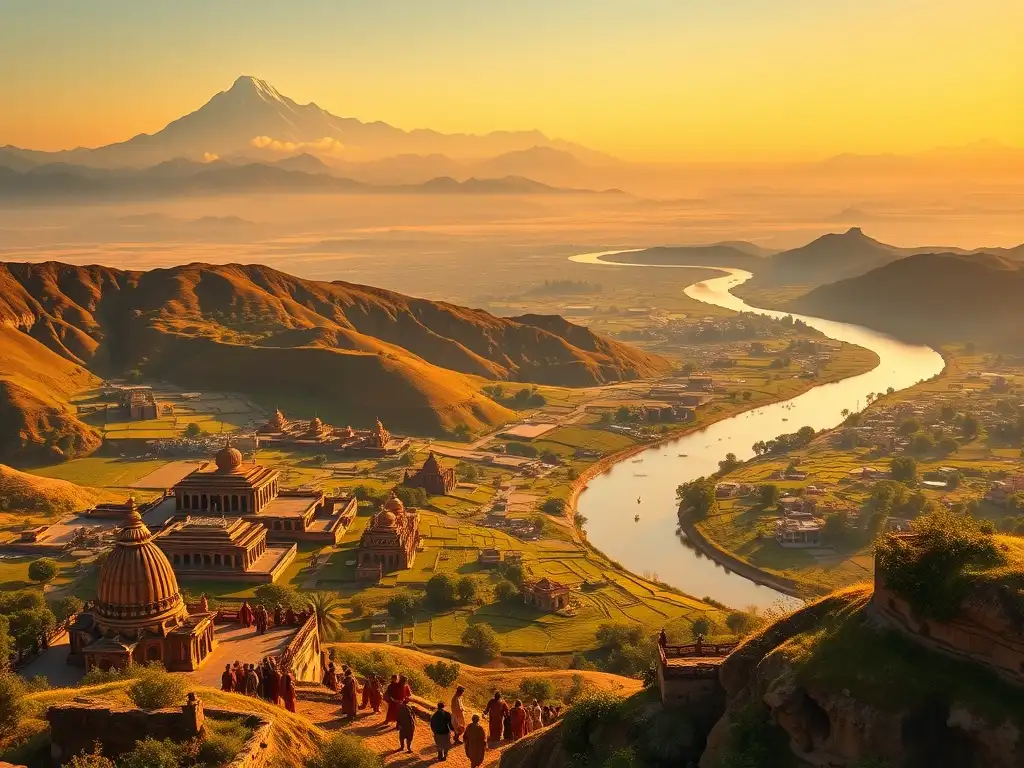
Welcome to Ancient India History, where we journey through the fascinating tapestry of India's past, uncovering the intricate connections between geography and society. In our featured article, “The Influence of Geography on the Social Stratification of Ancient India,” we delve into how the diverse landscapes shaped the lives and hierarchies of its people. Are you curious about how rivers, mountains, and climate influenced social structures from the Indus Valley to the Gupta Empire?
Join us as we explore these compelling narratives and discover the profound impacts of geography on the rich cultural mosaic of ancient India. Your voyage into history begins here!
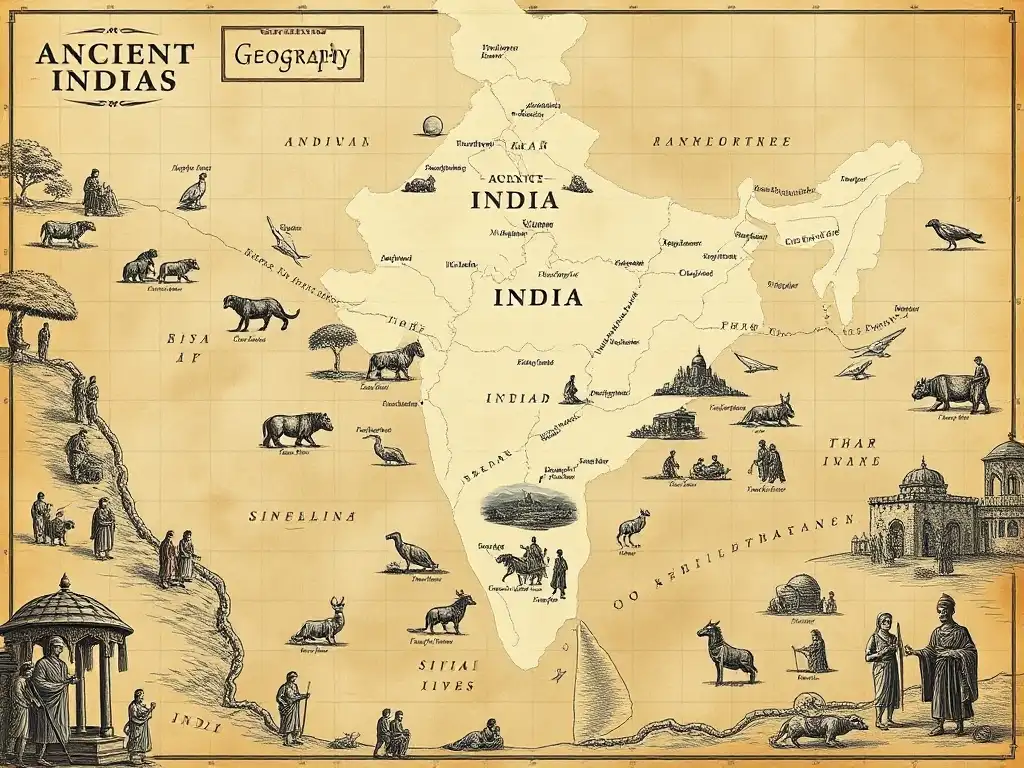
The intricate tapestry of ancient Indian civilization is deeply woven with the threads of geography and social stratification. The diverse landscapes, from the towering Himalayas to the fertile plains of the Indus River, played a pivotal role in shaping the social hierarchies that characterized ancient Indian society.
Understanding how geography influenced the distribution of resources, settlement patterns, and economic activities is essential for comprehending the complex social structure that developed over millennia. This article aims to explore the profound connection between geography and social stratification in ancient India, shedding light on the multifaceted interactions that contributed to the evolution of its caste system and social order.
Definition of Geography in the Context of Ancient India
In the context of ancient India, geography encompasses not only the physical features of the land but also the environmental conditions and resources available in different regions. The subcontinent's vast array of landscapes, including mountains, rivers, plateaus, and coastal areas, influenced human settlement, agricultural practices, and trade routes. Geographic factors determined the availability of arable land, access to water sources, and the presence of natural barriers, all of which played a critical role in shaping the socio-economic dynamics of ancient Indian communities.
Overview of Social Stratification in Ancient Civilizations
Social stratification refers to the hierarchical arrangement of individuals within society based on various criteria such as wealth, occupation, education, and social status. In ancient India, this stratification was particularly pronounced, with the emergence of the caste system—an intricate social hierarchy that divided people into distinct groups based on their profession and birth. Understanding the evolution of these social classes requires an examination of the underlying geographic factors that contributed to their formation and persistence throughout history.
Major Geographic Divisions of Ancient India
Ancient India can be broadly divided into several geographic regions, each with its unique characteristics and implications for social structure:
- The Indus Valley: Known for its advanced urban planning and trade networks, this region facilitated economic prosperity and the emergence of a more complex social hierarchy.
- The Gangetic Plain: Fertile and densely populated, this area became the cradle of major empires and the center of agricultural activity, significantly influencing social roles and stratification.
- The Deccan Plateau: With its rugged terrain and mineral resources, the plateau fostered distinct communities that varied in their social organization compared to the more fertile plains.
- The Himalayan Region: Acting as a natural barrier, the Himalayas influenced migration patterns and cultural exchanges, impacting social interactions and hierarchies in the regions they separated.
How Geography Influenced Economic Activities
Geographic features not only determined settlement patterns but also shaped the economic activities of ancient Indian societies. The availability of natural resources, such as fertile soil for agriculture, minerals for crafting tools, and access to trade routes, directly influenced occupational divisions:
- Agriculture: Regions with rich alluvial soil, like the Gangetic Plain, supported extensive agricultural practices, leading to surplus production and the rise of landowning classes.
- Trade: Coastal areas and river systems enabled trade with other civilizations, fostering economic interdependence and the emergence of merchant classes.
- Crafts and Industry: Regions rich in specific resources, such as metal ores or textiles, gave rise to specialized crafts, contributing to the development of distinct occupational groups within the social hierarchy.
Through this lens, we can see that geography was not merely a backdrop but a crucial factor shaping the social stratification of ancient India, influencing everything from economic activities to social interactions.
The geography of ancient India played a pivotal role in shaping its social structure and stratification. The diverse landscapes, ranging from the towering Himalayas to the fertile plains of the Ganges, influenced the distribution of people, resources, and economic activities, which in turn affected social hierarchies. Understanding these geographic factors provides insight into how ancient Indian civilizations organized themselves socially and economically.
Natural Resources and Wealth Distribution
Natural resources were a significant determinant of wealth and power in ancient India. Regions rich in resources, such as the fertile river valleys, facilitated agricultural productivity, which was crucial for sustenance and trade. For instance, the Ganges and Indus River valleys supported extensive farming, enabling the rise of prosperous agrarian communities.
The wealth generated from agriculture often led to the emergence of a powerful land-owning class that controlled resources and established social dominance. Conversely, areas with scarce resources faced economic hardships, leading to a stratified society where those with access to wealth and land held higher status. This disparity in resource distribution created a clear divide between the affluent and the impoverished, further entrenching social hierarchies.
Climate Variation and Its Impact on Livelihoods
The climatic conditions across different regions of ancient India also played a crucial role in shaping social stratification. The varying climate conditions affected agricultural practices, available crops, and, subsequently, the livelihoods of people in different areas.
For example, the monsoon season was vital for agriculture in the southern and western regions, leading to a surplus of crops and contributing to economic stability. In contrast, arid regions, such as parts of Rajasthan, faced challenges in agriculture, pushing communities towards alternative livelihoods such as trade or pastoralism.
These climatic disparities influenced social structures by creating different occupational roles, where agricultural communities often held higher status compared to those engaged in less stable forms of livelihood. The resultant social stratification was thus a reflection of the geographic and climatic advantages or disadvantages experienced by various groups.
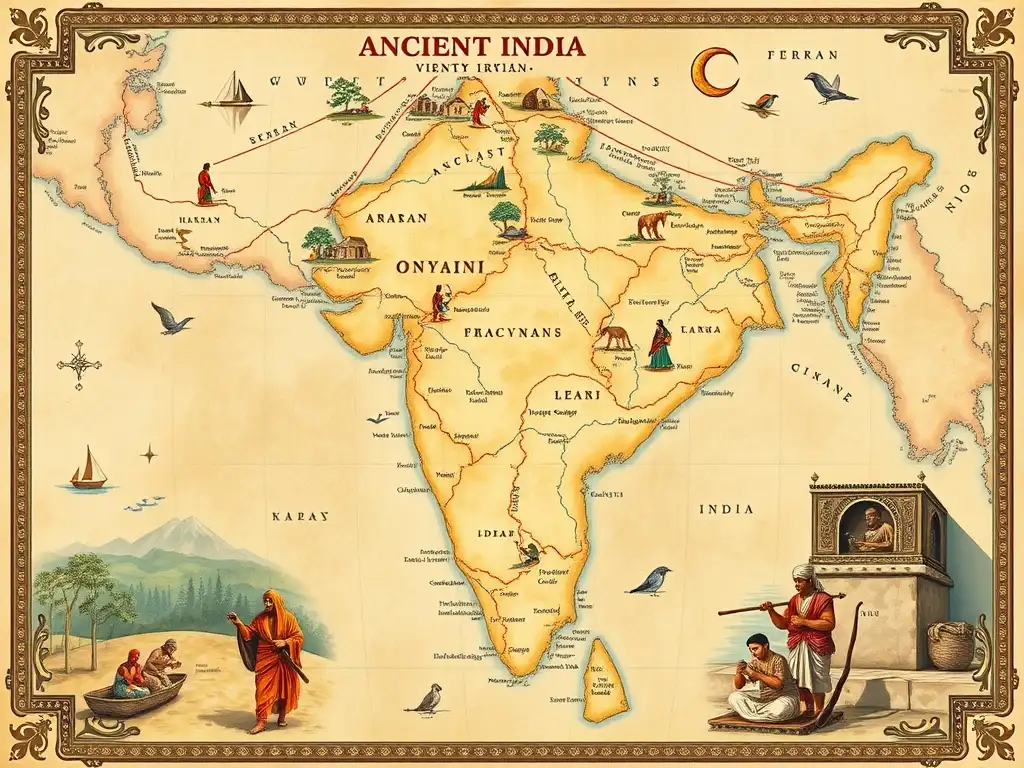
The Indus Valley Civilization
The Indus Valley Civilization (circa 2500–1900 BCE) showcases how geography shaped social stratification. The civilization thrived along the Indus River, benefiting from fertile land and access to water for irrigation. This geographic advantage led to the development of sophisticated urban centers like Mohenjo-Daro and Harappa, which featured advanced architecture, drainage systems, and trade networks.
The abundance of resources fostered economic prosperity, allowing for the emergence of a distinct social hierarchy. Archaeological findings suggest the presence of a ruling elite, likely comprised of landowners and merchants, who controlled trade and resources, while laborers and artisans occupied lower social strata. The geographic context significantly influenced the power dynamics and social organization within the Indus Valley.
The Mauryan Empire
The Mauryan Empire (322–185 BCE) exemplifies how geography influenced social stratification on a larger scale. With its capital at Pataliputra, situated at the confluence of major rivers, the empire had access to vital trade routes and fertile lands. This geographic advantage allowed it to control trade and agriculture, leading to significant wealth accumulation.
The Mauryan rulers implemented a structured administrative system, which further reinforced social stratification. The empire consisted of various social classes, including nobles, warriors, merchants, and farmers, each with designated roles and statuses. The geographic expanse of the empire created diverse economic activities, which contributed to a multifaceted social hierarchy where those in urban centers often held more power than their rural counterparts.
The Gupta Empire
The Gupta Empire (circa 240–550 CE), often referred to as the "Golden Age" of India, demonstrates the intricate relationship between geography and social stratification. The empire's heartland, located in the Ganges plain, was endowed with fertile soil and conducive climatic conditions, fostering agricultural surpluses and economic growth.
The Gupta period saw a flourishing of arts, science, and trade, which were heavily influenced by geographic factors. The rise of powerful merchant classes, who gained wealth through trade across the Indian subcontinent and beyond, led to the emergence of new social dynamics. While the traditional caste system persisted, the economic power of merchants began to challenge the dominance of the land-owning classes, resulting in a more complex social structure. The geographic context of the Gupta Empire facilitated this evolution, highlighting the interplay between geography and social stratification in ancient India.
The Interaction Between Geography and Caste System in Ancient India
The geography of ancient India played a pivotal role in shaping the social stratification that manifested in the caste system. Diverse landscapes, ranging from the towering Himalayas in the north to the expansive Deccan Plateau in the south, created distinct regional identities. These geographical features not only influenced agricultural practices but also dictated trade routes, settlements, and cultural exchanges, which in turn affected social hierarchies.
The fertile plains of the Indus and Ganges rivers supported agrarian societies that thrived on a surplus of resources, leading to a more complex social structure. Conversely, the arid regions of western India, such as Rajasthan, fostered a different set of social dynamics, often emphasizing trade and mobility over agrarian stability. Thus, geography acted as a catalyst for the development of various occupational groups, which ultimately contributed to the rigidities of the caste system.
Geographical barriers often isolated communities, allowing for the preservation of unique customs and practices. This isolation led to the solidification of social roles within these communities, thereby reinforcing the caste system. As a result, the interplay between geography and social stratification became a fundamental aspect of ancient Indian society, influencing everything from economic activities to cultural traditions.
How Geographic Isolation Contributed to Caste Development
Geographic isolation played a crucial role in the evolution of the caste system in ancient India. In regions that were difficult to access due to natural barriers such as mountains, rivers, or deserts, communities tended to develop distinct identities. These isolated groups often adhered to specific customs and practices that set them apart from neighboring populations.
This phenomenon is evident in the case of communities residing in the Himalayas or the remote areas of the Western Ghats, where limited interaction with outsiders fostered unique social structures. As these communities defined their roles within their specific geographical contexts, the differentiation in social practices became more pronounced. Over time, this led to the establishment of rigid caste identities, as individuals were born into specific roles dictated by their locality.
Moreover, the lack of mobility in these isolated regions meant that individuals had fewer opportunities to change their social status. This immobility reinforced the idea of hereditary occupations, where the roles of individuals were predetermined by their birth. Consequently, the geographic isolation of communities directly contributed to the entrenchment of the caste system, as social mobility became increasingly limited.
Regional Variations in Caste Practices and Social Hierarchies
Ancient India was characterized by significant regional variations in caste practices and social hierarchies, heavily influenced by geographic factors. Each region’s unique landscape, climate, and resources shaped the economic activities of its inhabitants, which in turn affected social organization.
For instance, in the agriculturally rich Gangetic plains, the caste system was often more rigidly defined, with farming communities adhering to strict hierarchies based on land ownership and agricultural productivity. In contrast, coastal regions such as Gujarat and Kerala, where trade and fishing were prominent, saw a more fluid social structure that allowed for increased interaction with diverse communities, leading to a different set of caste dynamics.
Additionally, the mountainous regions of the north saw the emergence of warrior castes, as the geography necessitated a focus on defense and resource control. This diversification of caste roles across different regions illustrates how geography dictated not only the economic foundations of society but also the social stratification that emerged in response to those foundations.
The influence of geography on social stratification in ancient India is a complex interplay that laid the groundwork for the caste system as we understand it today. From the geographical isolation of communities to the diverse economic activities dictated by the landscape, the spatial characteristics of India shaped its social fabric profoundly.
Summary of Key Points on Geography and Social Stratification
- Geographic Features: The diverse landscapes of ancient India, including mountains, rivers, and plains, played a significant role in shaping social structures.
- Isolation and Identity: Geographic isolation led to the development of distinct community identities, reinforcing the caste system.
- Regional Variations: Different regions exhibited unique caste practices influenced by local economic activities, such as agriculture, trade, and warfare.
Reflection on the Importance of Understanding Geographic Influences in Ancient Societies
Understanding the geographic influences on ancient societies is crucial for comprehending the complexities of their social structures. The caste system in ancient India did not arise in a vacuum; rather, it was deeply intertwined with the geographical contexts of its time. By studying these influences, we gain valuable insights into how social hierarchies were formed and maintained, enriching our understanding of not only ancient Indian civilization but also the broader implications of geography on social stratification in other cultures and periods.
- Understanding Geography and Social Stratification in Ancient India
- The Role of Geographic Features in Shaping Social Hierarchies
- Geographic Factors Contributing to Social Stratification
- Case Studies of Geographic Influence on Social Stratification
- The Interaction Between Geography and Caste System in Ancient India
- Conclusion: The Lasting Impact of Geography on Social Stratification in Ancient India
- What role did geography play in ancient Indian social stratification?
- How did the Indus Valley civilization reflect social stratification?
- What are the main geographical features that affected ancient Indian civilizations?
- How did trade routes impact social hierarchy in ancient India?
- What was the relationship between geography and caste systems in ancient India?
Frequently Asked Questions
Geography significantly influenced social stratification in ancient India by determining settlement patterns, resource distribution, and access to trade routes, which shaped the economic status of different communities.
The Indus Valley civilization showcased advanced urban planning and infrastructure, indicating a hierarchical society with distinct roles and social classes based on occupation and wealth.
What are the main geographical features that affected ancient Indian civilizations?
Key geographical features include the Himalayan mountains, the Gangetic plains, and the Deccan plateau, which influenced agricultural practices, trade, and the development of social hierarchies.
The establishment of trade routes facilitated economic prosperity, leading to the rise of merchant classes and the expansion of social stratification, as wealth accumulation became a factor in social status.
What was the relationship between geography and caste systems in ancient India?
Geographical factors contributed to the formation of caste systems, as communities adapted to their environments, leading to the development of distinct social groups based on occupation and regional resources.
The intricate relationship between geography and social stratification in ancient India remains profoundly relevant today. As we navigate a world increasingly defined by social divides, understanding how geographical factors shaped societal hierarchies in the past can provide critical insights into contemporary issues. The lessons from ancient India remind us that the landscapes we inhabit can significantly influence our social structures, opportunities, and identities.
The legacy of geography in shaping social stratification continues to resonate within India's diverse cultural fabric. From the towering Himalayas to the fertile plains of the Ganges, these geographical features have not only influenced settlement patterns but have also played a pivotal role in the evolution of social classes. As noted by historian Romila Thapar, The geography of a region is not merely a backdrop; it actively participates in the formation of social identities and hierarchies.
This observation underscores the ongoing relevance of geographical influences in understanding social dynamics, not only in India but across the globe.
As we reflect on the insights gleaned from the interplay of geography and social stratification, I invite you to consider your own environment and its impact on your life and community. What geographical factors shape your social interactions and opportunities? By recognizing these influences, we can work towards fostering a more equitable society that acknowledges and addresses the historical legacies of our landscapes. Let us engage in this reflection, not just as a scholarly exercise, but as a call to action for a more inclusive future.
Unveil the Layers of Ancient Stratification!
Thank you for diving into the fascinating world of ancient India's geography and its profound impact on social structures! We've explored how landscapes shaped communities, identities, and hierarchies. Now, let’s take those insights further and deepen our understanding of this rich history.
Here's how you can engage more deeply with the topic:
- Explore More: Visit our archives on geographical developments in ancient civilizations. You might discover surprising connections to contemporary social structures!
- Share Your Thoughts: Engage in discussions about this article with friends or on social media— in what ways do you believe geography continues to influence societies today?
- Join Our Community: Sign up for our newsletter to receive exclusive articles and participate in enriching discussions about ancient civilizations.
What new perspectives on the influence of geography have emerged for you while reading? We invite you to share your insights below!