
The Global Legacy of Ancient Indian Scholars: A Historical Perspective

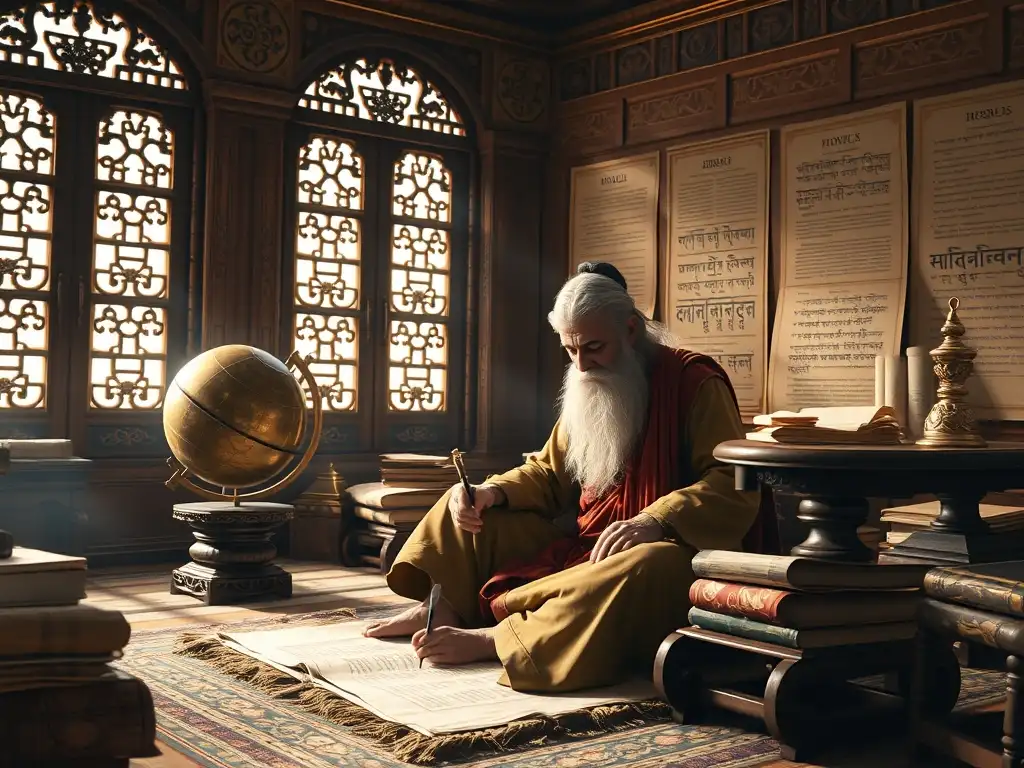
Welcome to Ancient India History, where we embark on a fascinating journey through time to uncover the rich and diverse legacy of ancient Indian civilizations. In our featured article, "The Global Legacy of Ancient Indian Scholars: A Historical Perspective," we delve into the remarkable contributions of ancient Indian scholars that have shaped educational systems and intellectual discourse across the world. What insights did these brilliant minds offer that continue to resonate today?
Prepare to be captivated as we explore the profound impact of their work and the enduring significance of their knowledge. Join us as we unlock the mysteries of a vibrant past and spark your curiosity for the wonders of ancient India!

Introduction to Ancient Indian Scholars Contributions
The contributions of ancient Indian scholars have profoundly influenced not only the Indian subcontinent but also the wider world. From the innovative philosophies of the Vedic period to the scientific advancements during the Gupta Empire, these scholars made strides in various fields including mathematics, astronomy, medicine, and philosophy. Their legacy is a testament to the rich intellectual tradition that flourished in ancient India, laying foundational stones for subsequent generations both in India and across the globe. This article delves into the significant contributions of these scholars, highlighting their impact and the institutions that nurtured their brilliance.
Overview of Ancient Indian Civilizations
Ancient India was home to several remarkable civilizations, each contributing uniquely to the tapestry of human knowledge. The Indus Valley Civilization, known for its urban planning and advanced drainage systems, set the stage for subsequent cultural developments. Following this, the Vedic period introduced profound spiritual and philosophical texts that shaped Indian thought.
The emergence of powerful empires such as the Maurya and Gupta marked an era of extensive scholarly activity. During this time, figures like Aryabhata and Charaka made groundbreaking contributions in mathematics and medicine, respectively. The diverse cultural milieu of ancient India fostered an environment where knowledge was not only pursued but also revered, leading to a legacy that continues to resonate through history.
Importance of Scholarly Work in Ancient India
The scholarly work in ancient India played a critical role in shaping various academic disciplines. The emphasis on inquiry and debate encouraged scholars to explore diverse subjects, resulting in significant advancements. Ancient Indian scholars were instrumental in:
- Mathematics: The introduction of the concept of zero and advancements in algebra and geometry.
- Astronomy: Detailed observations of celestial bodies and the formulation of complex astronomical models.
- Medicine: Development of surgical techniques and medicinal practices outlined in texts like the Sushruta Samhita.
These contributions reflect a deep-seated tradition of learning and inquiry, fostering a culture that valued education and intellectual development.
The Role of Ancient Indian Universities
Ancient Indian universities were pivotal in nurturing scholars and facilitating the transmission of knowledge. Institutions such as Nalanda, Taxila, and Vikramshila were not merely centers of education; they were hubs of intellectual exchange that attracted students and scholars from across Asia.
Nalanda University: A Center of Knowledge
Nalanda University, one of the world's oldest residential universities, thrived between the 5th and 12th centuries CE. It became a beacon of learning, attracting thousands of students from regions as far as China, Korea, and Japan. The curriculum encompassed diverse subjects, including:
- Philosophy
- Mathematics
- Astronomy
- Medicine
The university's rigorous academic environment and esteemed faculty, including notable scholars like Nagarjuna and Dharmakirti, played an essential role in shaping the intellectual landscape of ancient India and beyond.
Taxila: The Cradle of Learning
Taxila is often referred to as the cradle of learning in ancient India, with its origins tracing back to the 6th century BCE. This ancient university specialized in various disciplines, including:
- Military Science
- Medicine
- Philosophy
Taxila's strategic location along trade routes facilitated cultural exchanges, making it a melting pot of ideas and knowledge. Its influence extended across the region, contributing to the spread of Indian thought and culture.
Vikramshila: An Emerging Hub of Education
Vikramshila, established in the 8th century CE, emerged as a significant educational institution in ancient India. It was founded by the great philosopher and scholar Dharmapala as a response to the need for a more systematic approach to Buddhist education. Vikramshila was known for its:
- Focus on Buddhist Studies
- Rigorous Training in Logic and Philosophy
- Promotion of Scholarly Debates
The university attracted students from various backgrounds, further enriching the academic discourse of the time and ensuring the preservation and propagation of knowledge across generations.
The exploration of ancient Indian scholars and their contributions offers invaluable insights into the rich intellectual heritage of India. These scholars and their educational institutions laid the groundwork for future advancements, shaping the global landscape of knowledge and learning.
Key Contributions of Ancient Indian Scholars
The contributions of ancient Indian scholars have profoundly shaped various fields of knowledge, influencing not only their contemporaries but also future generations across the globe. From the intricate theories of mathematics to the profound insights in philosophy, the legacy of these scholars is a testament to the intellectual prowess of ancient Indian civilizations. Their work laid foundational principles that continue to resonate within modern disciplines, showcasing a rich tapestry of thought that spans centuries.
Contributions to Mathematics and Astronomy
Ancient Indian scholars made significant advancements in mathematics, particularly in the fields of arithmetic, algebra, and geometry. One of the most notable figures, Aryabhata, introduced concepts such as the approximation of π (pi) and the place-value system, which is fundamental to modern mathematics. His work, Aryabhatiya, outlined methods for solving quadratic equations and provided early insights into the rules of trigonometry.
In astronomy, scholars like Varahamihira compiled extensive texts that detailed celestial phenomena and planetary movements. The Brhat Samhita, authored by Varahamihira, includes predictions about eclipses, seasonal changes, and the behavior of celestial bodies, demonstrating a sophisticated understanding of astronomy that influenced both Indian and later Islamic astronomers.
Advances in Medicine and Healthcare
The ancient Indian medical system, known as Ayurveda, was significantly advanced by scholars such as Charaka and Sushruta. Charaka's Charaka Samhita is one of the earliest texts on medicine, emphasizing the importance of diagnosis and treatment based on individual constitution and the balance of bodily humors. His holistic approach laid the groundwork for personalized medicine.
Sushruta, often referred to as the "father of surgery," authored the Sushruta Samhita, which is considered one of the earliest surgical texts. It details surgical techniques, including procedures for cataract removal, plastic surgery, and the use of anesthesia. These contributions not only enhanced medical practices in ancient India but also influenced medical knowledge in various cultures, including those of the Middle East and Europe.
Innovations in Philosophy and Spiritual Thought
Ancient Indian scholars contributed richly to the realms of philosophy and spiritual thought, developing schools of thought that explore the nature of existence, ethics, and the human soul. The Vedic texts, composed by early sages, provided foundational concepts in spirituality, ritual, and cosmology.
The philosophies of Jainism and Buddhism, founded by Mahavira and Siddhartha Gautama (Buddha), respectively, introduced profound ideas about non-violence, compassion, and the pursuit of enlightenment. These teachings not only shaped Indian culture but also spread throughout Asia, influencing various philosophical and spiritual traditions.
In addition, thinkers like Adi Shankaracharya contributed to Advaita Vedanta, promoting the idea of non-duality and the unity of the individual soul (Atman) with the universal consciousness (Brahman). This philosophical discourse has had a lasting impact on spiritual thought worldwide.
Influence of Ancient Indian Scholars on Global Knowledge
The influence of ancient Indian scholars extends far beyond the subcontinent, with their ideas and discoveries permeating various cultures and intellectual movements across the globe. The transfer of knowledge initiated a dialogue between civilizations, enriching the global repository of wisdom.
Transmission of Knowledge to the West
The transmission of ancient Indian knowledge to the West occurred through various channels, including trade routes and the translations of texts. Notably, during the medieval period, Indian numerals and the concept of zero traveled along the Silk Road, reaching Islamic scholars who subsequently introduced these ideas to Europe. This transition was crucial for the development of Western mathematics, leading to advancements during the Renaissance.
Additionally, works by Indian astronomers and mathematicians were translated into Arabic, which played a pivotal role in bridging Eastern and Western scientific traditions. The influence of these texts can be seen in the work of European mathematicians such as Fibonacci, who credited Indian scholars for his introduction to the Hindu-Arabic numeral system.
Impact on Islamic Golden Age Scholars
Ancient Indian scholars significantly impacted the Islamic Golden Age, a period marked by remarkable advancements in science, philosophy, and the arts. Scholars like Al-Khwarizmi, who is often referred to as the "father of algebra," drew upon Indian mathematical concepts to develop his own theories, leading to the establishment of algebra as a distinct branch of mathematics.
Furthermore, the translation movement in the Abbasid Caliphate facilitated the incorporation of Indian astronomical texts into Islamic scholarship. The works of Indian astronomers were instrumental in refining astronomical tables and improving navigation techniques, influencing both Islamic and European explorations.
Legacy in Modern Educational Systems
The educational frameworks established by ancient Indian scholars laid the groundwork for modern educational systems. The ancient universities, notably Nalanda and Takshashila, served as centers of learning, attracting students from various regions. These institutions emphasized a comprehensive curriculum that included subjects such as mathematics, medicine, philosophy, and the arts.
The principles of inquiry, debate, and interdisciplinary learning that characterized these ancient universities resonate within contemporary educational practices. Their legacy continues to inspire modern institutions to embrace a holistic approach to education, fostering critical thinking and creativity among students.
The contributions of ancient Indian scholars have left an indelible mark on various fields, shaping the trajectory of global knowledge and education. Their intellectual achievements not only enriched their own civilization but also fostered a legacy that continues to influence the modern world.
Prominent Ancient Indian Scholars and Their Works

Ancient India was home to a multitude of scholars whose contributions spanned various fields including mathematics, medicine, linguistics, and astronomy. These scholars not only advanced their respective disciplines but also laid the groundwork for future generations of thinkers and innovators across the globe. Their works continue to be studied and revered, illustrating the profound impact of ancient Indian scholarship on world knowledge.
Aryabhata: The Mathematician and Astronomer
Aryabhata, who lived in the 5th century CE, is celebrated as one of the most influential mathematicians and astronomers of ancient India. His seminal work, the Aryabhatiya, is a compendium of mathematics and astronomy, where he introduced concepts such as the place value system and the use of zero. Aryabhata's calculations of the approximate value of π (pi) and the length of the solar year were remarkably accurate for his time.
He also proposed that the earth rotates on its axis, a revolutionary idea that predated similar concepts in the Western world by many centuries. His contributions laid the foundation for further developments in both mathematics and astronomy in India and beyond.
Charaka: The Father of Medicine
Charaka, a prominent physician of the ancient Indian medical system known as Ayurveda, lived around the 2nd century CE. His most significant contribution, the Charaka Samhita, is a comprehensive text that serves as a foundational work in Ayurvedic medicine. This text covers various aspects of health, disease, and treatment, emphasizing the importance of a holistic approach to medicine that incorporates diet, lifestyle, and herbal remedies.
Charaka's emphasis on observation and clinical practice established principles that are still relevant in modern medicine. His work not only influenced medical practice in India but also informed medical science in other cultures, particularly in the Middle East and Southeast Asia.
Panini: The Linguistic Pioneer
Panini, who flourished around the 4th century BCE, is revered as the father of linguistics due to his groundbreaking work on Sanskrit grammar. His text, the Ashtadhyayi, systematically outlines the rules of Sanskrit grammar in a concise and comprehensive manner, utilizing a formal approach that resembles modern linguistic theory. Panini's analysis of language structure and syntax set a precedent for linguistic studies worldwide. His work has influenced not only the study of languages but also the development of computational linguistics and artificial intelligence, highlighting the timeless relevance of ancient Indian scholarship.
The Cultural and Educational Impact of Ancient Indian Scholars
The contributions of ancient Indian scholars had a profound impact on the cultural and educational landscape of India and beyond. Their works fostered an environment of learning that transcended geographical boundaries, influencing various civilizations and facilitating cultural exchange.
Development of Educational Systems in Ancient India
Ancient India boasted a rich tradition of education, exemplified by institutions like Nalanda and Takshashila. These universities were centers of learning where students from across the globe converged to study diverse subjects, including philosophy, mathematics, medicine, and the arts. The educational systems established by these scholars emphasized critical thinking, dialogue, and practical application of knowledge, paving the way for a structured approach to learning. The emphasis on inquiry and debate in these institutions contributed significantly to the intellectual climate of the time, allowing for the flourishing of various disciplines.
Cultural Exchange and Interaction with Other Civilizations
The scholarship of ancient Indian scholars facilitated extensive cultural exchange with other civilizations, particularly through trade routes that connected India with regions such as the Middle East, China, and Southeast Asia. The transmission of knowledge, ideas, and texts across these regions led to the enrichment of various fields, including mathematics, astronomy, and medicine. For example, the Indian numeral system, which originated from the works of scholars like Aryabhata, eventually influenced the development of the Arabic numeral system, ultimately impacting global mathematics. This cultural interaction underscores the interconnectedness of ancient civilizations and the lasting legacy of Indian scholarship.
The Role of Manuscripts and Texts in Preserving Knowledge
Manuscripts and texts produced by ancient Indian scholars played a crucial role in preserving knowledge for future generations. These texts were meticulously copied and disseminated, ensuring that the wisdom of the past was accessible to scholars in subsequent eras.
The preservation of works such as the Aryabhatiya, Charaka Samhita, and Ashtadhyayi not only safeguarded invaluable knowledge but also inspired further inquiry and exploration in various fields. The tradition of manuscript preservation in ancient India laid the groundwork for the establishment of libraries and centers of learning that would continue to flourish throughout history, further solidifying India's role as a beacon of knowledge and education.
Conclusion: The Enduring Legacy of Ancient Indian Scholars
The contributions of ancient Indian scholars have left an indelible mark on various fields of knowledge, including mathematics, astronomy, philosophy, and medicine. Institutions like Nalanda and Takshashila were not just centers of learning; they were hubs of intellectual exchange that attracted scholars from across the globe. The rigorous methodologies and innovative thinking of these scholars laid the groundwork for future advancements in their respective fields. This legacy continues to resonate today, reminding us of the vast potential for knowledge and enlightenment that ancient Indian civilizations fostered.
Through the study of ancient Indian scholarship, we gain insights into the sophisticated educational systems that flourished in India, emphasizing critical thinking, debate, and a profound respect for learning. The impact of these scholars is not limited to their time; it extends into contemporary discussions about education and intellectual pursuits, emphasizing the importance of a holistic and inclusive approach to learning.
Reflection on the Importance of Preservation and Recognition
Preserving the history and contributions of ancient Indian scholars is crucial for fostering a deeper understanding of global intellectual heritage. Many of these scholars, such as Aryabhata and Charaka, have been instrumental in shaping their fields, yet their stories often remain obscured by time. Recognition of their work not only honors their contributions but also inspires future generations to explore and innovate.
Efforts to preserve ancient texts, manuscripts, and historical records are vital. By digitizing these resources and making them accessible to a broader audience, we can ensure that the wisdom of ancient Indian scholars continues to inform and enrich contemporary scholarship. Institutions and organizations dedicated to this cause play a pivotal role in keeping this legacy alive.
Future Implications for Education and Scholarship
The legacy of ancient Indian scholars serves as a blueprint for modern educational practices. Their emphasis on interdisciplinary learning, collaborative inquiry, and ethical discourse can inform contemporary curricula that aim to produce well-rounded, critical thinkers. Integrating ancient philosophies and methodologies into today’s educational frameworks may inspire students to delve deeper into subjects, fostering a culture of inquiry that transcends traditional boundaries.
Moreover, understanding the contributions of these scholars can encourage a more global perspective in academic discourse, where diverse cultural insights are valued and explored. This approach not only enriches the learning experience but also cultivates a spirit of inclusivity and respect for different knowledge systems.
References and Further Reading on Ancient Indian Scholars Contributions
Suggested Books and Articles
- "The History of Indian Philosophy" by Surendranath Dasgupta: This comprehensive work explores the rich philosophical traditions of India, detailing the contributions of various scholars.
- "Indian Mathematics: A Historical Perspective" by C. M. Srinivas: This book delves into the contributions of ancient Indian mathematicians, highlighting their significant achievements and methodologies.
- "Nalanda: The World's First Residential University" by R. K. Sharma: A detailed examination of Nalanda University, its scholars, and its impact on education in ancient India.
Online Resources for Further Exploration
- Digital Library of India: A vast collection of digitized texts and manuscripts that provide insights into the ancient Indian scholarly tradition.
- Internet Archive: Offers a range of historical texts related to ancient Indian scholars, available for free online reading and download.
- Ancient India: A Comprehensive Study: A website dedicated to exploring ancient Indian history, including the contributions of its scholars and educational institutions.
By engaging with these resources, one can gain a deeper appreciation for the remarkable contributions of ancient Indian scholars and their enduring influence on global knowledge.
- Introduction to Ancient Indian Scholars Contributions
- The Role of Ancient Indian Universities
- Key Contributions of Ancient Indian Scholars
- Influence of Ancient Indian Scholars on Global Knowledge
- Prominent Ancient Indian Scholars and Their Works
- The Cultural and Educational Impact of Ancient Indian Scholars
- Conclusion: The Enduring Legacy of Ancient Indian Scholars
- References and Further Reading on Ancient Indian Scholars Contributions
Frequently Asked Questions
What were some significant contributions of ancient Indian scholars?
Ancient Indian scholars made pioneering contributions in fields such as mathematics, astronomy, medicine, and philosophy, influencing both Eastern and Western thought.
How did ancient Indian scholars impact mathematics?
They introduced concepts like zero and the decimal system, which were crucial in the development of modern mathematics and are still used today.
Can you name some notable ancient Indian scholars?
Prominent figures include Aryabhata, known for his work in astronomy and mathematics, and Charaka, a key figure in Ayurvedic medicine.
What role did ancient Indian scholars play in philosophy?
They contributed to various philosophical schools, including Vedanta and Buddhism, shaping spiritual and ethical thought across the globe.
How did ancient Indian scholars influence global cultures?
Their works were translated into various languages, spreading ideas like numerical systems and medicinal practices, which had lasting impacts on global knowledge and cultural exchange.
Final Reflection: The Enduring Impact of Ancient Indian Scholars
The contributions of ancient Indian scholars resonate profoundly in today's world, as their insights continue to shape modern disciplines such as mathematics, astronomy, and philosophy. Their groundbreaking work not only laid the foundation for future generations but also serves as a reminder of the rich intellectual heritage that transcends time and geography. In an era where knowledge is often fragmented, revisiting these ancient contributions can inspire a more holistic understanding of our global history.
The legacy of ancient Indian scholars is not just a relic of the past; it is a living influence that permeates our cultural and social landscape. From the algorithms of Aryabhata to the philosophical inquiries of Adi Shankaracharya, their ideas have sparked dialogues that continue to evolve. As we navigate the complexities of the modern world, it is essential to acknowledge the wisdom of these scholars, who once said, The greatest knowledge is that which leads to liberation.
This perspective encourages us to seek knowledge not merely for academic achievement but for personal and collective growth.
As we reflect on the invaluable lessons imparted by ancient Indian scholars, let us take a moment to consider how we can apply their teachings in our lives today. I invite you to explore the depths of your own intellectual curiosity and to embrace the pursuit of knowledge as a lifelong journey. By doing so, we honor the legacy of those who came before us and contribute to a future where wisdom and understanding continue to flourish.
Embrace the Wisdom of Our Ancients!
Thank you for exploring the rich legacy of ancient Indian scholars with us. Your interest in this profound history is the first step toward preserving and celebrating their invaluable contributions to our world. Now, let's take action to deepen your understanding and share this knowledge with others!
- Explore further: Check out our curated list of ancient texts and their modern interpretations. Discover how these works continue to influence contemporary thought.
- Join the conversation: Engage with fellow history enthusiasts on our forum—share your insights or ask questions about ancient Indian scholarship.
- Spread the word: Share this article on social media to inspire others about the remarkable impact of India's ancient thinkers!
What aspect of ancient Indian scholarship resonates with you the most, and how do you plan to incorporate this knowledge into your daily life?