
Innovations in Agriculture: How Practical Skills Were Taught in Ancient India

Welcome to Ancient India History, where we embark on a fascinating journey through the vibrant tapestry of ancient Indian civilizations. In this exploration, we unravel the innovations in agriculture that laid the groundwork for one of the world’s earliest and most sophisticated farming systems. How did practical skills in agriculture shape the lives of people from the Indus Valley to the Gupta Empire?
Join us as we dive into the remarkable techniques and educational practices that not only transformed the landscape but also influenced the very fabric of ancient Indian society. Your adventure into the past begins now—let’s cultivate your curiosity!
Introduction to Ancient Indian Agriculture Innovations
Agriculture is often considered the backbone of civilization, and ancient India provides a remarkable case study of how agricultural practices contributed to societal development. From the sophisticated irrigation systems of the Indus Valley to the crop rotation techniques employed during the Gupta Empire, ancient Indian agriculture innovations played a crucial role in shaping the economy, culture, and social structure of these diverse civilizations. This article delves into how practical skills in agriculture were imparted, highlighting the methodologies and educational practices that enabled these innovations to thrive.
Overview of Agricultural Practices in Ancient India
Ancient Indian agriculture was characterized by a variety of practices that evolved over millennia. The region's diverse climate and geography allowed for the cultivation of a wide range of crops, including:
- Cereals: Wheat, barley, and rice
- Legumes: Lentils and chickpeas
- Cash Crops: Cotton and indigo
The agricultural techniques employed included:
- Irrigation: Utilizing rivers and canals to enhance water supply
- Crop Rotation: Alternating crops to maintain soil fertility
- Organic Fertilizers: Using animal manure and compost to enrich soil
These practices not only ensured food security but also fostered trade and economic prosperity.
Importance of Agricultural Innovations in Ancient Civilizations
The significance of agricultural innovations in ancient India cannot be overstated. They were pivotal in:
- Sustaining Populations: Enhanced crop yields supported larger populations.
- Economic Development: Surplus production led to trade, contributing to the wealth of cities.
- Cultural Exchange: Agricultural advancements facilitated interactions between different regions and cultures.
The educational practices surrounding agriculture, which included hands-on training and communal learning, ensured that such innovations were passed down through generations, laying the foundation for future advancements.
Historical Context of Agriculture in Ancient India
Understanding the historical context of agriculture in ancient India provides insight into the various phases of agricultural development and innovation.
The Indus Valley Civilization and Early Agricultural Techniques
The Indus Valley Civilization (circa 3300–1300 BCE) is often credited with some of the earliest agricultural innovations. Evidence suggests that this civilization had advanced techniques for crop cultivation, including:
- Well-Planned Irrigation Systems: Canals and reservoirs were constructed to manage water supply effectively.
- Sustainable Farming Practices: Crop rotation and mixed farming were likely practiced to optimize land use.
These innovations not only supported the population but also laid the groundwork for future agricultural advancements.
Agricultural Developments during the Vedic Period
Following the decline of the Indus Valley Civilization, the Vedic period (circa 1500–500 BCE) saw significant developments in agricultural practices. Key innovations included:
- Introduction of New Crops: The cultivation of rice and barley became prominent.
- Use of Iron Tools: The introduction of iron plows improved farming efficiency and increased productivity.
The Vedic texts also emphasize the importance of agriculture, reflecting its central role in society and economy.
Innovations in Agriculture During the Maurya and Gupta Empires
The Maurya (circa 322–185 BCE) and Gupta Empires (circa 320–550 CE) marked a golden age for agriculture in ancient India. Innovations during these periods included:
- Improved Irrigation Techniques: The construction of more complex irrigation systems expanded arable land.
- Agricultural Manuals: Texts like "Krishi Parashara" provided detailed guidance on farming techniques, crop management, and pest control.
These advancements not only enhanced agricultural productivity but also contributed to the overall prosperity of these empires, illustrating the critical link between education, practical skills, and agricultural innovation.
The journey of ancient Indian agriculture reflects a rich tapestry of practical knowledge and skills that were nurtured through generations, driving innovations that continue to influence agricultural practices today.
Methods of Teaching Practical Agricultural Skills
In ancient India, practical agricultural skills were taught through a combination of oral traditions, hands-on experiences, and structured educational systems. This multifaceted approach ensured that knowledge was not only transmitted but also applied effectively in real-world scenarios. Teaching methods were deeply rooted in the cultural and social fabric of the time, emphasizing community involvement and experiential learning.
Ancient Indian agricultural education emphasized the importance of direct participation in farming activities, allowing learners to develop skills through observation and practice. This experiential learning approach was further supported by the use of texts and manuals that provided theoretical knowledge alongside practical applications.
Oral Traditions and Apprenticeship in Ancient India
Oral traditions played a pivotal role in the transmission of agricultural knowledge in ancient India. Knowledge was often shared through storytelling, where experienced farmers would narrate tales of successful harvests, challenges faced, and techniques employed. This method not only preserved practical wisdom but also fostered a sense of community and shared identity among farmers.
Apprenticeship emerged as a crucial method for teaching agricultural skills. Young individuals typically learned alongside seasoned farmers, absorbing techniques through direct involvement in farming activities. This hands-on training was invaluable as it allowed apprentices to understand the nuances of various agricultural practices, such as planting, harvesting, and pest management. The mentor-mentee relationship formed during apprenticeship not only facilitated skill development but also ensured the continuity of agricultural knowledge across generations.
Role of Gurukuls in Agricultural Education
Gurukuls, traditional Indian educational institutions, significantly contributed to agricultural education. These centers focused on holistic learning, where students lived with their Gurus (teachers) and engaged in various subjects, including agriculture. The Gurukuls emphasized practical skills alongside spiritual and philosophical teachings, creating a well-rounded educational experience.
In the context of agriculture, Gurukuls provided a structured environment for students to learn about crop cultivation, soil management, and seasonal farming practices. Instruction was often tailored to the local ecosystem, ensuring that students understood the specific agricultural needs of their region. By fostering a close-knit community of learners, Gurukuls played a crucial role in preserving and disseminating agricultural knowledge.
Use of Texts and Manuals for Teaching Agriculture
In addition to oral traditions and practical experiences, written texts and manuals were essential tools for teaching agriculture in ancient India. Scholars such as Kautilya and Varahamihira contributed to agricultural literature, documenting various techniques, practices, and philosophies related to farming.
These texts served multiple purposes: they acted as reference materials for farmers, provided insights into crop management, and outlined the significance of agriculture within the broader context of society. Manuals often included detailed instructions on planting schedules, pest control methods, and the utilization of resources, reflecting a systematic approach to agricultural education that complemented experiential learning.
Innovations in Agricultural Techniques
Ancient Indian agriculture was marked by several innovations that significantly enhanced productivity and sustainability. Farmers employed a variety of techniques that demonstrated their ingenuity and adaptability to diverse climatic and geographic conditions. These innovations laid the foundation for sustainable agricultural practices that are still relevant today.
Crop Rotation and Diversification in Ancient Indian Agriculture
Crop rotation and diversification were crucial strategies employed by ancient Indian farmers to maintain soil fertility and maximize yields. By alternating different crops in a systematic manner, farmers were able to prevent soil depletion and reduce the risk of pest infestations.
For instance, legumes were often planted alongside staple crops, as they enriched the soil with nitrogen. This practice not only improved soil health but also ensured a varied diet for the community. The ancient Indians recognized the importance of biodiversity in agriculture, which ultimately contributed to sustainable farming practices that supported long-term agricultural productivity.
Irrigation Techniques: Wells, Canals, and Tanks
Irrigation was a cornerstone of agricultural innovation in ancient India, enabling farmers to cultivate crops in diverse climatic regions. Various irrigation techniques, such as the construction of wells, canals, and tanks, were developed to manage water resources effectively.
Wells provided a reliable source of water for irrigation, while canals facilitated the distribution of water across larger agricultural areas. Tanks, often constructed to collect rainwater, played a crucial role in sustaining crops during dry spells. The engineering skills demonstrated in these irrigation systems reflect the advanced understanding ancient Indian societies had of hydrology and landscape management, ensuring agricultural resilience.
Use of Fertilizers and Organic Farming Practices
Ancient Indian farmers were pioneers in the use of fertilizers and organic farming practices. They recognized the importance of soil health and implemented various methods to enhance fertility naturally.
Organic materials, such as animal manure, compost, and crop residues, were commonly used to enrich the soil. The practice of incorporating green manure—cover crops that are plowed back into the soil—was also prevalent, which improved soil structure and nutrient content. These sustainable practices not only boosted crop yields but also preserved the ecological balance, showcasing the foresight of ancient Indian agricultural innovations.
Tools and Implements Used in Ancient Indian Agriculture
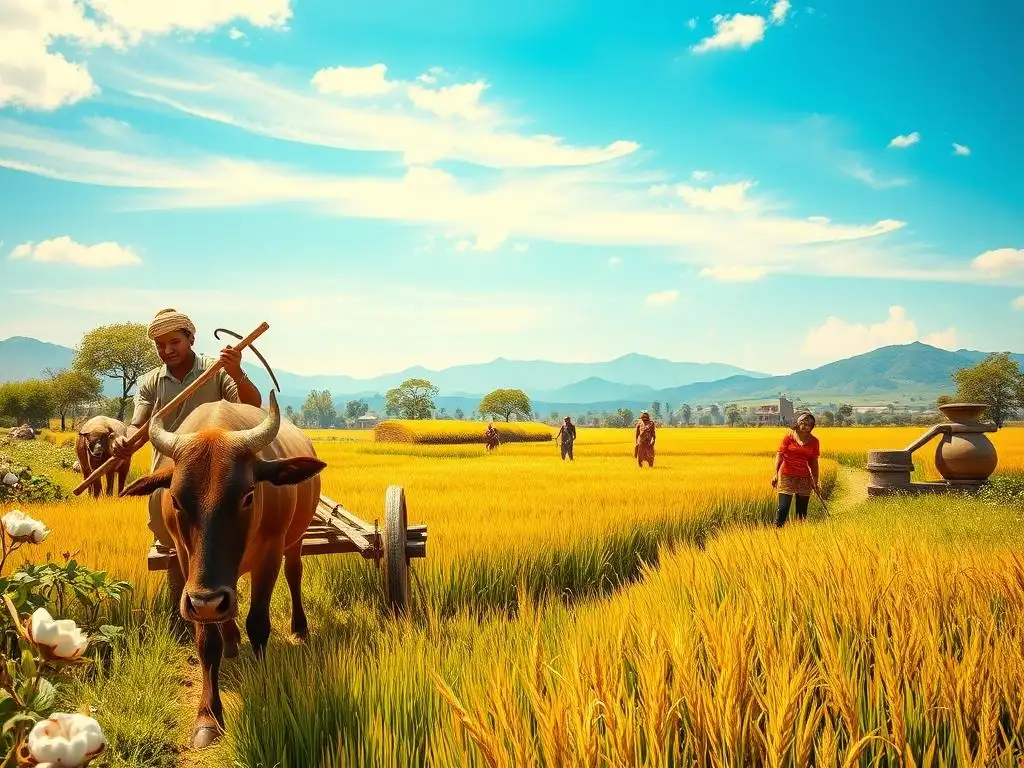
Ancient Indian agriculture was characterized by a variety of tools and implements that reflected the ingenuity and adaptability of its societies. These tools were primarily crafted from local materials such as wood, stone, and metal, enabling farmers to cultivate the land effectively. The following are key tools that played a significant role in agricultural practices:
- Ploughs: The plough was a fundamental tool used for turning the soil. Early versions were made of wood, often pulled by oxen. Over time, advancements led to the development of iron-tipped ploughs, which significantly improved soil cultivation.
- Sickles: Used for harvesting crops, sickles were curved blades that allowed for efficient cutting of grains. The design evolved over time, with improvements in blade sharpness and handle ergonomics.
- Hoed and Spades: These tools were essential for tilling the soil and preparing fields for planting. They allowed farmers to work the land more thoroughly and effectively.
- Irrigation Tools: Ancient Indian farmers developed various irrigation techniques, including wells and canals. Tools like water-lifting devices, such as the persian wheel or potter's wheel, facilitated the efficient distribution of water to crops.
Traditional Agricultural Tools and Their Evolution
The evolution of agricultural tools in ancient India reflects both technological advancements and the changing needs of society. Initially, farmers used simple hand tools, but as agricultural practices became more sophisticated, so too did the implements:
- Early Tools: The earliest agricultural tools were basic and included wooden sticks for tilling. With the domestication of animals, tools like the wooden plough emerged, allowing for more effective soil preparation.
- Development of Metal Tools: The introduction of metallurgy led to the crafting of metal tools, such as iron ploughshares. These innovations not only improved the efficiency of farming but also increased crop yields.
- Specialized Implements: As different crops were cultivated across various regions, specialized tools emerged. For example, tools for rice cultivation differed from those used for wheat, highlighting the diversity in agricultural practices.
- Adaptation to Local Conditions: Tools were often adapted to local climatic and soil conditions. For instance, in the wetter regions of the south, wooden ploughs were modified to suit the marshy land, demonstrating the practical application of local knowledge.
The Role of Technology in Enhancing Productivity
Technological advancements played a crucial role in enhancing agricultural productivity in ancient India. These innovations not only improved farming techniques but also contributed to a surplus of food, which was vital for the growth of civilization. Key technological contributions included:
- Irrigation Systems: The development of sophisticated irrigation systems, including wells, reservoirs, and canal networks, allowed farmers to cultivate arid and semi-arid lands. This technology enabled year-round farming and reduced dependency on seasonal rains.
- Crop Rotation and Land Management: Ancient Indian farmers practiced crop rotation and sustainable land management techniques, which helped maintain soil fertility and reduce pest infestations. This practice was crucial for long-term agricultural sustainability.
- Seed Selection and Hybridization: Farmers began to understand the importance of selecting superior seeds for planting. This practice led to the cultivation of more resilient and higher-yielding crop varieties.
- Agricultural Texts: The compilation of agricultural texts, such as the Krishi Parashara and Hiranyakeshi, provided farmers with knowledge on best practices, pest control, and crop management, further enhancing productivity.
The Impact of Agriculture Innovations on Society
The innovations in agriculture had profound social and economic impacts, shaping the fabric of ancient Indian society. These advancements not only improved food security but also influenced various aspects of daily life.
Economic Growth Driven by Agricultural Advancements
Agricultural innovations were a driving force behind economic growth in ancient India. The increased productivity from improved farming techniques led to several significant outcomes:
- Surpluses and Trade: Enhanced agricultural output created surpluses, enabling trade both locally and with distant regions. This trade fostered economic interdependence and contributed to the rise of urban centers.
- Wealth Accumulation: As agriculture became more productive, it allowed landowners and farmers to accumulate wealth. Surpluses provided the means for investment in other sectors, such as craft production and trade.
- Population Growth: The availability of food led to population growth, resulting in the expansion of settlements and the formation of more complex societal structures.
Social Structure and the Agricultural Economy in Ancient India
The agricultural economy significantly influenced the social structure of ancient Indian civilization. The relationship between agriculture and society can be summarized as follows:
- Class Distinctions: The agricultural economy led to the emergence of distinct social classes, including landowners, tenant farmers, and laborers. This stratification often determined access to resources and power within communities.
- Caste System Development: The reliance on agriculture contributed to the formation of the caste system, where certain groups became associated with specific agricultural roles, further solidifying social hierarchies.
- Community Cooperation: Agriculture also fostered a sense of community, as farming often required collective efforts. Festivals and rituals were frequently centered around agricultural cycles, reinforcing social bonds.
Influence of Agriculture on Cultural Practices and Festivals
Agriculture was deeply intertwined with the cultural practices and festivals of ancient India. The agricultural calendar dictated various social and religious activities, highlighting the significance of farming in daily life:
- Harvest Festivals: Celebrations such as Pongal and Makar Sankranti were integral to agricultural societies, marking the end of harvest seasons and expressing gratitude for bountiful crops.
- Rituals and Offerings: Many rituals were performed to appease deities believed to influence agricultural productivity. Offerings of the first fruits were common, reflecting the spiritual connection between agriculture and culture.
- Art and Literature: Agricultural themes permeated ancient Indian art and literature, showcasing the importance of farming in shaping societal values and beliefs.
Through these innovations and practices, agriculture not only sustained ancient Indian civilizations but also enriched their cultural heritage, leaving a lasting impact on society and its development.
Conclusion: Legacy of Agricultural Innovations in Ancient India
The agricultural innovations of ancient India have left an indelible mark on the world. From sophisticated irrigation systems to the development of diverse cropping techniques, the practices established thousands of years ago continue to influence modern agricultural practices. The legacy of these innovations is not merely historical; it is a living testament to the ingenuity and adaptability of ancient Indian farmers who faced various environmental challenges.
Moreover, the educational practices surrounding agriculture in ancient India fostered a culture of knowledge-sharing and practical skills development. This ensures that the wisdom of generations past is preserved and disseminated, allowing future farmers to benefit from tried and tested methods. As we explore these contributions, it becomes clear that ancient Indian agriculture was not just about sustenance but also about cultivating a profound relationship with the land, which continues to resonate in contemporary agricultural philosophies.
Lasting Impact on Modern Agricultural Practices
Ancient Indian agricultural practices have significantly shaped modern farming techniques across various regions. Innovations such as:
- Crop rotation: This practice, which involves alternating different crops in the same area across seasons, was utilized to maintain soil fertility and manage pests effectively.
- Irrigation methods: The use of wells, canals, and reservoirs pioneered by ancient Indian civilizations laid the groundwork for contemporary irrigation systems, ensuring efficient water management.
- Organic farming: Techniques like composting and using natural fertilizers, which were prevalent in ancient India, are now recognized as sustainable practices essential for modern agriculture.
These methods have been adapted and refined over centuries, demonstrating a blend of traditional knowledge and modern science. The enduring relevance of these practices highlights the importance of integrating ancient wisdom with contemporary agricultural challenges, emphasizing sustainability and ecological balance.
Lessons from Ancient Indian Agricultural Innovations for Today's Farmers
Today's farmers can draw invaluable lessons from the agricultural innovations of ancient India. Some key takeaways include:
- Sustainability: Ancient practices emphasized harmony with nature, advocating for techniques that promote soil health and biodiversity. Modern farming can benefit from a similar focus on sustainable practices that reduce reliance on chemical inputs.
- Community Knowledge Sharing: The communal approach to farming and education in ancient India fostered collaboration among farmers. Modern agricultural systems can enhance productivity and resilience by encouraging community-based learning and knowledge exchange.
- Adaptation to Local Conditions: Ancient Indian farmers were adept at adapting their methods to suit local climates and soil types. This localized approach remains crucial today, as farmers face varying environmental challenges across different regions.
By embracing these lessons, today's agricultural practitioners can work towards creating more resilient and sustainable farming systems, ensuring food security for future generations while honoring the rich legacy of ancient Indian agricultural innovations.
- Introduction to Ancient Indian Agriculture Innovations
- Historical Context of Agriculture in Ancient India
- Methods of Teaching Practical Agricultural Skills
- Innovations in Agricultural Techniques
- Tools and Implements Used in Ancient Indian Agriculture
- The Impact of Agriculture Innovations on Society
- Conclusion: Legacy of Agricultural Innovations in Ancient India
- What were the primary agricultural innovations in ancient India?
- How were practical skills taught to farmers in ancient India?
- What role did the Indus Valley Civilization play in agricultural advancements?
- How did ancient Indian agriculture impact its economy and society?
- Were there any specific crops that were significant in ancient Indian agriculture?
Frequently Asked Questions
What were the primary agricultural innovations in ancient India?
Ancient India saw significant agricultural innovations such as the development of irrigation systems, crop rotation methods, and the use of fertilizers, which enhanced productivity and sustainability.
How were practical skills taught to farmers in ancient India?
Practical skills were taught through a combination of oral traditions, hands-on training, and community practices, ensuring that knowledge was passed down effectively from generation to generation.
What role did the Indus Valley Civilization play in agricultural advancements?
The Indus Valley Civilization is known for its sophisticated drainage systems and urban planning, which included advanced techniques for agriculture, allowing for efficient water management and crop cultivation.
How did ancient Indian agriculture impact its economy and society?
Innovations in agriculture led to increased food production, which supported population growth, facilitated trade, and contributed to the emergence of complex societal structures and urban centers.
Were there any specific crops that were significant in ancient Indian agriculture?
Yes, ancient Indian agriculture cultivated a variety of crops, including rice, wheat, barley, and spices, which were not only staples but also significant for trade and cultural practices.
Final Reflection: Embracing the Wisdom of Ancient Indian Agriculture Innovations
The lessons learned from ancient Indian agriculture innovations remain profoundly relevant in today's world, where sustainable practices are urgently needed to combat climate change and food insecurity. The ingenuity and practical skills developed by our ancestors serve as a guiding light, reminding us that innovation is not solely a product of modernity but also deeply rooted in our history. As we face unprecedented challenges in agriculture, revisiting these time-tested methods can inspire a new wave of sustainable practices that honor both tradition and progress.
The influence of ancient Indian agricultural techniques extends far beyond their historical context; they have shaped cultural identities and social structures that continue to resonate today. From crop rotation to organic farming, these practices have laid the groundwork for contemporary sustainable agriculture movements. As the renowned Indian philosopher Mahatma Gandhi once said, “To forget how to dig the earth and to tend the soil is to forget ourselves.” This quote encapsulates the essence of our connection to the land and the importance of preserving the knowledge that has sustained civilizations for centuries.
As we reflect on the innovations of ancient Indian agriculture, let us take a moment to consider how we can integrate these timeless principles into our own lives. I invite you to explore your relationship with food, farming, and sustainability. Whether it’s supporting local farmers, adopting eco-friendly practices, or simply educating yourself about the origins of your food, every small action contributes to a larger movement towards a more sustainable future. By honoring the wisdom of our ancestors, we can cultivate a deeper appreciation for the land and ensure that their legacy continues to thrive for generations to come.
Embrace the Wisdom of Ancient Agriculture Today!
Thank you for diving into the fascinating world of ancient Indian agricultural innovations with us! You've uncovered valuable insights about practical skills that shaped not only the past but also inspire our future in sustainable practices. Now, let’s transform that knowledge into action!
- Start a community garden in your neighborhood to apply ancient techniques and promote sustainability.
- Share your newfound insights with friends and family—host a casual gathering to discuss how these ancient practices remain relevant today.
- Explore local resources such as workshops or online courses on sustainable agriculture to connect with others who share your passion.
Which ancient technique will you incorporate into your life to help cultivate a more sustainable future?