
The Philosophical Teachings of Ancient Indian Universities: A Deep Dive


Welcome to Ancient India History, where we embark on a fascinating journey through the rich and diverse tapestry of ancient Indian civilizations. In this deep dive into the philosophical teachings of ancient Indian universities, we explore the profound insights that have shaped the thoughts and beliefs of generations. From the intellectual hubs of the Indus Valley to the enlightening philosophies of the Gupta Empire, discover how these teachings continue to influence modern thought. Curious about the minds that crafted these ideas? Join us as we unravel the wisdom of the past and its impact on education and culture today.

Introduction to Ancient Indian Universities
The philosophical teachings of ancient Indian universities represent a profound and intricate tapestry of knowledge, ethics, and inquiry that has shaped civilizations for millennia. These institutions, notably the renowned Nalanda and Takshashila, were not merely centers of learning but vibrant hubs of philosophical discourse and innovation. They attracted scholars from across Asia, fostering an environment where diverse ideologies could flourish and evolve. This article delves into the rich heritage of these ancient educational establishments, exploring their philosophical teachings and the significant impact they had on both Indian society and the broader world.
Overview of Historical Context
To fully appreciate the philosophical teachings of ancient Indian universities, it is essential to contextualize them within their historical framework. The foundations of these institutions can be traced back to the Indus Valley Civilization (approximately 3300–1300 BCE), where early forms of education began to emerge. However, it was during the Maurya and Gupta Empires (approximately 322 BCE – 550 CE) that universities like Nalanda reached their zenith, attracting scholars from various backgrounds and regions.
- Key Historical Milestones:
- Indus Valley Civilization: Early educational practices focusing on trade and agriculture.
- Maurya Empire: Establishment of formal universities under Chandragupta Maurya and his grandson Ashoka.
- Gupta Empire: The golden age of learning, where universities flourished, and philosophical inquiry expanded.
Significance of Education in Ancient India
Education in ancient India was deeply intertwined with the Vedic traditions, where knowledge was considered sacred and essential for personal development and societal progress. Philosophical teachings were not only academic pursuits but also practical guides for living a virtuous life. The emphasis on Dharma (righteousness) and Moksha (liberation) shaped the curriculum, with students engaging in discussions about ethics, metaphysics, and epistemology.
- Key Aspects of Education:
- Holistic Approach: Education encompassed various disciplines, including philosophy, mathematics, astronomy, and medicine.
- Mentorship: Students often learned under the guidance of a guru, fostering a deep teacher-student relationship.
- Debate and Discourse: Philosophical inquiry was encouraged through debates, promoting critical thinking and diverse perspectives.
The Emergence of Philosophical Teachings in Ancient Indian Universities
The emergence of philosophical teachings within these ancient institutions marked a significant development in intellectual thought. Philosophers such as Buddha, Mahavira, and later Adti Shankara contributed to a rich tradition of inquiry that sought to understand the nature of existence, consciousness, and ethical living.
Historical Background of Philosophical Thought
The philosophical landscape of ancient India was incredibly diverse, with various schools of thought emerging over time. The six orthodox schools of Indian philosophy— Nyaya, Vaisheshika, Samkhya, Yoga, Mimamsa, and Vedanta—each offered unique perspectives on fundamental questions of reality and existence.
- Major Themes:
- Metaphysics: Exploration of the nature of reality and the self.
- Epistemology: Understanding the sources and limits of knowledge.
- Ethics: Discussions on morality and the right way to live.
Key Philosophers and Their Contributions
Prominent philosophers from ancient Indian universities made significant contributions that influenced not only Indian thought but also global philosophy.
- Buddha: Introduced the concepts of suffering and the path to enlightenment, emphasizing the importance of ethical living and mindfulness.
- Mahavira: Founder of Jainism, he taught the principles of non-violence (Ahimsa) and truth (Satya).
- Adti Shankara: A pivotal figure in the development of Advaita Vedanta, advocating for the non-dual nature of reality and the oneness of the self and Brahman.
Through their teachings, these philosophers laid the groundwork for future generations, shaping philosophical inquiry not just in India, but across the world. Their legacies continue to resonate in contemporary discussions on ethics, spirituality, and the nature of knowledge.
Major Ancient Indian Universities and Their Philosophical Teachings
Ancient Indian universities were not merely centers for academic learning; they were vibrant hubs for philosophical inquiry and discourse. Among the most renowned institutions, Nalanda, Takshashila, and Vikramshila stood out for their contributions to the philosophical teachings of ancient India. Each university fostered a unique environment that encouraged students and scholars to explore profound questions about existence, ethics, and the nature of knowledge. This section delves into the distinct characteristics and teachings of these major ancient universities.
Nalanda University: A Hub of Learning
Nalanda University, established in the 5th century CE, is often hailed as one of the first residential universities in the world. It became a significant center for Buddhist studies, attracting scholars from across Asia, including Tibet, China, Korea, and Japan. The university's curriculum was diverse, covering subjects such as philosophy, medicine, astronomy, mathematics, and arts.
One of the key philosophical teachings at Nalanda centered around the concept of Buddhism. Scholars like Dharmakirti and Nagarjuna emphasized logical reasoning and dialectics in understanding truth and reality. The teachings on the Middle Way, which advocates for a balanced approach to life and knowledge, were central to the philosophical discourse. Nalanda's emphasis on debate and dialogue as a means of arriving at truth encouraged students to engage critically with ideas, fostering a rich intellectual environment that contributed significantly to the philosophical fabric of ancient India.
Takshashila University: The Cradle of Ancient Wisdom
Takshashila, sometimes referred to as Taxila, is believed to have been established around the 6th century BCE. It is often considered the cradle of ancient wisdom, where students learned a wide range of subjects, including philosophy, medicine, and military science. The university was known for its diverse curriculum and the freedom it provided to scholars to explore various schools of thought.
Philosophically, Takshashila played a pivotal role in the development of Vaisheshika and Nyaya schools of thought. These schools focused on logic, epistemology, and metaphysics, delving into the nature of knowledge and reality. The teachings emphasized the importance of perception and inference as valid means of acquiring knowledge, laying the groundwork for future philosophical explorations in India. The university's environment promoted critical thinking and analytical skills, allowing students to engage deeply with philosophical questions that shaped their understanding of life and existence.
Vikramshila University: A Beacon of Buddhist Philosophy
Founded in the 8th century CE by the Indian king Dharmapala, Vikramshila University emerged as a prominent center for Buddhist studies and philosophy. It became renowned for its rigorous academic standards and its emphasis on the Tibetan tradition of Buddhism, attracting scholars and students from various regions.
The philosophical teachings at Vikramshila were heavily influenced by the Madhyamaka school, which focused on the concept of emptiness and the nature of phenomena. Scholars like Shantarakshita and Atisha contributed significantly to the dialogue on the nature of reality, consciousness, and the path to enlightenment. Vikramshila emphasized the integration of philosophical inquiry with practical ethical conduct, promoting a holistic approach to understanding Buddhism. The university's commitment to fostering a spirit of inquiry and debate allowed it to become a significant beacon of Buddhist philosophy during its time.
Core Philosophical Teachings of Ancient India
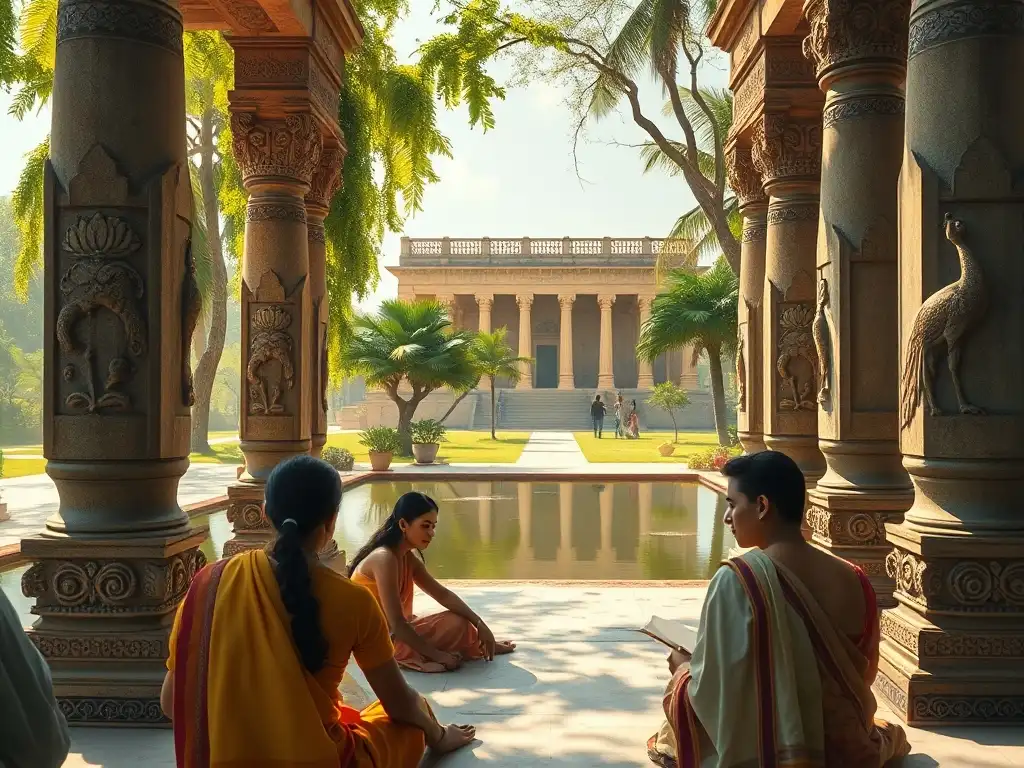
The philosophical teachings of ancient India are characterized by their depth and diversity. They encompass various schools of thought, each offering unique insights into fundamental questions about existence, morality, and the nature of knowledge. This section explores some of the core philosophical teachings that emerged from ancient Indian thought.
Concept of Dharma and Its Philosophical Implications
The concept of Dharma is central to ancient Indian philosophy, encompassing duty, righteousness, and moral order. It serves as a guiding principle for ethical behavior and social responsibility. Philosophers across different schools emphasized the significance of adhering to one’s Dharma as a means to achieve harmony within oneself and society.
Dharma is not a static concept; its interpretation varies depending on context, individual role, and societal norms. This adaptability highlights the dynamic nature of philosophical thought in ancient India, encouraging individuals to reflect on their responsibilities and the consequences of their actions. The exploration of Dharma also sparked discussions on justice, morality, and the relationship between the individual and the cosmos, contributing significantly to ethical philosophy.
The Nature of Reality: Advaita and Dvaita Philosophies
Ancient Indian philosophy is marked by rich dialogues on the nature of reality, particularly through the Advaita and Dvaita schools. Advaita, or non-dualism, articulated by Advaitha Acharya, posits that the ultimate reality is a singular, unified consciousness, where the individual soul (Atman) and the universal soul (Brahman) are one. This perspective encourages individuals to transcend illusions of separateness and recognize their intrinsic unity with the cosmos.
In contrast, Dvaita, or dualism, founded by Madhvacharya, emphasizes the distinction between the individual soul and the divine. This school advocates that the soul and God are eternally separate and that devotion (bhakti) to God is essential for spiritual liberation. The philosophical discourse between these schools illustrates the richness of thought in ancient India, as scholars engaged in profound debates about existence, consciousness, and the nature of divine reality.
The Role of Logic and Debate in Philosophical Discourse
Logic and debate were foundational elements of philosophical inquiry in ancient India. The Nyaya school, which focuses on logic and epistemology, played a critical role in shaping these discussions. Nyaya philosophers developed rigorous methods for argumentation, emphasizing the importance of sound reasoning and empirical evidence in philosophical discourse.
Debates were not merely academic exercises; they were essential for refining ideas and challenging assumptions. The practice of Vada (debate) allowed scholars to articulate and defend their views while critically engaging with opposing perspectives. This culture of intellectual exchange fostered a dynamic environment where philosophical ideas could evolve and adapt, leading to profound insights and contributions to the broader field of knowledge in ancient India. The legacy of this emphasis on logic and debate continues to influence contemporary philosophical thought.
The Influence of Ancient Indian Philosophical Teachings on Global Thought
The philosophical teachings originating from ancient Indian universities, particularly those like Nalanda and Takshashila, have played a pivotal role in shaping the intellectual landscape of not only India but also the global philosophical discourse. These teachings, which encompassed a wide range of subjects including logic, metaphysics, ethics, and epistemology, introduced concepts that resonate with various philosophical traditions worldwide. The profound insights of thinkers such as Adi Shankaracharya and Gautama Buddha traversed borders and influenced many cultures, leading to a rich tapestry of philosophical exchanges.
Ancient Indian philosophy emphasized the interconnectedness of all beings and the pursuit of knowledge as a means to attain liberation (moksha). This holistic approach encouraged a dialogue between various schools of thought, fostering a spirit of inquiry that transcended geographical boundaries. The texts produced by these thinkers were not merely academic; they were practical guides aimed at addressing the existential questions of life, thus attracting scholars from diverse backgrounds who sought wisdom and understanding.
Cross-Cultural Philosophical Exchanges
The ancient Indian universities served as vibrant centers of learning that attracted students and scholars from across Asia and beyond. The cross-cultural exchanges that took place within these institutions enriched the philosophical traditions of both India and other civilizations. For example, the interactions between Indian philosophers and those from Greece, Persia, and later, China, led to the synthesis of ideas that significantly impacted the development of various philosophical systems.
One notable example is the influence of Buddhist philosophy on Chinese thought. As Buddhism spread to China through the Silk Road, it brought with it concepts such as impermanence and the nature of suffering, which were deeply rooted in Indian philosophical discourse. Similarly, the teachings of the Upanishads and Vedanta found their way into the writings of early Islamic philosophers and later influenced the European Enlightenment thinkers. This exchange of ideas highlights the universal relevance of ancient Indian philosophical teachings and their ability to adapt and resonate with different cultural contexts.
The Impact on Modern Philosophy and Education
The legacy of ancient Indian philosophical teachings is not confined to historical discourse; it continues to shape modern philosophy and educational practices. Core tenets such as critical thinking, ethical reasoning, and the importance of experiential knowledge can be traced back to these ancient systems of thought. Modern educational frameworks increasingly recognize the value of integrating philosophical inquiry as a tool for developing holistic education.
Additionally, the emphasis on dialogue and debate in ancient Indian universities can be seen in contemporary pedagogical methods that encourage collaborative learning. The Socratic method, for example, shares similarities with the dialectical approach used in ancient Indian philosophical discussions. By fostering an environment of inquiry and exploration, modern education systems can draw inspiration from the rich traditions established by these ancient institutions.
Conclusion
Summary of Key Philosophical Contributions
The philosophical contributions of ancient Indian universities offer profound insights into the nature of reality, ethics, and the pursuit of knowledge. Key teachings include the concepts of karma and dharma, which explore the moral dimensions of human existence, and the idea of Brahman, which addresses the ultimate reality. These teachings not only provide a framework for understanding the self and the cosmos but also emphasize the importance of compassion and interconnectedness.
Furthermore, the emphasis on reason and logic in Indian philosophy has laid the groundwork for various fields of inquiry, influencing disciplines ranging from science to ethics. The works of philosophers such as Nagarjuna and Ramanuja continue to be studied and revered, highlighting their lasting relevance in contemporary philosophical discussions.
The Legacy of Ancient Indian Universities in Contemporary Thought
The legacy of ancient Indian universities extends beyond their historical context; it continues to inform contemporary thought and practice across various domains. The philosophical teachings of ancient India encourage a deeper understanding of the self, promote ethical living, and inspire a quest for knowledge that transcends cultural barriers.
In today's globalized world, where diverse philosophies intersect, the principles established by ancient Indian thinkers provide valuable perspectives on modern challenges. By embracing the wisdom of these teachings, individuals and societies can cultivate a more compassionate, thoughtful, and interconnected world, ensuring that the philosophical heritage of ancient India endures for future generations.
- Introduction to Ancient Indian Universities
- The Emergence of Philosophical Teachings in Ancient Indian Universities
- Major Ancient Indian Universities and Their Philosophical Teachings
- Core Philosophical Teachings of Ancient India
- The Influence of Ancient Indian Philosophical Teachings on Global Thought
- Conclusion
- What were the key philosophical teachings of ancient Indian universities?
- How did ancient Indian philosophy influence modern thought?
- Which universities were central to the development of philosophical teachings in ancient India?
- What role did religion play in ancient Indian philosophy?
- How can we study the philosophical teachings of ancient India today?
Frequently Asked Questions
What were the key philosophical teachings of ancient Indian universities?
Ancient Indian universities emphasized diverse philosophical traditions, including Vedanta, Buddhism, and Jainism, which shaped moral and ethical frameworks.
How did ancient Indian philosophy influence modern thought?
The philosophical teachings from ancient India laid the groundwork for various modern philosophical movements, promoting concepts such as non-violence and self-realization.
Which universities were central to the development of philosophical teachings in ancient India?
Notable institutions like Nalanda and Takshashila were pivotal in disseminating and developing philosophical teachings, attracting scholars from around the world.
What role did religion play in ancient Indian philosophy?
Religion was intricately tied to philosophical teachings, with many schools of thought intertwining spiritual practices and ethical living in their philosophies.
How can we study the philosophical teachings of ancient India today?
Modern scholars can explore texts, translations, and interpretations of ancient works, studying their impact and relevance in contemporary discussions on philosophy.
Final Reflection: Embracing the Wisdom of Ancient Indian Philosophy
The philosophical teachings of ancient India remain profoundly relevant in today's fast-paced world, where the quest for meaning and understanding is more critical than ever. As we navigate the complexities of modern life, the insights from these ancient universities remind us of the importance of introspection, ethical living, and the pursuit of knowledge. The timeless wisdom encapsulated in texts and teachings from this era continues to resonate, offering guidance and clarity in an increasingly chaotic environment.
The influence of ancient Indian philosophy extends far beyond historical significance; it shapes our cultural and social landscapes today. The principles of interconnectedness, mindfulness, and holistic understanding foster a deeper appreciation for life and relationships. As Mahatma Gandhi once said, Live as if you were to die tomorrow. Learn as if you were to live forever.
This perspective encourages us to embrace learning and personal growth, reflecting the core tenets of ancient Indian thought that emphasize the journey of self-discovery and the importance of ethical living.
As you reflect on the teachings explored in this article, I invite you to consider how these ancient philosophies can be woven into your daily life. Take a moment to pause, reflect, and integrate these timeless lessons into your own journey. Whether it's through meditation, ethical decision-making, or a commitment to lifelong learning, let the wisdom of ancient Indian universities inspire you to cultivate a more meaningful existence. The past holds the keys to a brighter future—embrace it.
Unleash Your Curiosity: Dive Deeper into Ancient Wisdom!
Thank you for taking the time to uncover the rich philosophical teachings of ancient Indian universities. You've gained insights into timeless knowledge that can inspire and guide modern thought. Now, let’s take the next steps to further enrich your understanding and appreciation of this profound heritage.
- Engage with your curiosity: Visit a local library or access reputable online resources to find original texts or insightful commentaries on ancient Indian philosophy.
- Join the conversation: Participate in local or online discussion groups to share insights and deepen your understanding with fellow enthusiasts.
- Share the knowledge: Write about your favorite teaching from this exploration on social media to inspire others to delve into this impactful legacy.
What philosophical concept resonates most with you, and how do you believe it can be applied to today's world?