
The Vedas and Their Impact on Later Indian Philosophies


Welcome to Ancient India History, where we delve into the rich tapestry of ancient Indian civilizations, exploring their profound cultural contributions and enduring legacies. In this journey, we invite you to uncover the impact of the Vedas on Indian philosophy, a cornerstone of thought that has shaped the spiritual landscape of India for centuries. What secrets do these ancient texts hold, and how have they influenced philosophical discourse throughout history? Join us as we unravel the intricate connections between the Vedas and the evolution of later Indian philosophies, igniting your curiosity to explore the depths of ancient wisdom.
- Introduction to the Vedas and Indian Philosophy
- Historical Context of the Vedas
- Core Philosophical Concepts in the Vedas
- Influence of the Vedas on Later Indian Philosophies
- Comparative Analysis of Vedic Influence
- The Legacy of the Vedas in Modern Indian Thought
- Conclusion
- Frequently Asked Questions
- Final Reflection: The Enduring Legacy of the Vedas on Indian Philosophy
- Unveil the Wisdom Within the Vedas!
Introduction to the Vedas and Indian Philosophy
The Vedas, often regarded as the oldest sacred texts of Hinduism, form the bedrock of ancient Indian spiritual and philosophical thought. Composed in Sanskrit between 1500 and 500 BCE, these texts encompass a vast array of hymns, rituals, and philosophical discourses that have shaped not only religious practices but also the very framework of Indian philosophy.
Understanding the Vedas is crucial for anyone interested in the evolution of Indian thought, as they provide insights into the metaphysical inquiries and ethical considerations that would later influence various philosophical schools. This article delves into the profound impact of the Vedas on Indian philosophy, tracing how their teachings and concepts laid the groundwork for subsequent intellectual movements and philosophical debates.
Overview of the Vedas
The Vedas consist of four primary texts: the Rigveda, Samaveda, Yajurveda, and Atharvaveda. Each of these texts serves a distinct purpose within the Vedic tradition:
- Rigveda: A collection of hymns dedicated to various deities, emphasizing cosmology, creation, and the human experience.
- Samaveda: Primarily a liturgical text, it consists of melodies and chants designed for rituals.
- Yajurveda: Focused on the procedural aspects of rituals, it provides instructions for performing sacrifices.
- Atharvaveda: A more eclectic text, it includes spells, charms, and philosophical reflections that address daily life and broader existential questions.
These texts collectively reflect the spiritual and intellectual milieu of ancient India, offering a glimpse into the values, beliefs, and societal norms of the time.
Importance of the Vedas in Ancient Indian Culture
The Vedas hold a central place in ancient Indian culture, influencing various aspects of life, including religion, philosophy, and social structure. Their teachings shaped the development of key concepts such as:
- Dharma: The moral and ethical duties individuals must follow, which is rooted in Vedic thought.
- Karma: The principle of cause and effect, emphasizing the consequences of actions on one's future existence, a concept deeply intertwined with Vedic philosophy.
- Ritual Practices: The Vedas introduced complex rituals that became foundational to Hindu worship, fostering a rich tradition of spiritual practice.
In addition to their religious significance, the Vedas sparked philosophical inquiry, leading to the emergence of various schools of thought that would explore fundamental questions about existence, consciousness, and the nature of the universe.
Purpose of the Article: Exploring the Impact of Vedas on Indian Philosophy
This article aims to systematically explore the impact of Vedas on Indian philosophy, examining how these ancient texts influenced subsequent philosophical developments. We will analyze key themes and concepts derived from the Vedas, illustrating their relevance to later philosophical schools, such as Vedanta, Samkhya, and Buddhism. By tracing this intellectual lineage, we hope to shed light on the enduring legacy of the Vedas in shaping the philosophical landscape of India, revealing their significance not only in ancient times but also in contemporary philosophical discourse.
Historical Context of the Vedas
Origin and Composition of the Vedas
The Vedas, a collection of ancient sacred texts, are foundational to understanding the spiritual and philosophical landscape of ancient India. Composed in Sanskrit, the Vedas are believed to have originated around 1500 BCE, during the early Vedic period. They are primarily divided into four collections:
- Rigveda: The oldest and most significant, consisting of hymns dedicated to various deities.
- Samaveda: Focused on melodies and chants, serving as a guide for Vedic rituals.
- Yajurveda: Comprising prose mantras, this text provides instructions for ritual sacrifices.
- Atharvaveda: A more diverse collection, incorporating hymns, spells, and incantations that address daily life and health.
The composition of the Vedas reflects a synthesis of various linguistic, cultural, and spiritual influences from the Indo-Aryan migrations into the Indian subcontinent. The oral tradition played a crucial role in the preservation and transmission of these texts, emphasizing memorization and recitation. Over time, the Vedas were codified into written form, but their roots remain deeply embedded in oral traditions.
Timeline of Vedic Literature Development
The development of Vedic literature can be segmented into distinct phases, each contributing to the evolution of Indian philosophy:
- Early Vedic Period (1500 - 1000 BCE):
- Emergence of the Rigveda.
- Formation of early religious practices and rituals.
- Later Vedic Period (1000 - 600 BCE):
- Composition of the Samaveda, Yajurveda, and Atharvaveda.
- Increased complexity in rituals and philosophical inquiry.
- Post-Vedic Period (600 - 300 BCE):
- Transition from Vedic to Upanishadic thought.
- Introduction of new concepts such as Brahman (universal soul) and Atman (individual soul).
This timeline highlights the progressive layering of philosophical thought, culminating in the profound ideas that would shape later Indian philosophies, including Buddhism and Jainism.
The Vedic period was marked by significant social and cultural developments that shaped the religious and philosophical landscape of ancient India.
- Societal Structure: The society was primarily agrarian and tribal, with a clear stratification based on the varna system (social classes):
- Brahmins: Priests and scholars responsible for religious rituals and preserving sacred knowledge.
- Kshatriyas: Warriors and rulers tasked with protecting the realm and upholding justice.
- Vaishyas: Merchants and farmers who contributed to the economy.
- Shudras: Laborers and service providers.
- Cultural Practices: Rituals, sacrifices, and communal gatherings were central to Vedic life, reflecting a deep connection to nature and the cosmos. The performance of yajnas (sacrificial rituals) was believed to maintain cosmic order and appease the deities.
- Philosophical Discourse: The Vedic texts laid the groundwork for philosophical exploration, addressing fundamental questions about existence, the nature of the divine, and the self. This discourse set the stage for the development of diverse schools of thought, including Vedanta and Samkhya, that would emerge in subsequent centuries.
The Vedas not only served as religious texts but also as catalysts for philosophical inquiry, influencing the trajectory of Indian thought and spirituality for millennia.
Core Philosophical Concepts in the Vedas
The Vedas, the oldest sacred texts of Hinduism, encapsulate a wealth of philosophical ideas that have significantly influenced later Indian philosophies. Central to Vedic thought are concepts that address the nature of reality, the self, and the universe, laying a foundational framework for subsequent philosophical developments. These texts encourage a dialogue between the material and spiritual worlds, emphasizing the interconnectedness of all existence.
Key Themes in Vedic Literature
Vedic literature encompasses several key themes that reflect the philosophical depth of these ancient texts.
-
Brahman and Atman:
One of the most profound ideas presented in the Vedas is the concept of Brahman, the ultimate reality, and Atman, the individual self. The relationship between Brahman and Atman is crucial for understanding the nature of existence. The phrase "Tat Tvam Asi" (That Thou Art) embodies this idea, suggesting that the individual soul is intrinsically connected to the universal spirit.
-
Rita:
The concept of Rita represents cosmic order and truth. It underscores the importance of maintaining harmony in the universe through ethical living and adherence to natural laws. This idea of cosmic order is foundational in later philosophical discourses, linking morality directly to the fabric of reality.
-
Unity of Existence:
The Vedas promote the idea that all beings are interconnected. This theme is reflected in the verses that advocate compassion and empathy toward all forms of life, laying the groundwork for later philosophies that explore the ethical implications of interdependence.
Concepts of Dharma, Karma, and Moksha
The Vedas also introduce pivotal concepts that are central to the understanding of Indian philosophy:
-
Dharma:
Dharma refers to the moral and ethical duties that govern individual conduct. The Vedic texts provide guidelines on how one should live in accordance with cosmic order, impacting later philosophical systems, such as Buddhism and Jainism, which also emphasize ethical behavior.
-
Karma:
The principle of Karma, meaning "action," posits that every action has consequences that affect an individual's future, both in this life and in future rebirths. This concept is crucial in later Indian philosophies and helps to explain the moral implications of one's choices.
-
Moksha:
Moksha, or liberation, is the ultimate goal of life according to Vedic philosophy. It represents the release from the cycle of birth and rebirth (samsara) and is attained through knowledge, meditation, and ethical living. The pursuit of Moksha has been a significant influence on various philosophical schools in India, shaping their metaphysical and ethical frameworks.
The Role of Rituals and Spiritual Practices
Rituals and spiritual practices, as prescribed in the Vedas, play a vital role in shaping the philosophical landscape of ancient India.
-
Yajna (Sacrifice):
The act of yajna, or ritual sacrifice, is a central theme in the Vedic texts. These rituals are seen as a means to maintain cosmic order and please the deities, illustrating the interconnectedness of spirituality and practical life.
-
Meditation and Contemplation:
The Vedas advocate for practices of meditation and contemplation as means to attain higher knowledge and realization of the self. These practices have been essential in the development of various philosophical schools, particularly in Advaita Vedanta, which emphasizes self-inquiry and the realization of one’s true nature.
-
Mantras and Sound:
The use of mantras, or sacred sounds, is another aspect of Vedic practices. The belief that sound has a profound spiritual impact reflects the importance of language and vibration in the pursuit of knowledge and enlightenment, influencing later philosophical thought on the nature of reality.
The impact of Vedas on Indian philosophy is profound and multifaceted, providing a foundational framework that has shaped ethical conduct, metaphysical inquiries, and spiritual practices throughout ancient Indian history. The philosophical concepts introduced in the Vedas continue to resonate in contemporary discussions on morality, existence, and the nature of the divine.
Influence of the Vedas on Later Indian Philosophies
Transition from Vedic to Post-Vedic Thought
The transition from Vedic to post-Vedic thought marks a pivotal evolution in Indian philosophy, wherein the foundational principles laid out in the Vedas began to be reinterpreted and expanded upon. The Vedas, primarily composed between 1500 and 500 BCE, encapsulate a wealth of knowledge, rituals, and philosophical insights. However, as society evolved and faced new existential questions, the philosophical landscape shifted significantly.
- Shift in Focus: The early Vedic texts predominantly emphasize ritualistic practices and the worship of deities. In contrast, post-Vedic philosophy began to explore more abstract concepts such as the nature of reality (Brahman), the self (Atman), and the ultimate purpose of life. This shift can be attributed to the changing socio-political landscape, where the need for a more personal and experiential understanding of spirituality took precedence.
- Emergence of New Texts: During this period, new texts emerged, most notably the Upanishads, which serve as a bridge between the ritualistic nature of the Vedas and the philosophical inquiries of later schools of thought. The Upanishads delve into metaphysical questions and introduce concepts such as moksha (liberation) and the unity of Atman and Brahman, thereby laying the groundwork for many later philosophical schools.
- Influence of Renounced Traditions: The rise of ascetic practices and the renunciation movement also played a crucial role in this transition. Thinkers began to question the efficacy of ritualistic practices, advocating for direct experiential knowledge and self-realization. This led to a more introspective approach to philosophy, diverging from the Vedic tradition's emphasis on external rituals.
The Vedas and the Rise of Upanishadic Philosophy
The Upanishads, composed between 800 and 200 BCE, represent a significant philosophical advancement that emerged from the Vedic tradition. The impact of the Vedas on Upanishadic philosophy can be summarized in several key areas:
- Philosophical Foundations: The concept of Brahman, the ultimate reality, and Atman, the individual self, is derived from Vedic thought. The Upanishads elaborate on these concepts, proposing that understanding the relationship between the two is essential for achieving spiritual liberation.
- Metaphysical Inquiry: The Upanishads shift the focus from external rituals to internal contemplation and philosophical inquiry. They encourage practitioners to seek knowledge through meditation and self-reflection, marking a departure from the ritualistic practices emphasized in the Vedas.
- Unity of Existence: The notion of the interconnectedness of all beings and the belief that everything is a manifestation of the same ultimate reality can be traced back to Vedic ideas. The Upanishads articulate this unity through various metaphors, further influencing later philosophical schools such as Advaita Vedanta.
The philosophical discourse initiated by the Vedas significantly impacted the development of Jainism and Buddhism. While these traditions share some fundamental concepts with Vedic philosophy, they also exhibit profound divergences.
- Shared Concepts:
- Karma and Rebirth: Both Jainism and Buddhism adopted the Vedic concept of karma, positing that one's actions directly influence future rebirths. This alignment showcases the Vedas' lasting impact on spiritual thought within ancient Indian traditions.
- Meditation and Self-Realization: Like the Upanishads, Jainism and Buddhism emphasize the importance of meditation and personal experience in the pursuit of truth and liberation.
- Divergences:
- View of the Self: While the Vedas and Upanishads advocate for the unity of Atman and Brahman, Jainism and Buddhism reject the notion of a permanent self (Atman). Instead, they teach the concept of anatta (non-self) in Buddhism and the multiplicity of souls in Jainism, leading to distinct metaphysical frameworks.
- Approach to Rituals: Jainism and Buddhism critique the ritualistic practices prevalent in Vedic traditions, focusing instead on ethical conduct and personal spiritual development. This divergence highlights a significant philosophical shift influenced by the Vedas but ultimately seeking to transcend them.
The legacy of the Vedas is evident in the foundational philosophies of Jainism and Buddhism, illustrating both continuity and transformation within Indian philosophical thought.
Comparative Analysis of Vedic Influence
Vedic Philosophy vs. Classical Indian Philosophies
Vedic philosophy, rooted in the sacred texts known as the Vedas, forms the foundation of many philosophical schools in India. The Vedas, comprising the Rigveda, Samaveda, Yajurveda, and Atharvaveda, encapsulate a worldview that emphasizes cosmology, metaphysics, ethics, and rituals. In contrast, classical Indian philosophies such as Samkhya, Yoga, and Nyaya evolved later, refining and sometimes challenging the original Vedic concepts.
Key Differences:
-
Epistemology:
Vedic philosophy primarily relies on revelation (śruti) as the source of knowledge, whereas classical philosophies often incorporate pratyakṣa (direct perception), anumāna (inference), and upamāna (comparison) as valid means of knowledge.
-
Ontology:
Vedic texts focus on the concept of Brahman, the ultimate reality, and the interconnectedness of all beings. In contrast, schools like Samkhya introduce the dualistic notion of purusha (consciousness) and prakriti (matter), presenting a more segmented view of existence.
-
Ethics and Morality:
Vedic texts emphasize dharma (righteousness) as a guiding principle, closely tied to ritualistic practices. Classical philosophies, particularly Nyaya, explore the concepts of right and wrong through logical reasoning and debate, often separating ethics from ritual.
The evolution from Vedic to classical Indian philosophies illustrates a significant shift in thought, where the foundational ideas of the Vedas provided a launchpad for deeper analytical exploration and philosophical discourse.
The Role of Vedic Thought in the Development of Vedanta
Vedanta is one of the six orthodox schools of Indian philosophy, primarily derived from the concluding parts of the Vedas, known as the Upanishads. This school of thought emphasizes the nature of reality, self, and the ultimate purpose of life. The impact of Vedic thought on Vedanta can be understood through several key aspects:
-
Brahman and Atman:
The Vedas introduce the concept of Brahman, the ultimate reality, which is intricately linked to Atman, the inner self. Vedanta further develops this idea, asserting that realizing the identity of Atman with Brahman is the essence of liberation (moksha).
-
Philosophical Interpretation:
The Upanishads, which are part of the Vedic corpus, provide profound insights into metaphysics and spirituality. Philosophers like Adi Shankaracharya interpreted these texts, leading to the Advaita (non-dualism) school of Vedanta, which posits that true knowledge transcends the dualistic perception of the universe.
-
Ethical Implications:
Vedanta stresses the importance of ethical living and self-discipline, drawing from the Vedic emphasis on dharma. The teachings underscore that understanding one's true nature leads to ethical actions and harmony with the cosmos.
The development of Vedanta showcases how Vedic thought not only influenced a specific philosophical tradition but also molded the spiritual landscape of Indian philosophy, emphasizing self-realization and unity with the cosmos.
Influence on Other Indian Philosophical Schools: Sankhya, Yoga, and Nyaya
The Vedas have profoundly influenced various Indian philosophical schools, shaping their foundational concepts and methodologies. Here’s how the Vedic tradition impacted Sankhya, Yoga, and Nyaya:
-
Sankhya:
Sankhya philosophy, founded by Kapila, presents a dualistic approach to existence, distinguishing between purusha (consciousness) and prakriti (matter). While Vedic thought emphasizes a singular, undivided reality in Brahman, Sankhya introduces a more analytical framework that categorizes reality into distinct principles. However, it retains the Vedic notion of liberation from the cycle of samsara (rebirth).
-
Yoga:
The Yoga school, particularly as articulated in the Yoga Sutras of Patanjali, draws heavily from Vedic concepts of meditation and self-discipline. The practice of yoga is seen as a means to realize the Vedic ideal of unity with the cosmic order. The emphasis on inner experience in Vedic texts aligns with the experiential focus of Yoga, promoting practices that lead to self-awareness and enlightenment.
-
Nyaya:
The Nyaya school, which focuses on logic and epistemology, incorporates Vedic authority as a valid source of knowledge while developing a rigorous framework for reasoning. Nyaya philosophers utilized Vedic texts to establish their arguments, showcasing the Vedas' role as foundational to Indian academic discourse. The analytical methods employed by Nyaya also reflect a shift from Vedic mysticism to a more systematic approach to knowledge.
The impact of the Vedas on Indian philosophy is profound and multifaceted, influencing a diverse range of schools and shaping the intellectual landscape of ancient India. Each philosophical tradition, while drawing from the Vedic corpus, presents unique interpretations and applications of these foundational ideas, enriching the tapestry of Indian thought.
The Legacy of the Vedas in Modern Indian Thought

The Vedas, as the oldest sacred texts of India, have significantly shaped the trajectory of Indian thought and philosophy. Their legacy extends far beyond ancient times, influencing various philosophical schools and movements that emerged throughout Indian history. This section delves into how the foundational ideas presented in the Vedas continue to resonate in modern Indian thought, often bridging the ancient with the contemporary.
Continuation of Vedic Ideas in Contemporary Philosophy
Modern Indian philosophy has not only preserved but also evolved the concepts found in the Vedas. Key themes such as Dharma (duty/righteousness), Karma (action), and Moksha (liberation) are central to various philosophical discourses today.
- Dharma: The notion of ethical duty derived from the Vedas remains vital in contemporary discussions around morality and ethics. Thinkers like Mahatma Gandhi drew heavily from Vedic texts to frame their ideas of non-violence and social justice.
- Karma: The principle of Karma has found its way into modern psychology and self-help philosophies, emphasizing personal responsibility and the consequences of one's actions.
- Moksha: The pursuit of spiritual liberation still drives many contemporary philosophical inquiries, prompting debates about the meaning of existence and the self.
Moreover, contemporary philosophers and scholars often reference the Vedas to critique or refine existing philosophical frameworks, demonstrating their enduring relevance in addressing modern dilemmas.
Vedas and Their Role in Modern Spiritual Movements
The Vedas have also played a crucial role in shaping various modern spiritual movements both within India and globally. The resurgence of interest in Vedic texts can be attributed to:
- Hindu Reform Movements: Figures like Swami Vivekananda and Aurobindo Ghose emphasized the importance of Vedic teachings, advocating for a return to spiritual roots while adapting them to modern sensibilities.
- New Age Spirituality: Many contemporary spiritual movements, particularly those influenced by the West, draw upon Vedic concepts such as meditation, yoga, and holistic living. These concepts have been integrated into global wellness practices, demonstrating the Vedas' impact beyond traditional boundaries.
- Interfaith Dialogues: The Vedic emphasis on universal truths and the interconnectedness of all beings has fostered dialogues among various faiths, promoting a more inclusive approach to spirituality.
The teachings of the Vedas continue to inspire spiritual seekers, providing a framework for understanding the self and the universe in a rapidly changing world.
The Impact of Vedas on Indian Nationalism and Identity
The revival of Vedic thought has profoundly influenced Indian nationalism and cultural identity, particularly during the colonial period and in the post-independence era. The following aspects highlight this impact:
- Cultural Renaissance: The late 19th and early 20th centuries saw a resurgence of interest in Vedic literature, which was viewed as a source of pride and cultural identity. Leaders such as Bal Gangadhar Tilak emphasized the Vedas as a symbol of India's ancient wisdom in the fight against colonial oppression.
- Hindutva Movement: The Vedas have been invoked in the context of Hindutva, a movement aimed at promoting Hindu culture and identity. The emphasis on Vedic principles has been used to assert a narrative of historical continuity and cultural resilience.
- Education and Literature: The incorporation of Vedic studies into educational curricula and the production of literature inspired by Vedic themes have further cemented their role in shaping national identity and collective consciousness.
The impact of the Vedas on Indian philosophy is profound and multifaceted, influencing not only philosophical thought but also spiritual practices and national identity. The Vedas continue to serve as a wellspring of wisdom, guiding contemporary discussions on ethics, spirituality, and culture. Their enduring legacy is a testament to their foundational role in the tapestry of Indian civilization.
Conclusion
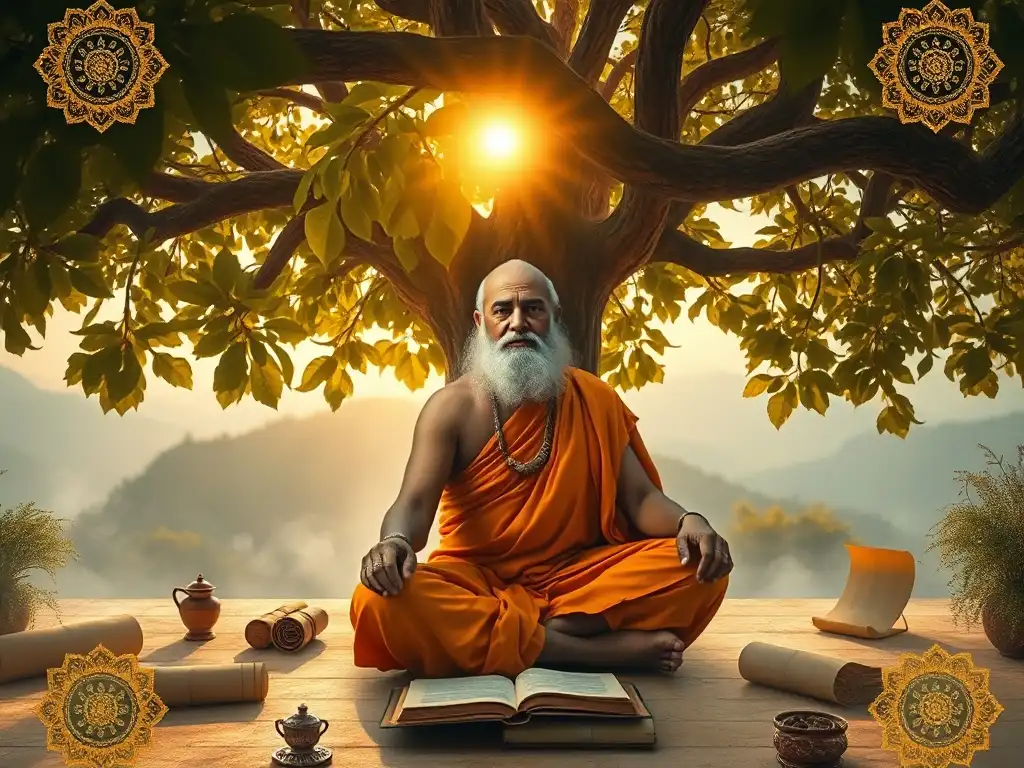
Summary of the Vedic Impact on Indian Philosophy
The Vedas, comprising the Rigveda, Samaveda, Yajurveda, and Atharvaveda, serve as the foundational texts of ancient Indian philosophy. Their impact on later philosophical developments is profound and multifaceted. Central to Vedic thought is the concept of Brahman, the ultimate reality or cosmic spirit, which later influenced the philosophical discourse on metaphysics and existence.
- Philosophical Themes:
- Ontology: The Vedas introduce the idea of a supreme reality, laying the groundwork for later discussions in schools such as Vedanta.
- Epistemology: The methods of knowledge acquisition presented in the Vedas, through intuition and revelation, were pivotal in shaping subsequent philosophical inquiries.
- Influence on Schools of Thought:
- Vedanta: The philosophical interpretations of the Upanishads, which are part of the Vedic literature, formed the basis for Vedanta philosophy, emphasizing non-dualism (Advaita) and the nature of the self (Atman).
- Samkhya: The dualistic approach to reality found in Samkhya philosophy also draws from Vedic concepts, particularly concerning the distinction between consciousness and matter.
- Ethical and Moral Framework:
- The Vedas set forth principles of Dharma (righteousness), which became a cornerstone of Indian ethical philosophy. This concept influenced later texts such as the Mahabharata and the Manusmriti, embedding moral duties within the framework of societal roles.
The Vedas not only laid the philosophical groundwork for subsequent Indian thought but also influenced the moral and ethical frameworks that continue to resonate in contemporary Indian culture.
Final Thoughts on the Relevance of Vedic Teachings Today
The teachings of the Vedas remain relevant in the modern context, offering insights into various aspects of life, spirituality, and ethics. Their emphasis on self-realization and understanding the nature of reality continues to inspire philosophical inquiry and personal exploration.
- Contemporary Spiritual Movements: Modern spiritual practices, including yoga and meditation, often draw upon Vedic principles, emphasizing inner peace and self-awareness.
- Cultural Significance: Vedic literature continues to inform cultural practices, rituals, and traditions in India, reflecting a continuity of thought that bridges ancient wisdom with contemporary life.
The impact of the Vedas on Indian philosophy is not merely historical but continues to shape spiritual and philosophical discourse today. Their teachings encourage individuals to explore profound questions about existence, purpose, and the nature of the universe, affirming their enduring legacy in both academic and spiritual realms.
Frequently Asked Questions
What are the Vedas?
The Vedas are the oldest sacred texts of Hinduism, composed in ancient Sanskrit. They consist of four main texts: Rigveda, Samaveda, Yajurveda, and Atharvaveda.
How did the Vedas influence Indian philosophy?
The Vedas laid the foundational concepts of dharma, karma, and moksha, which greatly shaped later Indian philosophies such as Vedanta and Samkhya.
What is the significance of the Vedic texts in cultural practices?
The Vedic texts provide insights into ancient rituals, sacrifices, and the social order, which were integral to the cultural practices of ancient Indian civilizations.
How did the Vedas contribute to the development of spiritual thought in India?
The Vedas introduced profound ideas about the nature of reality, the self, and the universe, influencing various schools of thought and spiritual practices in Indian philosophy.
Are the Vedas still relevant in modern times?
Yes, the Vedas continue to play a vital role in contemporary Hindu philosophy, guiding spiritual practices and influencing modern interpretations of Indian culture and thought.
Final Reflection: The Enduring Legacy of the Vedas on Indian Philosophy
The impact of the Vedas on Indian philosophy is not merely a historical footnote; it is a living, breathing force that continues to shape our understanding of existence, ethics, and spirituality today. As we navigate the complexities of modern life, the teachings enshrined in these ancient texts resonate with profound relevance, urging us to seek wisdom beyond the confines of contemporary thought. The Vedas remind us that philosophy is not static but a dynamic dialogue that evolves with time, inviting us to engage with our roots while forging new paths.
The Vedas have profoundly influenced the cultural and social landscape of India, weaving their way into the very fabric of our identity. Their teachings have inspired countless thinkers, artists, and spiritual leaders, fostering a rich tapestry of philosophical inquiry that transcends generations. As we reflect on this enduring legacy, we are reminded of the words of Swami Vivekananda: The Vedas are the foundation of all knowledge.
This acknowledgment of the Vedas as a source of wisdom underscores their pivotal role in shaping not just individual beliefs but also collective consciousness, guiding us in our quest for truth and understanding.
As we conclude this exploration of the Vedas and their impact on Indian philosophy, I invite you to reflect on how these ancient teachings can inform your own life. Consider how the principles derived from the Vedas can inspire you to cultivate a deeper understanding of yourself and the world around you. Embrace the opportunity to engage with these timeless texts, allowing their insights to illuminate your path forward. Let us honor the legacy of the Vedas by integrating their wisdom into our daily lives, fostering a culture of inquiry, compassion, and enlightenment for ourselves and future generations.
Unveil the Wisdom Within the Vedas!
Thank you for taking the time to explore the profound influence of the Vedas on Indian philosophies. You've uncovered the layers of knowledge that have shaped spiritual thought and practice for centuries. Now, it’s your turn to take action and deepen your understanding!
Here are some practical steps you can take right now:
- Dive deeper: Read a Vedic text! Start with the **Rigveda** or the **Upanishads** to experience their original teachings firsthand.
- Join a discussion group: Find or start a local or online community focused on Vedic philosophies to exchange insights, interpretations, and perspectives.
- Share your insights: Encourage friends and family to explore the Vedas by sharing your newfound knowledge on social media or within your circles.
Which aspects of Vedic philosophy resonate with you the most, and in what ways do you believe they can be applied to contemporary life?