
The Vedas and Music: The Soundscapes of Ancient India

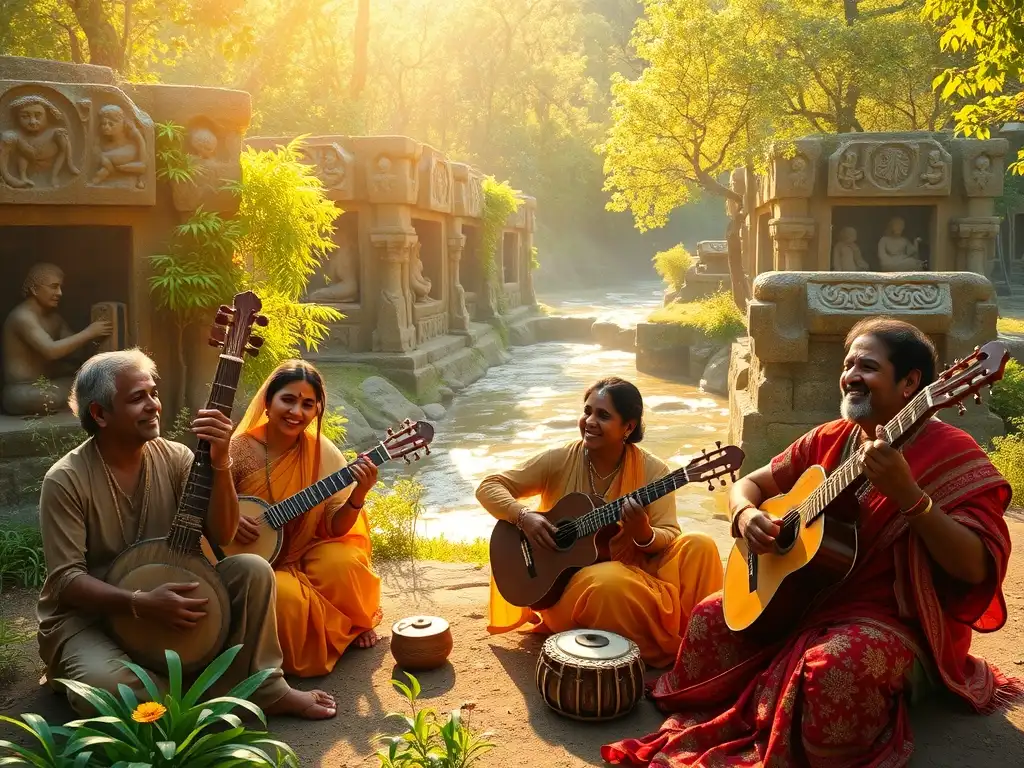
Welcome to Ancient India History, where we embark on a fascinating journey through the vibrant tapestry of India's past. Here, we delve into the rich and diverse history, culture, and contributions of ancient Indian civilizations, from the enigmatic Indus Valley to the illustrious Gupta Empire.
In our featured article, "The Vedas and Music: The Soundscapes of Ancient India," we unravel the captivating ancient Indian music history—an exploration that not only resonates with melodies of the past but also reveals profound insights into the spiritual and cultural ethos of the time. Join us as we uncover the harmonious threads that weave through the epic literature of ancient India, sparking your curiosity and deepening your appreciation for this remarkable heritage.
Introduction to Ancient Indian Music History
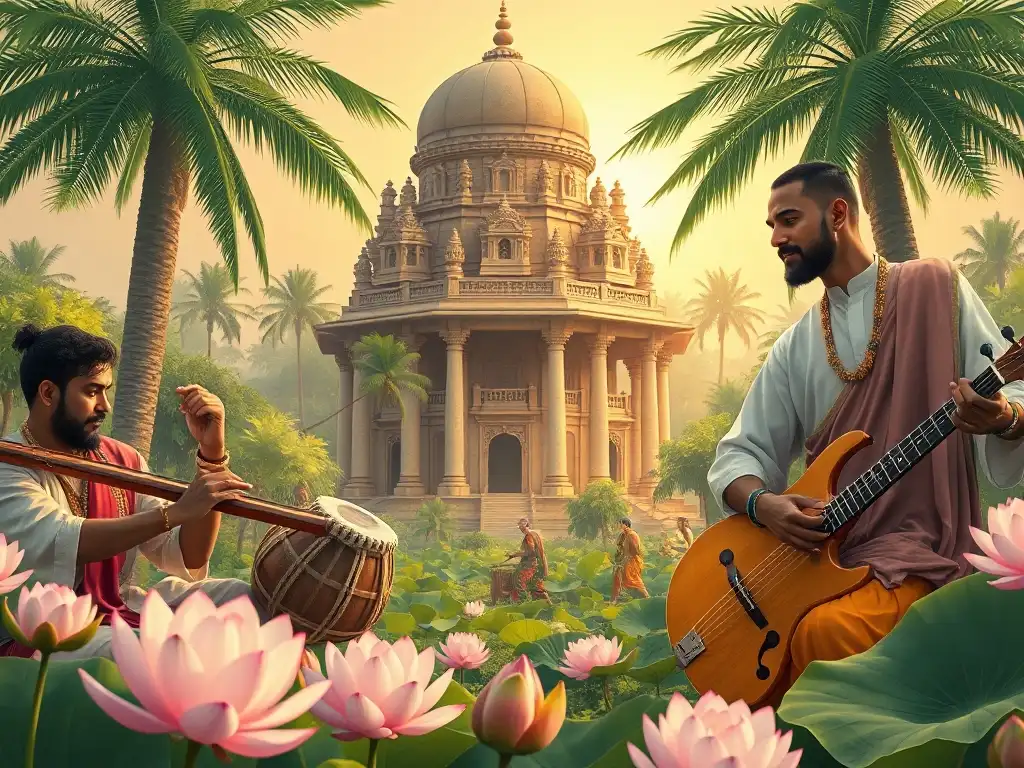
The journey through ancient Indian music history is a fascinating exploration of the intricate relationship between sound, spirituality, and cultural expression in one of the world's oldest civilizations. Music in ancient India was not merely an art form; it was intricately woven into the very fabric of society, manifesting in rituals, ceremonies, and everyday life. The Vedas, the oldest sacred texts of Hinduism, serve as a crucial source for understanding the musical traditions that flourished in ancient India.
These texts provide insights into the musical practices, instruments, and the philosophical underpinnings of music during that era. By examining the Vedas, we can appreciate how ancient Indian music not only reflected the spiritual and ritualistic practices of the time but also contributed to the cultural identity that resonates even in contemporary Indian music.
The Role of the Vedas in Ancient Indian Music
Overview of the Vedas
The Vedas, comprising four main texts—Rigveda, Samaveda, Yajurveda, and Atharvaveda—are revered as the foundational scriptures of Hindu philosophy and spirituality. Each Veda contains hymns, rituals, and philosophical discourses, but it is the Samaveda that holds particular significance in the context of music. This Veda is often referred to as the "Veda of Melodies" and contains numerous chants and melodies that were integral to Vedic rituals. The Samaveda’s structure emphasizes the melodic aspects of the hymns, highlighting the connection between music and spirituality.
The Vedas not only catalog the musical forms of their time but also reflect the evolution of musical theory. Notably, they introduce various musical instruments such as the veena, mridangam, and flute, emphasizing their roles in ritualistic practices. The intricate use of rhythm and meter in Vedic verses laid the groundwork for later developments in Indian classical music.
The Significance of Music in Vedic Texts
Music in the Vedic texts is depicted as a divine force, capable of invoking the gods and facilitating communication between the earthly and celestial realms. The hymns were often sung during sacrifices and rituals, where music served as a medium for worship and devotion. This underscores the profound belief that music had the power to transcend the ordinary, connecting practitioners with the divine.
Moreover, the Vedas articulate the philosophical dimensions of music, positing it as a tool for meditation and spiritual upliftment. The rhythmic patterns and melodic structures were designed not only to please the deities but also to foster a sense of harmony within the practitioners. This dual role of music—as both a spiritual practice and an artistic expression—highlights its critical place in ancient Indian culture.
The Vedas illuminate the rich tapestry of ancient Indian music history, providing a window into the soundscapes that shaped the spiritual and cultural identity of ancient India.
Understanding the Foundations of Vedic Music
Vedic music serves as a cornerstone of ancient Indian music history, deeply intertwined with the spiritual and cultural practices of the time. The Vedas, composed around 1500 to 500 BCE, are a collection of hymns, chants, and philosophical texts that form the foundation of Hindu thought and ritual. Music in the Vedic period was not merely an art form; it was considered a means to connect with the divine. The melodic structures and rhythmic patterns found in Vedic hymns were believed to have cosmic significance, influencing both the physical and spiritual realms.
At the heart of Vedic music is the concept of Nada, or sound, which is believed to be a manifestation of the divine. The ancient texts describe specific intonations and pitches, emphasizing the importance of pronunciation and modulation in chanting. This meticulous attention to sound reflects a profound understanding of the relationship between music, language, and spirituality, illustrating how Vedic music was a vehicle for both worship and communication with the divine.
Key Elements of Ancient Indian Music
The key elements of ancient Indian music, particularly as seen in Vedic traditions, can be categorized into melody, rhythm, and lyrics.
- Melody (Raga): The melodic framework in Vedic music is derived from the concept of Raga, which comprises a specific set of notes and associated emotional expressions. Each Raga is believed to evoke particular feelings and is often tied to specific times of day or seasons.
- Rhythm (Tala): Tala refers to the rhythmic cycle that governs the timing of musical phrases. The Vedas outline various rhythmic patterns that are integral to both the chanting of hymns and the performance of music.
- Lyrics: The texts of the Vedas themselves are composed of rich poetic imagery, often invoking deities, nature, and philosophical concepts. The lyrical content is just as important as the sound, as it carries the spiritual and cultural narratives of ancient India.
Understanding these elements is crucial for appreciating how Vedic music laid the groundwork for later developments in Indian classical music.
Instruments Mentioned in the Vedas
The Vedas reference several musical instruments that played a significant role in the musical practices of ancient India. Some of the notable instruments include:
- Vina: A stringed instrument that is often depicted in Vedic literature as a central tool for musicians, symbolizing the harmony of sound.
- Mrdanga: An ancient percussion instrument similar to the modern-day tabla, used in ritualistic contexts to maintain rhythm.
- Bansuri: A bamboo flute that is mentioned in various texts, known for its soulful and melodious sound, often associated with pastoral themes.
- Damaru: A small drum traditionally used in meditation and rituals, embodying the rhythm of the universe.
These instruments not only contributed to the musical landscape of the time but also held symbolic meanings, facilitating a connection between the material and spiritual worlds.
Theoretical Concepts of Raga and Tala
The theoretical frameworks of Raga and Tala are foundational to ancient Indian music, establishing principles that continue to influence music today.
- Raga: Each Raga is characterized by a specific set of pitches, which can be arranged in ascending and descending patterns. The emotional essence of a Raga is integral; for example, Raga Yaman evokes feelings of romance and longing, while Raga Bhimpalasi expresses introspection and melancholy. The Vedas provide insights into the emotional and seasonal associations of various Ragas, highlighting their role in rituals and ceremonies.
- Tala: Tala is a system of rhythmic cycles that dictates the timing and structure of musical compositions. Each Tala consists of a predetermined number of beats, and variations in these beats create complex rhythmic patterns that enhance the musical experience. The Vedic texts elaborate on various Tala systems, emphasizing their importance in maintaining the integrity of musical performance.
Together, Raga and Tala create a rich tapestry of sound that is both dynamic and deeply connected to the spiritual practices of ancient India.
The Connection Between Vedic Hymns and Musical Practices
The connection between Vedic hymns and musical practices is profound, as music was an integral component of spiritual rituals and communal gatherings. Vedic hymns were not only recited but also sung, creating a melodic experience that enhanced the devotional atmosphere. The act of singing these hymns was considered a form of worship, believed to invoke divine blessings and cosmic order.
The Use of Chanting and Recitation
Chanting and recitation of Vedic hymns were essential practices within Vedic rituals. The precise pronunciation and intonation were crucial, as it was believed that any deviation could disrupt the intended spiritual outcome.
- Chanting: The rhythmic and melodic chanting of hymns created an immersive experience, fostering a sense of community among participants. This practice was often accompanied by symbolic gestures and rituals, reinforcing the connection between sound and spirituality.
- Recitation: The recitation of hymns was not merely an oral tradition; it served as a means of preserving knowledge and cultural heritage. The oral transmission of these hymns ensured that the meanings and musical nuances were passed down through generations, forming a continuous thread in India's musical history.
Musical Forms and Their Spiritual Significance
Musical forms emerging from Vedic traditions were deeply rooted in spiritual significance.
- Devotional Songs: Many hymns evolved into devotional songs, known as bhajans, which are still prevalent in modern practices. These songs often focus on personal devotion to deities, encapsulating the essence of the Vedic spirit in contemporary worship.
- Ritualistic Music: Specific musical forms were designed for rituals, enhancing the sacred atmosphere and facilitating a connection to the divine. The Vedic texts describe how music played a role in ceremonies such as yajnas (sacrificial rituals) and festivals, fostering a sense of unity among participants.
The spiritual significance of these musical forms underscores the belief that sound has the power to influence the cosmos, an idea that remains central to the understanding of ancient Indian music history.
Rituals and Their Musical Components
Rituals in ancient India were often accompanied by music, forming an inseparable bond between sound and ceremony.
- Ceremonial Music: The Vedas outline specific musical components that were essential for various rituals, including the use of particular Ragas and Talas to align with the spiritual intentions of the ceremony. This coordination of music and ritual created a harmonious atmosphere conducive to divine communication.
- Instrumental Accompaniment: Instruments mentioned in the Vedas were integral to these rituals, providing a sonic backdrop that enhanced the sacred experience. The interplay between vocal chants and instrumental music allowed for a dynamic expression of spirituality.
In essence, the musical components of Vedic rituals contributed to a holistic experience, where sound, emotion, and spirituality converged, shaping the ancient Indian music history that resonates through the ages.
Evolution of Music Beyond the Vedas
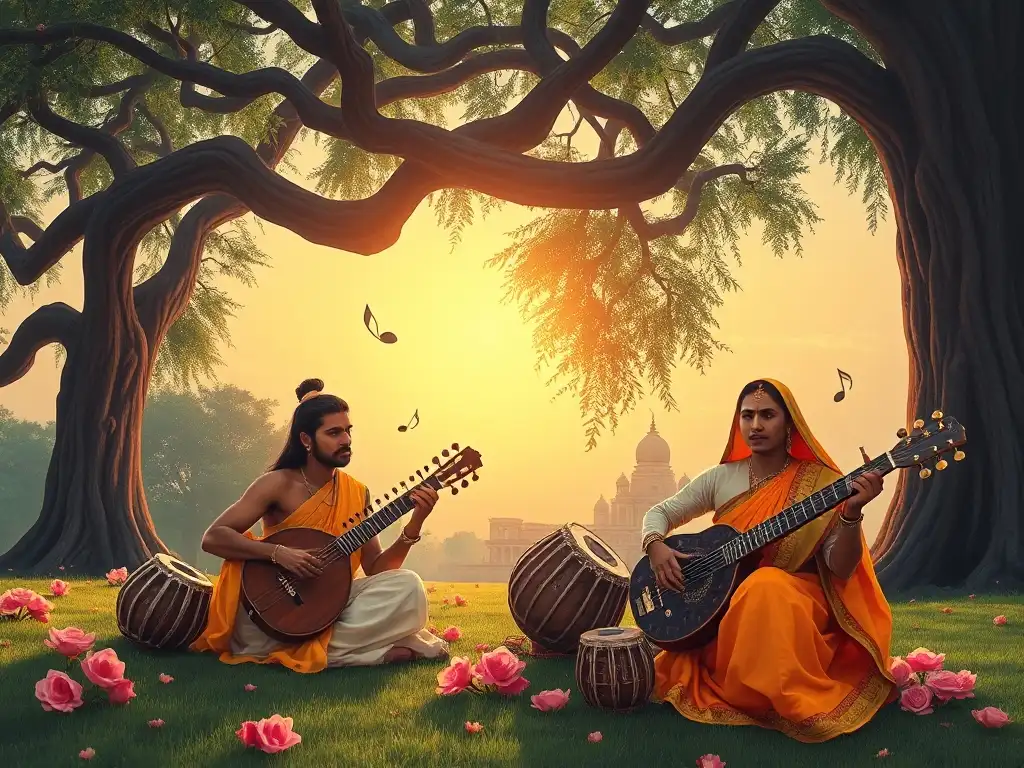
The evolution of music in ancient India extends far beyond the Vedic period, with significant transformations occurring as society progressed. While the Vedas, particularly the Samaveda, laid the foundation for musical development by incorporating chants and melodies into ritual practices, the subsequent eras saw the diversification and refinement of musical forms. As Hindu society evolved, so too did its musical expressions, leading to the emergence of various genres and styles that would eventually culminate in the classical traditions of Indian music we recognize today.
During the post-Vedic period, music began to intertwine closely with the arts, particularly dance and drama. The Natya Shastra, attributed to Bharata Muni, served as a crucial text that codified the principles of performance arts, including music. This text not only detailed the technical aspects of music but also emphasized the emotional and spiritual dimensions of performance, further enriching the musical landscape of ancient India.
Transition from Vedic Music to Classical Traditions
The transition from Vedic music to classical traditions was characterized by a gradual shift from purely ritualistic functions to more diverse aesthetic expressions. The early Vedic chants were primarily devotional and ceremonial, utilizing simple melodic structures. However, as musical practices evolved, more sophisticated forms began to emerge, incorporating intricate rhythms and scales.
By the time of the Gupta Empire (approximately 320 to 550 CE), the foundations of the two major classical music traditions—Hindustani (North Indian) and Carnatic (South Indian)—were being established. The elaboration of ragas and talas became prominent, reflecting a deeper understanding of musical theory and its emotional impact. This transition highlights the dynamic nature of ancient Indian music, which adapted to the cultural and spiritual needs of the society at the time.
Influence of Vedic Music on Later Indian Music Forms
Vedic music significantly influenced the development of later Indian music forms in several ways. The concept of 'raga', a melodic framework that became central to Indian classical music, has its roots in the melodic structures found in the Samaveda. The use of specific ragas for different times of the day and seasons is a practice that traces back to these ancient chants.
Moreover, the rhythmic patterns established during the Vedic period laid the groundwork for the complex talas that characterize both Hindustani and Carnatic music. The notion of music as a means of spiritual connection, which was prevalent in Vedic practices, continued to resonate in later musical traditions, where music was often seen as a vehicle for devotion and meditation.
Notable Historical Figures in Ancient Indian Music
Several figures from ancient Indian history played pivotal roles in shaping the music landscape. One such figure is Bharata Muni, whose Natya Shastra is foundational for understanding the relationship between music, dance, and drama in ancient India. His work not only systematized the technical aspects of music but also highlighted its emotional and spiritual significance.
Another crucial figure is Tansen, a legendary musician of the Mughal era, known for his mastery of ragas and his ability to evoke emotions through music. Tansen is often credited with popularizing various musical forms and integrating them into the courtly culture of his time. His contributions established a legacy that influenced generations of musicians and composers.
The Impact of Ancient Indian Music on Culture and Society
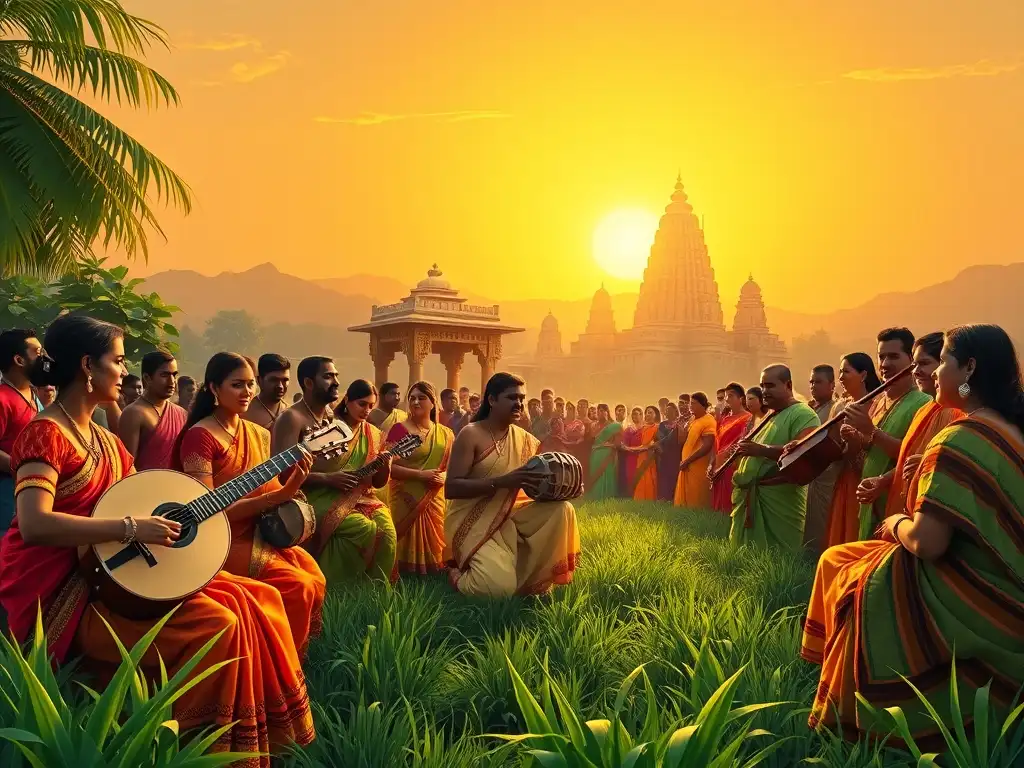
Ancient Indian music played a vital role in shaping the cultural and societal framework of Indian civilization. Music was not merely entertainment; it served as a means of communication and expression, reflecting the values, beliefs, and practices of the time.
Music as a Tool for Social Cohesion
Music acted as a unifying force within ancient Indian society, transcending regional and linguistic barriers. It facilitated communal participation in rituals, festivals, and gatherings, fostering a sense of belonging and identity among diverse groups. The communal singing of Vedic hymns during sacrifices and celebrations exemplifies how music brought people together, strengthening social bonds.
Moreover, music served as a vehicle for storytelling and the transmission of cultural narratives, reinforcing collective memory and shared traditions. Through songs and chants, important historical events, moral lessons, and spiritual teachings were passed down generations, nurturing a cohesive cultural identity.
The Role of Music in Festivals and Ceremonies
Festivals and ceremonies in ancient India were often marked by elaborate musical performances. Music played a central role in rituals, enhancing the spiritual atmosphere and facilitating devotees' connection with the divine. The chanting of Vedic hymns during sacrifices and celebrations exemplified music’s sacred status.
Different types of music were associated with various occasions, from joyous celebrations to somber rituals. Festivals, such as Diwali and Holi, incorporated music and dance as essential elements, reflecting the vibrancy of ancient Indian culture. This integration of music in communal festivities not only enriched the celebratory experience but also reinforced cultural values and traditions.
Preservation of Ancient Music Traditions in Modern India
The preservation of ancient music traditions remains an integral part of India's cultural heritage. Many classical forms of music, including Hindustani and Carnatic, continue to thrive, drawing from the rich legacy established by their ancient predecessors. Modern musicians often study ancient texts and practices to hone their skills and maintain the authenticity of their art.
Additionally, numerous organizations and initiatives have emerged to promote and preserve traditional music. Festivals, workshops, and academic institutions are dedicated to celebrating and educating future generations about the importance of ancient music traditions. This ongoing commitment ensures that the soundscapes of ancient India continue to resonate in contemporary society, bridging the past with the present.
Conclusion: The Enduring Legacy of Vedic Music in Ancient Indian History
The legacy of Vedic music is a profound aspect of ancient Indian history that has significantly influenced both the cultural and spiritual landscape of the subcontinent. Rooted in the Vedas—one of the oldest sacred texts in the world—Vedic music was not merely an art form but a vital expression of religious devotion and philosophical thought. This music, characterized by its intricate rhythms and melodic structures, was integral to rituals and ceremonies, serving as a medium through which the ancient Indians communicated with the divine.
Through the ages, the principles and practices of Vedic music have evolved but continued to resonate within various Indian musical traditions. The foundational elements found in the Vedic chants and hymns laid the groundwork for classical music forms like Hindustani and Carnatic music. Instruments such as the veena and the tabla can trace their lineage back to the sounds cultivated during the Vedic period, showcasing the enduring impact of this musical heritage.
Furthermore, the philosophy embedded in Vedic music emphasized the connection between sound, spirituality, and the cosmos, suggesting that music was a pathway to enlightenment and understanding of the universe. This holistic view continues to inspire musicians and scholars today, affirming that the soundscapes of ancient India remain a vibrant part of its cultural identity. Thus, the enduring legacy of Vedic music is not only crucial for understanding ancient Indian music history but also for appreciating the broader spectrum of human expression through sound.
Recommendations for Further Reading on Ancient Indian Music History
To delve deeper into the rich tapestry of ancient Indian music history, several resources are recommended that provide valuable insights into the Vedas and their musical significance. These resources encompass a range of perspectives, from scholarly analysis to practical studies, enriching one’s understanding of this fascinating subject.
Suggested Books and Articles
-
"The Music of India" by John Stoessel
This book offers a comprehensive overview of the history of Indian music, exploring its roots in the Vedic traditions and its evolution through the ages.
-
"Vedic Chants: A Commentary" by David Frawley
Frawley provides an in-depth commentary on the significance of Vedic chants, discussing their spiritual and musical dimensions.
-
"Ancient Indian Music: Theory and Practice" by Dr. Bansari Dutta
This work examines the theoretical underpinnings of ancient Indian music, including its Vedic origins and practical applications.
-
"The Origins of Indian Music" by R. N. Sharma
Sharma delves into the historical context of Indian music, tracing its lineage back to the Vedic period and highlighting key developments.
Online Resources and Documentaries
-
Ancient Indian Music History - YouTube Channel
This channel features a variety of documentaries and lectures on the history of music in ancient India, including Vedic music traditions.
-
The Vedas and Their Impact on Indian Culture - Online Course
Offered by several educational platforms, this course provides insights into the Vedic texts, including a section dedicated to the musical aspects.
-
Sanskrit Chants and Melodies - Digital Archive
This resource compiles audio recordings of Vedic chants, allowing listeners to experience the soundscapes of ancient India firsthand.
-
"Indian Classical Music: A Living Tradition" - Documentary
This film explores the evolution of Indian classical music, with segments dedicated to the Vedic influences that shaped its foundations.
These resources will enhance your understanding of ancient Indian music history and its enduring legacy, inviting you to explore the rich soundscapes that have shaped a civilization.
- Introduction to Ancient Indian Music History
- The Role of the Vedas in Ancient Indian Music
- Understanding the Foundations of Vedic Music
- The Connection Between Vedic Hymns and Musical Practices
- Evolution of Music Beyond the Vedas
- Transition from Vedic Music to Classical Traditions
- Influence of Vedic Music on Later Indian Music Forms
- Notable Historical Figures in Ancient Indian Music
- The Impact of Ancient Indian Music on Culture and Society
- Conclusion: The Enduring Legacy of Vedic Music in Ancient Indian History
- Recommendations for Further Reading on Ancient Indian Music History
- What are the Vedas and their significance in ancient Indian music history?
- How did ancient Indian music evolve over time?
- What role did instruments play in ancient Indian music?
- How did the Gupta Empire influence music in ancient India?
- What is the connection between ancient Indian music and spirituality?
Frequently Asked Questions
What are the Vedas and their significance in ancient Indian music history?
The Vedas are ancient sacred texts of India, containing hymns, rituals, and philosophical teachings. They play a crucial role in ancient Indian music history by providing the foundation for musical traditions and practices.
How did ancient Indian music evolve over time?
Ancient Indian music evolved through various influences, including the Vedic chants, folk traditions, and regional styles, leading to the development of distinct musical forms that are still celebrated today.
What role did instruments play in ancient Indian music?
Musical instruments like the veena and mridangam were integral to ancient Indian music, enhancing vocal performances and contributing to the rich sonic textures found in Vedic rituals and cultural festivities.
How did the Gupta Empire influence music in ancient India?
During the Gupta Empire, there was a remarkable flourishing of the arts, including music. This period saw the codification of musical theory and the emergence of classical music, which laid the groundwork for future Indian musical traditions.
What is the connection between ancient Indian music and spirituality?
Ancient Indian music is deeply intertwined with spiritual practices, often used in rituals and prayers to evoke divine connection. The Vedic chants were believed to resonate with the cosmos, enhancing the spiritual experience.
Final Reflection: The Resonance of Ancient Indian Music in Modern Times
The exploration of ancient Indian music history through the lens of the Vedas reveals a profound connection between sound and spirituality that remains relevant today. This intricate relationship underscores the idea that music is not merely an art form but a vital expression of cultural identity and human experience. As we navigate a world increasingly dominated by technology, the timeless wisdom encapsulated in the Vedas invites us to reconnect with the essence of sound and its power to transcend boundaries.
Cultural landscapes are continually shaped by the echoes of our past, and the influence of ancient Indian music is no exception. The Vedas, with their rich musical traditions, have laid the groundwork for various genres and practices that resonate throughout contemporary Indian music.
This enduring legacy serves as a reminder of the importance of preserving and honoring our roots. As Rabindranath Tagore once said, “The highest education is that which does not merely give us information but makes our life in harmony with all existence.” > This sentiment encapsulates the essence of how ancient music can guide us toward a more harmonious existence today.
As you reflect on the themes presented in this article, consider how the principles of ancient Indian music can inspire your own life. Embrace the rhythms and melodies that speak to your soul, and allow them to guide you in your journey of self-discovery and connection with others. By engaging with the rich tapestry of our musical heritage, we can cultivate a deeper appreciation for the art of sound and its ability to unite us across time and space. Let the echoes of the Vedas inspire you to explore your own soundscapes and create a harmonious future.
Unveil the Harmony of Ancient Soundscapes!
Thank you for exploring the rich connection between the Vedas and music in ancient India! Your interest has uncovered a fascinating world where sound and spirituality intertwine, offering you insights into a profound cultural legacy. Now, it's time to take that spark of knowledge and transform it into action!
- Dive deeper into Vedic chants: Explore curated resources to experience the power of these ancient sounds firsthand.
- Share your thoughts: Join our community forum to discuss the evolution of music since the Vedic era—what's your favorite musical tradition influenced by ancient India?
- Experiment with sound: Engage in meditation or yoga accompanied by traditional Vedic music; observe its impact on your well-being and creativity.
As you reflect on these steps, consider this: How can the ancient wisdom of the Vedas inspire your own musical journey today?