
Divine Offerings: How Rituals Shaped Ancient Indian Spirituality

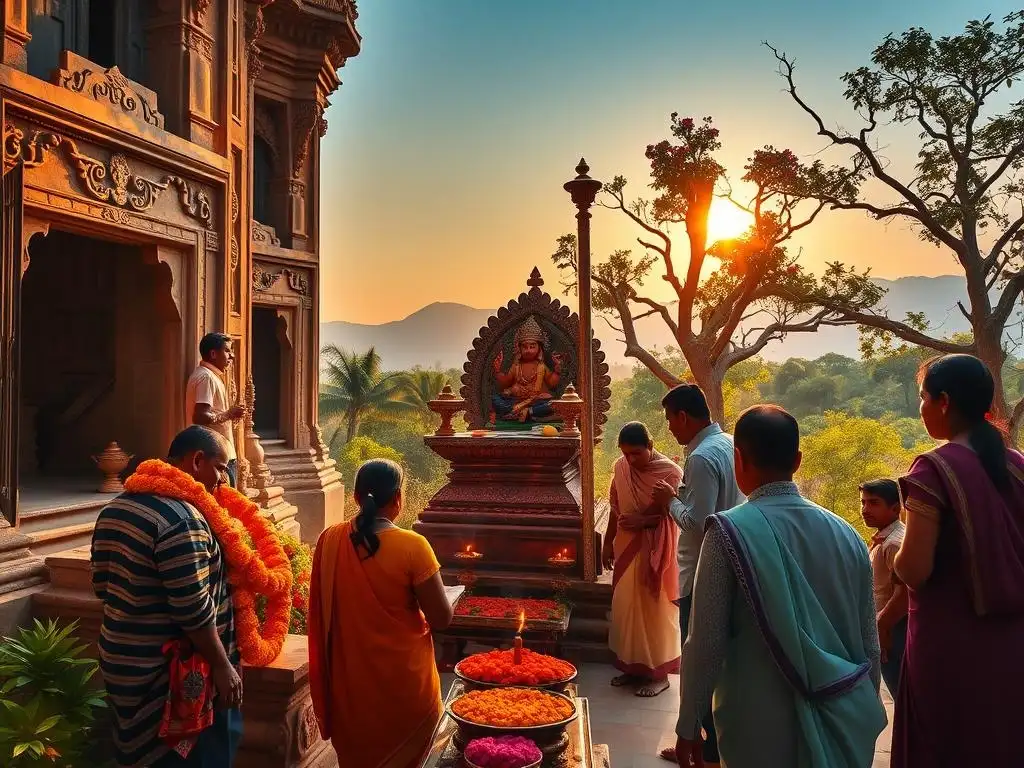
Welcome to Ancient India History, where we embark on a fascinating journey through the rich tapestry of ancient Indian civilizations. In our featured article, "Divine Offerings: How Rituals Shaped Ancient Indian Spirituality," we delve into the profound significance of ancient Indian spiritual rituals that not only defined religious practices but also influenced daily life and community bonding. Prepare to uncover the mysteries of sacred traditions, from the serene ceremonies of the Indus Valley to the vibrant festivals of the Gupta Empire. Your exploration of these timeless customs begins here—let curiosity lead the way!
Ancient Indian spirituality is a tapestry woven from the threads of diverse rituals, ceremonies, and beliefs that have evolved over millennia. This rich heritage not only reflects the profound relationship between humanity and the divine but also underscores the cultural and philosophical depth of ancient Indian civilizations. From the intricate rites of the Indus Valley Civilization to the elaborate ceremonies of the Gupta Empire, these ancient Indian spiritual rituals served as essential practices that shaped the social fabric and spiritual landscape of the time.
The significance of rituals in ancient India extends beyond mere religious observance; they were integral to community bonding, the transmission of cultural values, and the expression of gratitude toward the divine. These rituals encompassed a variety of activities, including offerings, prayers, and festivals, each with its unique symbolism and purpose. By exploring these divine offerings, we gain insight into how spiritual practices not only influenced individual lives but also helped in defining the collective identity of ancient Indian societies.
In the following sections, we will delve deeper into the various aspects of ancient Indian spiritual rituals, examining their origins, significance, and the lasting impact they have had on contemporary practices. Join us as we embark on this enlightening journey through time, unraveling the sacred traditions that have shaped spiritual life in India.
- Introduction to Ancient Indian Spiritual Rituals
- Historical Context of Ancient Indian Spiritual Rituals
- Types of Ancient Indian Spiritual Rituals
- The Role of Deities in Ancient Indian Rituals
- Rituals and Their Influence on Society
- The Evolution of Ancient Indian Spiritual Rituals
- The Legacy of Ancient Indian Spiritual Rituals
- Conclusion: The Enduring Impact of Ancient Indian Spiritual Rituals
- Frequently Asked Questions
- Final Reflection: The Enduring Legacy of Ancient Indian Spiritual Rituals
- Embrace Your Path: Ignite Your Spiritual Journey Today!
Introduction to Ancient Indian Spiritual Rituals
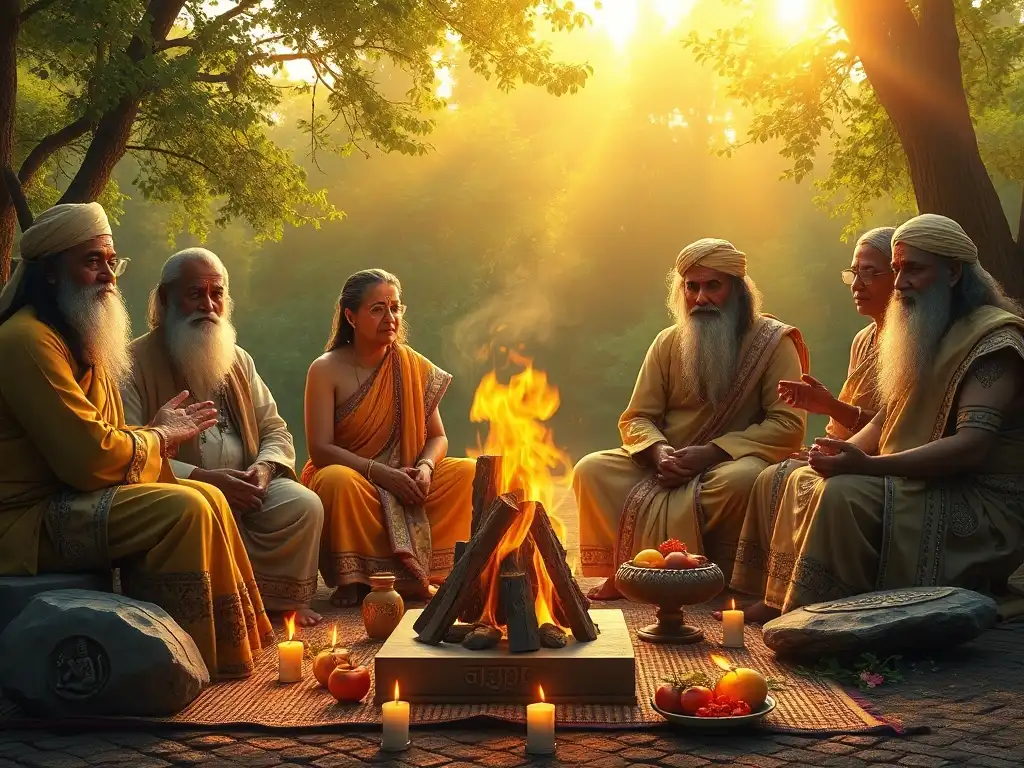
The spiritual landscape of ancient India is intricately woven with a multitude of rituals that reflect the civilization's profound connection to the divine. These ancient Indian spiritual rituals were not merely ceremonial acts; they represented a deep-seated belief in the interplay between the human and the divine, serving as a conduit for communication with higher powers. The rituals encompassed a broad spectrum of practices, from elaborate ceremonies to simple offerings, each imbued with cultural significance and spiritual intent.
As we delve deeper into ancient Indian spiritual rituals, it is crucial to understand their roots in the broader context of spirituality in ancient India, which informed both individual and communal practices. The rituals not only played a role in religious observance but also fostered social cohesion and cultural identity among diverse communities.
The Significance of Spirituality in Ancient India
Spirituality in ancient India was characterized by a quest for ultimate truth and understanding of the cosmos. The Vedic texts, which form the foundation of Indian spirituality, emphasized the concept of Dharma (righteousness), Karma (action), and Moksha (liberation). These principles guided the lives of individuals and shaped societal norms.
- Interconnectedness of Life: Ancient Indian thought posited that all beings are interconnected, and spiritual rituals were a means to honor this interconnectedness. Offerings and prayers were seen as ways to maintain harmony with nature and the universe.
- Divine Favor and Protection: Rituals were often performed to seek blessings from deities for health, prosperity, and protection against misfortunes. The Yajnas (fire sacrifices) were particularly significant, invoking Agni, the fire god, as a mediator between humans and the divine.
- Rituals as a Path to Enlightenment: Many spiritual practices, such as meditation and yoga, were integral to ancient Indian spirituality, aiming at self-realization and enlightenment. Rituals often accompanied these practices, enhancing their effectiveness and deepening the spiritual experience.
- Community and Identity: Rituals played a vital role in community bonding. Festivals, ceremonies, and communal prayers fostered a sense of belonging and identity, reinforcing cultural values and social structures.
Overview of Rituals in Ancient Indian Culture
Ancient Indian spiritual rituals were diverse, reflecting the rich tapestry of beliefs and practices across different regions and communities. Here are some key categories of these rituals:
- Vedic Rituals: The most ancient and systematic forms of rituals, rooted in the Vedas, included:
- Yajnas: Fire sacrifices performed for various purposes, often involving chanting of Vedic hymns.
- Soma Offerings: Rituals involving the preparation and offering of the Soma drink, believed to be a source of immortality.
- Puja: A widely practiced ritual that involves the worship of deities through offerings of flowers, food, and prayers. This can be performed at home or in temples.
- Tirtha Snana: The ritual of taking a holy dip in sacred rivers or lakes, believed to purify the soul and wash away sins.
- Festivals: Many festivals, such as Diwali and Navaratri, are steeped in ritual significance, celebrating deities and seasonal changes through communal worship, dance, and feasting.
- Life Cycle Rituals (Samskaras): These are rites of passage marking significant life events, including birth, marriage, and death, each with its own set of rituals to ensure spiritual well-being.
| Type of Ritual | Description | Purpose |
|---|---|---|
| Yajna | Fire sacrifices with Vedic chants | Invoking divine blessings |
| Puja | Worship of deities with offerings | Personal devotion and seeking blessings |
| Tirtha Snana | Holy bathing in sacred waters | Spiritual purification |
| Samskaras | Life cycle rituals marking significant events | Ensuring spiritual well-being at life stages |
Ancient Indian spiritual rituals were essential in shaping the spiritual landscape of the civilization. They provided a framework for understanding the divine, fostering community bonds, and navigating the complexities of life. Through these rituals, ancient Indians expressed their spirituality, leaving a rich legacy that continues to influence contemporary practices.
Historical Context of Ancient Indian Spiritual Rituals
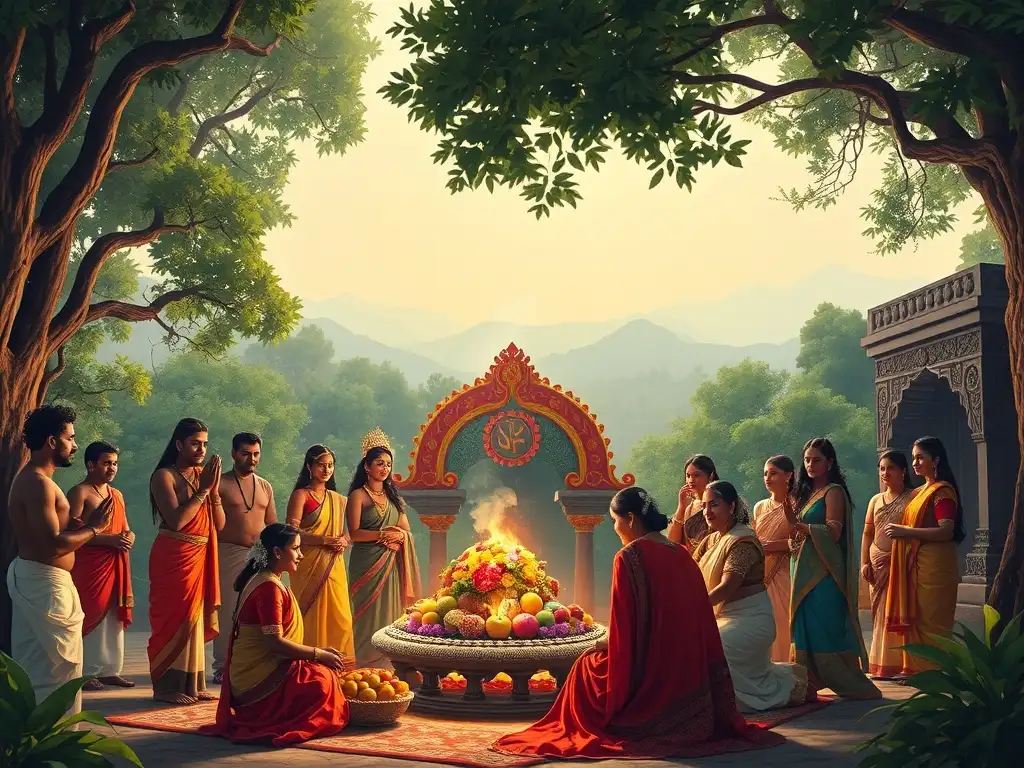
Ancient Indian spiritual rituals encompass a rich tapestry of beliefs, practices, and cultural expressions that have evolved over millennia. These rituals were not merely acts of devotion but were integral to the societal structure, shaping the spiritual landscape of ancient India. Understanding the historical context of these rituals provides insights into their significance in the broader framework of Indian civilization.
The Indus Valley Civilization: Early Spiritual Practices
The Indus Valley Civilization (circa 3300–1300 BCE) is one of the earliest known urban cultures in the world, with evidence suggesting that spirituality played a vital role in their daily lives. Archaeological findings reveal several key features that highlight their spiritual practices:
- Sacred Symbols: Seals bearing symbols, such as the swastika and the tree of life, indicate a belief in the sacredness of certain motifs. These symbols likely represented important spiritual concepts and were used in rituals.
- Fire Altars: Excavations in sites like Mohenjo-Daro have uncovered structures resembling fire altars. These may have been used for sacrificial rituals, emphasizing the significance of fire as a purifying element.
- Water Symbolism: The presence of advanced drainage systems and public baths suggests that water purification held spiritual importance, possibly linked to early forms of ritual bathing.
These practices laid the groundwork for later spiritual developments, reflecting a deep-seated reverence for nature and the cosmos.
Vedic Period: The Foundation of Ritualistic Traditions
The Vedic period (circa 1500–500 BCE) marks a transformative era in ancient Indian spirituality, characterized by the composition of the Vedas, a collection of hymns and texts detailing various rituals. This period introduced several key aspects of ancient Indian spiritual rituals:
- Yajnas (Sacrificial Offerings): Central to Vedic rituals, yajnas were elaborate fire sacrifices performed to appease deities. These rituals involved offerings of ghee, grains, and soma (a sacred drink) to invoke blessings for prosperity and protection.
- Ritual Specialists: The emergence of ritual specialists, or priests (Brahmins), who were responsible for conducting yajnas and ensuring the proper adherence to Vedic rituals. Their role was critical in maintaining the spiritual order and mediating between the divine and the earthly realms.
- Cosmic Order (Rta): The concept of Rta, or cosmic order, emphasized the importance of performing rituals correctly to maintain harmony in the universe. Deviating from established rituals was believed to disrupt this balance, leading to chaos.
These developments established a systematic approach to spirituality, intertwining social structures with spiritual practices.
Post-Vedic Developments: Evolving Spiritual Practices
Following the Vedic period, ancient Indian spirituality witnessed significant changes, influenced by various philosophical movements and cultural exchanges. Key developments include:
- Rise of Upanishadic Thought: The Upanishads, composed around 800–200 BCE, introduced introspective spiritual practices that emphasized meditation and individual enlightenment over ritualistic traditions. This shift marked a transition towards more personal and philosophical interpretations of spirituality.
- Buddhism and Jainism: Emerging around the 6th century BCE, both Buddhism and Jainism challenged Vedic orthodoxy by promoting non-ritualistic paths to spiritual liberation. Their teachings emphasized ethical conduct, meditation, and self-realization, reflecting a departure from elaborate Vedic rituals.
- Integration of Folk Traditions: As various regional and folk traditions blended with mainstream practices, new forms of rituals emerged, often celebrating local deities and nature. This syncretism enriched the spiritual landscape and allowed for diverse expressions of faith.
The evolution of spiritual practices in ancient India illustrates a dynamic interplay between tradition and innovation, highlighting the adaptability of ancient Indian spiritual rituals in response to changing sociocultural contexts.
Types of Ancient Indian Spiritual Rituals
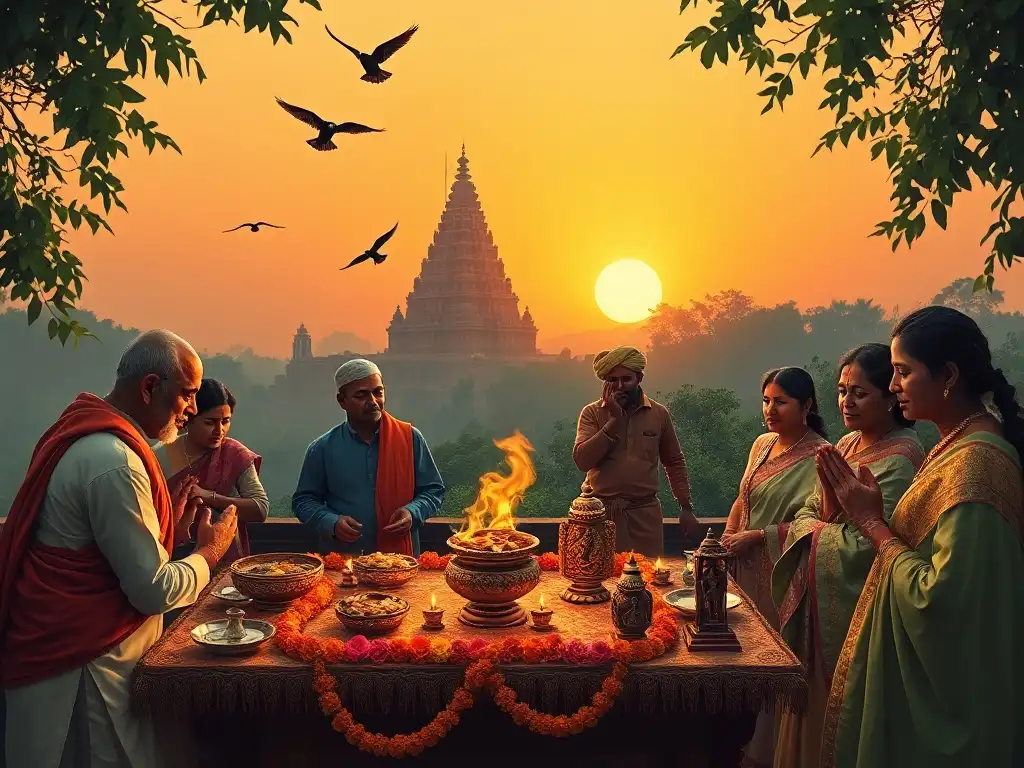
Sacrificial Rituals: Yajnas and Homas
Sacrificial rituals, known as Yajnas and Homas, are fundamental components of ancient Indian spiritual practices. These rituals involved offerings made to the fire, which is considered a sacred element in Hinduism. The purpose of these rituals was multifaceted, encompassing worship of deities, the fulfillment of personal desires, and the promotion of cosmic harmony.
- Yajnas:
- Definition: A Yajna is a Vedic ritual of offerings accompanied by chanting of Vedic mantras.
- Purpose: It aims to please the gods, ensure prosperity, and maintain the balance of nature.
- Types: There are several types of Yajnas, including:
- Soma Yajna: Involves the offering of Soma, a sacred drink.
- Ashvamedha: A royal horse sacrifice to establish sovereignty.
- Rajasuya: A ritual performed by kings to assert their authority.
- Homas:
- Definition: A Homa is similar to a Yajna but typically performed on a smaller scale, often in domestic settings.
- Significance: Homas are performed to invoke specific deities for blessings, health, and prosperity.
- Common Offerings: Ingredients such as ghee, grains, and herbs are offered into the fire, symbolizing purification and transformation.
The intricate nature of these rituals reflects the deep spiritual and cultural significance they held in ancient Indian society, serving as a means to connect the material world with the divine.
Domestic Rituals: Pujas and Daily Offerings
Domestic rituals, particularly Pujas and daily offerings, formed an integral part of the spiritual lives of ancient Indians. These rituals were often performed at home and served to cultivate a personal relationship with the divine.
- Pujas:
- Definition: A Puja is a worship ritual performed to honor and invite divine presence.
- Components: It typically includes:
- Prayers and Mantras: Invocation of specific deities through recitations.
- Offerings: Flowers, fruits, and sweets are typically offered to the deities.
- Aarti: The ceremonial worship using light from wicks in oil or ghee lamps.
- Daily Offerings:
- Routine Practice: Daily offerings, known as Nitya Puja, are personal rituals performed at specific times, often in the morning and evening.
- Significance: These offerings include:
- Water and Food: Symbolizing sustenance and gratitude.
- Incense and Flowers: Used to create a sacred atmosphere and express devotion.
These domestic rituals not only fostered a sense of spirituality and discipline within ancient households but also helped in passing down traditions and values through generations.
Seasonal and Agricultural Rituals: Festivals and Celebrations
Seasonal and agricultural rituals in ancient India were closely linked to the cycles of nature and were celebrated through various festivals and celebrations. These rituals served to express gratitude for the harvest and to invoke blessings for future prosperity.
- Harvest Festivals:
- Makar Sankranti: Celebrated in January, marking the transition of the sun into the zodiac sign of Capricorn, this festival symbolizes the end of winter and the onset of harvest season.
- Pongal: A Tamil festival that celebrates the harvest of rice, involving cooking a special dish to offer to the Sun God.
- Seasonal Rituals:
- Navaratri: A nine-night festival dedicated to the worship of the goddess Durga, celebrated with dance and music.
- Holi: The festival of colors, marking the arrival of spring and the victory of good over evil. Rituals involve the throwing of colored powders and water, symbolizing joy and the arrival of new beginnings.
- Religious Significance:
- These rituals often involve communal gatherings, showcasing the importance of unity and shared beliefs in ancient Indian culture. The timing and nature of these festivals were closely aligned with agricultural cycles, reinforcing the connection between spirituality and sustenance.
The ancient Indian spiritual rituals encapsulate a rich tapestry of practices that reflect the beliefs, values, and traditions of ancient Indian civilization. Each type of ritual, be it sacrificial, domestic, or seasonal, played a pivotal role in shaping the spiritual landscape of the time.
The Role of Deities in Ancient Indian Rituals
The spiritual landscape of ancient India was profoundly shaped by the myriad deities worshiped across various civilizations. Each deity held a specific role and significance, influencing the nature and practice of spiritual rituals. The concept of divinity in ancient Indian culture was not limited to a singular entity; rather, it encompassed a wide array of gods and goddesses, each embodying different aspects of life, nature, and cosmic order.
Ancient Indian spiritual rituals were deeply interwoven with the worship of these deities, establishing a framework through which devotees could connect with the divine. Rituals often involved elaborate ceremonies, offerings, and chants that were believed to appease the deities and seek their blessings. This relationship between the worshippers and the divine was both reciprocal and dynamic, where the fulfillment of rituals was expected to invoke divine favor in the form of prosperity, health, and protection.
The rituals conducted in temples, homes, and during community gatherings were often tailored to the specific attributes and stories of the deities involved. The practice of invoking deities through rituals played a crucial role in maintaining harmony within the society and fostering a sense of collective identity among the worshippers.
Major Deities Worshiped in Ancient India
In ancient India, a multitude of deities were revered, each with their own myths, attributes, and spheres of influence. Here are some of the prominent deities who were central to ancient Indian spiritual rituals:
- Brahma:
- The creator god of the Hindu trinity (Trimurti).
- Symbolizes knowledge and the creative force of the universe.
- Vishnu:
- The preserver and protector of the universe.
- Worshiped through various avatars, including Krishna and Rama, who played significant roles in ancient epics.
- Shiva:
- The destroyer and transformer, symbolizing the cyclical nature of creation and destruction.
- Often worshiped in the form of the Lingam, representing his cosmic energy.
- Devi (Shakti):
- The divine feminine energy, representing power and motherhood.
- Manifested in various forms such as Durga, Kali, and Saraswati, each embodying different virtues and strengths.
- Ganesha:
- The remover of obstacles and god of beginnings.
- Often invoked at the start of rituals and new ventures.
- Surya:
- The sun god, representing health and prosperity.
- Worshiped during rituals for good harvests and well-being.
- Agni:
- The fire god, essential in Vedic rituals.
- Acts as a mediator between gods and humans, with offerings made into the sacred fire.
These deities were not only worshipped through personal devotion but were also integral to community rituals that reinforced social bonds and cultural identity.
Symbolism of Offerings to Deities in Rituals
The offerings made to deities in ancient Indian spiritual rituals were rich in symbolism and held profound meaning. Each offering was intended to express reverence, gratitude, and the desire for divine blessings. Here are some key aspects of the symbolism behind these offerings:
- Food Offerings:
- Represent sustenance and the sharing of abundance.
- Common items included fruits, grains, and sweets, symbolizing the bounty of nature and the cycle of life.
- Floral Offerings:
- Flowers were often used to adorn idols and altars, symbolizing beauty and the impermanence of life.
- Specific flowers held different meanings; for example, lotus flowers represented purity and spiritual awakening.
- Incense and Aromatic Substances:
- Used to create a sacred atmosphere, incense offerings symbolized the act of purification and the elevation of the soul towards the divine.
- Different scents were believed to attract specific deities or energies.
- Water and Milk:
- Represented purity and life. Water was often poured over idols in a ritual known as abhishekam, symbolizing the cleansing of sins and the flow of divine grace.
- Symbolic Objects:
- Items like rice grains (representing fertility), coins (symbolizing prosperity), and ghee (representing the essence of life) were commonly offered.
The act of making offerings was not merely a ritualistic practice but a profound expression of faith and devotion. It illustrated the interconnectedness of the physical and spiritual realms, where the material offerings were seen as vehicles to convey the intentions and emotions of the worshippers to the divine.
Ancient Indian spiritual rituals were deeply influenced by the deities worshipped and the symbolic meanings of the offerings made to them. This rich tapestry of beliefs and practices formed the foundation of spiritual life in ancient India, echoing through the ages in various cultural expressions and traditions.
Rituals and Their Influence on Society
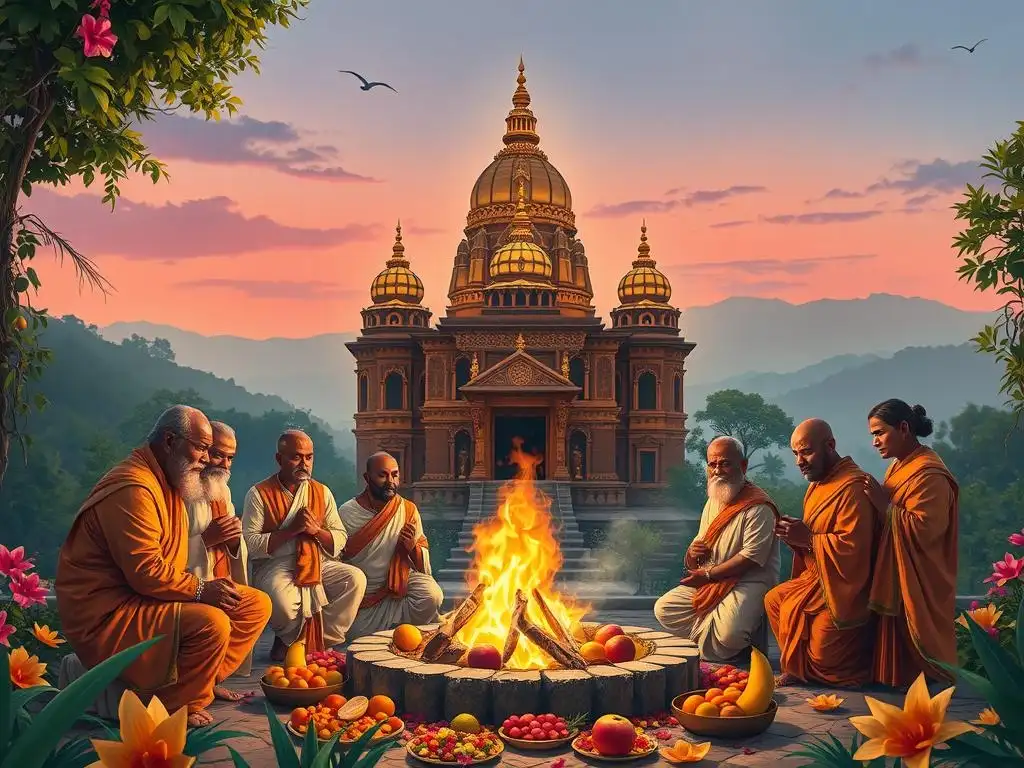
Rituals in ancient Indian spirituality played a pivotal role in shaping societal norms, values, and structures. These practices were not merely religious expressions but were deeply intertwined with the social fabric of the time, influencing everything from governance to community dynamics.
In ancient India, the social hierarchy was intricately linked to ritual practices, with different castes and classes participating in varying degrees and forms of rituals. The Brahmins, as the priestly class, held significant power and were responsible for conducting rituals that were deemed essential for societal prosperity and cosmic balance. Their exclusive knowledge of the Vedas and other sacred texts positioned them at the apex of the social hierarchy.
- Caste System and Rituals:
- Brahmins: Conducted rituals, performed sacrifices, and acted as intermediaries between the divine and the laypeople.
- Kshatriyas: Engaged in rituals that emphasized valor and protection, often participating in royal sacrifices to ensure victory in battles.
- Vaishyas: Their rituals revolved around prosperity, agriculture, and trade, reflecting their economic roles in society.
- Shudras: Generally excluded from many rituals, they participated in labor and service-related activities that supported the ritualistic framework established by higher castes.
The differentiation in ritual participation underscored the social stratification and reinforced the existing hierarchy. For instance, grand ceremonies like the Ashvamedha Yagna, performed by kings, not only conferred divine legitimacy upon their rule but also reinforced their status among the nobility.
Community Involvement in Spiritual Rituals
While certain rituals were exclusive to the upper castes, many spiritual rituals were designed to foster community involvement and cohesion. These practices served to unite people through shared beliefs and collective participation.
- Festivals and Collective Rituals:
- Puja: Community gatherings for worshipping deities, where everyone, regardless of caste, could participate in communal offerings and prayers.
- Homas: Fire rituals performed collectively, symbolizing purification and the offering of desires to the divine.
- Role of Temples:
- Temples were not just places of worship but also community centers. They hosted numerous festivals and rituals that involved the entire community, allowing for social interactions and strengthening communal bonds.
- The participation in temple rituals, such as pradakshina (circumambulation) and bhajan (devotional singing), fostered a sense of belonging and collective spiritual experience.
- Rituals in Daily Life:
- Daily rituals, such as sandhya vandanam (evening prayers), were encouraged for all households, emphasizing the importance of spirituality in everyday life and promoting universal participation.
Ancient Indian spiritual rituals were not only spiritual expressions but also vital forces that shaped social structures and community ties. They provided a framework for understanding one's place in the universe, fostering a sense of belonging and collective identity among diverse groups. By engaging in these rituals, individuals contributed to the greater societal fabric while also seeking personal and communal spiritual fulfillment.
The Evolution of Ancient Indian Spiritual Rituals
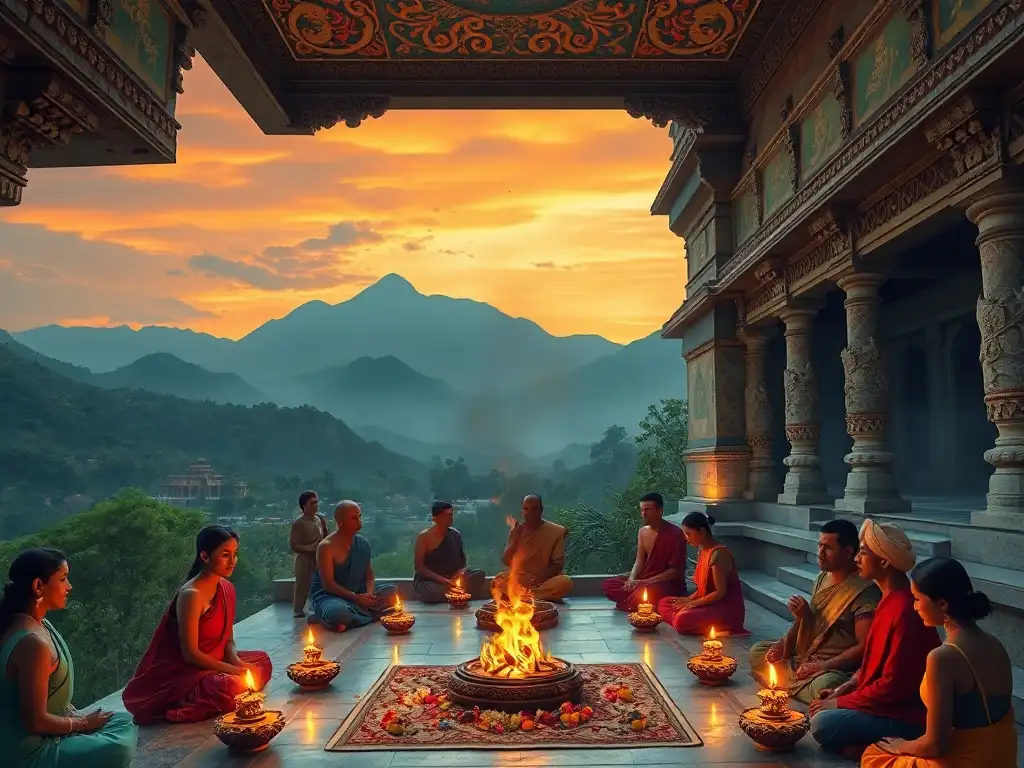
The evolution of ancient Indian spiritual rituals showcases a rich tapestry woven through various historical periods, marked by cultural exchanges, philosophical developments, and regional diversities. These rituals, integral to ancient Indian spirituality, served not only as expressions of devotion but also as frameworks for social cohesion and community identity.
Changes Through Dynasties: Maurya to Gupta
The transition from the Mauryan Empire (c. 322-185 BCE) to the Gupta Empire (c. 320-550 CE) witnessed significant transformations in spiritual rituals. Under the Mauryan dynasty, particularly during the reign of Ashoka, there was a notable shift towards Buddhism, which introduced a plethora of new rituals centered around non-violence and meditation. Ashoka promoted the Dhamma, advocating for moral conduct and communal harmony, which influenced local practices across the empire.
| Aspect | Mauryan Empire | Gupta Empire |
|---|---|---|
| Dominant Faith | Buddhism and Jainism | Hinduism and resurgence of Vedic practices |
| Rituals | Emphasis on meditation and moral living | Revival of Vedic rituals and temple worship |
| Community Role | Focus on community welfare and ethics | Emphasis on individual devotion and personal rituals |
During the Gupta period, there was a revival of Hindu practices, with a resurgence in Vedic rituals. This era saw the construction of grand temples and the performance of elaborate ceremonies, reflecting a shift towards more structured and formalized spiritual practices. Rituals such as Homa (fire offerings) and Puja (worship) became central to religious life, emphasizing a personal connection with the divine.
The Gupta rulers also encouraged the compilation of texts that codified rituals, including the Puranas and the Dharmashastras, which articulated the significance of various ceremonies and their proper execution. This codification played a crucial role in standardizing rituals across regions, leading to the establishment of a more uniform spiritual landscape.
The Impact of Foreign Influences on Ritual Practices
Throughout ancient India, foreign influences significantly shaped spiritual rituals, particularly during periods of conquest and trade. The arrival of Persian and Hellenistic cultures introduced new ideas and practices that were assimilated into local traditions. For instance, the Macedonian invasion and subsequent interactions with Greek culture brought about changes in artistic expressions and ritualistic elements, such as the incorporation of new deities and the fusion of iconography.
Moreover, the Silk Road facilitated the exchange of spiritual ideas between India and other civilizations, including Central Asia and China. The introduction of Zoroastrian and Buddhist concepts led to a diversification of rituals. Zoroastrian influences can be seen in fire rituals, while Buddhist practices introduced the concept of meditation and mindfulness, influencing various Hindu spiritual practices.
As trade routes flourished, ideas about sacred spaces and ritual offerings evolved. The blending of indigenous and foreign elements created a unique syncretism in rituals, seen in the worship of deities like Buddha alongside traditional Hindu gods. This adaptability allowed ancient Indian spiritual rituals to thrive and evolve, reflecting an ongoing dialogue between tradition and innovation.
The evolution of ancient Indian spiritual rituals is a testament to the dynamic interplay of religious beliefs, cultural exchanges, and the socio-political landscape over centuries. As these rituals adapted to changing times, they not only preserved the essence of ancient spirituality but also enriched it with diverse influences.
The Legacy of Ancient Indian Spiritual Rituals
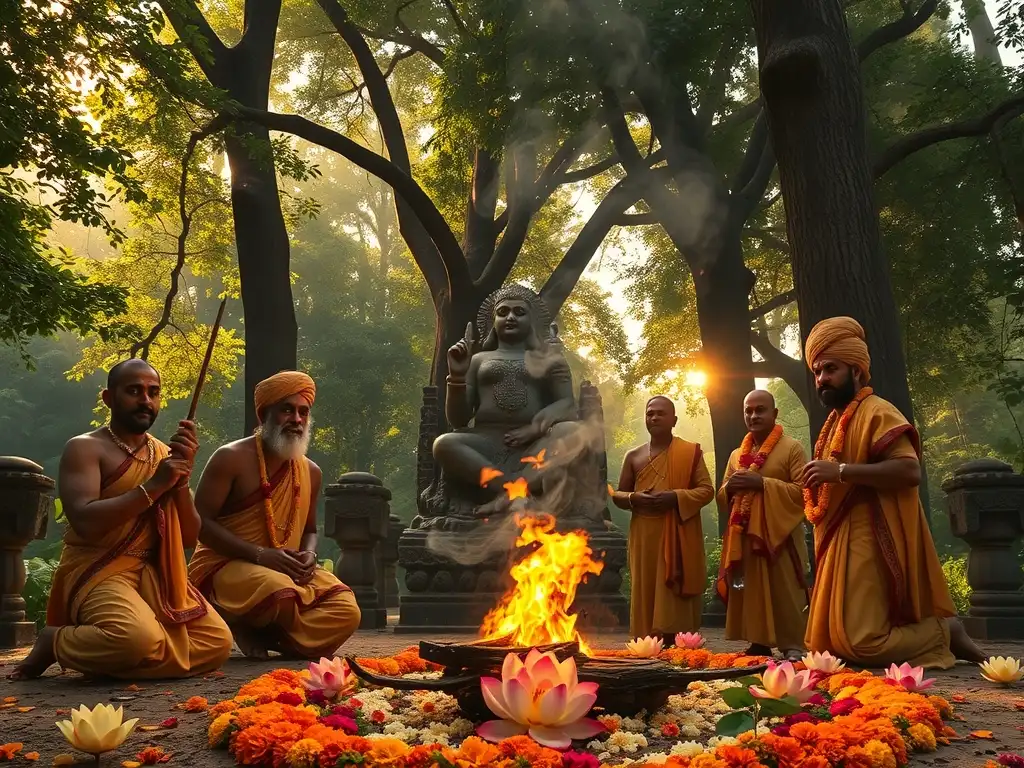
Ancient Indian spiritual rituals have left an indelible mark on the cultural and religious landscape of India. These rituals, steeped in history, served as a means of connecting the material world with the divine, facilitating communication between humans and deities. The spiritual practices of ancient India were not merely ceremonial; they were deeply embedded in daily life, offering a framework for understanding existence, morality, and the cosmos.
The earliest evidence of these rituals can be traced back to the Indus Valley Civilization, where archaeological findings suggest the presence of fire altars and figurines indicative of spiritual practices. The Vedic texts further elaborate on the significance of rituals such as Yajna (sacrificial offerings) and Puja (worship), which were believed to sustain the cosmic order and ensure prosperity. These rituals were often accompanied by hymns, chants, and specific mantras, each carrying its own vibrational essence aimed at invoking divine blessings.
As time progressed, different dynasties and cultures contributed to the evolution of these rituals. For instance, during the Maurya and Gupta Empires, spiritual practices became more formalized, with the integration of philosophical concepts from Hinduism, Buddhism, and Jainism. The concept of Dharma (righteousness) became central, with rituals designed to uphold social order and individual morality.
In contemporary India, the legacy of these ancient rituals continues to thrive, influencing various aspects of life, including festivals, ceremonies, and personal spiritual practices. The intricate connection between ancient Indian spiritual rituals and modern practices underscores the enduring significance of these traditions in shaping Indian identity and spirituality.
Modern-Day Practices Rooted in Ancient Rituals
Modern Indian spirituality is a rich tapestry woven with threads of ancient rituals that have evolved yet retained their core essence. Many contemporary practices can trace their origins back to the ancient period, showcasing a seamless continuity in spiritual beliefs.
- Puja: This ritual remains a cornerstone of worship in Hindu households. The practice of offering flowers, fruits, and incense to deities is rooted in ancient traditions that seek to honor and appease divine energies.
- Yajna: While large-scale yajnas are less common today, smaller versions known as Homa are prevalent. These involve the offering of oblations into a sacred fire, symbolizing the purification of the environment and the self.
- Festivals: Many festivals, such as Diwali and Makar Sankranti, incorporate ancient rituals that celebrate the cycles of nature. These celebrations not only honor deities but also reinforce community bonds and cultural identity.
- Meditation and Yoga: Practices like yoga and meditation, which are deeply rooted in ancient texts like the Yoga Sutras, are now globally recognized for their physical and mental health benefits. They carry the spiritual essence of connecting the body and mind to the cosmos.
The adaptation of these practices showcases the resilience and dynamism of ancient Indian spiritual rituals, allowing them to thrive in a modern context while maintaining their spiritual significance.
Preservation of Spiritual Traditions in Contemporary India
The preservation of ancient Indian spiritual rituals in contemporary society is a testament to the cultural richness and depth of Indian spirituality. Various factors contribute to this sustained relevance:
- Cultural Festivals: Festivals play a pivotal role in keeping ancient rituals alive. Events such as Navaratri and Durga Puja not only celebrate deities but also serve as platforms for communal participation in age-old practices.
- Religious Institutions: Temples and ashrams continue to be centers for the practice and teaching of rituals. Many of these institutions offer workshops and classes that aim to educate younger generations about the significance and methodology of traditional rituals.
- Art and Literature: The representation of ancient rituals in Indian art, literature, and cinema has helped to popularize and preserve these practices. By showcasing their beauty and complexity, these media foster a renewed interest in ancient traditions.
- Spiritual Tourism: With the rise of spiritual tourism, many individuals seek to immerse themselves in the rituals and practices that have defined Indian spirituality for centuries. This phenomenon not only promotes cultural exchange but also supports local economies.
The preservation of ancient Indian spiritual rituals in contemporary India reflects a continuous journey of cultural evolution. By honoring these traditions, modern society not only keeps the past alive but also enriches the present, demonstrating the timeless nature of ancient Indian spiritual rituals.
Conclusion: The Enduring Impact of Ancient Indian Spiritual Rituals
The spiritual landscape of ancient India is profoundly marked by rituals that served not only as expressions of devotion but also as fundamental components of daily life and societal structure. These ancient Indian spiritual rituals were deeply intertwined with the beliefs and practices of various civilizations, from the Indus Valley to the Gupta Empire. Their influence extends far beyond their historical context, shaping the spiritual frameworks that many modern practices are built upon.
Rituals such as yajnas (sacrificial offerings) and pujas (worship) were not mere acts of devotion; they were intricate ceremonies designed to establish a connection between the divine and the earthly realms. Through the meticulous performance of these rituals, practitioners sought to appease deities, ensure prosperity, and maintain cosmic order. The significance of these rituals is further illustrated in texts like the Vedas and Upanishads, which provide a philosophical underpinning to the practices, emphasizing the importance of intention (sankalpa) and purity of action.
Reflection on Spirituality and Rituals in Ancient India
The spiritual ethos of ancient India was characterized by a holistic view of life, where spirituality and rituals were seamlessly integrated. This interconnection can be observed in various facets of life, from birth to death and everything in between. Each life stage was marked by specific rituals, known as samskaras, which were designed to purify, sanctify, and guide individuals through their spiritual journey.
- Rituals and Life Stages:
- Jatakarma: Welcoming a new child into the world.
- Namakarana: The naming ceremony, which holds astrological significance.
- Vivaha: Marriage rituals that symbolize the union of two souls.
- Antyesti: Funeral rites that ensure a peaceful transition to the afterlife.
Each of these samskaras not only reinforced spiritual beliefs but also fostered community bonding and cultural identity. They were often accompanied by specific chants (mantras) and offerings that were believed to invoke divine blessings.
Moreover, the practice of yoga and meditation, which emerged during this period, further illustrates the profound impact of rituals on personal and collective spirituality. These practices were often incorporated into rituals, reinforcing the idea that spiritual growth is both an inward journey and a communal experience.
The Relevance of Ancient Rituals in Today's Spiritual Practices
In contemporary society, the legacy of ancient Indian spiritual rituals continues to resonate. Many modern spiritual practices, including those within Hinduism, Buddhism, and even New Age movements, draw heavily from these ancient traditions. The rituals have adapted to meet the needs of current practitioners while preserving their intrinsic values and meanings.
- Modern Adaptations:
- Puja ceremonies are still prevalent in homes and temples, fostering communal ties.
- Yoga has gained global popularity, transcending cultural boundaries while retaining its ancient roots.
- Festivals such as Diwali and Holi celebrate ancient rituals, integrating them into modern cultural practices.
- Psychological and Social Benefits:
- Mindfulness and Meditation: The emphasis on internal reflection and mindfulness in modern practices echoes ancient meditation techniques.
- Community Engagement: Spiritual rituals foster a sense of belonging and community, crucial in today’s fragmented societies.
The enduring nature of these ancient Indian spiritual rituals illustrates their adaptability and relevance. They continue to provide individuals with a framework for understanding their place in the universe, guiding them toward personal development and communal harmony. As we delve into the spiritual practices of ancient India, we uncover not only the roots of our spiritual heritage but also pathways that lead to holistic well-being in the present day.
Frequently Asked Questions
What are ancient Indian spiritual rituals?
Ancient Indian spiritual rituals refer to various ceremonial practices performed as part of religious traditions, designed to connect individuals with the divine and facilitate spiritual growth.
How did rituals influence ancient Indian culture?
Rituals played a crucial role in shaping social norms, values, and religious beliefs in ancient India, reinforcing the connection between community and spirituality.
What role did the Indus Valley Civilization play in these rituals?
The Indus Valley Civilization showcased early forms of ritualistic practices, including the worship of deities and the use of sacred symbols, setting the foundation for later spiritual traditions.
How did the Gupta Empire contribute to the evolution of rituals?
During the Gupta Empire, rituals became more sophisticated, integrating various philosophical ideas and leading to the establishment of Hinduism as a major spiritual force in India.
Are there any modern practices that stem from ancient Indian rituals?
Yes, many modern practices, such as puja and yoga, are deeply rooted in ancient Indian rituals, reflecting their lasting influence on contemporary spirituality and cultural identity.
Final Reflection: The Enduring Legacy of Ancient Indian Spiritual Rituals
The exploration of ancient Indian spiritual rituals reveals their profound impact on contemporary spirituality and cultural practices. In a world increasingly driven by technology and modernity, these rituals serve as a reminder of our deep-rooted connections to tradition and the divine. They are not mere relics of the past but vibrant expressions of faith that continue to resonate with seekers of meaning today.
The influence of these rituals extends beyond personal spirituality; they shape communal identities and cultural narratives. From the intricate ceremonies of Diwali to the meditative practices of yoga, ancient Indian spiritual rituals foster a sense of belonging and continuity. As Mahatma Gandhi once said, “The best way to find yourself is to lose yourself in the service of others.” This sentiment encapsulates the essence of these rituals, emphasizing their role in nurturing community and self-discovery.
As you reflect on the insights shared in this article, consider how you can incorporate the wisdom of ancient Indian spiritual rituals into your own life. Embrace the opportunity to connect with your inner self and the world around you through mindful practices, rituals, or acts of service. Let these ancient traditions inspire you to cultivate a deeper sense of purpose and connection in your daily life, reminding you that the divine is ever-present in the rituals we choose to honor.
Embrace Your Path: Ignite Your Spiritual Journey Today!
Thank you for exploring the fascinating world of ancient Indian spirituality with us! We hope you discovered the profound impact that rituals had on shaping the spiritual landscape of that era. Now, it’s time to take that inspiration and turn it into action!
Here are a few steps you can take to further explore this captivating topic:
- Dive deeper: Investigate specific rituals or practices that resonate with you—consider journaling your findings or sharing insights with others!
- Reconnect: Engage in a personal ritual that honors the traditions you learned about—whether it’s meditation, prayer, or creating a small altar.
- Share the knowledge: Initiate a conversation about these ancient practices with friends or family, or even share this article on social media to spread awareness.
What rituals or practices from ancient Indian spirituality inspire you to cultivate a meaningful connection in your own life?