
The Journey of the Soul: Afterlife Rituals in Ancient Indian Beliefs

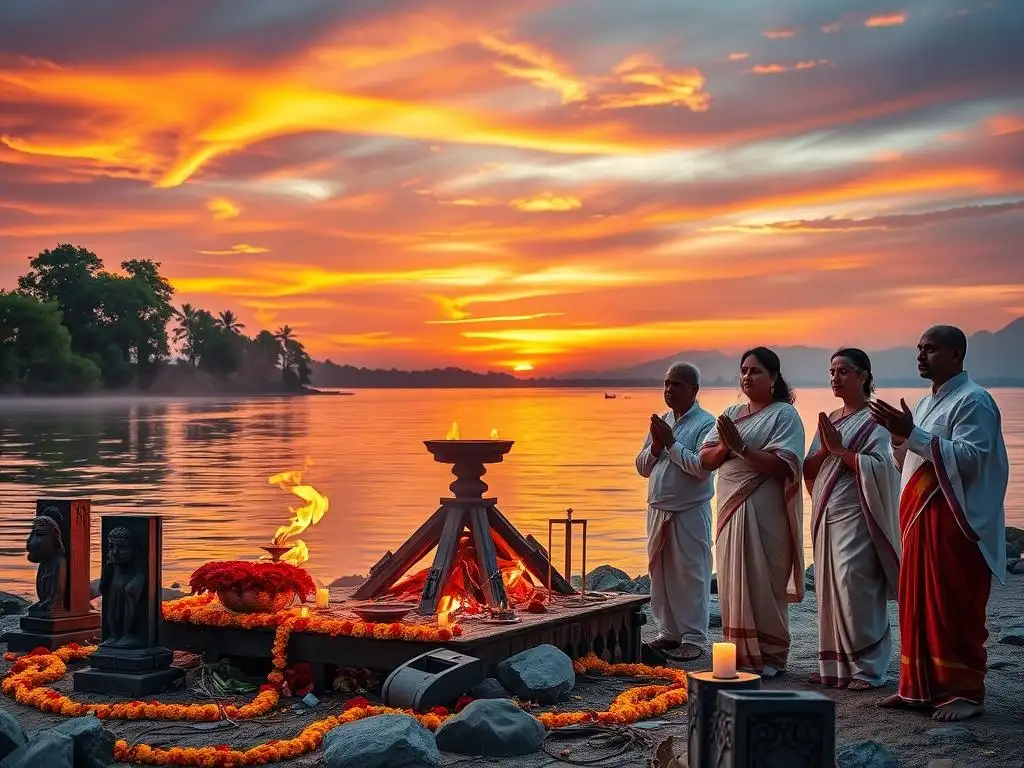
Welcome to Ancient India History, where we embark on an enthralling exploration of the rich tapestry woven by ancient Indian civilizations. In our featured article, “The Journey of the Soul: Afterlife Rituals in Ancient Indian Beliefs,” we delve deep into the captivating realms of ancient Indian afterlife rituals, uncovering the profound traditions that shaped their understanding of life beyond death. Join us as we unravel the mysteries of these rituals, revealing how they reflect the intricate beliefs and cultural heritage of one of the world's most fascinating civilizations. Curious about what awaits in the afterlife? Let the journey begin!
Introduction to Ancient Indian Afterlife Rituals
The concept of the afterlife has been a profound aspect of human existence across cultures, and ancient India is no exception. Ancient Indian afterlife rituals are deeply rooted in a complex tapestry of beliefs, philosophies, and practices that evolved over millennia. From the enigmatic rituals of the Indus Valley Civilization to the rich spiritual traditions of the Gupta Empire, the journey of the soul after death has been a focal point of ancient Indian culture. These rituals not only reflect the intricate understanding of life and death but also reveal the societal values and spiritual aspirations of the time.
The myriad of practices associated with afterlife beliefs in ancient India—ranging from elaborate funerary rites to the recitation of sacred texts—underscores a universal quest for understanding what lies beyond mortal existence. The ancient texts, including the Vedas and Upanishads, provide insight into how these rituals were perceived, highlighting their significance in ensuring a safe passage to the next world. Through this exploration, we will uncover the various dimensions of these rituals, their historical evolution, and their lasting impact on Indian spirituality.
Significance of Afterlife in Ancient Indian Culture
The significance of the afterlife in ancient Indian culture cannot be overstated. It shaped the moral framework and everyday practices of society, influencing everything from individual behavior to community rituals. The belief in reincarnation—the cycle of birth, death, and rebirth (samsara)—was central to these beliefs, suggesting that one's actions (karma) in this life directly affected future existences. This notion instilled a sense of accountability and purpose among individuals, urging them to live a life aligned with dharma (righteousness).
Key Aspects of Afterlife Beliefs:
- Karma and Rebirth: The moral law of cause and effect that governs the cycle of life and death.
- Ritualistic Practices: Elaborate ceremonies performed to honor the deceased and ensure their safe journey to the afterlife.
- Sacred Texts and Mantras: The use of scriptures like the Bhagavad Gita and the recitation of mantras to guide the soul.
These beliefs and practices were not merely spiritual; they were also deeply intertwined with social structures and customs, influencing art, literature, and even politics. The reverence for ancestors and the practice of Shraddha—rituals conducted to pay homage to deceased family members—illustrate the ongoing connection between the living and the departed, embodying a profound respect for lineage and familial ties.
Through this examination, we will explore how ancient Indian afterlife rituals served as a bridge connecting the material world with the spiritual realm, reflecting the rich tapestry of beliefs that defined ancient Indian civilization.
- Introduction to Ancient Indian Afterlife Rituals
- Significance of Afterlife in Ancient Indian Culture
- What are afterlife rituals in ancient Indian beliefs?
- How did the Indus Valley Civilization view the afterlife?
- What role did the Vedas play in shaping afterlife beliefs?
- How did the Gupta Empire contribute to the understanding of afterlife rituals?
- Are there any contemporary practices that stem from ancient Indian afterlife beliefs?
Historical Context of Afterlife Beliefs in Ancient India
Overview of Ancient Indian Civilizations
Ancient Indian civilizations were characterized by a rich tapestry of cultures, philosophies, and spiritual beliefs that shaped their views on life and death. From the Indus Valley Civilization (c. 3300–1300 BCE) to the Gupta Empire (c. 320–550 CE), various societies developed unique afterlife rituals that reflected their understanding of existence beyond death.
- Indus Valley Civilization:
- The remains of cities like Mohenjo-Daro and Harappa suggest a complex societal structure. While direct evidence of afterlife beliefs is scarce, the presence of burial practices indicates a recognition of life after death. For instance, many skeletons were found in fetal positions, suggesting a belief in reincarnation or a protective stance for the afterlife.
- Vedic Period (c. 1500–500 BCE):
- The Vedas, the oldest sacred texts of Hinduism, introduced profound concepts of the soul (Atman) and the cycle of rebirth (Samsara). Rituals during this period, such as Antyesti (last rites), laid the foundation for later afterlife beliefs, emphasizing the importance of proper burial and the performance of rites to ensure a favorable rebirth.
- Buddhist and Jain Influences:
- The emergence of Buddhism (6th century BCE) and Jainism introduced alternative concepts of the afterlife. Both religions emphasized karma and the liberation of the soul from the cycle of rebirth. Their respective rituals, such as Upanayana in Jainism and meditation in Buddhism, reflect a distinct approach to afterlife beliefs compared to Vedic traditions.
- Gupta Empire:
- During this period, the synthesis of earlier beliefs led to a more defined view of the afterlife. The concept of Moksha, or liberation from the cycle of birth and death, became central. Rituals such as Shraddha (rituals for the deceased) were elaborately practiced, emphasizing the need for descendants to perform rites for their ancestors.
The Role of Religion in Shaping Afterlife Concepts
Religion played a pivotal role in shaping the beliefs surrounding the afterlife in ancient India. Different religious texts and philosophies influenced the understanding of death, the soul, and the rituals performed to honor the deceased.
- Hinduism:
- The Hindu scriptures, particularly the Upanishads and Puranas, provided extensive insights into the nature of the soul and its journey post-death. The belief in Karma dictated that one's actions in life directly influenced their circumstances in the afterlife. Rituals performed during life, especially during the death rites, were seen as crucial for ensuring a favorable reincarnation.
- Buddhism:
- The Buddhist perspective shifted focus from the self to the collective, emphasizing the impermanence of life. The Four Noble Truths and the Eightfold Path guided followers toward enlightenment (Nirvana), which represented the ultimate afterlife state. Rituals such as chanting and meditation were integral in supporting a peaceful transition after death.
- Jainism:
- Jain beliefs centered around the idea of liberation from the cycle of birth and death through ethical living and ascetic practices. The Tirthankaras, spiritual teachers in Jainism, exemplified the path to Moksha. Afterlife rituals in Jainism often involved fasting and meditation, focused on purifying the soul.
- Islamic Influence:
- With the arrival of Islam in India during the medieval period, new concepts of the afterlife were introduced, emphasizing a judgment day and the eternal nature of heaven and hell. The integration of Islamic afterlife rituals began to influence the existing practices, leading to a syncretic blend of beliefs in certain regions.
The diverse beliefs and rituals surrounding the afterlife in ancient Indian civilizations reflect a complex interplay of cultural, religious, and philosophical developments. The evolution of these concepts highlights the significance of ancient Indian afterlife rituals in understanding the broader spiritual landscape of the time.
Key Ancient Indian Afterlife Rituals
Vedic Afterlife Practices
The Vedic period, which spanned from approximately 1500 to 500 BCE, laid the foundational beliefs regarding the afterlife in ancient India. Central to these beliefs were the rituals and practices that aimed to ensure a safe passage for the soul (ātman) to the afterlife. These practices were closely tied to the concept of sacrifice (yajna), which was viewed as a means of pleasing the deities and securing favorable conditions for the deceased.
Funeral Rites in Vedic Tradition
Funeral rites, known as Antyesti or last rites, were of paramount importance in Vedic tradition. These ceremonies were meticulously performed to facilitate the soul's journey to the afterlife. The key components of these rites included:
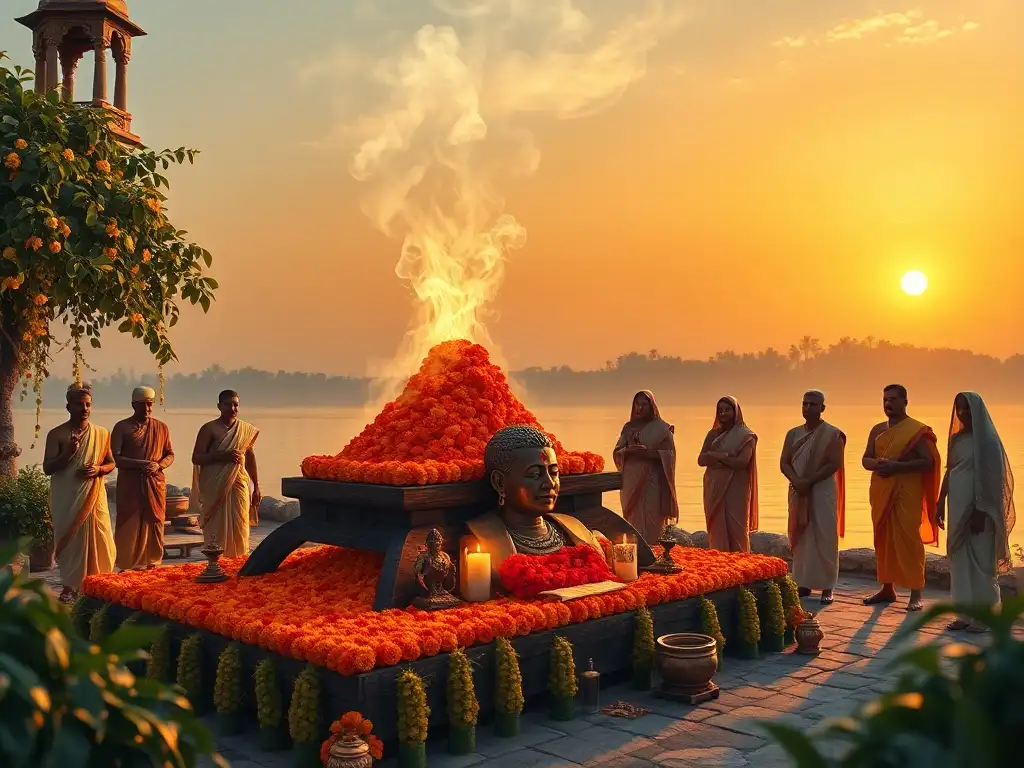
- Body Preparation: The body was bathed, adorned with flowers, and sacred threads were tied. This preparation was believed to purify the body and prepare it for the afterlife.
- Cremation: Fire was considered a purifying element. The body was typically cremated on a pyre, and the ashes were often placed in sacred rivers. This act symbolized the release of the soul from the physical realm.
- Offerings to Deities: During the rites, offerings were made to various deities, primarily Agni, the fire god. These offerings were believed to assist the departed soul in its transition to the afterlife.
- Post-Funeral Rituals: After the cremation, rituals such as Shraddha were performed to honor the ancestors and ensure their peace in the afterlife. These rituals involved food offerings, which were believed to nourish the soul.
The Concept of Swarga and Naraka
In Vedic beliefs, the afterlife was conceptualized as a journey towards Swarga (heaven) or Naraka (hell).
- Swarga: This realm was viewed as a place of eternal bliss and joy, reserved for those who lived virtuous lives. It was often depicted as a celestial garden, where the soul could enjoy the fruits of its good deeds.
- Naraka: Conversely, Naraka was perceived as a place of punishment for souls that committed wrongful acts during their lifetime. It was described in various texts as a realm of suffering, where souls faced the consequences of their actions before being reborn.
The balance of these experiences was believed to be dictated by one's actions (karma) during life, setting the stage for the moral framework that would influence subsequent philosophical developments regarding the afterlife.
Rituals from the Upanishadic Period
The Upanishadic period, emerging around 800 to 200 BCE, marked a significant evolution in the understanding of the afterlife in ancient Indian thought. The focus shifted from ritualistic practices to more philosophical interpretations of the soul and its journey.
Philosophical Views on the Soul's Journey
The Upanishads introduced profound concepts regarding the nature of the soul (ātman) and its relationship with the ultimate reality (Brahman). Key ideas include:
- Unity of Atman and Brahman: The belief that the individual soul is fundamentally connected to the universal soul. Realizing this unity was seen as essential for liberation (moksha) from the cycle of birth and death (samsara).
- Transmigration of the Soul: The Upanishadic texts emphasized that the soul undergoes a cycle of reincarnation based on its karma. This cyclical journey continues until the soul achieves liberation from material existence.
- Meditation and Knowledge: Unlike the earlier emphasis on rituals, the Upanishads promoted meditation (dhyana) and self-realization as key practices for understanding the soul's journey and attaining moksha.
The Influence of Karma on Afterlife
The doctrine of karma became central to the Upanishadic understanding of the afterlife. It posited that every action, whether good or bad, influences the soul's future experiences. Key points include:
- Karma and Rebirth: The accumulated karma from one's life determines the circumstances of future births. Good karma leads to favorable rebirths, while negative karma results in less desirable fates.
- Liberation through Right Action: Ultimately, the goal of life was to accumulate enough good karma to transcend the cycle of rebirth and attain moksha. This liberation was viewed as the ultimate realization of one's true nature and unity with Brahman.
- Ethical Living: The emphasis on karma reinforced the importance of ethical living and moral behavior in everyday life, shaping the values of ancient Indian society.
These evolving beliefs about afterlife rituals and the complexities of the soul's journey reflect the rich tapestry of ancient Indian spirituality, emphasizing a profound understanding of existence and morality.
Buddhist Afterlife Concepts and Rituals
Buddhism offers a unique perspective on afterlife concepts and rituals, deeply rooted in its core beliefs about life, death, and rebirth. Central to these beliefs is the notion of Samsara, the continuous cycle of birth, death, and rebirth, which is influenced by one's actions or karma. Rather than a singular afterlife destination, Buddhism emphasizes the journey of the soul through various realms, shaped by the moral quality of one’s deeds. This cyclical existence underscores the importance of ethical living and spiritual development in the quest for enlightenment and liberation from Samsara.
Rituals associated with the afterlife in Buddhism are designed not only to honor the deceased but also to assist their journey through Samsara. These rituals vary across different Buddhist cultures but generally aim to cultivate merit for the departed, aiding them in their next rebirth. Through specific practices, the living express their compassion and desire to support the deceased’s spiritual progression.
The Cycle of Samsara in Buddhism
The cycle of Samsara is a fundamental concept in Buddhism, representing the continuous flow of life where beings are reborn into various forms based on their karmic actions. This cycle is not merely a repetitive loop but a complex process influenced by moral choices, intentions, and actions in previous lives. Within Samsara, there are six realms of existence, which include:
- Deva Realm: A realm of gods characterized by pleasure and long life, but ultimately transient.
- Asura Realm: A realm of demigods that embodies jealousy and strife, often experiencing conflict with the Devas.
- Human Realm: Considered the most advantageous realm for achieving enlightenment due to the balance of suffering and joy.
- Animal Realm: A realm marked by ignorance and instinctual behavior, often associated with suffering.
- Preta Realm (Hungry Ghosts): A realm of beings who are perpetually hungry and dissatisfied, representing the consequences of greed.
- Naraka Realm: The hellish realm, where beings experience intense suffering as a result of negative karma.
The ultimate goal for Buddhists is to escape this cycle through the attainment of Nirvana, a state of liberation and enlightenment where one is free from the burdens of Samsara. This spiritual journey is supported by various practices and rituals that foster a deeper understanding of impermanence and interconnectedness.
Specific Buddhist Afterlife Practices
Buddhist afterlife practices are diverse and often context-dependent, varying significantly across different cultures and traditions. However, some common practices include:
- Funeral Rites: Buddhist funerals are a vital aspect of honoring the deceased. They often involve chanting of Sutras and the performance of rituals designed to guide the deceased's consciousness toward a favorable rebirth. The rituals may vary between schools of Buddhism, with some emphasizing simplicity while others include elaborate ceremonies.
- Merit Transfer: A crucial belief in Buddhism is that the living can transfer merit to the deceased. This is often done through acts of generosity, meditation, and the recitation of Sutras. Family members may perform good deeds or dedicate the merits gained to the departed, believing it can help improve their circumstances in the afterlife.
- Bardo Practices: In Tibetan Buddhism, there is a significant focus on the intermediate state known as Bardo, which occurs between death and rebirth. During this period, specific rituals are performed, including the reading of texts and guiding the deceased’s consciousness to navigate this transient phase effectively.
- Remembrance Rituals: Annual remembrance rituals, like Uposatha, are also prevalent, where families gather to honor their ancestors. These practices serve to maintain the connection between the living and the deceased, reinforcing the cycle of compassion and support.
Overall, Buddhist afterlife practices underscore a deep reverence for life and death, illustrating the interconnectedness of all beings through the lens of Samsara and the pursuit of enlightenment.
Regional Variations of Afterlife Rituals in Ancient India
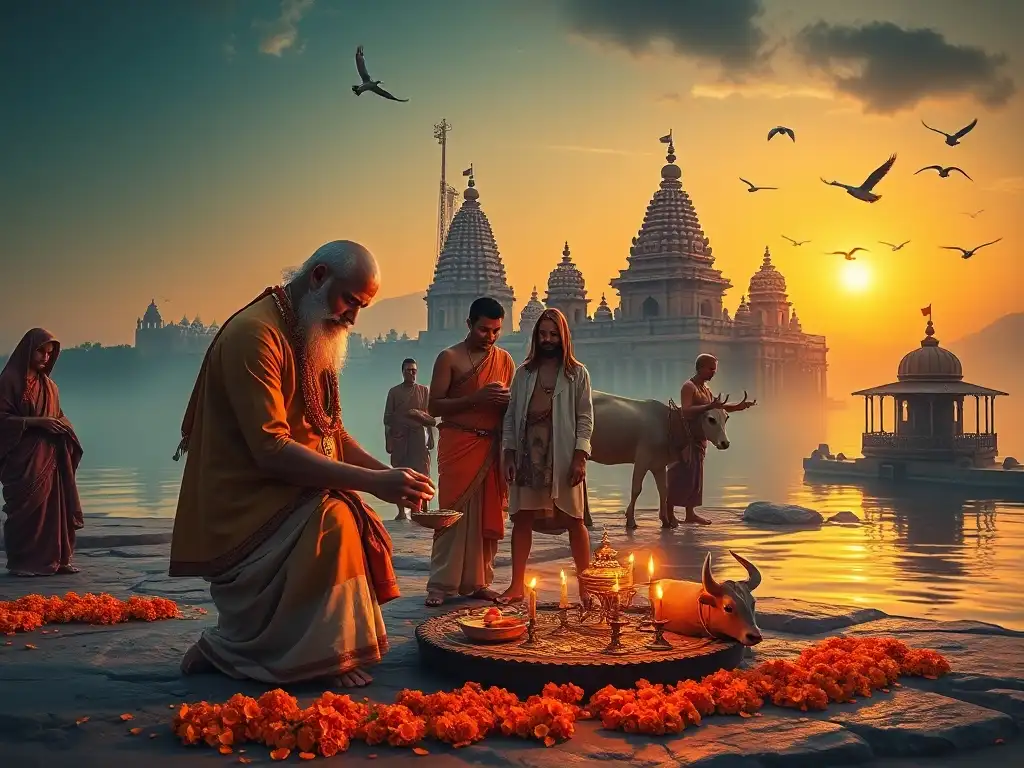
The afterlife rituals in ancient India were diverse and varied significantly across different regions and cultures. These variations were influenced by local beliefs, traditions, and the socio-political context of the time. Understanding these regional differences provides valuable insights into how ancient Indian civilizations perceived life after death and the rituals they employed to ensure a favorable passage for the soul.
Afterlife Customs in the Indus Valley Civilization
The Indus Valley Civilization (c. 3300–1300 BCE) exhibited unique afterlife customs that reflected their advanced urban culture. Archaeological evidence suggests that the people of this civilization believed in a form of life after death, as indicated by their burial practices.
- Burial Practices: Graves were often constructed with care, and the dead were placed in a supine position, sometimes with objects like pottery, jewelry, and tools, suggesting a belief that these items would be useful in the afterlife. This practice hints at a complex understanding of death and the importance of material goods in the journey of the soul.
- Ritualistic Elements: The presence of fire altars and possible evidence of cremation in some sites indicates that the Indus people may have engaged in rituals to honor the deceased. However, the exact nature of these rituals remains largely speculative due to the lack of written records.
- Symbolic Artifacts: Seals and figurines found in the ruins often depict animals and symbolic figures, which might have been used in afterlife rituals. These artifacts indicate a rich tapestry of beliefs surrounding the soul's journey beyond the physical world.
Aryan Influences on Afterlife Beliefs
With the arrival of the Aryans around 1500 BCE, ancient Indian afterlife beliefs underwent significant transformations. The Vedic texts that emerged during this period provide critical insights into the evolving understanding of the afterlife.
- Concept of Rebirth: The Aryans introduced the notion of samsara (the cycle of birth, death, and rebirth) and karma (the law of moral causation), which became central to later Hindu beliefs. These ideas emphasized that one's actions in life directly influenced their fate in the afterlife, leading to a more ethical framework for living.
- Cremation Rituals: Aryan texts highlight the importance of cremation as a means to release the soul from the physical body. The Antyesti or last rites became a formalized ritual involving specific ceremonies, offerings, and chants aimed at ensuring the peaceful transition of the soul.
- Ritual Offerings: The Vedic rituals often included offerings to ancestors, known as Pitru, which reinforced the connection between the living and the dead. This practice reflected the belief that the souls of ancestors could influence the lives of their descendants, further embedding the importance of afterlife rituals in social customs.
Localized Practices Across Indian Kingdoms
As Indian kingdoms flourished through various periods, localized practices emerged, reflecting the rich cultural mosaic of ancient India. Each region developed its unique rituals, adapting broader beliefs into local customs.
- Regional Variations: In Southern India, for example, the Saiva and Vaishnava traditions emphasized temple rituals and community involvement in afterlife ceremonies, which often included elaborate processions and community feasts. In contrast, Northern India maintained a more individualistic approach to afterlife rituals, focusing on personal rites and family obligations.
- Influence of Local Deities: Different local deities played significant roles in afterlife beliefs. For instance, the worship of Yama, the god of death, was prevalent in various forms across India, influencing rituals and customs related to death and the afterlife.
- Cultural Syncretism: The integration of various cultural practices, such as Jain and Buddhist beliefs, also contributed to the diversity of afterlife rituals. Jainism's focus on non-violence and asceticism introduced unique perspectives on the soul's journey, while Buddhism emphasized the impermanence of life and the importance of detachment from worldly desires.
The exploration of ancient Indian afterlife rituals reveals a profound and intricate understanding of the human experience, shaped by diverse cultures and beliefs over millennia. The customs surrounding death and afterlife not only served as a means of honoring the deceased but also reflected the values and philosophies of the societies from which they emerged.
Symbolism and Art in Afterlife Rituals
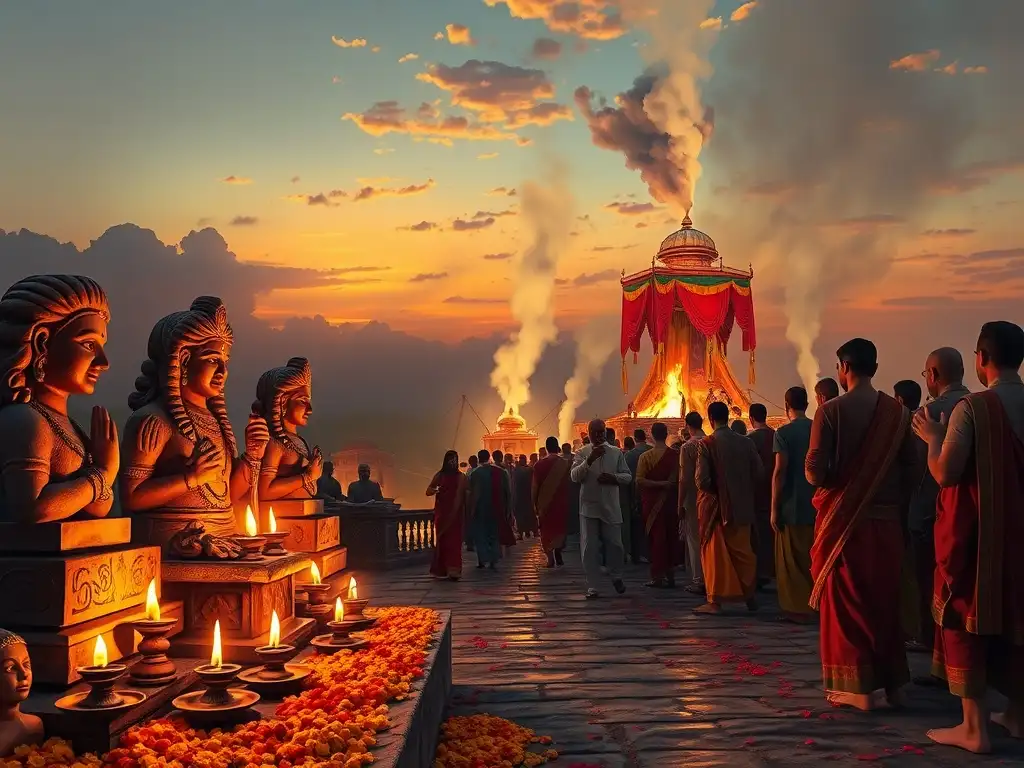
The intricate tapestry of ancient Indian afterlife rituals is woven with rich symbolism and profound artistic expressions that serve to convey the beliefs surrounding the soul's journey beyond death. These elements not only reflect the spiritual and cultural ethos of the civilizations but also provide insight into their understanding of mortality and the afterlife.
Iconography Depicting the Soul’s Journey
Ancient Indian art is replete with iconography that illustrates the various stages of the soul's journey post-mortem. One of the most prominent symbols is the lotus flower, which signifies purity and spiritual awakening. In many depictions, the soul is portrayed as rising from a lotus, representing its ascent to higher realms.
Key Iconographic Elements:
- Yama, the God of Death: Often depicted riding a buffalo, Yama serves as the guide for souls to the afterlife. His representations convey the duality of fear and respect associated with death.
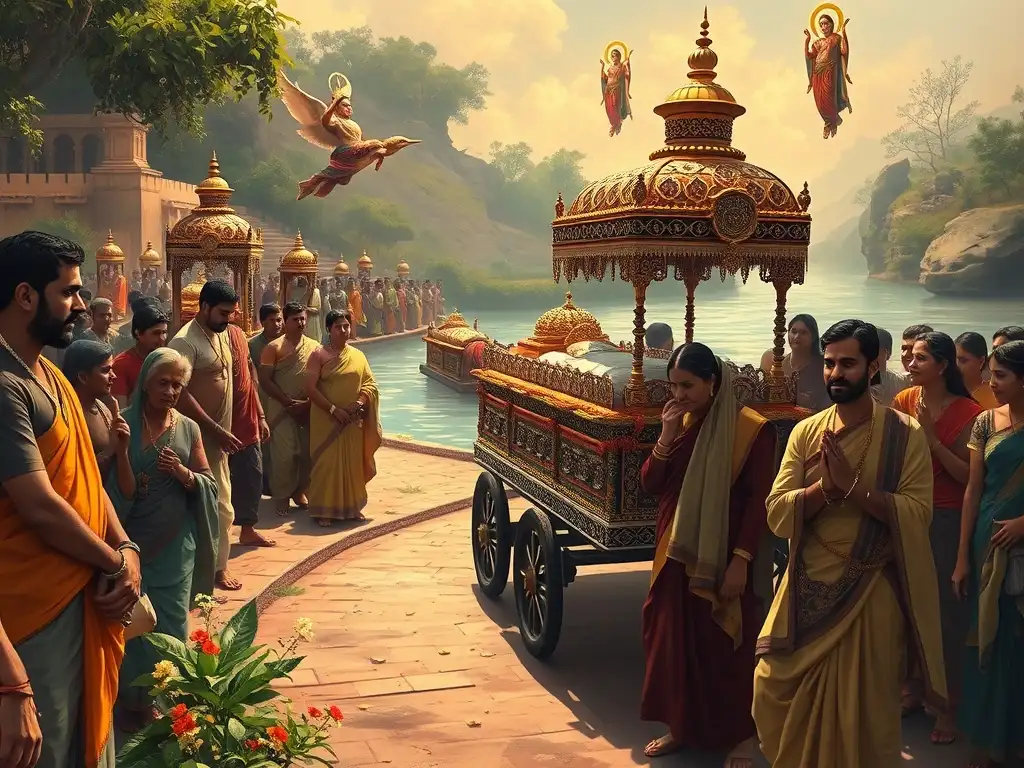
- Chariots and Pathways: Artistic renditions frequently show chariots traveling along pathways lined with divine beings. These pathways symbolize the journey to the afterlife, where the soul is escorted by celestial entities.
- Judgment Scenes: Iconography also includes scenes of judgment, where souls are weighed against the feather of truth. This motif underscores the importance of moral conduct during one's lifetime.
The use of vibrant colors and detailed motifs in sculptures and frescoes enhances the spiritual narrative, making the afterlife a vivid aspect of cultural consciousness.
Role of Art and Literature in Ancient Rituals
Art and literature served as vital mediums for expressing and preserving the beliefs surrounding ancient Indian afterlife rituals. Through epic texts and poetic works, the philosophies of life, death, and rebirth were articulated, providing a framework for understanding the soul's journey.
Influential Texts and Their Impact:
- The Vedas: These sacred texts contain hymns and rituals that outline the processes surrounding death and the afterlife. They emphasize the importance of proper rites to ensure the soul's safe passage.
- The Mahabharata and Ramayana: These epics include narratives that explore themes of dharma (duty) and karma (actions), reinforcing the idea that one's earthly conduct directly influences their fate in the afterlife.
- Sanskrit Poetry: Poets like Kalidasa incorporated themes of mortality and the afterlife into their works, enriching the cultural dialogue about existence beyond death.
The artistic expressions found in murals, sculptures, and manuscripts not only served ceremonial purposes but also functioned as educational tools, guiding the living in their spiritual practices. By intertwining artistic creation with ritualistic significance, ancient Indian cultures ensured that the journey of the soul remained a central theme in their collective consciousness.
The symbolism and art associated with ancient Indian afterlife rituals are profound reflections of the civilizations' beliefs and values. Through iconography and literary contributions, these cultures articulated complex ideas about life, death, and the soul's journey, creating a rich heritage that continues to resonate through history.
The Evolution of Afterlife Rituals Over Time
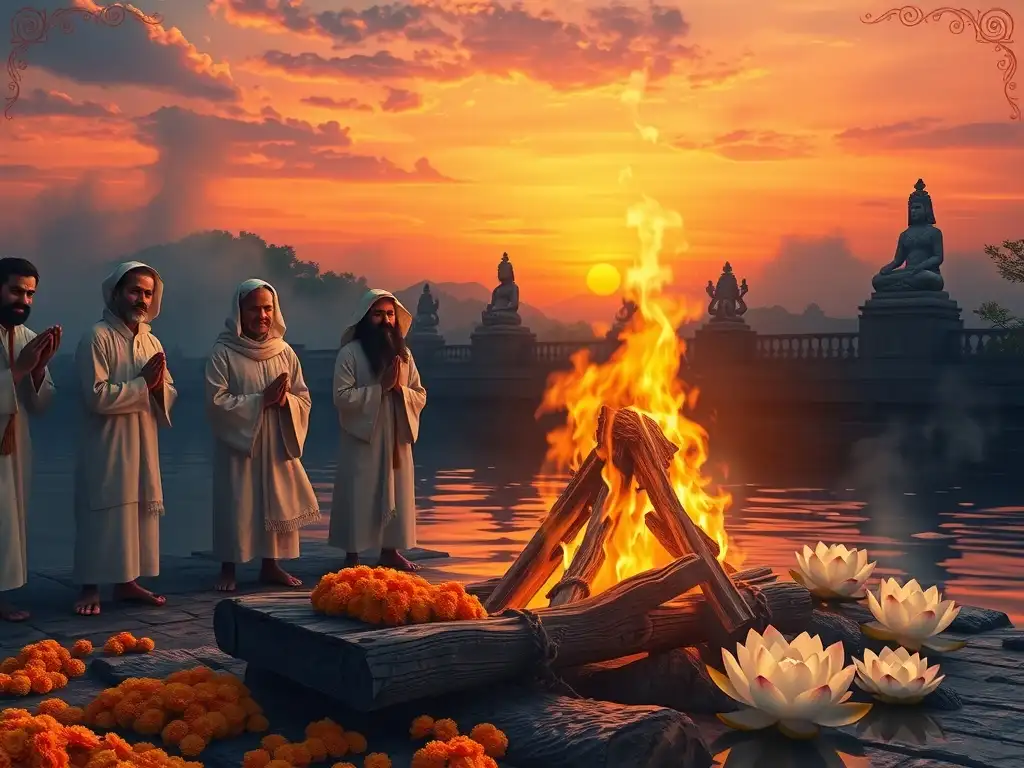
The concept of afterlife rituals in ancient Indian beliefs has undergone significant transformations throughout history, shaped by cultural, religious, and philosophical influences. By tracing the evolution of these rituals, we can gain insights into how ancient Indian civilizations viewed life, death, and the journey of the soul.
Changes During the Gupta Empire
During the Gupta Empire (approximately 320 to 550 CE), afterlife rituals evolved to reflect the philosophical advancements of the time. The Gupta period is often referred to as the "Golden Age" of India due to its remarkable achievements in arts, sciences, and spirituality. This era saw a flourishing of Hinduism, which significantly influenced afterlife beliefs and rituals.
- Emphasis on Dharma: The concept of dharma (duty) became central to afterlife rituals. Adhering to one’s dharma was believed to influence the soul’s journey after death. Good deeds and righteous living were thought to ensure a favorable rebirth.
- Samsara and Karma: The ideas of samsara (the cycle of rebirth) and karma (the law of cause and effect) gained prominence. Rituals began to focus more on the actions taken during one’s lifetime, as these actions directly impacted future incarnations. This philosophical shift led to more personalized afterlife practices.
- Funerary Practices: The Gupta period saw the standardization of cremation as a primary funerary practice among the upper classes. The belief was that cremation liberated the soul from the physical body, allowing it to ascend to higher realms.
- Posthumous Offerings: Families began to perform more elaborate posthumous rituals, including shraddha (a ceremony performed for deceased ancestors), which reinforced familial ties and ensured the deceased's peaceful journey in the afterlife.
- Influence of Texts: The Garuda Purana and other texts composed during this time began to outline specific afterlife rituals, emphasizing the importance of rituals in aiding the soul's transition and ensuring it reaches its final destination.
Influence of Other Religions on Indian Afterlife Beliefs
The ancient Indian afterlife rituals were not developed in isolation; they were influenced by various religions and philosophical traditions that coexisted in the region.
- Buddhism: Emerging in the 5th century BCE, Buddhism introduced concepts such as nirvana and the cycle of birth and rebirth, which influenced Hindu beliefs on the afterlife. The idea of detachment from worldly desires and the pursuit of enlightenment reshaped some afterlife rituals, encouraging a focus on spiritual liberation rather than material offerings.
- Jainism: Jain beliefs emphasized non-violence (ahimsa) and truth (satya), which affected the ethical dimensions of afterlife rituals. Jains performed rituals that underscored the importance of purifying the soul through right conduct, impacting how other communities approached afterlife practices.
- Zoroastrianism: Contact with Zoroastrianism, particularly through trade and cultural exchanges, introduced ideas of dualism and the judgment of souls. The Zoroastrian influence can be seen in the incorporation of judgment themes in some Indian texts, where the soul is evaluated based on its deeds.
- Islamic Influence: As Islam spread into India in the 7th century CE, it brought new perspectives on the afterlife, including the concepts of heaven and hell. While this influence came later, the interactions between these faiths enriched the tapestry of Indian spirituality and contributed to evolving afterlife beliefs.
The evolution of ancient Indian afterlife rituals reflects a complex interplay of cultural, religious, and philosophical influences. Understanding these changes provides valuable insight into the rich spiritual landscape of ancient India, highlighting the significance of afterlife beliefs in shaping societal values and practices.
Conclusion: The Legacy of Ancient Indian Afterlife Rituals
The exploration of ancient Indian afterlife rituals reveals a profound legacy that continues to influence contemporary practices and beliefs. These rituals were not merely ceremonial; they encapsulated the philosophical, spiritual, and cultural ethos of the time. They provided a framework for understanding the journey of the soul, emphasizing continuity beyond physical existence.
In particular, the practices surrounding death and the afterlife—such as cremation, offerings, and the recitation of sacred texts—served to reinforce community bonds and the collective memory of ancestors. The intricate symbolism present in these rituals reflects a deep connection to both the earthly and the divine, establishing a sense of purpose and continuity for the living.
Reflection on Modern Practices Influenced by Ancient Beliefs
Today, many modern practices in India still echo the ancient beliefs associated with afterlife rituals. For instance, the tradition of performing shraddha (a ritual for honoring deceased ancestors) remains prevalent. This ritual underscores the importance of filial piety and the belief in the soul's ongoing journey, which are foundational elements rooted in ancient practices.
- Cremation: The predominant practice of cremation, believed to facilitate the soul's release, can be traced back to the Vedic texts. Many families still perform last rites in accordance with ancient customs, ensuring that the essence of these traditions persists.
- Offerings and Prayers: The act of making offerings to the deceased during specific festivals, such as Pitru Paksha, demonstrates how ancestral worship remains a vital aspect of Indian spirituality, linking the living with their forebears.
- Philosophical Underpinnings: Contemporary discussions around life, death, and rebirth often draw from the ancient texts, such as the Bhagavad Gita and Upanishads, which elaborate on the soul's journey post-mortem, further intertwining ancient beliefs with modern spiritual thought.
The Importance of Preserving Ritualistic Heritage
Preserving the ritualistic heritage of ancient Indian afterlife beliefs is crucial for several reasons. First, these rituals offer invaluable insights into the social, cultural, and spiritual dimensions of ancient civilizations. As practices evolve, maintaining a connection to these traditions ensures that future generations can appreciate and understand their historical significance.
- Cultural Identity: Rituals serve as a foundation for cultural identity. They foster a sense of belonging and continuity among communities, reinforcing shared values and beliefs that transcend time.
- Educational Value: Understanding ancient rituals can provide modern practitioners with a deeper appreciation of their own customs. Educational initiatives that focus on these aspects can bridge generational gaps and promote intergenerational dialogue.
- Spiritual Connection: Engaging with ancient practices allows individuals to explore their spiritual heritage. It encourages a reflective approach to life and death, emphasizing mindfulness and respect for the cycle of existence.
The legacy of ancient Indian afterlife rituals is a rich tapestry woven through time, influencing modern customs and providing a vital connection to cultural heritage. By preserving and honoring these traditions, we not only maintain a link to our past but also enrich our understanding of the present.
Frequently Asked Questions
What are afterlife rituals in ancient Indian beliefs?
Afterlife rituals in ancient India refer to the various ceremonies and practices conducted to honor the deceased and ensure a safe passage for the soul to the next realm.
How did the Indus Valley Civilization view the afterlife?
The Indus Valley Civilization had intricate burial practices, suggesting a belief in an afterlife, as evidenced by their elaborate grave goods and the positioning of bodies.
What role did the Vedas play in shaping afterlife beliefs?
The Vedas, ancient sacred texts, outline the spiritual significance of life and death, influencing rituals such as cremation and the concept of moksha, or liberation of the soul.
How did the Gupta Empire contribute to the understanding of afterlife rituals?
During the Gupta Empire, philosophical texts and art flourished, expanding on afterlife concepts, including the cycle of rebirth (samsara) and the importance of rituals for the deceased.
Are there any contemporary practices that stem from ancient Indian afterlife beliefs?
Yes, many modern Hindu practices, like shraddha (rituals for ancestors), have roots in ancient Indian afterlife beliefs, continuing the tradition of honoring departed souls.
Final Reflection: Embracing the Wisdom of Ancient Indian Afterlife Rituals
The exploration of ancient Indian afterlife rituals reveals a profound understanding of life and death that resonates deeply in today's world. In a time when many grapple with the uncertainty of mortality and the meaning of existence, these rituals offer not only a glimpse into the spiritual beliefs of our ancestors but also a framework for navigating our own journeys. The wisdom embedded in these practices reminds us that death is not an end, but a transition, inviting us to reflect on our lives and the legacies we leave behind.
Cultural practices surrounding death and the afterlife continue to shape our social fabric, influencing how we perceive loss and honor those who have passed. The rituals of ancient India, with their rich symbolism and deep reverence for the soul, encourage us to cultivate a sense of connection with our heritage. As we navigate the complexities of modern life, we can draw inspiration from these traditions to foster a greater appreciation for the cycles of life. The soul is neither born, and nor does it die; it is eternal.
This quote encapsulates the essence of ancient beliefs, reminding us of the continuity of existence beyond our physical forms.
As we reflect on the teachings of ancient Indian afterlife rituals, let us carry forward their lessons into our daily lives. Take a moment to consider how you honor the memories of those who have departed and how you can incorporate mindfulness about life and death into your own journey. Embrace the opportunity to create meaningful rituals that celebrate life, foster connections, and acknowledge the profound mystery of existence. In doing so, we not only honor the past but also enrich our present and future, ensuring that the wisdom of our ancestors continues to illuminate our paths.
Embrace the Journey: Take Action Today!
Thank you for diving into the fascinating world of ancient Indian beliefs and the rituals that surround the afterlife. Your exploration of this profound topic not only enriches your understanding but also connects you to a legacy of spiritual wisdom. Now, let’s transform this knowledge into action!
Here are a few steps you can take to further engage with the journey of the soul:
- Practice a Simple Ritual: Incorporate a personal ritual into your daily life that honors your journey, such as taking a moment each day for reflection or meditation on your values and experiences.
- Explore More: Investigate contemporary practices influenced by ancient traditions to discover how they resonate in today's world. You might be surprised by how these rituals can help you feel more grounded in your life.
- Share Your Insights: Engage in conversations with friends or family, exchanging ideas and experiences about beliefs concerning the afterlife across different cultures to foster deeper connections.
What rituals or beliefs resonate with you personally, and how might they influence the way you live your life today? Let's ignite a conversation in the comments!