
Inscriptions of Ancient Temples: Spiritual Narratives in Stone


Welcome to Ancient India History, where we embark on a captivating journey through the rich tapestry of ancient Indian civilizations. Here, we delve deep into the majestic narratives etched in stone, exploring the profound significance of ancient Indian temple inscriptions. These inscriptions are not merely characters carved into rock; they are spiritual narratives that offer a glimpse into the beliefs, practices, and artistic expressions of a bygone era.
As you navigate through our content, prepare to uncover the stories that lie within these sacred texts and understand their vital role in shaping the cultural legacy of India. Join us as we unlock the secrets of the past, inviting you to explore the remarkable contributions of our ancestors.
Introduction to Ancient Indian Temple Inscriptions
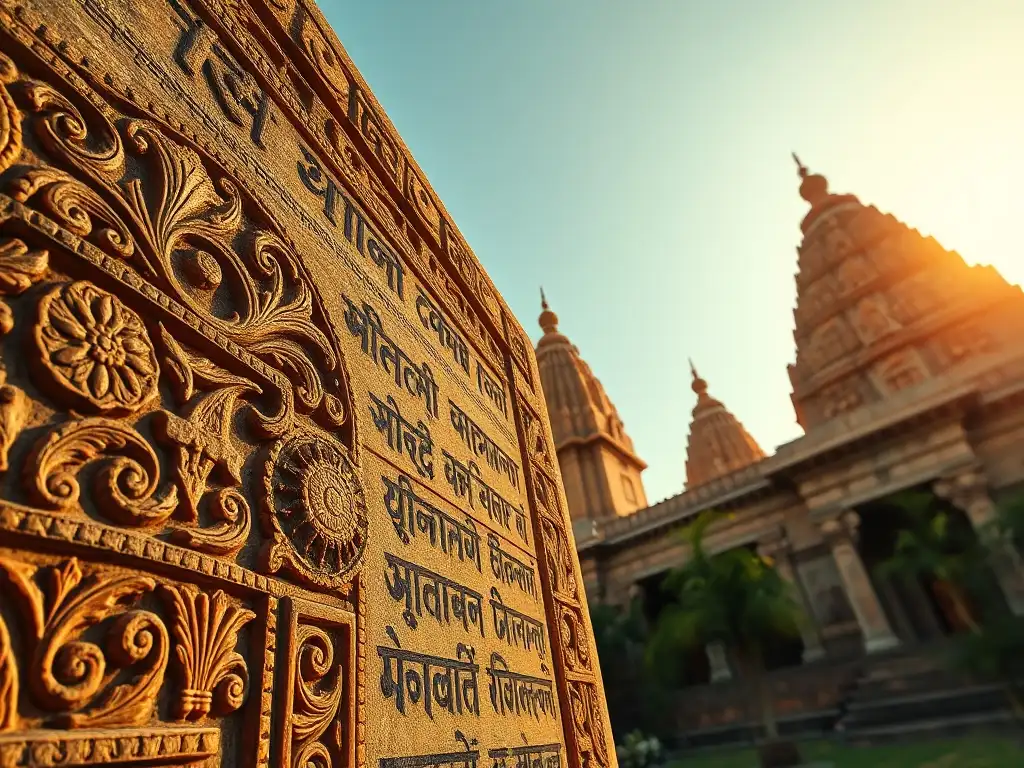
The ancient Indian temple inscriptions serve as a remarkable window into the spiritual, cultural, and socio-political fabric of early Indian civilizations. These inscriptions, often intricately carved into stone, not only embellish the architectural beauty of temples but also encapsulate profound narratives that reflect the beliefs, practices, and historical contexts of the time.
From the revered Vedic traditions to the philosophical underpinnings of the Gupta Empire, these texts provide invaluable insights into the evolution of religious thought and artistic expression in ancient India. This article embarks on a journey to explore the significance, historical context, and enduring legacy of temple inscriptions, illuminating their role as spiritual narratives etched in stone.
Understanding the Importance of Inscriptions in Ancient Indian Culture
Inscriptions in ancient India were far more than mere decorations; they were vital instruments of communication that conveyed religious, political, and social messages. Key aspects of their importance include:
- Religious Significance: Many inscriptions serve as dedications to deities, offering prayers or documenting rituals. They often reflect the evolving practices of worship and the theological shifts within Hinduism and other faiths.
- Historical Documentation: Inscriptions act as primary sources for historians, providing concrete evidence of dynastic changes, territorial conquests, and cultural exchanges. They help reconstruct timelines of ancient Indian history.
- Cultural Identity: Through language and style, inscriptions reveal the linguistic and artistic diversity of ancient India, showcasing the regional variations that contributed to a rich cultural tapestry.
Overview of Ancient Indian Temple Inscriptions and Their Significance
The inscriptions found in ancient temples can be categorized into various types, each serving distinct purposes:
- Religious Texts: These include hymns, mantras, and verses that honor deities, often inscribed within the sanctum sanctorum or on temple walls.
- Donative Inscriptions: Many inscriptions record gifts or donations made by patrons, often detailing the reasons for the endowment and the associated merits.
- Royal Decrees: Some inscriptions bear royal edicts or proclamations that highlight the patronage of temples by kings, further emphasizing the political significance of such edifices.
The significance of these inscriptions extends beyond their immediate context, as they continue to inspire contemporary scholars and devotees, fostering a deeper understanding of ancient Indian spirituality and heritage.
Historical Context of Ancient Indian Temple Inscriptions
The historical context of ancient Indian temple inscriptions is closely linked to the evolution of temple architecture and the socio-political climate of various eras. Understanding this context is essential to appreciate the narratives these inscriptions convey.
The Evolution of Temple Architecture and Inscriptions
The development of temple architecture in India can be traced through distinct phases, each contributing to the complexity of inscriptions:
- Indus Valley Civilization (c. 2500–1900 BCE): Early signs of urban planning and religious structures, though inscriptions are scarce.
- Maurya Period (c. 322–185 BCE): The use of inscriptions began to flourish, as seen in the edicts of Ashoka, which reflect Buddhist values and governance.
- Gupta Period (c. 320–550 CE): A golden age of art and architecture, where intricate temple designs featured extensive inscriptions, showcasing the peak of artistic expression.
The progression of temple architecture directly influenced the types and styles of inscriptions, leading to a diverse range of spiritual narratives that encapsulated the ethos of their times.
Major Periods of Ancient Indian History Influencing Temple Inscriptions
The significance of temple inscriptions evolved through various historical periods, each leaving its mark on the inscriptions themselves:
- Vedic Period (c. 1500–500 BCE): Inscriptions are minimal, but the period laid the groundwork for later religious practices and beliefs.
- Mauryan and Post-Mauryan Periods: The emergence of Buddhism and Jainism introduced new themes in inscriptions, emphasizing moral and ethical teachings.
- Medieval Period: The rise of regional kingdoms saw the proliferation of temple building and inscriptions, reflecting local dialects, art styles, and religious diversity.
- Late Medieval to Early Modern Period: Inscriptions began to reflect the socio-political changes brought about by invasions and the establishment of new empires, including the Mughals.
Through the lens of these historical periods, the inscriptional evidence found in ancient temples becomes a compelling narrative of the spiritual and cultural evolution of India, inviting further exploration and appreciation of its rich heritage.
Types of Ancient Indian Temple Inscriptions
Ancient Indian temple inscriptions are invaluable resources that provide insight into the religious, cultural, and historical contexts of the time. They can be classified into three primary types: epigraphic, iconographic, and literary inscriptions. Each type serves a distinct purpose and contributes uniquely to our understanding of ancient Indian civilization.
Epigraphic Inscriptions: Definitions and Examples
Epigraphic inscriptions are engraved texts that serve as records of various aspects related to temples, such as donations, temple constructions, and the patronage of rulers. These inscriptions are typically found on stone slabs, pillars, or walls and are composed in various languages, including Sanskrit, Tamil, and Prakrit.
One notable example is the Aihole inscription, which commemorates the achievements of the Chalukya king Pulakeshin II. It highlights his victories and the construction of temples, illustrating both the political and religious significance of the era. Another significant instance is the Kalinga inscriptions, which detail the contributions of King Ashoka to Buddhism and the establishment of stupas, showcasing the intertwining of governance and spirituality.
Iconographic Inscriptions: Symbolism and Meaning
Iconographic inscriptions focus on the visual representations and symbols associated with deities and religious practices. These inscriptions often accompany sculptures or reliefs in temples and provide insight into the iconography of gods and goddesses, their attributes, and the rituals performed in their honor.
For instance, the Brahmanical temples of Khajuraho feature intricate carvings that depict deities such as Shiva and Vishnu, along with their consorts. The symbolism in these inscriptions reflects the philosophical and theological concepts of the time, such as the relationship between the divine and the material world. Moreover, these inscriptions often incorporate motifs representing fertility, prosperity, and the cycle of life, which were central to the beliefs of ancient Indian society.
Literary Inscriptions: Textual Narratives in Stone
Literary inscriptions comprise poetic verses, hymns, or prose that convey spiritual teachings, devotional sentiments, or historical narratives. These inscriptions often reflect the cultural and literary traditions of the period and serve as a testament to the linguistic development of ancient India.
A prominent example is the inscriptions found in the Brihadeeswarar Temple in Thanjavur, which include Tamil verses praising the deity and the Chola dynasty. Such literary inscriptions not only highlight the artistic expression of ancient poets but also reveal the socio-political context, showcasing the patronage of literature and the arts by powerful rulers.
Themes Explored in Ancient Indian Temple Inscriptions
Ancient Indian temple inscriptions explore a multitude of themes, providing a comprehensive understanding of the spiritual, political, and cultural landscape of the time. Key themes include spiritual narratives, historical events, and artistic expressions that reflect the values of ancient societies.
Spiritual Narratives and Religious Beliefs
Spiritual narratives in temple inscriptions often recount the divine attributes of deities, the significance of rituals, and the relationship between the devotee and the divine. These inscriptions serve as a medium for conveying religious teachings and doctrines, illustrating the beliefs and practices that shaped the spiritual landscape of ancient India.
For instance, the inscriptions in the Jagannath Temple in Puri narrate the story of Lord Jagannath's divine play and the annual Ratha Yatra, emphasizing the importance of devotion and community participation in religious life. Such narratives not only reinforce faith but also create a sense of collective identity among devotees.
Historical Events and Dynastic Claims
Historical events and dynastic claims are frequently documented in temple inscriptions, providing insights into the political landscape of ancient India. These inscriptions often commemorate the achievements of rulers, victories in battles, and the establishment of dynasties, thereby serving as historical records.
The inscriptions of the Gupta Empire exemplify this theme, as they detail the accomplishments of rulers like Chandragupta II and their contributions to art, culture, and religion. By chronicling these events, the inscriptions reinforce the legitimacy of dynasties and their divine right to rule, reflecting the intersection of politics and spirituality.
Artistic Expressions and Cultural Values
Artistic expressions in temple inscriptions reveal the cultural values and aesthetic sensibilities of ancient Indian society. The intricacy of carvings, the choice of themes, and the style of execution reflect the artistic trends of the time and provide insight into the socio-cultural fabric.
For example, the temples of Hampi are adorned with detailed sculptures and inscriptions that celebrate various aspects of life, including love, valor, and devotion. These artistic expressions not only enhance the visual appeal of the temples but also serve as a medium for conveying moral and ethical teachings, thus embodying the values upheld by ancient Indian civilizations.
Notable Examples of Ancient Indian Temple Inscriptions
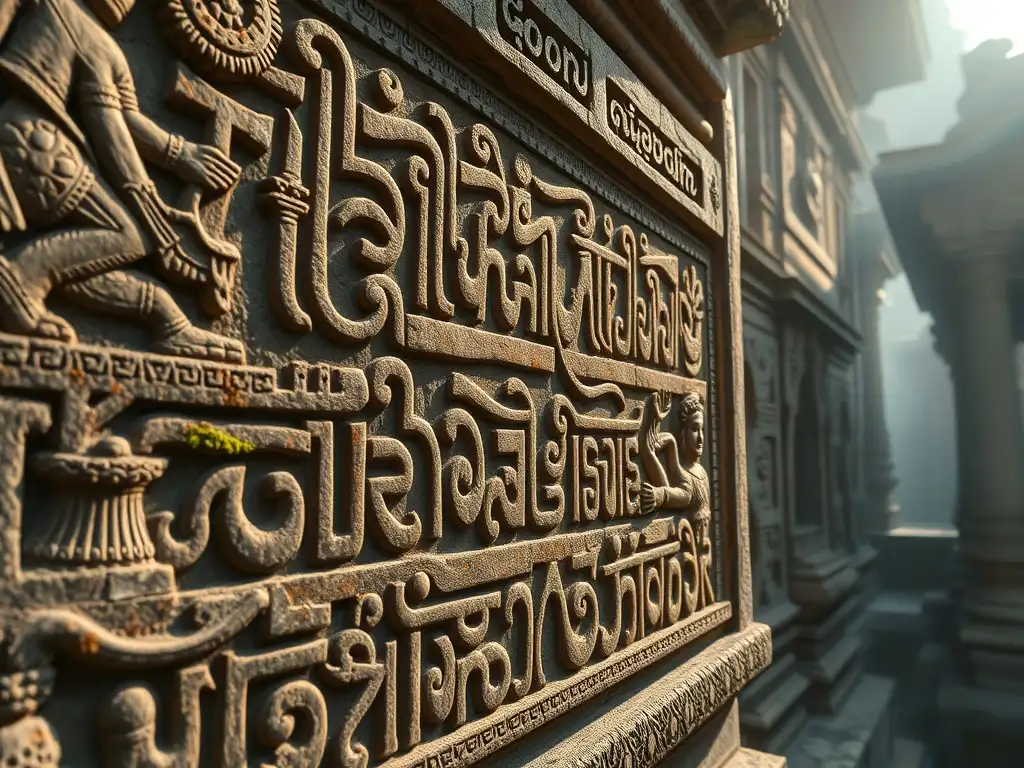
Ancient Indian temple inscriptions serve as invaluable windows into the spiritual, cultural, and historical contexts of their time. These inscriptions not only convey religious sentiments but also document political events, social structures, and artistic achievements. Here are some notable examples that exemplify the richness of ancient Indian temple inscriptions.
The Inscriptions of the Brihadeeswarar Temple
Constructed in the early 11th century CE, the Brihadeeswarar Temple in Thanjavur is a masterpiece of Chola architecture and artistry. It houses numerous inscriptions that detail the temple's construction, the patronage of Emperor Rajaraja Chola I, and various rituals performed within its sacred precincts. The inscriptions are primarily in Tamil and Sanskrit, reflecting the linguistic diversity of the region.
One of the most significant inscriptions records the temple's consecration and the various offerings made to the deity, Shiva. This not only highlights the religious fervor of that era but also provides insights into the socio-political dynamics of the Chola dynasty, emphasizing the emperor's divine right to rule as ordained by the gods. The inscriptions also include references to land grants made for the temple's maintenance, showcasing the intertwining of religion and governance.
The Edicts of Ashoka and Their Impacts
The Edicts of Ashoka, inscribed during the reign of Emperor Ashoka (268-232 BCE), are among the earliest and most important records of ancient Indian inscriptions. These edicts, found on pillars and rock surfaces across the Indian subcontinent, primarily convey messages of moral governance, peace, and Buddhist philosophy. Ashoka's inscriptions are written in several scripts, including Brahmi and Kharosthi, and are pivotal in understanding the spread of Buddhism.
The impact of these edicts was profound, as they not only promoted ethical conduct and non-violence but also laid the groundwork for a unified Indian identity. The edicts addressed various aspects of governance, such as welfare measures, animal rights, and social harmony. Through these inscriptions, Ashoka sought to communicate directly with his subjects, emphasizing the importance of dharma, or moral duty, which resonated throughout the empire and beyond.
The Inscriptions of the Khajuraho Temples
The Khajuraho temples, built between 950 and 1050 CE during the Chandela dynasty, are renowned for their intricate sculptures and erotic carvings. The inscriptions found within these temples provide essential information about the patrons, architectural features, and the cultural milieu of the time. Written in Sanskrit, these inscriptions celebrate the deities worshipped in the temples, including Brahma, Vishnu, and Shiva.
One notable inscription from the Kandariya Mahadeva Temple describes the temple’s dedication and highlights the significance of its artistic representations. The inscriptions serve not only as religious texts but also as commentaries on the society’s values, beliefs, and artistic endeavors. Additionally, they offer insights into the patronage system, revealing how the ruling class engaged with religion and art to legitimize their authority and enhance their status.
Analysis of the Language and Script Used in Inscriptions
The language and script used in ancient Indian temple inscriptions are vital for understanding the historical and cultural contexts of their creation. The interplay of languages and scripts illustrates the evolution of communication in ancient India and how it has been influenced by various factors, including regional dialects, religious practices, and political changes.
The Evolution of Scripts in Ancient India
The evolution of scripts in ancient India is a fascinating journey that reflects the development of Indian civilization. Initially, the Indus Valley civilization utilized a script that remains undeciphered, suggesting an early form of written communication. However, the emergence of Brahmi and Kharosthi scripts during the Mauryan period marked a significant advancement in literacy and documentation.
Brahmi script, in particular, became the progenitor of many modern Indian scripts and was widely used in inscriptions across various regions. Over time, regional variations of Brahmi emerged, adapting to local languages and dialects, which facilitated the spread of literacy and the cultural exchange across the subcontinent. The evolution of scripts not only showcases the linguistic diversity of ancient India but also highlights the socio-political influences that shaped these changes.
Language Variations and Regional Dialects in Inscriptions
Language variations and regional dialects play a crucial role in the understanding of ancient Indian temple inscriptions. While Sanskrit served as the liturgical and scholarly language, local dialects and languages were often employed in inscriptions to cater to the diverse populations that worshipped at these temples.
Inscriptions in regional languages, such as Tamil, Kannada, and Telugu, reflect the cultural identities and practices of the communities involved. This linguistic diversity is particularly evident in inscriptions from places like Tamil Nadu and Karnataka, where local idioms and expressions add layers of meaning to the texts. The use of vernacular languages in temple inscriptions not only made religious teachings more accessible but also reinforced the connection between the temple and the local populace.
The language and script of ancient Indian temple inscriptions are key to understanding the historical context, cultural practices, and religious beliefs of ancient Indian civilizations. Through a careful analysis of these inscriptions, we gain insights into the rich tapestry of India's past and the enduring legacy of its spiritual narratives.
The Role of Ancient Indian Temple Inscriptions in Contemporary Studies
Ancient Indian temple inscriptions serve as invaluable resources for contemporary scholars and researchers, offering a direct link to the beliefs, practices, and societal structures of bygone eras. These inscriptions, carved in stone, often contain religious texts, royal edicts, and historical accounts that illuminate the cultural and spiritual ethos of ancient India. By studying these inscriptions, modern researchers can gain insights into the religious practices, artistic expressions, and social hierarchies of ancient civilizations, effectively bridging the gap between past and present.
In contemporary studies, these inscriptions are not merely historical artifacts; they also provide a framework for understanding the evolution of language and script in ancient India. The diverse scripts used—such as Brahmi, Kharosthi, and later Devanagari—reflect the linguistic diversity and the cultural interchange that characterized ancient Indian society. Furthermore, these inscriptions often reveal the interactions between different regions and cultures, showcasing the syncretic nature of Indian history. Thus, the role of ancient Indian temple inscriptions transcends mere historical documentation; they are critical to understanding the complex tapestry of India's cultural heritage.
Archaeological Significance of Temple Inscriptions
The archaeological significance of temple inscriptions lies in their ability to provide chronological context to archaeological finds. These inscriptions often include date stamps and references to specific events, rulers, or dynasties, which can help establish a timeline of historical developments. For instance, inscriptions from the Gupta period can be correlated with archaeological evidence from sites like Nalanda and Vikramshila, offering a more comprehensive understanding of the socio-political climate of the time.
Moreover, temple inscriptions can serve as markers for the location and importance of certain temples within ancient trade routes or pilgrimage paths. Archaeologists can utilize this information to identify previously unknown sites or to understand the spatial organization of religious practices in ancient India. The inscriptions also contribute to the study of architectural styles and construction techniques, as they often describe the patronage and funding sources for temple construction, reflecting the economic conditions and priorities of the time.
Contributions to Understanding Ancient Indian Society
Ancient Indian temple inscriptions are crucial for comprehending the social, political, and economic fabrics of ancient Indian society. These inscriptions frequently mention donations made by individuals or communities, revealing the socio-economic dynamics and the role of patronage in temple construction and maintenance. The recorded acts of devotion reflect the societal values and the significance of religion in everyday life, indicating how spiritual beliefs permeated the social structure.
Furthermore, inscriptions can shed light on the roles of various classes within society, including kings, merchants, artisans, and common people. For instance, inscriptions might document the contributions of local guilds or the involvement of women in religious practices, thus providing a nuanced understanding of gender roles and social stratification. By analyzing these inscriptions, historians can reconstruct the intricate relationships between different societal groups and the governance structures that influenced their interactions.
Challenges in Studying Ancient Indian Temple Inscriptions

While ancient Indian temple inscriptions offer rich insights into the past, several challenges hinder their study and interpretation. One of the primary obstacles is the sheer volume and diversity of inscriptions, which vary widely in language, script, and content. This diversity demands specialized knowledge from researchers, who must be well-versed in various epigraphic traditions and regional histories to accurately interpret the data.
Additionally, many inscriptions are found in fragmented states, making it difficult to reconstruct the full context or meaning. Inscriptions that have weathered over centuries may be partially eroded or damaged, complicating the task of decipherment. The presence of multiple layers of text or graffiti on the same stone can also lead to interpretive ambiguities, requiring careful analysis and sometimes even the use of advanced imaging technologies to unveil hidden details.
Preservation Issues and Epigraphic Studies
Preservation of ancient inscriptions poses a significant challenge, as many are exposed to environmental factors that hasten their deterioration. Pollution, moisture, and physical wear can erode inscriptions over time, leading to the loss of critical historical data. Efforts to preserve these inscriptions often face budgetary constraints and a lack of dedicated resources, particularly in rural areas where many ancient temples are located.
Furthermore, the methodologies employed in epigraphic studies can vary, affecting the consistency of data collection and preservation practices. In some cases, local traditions of conservation may conflict with modern scientific approaches, resulting in further complications. As such, it is imperative for researchers to collaborate with conservationists and local authorities to develop comprehensive preservation strategies that ensure the longevity of these invaluable historical records.
Interpretative Challenges and Modern Research Approaches
The interpretative challenges surrounding ancient Indian temple inscriptions are multifaceted. The language used in these inscriptions often reflects the socio-political context of the time, which can lead to misinterpretations if not properly understood. Scholars must navigate the nuances of ancient languages and idioms, requiring a deep understanding of the historical and cultural context in which these inscriptions were created.
Modern research approaches increasingly incorporate interdisciplinary methodologies, blending archaeology, history, linguistics, and digital humanities to enhance the study of ancient inscriptions. The use of advanced technologies, such as 3D scanning and digital imaging, allows researchers to analyze inscriptions more thoroughly and identify details that may not be visible to the naked eye. Additionally, collaborative efforts among scholars from different fields can foster a more comprehensive understanding of these inscriptions, leading to richer insights into ancient Indian culture and history.
While the study of ancient Indian temple inscriptions presents challenges, it also offers profound opportunities for understanding the complexities of ancient Indian civilizations. Through continued research and innovative methodologies, scholars can unlock the spiritual narratives embedded in stone, contributing to the broader narrative of India's rich historical tapestry.
Conclusion: The Legacy of Ancient Indian Temple Inscriptions
The inscriptions found in ancient Indian temples serve as a remarkable testament to the rich spiritual, cultural, and historical tapestry of Indian civilization. These inscriptions not only document the religious practices and beliefs of the time but also reflect the socio-political dynamics, artistic expressions, and linguistic evolution of ancient India. The legacy of these temple inscriptions lies in their ability to connect modern society with its historical roots, providing invaluable insights into the spiritual narratives that shaped the lives of countless individuals.
As we delve deeper into the study of these inscriptions, we begin to recognize their role as more than mere texts etched in stone; they are powerful narratives that encapsulate the essence of faith, devotion, and community. Through the study of ancient Indian temple inscriptions, we can better appreciate the cultural heritage that has influenced contemporary practices and beliefs, fostering a deeper understanding of our shared history.
Reflections on the Spiritual and Cultural Narratives in Stone
The spiritual narratives embedded in ancient Indian temple inscriptions reveal the complexities of religious thought and practice in the subcontinent. They often depict the divine, narrate mythological stories, and celebrate the lives of saints and devotees, reflecting the diverse belief systems that coexisted in ancient India. These texts serve as a window into the past, illustrating how spirituality was interwoven with daily life, community identity, and cultural values.
Moreover, the inscriptions frequently highlight local traditions and deities, showcasing regional variations in worship and belief. This diversity enriches our understanding of ancient Indian society and emphasizes the significance of local customs in the broader context of Indian culture. By analyzing these inscriptions, scholars can uncover the nuanced interactions between different religious traditions, shedding light on the syncretic nature of ancient Indian spirituality.
The Importance of Continued Research in Inscriptions and Epigraphy
The field of epigraphy is vital for preserving the knowledge and understanding of our ancient past. Continued research into ancient Indian temple inscriptions is essential for several reasons. First, it allows historians and archaeologists to build a more comprehensive picture of ancient Indian life, revealing connections between various communities and their cultural practices.
Secondly, as modern technology advances, new methodologies in epigraphy, such as digital imaging and 3D modeling, enable researchers to analyze inscriptions in ways that were previously impossible. This not only enhances our understanding of the texts themselves but also aids in the preservation of these irreplaceable artifacts.
Lastly, as awareness of the significance of inscriptions grows, so does the potential for collaboration between scholars, local communities, and cultural institutions. This synergy can foster a greater appreciation for ancient history and encourage the safeguarding of these invaluable resources for future generations.
Call to Action: Engaging with Ancient History
To truly appreciate the spiritual and cultural narratives captured in ancient Indian temple inscriptions, it is essential for individuals to engage with this rich history actively. Whether through academic study, community projects, or personal exploration, there are countless ways to connect with the ancient past.
Encouraging Further Exploration of Ancient Indian Temple Inscriptions
We encourage readers to delve into the study of ancient Indian temple inscriptions by visiting local museums, participating in guided tours of historical sites, or attending lectures and workshops focused on epigraphy. Engaging with these narratives can foster a deeper appreciation for the artistry and significance of inscriptions, as well as their role in shaping contemporary cultural identities.
Additionally, readers can explore scholarly publications, documentaries, and online resources dedicated to the study of ancient Indian temple inscriptions. These materials provide valuable insights and interpretations that can enhance one’s understanding of the intricate relationships between spirituality, culture, and history.
Resources for Learning More About Ancient Indian Epigraphy
Here are some resources that can aid in the exploration of ancient Indian epigraphy:
- Books & Journals: Look for scholarly books and journals that focus on epigraphy, archaeology, and history of ancient India.
- Online Courses: Various universities and institutions offer online courses on ancient history and epigraphy that provide structured learning opportunities.
- Documentaries: Watch documentaries that explore ancient Indian civilizations and their contributions, which often include segments on inscriptions.
- Museums & Archives: Visit museums housing ancient artifacts and inscriptions, where guided tours can provide context and expert insights.
By actively engaging with these resources, individuals can contribute to the ongoing discourse surrounding ancient Indian temple inscriptions and help preserve their legacy for future generations.
- Introduction to Ancient Indian Temple Inscriptions
- Historical Context of Ancient Indian Temple Inscriptions
- Types of Ancient Indian Temple Inscriptions
- Themes Explored in Ancient Indian Temple Inscriptions
- Notable Examples of Ancient Indian Temple Inscriptions
- Analysis of the Language and Script Used in Inscriptions
- The Role of Ancient Indian Temple Inscriptions in Contemporary Studies
- Challenges in Studying Ancient Indian Temple Inscriptions
- Conclusion: The Legacy of Ancient Indian Temple Inscriptions
- Call to Action: Engaging with Ancient History
Frequently Asked Questions
What are ancient Indian temple inscriptions?
Ancient Indian temple inscriptions are dedications or records carved into the stone of temples, often detailing historical events, religious beliefs, or donations made to the temple.
Why are temple inscriptions important?
These inscriptions serve as valuable historical sources, offering insights into the culture, society, and religion of ancient India, as well as the patrons and artists involved in temple construction.
How do inscriptions reflect the spiritual narratives of ancient India?
The inscriptions often contain mythological stories, prayers, and devotional texts, which provide a glimpse into the spiritual beliefs and practices of the time, highlighting the socio-religious dynamics of ancient civilizations.
Where can ancient temple inscriptions be found in India?
Ancient temple inscriptions can be found across various regions of India, especially in temples from the Gupta Empire, Chola Dynasty, and Indus Valley Civilization, showcasing the artistic and linguistic diversity of the era.
How have modern scholars studied these inscriptions?
Modern scholars use epigraphy and historical analysis to interpret temple inscriptions, contributing to a deeper understanding of ancient Indian history, culture, and their impact on contemporary society.
Final Reflection: The Enduring Legacy of Ancient Indian Temple Inscriptions
Inscriptions of ancient Indian temples serve as a profound testament to the spiritual narratives that shaped their creation and continue to resonate today. These inscriptions are not merely decorative; they are windows into the past, revealing the intricate beliefs, values, and stories of a civilization that sought to connect the divine with the earthly realm. In our fast-paced modern world, where spirituality often takes a backseat to material pursuits, these ancient texts remind us of the importance of introspection and the quest for meaning in our lives.
Cultural and social landscapes are continually influenced by the wisdom embedded in these inscriptions. The stories etched in stone have the power to inspire contemporary society, encouraging us to explore our own spiritual journeys and understand the rich heritage that has shaped our identities. As noted by historian R. Nagaswamy, “The inscriptions are not just historical records; they are living narratives that guide us in our spiritual quests.” This ongoing dialogue between the past and present invites us to reflect on how these ancient teachings can inform our understanding of community, devotion, and the human experience.
As we conclude this exploration of ancient Indian temple inscriptions, I invite you to take a moment to reflect on your own spiritual narrative. Consider how the lessons from these inscriptions can enrich your life and foster a deeper connection to your own beliefs and values. Let the stories of the past inspire you to seek out your own truths, to honor your heritage, and to contribute to the ongoing tapestry of human spirituality. Embrace the wisdom of those who came before us, and allow it to guide you on your journey forward.
Unveil the Wisdom of Ancient Temples!
Thank you for exploring the fascinating world of ancient temples and their spiritual narratives with us! We hope this article has deepened your appreciation for the timeless stories etched in stone and inspired you to delve even further into India’s rich history.
Now, it's time to take that inspiration and transform it into action! Here are a few engaging ways to continue your journey:
- Explore a local historical site or temple to experience the rich stories firsthand.
- Join a community discussion, either online or at a museum, to share your insights and learn from different perspectives.
- Document your thoughts and reflections through a blog or social media, inviting friends to participate in the conversation!
What hidden stories or insights about ancient temples have you discovered, and how will you share them with others?