
The Art of Diplomacy: Ashoka’s Alliances Beyond the Mauryan Empire

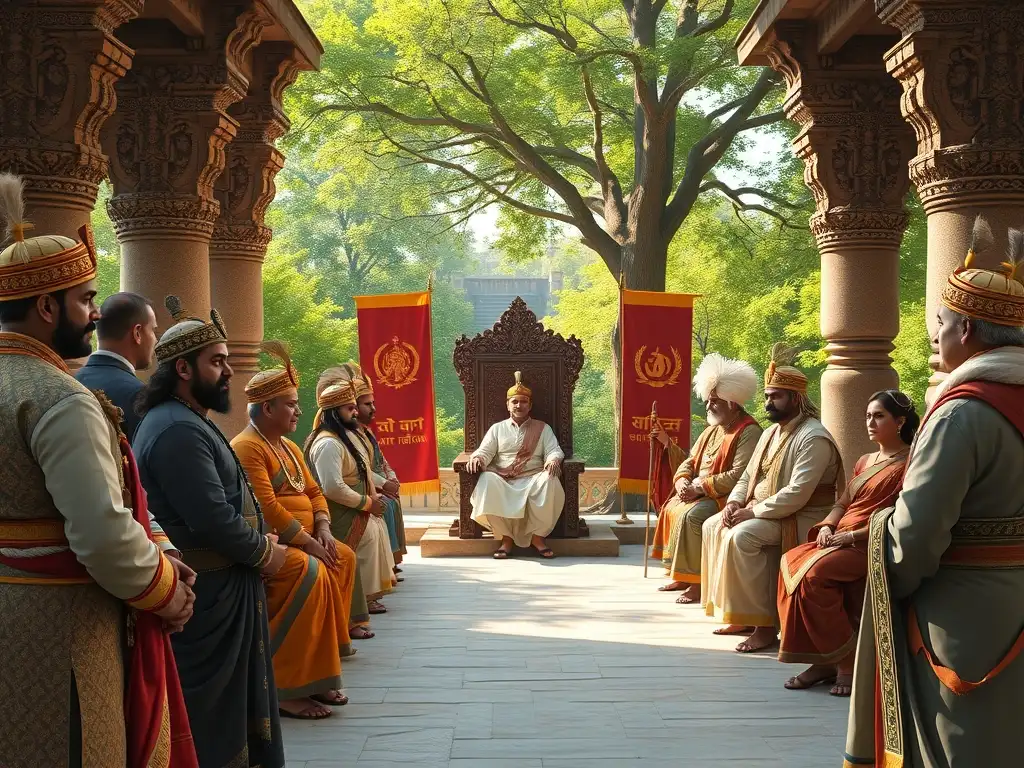
Welcome to Ancient India History, where we embark on a fascinating journey through the corridors of time to uncover the rich and diverse legacy of ancient Indian civilizations. In this exploration, we delve into the intricate web of diplomacy and alliances that shaped the social and political landscape of the era. Our featured article, "The Art of Diplomacy: Ashoka’s Alliances Beyond the Mauryan Empire," invites you to discover how one of history’s most revered leaders navigated alliances that transcended borders and time.
Are you ready to unlock the secrets of ancient Indian diplomacy? Join us as we unravel the threads of history that still resonate today!
Introduction to Ancient Indian Diplomacy
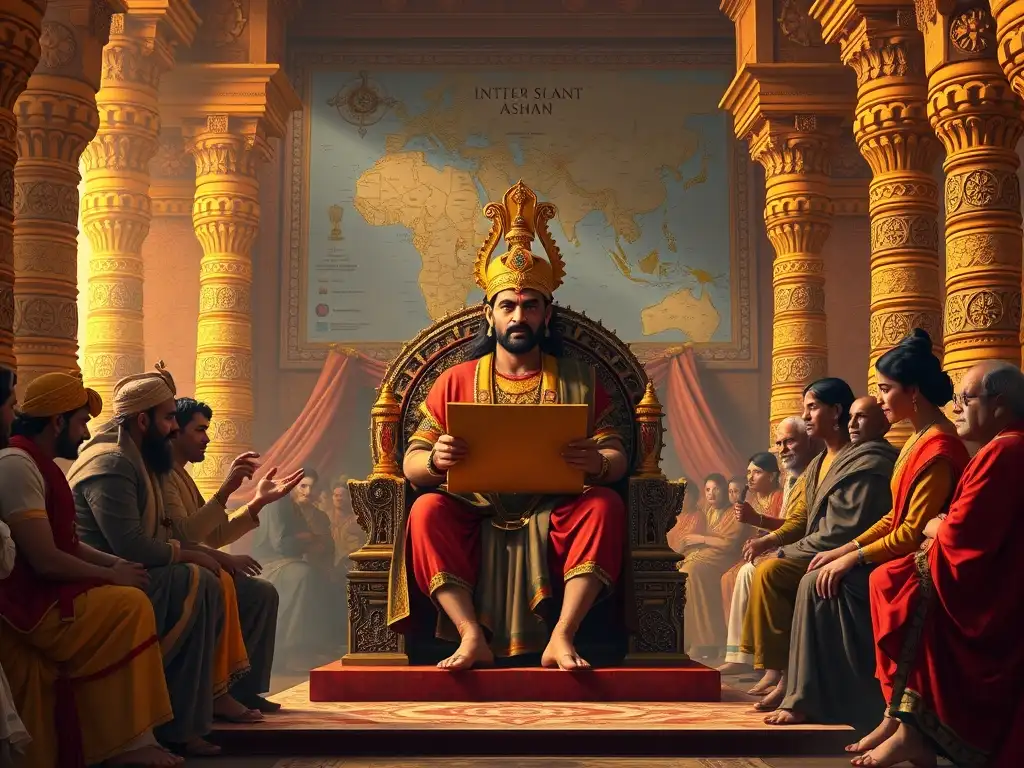
The study of ancient Indian diplomacy and alliances opens a fascinating window into the complex political landscape of the subcontinent. From the sophisticated urban planning of the Indus Valley Civilization to the expansive reach of the Mauryan Empire, the art of diplomacy played a crucial role in shaping the historical trajectory of ancient India.
This article delves into the diplomatic strategies employed by one of its most renowned rulers, Ashoka the Great, highlighting his alliances that extended beyond the confines of his empire. Understanding these diplomatic maneuvers not only sheds light on Ashoka's reign but also offers invaluable insights into the broader cultural and political exchanges that defined ancient Indian civilization.
Understanding the Concept of Diplomacy in Ancient India
Diplomacy in ancient India was not merely an extension of political strategy; it was a nuanced art that involved negotiation, communication, and alliance-building. Key characteristics of ancient Indian diplomacy included:
- Cultural Exchange: Diplomats often facilitated the exchange of ideas, art, and technology, enriching both the sending and receiving states.
- Marriage Alliances: Royal marriages were a common practice to forge strong ties between kingdoms, ensuring peace and mutual support.
- Treaties and Agreements: Various forms of treaties were crafted, ranging from trade agreements to non-aggression pacts, often inscribed on stone or metal for permanence.
These elements underscore the intricate nature of political relations and the importance of maintaining harmonious ties with neighboring states.
Significance of Alliances in the Mauryan Empire
The Mauryan Empire, under the leadership of Chandragupta Maurya and later Ashoka, utilized alliances as a strategic tool for expansion and consolidation. The significance of these alliances can be summarized as follows:
- Military Strength: Alliances provided military support against common enemies, enhancing the empire's defensive capabilities.
- Economic Benefits: Trade agreements allowed for the exchange of goods, which bolstered the economy and led to prosperity.
- Cultural Integration: Diplomatic relationships facilitated cultural exchanges, promoting a sense of unity among diverse populations within the empire.
Through these alliances, the Mauryan Empire was able to establish a formidable presence in ancient India, influencing the political landscape for centuries.
Ashoka the Great: A Brief Overview
Ashoka, the grandson of Chandragupta Maurya, is remembered as one of India's most enlightened rulers. His reign marked a pivotal period in the Mauryan Empire, characterized by both military conquests and a profound commitment to Buddhist principles.
Early Life and Ascension to the Throne
Born into royalty, Ashoka received a comprehensive education in governance, military strategy, and the arts. His early life was marked by a fierce ambition to expand the empire, leading him to numerous military campaigns. His pivotal moment came with the Kalinga War, which, despite military success, left him deeply troubled by the suffering caused. This turning point laid the foundation for his transformative approach to governance.
Ashoka's Vision for a Unified Empire
Ashoka envisioned an empire where peace and harmony prevailed over conflict. After his conversion to Buddhism, he adopted a policy of Dharma that emphasized ethical governance, non-violence, and compassion. His diplomatic efforts were aimed at promoting these ideals, leading to alliances that not only solidified his power but also fostered a culture of peace across the region. By prioritizing diplomacy over warfare, Ashoka set a precedent for future leaders, illustrating the profound impact of alliances in shaping the legacy of ancient Indian diplomacy.
The Role of Diplomacy in Ashoka's Reign
Ashoka the Great, who ruled from 268 to 232 BCE, is often celebrated not only for his military conquests but also for his remarkable diplomatic strategies that extended the influence of the Mauryan Empire beyond its borders. Diplomacy during Ashoka's reign played a crucial role in fostering peaceful relationships with neighboring states and promoting the spread of Buddhism. Ashoka's approach marked a significant shift from aggressive military expansion to a more nuanced and strategic form of governance, prioritizing dialogue and alliances over warfare.
The significance of diplomacy in Ashoka's reign can be observed in various aspects. Firstly, it helped in consolidating his power and securing the empire's borders, as diplomatic ties with neighboring kingdoms reduced the likelihood of conflict. Secondly, Ashoka effectively used diplomacy as a means to promote the moral and ethical teachings of Buddhism, which he believed could unify diverse cultures and peoples under a common framework of peace and respect. This dual approach of military might combined with diplomatic engagement established Ashoka not only as a conqueror but as a revered figure in the annals of ancient Indian diplomacy.
Defining Ancient Indian Diplomacy during Ashoka’s Era
Ancient Indian diplomacy during Ashoka's era can be characterized by a blend of negotiation, alliance-building, and cultural exchange. Unlike contemporary methods of diplomacy that may rely heavily on treaties and formal agreements, ancient Indian diplomacy was often more fluid, relying on personal relationships and mutual respect among rulers. The principles of dharma (moral duty) and ahimsa (non-violence), particularly highlighted by Ashoka in his edicts, shaped the diplomatic interactions of the time.
Ashoka's edicts, inscribed on pillars and rocks across his empire, served as a means of communicating his diplomatic intentions and ethical stance. They articulated his commitment to non-violence and respect for all living beings, which resonated with both his subjects and foreign dignitaries. Moreover, the establishment of emissaries and envoys to maintain relationships with other kingdoms was a hallmark of Ashoka's diplomatic approach, reflecting a sophisticated understanding of international relations for that era.
Key Diplomatic Strategies Employed by Ashoka
Ashoka employed several key diplomatic strategies that were pivotal in extending his influence and fostering peaceful relations.
- Missionary Diplomacy: Ashoka sent missionaries, particularly Buddhist monks, to various regions, including Sri Lanka and Southeast Asia, to spread the teachings of Buddhism. This not only helped in establishing cultural ties but also in enhancing his reputation as a benevolent ruler.
- Marriage Alliances: Marriages were often used as tools for political alliances. Ashoka strategically arranged marriages between his royal family and the nobility of surrounding regions to solidify relationships and secure loyalty.
- Cultural Exchanges: Ashoka encouraged cultural exchanges, promoting art, philosophy, and religious practices that resonated with neighboring states. This approach not only fostered goodwill but also integrated diverse cultures into the Mauryan sphere of influence.
- Peace Treaties: Rather than seeking to conquer through warfare, Ashoka often opted for peace treaties with rival kingdoms, emphasizing negotiations that respected the sovereignty of other states while promoting mutual interests.
Major Alliances Formed by Ashoka
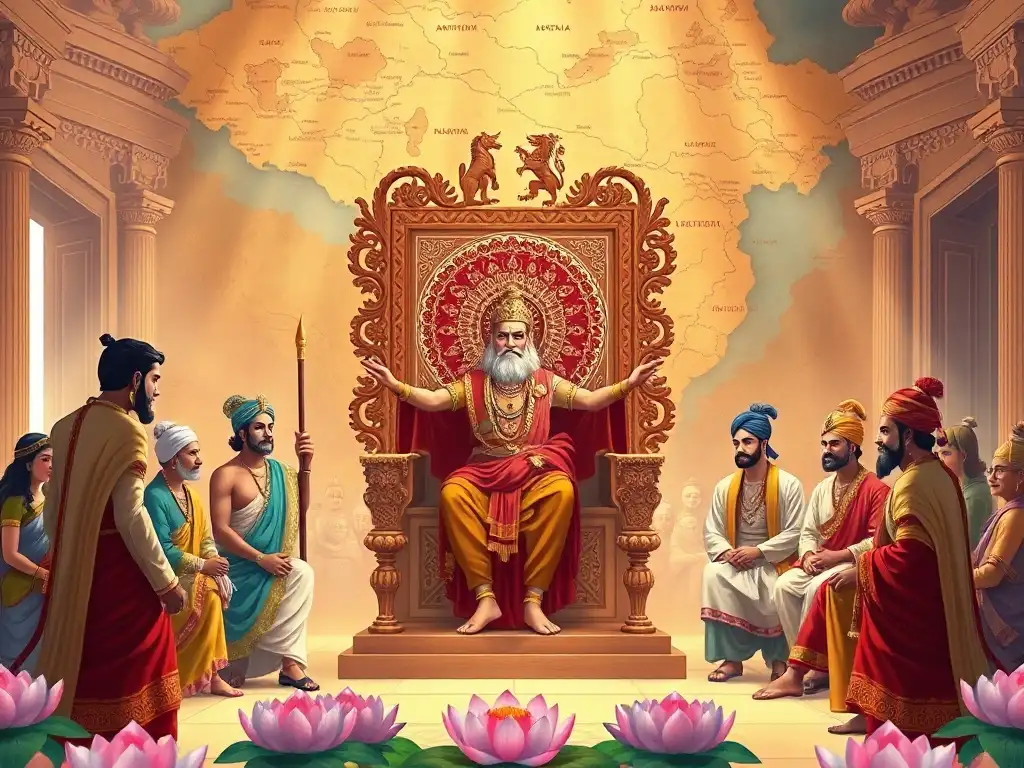
Ashoka's reign was marked by several significant alliances that contributed to the stability and prosperity of the Mauryan Empire. These alliances were not only political but also cultural, reflecting Ashoka's vision of a unified and peaceful society.
Overview of Ashoka’s Key Alliances
- Alliance with Sri Lanka: One of the most notable alliances was with Sri Lanka, achieved through the missionary efforts of Ashoka's son, Mahinda. This alliance not only facilitated the spread of Buddhism in the region but also established strong cultural and trade relations that lasted for centuries.
- Relations with the Hellenistic World: Ashoka maintained diplomatic correspondence with Hellenistic rulers, including the Seleucid Empire. This relationship was characterized by mutual respect and trade, which allowed for cultural exchanges that enriched both civilizations.
- Alliances with Regional Kings: Ashoka forged alliances with various regional kings in present-day Afghanistan, Nepal, and parts of the Indian subcontinent. Through marriages and treaties, these alliances helped in maintaining peace and stability within the empire, enabling Ashoka to focus on governance and cultural development.
- Support from Buddhist Kingdoms: Ashoka also allied with other Buddhist kingdoms, such as in Central Asia, promoting a shared cultural and religious identity that reinforced the influence of Buddhism as a unifying factor across diverse regions.
Ashoka's diplomatic endeavors were integral to his legacy, shaping the political landscape of ancient India and influencing the course of Buddhist expansion across Asia. His strategic focus on alliances over aggression not only secured the Mauryan Empire's prosperity but also set a precedent for future diplomatic relations in the region.
The Impact of Ashoka's Alliances on the Mauryan Empire
Ashoka the Great, the third emperor of the Mauryan Empire, is renowned for his transformative approach to governance and diplomacy. His strategic alliances were not merely a means to consolidate power; they significantly shaped the political, cultural, and spiritual landscape of the time. These alliances, formed through marriage, treaties, and diplomatic missions, had far-reaching impacts that extended beyond the borders of the Mauryan Empire, fostering stability and prosperity.
Strengthening Political Relations and Trade
One of the most significant impacts of Ashoka's alliances was the strengthening of political relations with neighboring states. By marrying into influential families and forging treaties, Ashoka not only secured peace but also facilitated trade routes that were essential for economic growth. The Mauryan Empire benefitted from increased trade with regions such as Central Asia and the Mediterranean, leading to a prosperous economy.
Through alliances, Ashoka was able to stabilize borders and create a network of cooperative states. This political stability encouraged merchants and traders to traverse the trade routes, boosting commerce and cultural interactions. The flourishing trade also contributed to the empire's wealth, enabling Ashoka to fund extensive public works and social programs that benefited his subjects.
Cultural Exchange through Diplomatic Channels
Ashoka's diplomatic efforts also led to significant cultural exchanges between the Mauryan Empire and its allies. By sending emissaries and envoys to foreign courts, he facilitated the sharing of ideas, art, and technology. The influence of Indian culture spread far beyond its borders, enriching the societies of Southeast Asia and beyond.
These exchanges were particularly evident in the realms of art and architecture. The Mauryan style of sculpture and stupas influenced the artistic traditions of neighboring regions, as seen in the adoption of Buddhist motifs and architectural styles. Moreover, the exchange of knowledge in agriculture, metallurgy, and urban planning fostered advancements that would benefit various civilizations.
The Role of Buddhism in Diplomacy and Alliances
Buddhism played a crucial role in Ashoka's diplomatic endeavors. After his conversion to Buddhism post-Kalinga War, Ashoka utilized the religion as a diplomatic tool to promote peace and goodwill among nations. He sent Buddhist missionaries to various regions, including Sri Lanka and Central Asia, to spread the teachings of Buddhism and foster harmonious relations.
This religious diplomacy helped to establish a common cultural and ethical framework that transcended political borders. The propagation of Buddhist ideals led to the establishment of alliances based on shared values, resulting in a more cohesive political landscape. By positioning Buddhism as a unifying force, Ashoka not only enhanced his empire's influence but also contributed to the spread of one of the world's major religions.
Challenges Faced by Ashoka in Diplomacy
Despite his successes, Ashoka faced numerous challenges in his diplomatic efforts. The complexities of maintaining alliances and addressing internal and external pressures were significant hurdles that required astute management.
Internal Conflicts and Their Impact on Alliances
The Mauryan Empire was not immune to internal strife. Conflicts among various factions and regional governors posed a threat to Ashoka's diplomatic initiatives. These internal conflicts often undermined the stability necessary for alliances to thrive.
For instance, dissent from within the royal court and among the military could disrupt Ashoka's plans for diplomatic engagement, as rival factions might oppose any conciliatory approaches. Such discord could lead to a lack of cohesion, making it difficult to maintain trust with allied states. Ashoka's challenge lay in balancing governance and diplomacy, ensuring that internal issues did not compromise his broader strategic goals.
Resistance from Neighboring Kingdoms
Ashoka also encountered resistance from neighboring kingdoms who viewed the Mauryan Empire's expansion and diplomatic outreach with suspicion. States such as the Seleucid Empire posed significant challenges, as their interests often clashed with those of the Mauryas.
While Ashoka sought to establish peaceful relations through diplomacy, some kingdoms were reluctant to engage, fearing loss of sovereignty or influence. This resistance often required Ashoka to navigate delicate negotiations, balancing assertiveness with diplomacy to avoid conflict. The complexities of these interactions highlighted the intricate nature of ancient Indian diplomacy, where alliances were as fragile as they were strategic.
Ashoka's diplomatic efforts were integral to shaping the Mauryan Empire's legacy. Through strategic alliances, cultural exchanges, and the promotion of Buddhism, he not only enhanced his empire's strength but also faced numerous challenges that tested his diplomatic acumen.
Legacy of Ashoka's Diplomatic Practices
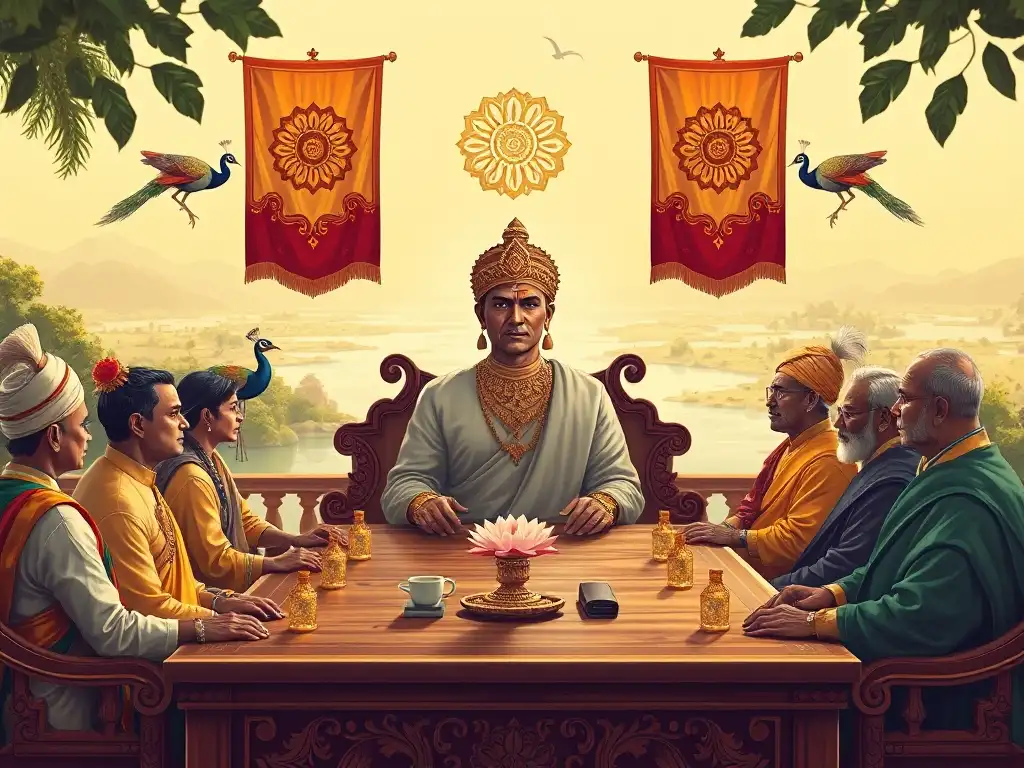
Ashoka the Great, the third emperor of the Mauryan Dynasty, is often celebrated for his remarkable contributions to the art of diplomacy during the 3rd century BCE. His reign marked a significant shift in the approach to governance and international relations, emphasizing moral diplomacy over military conquest.
Ashoka's legacy is characterized by a series of strategic alliances and a commitment to the principles of peace and non-violence, which were profoundly influenced by his conversion to Buddhism after the Kalinga War. This transformation led him to adopt a more humane and ethical approach to diplomacy, prioritizing coexistence and mutual respect among nations.
Through his edicts inscribed on pillars and rocks across his empire, Ashoka communicated his diplomatic philosophy, advocating for Dhamma (moral law) and the welfare of all living beings. His diplomatic practices not only enhanced the Mauryan Empire's influence but also set a precedent for future Indian rulers. The emphasis on dialogue, cultural exchange, and religious tolerance became foundational elements of ancient Indian diplomacy, fostering an environment where alliances could thrive based on shared values rather than mere power dynamics.
Influence on Subsequent Indian Dynasties
The diplomatic framework established by Ashoka had a profound influence on subsequent Indian dynasties, notably the Gupta Empire, which followed the Mauryan period. The Guptas, like Ashoka, recognized the importance of diplomacy in maintaining stability and fostering trade relations. They adopted many of Ashoka's principles, focusing on cultural integration and religious pluralism to create a cohesive and flourishing empire.
Moreover, Ashoka's diplomatic legacy extended beyond India. His approach inspired neighboring kingdoms and empires, leading to cross-cultural exchanges that enriched the region’s history. For instance, the spread of Buddhism through diplomatic channels facilitated cultural and economic ties with Central Asia, Southeast Asia, and beyond. The emphasis on ethical governance and mutual respect became a hallmark of Indian diplomacy, influencing the conduct of foreign relations in the region for centuries.
The Lasting Impact of Ancient Indian Diplomacy on Modern Relations
The principles of diplomacy established during Ashoka's reign continue to resonate in contemporary international relations, particularly in South Asia. Modern diplomatic practices often reflect the ideals of non-violence, dialogue, and cultural understanding that Ashoka championed. For example, the emphasis on peaceful coexistence and conflict resolution through negotiation is evident in the foreign policies of modern Indian leaders.
In recent years, initiatives like India's "Act East" policy and its efforts to strengthen ties with neighboring countries are reminiscent of Ashoka’s approach to fostering alliances. The promotion of cultural diplomacy, including exchanges in art, religion, and education, mirrors the ancient practices initiated by Ashoka. This historical legacy underscores the relevance of ancient Indian diplomacy in shaping the dynamics of modern geopolitical relationships.
Conclusion
Ashoka's diplomatic strategies not only secured the Mauryan Empire's stability and prosperity but also laid the groundwork for a rich tradition of diplomacy that would influence future generations. His vision of a world united through shared moral values and mutual respect continues to inspire diplomatic endeavors today.
Summary of Ashoka’s Diplomatic Achievements
Ashoka's diplomatic achievements are characterized by a unique blend of ethical governance and strategic alliances. His efforts to promote Buddhism as a vehicle for peace and cooperation, along with his commitment to the welfare of all beings, set a standard for diplomatic conduct that was unprecedented in ancient India. The treaties, alliances, and cultural exchanges initiated during his reign played a crucial role in expanding the Mauryan Empire's influence and fostering regional stability.
The Continuing Relevance of Ancient Indian Diplomacy and Alliances
The principles of ancient Indian diplomacy and alliances, as exemplified by Ashoka, remain remarkably relevant in today’s complex international landscape. The focus on dialogue, cultural engagement, and ethical governance serves as a guiding framework for modern diplomacy. As nations navigate the challenges of globalization and conflict, the lessons learned from Ashoka's era of diplomacy can provide valuable insights into building cooperative and harmonious international relations.
Suggested Further Reading
For those interested in delving deeper into the fascinating world of Ashoka the Great and the intricate web of ancient Indian diplomacy and alliances, a variety of scholarly resources are available. These resources not only illuminate Ashoka's reign but also provide broader context regarding the political and cultural landscape of ancient India.
Books and Articles on Ashoka the Great
-
"Ashoka: The Search for the Historical Buddha" by Charles Allen
This book explores the life of Ashoka, integrating his role as a ruler and a follower of Buddhism. Allen’s work provides a comprehensive look at how Ashoka's conversion influenced his policies and diplomatic strategies.
-
"The Edicts of Ashoka: An English Translation" by N. R. Ray
This translation presents the edicts issued by Ashoka, offering insights into his governance and his commitment to dharma (moral law), which played a crucial role in his diplomatic endeavors.
-
"Ashoka: A Life" by Vikram Sampath
Sampath's biography contextualizes Ashoka's life within the broader framework of ancient Indian history and highlights his diplomatic relations with neighboring regions, showcasing his impact on international relations.
-
"The Mauryas: A Study of Ashoka and His Times" by R. C. Majumdar
This scholarly work examines the Mauryan Empire under Ashoka, discussing its diplomatic interactions and the significance of alliances formed during this period.
-
"Ashoka's India: The Legacy of the Great Emperor" by B. R. Ambedkar
Ambedkar's exploration of Ashoka’s legacy touches upon his diplomatic strategies and how they contributed to the spread of Buddhism, influencing various cultures and regions.
Resources on Ancient Indian Diplomacy and Its Evolution
-
"Ancient Indian Political Thought" by P. V. Kane
This text provides an overview of political theories in ancient India, including discussions on diplomacy and statecraft, shedding light on the frameworks that guided rulers like Ashoka in their diplomatic relations.
-
"The History of Ancient India" by R. C. Majumdar and A. D. Pusalkar
This comprehensive history outlines various aspects of ancient Indian governance and diplomacy, offering insights into how these practices evolved over time.
-
"Diplomacy in Ancient India" by R. K. Mookerji
Mookerji's work delves into the nuances of diplomatic practices in ancient India, detailing the strategies employed by various rulers, including Ashoka, to forge alliances and maintain peace.
-
"The Role of Diplomacy in Ancient Indian History" by R. N. Sharma
This article discusses the significance of diplomacy throughout ancient Indian history, highlighting key figures and events that shaped diplomatic relations and alliances.
-
Online Archives and Journals
For those seeking academic articles and papers, resources such as JSTOR and Google Scholar can provide access to a wealth of research on ancient Indian diplomacy and its evolution, offering peer-reviewed articles that explore various facets of the subject.
These suggested readings and resources will enrich your understanding of Ashoka the Great and the broader context of ancient Indian diplomacy and alliances. By engaging with these works, readers can appreciate the complexity of political relationships in ancient India and the lasting influence of Ashoka's approach to diplomacy.
- Introduction to Ancient Indian Diplomacy
- Ashoka the Great: A Brief Overview
- The Role of Diplomacy in Ashoka's Reign
- Major Alliances Formed by Ashoka
- The Impact of Ashoka's Alliances on the Mauryan Empire
- Challenges Faced by Ashoka in Diplomacy
- Legacy of Ashoka's Diplomatic Practices
- Conclusion
- Suggested Further Reading
- What was Ashoka's approach to diplomacy during the Mauryan Empire?
- How did Ashoka's alliances influence the Mauryan Empire's expansion?
- What role did religion play in Ashoka's diplomatic strategies?
- Can you give examples of alliances formed by Ashoka?
- How did Ashoka's diplomacy differ from that of his predecessors?
Frequently Asked Questions
What was Ashoka's approach to diplomacy during the Mauryan Empire?
Ashoka employed non-violent diplomacy, promoting alliances through edicts that advocated for peace and mutual respect among neighboring states.
How did Ashoka's alliances influence the Mauryan Empire's expansion?
Ashoka's strategic alliances helped to extend the influence of the Mauryan Empire without resorting to war, fostering a culture of trade and cultural exchange.
What role did religion play in Ashoka's diplomatic strategies?
Ashoka utilized Buddhism as a tool for diplomacy, encouraging tolerance and cooperation among various kingdoms, which enhanced his image and facilitated alliances.
Can you give examples of alliances formed by Ashoka?
Ashoka formed alliances with several regional powers, including the Kalinga and Sri Lankan kingdoms, promoting peaceful coexistence and economic ties.
How did Ashoka's diplomacy differ from that of his predecessors?
Unlike his predecessors, Ashoka prioritized diplomatic relations and cultural ties over military conquest, marking a significant shift towards peaceful governance in ancient Indian diplomacy.
Final Reflection: The Enduring Legacy of Ancient Indian Diplomacy
The exploration of Ashoka’s diplomatic strategies reveals their profound relevance in today’s interconnected world. As we navigate complex global relationships, the principles of diplomacy and alliance-building that Ashoka exemplified resonate powerfully, reminding us that effective communication and mutual respect are timeless tools for fostering peace and cooperation. The art of diplomacy, as practiced by Ashoka, is not just a relic of the past; it is a guiding light for contemporary leaders and citizens alike.
The impact of Ashoka’s alliances extends far beyond the borders of the Mauryan Empire, influencing cultural and social landscapes throughout history. His approach to diplomacy, characterized by compassion and strategic foresight, serves as a model for modern diplomacy. As we witness ongoing conflicts and the need for collaboration across nations, we can draw inspiration from Ashoka’s legacy. > “Peace is not merely the absence of war. It is also a state of mind.” This quote encapsulates the essence of Ashoka’s philosophy, urging us to cultivate peace through understanding and cooperation.
As we reflect on the lessons of ancient Indian diplomacy, let us consider how we can embody these principles in our own lives. Take a moment to think about the alliances you forge in your personal and professional spheres. How can you apply the art of diplomacy to create more harmonious relationships and foster understanding in your community? By embracing the values of empathy and collaboration, we can contribute to a more peaceful world, echoing the timeless wisdom of Ashoka and his diplomatic legacy.
Embrace the Legacy of Diplomacy!
Thank you for diving into the world of Ashoka’s diplomatic brilliance! Understanding how his alliances shaped the Mauryan Empire offers valuable lessons in communication, leadership, and peacebuilding. Now, it's time to put that knowledge into action!
Here’s how you can continue your journey:
- Research and Explore: Delve deeper into the art of diplomacy by studying modern diplomatic strategies and considering how they reflect Ashoka's approaches.
- Engage with the Community: Join online forums or local history groups to discuss the ongoing relevance of diplomatic relations in today’s world.
- Share Your Insights: Share this article with friends or on social media to spark conversations about the significance of diplomacy in both historical and contemporary contexts.
What do you believe is the most crucial lesson from Ashoka’s diplomatic efforts that we can apply in our personal lives or society today?