
The Role of Ashoka in Promoting Trade and Commerce

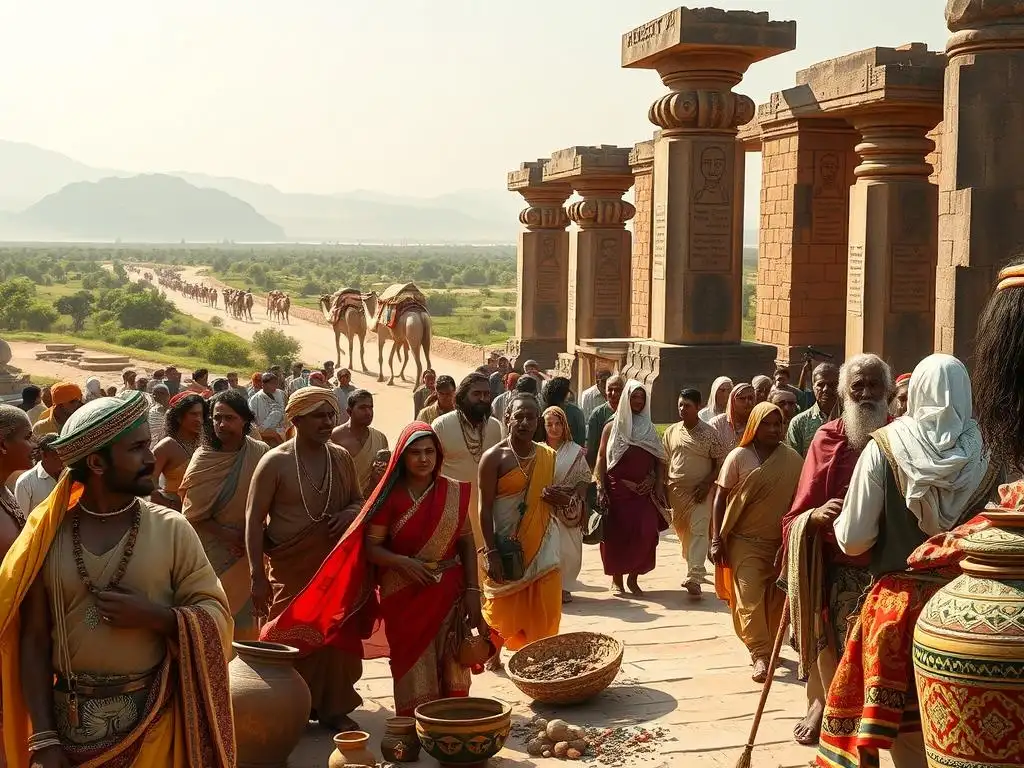
Welcome to Ancient India History, where we embark on a fascinating journey through the rich tapestry of India's past. Here, we delve into the remarkable stories and contributions of ancient civilizations, from the enigmatic Indus Valley to the illustrious Gupta Empire. In our featured article, "The Role of Ashoka in Promoting Trade and Commerce," we explore how Ashoka, one of India's most revered emperors, transformed trade networks and influenced commerce across the region.
What drove him to prioritize trade, and how did his policies shape the economic landscape of ancient India? Join us as we unravel these intriguing questions and uncover the profound impact of Ashoka on ancient trade.
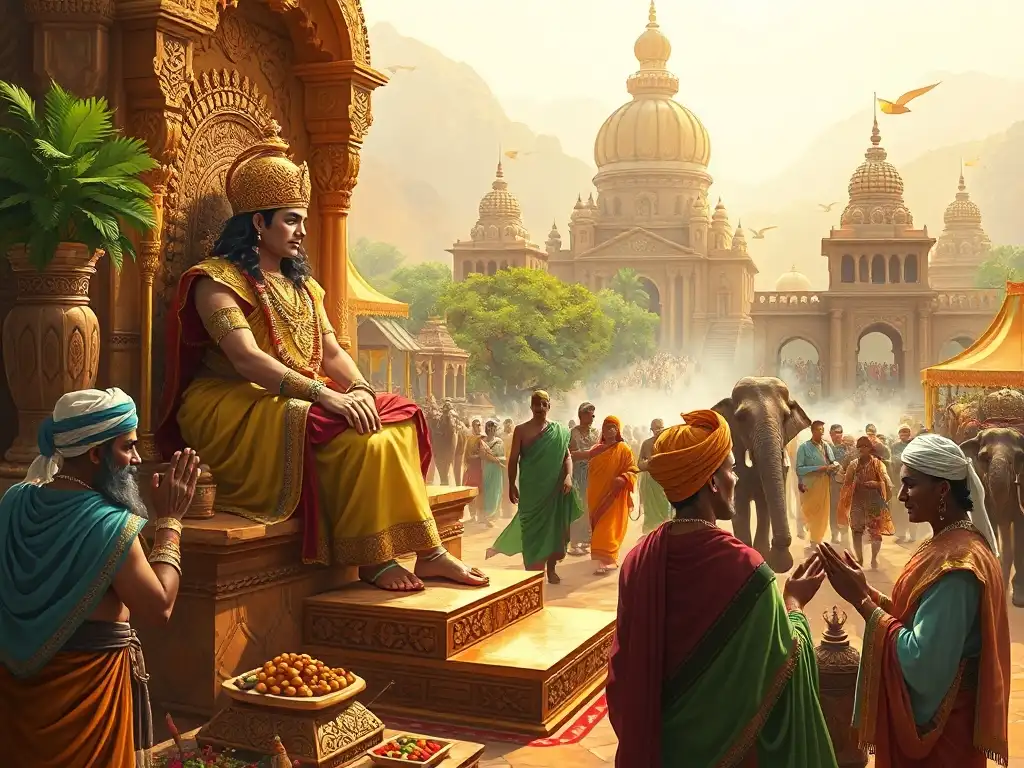
Introduction to Ashoka the Great
Ashoka the Great, one of the most influential emperors of ancient India, played a pivotal role not only in the political landscape of his time but also in the expansion of trade and commerce across the subcontinent and beyond. Reigning from 268 to 232 BCE, Ashoka's legacy is marked by his commitment to the principles of Dharma, which emphasized moral governance and the welfare of his subjects.
His efforts to promote trade were integral to fostering economic growth and cultural exchange, creating a more interconnected world during a period often characterized by regional isolation. This article delves into Ashoka's impact on ancient trade, examining the various trade routes established during his reign and how his policies facilitated the flourishing of commerce.
Overview of Ashoka's Life and Reign
Ashoka was born into the Maurya dynasty and was the grandson of Chandragupta Maurya, the empire's founder. Following a series of military conquests, Ashoka ascended to the throne and quickly established himself as a powerful ruler. However, the pivotal moment in his reign came after the Kalinga War, where the extensive loss of life led him to embrace Buddhism and adopt a more compassionate approach to governance.
His reign is marked by significant administrative reforms, which not only stabilized the empire but also laid the groundwork for economic prosperity. Ashoka implemented policies that promoted trade, including the establishment of a vast network of roads and the maintenance of law and order, which were essential for safe and efficient trade.
Historical Context of Ancient India during Ashoka's Time
During Ashoka's reign, ancient India was a tapestry of diverse cultures and thriving urban centers. The subcontinent was marked by various regional kingdoms and a complex socio-political landscape. The Maurya Empire itself was one of the largest and most powerful empires of the time, encompassing a vast area that included present-day India, Pakistan, Bangladesh, and parts of Afghanistan.
Trade was a crucial aspect of life in ancient India, with established trade routes connecting the region to distant lands such as Persia, Central Asia, and the Mediterranean. The flourishing of trade during this period was facilitated by advancements in technology, such as improved shipbuilding and navigational techniques, as well as the increasing demand for luxury goods, spices, and textiles. Ashoka's reign came at a time when the need for economic integration and cultural exchange was paramount, and his policies would significantly influence the trajectory of Indian trade.
Ashoka's Impact on Ancient Trade
Ashoka's reign marked a transformative era for trade in ancient India. His policies and initiatives played a crucial role in enhancing trade networks, ensuring that commerce thrived throughout his empire.
Trade Routes Established During Ashoka's Reign
Under Ashoka's patronage, several key trade routes were established or improved, which facilitated the movement of goods and cultural exchange. The construction of roads, such as the Grand Trunk Road, linked major cities and regions, enhancing connectivity and trade efficiency. The following routes were particularly significant:
- North-South Trade Route: This route connected the northern regions with the southern tip of India, enabling the exchange of goods like spices and textiles.
- East-West Trade Route: Linking the eastern coast to the western regions, this route was vital for maritime trade, allowing goods to reach distant markets, including those in the Mediterranean.
- Silk Road Connections: Ashoka's policies encouraged trade with regions along the Silk Road, facilitating the exchange of ideas, culture, and goods between India and Central Asia.
Influence of Ashoka's Policies on Trade Expansion
Ashoka's policies were instrumental in promoting trade across his empire. His promotion of Buddhism also played a role in trade expansion, as Buddhist monks often traveled along trade routes, establishing cultural ties and fostering connections between different regions. The following aspects highlight his influence:
- Standardization of Weights and Measures: This facilitated fair trade practices and encouraged merchants to participate in commerce without fear of exploitation.
- Protection and Security: Ashoka's commitment to maintaining peace and order along trade routes ensured the safety of merchants and travelers, further promoting trade activities.
- Diplomatic Relations: Ashoka's diplomatic efforts to establish ties with neighboring kingdoms and empires opened up new markets for trade, enhancing the overall economic landscape of ancient India.
Ashoka's reign was a defining moment in the history of ancient Indian trade, characterized by substantial advancements in infrastructure, policy, and international relations, which collectively fostered an environment conducive to economic growth and cultural exchange.
The Role of Ashoka in Promoting Commerce
Ashoka the Great, the third Mauryan emperor, is often hailed for his transformative role in promoting trade and commerce during his reign from 268 to 232 BCE. His policies and initiatives not only bolstered the economy but also laid the groundwork for a vibrant trade network that connected various regions of ancient India with the wider world. Ashoka understood the importance of trade as a means of generating wealth and fostering cultural exchanges, which ultimately contributed to the prosperity of his empire.
Ashoka's Edicts and Their Implications for Trade
One of the most significant contributions of Ashoka to trade was his series of edicts inscribed on pillars and rocks across his empire. These edicts served multiple purposes, including the promotion of moral values and governance principles, but they also had far-reaching implications for trade. For instance, Ashoka emphasized the importance of fair trade practices, encouraging merchants to engage in honest dealings and to refrain from exploiting consumers.
The edicts contained directives that facilitated the movement of goods by ensuring the safety of trade routes. They advocated for the establishment of rest houses and wells along these routes, which provided essential services to travelers and traders. By enhancing the infrastructure and security surrounding trade, Ashoka's edicts played a pivotal role in stimulating commerce within his empire and beyond.
Economic Reforms Initiated by Ashoka
Ashoka implemented several economic reforms aimed at enhancing trade and commerce throughout his realm. One notable measure was the standardization of weights and measures, which simplified transactions and fostered trust among traders. This initiative not only made trade more efficient but also promoted a sense of fairness in commercial practices.
Additionally, Ashoka encouraged the cultivation of cash crops, which increased agricultural productivity and provided surplus goods for trade. The establishment of state monopolies on certain products, such as textiles and salt, allowed for regulated pricing and quality control, further stabilizing the economy. These reforms collectively created a conducive environment for trade, boosting economic activity and enhancing the wealth of his empire.
Cultural Exchanges Facilitated by Ashoka
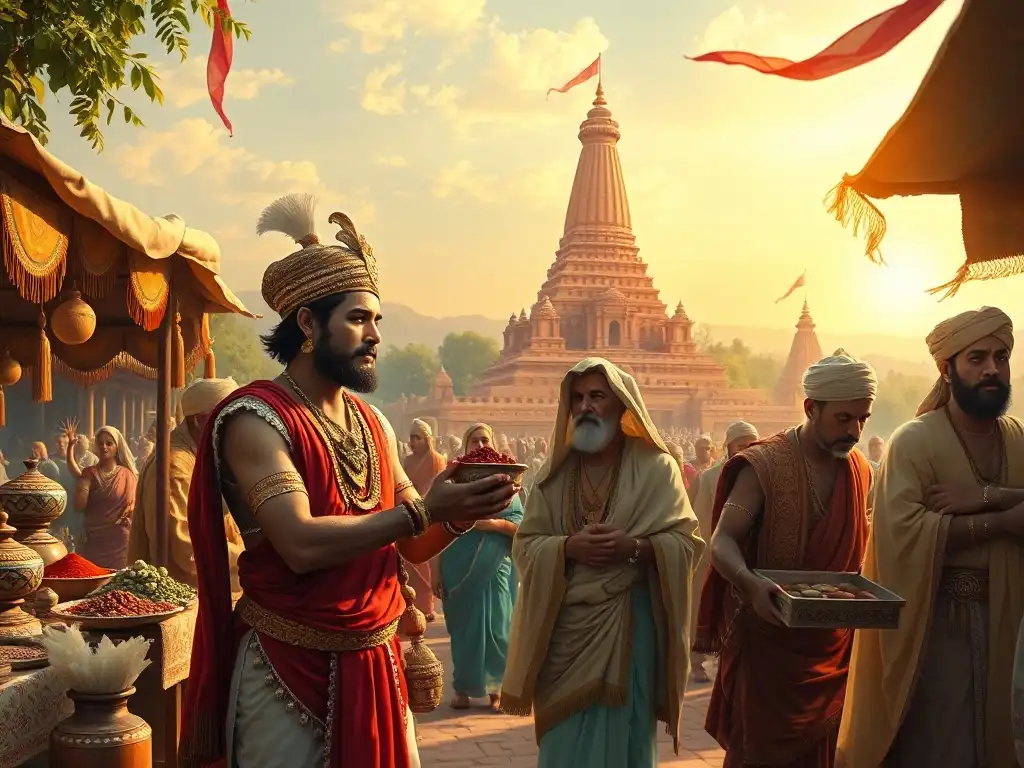
Ashoka's promotion of trade was not solely an economic endeavor; it also facilitated significant cultural exchanges. As trade routes flourished, they became conduits for the exchange of ideas, customs, and beliefs among various civilizations.
Interaction with Other Civilizations Through Trade
Through his extensive trade networks, Ashoka established connections with neighboring regions and distant lands. Merchants from the Indian subcontinent engaged in commerce with traders from the Persian Empire, Central Asia, and even as far as the Mediterranean. This interaction not only brought diverse goods into India but also allowed for the exchange of cultural and intellectual ideas.
The influx of foreign influences enriched Indian culture, leading to advancements in arts, sciences, and philosophy. Ashoka’s reign marked a period of cosmopolitanism, where the blending of different cultural practices fostered a unique Indian identity while simultaneously integrating elements from other civilizations.
The Spread of Buddhism and Its Impact on Trade Relations
Ashoka's promotion of Buddhism played a crucial role in enhancing trade relations, both within and outside his empire. As a fervent supporter of Buddhism, he dispatched missionaries to various regions, spreading the teachings of Buddha. This not only facilitated the spread of a religious ideology but also established networks of communication and trust among traders who shared similar beliefs.
Buddhism's emphasis on ethical conduct and community welfare resonated with merchants, making them more likely to engage in trade with those who adhered to similar values. The establishment of monasteries along trade routes served as hubs for trade and commerce, where merchants could rest, conduct business, and exchange ideas. Thus, the spread of Buddhism under Ashoka not only contributed to the religious landscape of Asia but also significantly impacted trade relations, fostering a spirit of cooperation and mutual benefit among diverse trading communities.
Ashoka's Legacy in Trade and Commerce
Ashoka the Great, who ruled from 268 to 232 BCE, is often celebrated for his profound contributions to Buddhism and moral governance. However, his legacy extends significantly into the realms of trade and commerce. Under his reign, the Mauryan Empire witnessed a vibrant flourishing of trade networks, both domestically and internationally. Ashoka's promotion of trade was not merely a matter of economic interest; it was deeply intertwined with his vision of a unified and prosperous empire.
One of the key aspects of Ashoka's legacy in trade was the establishment of efficient trade routes. He recognized the importance of connectivity for economic prosperity and thus invested in the development of roads and infrastructure. The Royal Road, which extended from the eastern to the western parts of his empire, facilitated the movement of goods, services, and ideas. This not only enhanced trade within India but also connected Indian traders to the wider world, including regions as far as the Mediterranean and Southeast Asia.
Additionally, Ashoka's policies encouraged the standardization of weights and measures, which simplified trade transactions and enhanced trust among merchants. This standardization was crucial for the growth of commerce, as it enabled fair trading practices and reduced disputes among traders. Furthermore, his promotion of agriculture through irrigation projects contributed to surplus production, which in turn stimulated trade.
Long-term Effects of Ashoka's Policies on Indian Trade
The long-term effects of Ashoka's policies on Indian trade were profound and far-reaching. His emphasis on trade and commerce laid the groundwork for a thriving economic system that would benefit subsequent generations. One of the most significant outcomes was the establishment of India as a central hub in international trade networks. The trade routes initiated during Ashoka’s reign continued to flourish, connecting India with major civilizations, including those in Persia, Greece, and China.
Moreover, the Mauryan Empire under Ashoka became a melting pot of cultures, ideas, and goods. The exchange of products such as spices, textiles, and precious stones not only enriched the Indian economy but also contributed to the cultural and social fabric of society. This cultural diffusion fostered a sense of unity among diverse regions and communities within the empire.
Additionally, Ashoka's promotion of Buddhism played a pivotal role in enhancing trade. Buddhist monks traveled extensively along trade routes, spreading their teachings while simultaneously facilitating trade relations. The monasteries often acted as rest stops for traders, providing them with shelter and resources, which further encouraged commercial activities.
Ashoka's Influence on Subsequent Rulers and Trade Practices
Ashoka's influence on subsequent rulers and trade practices cannot be understated. His model of governance, characterized by benevolence and ethical leadership, set a precedent for later Indian emperors. Many rulers sought to emulate Ashoka’s approach to trade by investing in infrastructure and promoting economic policies that favored trade and commerce.
For instance, the Gupta Empire, which emerged centuries after Ashoka, built upon the trade networks and practices established during the Mauryan period. The Guptas continued to enhance trade by establishing a stable currency and promoting crafts and industries, which further invigorated commerce. This period saw the flourishing of trade not only within India but also with external markets, including Rome and Southeast Asia.
Furthermore, Ashoka’s emphasis on dharma and ethical conduct in trade influenced the merchant class. Many traders adopted principles of fairness and honesty, which became integral to trade practices in ancient India. This ethical framework contributed to the long-term sustainability of trade relations and established a reputation for Indian merchants that resonated across continents.
Conclusion
Summary of Ashoka's Contributions to Trade and Commerce
Ashoka's contributions to trade and commerce were transformative. His policies not only bolstered the economy of the Mauryan Empire but also laid the foundation for India’s future as a significant player in global trade. Through infrastructure development, standardization of trade practices, and the promotion of ethical governance, Ashoka created an environment conducive to commercial growth.
Reflection on the Importance of Ashoka's Impact on Ancient Trade
Reflecting on Ashoka's impact on ancient trade, it is evident that his visionary leadership extended beyond mere economic advancements. Ashoka’s legacy is a testament to the interconnectedness of trade and culture, demonstrating how commerce can facilitate not only wealth but also the exchange of ideas and values. Understanding Ashoka's role in shaping ancient trade provides valuable insight into the dynamics of historical economies and their enduring influence on modern trade practices. Ashoka's impact continues to be a significant point of reference for historians and economists alike, highlighting the importance of ethical and sustainable practices in trade.
- Introduction to Ashoka the Great
- Ashoka's Impact on Ancient Trade
- The Role of Ashoka in Promoting Commerce
- Cultural Exchanges Facilitated by Ashoka
- Ashoka's Legacy in Trade and Commerce
- Conclusion
- What was Ashoka's role in ancient trade?
- How did Ashoka influence trade relationships with other regions?
- What contributions did Ashoka make to infrastructure for trade?
- How did Ashoka's policies affect merchant communities?
- What was the impact of Ashoka's trade policies on ancient Indian civilization?
Frequently Asked Questions
What was Ashoka's role in ancient trade?
Ashoka played a pivotal role in promoting trade and commerce across his empire. He established trade routes and encouraged the exchange of goods, facilitating economic prosperity.
How did Ashoka influence trade relationships with other regions?
Through his diplomatic efforts, Ashoka fostered trade relationships with neighboring regions, such as Southeast Asia and the Mediterranean, expanding the reach of Indian goods.
What contributions did Ashoka make to infrastructure for trade?
Ashoka invested in infrastructure by building roads, rest houses, and ports. These developments significantly improved the ease of transport and security for traders.
How did Ashoka's policies affect merchant communities?
His policies promoted the rights and safety of merchants, leading to the growth of merchant guilds and enhancing the overall economic stability of the empire.
What was the impact of Ashoka's trade policies on ancient Indian civilization?
Ashoka's trade policies led to increased cultural exchanges and economic growth, positioning ancient India as a key player in global trade networks during his reign.
Final Reflection: The Enduring Legacy of Ashoka's Impact on Ancient Trade
The role of Ashoka in promoting trade and commerce is not merely a historical footnote; it is a testament to the profound influence that visionary leadership can have on economic development. In today's globalized world, where trade routes and commerce are the lifeblood of nations, the principles established by Ashoka resonate with renewed significance. His commitment to fostering trade not only enriched his empire but also laid the groundwork for interconnectedness that we still strive for in our modern economies.
The impact of Ashoka's policies on trade and commerce continues to shape our cultural and social landscape, reminding us of the power of collaboration and mutual benefit. His efforts to enhance trade routes and establish a system of commerce that transcended borders fostered a spirit of unity among diverse cultures. As historian Romila Thapar eloquently stated, Ashoka's reign was a turning point that demonstrated how trade can be a bridge between civilizations.
This observation underscores the ongoing relevance of Ashoka's legacy, as we navigate the complexities of global trade today.
As we reflect on Ashoka's contributions, let us be inspired to embrace the lessons of cooperation and innovation in our own lives. Consider how you can contribute to building bridges in your community and beyond, fostering connections that promote understanding and prosperity. By applying the principles of Ashoka's impact on ancient trade, we can create a more harmonious and interconnected world, ensuring that the spirit of collaboration thrives for generations to come.
Unveil the Legacy of Ashoka: Take Action Today!
Thank you for exploring the fascinating world of Ashoka and his contributions to trade and commerce! You have gained valuable insights into how his policies shaped economic interactions in ancient India. Now, it’s time to put this knowledge into action.
Here’s how you can actively engage with this topic:
- Explore your local history: Visit museums or historical sites that highlight trade routes and commerce from ancient India.
- Join a discussion group: Share your thoughts and insights about Ashoka’s impact with fellow history enthusiasts.
- Educate others: Write a blog post or social media update to share what you've learned about Ashoka’s legacy and its relevance today.
What aspect of Ashoka's approach to trade inspires you the most, and how do you believe it could influence modern commerce?