
The Global Impact of Ashoka’s Policies on Buddhism


Welcome to Ancient India History, where we embark on an enlightening journey through the remarkable tapestry of ancient Indian civilizations. Delve into the profound legacy of influential figures, such as Emperor Ashoka, whose policies not only transformed the landscape of Buddhism but also resonated far beyond the borders of his empire. What exactly did Ashoka do that left a lasting impact on this spiritual tradition? Join us as we uncover the fascinating threads of history that connect Ashoka to the global spread of Buddhism. Your exploration begins here!
- Introduction to Ashoka's Impact on Buddhism
- Historical Context of Buddhism Before Ashoka
- Ashoka's Policies and Their Influence on Buddhism
- Global Impact of Ashoka's Policies on Buddhism
- Legacy of Ashoka's Impact on Buddhism
- Conclusion: The Enduring Influence of Ashoka on Buddhism
- Frequently Asked Questions
- Final Reflection: The Enduring Legacy of Ashoka's Impact on Buddhism
- Unveil the Legacy of Ashoka’s Influence on Buddhism!
Introduction to Ashoka's Impact on Buddhism

The reign of Ashoka the Great, one of India's most celebrated emperors, marks a significant chapter in the history of Buddhism and its global spread. Ashoka, who ruled from 268 to 232 BCE, is often credited with transforming Buddhism from a relatively localized faith into a major world religion.
His policies and patronage not only fostered the growth of Buddhism throughout the Indian subcontinent but also facilitated its dissemination across Asia, influencing cultures far beyond its origins. In this article, we will explore the multifaceted impact of Ashoka's policies on Buddhism, examining how his innovative approaches to governance and spirituality helped shape the future of this profound tradition.
Overview of Ashoka the Great
Ashoka's legacy is rooted in his transformative vision for governance and social welfare. Ascending to the throne after a period of violent conflict, Ashoka's conversion to Buddhism after the Kalinga War marked a pivotal moment in his reign. The war, which resulted in immense suffering and loss of life, led him to embrace the principles of non-violence (ahimsa) and compassion. As a result, he adopted a set of policies that emphasized ethical conduct, public welfare, and religious tolerance, which not only reflected his personal beliefs but also aimed to unify his diverse empire.
Under Ashoka's rule, the Maurya Empire expanded significantly, covering vast territories across the Indian subcontinent. His administration was characterized by the establishment of a centralized bureaucracy that facilitated effective governance. Ashoka's commitment to Buddhism was evident in the construction of stupas, monasteries, and the dissemination of the Buddha's teachings through edicts inscribed on pillars and rocks, which served as guidelines for moral conduct and governance.
Significance of Ashoka's Reign in Ancient India
Ashoka's reign is often regarded as a golden age for Buddhism and ancient Indian civilization. His promotion of Buddhist values had far-reaching implications, not only for the religion itself but also for the broader cultural and social dynamics of the time. The Edicts of Ashoka, which were inscribed in multiple languages and scripts across his empire, played a crucial role in communicating his message of peace and ethical governance to his subjects.
Moreover, Ashoka's policies encouraged the establishment of a network of trade routes that facilitated the exchange of ideas, goods, and cultural practices across Asia. This interconnectedness contributed to the flourishing of Buddhism beyond India, reaching regions such as Central Asia, Southeast Asia, and even the Mediterranean. The establishment of diplomatic relations and sending of Buddhist missionaries further amplified the global influence of Ashoka's reign.
Introduction to Buddhism During Ashoka's Time
During Ashoka's reign, Buddhism was still in its formative stages, having been founded by Siddhartha Gautama (the Buddha) several centuries earlier. However, it was under Ashoka's patronage that Buddhism began to gain prominence as a major religious force in India. The emperor's commitment to promoting Buddhist teachings led to the establishment of monasteries and the support of Buddhist monks, who played a vital role in spreading the faith.
The Third Buddhist Council, convened by Ashoka, was instrumental in codifying the teachings of Buddhism and addressing issues of sectarianism within the tradition. This council not only sought to purify the Buddhist community but also aimed to define and promote a unified understanding of the Buddha's teachings, which was essential for the religion's growth.
Through these efforts, Ashoka not only solidified Buddhism's place within Indian society but also laid the groundwork for its future expansion into other parts of Asia. His vision for a compassionate and just society, rooted in Buddhist principles, continues to resonate today, reflecting the profound impact of his reign on the course of religious history.
Historical Context of Buddhism Before Ashoka

The Birth and Early Development of Buddhism
Buddhism emerged in the 5th century BCE as a reform movement within the spiritual landscape of ancient India. Founded by Siddhartha Gautama, known as the Buddha, the religion arose in a context marked by various philosophical traditions, including Hinduism and Jainism. The Buddha's teachings, which emphasized the Four Noble Truths and the Eightfold Path, provided a practical framework for individuals seeking liberation from suffering (dukkha) and the cycle of rebirth (samsara).
The core tenets of Buddhism revolved around the understanding of suffering, its causes, and the means to overcome it. This revolutionary approach attracted a diverse following, leading to the initial establishment of monastic communities known as the Sangha. These communities not only preserved the Buddha's teachings through oral tradition but also facilitated collective practice, setting the stage for Buddhism's later expansion.
Key Figures in Early Buddhism
Several key figures played crucial roles in the early development of Buddhism, each contributing to its philosophical foundations and dissemination.
- Siddhartha Gautama (the Buddha): As the founder, the Buddha's life story and enlightenment journey became central to Buddhist teachings. His discourses laid the groundwork for later texts and interpretations.
- Ananda: A cousin and one of the Buddha's closest disciples, Ananda was instrumental in the oral transmission of the Buddha's teachings. His efforts are credited with the preservation of many early discourses.
- Ashvagosa: An influential poet and philosopher, Ashvagosa's works, particularly the Buddhacharita, were pivotal in developing the narrative of the Buddha's life and teachings, thus helping to popularize Buddhism.
These figures not only shaped the theological aspects of Buddhism but also helped establish its community structures, creating a robust framework for its growth.
The Spread of Buddhism in Ancient India
The spread of Buddhism across ancient India can be attributed to a combination of socio-political factors, missionary activities, and the appeal of its teachings. Following the Buddha's death, several councils were held to compile and codify his teachings, which facilitated a more organized dissemination.
- Royal Patronage: Initial support from local rulers and wealthy merchants played a crucial role in the spread of Buddhism. The establishment of monasteries along trade routes allowed for the religion to reach diverse populations.
- Missionary Activities: Monks took to the roads, traveling to various regions to teach the Dharma. This grassroots approach enabled Buddhism to penetrate areas beyond its birthplace, including regions of modern-day Nepal, Sri Lanka, and later, parts of Central Asia.
- Cultural Syncretism: Buddhism often adapted to local customs and traditions, which helped it resonate with various communities. By integrating elements from other religious practices, it became more accessible and appealing to a broader audience.
As a result of these factors, Buddhism established a significant presence in ancient India, creating a foundation that would later be amplified by the policies and influence of Emperor Ashoka.
Ashoka's Policies and Their Influence on Buddhism
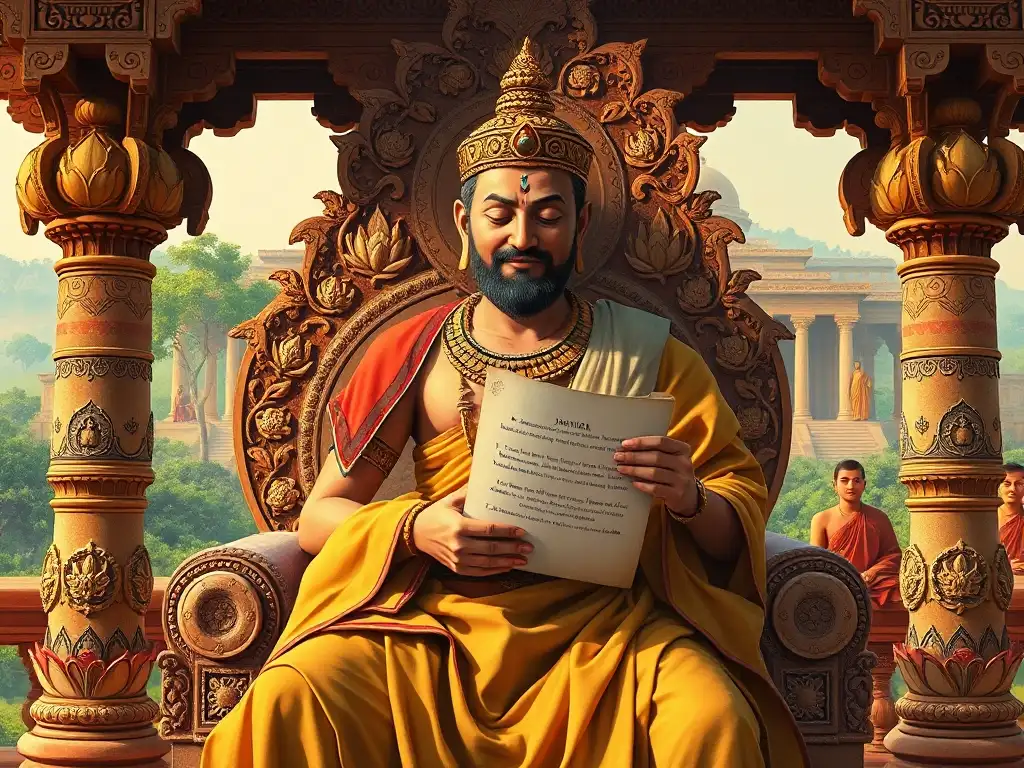
The Edicts of Ashoka: A Tool for Promoting Buddhism
Ashoka the Great, known for his transformative role in the propagation of Buddhism, implemented a series of edicts that served as a significant tool for promoting Buddhist values and principles across his empire. These edicts, inscribed on rocks and pillars, are among the earliest records of the moral and ethical guidelines that Ashoka championed.
The Edicts of Ashoka can be categorized into major themes, which include:
- Moral Conduct: Ashoka emphasized the importance of non-violence (Ahimsa), truthfulness, and compassion, aligning with core Buddhist teachings.
- Religious Tolerance: He advocated for respect towards all religions, encouraging his subjects to practice their faith freely. This approach helped Buddhism coalesce with other religious traditions, fostering a pluralistic society.
- Social Welfare: The edicts outlined policies for the welfare of the populace, including public health measures, the planting of trees, and the construction of wells, which reflected Buddhist principles of caring for all living beings.
Ashoka's commitment to these edicts significantly impacted Buddhism's growth, as they not only promoted the religion but also provided a moral framework that resonated with the populace. The dissemination of these edicts throughout his empire helped in establishing a common ethical baseline that supported the spread of Buddhist philosophy.
Establishment of Buddhist Monasteries and Stupas
One of Ashoka's most enduring contributions to Buddhism was the establishment of monasteries and stupas, which served as pivotal centers for learning and religious practice. Ashoka recognized the importance of physical structures in strengthening the Buddhist community and ensuring the preservation of its teachings.
- Stupas: Ashoka constructed numerous stupas, which are dome-shaped structures housing relics of the Buddha and other important figures. The most famous of these is the Sanchi Stupa, which stands as a testament to the architectural and artistic achievements of ancient India. These stupas not only served as places of worship but also as symbols of Buddhist devotion.
- Monasteries: Ashoka also supported the establishment of monasteries, which became vital for Buddhist education and the training of monks. These monasteries were places where the teachings of the Buddha were studied, practiced, and transmitted to future generations. They played a crucial role in maintaining the continuity of Buddhist traditions and fostering a community of practitioners.
The proliferation of these structures under Ashoka's rule facilitated the spread of Buddhism beyond the Indian subcontinent, as they attracted pilgrims and scholars from various regions, thereby enhancing the global impact of his policies on Buddhism.
Support for Buddhist Missionaries and Scholars
Ashoka's impact on Buddhism extended significantly through his unwavering support for missionaries and scholars, which was instrumental in spreading the religion across Asia. His policies encouraged the dissemination of Buddhist teachings beyond India, fostering cross-cultural exchanges.
- Missionary Efforts: Ashoka sent out missions to various regions, including modern-day Sri Lanka, Nepal, and beyond. He appointed his own children, Mahinda and Sanghamitra, as missionaries to propagate Buddhism in Sri Lanka, which led to the establishment of a strong Buddhist culture on the island.
- Promotion of Scholarship: Ashoka supported Buddhist scholars and monks, providing them with resources to study and teach. This emphasis on scholarship helped in the preservation and interpretation of Buddhist texts, which were crucial for the religion's doctrinal development.
- International Influence: The success of these missionary activities laid the groundwork for Buddhism to become a major world religion. The establishment of trade routes and cultural exchanges facilitated by Ashoka's policies enabled the movement of Buddhist ideas and practices into Central Asia, Southeast Asia, and beyond.
Ashoka's commitment to supporting Buddhist missionaries and scholars not only ensured the survival of the religion but also allowed it to flourish and adapt in diverse cultural contexts, solidifying his legacy as a key figure in the global history of Buddhism.
Global Impact of Ashoka's Policies on Buddhism

The Spread of Buddhism Beyond India
Ashoka the Great, the third Mauryan emperor, played a pivotal role in the expansion of Buddhism beyond the subcontinent. Following his conversion to Buddhism after the Kalinga War, Ashoka recognized the potential of the religion as a unifying force across diverse cultures. His policies significantly contributed to the spread of Buddhist teachings, making it one of the world’s major religions.
Ashoka's commitment to promoting Buddhism is evident in various edicts inscribed on pillars and rocks throughout his empire. These edicts not only articulated his moral and ethical principles but also served as a medium to disseminate Buddhist doctrine. For instance, Ashoka's Edict I encourages the practice of Dhamma (moral law), which emphasized compassion and non-violence, core tenets of Buddhism.
To facilitate the spread of Buddhism, Ashoka established a network of missionaries. He dispatched monks, including his own son Mahinda and daughter Sanghamitta, to regions such as Sri Lanka, Central Asia, and even as far as the Hellenistic world. This missionary activity was crucial in establishing Buddhist monasteries and communities, leading to an enduring legacy of Buddhist influence across these territories.
Ashoka's Role in the Transmission of Buddhist Teachings
Ashoka's role in the transmission of Buddhist teachings cannot be overstated. By actively promoting the religion, he helped shape its doctrinal framework and practices. His efforts included:
- Sponsorship of Monastic Institutions: Ashoka funded the establishment of monasteries, which became centers for education and the preservation of Buddhist texts. This institutional support ensured the continuity of Buddhist teachings.
- Promotion of the Tripitaka: Ashoka encouraged the compilation and dissemination of the Tripitaka, the canonical scriptures of Buddhism. His patronage helped in standardizing teachings, which were instrumental for the education of monks and lay followers alike.
- Establishment of a Global Dialogue: Ashoka fostered an environment conducive to dialogue between different cultures and religions. His edicts often acknowledged and respected other belief systems, facilitating a cross-cultural exchange of ideas and practices that enriched Buddhism.
Influence on Neighboring Regions: Sri Lanka, Central Asia, and Beyond
Ashoka's influence extended far beyond the borders of India, particularly in Sri Lanka and Central Asia. His initiatives had a lasting impact on these regions, evidenced by the establishment of Buddhism as a dominant faith.
- Sri Lanka: Ashoka's missionary endeavors led to the conversion of King Devanampiya Tissa of Sri Lanka, who embraced Buddhism and established it as the island's primary religion. The introduction of the Bodhi tree, a sapling from the original tree under which the Buddha attained enlightenment, further solidified the connection between Indian Buddhism and Sri Lankan culture.
- Central Asia: The spread of Buddhism through trade routes, such as the Silk Road, was greatly facilitated by Ashoka's policies. His emissaries traveled to places like Gandhara and Bactria, promoting Buddhist teachings and practices. This interaction led to the emergence of unique schools of thought, such as Gandharan Buddhism, which blended local traditions with Buddhist philosophy.
- Hellenistic World: Ashoka’s outreach to the Hellenistic world resulted in an exchange between Greek philosophy and Buddhist thought. The establishment of trade relations fostered cultural exchanges, leading to the adaptation of certain Buddhist concepts within Hellenistic philosophical frameworks.
Transformation of Buddhism into a Global Religion
Ashoka's impact on Buddhism was instrumental in its transformation from a localized belief system into a global religion. His policies laid the groundwork for the proliferation of Buddhist practices across various cultures, creating a diverse tapestry of beliefs and traditions that continue to thrive today.
Adoption and Adaptation of Buddhist Practices in Different Cultures
As Buddhism spread, it underwent significant transformations, adapting to the local customs and beliefs of the regions it encountered. This adaptability was crucial in its acceptance and integration into various cultures:
- Cultural Syncretism: In countries like Japan and China, Buddhism blended with indigenous beliefs, resulting in unique forms such as Zen and Pure Land Buddhism. These adaptations allowed Buddhism to resonate with local populations, fostering a sense of belonging and community.
- Art and Architecture: The spread of Buddhism also influenced art and architecture. Stupas, temples, and sculptures became prominent in regions where Buddhism took root. For instance, the intricate carvings at Ajanta and Ellora caves in India depict Buddhist narratives, while the Great Stupa at Sanchi serves as a monumental testament to Ashoka's architectural legacy.
- Rituals and Practices: Local rituals were often incorporated into Buddhist practices, leading to a rich diversity of ceremonies and festivals. For example, the celebration of Vesak, marking the birth, enlightenment, and death of the Buddha, has taken on various forms across different cultures, reflecting local traditions and customs.
Ashoka's impact on Buddhism was profound and far-reaching. His policies not only facilitated the spread of Buddhist teachings across Asia but also transformed Buddhism into a global religion that continues to evolve and adapt to this day. Through his efforts, Ashoka laid the foundation for a rich and diverse Buddhist heritage that transcends geographical and cultural boundaries.
Legacy of Ashoka's Impact on Buddhism

Long-term Effects on Buddhist Philosophy and Practices
Ashoka's reign marked a significant turning point in the evolution of Buddhism, shaping its philosophical underpinnings and practices for centuries to come. One of the most profound changes was the emphasis on Dharma—the moral law as articulated by the Buddha—which Ashoka adopted as a guiding principle for his governance. By promoting non-violence (Ahimsa) and compassion, Ashoka encouraged Buddhist communities to adopt these values, which became central to Buddhist philosophy.
The Edicts of Ashoka, inscribed on pillars and rocks throughout his empire, serve as critical historical documents illustrating his commitment to spreading Buddhist principles. These edicts emphasize ethical conduct, tolerance towards other religions, and the importance of meditation and mindfulness. As a result, they laid a foundation for the development of various Buddhist schools of thought, including the Mahayana and Theravada traditions, which further elaborated on these core teachings.
Moreover, Ashoka's policies facilitated the establishment of monasteries and stupas, which became centers of learning and community life. These institutions played a crucial role in the preservation and dissemination of Buddhist texts, fostering a culture of scholarship that allowed for the flourishing of Buddhist philosophy. The Buddhist councils, organized under Ashoka’s patronage, were instrumental in consolidating and codifying the teachings of the Buddha, ensuring that they remained relevant and accessible to future generations.
Ashoka's Influence on Subsequent Buddhist Dynasties
The impact of Ashoka on Buddhism did not end with his death; rather, it echoed through the ages, influencing subsequent dynasties across Asia. The Mauryan Empire's model of governance, which integrated Buddhist principles, inspired later rulers such as the Kushans and Guptas. These dynasties adopted Ashoka's legacy, promoting Buddhism as a unifying ideology that fostered cultural exchange and political stability.
For instance, the Kushan Emperor Kanishka, who ruled in the 2nd century CE, is often regarded as a pivotal figure in the spread of Buddhism along the Silk Road. His support for the religion mirrored Ashoka's policies, leading to the establishment of Buddhist monasteries and the patronage of Buddhist art, including the famous Gandhara sculptures. These artistic expressions reflected the syncretism of Buddhist and Greco-Roman influences, illustrating how Ashoka's impact transcended cultural boundaries.
Similarly, the Gupta Empire, known as the "Golden Age of India," saw the flourishing of Buddhism in arts, literature, and philosophy. The Nalanda University, established during this period, became a leading center of Buddhist learning, attracting scholars from across Asia. The teachings and ideals propagated by Ashoka continued to resonate, shaping the intellectual landscape of Buddhism for centuries.
Recognition of Ashoka in Modern Buddhist Thought
In contemporary Buddhist thought, Ashoka is revered not just as a historical figure but as a symbol of the intersection between governance and ethical leadership. His commitment to spreading Buddhism through peaceful means resonates with modern movements advocating for social justice and environmental sustainability.
Many contemporary Buddhist leaders and organizations draw inspiration from Ashoka’s principles, advocating for a society rooted in compassion, dialogue, and respect for all life. Ashoka's legacy serves as a reminder of the potential for political power to effect positive change, reinforcing the idea that leadership should embody moral integrity and a commitment to the welfare of all beings.
Moreover, Ashoka's pillars and edicts continue to be studied and revered, often cited in discussions about the relevance of Buddhism in addressing modern societal challenges. His vision of a world founded on mutual respect and understanding encourages a return to the core teachings of Buddhism, emphasizing the importance of mindfulness and compassionate action in today's globalized society.
Ashoka's impact on Buddhism remains a pivotal chapter in the history of the religion, influencing its evolution and ensuring its relevance across time and cultures. His enduring legacy serves as a guiding light for practitioners and scholars alike, illustrating the profound connection between ethical governance and spiritual development.
Conclusion: The Enduring Influence of Ashoka on Buddhism
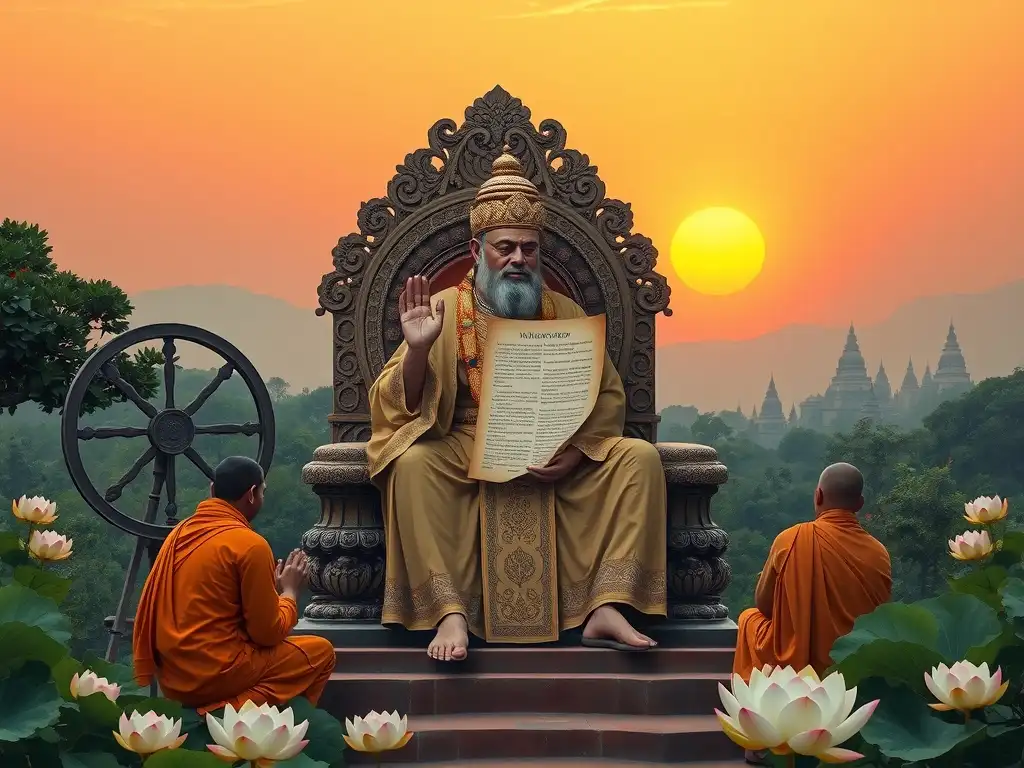
Reflection on Ashoka's Role in Shaping Buddhist History
Ashoka the Great, who reigned from 268 to 232 BCE, is often celebrated as a pivotal figure in the history of Buddhism. His conversion to Buddhism following the Kalinga War marked a significant turning point not only for his empire but for the spread of Buddhist teachings across Asia. The Edicts of Ashoka, inscribed on pillars and rocks throughout his kingdom, served as a means to communicate his policies, which emphasized non-violence, compassion, and moral governance.
The impact of Ashoka on Buddhism can be summarized through several key contributions:
- Promotion of Buddhist Teachings: Ashoka actively promoted Buddhism as the state religion, providing patronage to monastic communities and facilitating the construction of stupas, monasteries, and viharas. This infrastructural support laid the groundwork for the religion's expansion beyond India.
- Diplomatic Engagement: Through missions and envoys, Ashoka's influence extended far beyond the Indian subcontinent. Notably, he sent his son Mahinda and daughter Sanghamitta to Sri Lanka, where they established Buddhism as a major religion. This act not only reinforced his commitment to spreading Buddhist philosophy but also created a lasting legacy in the region.
- Philosophical Integration: Ashoka's policies promoted a form of Buddhism that integrated ethical governance with spiritual practice. His emphasis on 'Dharma' (moral law) resonated with both Buddhist and non-Buddhist populations, creating a more inclusive approach to governance that emphasized the well-being of all subjects.
The Ongoing Relevance of Ashoka's Policies in Contemporary Buddhism
The relevance of Ashoka's policies in contemporary Buddhism can be observed in various aspects of modern Buddhist practice and societal values. His focus on non-violence, social justice, and ethical governance continues to inspire both spiritual leaders and lay followers.
- Non-Violence (Ahimsa): Ashoka’s commitment to non-violence remains a cornerstone of Buddhist teaching today. This principle not only influences personal conduct but also impacts broader social movements advocating for peace and justice around the world.
- Social Welfare: Ashoka's policies included the establishment of hospitals and wells for public use, reflecting a concern for the welfare of all beings. In modern contexts, many Buddhist organizations echo this sentiment by engaging in humanitarian efforts, emphasizing the importance of social responsibility.
- Global Buddhist Networks: The historical framework Ashoka provided has allowed for the establishment of global networks of Buddhist practitioners and organizations. These communities often emphasize interfaith dialogue and cooperation, aligning with Ashoka’s vision of a harmonious society.
- Cultural Preservation: Ashoka's efforts to document and disseminate Buddhist teachings have led to a rich tapestry of cultural expressions and practices that persist today. Festivals, rituals, and art inspired by Ashoka's era continue to thrive, demonstrating the enduring nature of his influence.
Ashoka's impact on Buddhism extends far beyond his reign, shaping the religion's path throughout history and into contemporary society. His legacy serves as a reminder of the potential for leadership grounded in compassion and ethical governance, inspiring future generations to embrace these values in their own lives and communities.
Frequently Asked Questions
What were Ashoka's main contributions to Buddhism?
Ashoka, the Mauryan emperor, played a crucial role in spreading Buddhism throughout his empire and beyond. He established monasteries, sent missionaries, and promoted Dhamma, which emphasized moral living and compassion.
How did Ashoka's policies influence Buddhist practices?
Ashoka's policies emphasized non-violence and tolerance, which helped shape Buddhist practices. His edicts encouraged the community to adopt ethical behavior, fostering a more inclusive approach to spirituality.
In what ways did Ashoka's reign impact Buddhism's global reach?
Under Ashoka, Buddhism transitioned from a local to a global religion. His support facilitated the dissemination of Buddhist texts and teachings across Asia, influencing cultures in regions like Southeast Asia and Central Asia.
What was the significance of Ashoka's edicts?
Ashoka’s edicts, inscribed on pillars and rocks, served as a critical tool for promoting Buddhism and his principles. They communicated his commitment to Dhamma and provided guidelines for ethical living to his subjects.
How did Ashoka's impact on Buddhism differ from other rulers?
Unlike many rulers, Ashoka's influence on Buddhism was primarily rooted in compassion and non-violence rather than conquest. His conversion to Buddhism led to a paradigm shift, prioritizing spiritual development over military expansion.
Final Reflection: The Enduring Legacy of Ashoka's Impact on Buddhism
Ashoka's policies have not only shaped the course of Buddhism but also resonate profoundly in today's world, illustrating how compassionate governance can influence spiritual and social landscapes. In an era marked by conflict and division, Ashoka's commitment to non-violence and moral leadership serves as a powerful reminder of the potential for political systems to foster peace and understanding among diverse communities. His vision for a harmonious society continues to inspire leaders and followers alike, emphasizing the relevance of his teachings in contemporary discussions on ethics and governance.
Clearly, Ashoka's influence extends beyond historical boundaries, impacting cultural and social dynamics across the globe. His promotion of Buddhism as a state religion catalyzed its spread, encouraging intercultural dialogue and mutual respect among different faiths. As we reflect on this, we are reminded of the words of the Dalai Lama: My religion is very simple. My religion is kindness.
This sentiment echoes Ashoka's principles, highlighting the ongoing need for compassion in our interactions with others and the importance of fostering understanding in our increasingly interconnected world.
As we conclude, let us take a moment to reflect on how Ashoka's teachings can inform our lives today. Consider how you can embody the values of compassion, tolerance, and ethical leadership in your own community. Whether through small acts of kindness or larger commitments to social justice, each of us has the power to contribute to a more peaceful and understanding society. Embrace the lessons of Ashoka, and let them guide your actions as we strive to create a world that honors the rich legacy of Buddhism and its profound impact on humanity.
Unveil the Legacy of Ashoka’s Influence on Buddhism!
Thank you for diving into the compelling world of Ashoka’s policies and their profound impact on Buddhism. Your interest in this rich history not only honors the past but also embodies the spirit of exploration and understanding. Now, let’s take the next step together!
Here’s how you can further engage with this topic and share the legacy of Ashoka:
- Dive deeper into historical texts: Explore ancient manuscripts and scriptures related to Buddhism to fully grasp Ashoka’s philosophies and their implications.
- Join a community discussion: Connect with local or online groups that focus on Buddhist history to exchange insights and deepen your understanding.
- Spread the word: Share your findings on social media or write a brief article about how Ashoka shaped Buddhist practices to inspire others!
What insights about Ashoka’s policies resonate with you, and how do you believe they influence modern Buddhism today?