
The Historical Narrative of Ashoka: Myth vs. Reality

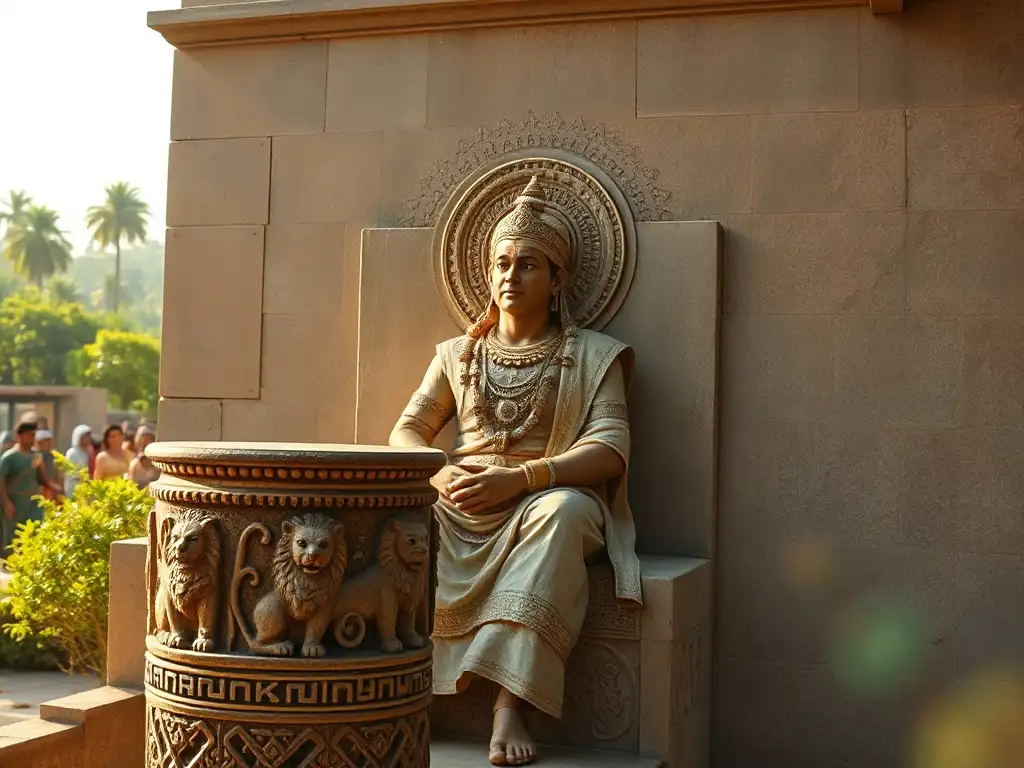
Welcome to Ancient India History, where we embark on a journey through time to uncover the rich and diverse tapestry of ancient Indian civilizations. In this exploration, we delve into the fascinating life of one of history's most revered rulers, Ashoka the Great. What truths lie behind the myths and legends surrounding his reign? Our featured article, "The Historical Narrative of Ashoka: Myth vs. Reality," promises to unveil compelling history facts that challenge common perceptions. Prepare to ignite your curiosity and deepen your understanding of one of India's most influential figures—let’s dive in!
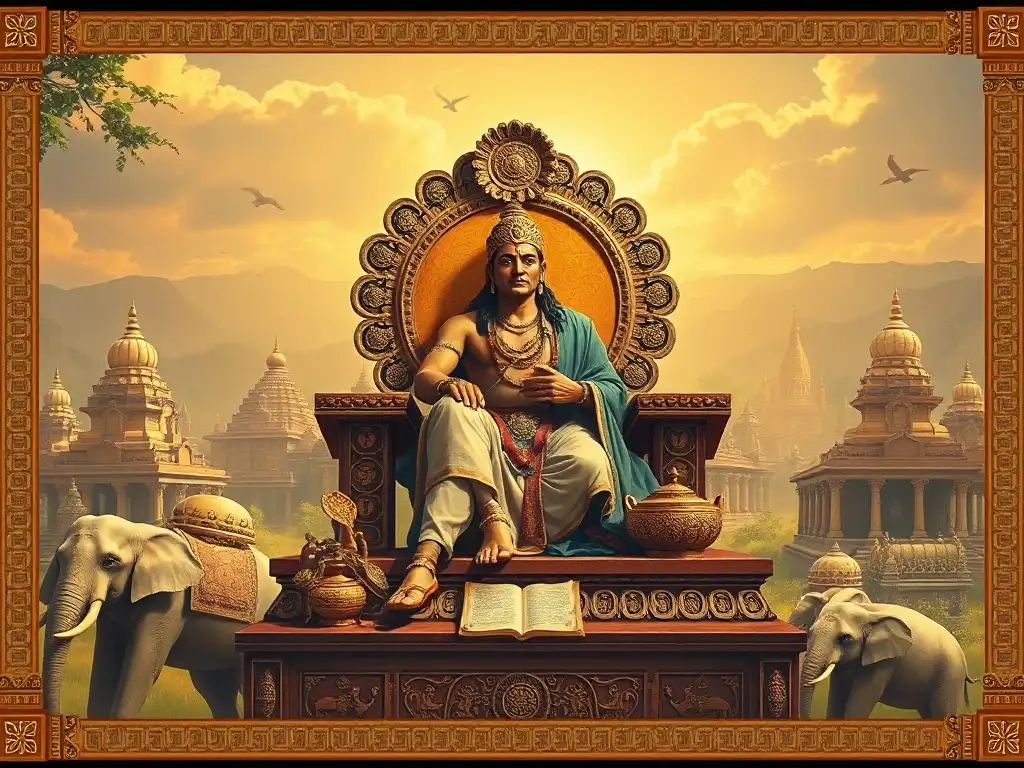
Introduction to Ashoka the Great
Ashoka the Great, one of the most revered and enigmatic figures in ancient Indian history, ruled the Maurya Empire during the 3rd century BCE. His reign marked a significant turning point, not just for India, but for the entire world, as he transformed from a conqueror to a proponent of peace and Buddhism following the bloody Kalinga War.
This article delves into the historical narrative of Ashoka, distinguishing the myths from reality and exploring the profound impact he left on society, culture, and governance. By examining Ashoka the Great history facts, we can uncover the layers of truth that shape our understanding of this iconic emperor and his legacy.
Overview of Ashoka's Life and Reign
Ashoka, born into the Maurya dynasty as the grandson of Chandragupta Maurya, ascended to the throne around 268 BCE. His early years were marked by military conquests, expanding the Mauryan Empire to its zenith. However, the devastating consequences of the Kalinga War, where hundreds of thousands lost their lives, led to a profound transformation in his ideology. Ashoka embraced Buddhism, promoting non-violence, compassion, and ethical governance, which set a precedent for future rulers.
His reign is characterized by the establishment of the Dhamma, a moral code based on Buddhist principles, which he disseminated through edicts inscribed on pillars and rocks throughout his empire. These inscriptions serve as invaluable historical sources, providing insights into his policies and the socio-political landscape of the time.
Importance of Studying Ashoka the Great History Facts
Understanding the history of Ashoka the Great is pivotal for several reasons:
- Cultural Influence: Ashoka's promotion of Buddhism helped it spread beyond India, influencing cultures across Asia.
- Governance: His innovative approach to governance and justice remains relevant in contemporary discussions about ethical leadership.
- Historical Debate: The myths surrounding Ashoka's life and reign challenge historians to differentiate between fact and fiction, enriching our understanding of ancient Indian history.
By examining these facets, we can appreciate Ashoka not just as an emperor but as a transformative leader whose legacy continues to resonate today.
Myths Surrounding Ashoka the Great
While Ashoka is celebrated as a great monarch, various myths have emerged around his life and reign. These narratives often overshadow the complexities of his contributions and the historical realities.
The Legend of Ashoka's Conversion to Buddhism
One of the most enduring legends is that of Ashoka's sudden conversion to Buddhism following the Kalinga War. While this narrative emphasizes a dramatic shift from violence to peace, historical evidence suggests that his interest in Buddhism may have developed gradually over time, influenced by various factors, including his interactions with Buddhist scholars and monks. This myth simplifies a complex transformation, reducing it to a singular moment of epiphany.
The Myth of Ashoka as a Pacifist Emperor
Contrary to the popular belief that Ashoka was a total pacifist after his conversion, he was still a ruler who maintained a military presence to protect his empire. While he did promote non-violence and sought to resolve conflicts through diplomacy, the reality of governance during his time necessitated a balanced approach between peace and military readiness. This myth often overlooks the practical challenges that rulers faced in maintaining control over vast territories.
Exaggerated Claims about Ashoka's Empire and Influence
Many accounts exaggerate Ashoka’s influence and the extent of his empire. While he ruled over a significant portion of the Indian subcontinent, claims of an empire that stretched to distant lands are often overstated. By critically evaluating these claims, we can gain a more nuanced understanding of the geographical and political realities of Ashoka's empire, as well as its actual impact on neighboring regions.
Separating myth from reality in the narrative of Ashoka the Great allows us to appreciate the true essence of his contributions to history and culture, providing a clearer picture of one of ancient India’s most significant figures.
The Reality of Ashoka's Rule
Ashoka the Great, one of the most prominent rulers of ancient India, has often been portrayed through a lens of both reverence and skepticism. While he is widely celebrated for his contributions to Buddhism and governance, the historical narrative surrounding him encompasses a blend of myth and reality. His reign, which lasted from approximately 268 to 232 BCE, marked a significant transition in Indian history, characterized by both military prowess and a profound commitment to social welfare.
Political Strategies and Administration in Ashoka's Empire
Ashoka's political strategies were multifaceted, focusing on unifying a vast and diverse empire. He implemented a centralized administrative system, which allowed him to effectively manage vast territories stretching from present-day Afghanistan to Bangladesh. His governance was marked by the establishment of provincial capitals, each overseen by appointed officials who reported directly to him. This hierarchical structure ensured consistency in policy implementation and administrative efficiency.
Additionally, Ashoka utilized a policy of dharma, or moral law, to legitimize his rule. He promoted ethical governance, encouraging his subjects to adhere to principles of non-violence, truthfulness, and compassion. His commitment to these principles not only strengthened his authority but also endeared him to his people, fostering a sense of loyalty and stability within his empire.
Military Campaigns: The Kalinga War and Its Aftermath
The Kalinga War (circa 261 BCE) stands out as a pivotal moment in Ashoka's reign, marking a drastic turning point in his approach to warfare and governance. The conflict against the Kalinga kingdom was brutal and resulted in significant loss of life, with estimates suggesting that over 100,000 soldiers and civilians perished. The sheer scale of suffering deeply affected Ashoka, leading him to embrace a philosophy of non-violence and compassion.
In the aftermath of the war, Ashoka's remorse transformed him. He renounced further military conquests and instead focused on consolidating his empire through diplomacy and moral persuasion. This shift not only defined his legacy but also exemplified the profound impact of warfare on his ideology, steering him towards the promotion of peace and social welfare.
True Nature of Ashoka's Governance and Policies
The governance of Ashoka was characterized by a unique blend of authoritarianism and benevolence. While he maintained a strong central authority, his policies leaned towards the welfare of his subjects. Ashoka instituted various public welfare measures, including the construction of hospitals, wells, and roads, significantly improving the quality of life within his empire.
Moreover, his edicts, inscribed on pillars and rocks across his realm, reflect a commitment to ethical governance. They encapsulate his vision of a just society, advocating for non-violence, tolerance, and respect for all living beings. However, the reality of his rule also includes instances of harsh punishment for dissenters, revealing a complex character that oscillated between benevolence and authoritarian control.
Ashoka's Contributions to Ancient Indian Civilization
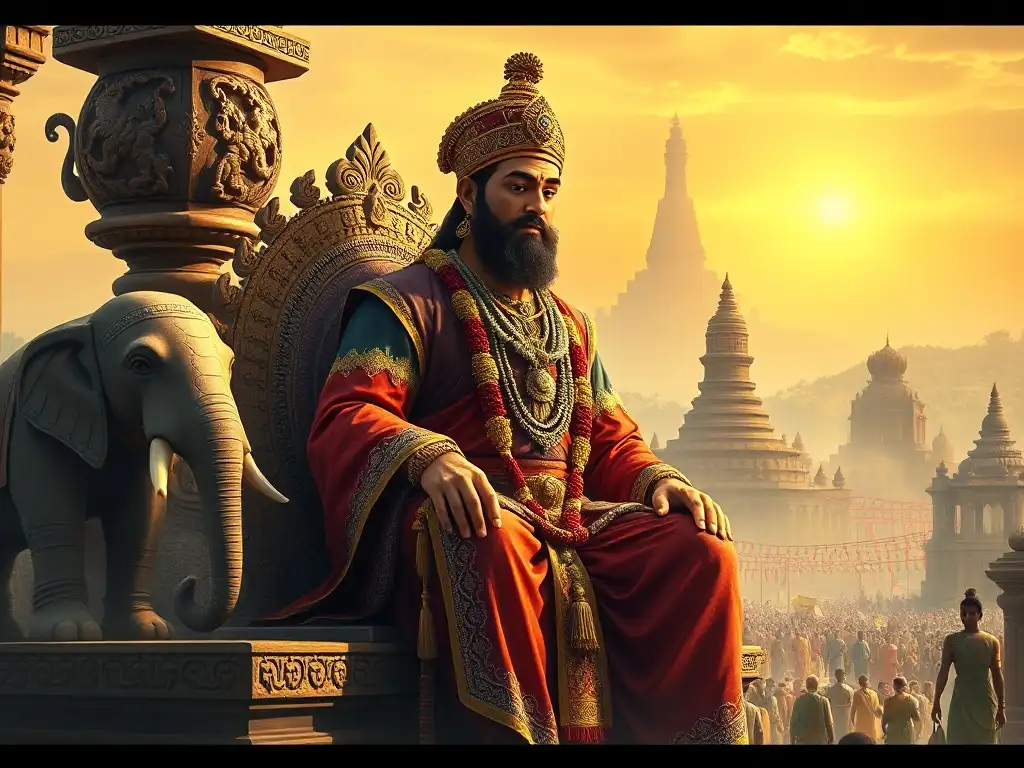
Ashoka's reign was not only significant for its political and military aspects but also for the transformative contributions he made to ancient Indian civilization. His advocacy for Buddhism and the promotion of moral governance left an indelible mark on the cultural landscape of India and beyond.
Promotion of Buddhism and Its Spread
One of Ashoka's most notable contributions is his role in the promotion and spread of Buddhism. After his conversion post-Kalinga War, he dedicated his reign to disseminating Buddhist teachings and principles. Ashoka dispatched missionaries across his empire and beyond, reaching regions such as Sri Lanka and Central Asia, which played a crucial role in establishing Buddhism as a major world religion.
His efforts included the establishment of stupas and monastic complexes, which served as centers for learning and meditation. This widespread promotion of Buddhism not only enhanced the religious landscape of India but also fostered cultural exchanges across Asia, influencing art, philosophy, and governance.
Edicts of Ashoka: Historical Significance and Interpretation
The Edicts of Ashoka are a collection of inscriptions that provide invaluable insights into his reign and the societal values of the time. These edicts, carved on rocks and pillars, convey messages of moral conduct, social responsibility, and the importance of non-violence. They serve as a testament to Ashoka's commitment to dharma and his efforts to create a harmonious society.
Historically, the edicts have been interpreted in various ways, with scholars analyzing their significance in the context of governance, religion, and ethics. They reflect not only Ashoka's personal beliefs but also the broader societal values of ancient India, making them crucial for understanding the cultural and political dynamics of the era.
Influence on Art and Architecture during Ashoka's Reign
Ashoka's reign heralded a flourishing of art and architecture, with significant advancements influenced by Buddhist themes. The construction of stupas, such as the Sanchi Stupa, exemplifies the architectural innovation of the period. These structures were not only religious sites but also served as symbols of the emperor's commitment to Buddhism.
Moreover, the intricate carvings and sculptures found at these sites illustrate the artistic styles that emerged during Ashoka's rule. These artworks often depict scenes from the life of the Buddha, reflecting the synthesis of artistic expression and religious devotion. Ashoka's patronage of art and architecture thus played a critical role in shaping the cultural heritage of ancient India, leaving a lasting legacy that continues to be celebrated today.
The Legacy of Ashoka the Great
The legacy of Ashoka the Great is one of profound influence that transcends time, shaping not only the Indian subcontinent but also the philosophical discourse surrounding governance and morality. Ashoka, who ruled from approximately 268 to 232 BCE, is often celebrated for his transformation from a warrior king to a proponent of peace and dharma (moral law). His reign marked a pivotal shift in Indian history, characterized by the adoption of Buddhism as a state religion, which played a crucial role in promoting ethical governance.
Ashoka's legacy is encapsulated in his edicts, which were inscribed on pillars and rocks across his empire. These edicts communicated his vision of a society governed by compassion, non-violence, and justice. They serve as a testament to his efforts to foster harmony among his subjects, promoting ideals that resonate with contemporary values of human rights and ethical leadership. Furthermore, Ashoka's approach to governance laid down a model that many subsequent Indian empires aspired to emulate, emphasizing the importance of moral authority over brute force.
How Ashoka's Reign Shaped Future Indian Empires
Ashoka's reign significantly shaped the political landscape of ancient India and influenced subsequent empires in several ways. His emphasis on dharma as a guiding principle of governance established a paradigm where the ruler's legitimacy was tied to their moral conduct rather than mere military prowess. This principle would be echoed in later empires, such as the Gupta Empire, which sought to blend political power with ethical governance.
Furthermore, Ashoka's promotion of Buddhism led to its spread across Asia, impacting not just India but also regions such as Central Asia, Southeast Asia, and beyond. The establishment of monasteries and the support of Buddhist missionaries during his reign facilitated cultural exchanges that enriched the societies that adopted these teachings. The political and religious tolerance exhibited during Ashoka's rule set a precedent for future emperors, who often adopted similar inclusive policies to maintain stability within their diverse realms.
Ashoka's Role in Shaping Modern Views on Non-Violence
Ashoka's legacy is particularly significant in the context of non-violence, a principle that he ardently championed following the Kalinga War, which left him deeply remorseful. His commitment to ahimsa (non-violence) not only influenced Buddhist philosophy but also resonated with modern leaders and movements advocating for peace and social justice. Figures like Mahatma Gandhi drew heavily from Ashoka's principles, using them as a foundation for non-violent resistance against colonial rule in India.
In contemporary society, Ashoka's teachings on non-violence continue to inspire activists and thinkers around the globe. His belief in the power of dialogue and reconciliation serves as a critical counter-narrative to the often violent struggles for power seen throughout history. The global appeal of his philosophy underscores the timelessness of Ashoka's contributions to ethical thought and political discourse.
The Enduring Impact of Ashoka's Edicts on Indian Society
The edicts of Ashoka are not just historical artifacts; they represent a comprehensive blueprint for governance that continues to resonate in modern Indian society. These inscriptions highlight themes such as tolerance, social welfare, and the importance of moral behavior, which are foundational to contemporary Indian values. The emphasis on public welfare initiatives, such as the establishment of hospitals and the promotion of environmental conservation, reflects Ashoka's holistic approach to governance.
Moreover, Ashoka's edicts have served as a source of inspiration for various social reform movements throughout Indian history. The principles enshrined in these texts advocate for the rights of individuals and communities, fostering a sense of responsibility among citizens towards one another. In this sense, Ashoka's legacy persists in the ongoing discourse surrounding social justice and ethical governance in India.
Conclusion: Reconciling Myth and Reality in Ashoka's Historical Narrative
The historical narrative of Ashoka the Great is often embellished with myths and legends, leading to a complex interplay between fact and fiction. While his transformation from a conqueror to a pacifist is well documented, the extent of his influence and the effectiveness of his policies can sometimes be overstated. It is essential to approach Ashoka's history with a balanced perspective that recognizes both his significant contributions and the limitations of his reign.
Through critical analysis, we can distinguish the realities of Ashoka's rule from the myths that have developed over centuries. By examining archaeological evidence, historical texts, and the socio-political context of his time, we gain a clearer understanding of his impact on Indian civilization and the broader world.
Final Thoughts on Ashoka the Great History Facts
Ashoka the Great remains a towering figure in the annals of history, with his life and reign providing rich insights into the complexities of leadership, morality, and societal values. The facts surrounding his history reveal a ruler who navigated the challenges of his time with a unique blend of power and compassion. His legacy continues to be relevant, as contemporary society grapples with the ideals of peace, tolerance, and ethical governance.
The Importance of Critical Historical Analysis in Understanding Ashoka
To truly appreciate the significance of Ashoka, it is imperative to engage in critical historical analysis. This involves questioning the sources, understanding the biases present in historical narratives, and recognizing the socio-political dynamics of ancient India. By doing so, we can unravel the layers of myth that often cloud our understanding of historical figures and their contributions.
Critical analysis allows us to contextualize Ashoka's actions within the framework of his time, providing a comprehensive view of his achievements and challenges. It also encourages an appreciation of the complexities involved in historical interpretation, highlighting the need for ongoing research and dialogue in the pursuit of accurate historical knowledge. The story of Ashoka is not merely one of greatness but a multifaceted narrative that invites us to explore the depths of human experience and the quest for a just society.
- Introduction to Ashoka the Great
- Myths Surrounding Ashoka the Great
- The Reality of Ashoka's Rule
- Ashoka's Contributions to Ancient Indian Civilization
- The Legacy of Ashoka the Great
- Conclusion: Reconciling Myth and Reality in Ashoka's Historical Narrative
Frequently Asked Questions
What are some key facts about Ashoka the Great?
Ashoka the Great was a Mauryan emperor who ruled from 268 to 232 BCE. He is known for his conversion to Buddhism and for promoting non-violence and tolerance throughout his empire.
How did Ashoka contribute to Buddhism?
Ashoka played a crucial role in the spread of Buddhism across India and beyond. He established stupas and monasteries, and sent missionaries to promote Buddhist teachings in various regions.
What was the significance of the Edicts of Ashoka?
The Edicts of Ashoka are a collection of inscriptions on rocks and pillars that convey his moral and ethical policies. They emphasize social welfare, justice, and the importance of compassion towards all living beings.
How did Ashoka's reign impact Indian society?
Ashoka's reign marked a transformation in Indian society, promoting cultural exchange and economic prosperity. His policies aimed at improving the lives of his subjects and fostering a sense of unity within the diverse empire.
What myths surround Ashoka's legacy?
Common myths include the notion that Ashoka was always a pacifist. In reality, his early reign involved military conquests, but his conversion to Buddhism led to a dramatic shift towards peace and moral governance.
Final Reflection: Unveiling the Truth Behind Ashoka the Great
The exploration of Ashoka the Great's history reveals a profound dichotomy between myth and reality that resonates deeply in today's world. In an era where narratives shape our understanding of history and identity, the story of Ashoka serves as a powerful reminder of the complexities that lie beneath the surface of widely accepted tales. As we sift through the layers of legend and fact, we uncover not only the man behind the title but also the enduring impact of his reign on contemporary society.
Clearly, the historical narrative of Ashoka has left an indelible mark on our cultural and social landscape, influencing how we perceive leadership, morality, and governance. The lessons drawn from his life continue to inspire discussions around ethical leadership and the responsibilities that come with power. As Mahatma Gandhi once said, “The greatness of a nation and its moral progress can be judged by the way its animals are treated.” This quote encapsulates Ashoka's vision of compassion and non-violence, which remains relevant as we navigate the ethical dilemmas of our time.
As we conclude this exploration of Ashoka's legacy, I invite you, dear reader, to reflect on the narratives that shape your own understanding of history and leadership. Consider how the lessons from Ashoka's life can inform your actions and decisions today. In a world where myths often overshadow reality, let us strive to seek the truth, embrace compassion, and lead with integrity, ensuring that the stories we tell and the legacies we build are rooted in authenticity and purpose.
Unravel the Truth Behind Ashoka’s Legacy!
Thank you for diving into the complex narrative of Ashoka with us! Your exploration of the myths and realities surrounding this historical figure has undoubtedly provided valuable insights that deepen your understanding of ancient India. Now, let’s take action to further enrich your knowledge and engage with this fascinating topic.
- Join a local or online discussion group about ancient Indian history to share your perspectives and learn from others.
- Read a book or watch a documentary that offers a fresh take on Ashoka’s life; you might discover details that challenge your beliefs!
- Share this article on your social media platforms and invite friends to discuss the intriguing contrasts in historical narratives.
What aspect of Ashoka's story resonates with you the most, and how do you think it shapes our understanding of history today?