
The Gupta Empire's Linguistic Legacy: Scripts That Shaped a Civilization


Welcome to Ancient India History, where we embark on a fascinating journey through the rich tapestry of India's past! Dive into the intriguing world of the Gupta Empire, a period marked by remarkable linguistic contributions that not only shaped a civilization but also influenced languages and scripts for generations to come. Discover how these ancient innovations laid the groundwork for communication and culture, and join us as we unravel the stories behind the scripts that defined an era.
Are you ready to explore the legacy that still resonates today? Let's delve deeper into the captivating linguistic heritage of the Gupta Empire!
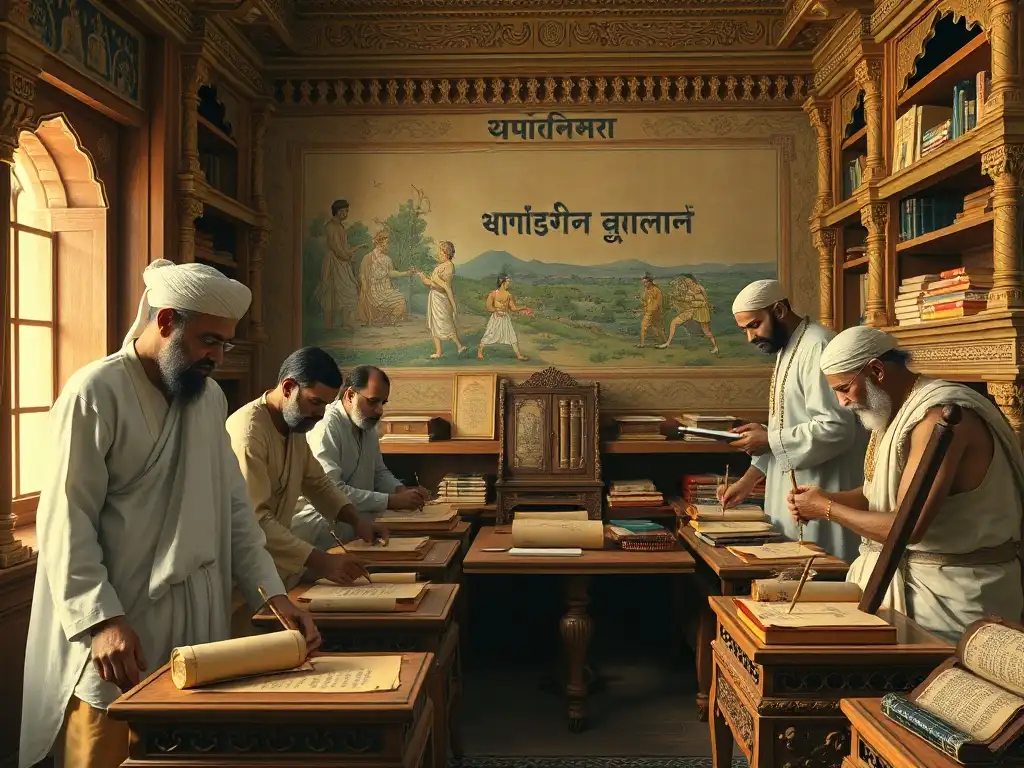
The Gupta Empire, which flourished between the 4th and 6th centuries CE, is often hailed as a golden age in Indian history, marked by significant advancements across various fields including art, science, and philosophy. However, one of the most profound yet often overlooked aspects of this era is its linguistic contributions.
The Gupta period not only saw the emergence of new scripts but also the refinement and proliferation of existing languages that played a vital role in the cultural and administrative fabric of the empire. This article delves into the Gupta Empire's linguistic legacy, exploring how its scripts and languages shaped not only the civilization of the time but also laid the groundwork for future linguistic developments in the Indian subcontinent.
Introduction to the Gupta Empire Linguistic Contributions
The Gupta Empire's linguistic contributions are pivotal in understanding the evolution of communication and literature in ancient India. The use of Sanskrit as a prominent language during this period facilitated the creation of a rich literary tradition, alongside the development of various scripts that catered to diverse regional languages. These developments were not merely functional; they also reflected the cultural ethos and sociopolitical dynamics of the time, showcasing the Gupta Empire's commitment to linguistic diversity and scholarly pursuits.
Overview of the Gupta Empire's Influence on Language
The Gupta era witnessed the extensive use of Sanskrit, which was not only the language of the elite but also became increasingly accessible to the common populace through various literary works and inscriptions. The period saw the creation of significant texts, including the famous Kumarasambhava and Shakuntala by the poet Kalidasa, which enriched the cultural landscape of ancient India.
- Key Features of Gupta Linguistic Contributions:
- Standardization of Scripts: The Gupta period led to the refinement of existing scripts and the emergence of new ones, such as the Gupta script itself.
- Literary Advancements: Flourishing of poetry, drama, and scientific literature in Sanskrit.
- Regional Language Development: Encouragement of local dialects that contributed to the linguistic diversity of the empire.
Importance of Linguistic Contributions in Ancient India
The linguistic contributions of the Gupta Empire extend beyond mere communication; they played a crucial role in:
- Cultural Integration: Facilitating trade and cultural exchange across the vast empire.
- Administrative Efficiency: Enhancing governance through standardized scripts for official documentation.
- Intellectual Growth: Fostering an environment conducive to philosophical and scientific discourse, which was vital for the advancement of knowledge.
Historical Context of the Gupta Empire
Understanding the Gupta Empire's linguistic legacy requires an exploration of its historical context, which reveals the socio-political climate that allowed for such significant advancements in language and literature.
The Rise of the Gupta Empire and Its Cultural Flourishing
Emerging from the decline of the Kushan Empire, the Gupta Empire was established by Maharaja Sri Gupta around the early 4th century CE. Under the leadership of later rulers such as Chandragupta I and Samudragupta, the empire expanded its territories and influence, leading to a renaissance of art, science, and culture.
- Key Events in the Gupta Period:
- Consolidation of Power: Strategic alliances and military conquests that expanded the empire's reach.
- Cultural Patronage: Support for scholars and artists, leading to a vibrant cultural scene.
The Role of Language in Gupta Society and Governance
Language during the Gupta Empire was central to both daily life and governance. The use of Sanskrit in administration and law reflects the empire's sophisticated bureaucratic systems. Inscriptions found on pillars, temples, and coins highlight the importance placed on language as a means of unifying the diverse populace.
- Language as a Tool of Governance:
- Official Inscriptions: Use of Sanskrit for edicts and proclamations.
- Legal Codification: Development of legal texts that were instrumental in maintaining order and justice.
The Gupta Empire's linguistic contributions not only shaped its civilization but also left a lasting legacy on the languages and scripts of the Indian subcontinent. As we explore this topic further, we will uncover the nuances of these contributions and their impact on future generations.
Major Scripts of the Gupta Empire
The Gupta Empire, which flourished from around 320 to 550 CE, is renowned not only for its remarkable achievements in art, science, and politics but also for its significant contributions to language and writing systems. During this period, several scripts emerged and evolved, laying the groundwork for future linguistic development in the Indian subcontinent. The most notable scripts that characterized this era include Brahmi and Devanagari, alongside other regional scripts that were influenced by the Gupta's linguistic innovations. These scripts were crucial in facilitating communication, administration, and literary expression, thus shaping the cultural landscape of ancient India.
Brahmi Script: The Foundation of Indian Writing Systems
Brahmi script is one of the earliest known writing systems in India and played a pivotal role in the formation of subsequent scripts. Originating in the 3rd century BCE, Brahmi was widely used during the Gupta period for inscriptions and manuscripts. It is characterized by its distinct letters, which are derived from an abugida system—where consonants carry an inherent vowel sound that can be modified with diacritics.
The significance of Brahmi lies in its versatility; it not only served various languages of ancient India, including Sanskrit and Prakrit, but also influenced scripts across Asia, such as those in Southeast Asia. Many inscriptions from the Gupta Empire, including those on pillars and caves, were written in Brahmi, documenting important historical events and royal decrees. This script's adaptability and wide usage underscore its foundational role in the development of Indian writing systems and its enduring legacy in the region.
Devanagari Script: Evolution and Significance
Devanagari, a script that is primarily used for writing Hindi, Sanskrit, and several other languages today, has its roots in the Gupta period. Evolving from the Brahmi script, Devanagari became prominent for its systematic representation of sounds, making it suitable for the rich phonetics of Sanskrit. Its development during the Gupta Empire marked a significant leap in the representation of written language, as it allowed for more precise pronunciation and clarity in literary and scholarly texts.
The script is characterized by a horizontal line running along the top of the letters and includes a combination of vowels and consonants. This feature enhances its aesthetic appeal and functional efficiency, making it an ideal medium for both administrative documentation and literary expression. Devanagari not only facilitated the preservation of ancient texts but also contributed to the spread of literature and education throughout the empire, solidifying its importance in the cultural and linguistic legacy of ancient India.
Other Scripts Influenced by the Gupta Empire
In addition to Brahmi and Devanagari, several other scripts emerged during the Gupta Empire, influenced by its linguistic advancements. Among these are the Siddham script, used primarily in Buddhist texts, and the Sharada script, which became the standard for writing Kashmiri and Sanskrit in the northern regions of India.
These scripts demonstrate the Gupta Empire's role as a cultural hub, where language and writing flourished and adapted to meet the needs of diverse communities. The influence of Gupta scripts extended beyond its borders, as neighboring cultures adopted and adapted these writing systems, showcasing the empire's far-reaching impact on linguistic development in Asia.
Linguistic Contributions and Their Impact on Civilization

The linguistic contributions of the Gupta Empire were profound, shaping not only the administrative framework but also the cultural and literary milieu of ancient India. Language served as a vital tool for governance, cultural expression, and the dissemination of knowledge, embedding itself into the fabric of Gupta society.
The Role of Language in Administration and Governance
Language played a crucial role in the administration of the Gupta Empire. The use of Sanskrit as the official language facilitated effective governance, as it allowed for clear communication of laws, decrees, and policies. Sanskrit's grammatical precision and rich vocabulary made it an ideal medium for administration, enabling bureaucrats to maintain records, issue orders, and interact with the populace.
Moreover, the promotion of Sanskrit and local dialects in various administrative documents fostered a sense of unity within the empire, allowing diverse communities to engage with their government. This linguistic approach not only streamlined administration but also enhanced the cultural identity of the Gupta Empire, establishing a cohesive societal framework.
Literature and Poetry: The Gupta Era's Contribution to Sanskrit
The Gupta Empire is often referred to as the "Golden Age" of Sanskrit literature, as it witnessed the emergence of remarkable poets, playwrights, and scholars. Notable figures such as Kalidasa and Bhasa contributed significantly to the richness of Sanskrit literature, producing works that are celebrated for their artistic and philosophical depth.
The era's literary contributions included plays, poems, and epics, which explored themes of love, duty, and morality, reflecting the complexities of human experience. These works not only enriched the cultural heritage of ancient India but also laid the foundation for future literary traditions, influencing generations of writers and poets. The Gupta period's dedication to literature and the arts exemplifies the civilization's commitment to intellectual and cultural advancement.
The Influence of Gupta Scripts on Neighboring Cultures
The scripts developed during the Gupta Empire had a lasting impact on neighboring cultures, facilitating the spread of Indian linguistic and literary traditions across Asia. Regions such as Southeast Asia adopted Brahmi and its derivatives, leading to the creation of various local scripts that often retained elements of their Indian origins.
This cultural diffusion was particularly evident in the spread of Buddhism, where Indian scripts were used in the transcription of sacred texts and teachings across countries like Indonesia and Cambodia. The influence of Gupta scripts not only shaped the linguistic landscape of these regions but also contributed to the transmission of Indian philosophical ideas and artistic styles, creating a rich tapestry of cultural exchange that resonates to this day.
Preservation and Evolution of Gupta Scripts
The Gupta Empire, which flourished from approximately 240 to 550 CE, is known for its remarkable contributions to various fields, including linguistics. One of the most significant aspects of this era was the preservation and evolution of scripts. The Gupta script, derived from the earlier Brahmi script, became a foundational element for later Indian languages and scripts.
The Gupta script showcased a transition towards more rounded and stylized characters, making it aesthetically pleasing and easier to write. This evolution not only facilitated the recording of administrative and literary texts but also influenced the regional scripts that emerged in subsequent centuries. By codifying language in written form, the Gupta Empire played a crucial role in the standardization and dissemination of knowledge, which had far-reaching implications for culture and education.
Furthermore, the preservation of these scripts through inscriptions on stone, copper plates, and manuscripts indicates the value placed on literacy and documentation during this period. The Gupta rulers often commissioned inscriptions to commemorate achievements, religious dedications, and administrative orders, ensuring that their linguistic legacy remained intact for future generations.
Archaeological Discoveries of Gupta Inscriptions
Archaeological discoveries of Gupta inscriptions have provided invaluable insights into the linguistic contributions of the empire. Sites such as Udayagiri, Sanchi, and the ruins of ancient Nalanda have yielded inscriptions that date back to the Gupta period. These inscriptions, often carved in stone, reveal details about the socio-political structure, religious practices, and daily life of the times.
One of the most famous inscriptions is the Udayagiri inscription of Samudragupta, which extols the achievements of the ruler and outlines his military conquests. The clarity of the Gupta script used in these inscriptions not only highlights its artistic quality but also its role as a medium for public communication.
Additionally, copper plate inscriptions, such as the Brahmapuri copper plate, shed light on land grants and the administrative framework of the Gupta Empire. These archaeological finds underscore the importance of written language in governance and record-keeping, demonstrating how Gupta scripts were integral in shaping the bureaucratic systems of ancient India.
The Transition from Gupta Scripts to Modern Languages
The transition from Gupta scripts to modern languages is a fascinating journey through linguistic evolution. As the Gupta Empire declined, its scripts laid the groundwork for subsequent scripts like Devanagari, which is used for Hindi, Sanskrit, and several other languages today.
The phonetic developments that occurred during the Gupta period influenced the way sounds were represented in writing. For instance, the simplification of certain characters resulted in more efficient means of communication, which was critical for the spread of literature and scholarly works.
By the 7th century, the Gupta script had largely evolved into what we recognize as early forms of Brahmi and further branched into various regional scripts across India. This transition not only illustrates the dynamic nature of language but also highlights the Gupta Empire's role as a catalyst in the linguistic landscape of India. The linguistic contributions of the Gupta Empire continue to resonate, forming a bridge between ancient and modern languages.
Conclusion: The Lasting Legacy of Gupta Empire's Linguistic Contributions
The Gupta Empire's linguistic contributions have left an indelible mark on the history of Indian languages and scripts. Through the refinement of writing systems and the promotion of literacy, the Guptas established a framework that facilitated cultural and intellectual exchanges across the subcontinent. Their scripts not only served administrative purposes but also played a pivotal role in the flourishing of literature and philosophy during this golden age of Indian civilization.
The Ongoing Relevance of Ancient Scripts in Modern India
The relevance of ancient scripts in modern India is evident in the continued use and study of these scripts in academic settings. Institutions dedicated to the preservation and research of ancient texts often rely on Gupta scripts to understand India's linguistic heritage. Additionally, many modern Indian languages boast roots in the scripts developed during the Gupta period, showcasing their enduring influence.
In contemporary society, there is a renewed interest in ancient scripts, not just as linguistic artifacts but as cultural symbols that reflect India's rich history. Workshops and educational programs aimed at teaching these scripts are becoming increasingly popular, fostering a connection between past and present.
Reflections on Language and Cultural Identity in Ancient Civilizations
Language is a powerful marker of cultural identity, and the Gupta Empire exemplifies this connection. The evolution of Gupta scripts underscores how language can shape societal structures, influence thought, and serve as a repository of tradition and knowledge.
Reflecting on the linguistic legacy of ancient civilizations like the Gupta Empire allows modern societies to appreciate the complexities of cultural identity. Just as the Gupta scripts served as a medium for expressing beliefs, governance, and artistic endeavors, contemporary languages continue to evolve, echoing the historical narratives of those who came before us. This ongoing dialogue between past and present highlights the importance of preserving linguistic heritage as a vital part of cultural identity.
- Introduction to the Gupta Empire Linguistic Contributions
- Historical Context of the Gupta Empire
- Major Scripts of the Gupta Empire
- Linguistic Contributions and Their Impact on Civilization
- Preservation and Evolution of Gupta Scripts
- Conclusion: The Lasting Legacy of Gupta Empire's Linguistic Contributions
- What were the primary linguistic contributions of the Gupta Empire?
- How did the Gupta Empire influence literature and language?
- What role did the Brahmi script play during the Gupta Empire?
- How did the Gupta Empire's linguistic advancements affect neighboring regions?
- Are there any modern languages that trace their roots back to Gupta linguistic contributions?
Frequently Asked Questions
What were the primary linguistic contributions of the Gupta Empire?
The Gupta Empire is known for the development of Sanskrit, which became the lingua franca of ancient India, and the creation of various scripts that influenced many regional languages.
How did the Gupta Empire influence literature and language?
The Gupta period saw a flourishing of literature in Sanskrit, leading to the creation of seminal works like Kalidasa's plays and poetry, which set a standard for future Indian literature.
What role did the Brahmi script play during the Gupta Empire?
The Brahmi script was crucial for administrative purposes and religious texts, serving as a foundation for many Indian scripts that evolved later, reflecting the linguistic diversity of the time.
How did the Gupta Empire's linguistic advancements affect neighboring regions?
The linguistic advancements made during the Gupta Empire facilitated cultural exchange, influencing languages and scripts in regions like Southeast Asia, where Sanskrit became an important language for trade and culture.
Are there any modern languages that trace their roots back to Gupta linguistic contributions?
Yes, several modern languages, particularly those in the Indo-Aryan family, have roots in the Sanskrit and scripts developed during the Gupta Empire, showcasing its lasting impact on Indian linguistics.
Final Reflection: The Enduring Echoes of the Gupta Empire's Linguistic Contributions
The linguistic contributions of the Gupta Empire resonate profoundly in today's world, reminding us of the power of language as a vehicle for culture and identity. As we navigate a globalized society, the scripts and languages that emerged during this golden age of India serve as a testament to the rich tapestry of human expression. The Gupta Empire's innovations in language not only shaped their civilization but also laid the groundwork for future generations, illustrating that the words we use can transcend time and geography.
The impact of the Gupta Empire's linguistic legacy is evident in the cultural and social landscapes we inhabit today. Language is not merely a means of communication; it is a reflection of our values, beliefs, and histories. The scripts developed during this period, such as Devanagari, continue to influence modern languages and scripts across the Indian subcontinent. As noted by historian Romila Thapar, The past is not just a record of what has been; it is a living force that shapes our present and future.
This ongoing influence highlights the importance of understanding our linguistic heritage and its role in fostering a sense of belonging and continuity.
As we reflect on the Gupta Empire's linguistic contributions, I invite you to consider how language shapes your own identity and community. What stories do your words tell? How can you honor and preserve the linguistic heritage that surrounds you? Embrace the lessons of the past and recognize the power of language to connect, inspire, and transform. Let us carry forward this legacy, ensuring that the echoes of the Gupta Empire continue to resonate in our lives and the lives of future generations.
Unveil the Linguistic Treasures of the Gupta Empire!
Thank you for delving into the rich linguistic legacy of the Gupta Empire with us! You’ve explored how ancient scripts shed light on a vibrant civilization, showcasing the profound impact of language on culture and identity. Now, let’s take that knowledge further!
Here are some ways to engage with this fascinating topic:
- Dive into ancient texts: Explore online resources or libraries to find original texts written in Gupta scripts. Challenge yourself to decipher a passage or two!
- Join a community discussion: Engage with others who share your passion for ancient languages and cultures. Consider joining forums or social media groups focused on Indian history.
- Share your findings: Write a blog post or create a social media update to share what you’ve learned about the scripts and their cultural significance. Help others discover the beauty of the Gupta Empire’s legacy!
What aspects of the Gupta scripts do you find most intriguing, and how do you think they shaped the cultural identity of this remarkable civilization?