
The Cultural Exchange Through Warfare: Ancient India and Its Neighbors

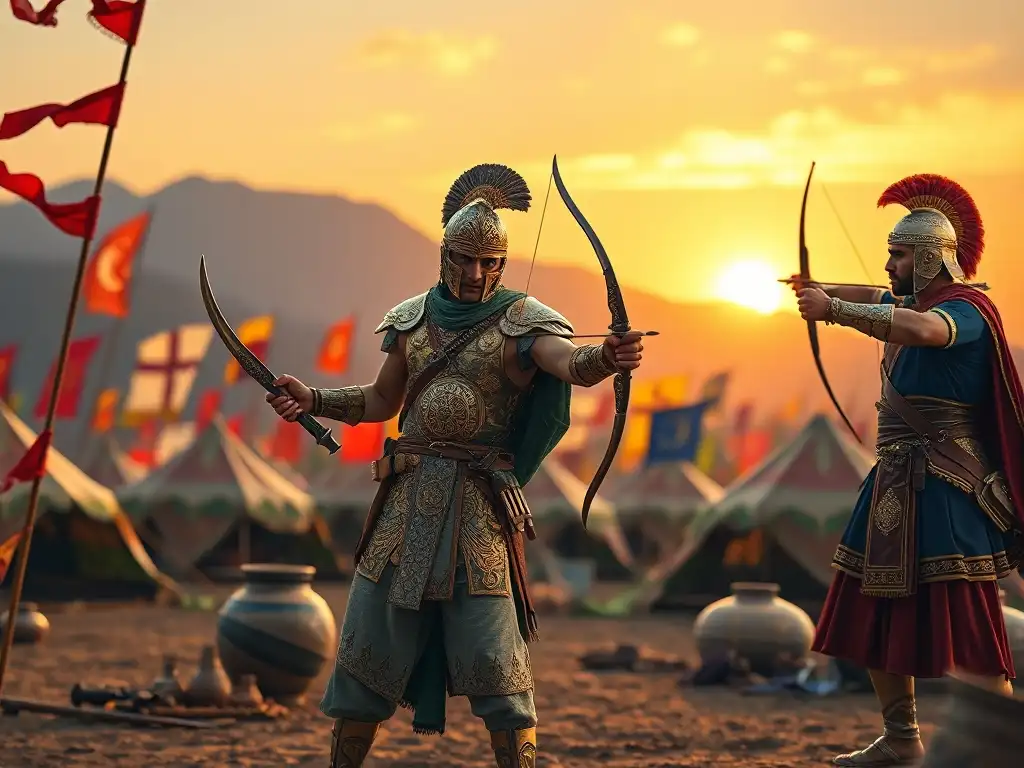
Welcome to Ancient India History, where we embark on a fascinating journey through the rich tapestry of India's past. In this exploration of Cultural Exchange in Ancient India, we delve into the intricate relationships forged through warfare between ancient Indian civilizations and their neighbors. What insights can we uncover about the impact of conflict on culture and innovation? Join us as we unravel the profound connections that shaped not only India but also the world beyond its borders. Prepare to be captivated by the stories of resilience and transformation that await you!
- Introduction to Cultural Exchange in Ancient India
- The Role of Warfare in Cultural Exchange
- Major Conflicts Involving Ancient India
- Cultural Exchange with Neighboring Civilizations
- Mechanisms of Cultural Exchange Through Warfare
- Case Studies of Cultural Exchange in Ancient Indian Warfare
- Conclusion: The Lasting Impact of Cultural Exchange in Ancient India
- References
-
Frequently Asked Questions
- What role did warfare play in cultural exchange in ancient India?
- How did ancient Indian civilizations influence their neighbors through cultural exchange?
- What are some examples of cultural exchange during the Gupta Empire?
- In what ways did foreign invasions affect the cultural landscape of ancient India?
- How did trade contribute to cultural exchange in ancient India?
- Final Reflection: The Enduring Legacy of Cultural Exchange in Ancient India
- Unleash the Power of Knowledge: Explore Ancient India’s Cultural Tapestry!
Introduction to Cultural Exchange in Ancient India
The history of ancient India is a tapestry woven with threads of diverse cultures, religions, and practices, making it a fascinating subject for exploration. One of the most intriguing aspects of this history is the concept of cultural exchange—how ancient Indian civilizations interacted with their neighbors through various means, including warfare.
Warfare, often viewed solely as a tool of conflict, also served as a conduit for cultural diffusion, facilitating the transfer of ideas, technologies, and artistic influences across regions. This article delves into the intricate dynamics of cultural exchange that emerged through warfare in ancient India, highlighting how these interactions contributed to the rich legacy of Indian civilization.
Overview of Ancient Indian Civilizations
Ancient India was home to several prominent civilizations, each contributing uniquely to the region's cultural and historical landscape. Major civilizations included:
- Indus Valley Civilization (c. 3300–1300 BCE): Known for its advanced urban planning, drainage systems, and trade networks.
- Vedic Period (c. 1500–500 BCE): Characterized by the composition of the Vedas and the establishment of societal structures such as the varna system.
- Mauryan Empire (c. 322–185 BCE): Marked by the spread of Buddhism and significant developments in administration and trade, particularly under Emperor Ashoka.
- Gupta Empire (c. 240–550 CE): Often referred to as the Golden Age of India, noted for advancements in science, art, and literature.
These civilizations not only thrived independently but also engaged with neighboring regions, leading to exchanges that shaped their evolution. The interactions often took place through trade, diplomacy, and, notably, warfare, which became a significant catalyst for cultural exchange.
Importance of Warfare in Cultural Exchange
Warfare in ancient India was not merely about territorial conquest; it played a crucial role in the cultural exchange that occurred between India and its neighbors. Here are some key aspects of this phenomenon:
- Adoption of Military Technologies: Victorious armies often brought back advanced military techniques and technologies from conquered territories. The introduction of new weaponry, tactics, and fortification methods influenced Indian military strategies.
- Spread of Ideas and Religion: Conquests often facilitated the spread of religious beliefs and philosophies. For instance, the Mauryan Empire's expansion under Ashoka led to the proliferation of Buddhism beyond Indian borders, influencing cultures in Central and East Asia.
- Cultural Syncretism: Interaction through warfare resulted in a blending of cultural practices. The fusion of artistic styles, languages, and traditions enriched the cultural fabric of ancient India and its neighbors.
- Trade Routes and Economic Exchange: Warfare sometimes opened up new trade routes, enhancing economic relationships and facilitating the exchange of goods, ideas, and cultural practices.
Through these mechanisms, warfare became a powerful agent of cultural exchange, facilitating the sharing of knowledge and innovations that helped shape the ancient Indian world and its connections to neighboring civilizations. Understanding these dynamics provides crucial insights into the historical narrative of ancient India and emphasizes the complexity of its interactions with the broader world.
The Role of Warfare in Cultural Exchange
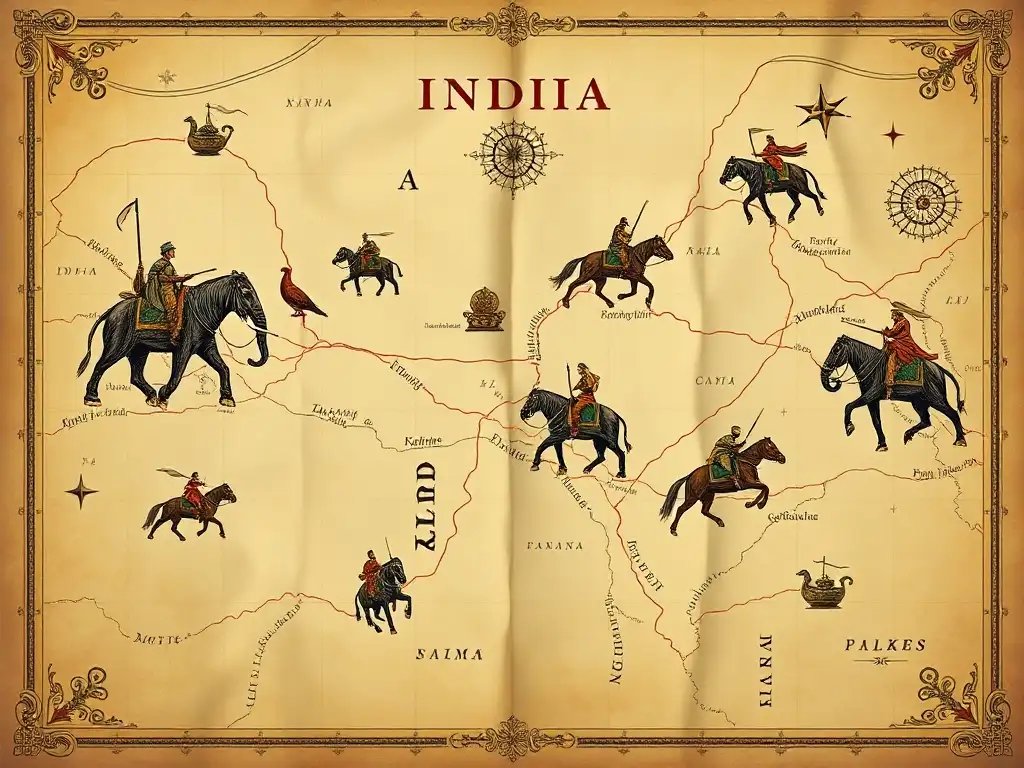
Warfare in ancient India was not merely a means of territorial expansion; it served as a significant catalyst for cultural exchange between Indian civilizations and their neighbors. As armies clashed and empires expanded, they brought diverse peoples into contact with one another, leading to the exchange of ideas, beliefs, and technologies. This dynamic interaction shaped the cultural landscape of ancient India, influencing art, religion, and social structures.
How Conflicts Fostered Cultural Interactions
The conflicts that ensued between ancient Indian states and neighboring territories often resulted in the movement of people, the spread of languages, and the amalgamation of customs. During periods of invasion or military campaigns, conquerors would bring their own cultural practices, which would intermingle with those of the indigenous populations.
- Migration of Peoples:
- Warfare often led to migration. For instance, the invasions by the Indo-Aryans around 1500 BCE introduced new languages and cultural practices to the subcontinent.
- The raids by the Scythians and later the Kushans brought Central Asian influences that permeated Indian society, especially in the realms of art and religion.
- Intermarriage and Alliances:
- Military alliances frequently resulted in intermarriage between ruling classes, creating a blend of customs and traditions. The Mauryan Empire, under Ashoka, saw marriages that linked Indian royalty with Hellenistic powers, further enriching the cultural tapestry.
- Cultural Syncretism:
- The fusion of religions is another notable outcome of warfare. For example, the spread of Buddhism into Central Asia and beyond was facilitated by the military campaigns of the Mauryan Empire, leading to a unique blend of Buddhist and local traditions.
By fostering these interactions, warfare acted as a powerful driver of cultural exchange, reshaping societies and contributing to the rich diversity that characterizes ancient Indian history.
Exchange of Ideas and Technology Through Warfare
The exchange of ideas and technology during warfare had lasting impacts on military strategies, architectural styles, and agricultural practices in ancient India. Each encounter brought not just weapons, but also knowledge that transformed societies.
- Military Innovations:
- The introduction of new warfare techniques, such as the use of cavalry and war elephants, was influenced by interactions with neighboring cultures. For instance, the Persian military innovations were adopted and adapted by Indian rulers, enhancing their capabilities in battle.
- The concept of fortifications and urban planning in military camps led to advancements in architecture, influencing the design of cities like Pataliputra.
- Cultural Artifacts:
- Artisans would often accompany armies, leading to the diffusion of artistic techniques. The Gandharan art style, which emerged from Indo-Greek interactions, is a prime example, blending Hellenistic and Indian artistic traditions to create unique sculptures and architecture.
- Agricultural Techniques:
- Conquerors brought with them new agricultural practices, which were crucial for sustaining large armies. Techniques such as irrigation methods from the Persian Empire significantly improved Indian agriculture, leading to surplus production and supporting urbanization.
Warfare in ancient India was a pivotal force that facilitated cultural exchange, fostering a dynamic interplay of ideas, technologies, and traditions. The resulting cultural amalgamation not only enriched Indian civilization but also left a lasting legacy on the subcontinent's historical narrative.
Major Conflicts Involving Ancient India
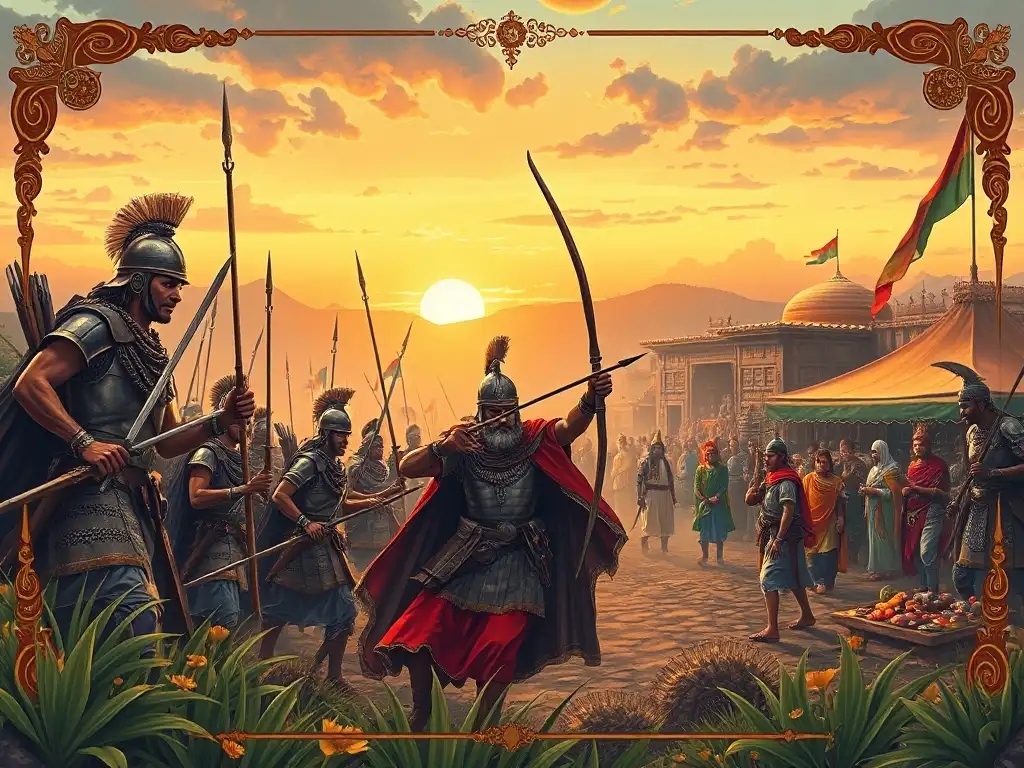
The history of ancient India is marked by significant conflicts that not only shaped its political landscape but also facilitated cultural exchange with neighboring civilizations. These conflicts often resulted in the movement of peoples, ideas, and technologies, enriching the cultural tapestry of ancient India. This section delves into key conflicts and their roles in fostering cultural exchange.
The Aryan Invasions and Cultural Assimilation
The Aryan Invasions, occurring around 1500 BCE, were pivotal in the formation of early Indian society. The arrival of the Indo-Aryans brought about significant changes:
- Cultural Integration: The Indo-Aryans assimilated with the existing Dravidian populations, leading to a synthesis of languages, rituals, and social structures. This integration laid the groundwork for the development of Vedic culture, which emphasized spiritual and philosophical ideas that influenced subsequent Indian thought.
- Linguistic Influence: The introduction of Sanskrit, a language brought by the Aryans, became a cornerstone of Indian literature and philosophy. The subsequent evolution of languages in the Indian subcontinent can be traced back to this linguistic foundation.
- Religious Developments: The conflicts and exchanges during this period also saw the emergence of early Hinduism, as Aryan religious practices merged with local beliefs. This resulted in rich mythologies and rituals that would define Indian spirituality for centuries.
The Aryan Invasions were not just military incursions but also catalysts for cultural exchange, significantly shaping the social and religious landscape of ancient India.
The Maurya Empire: Expansion and Cultural Exchange
The Maurya Empire, established in the 4th century BCE under Chandragupta Maurya and expanded by his grandson Ashoka, is a prime example of how warfare can lead to cultural exchange:
- Military Conquests: The Mauryan military campaigns extended into present-day Afghanistan and parts of Southeast Asia. These conquests facilitated the introduction of diverse cultural practices and ideas from the regions they encountered.
- Spread of Buddhism: Ashoka, after the Kalinga War, embraced Buddhism and played a crucial role in its propagation. He sent missionaries across Asia, which led to the establishment of strong cultural ties with regions such as Central Asia and East Asia. This exchange significantly influenced art, architecture, and religious practices across these areas.
- Trade Networks: The Maurya Empire also established extensive trade routes that connected India with the Mediterranean world. Goods, ideas, and cultural practices flowed through these routes, enhancing the cultural exchange further. For instance, the introduction of Hellenistic influences is evident in Mauryan art and architecture.
The Maurya Empire exemplifies how military expansion can facilitate widespread cultural exchange, enriching both the conquerors and the conquered.
The Gupta Empire: Military Campaigns and Cultural Flourishing
The Gupta Empire, often referred to as the "Golden Age of India," thrived from the 4th to the 6th centuries CE, characterized by remarkable achievements in arts, science, and philosophy, largely influenced by its military campaigns:
- Territorial Expansion: The Gupta rulers expanded their territory through strategic warfare, incorporating various regions of Northern and Central India. This unification under a central authority promoted stability, leading to a flourishing of cultural and intellectual endeavors.
- Cultural Synthesis: As the Gupta Empire expanded, it absorbed diverse cultural elements from conquered territories. This led to a blend of artistic styles, evident in sculptures and murals, which incorporated both indigenous and foreign influences.
- Contributions to Knowledge: The military conquests facilitated the exchange of ideas, particularly in mathematics and astronomy. Scholars such as Aryabhata made significant advancements during this period, and their works were disseminated far beyond India due to the empire's expansive trade networks.
The Gupta Empire's military campaigns not only consolidated power but also played a crucial role in fostering cultural exchange, resulting in significant advancements in various fields that shaped the future of Indian civilization.
The major conflicts involving ancient India were instrumental in driving cultural exchange. From the Aryan Invasions to the expansive empires of Maurya and Gupta, each conflict contributed to the rich tapestry of Indian history, resulting in a dynamic interplay of cultures that resonated through the ages.
Cultural Exchange with Neighboring Civilizations
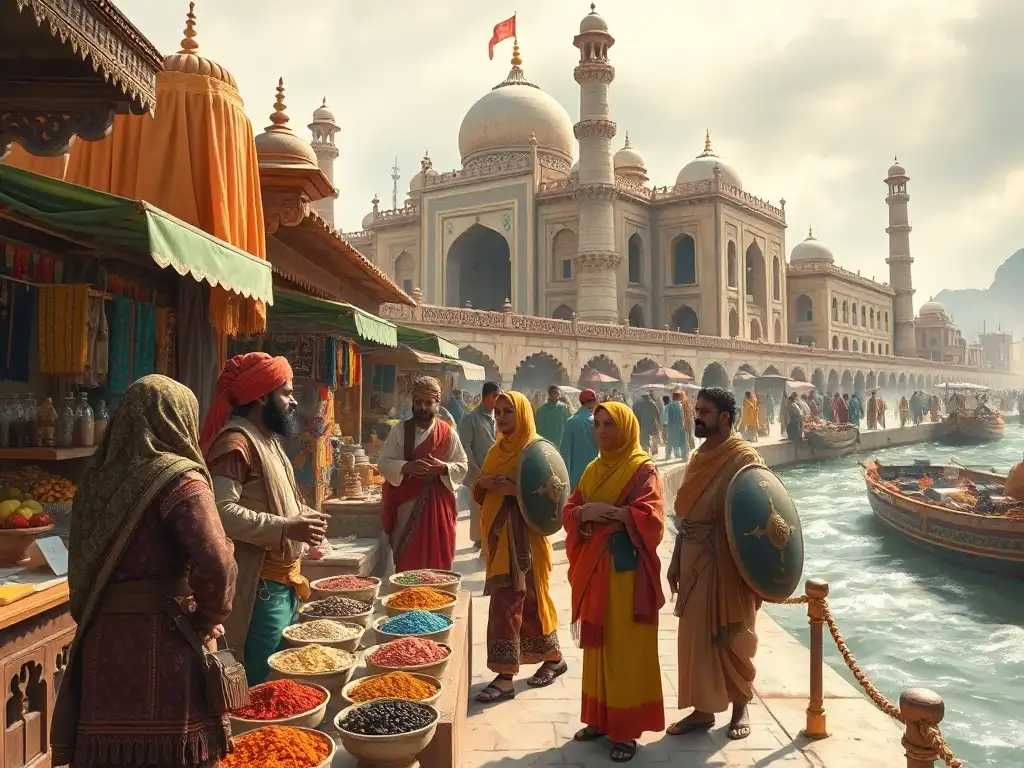
India and Persia: Trade, Warfare, and Cultural Influences
The historical relationship between India and Persia is marked by both conflict and collaboration, resulting in a rich tapestry of cultural exchange. Following the establishment of the Achaemenid Empire, Persian influence permeated various aspects of Indian society. The trade routes connecting these civilizations facilitated not only the exchange of goods but also ideas, art, and technology.
- Trade Networks: The Persian Empire established extensive trade networks that reached into the Indian subcontinent. Goods like textiles, spices, and precious stones were exchanged, leading to economic interdependence. Indian merchants benefitted from Persian markets, while Persian traders introduced new agricultural practices and luxury items to Indian society.
- Artistic Influence: The confluence of Persian and Indian artistic traditions is evident in architecture, sculpture, and coinage. The introduction of Persian motifs in Indian art, particularly during the Mauryan and Gupta periods, showcases this cultural fusion. For example, intricate carvings and decorative elements found in ancient Indian temples exhibit clear Persian influences.
- Military Engagements: The Persian invasions of India, particularly under Darius I, were significant in shaping military tactics and strategies. The exchange of weaponry and military techniques between the two civilizations led to advancements in warfare. The use of cavalry, for instance, became more prominent in Indian military practices as a result of Persian influence.
Relations with the Hellenistic World: Alexander's Campaigns
The arrival of Alexander the Great in India in 326 BCE marked a pivotal moment in the cultural exchange between India and the Hellenistic world. His campaigns not only instigated military confrontations but also initiated a profound exchange of ideas and cultural practices.
- Cultural Syncretism: Alexander's brief reign in the northwestern regions of India facilitated a blending of Greek and Indian cultures. This syncretism is most notably observed in the region of Gandhara, where the Greco-Buddhist art movement emerged. Sculptures from this period depict Buddhist themes infused with Hellenistic styles, showcasing the cross-pollination of artistic traditions.
- Philosophical Exchange: The encounters between Indian sages and Greek philosophers led to the sharing of philosophical concepts. Ideas of ethics, governance, and metaphysics were exchanged, enriching both cultures. Notably, the works of Greek historians and philosophers documented their observations of Indian customs and philosophies, contributing to a broader understanding of Indian society.
- Military Tactics and Organization: The military strategies employed by Alexander also left a lasting legacy on Indian warfare. Techniques such as the use of phalanx formations and combined arms tactics were adopted and adapted by Indian rulers in subsequent conflicts, demonstrating a practical aspect of cultural exchange in warfare.
Cultural Interactions with the Chinese Dynasties
The interaction between ancient India and the Chinese dynasties was significant in shaping the cultural landscape of both regions. This relationship was characterized by trade, the exchange of ideas, and the spread of Buddhism.
- Silk Road Trade: The Silk Road served as a vital conduit for trade between India and China. Indian traders introduced valuable commodities such as silk, spices, and precious stones to Chinese markets. In return, they brought back Chinese goods and technologies, fostering a mutual appreciation of each other's cultures.
- Spread of Buddhism: One of the most profound cultural exchanges occurred through the spread of Buddhism from India to China. Missionaries and monks traveled along trade routes, bringing Buddhist teachings and texts. This exchange not only influenced religious practices but also impacted art, literature, and philosophy in China.
- Technological Innovations: The sharing of technological innovations, such as papermaking and metallurgy, occurred during interactions between Indian and Chinese civilizations. These exchanges enhanced agricultural productivity and craftsmanship in both regions, highlighting the importance of collaboration in development.
The cultural exchanges through warfare and trade between ancient India and its neighboring civilizations shaped the region's historical trajectory. These interactions significantly influenced political structures, artistic expressions, and philosophical thought, leaving a lasting legacy that continues to resonate in modern times.
Mechanisms of Cultural Exchange Through Warfare
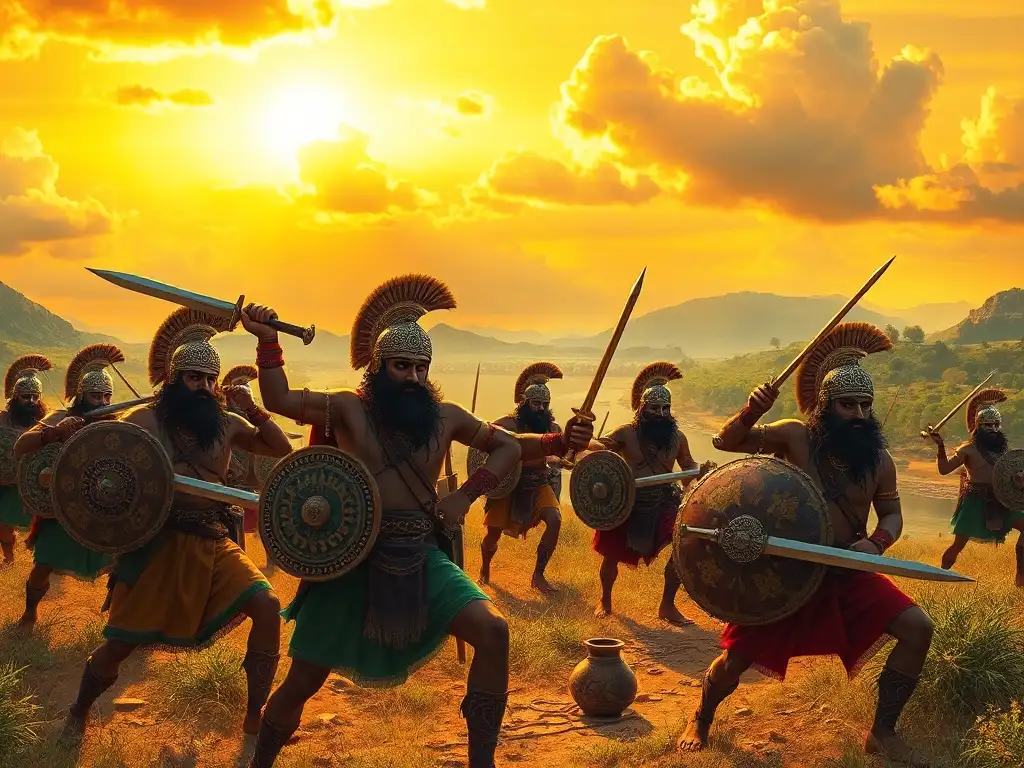
The interplay between warfare and cultural exchange in ancient India represents a complex tapestry woven from military conflicts, alliances, and shared experiences. Warfare, often seen solely as a destructive force, also served as a catalyst for cultural interactions that significantly influenced the societies involved. This section explores the key mechanisms through which cultural exchange occurred during times of conflict, providing insights into how ancient Indian civilizations engaged with their neighbors.
The Role of Diplomacy in Military Conflicts
Diplomacy often preceded or followed military engagements in ancient India, serving as a crucial mechanism for cultural exchange. States would frequently send envoys to negotiate terms of peace or alliances, which facilitated the transfer of ideas and customs.
- Treaties and Alliances: Many conflicts were resolved through treaties that included not only military agreements but also provisions for cultural exchanges, such as intermarriage between royal families or the sharing of knowledge in governance and administration.
- Cultural Envoys: Diplomatic missions often featured cultural representatives who introduced art, literature, and religious practices from their homelands. This exchange enriched the cultural landscape of the involved societies.
- Example: The Mauryan Empire, under Ashoka, is a prime example where military conquests were followed by a commitment to Buddhist ideals, promoting peace and cultural integration across regions.
The dynamics of warfare in ancient India led to significant exchanges of technology and military strategies among various civilizations. The adoption of these innovations often had far-reaching implications beyond the battlefield.
- Weaponry and Armor: The introduction of advanced weaponry, such as the use of the composite bow and crossbow, was often a result of encounters with neighboring cultures. Indian armies integrated these technologies into their own military practices, enhancing their effectiveness.
- Warfare Strategies: Techniques such as guerilla warfare were adopted and adapted from various tribal and regional practices. For instance, the use of elephants in battle, a hallmark of Indian warfare, was influenced by interactions with cultures in Southeast Asia.
- Trade of Knowledge: The Silk Road and maritime routes facilitated not just trade in goods but also the movement of military scholars and strategists. This exchange fostered a blend of tactics that improved military outcomes and cultural understanding.
The Influence of Religion and Philosophy on Warfare
Religion and philosophy played significant roles in shaping the motivations and conduct of warfare in ancient India, influencing not only the justification for conflicts but also the cultural exchanges that arose from them.
- Religious Warfare: Conflicts often had a religious dimension, with rulers invoking divine sanction for their campaigns. The spread of Buddhism and Jainism during military conquests led to the adoption of non-violence and ethical warfare principles, promoting cultural dialogue across regions.
- Philosophical Texts: Texts such as the Bhagavad Gita reflect on the moral dilemmas of warfare and the broader implications of conflict on society. These philosophical discourses influenced military leaders and their decisions, often leading to cultural introspection and exchange.
- Syncretism: The blending of religious traditions during and after conflicts led to the development of syncretic practices that merged elements of different cultures. This was particularly evident in regions such as Gujarat and Rajasthan, where various religious traditions coexisted and influenced each other.
Through these mechanisms, ancient India not only engaged in warfare but also transformed it into a conduit for cultural exchange, enriching its civilization and those of its neighbors. The legacy of these interactions can still be seen in the diverse cultural fabric of contemporary India.
Case Studies of Cultural Exchange in Ancient Indian Warfare
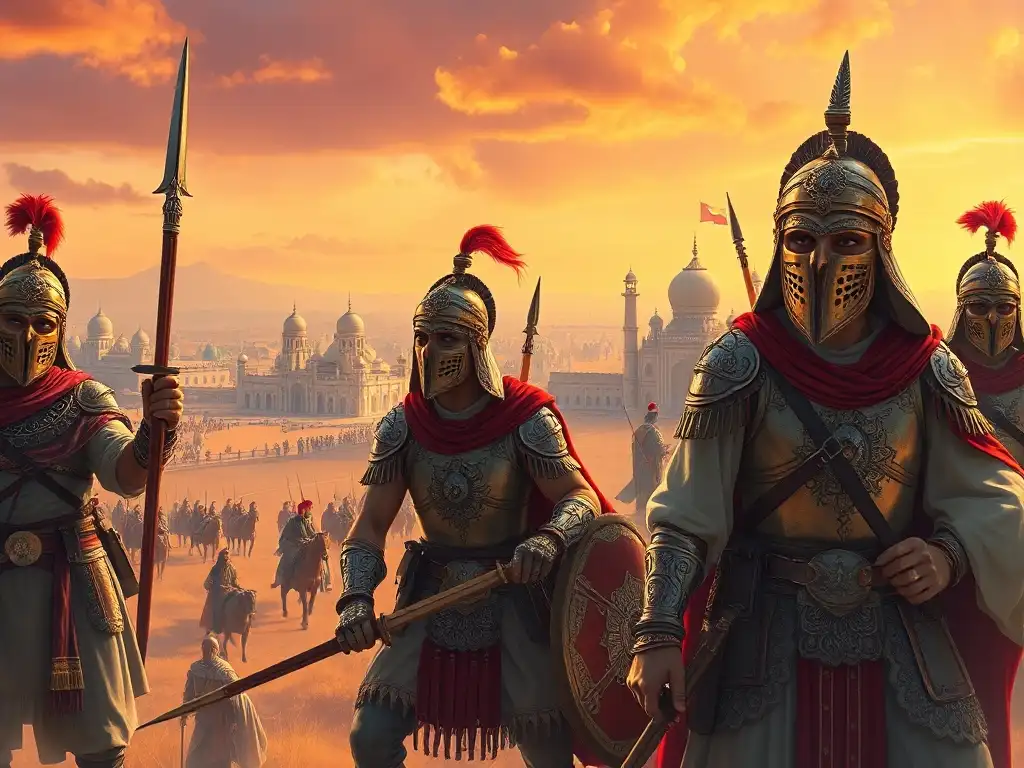
The Battle of the Hydaspes: Cultural Impacts of Alexander's Invasion
The Battle of the Hydaspes, fought in 326 BCE between Alexander the Great and King Porus, marked a significant point of cultural exchange in ancient India. This encounter not only demonstrated military prowess but also initiated a complex relationship between Greek and Indian cultures. After his victory, Alexander retained Porus as a satrap, allowing for a unique synthesis of Hellenistic and Indian cultural elements to flourish.
- Military Innovations:
- The introduction of Greek military strategies influenced Indian warfare techniques. The use of cavalry and tactical formations seen during the battle was later integrated into Indian military practices.
- Indian forces began adopting the use of mounted archers and heavy cavalry, which were prominent in Greek warfare.
- Cultural Exchange:
- Art and Architecture: The encounter led to the emergence of Indo-Greek art, characterized by the blending of Greek stylistic elements with Indian motifs. Statues depicting deities with Greco-Roman features became prevalent.
- Religion and Philosophy: Greek philosophy began to permeate Indian thought, with concepts of democracy and governance being discussed among scholars. This exchange would later influence the development of Indian political thought.
The meeting of Alexander and Porus was not merely a clash of swords but a profound encounter of civilizations, leading to lasting cultural transformations.
The Conquests of Chandragupta Maurya: Cultural Syncretism
Chandragupta Maurya, the founder of the Maurya Empire, exemplified cultural exchange through conquest and diplomacy. His reign (c. 321 – 297 BCE) saw the unification of the Indian subcontinent, which facilitated a rich interplay of ideas, customs, and technologies.
- Diplomatic Marriages:
- Chandragupta’s marriage to a princess from the Greek Seleucid Empire was a strategic move that fostered alliances and encouraged cultural integration. This union facilitated the exchange of art, literature, and religious ideas between the two empires.
- The infusion of Greek administrative practices into Indian governance led to more organized bureaucratic systems.
- Trade and Commerce:
- The Maurya Empire established trade routes that connected India with the Mediterranean world, allowing for the flow of goods, ideas, and innovations. This led to the introduction of new crops, textiles, and technologies.
- Indian merchants began to adopt Greek coinage, which simplified trade and contributed to the economic prosperity of the region.
| Cultural Aspect | Greek Influence | Indian Adaptation |
|---|---|---|
| Art | Introduction of naturalistic styles | Fusion with traditional motifs |
| Governance | Ideas of democracy and governance | Administrative reforms based on Greek models |
| Religious Thought | Philosophical ideas from Greek schools | Integration into Indian spiritual practices |
Chandragupta’s reign illustrates how military conquests can lead to profound cultural syncretism, reshaping the identity of a civilization.
These case studies highlight that warfare in ancient India was not merely about territorial conquest but also a catalyst for cultural exchange. The interactions between Indian and neighboring civilizations enriched the cultural tapestry of the subcontinent, leaving a lasting legacy that continues to be explored today.
Conclusion: The Lasting Impact of Cultural Exchange in Ancient India
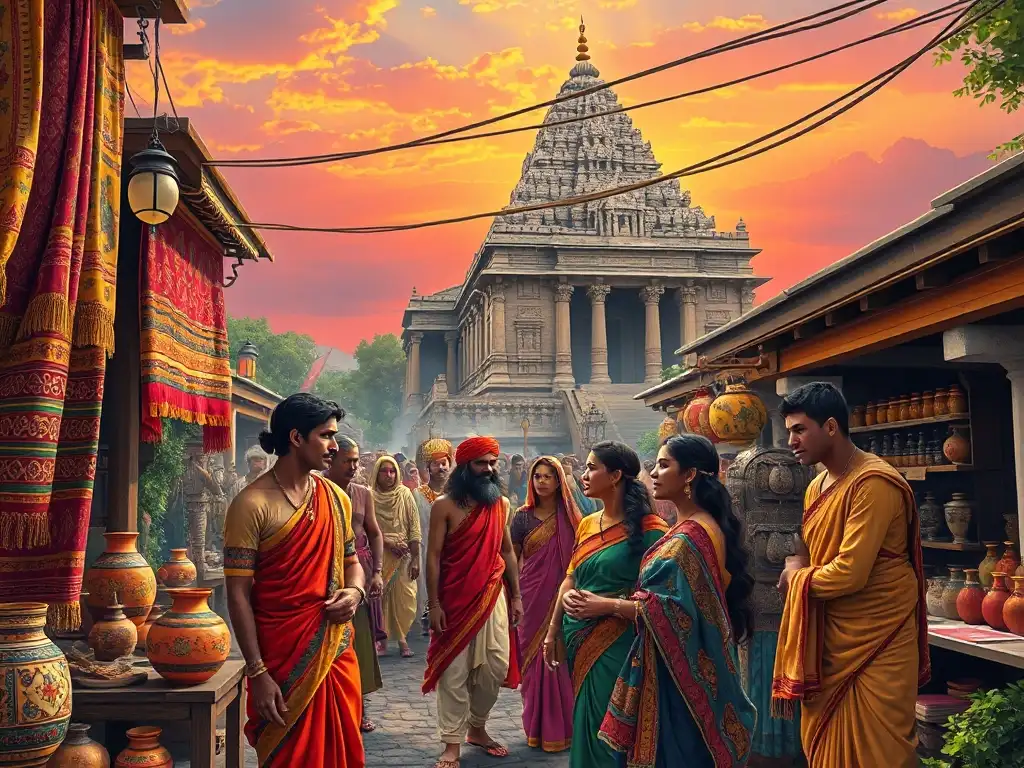
The cultural exchange in ancient India, particularly through the lens of warfare, has left an indelible mark on the historical narrative of the region. This multifaceted interaction with neighboring civilizations not only influenced military tactics and technologies but also facilitated a vibrant exchange of ideas, art, and philosophy. The shared experiences of conflict often led to the blending of cultures, which can be observed in various aspects of daily life, religion, and governance.
The legacies of these exchanges can still be traced in modern India, where the cultural imprints of ancient interactions continue to shape societal norms and values. For instance, the synthesis of Indian and Persian cultures during the invasions of the Persian Empire fostered developments in art and architecture that are still celebrated today. This enduring impact highlights the significance of recognizing historical conflicts as catalysts for cultural enrichment rather than mere destruction.
Reflection on Modern Understanding of Ancient Indian Warfare
The study of cultural exchange in ancient India, particularly through warfare, provides contemporary scholars with a nuanced perspective on the complexities of historical interactions. Warfare was not merely a destructive force; it served as a conduit for the transfer of knowledge and cultural practices between civilizations. For example, the Mauryan Empire's military campaigns expanded its influence beyond the Indian subcontinent, leading to the adoption of various administrative practices and philosophies from conquered territories.
Modern historians are now increasingly examining the duality of warfare as both a violent and constructive force. This reflection encourages a broader understanding of how ancient Indian societies adapted to and integrated external influences while maintaining core aspects of their identity. Such insights are crucial for developing a comprehensive view of ancient Indian warfare and its ramifications on cultural exchange, which has shaped the trajectory of not just India but also its neighboring regions.
Implications for Cultural Studies and Historical Research
The implications of studying cultural exchange through warfare in ancient India extend beyond military history into the realms of cultural studies and historical research. By recognizing the interconnectedness of warfare and cultural exchange, researchers can uncover the layers of meaning embedded in historical narratives. This interdisciplinary approach invites scholars to explore various facets of ancient societies, including social structures, religious beliefs, and artistic expressions influenced by external contacts.
Moreover, understanding the dynamics of cultural exchange enriches the discourse on identity and heritage. As ancient Indian civilizations interacted with diverse cultures, they forged unique identities that reflect a blend of indigenous and foreign elements. This realization prompts a reevaluation of how histories are constructed and the importance of including diverse perspectives in the narrative.
The study of cultural exchange in ancient India through the lens of warfare not only informs our understanding of past societies but also offers valuable lessons for contemporary cultural interactions. By appreciating the complexities of these exchanges, we can foster a deeper understanding of human history that transcends borders and time.
References
The study of cultural exchange in ancient India, especially through the lens of warfare, is supported by a variety of sources that provide insights into the interactions between different civilizations. These references encompass historical texts, archaeological findings, and scholarly articles that detail the complexities of these exchanges.
- Historical Texts:
- The Mahabharata and Ramayana not only narrate epic tales but also illustrate the cultural, political, and social dynamics of the time, reflecting the values and practices of ancient Indian society.
- Works by historians like Megasthenes in Indika, which provide accounts of India from a foreign perspective, highlight the cultural richness and exchanges that occurred.
- Archaeological Findings:
- Excavations in sites like Harappa and Mohenjo-Daro reveal artifacts that suggest trade connections and cultural exchanges with neighboring regions, including Mesopotamia and Persia.
- The discovery of Sanskrit inscriptions in regions such as Southeast Asia indicates the spread of Indian culture and ideas through trade and conquest.
- Scholarly Articles and Books:
- Academic journals focusing on ancient history often publish articles exploring the military and cultural exchanges between India and its neighbors. Key works include:
- "Warfare and Society in Ancient India" by A. K. Sharma.
- "Cultural Encounters: The Indian Subcontinent and the World" by R. N. Mukherjee.
- Academic journals focusing on ancient history often publish articles exploring the military and cultural exchanges between India and its neighbors. Key works include:
Suggested Reading on Cultural Exchange in Ancient India
To deepen your understanding of cultural exchange in ancient India, consider the following readings that explore various aspects of this rich history:
- "The Cultural History of India" by S. R. Sharma: This book delves into the multifaceted cultural exchanges that took place through trade, migration, and conquest.
- "Trade and Warfare in Ancient India" by V. K. Tripathi: Analyzes how trade routes facilitated not only economic exchanges but also cultural interactions influenced by military conquests.
- "Indo-Greek Art and the Cultural Exchange" by M. C. Joshi: Examines the artistic influences resulting from the interactions between Indian and Hellenistic cultures, particularly after Alexander's invasion.
These resources will offer a comprehensive overview of how ancient Indian civilizations interacted with their neighbors, enhancing the understanding of cultural exchange through warfare.
Primary Sources for Further Exploration
For those interested in primary sources that shed light on cultural exchanges in ancient India, the following texts and inscriptions are invaluable:
- The Arthashastra by Kautilya (Chanakya): This ancient treatise on statecraft and military strategy also addresses economic policies, trade, and diplomatic relations, providing insight into how warfare influenced cultural exchanges.
- Inscriptions of Ashoka: The edicts of Ashoka the Great not only promote Buddhism but also reflect the emperor's views on governance, trade, and diplomacy with neighboring states, highlighting the interconnectedness of culture and military power.
- Accounts of Foreign Travelers: Writings from Faxian, a Chinese Buddhist monk, and Hiuen Tsang, who traveled through India, offer firsthand observations of Indian society, religion, and culture during their respective journeys.
These primary sources are crucial for understanding the intricate web of cultural exchanges that occurred in ancient India, shaped significantly by warfare and its aftermath.
Frequently Asked Questions
What role did warfare play in cultural exchange in ancient India?
Warfare often facilitated cultural exchange by bringing conquered peoples into contact with the victors, leading to a blending of traditions, languages, and practices.
How did ancient Indian civilizations influence their neighbors through cultural exchange?
Ancient Indian civilizations, through trade and military conquests, spread their religions, art, and technologies, enriching the cultures of neighboring regions.
What are some examples of cultural exchange during the Gupta Empire?
The Gupta Empire saw significant cultural exchange through trade routes, where ideas in mathematics, astronomy, and literature were shared, influencing neighboring cultures and beyond.
In what ways did foreign invasions affect the cultural landscape of ancient India?
Foreign invasions often led to the introduction of new ideas and customs, resulting in a dynamic cultural landscape that incorporated elements from both the invaders and the local populace.
How did trade contribute to cultural exchange in ancient India?
Trade not only facilitated the exchange of goods but also served as a medium for cultural interaction, allowing for the spread of philosophies, art styles, and religious beliefs across regions.
Final Reflection: The Enduring Legacy of Cultural Exchange in Ancient India
The intricate tapestry of cultural exchange woven through the conflicts of ancient India remains profoundly relevant today. As we navigate an increasingly interconnected world, the lessons from the past remind us that even in times of strife, the sharing of ideas, art, and philosophies can lead to mutual growth and understanding. The historical interactions between ancient India and its neighbors illustrate that cultural exchange is not merely a byproduct of warfare but a vital force that shapes civilizations.
The influence of these exchanges continues to resonate in our modern cultural landscape, where the blending of traditions fosters diversity and innovation. The legacies of ancient trade routes, conquests, and diplomatic relations have laid the groundwork for the rich cultural mosaic we experience today. As noted by historian Romila Thapar, History is not just a record of events; it is a narrative of human interactions that transcend borders.
This perspective emphasizes the importance of recognizing and valuing the interconnectedness of our histories, as they inform our present and future.
As we reflect on the profound implications of cultural exchange in ancient India, I invite you to consider how these historical lessons can be applied in your own life. Embrace the diversity around you, seek to understand different perspectives, and recognize the beauty that arises from cultural interactions. In doing so, you contribute to a legacy of unity and collaboration that honors the past while paving the way for a more harmonious future.
Unleash the Power of Knowledge: Explore Ancient India’s Cultural Tapestry!
Thank you for diving into the fascinating world of ancient India and its interweaving cultural narratives with neighboring civilizations. Understanding these connections not only enriches our appreciation for history but also sheds light on the shared journeys of humanity. Now, it’s time to take your exploration further!
Here are some actionable steps you can take to deepen your understanding and engage with this rich history:
- Dive Deeper: Read more about significant events and their cultural legacies by visiting our related articles section on Ancient Indian History.
- Join the Conversation: Share your thoughts or insights about how historical conflicts influenced cultural exchanges in ancient times by commenting below!
- Discover: Uncover lesser-known stories of cultural interactions and their impacts by exploring our featured research papers on the topic.
Which cultural exchange related to warfare intrigues you the most? Share your insights with us!