
The Maritime Expeditions of Ancient Indian Kingdoms

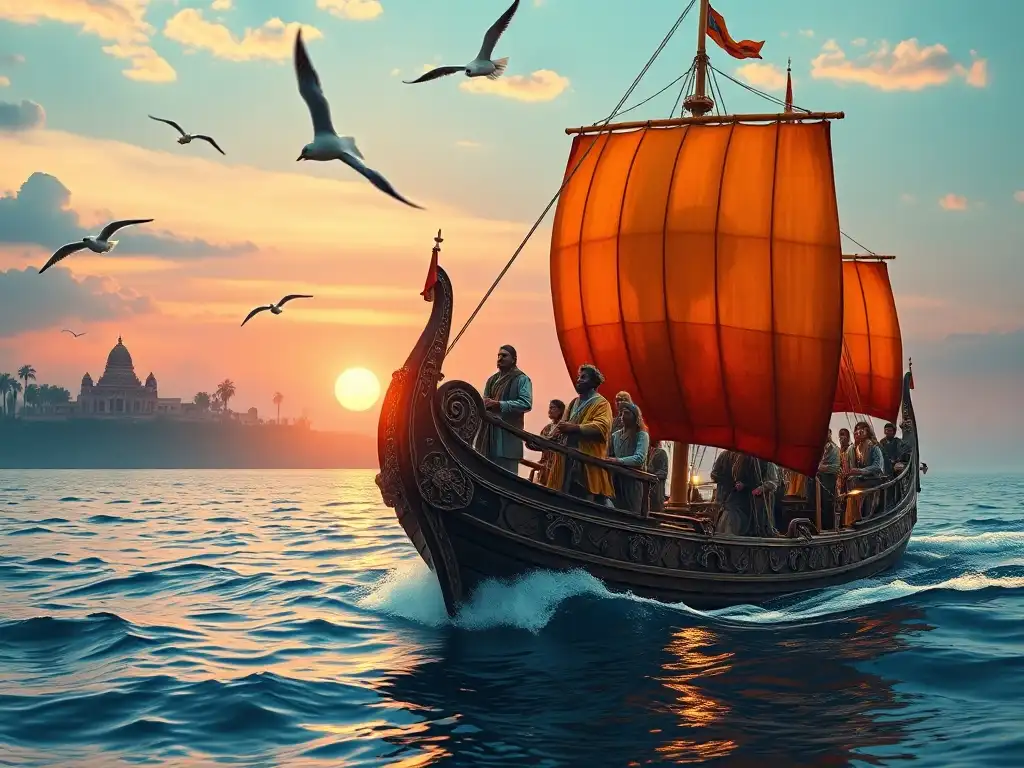
Welcome to Ancient India History, where we embark on an enlightening journey through the rich tapestry of ancient Indian civilizations. Dive deep into the fascinating world of Ancient Indian maritime expeditions, where intrepid sailors charted unknown waters, forging trade routes and cultural exchanges that shaped not only their kingdoms but the entire region. What secrets did these voyages hold, and how did they influence the course of history? Join us as we unveil the remarkable stories of courage and exploration that define the maritime legacy of ancient India. Your adventure into the past starts here!
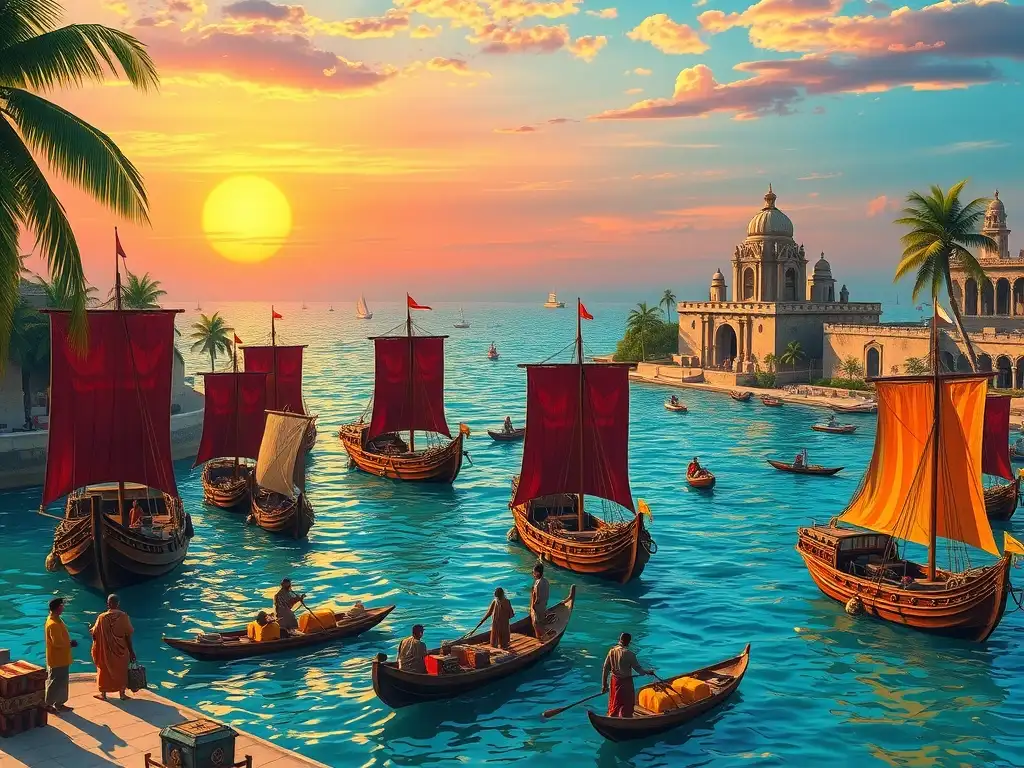
Introduction to Ancient Indian Maritime Expeditions
The maritime expeditions of ancient Indian kingdoms represent a fascinating chapter in the rich tapestry of India’s history. These naval ventures were not just about conquest and territorial expansions; they were a confluence of trade, cultural exchange, and technological advancements that significantly influenced the Indian subcontinent and its neighbors.
From the flourishing ports of the Indus Valley Civilization to the seafaring prowess of the Chola and Gupta empires, ancient Indian maritime expeditions played a pivotal role in shaping economic and cultural landscapes. This article delves into the intricacies of these expeditions, exploring their historical context, significance, and the myriad of factors that facilitated them.
Overview of Maritime Activities in Ancient India
Ancient India was home to a variety of maritime activities that encompassed trade, exploration, and military campaigns. The coastal regions, particularly along the Arabian Sea and the Bay of Bengal, were bustling with ports that served as vital nodes for commerce.
- Trade: Indian merchants engaged in extensive trade networks that reached as far as Southeast Asia, Africa, and the Middle East. Goods such as spices, textiles, and precious stones were highly sought after, leading to prosperous trade routes.
- Exploration: Ancient seafarers ventured into uncharted waters, driven by curiosity and the desire for new opportunities. This exploratory spirit helped expand knowledge about distant lands and cultures.
- Military Expeditions: Naval power was crucial for the defense of trade routes and territorial integrity. Kingdoms often launched maritime campaigns to assert dominance over rival states or protect their interests.
Significance of Maritime Expeditions in Indian History
The significance of these maritime expeditions extends beyond mere economic benefits; they contributed to India’s cultural and political evolution as well. The interactions fostered through trade and exploration led to:
- Cultural Exchange: Maritime expeditions facilitated the exchange of ideas, religions, and technologies. For instance, the spread of Buddhism to Southeast Asia can be attributed to Indian maritime traders and monks.
- Political Alliances: Strategic maritime campaigns often resulted in alliances with other kingdoms, enhancing political stability and influence in the region.
- Economic Prosperity: Control over trade routes translated into wealth, allowing kingdoms to flourish and invest in infrastructure, arts, and sciences.
Historical Context of Ancient Indian Maritime Expeditions
To fully appreciate the scope of ancient Indian maritime expeditions, it is essential to consider the historical context in which they occurred.
Trade Routes and Navigation Techniques in Ancient India
The development of trade routes was instrumental in facilitating maritime expeditions.
- Key Trade Routes: Major routes connected the Indian subcontinent to regions like the Mediterranean, East Africa, and Southeast Asia. These routes were vital for the exchange of goods and ideas.
- Navigation Techniques: Ancient Indian navigators employed a variety of techniques, including the use of the stars, ocean currents, and seasonal winds, to traverse vast distances. The knowledge of monsoon patterns was particularly crucial for timing voyages.
Influence of Geography on Maritime Expeditions
The geographical features of India significantly shaped its maritime capabilities.
- Coastal Geography: The extensive coastline provided numerous natural harbors, facilitating the establishment of ports and trade centers.
- Proximity to Trade Partners: India’s location between major trade routes made it a strategic player in maritime commerce, enhancing its role in regional and global trade networks.
The maritime expeditions of ancient Indian kingdoms were not only instrumental in trade and exploration but also played a significant role in the cultural and political development of the region. By understanding the historical context and significance of these expeditions, we gain insight into the remarkable maritime legacy of ancient India.
Key Ancient Indian Kingdoms and Their Maritime Expeditions
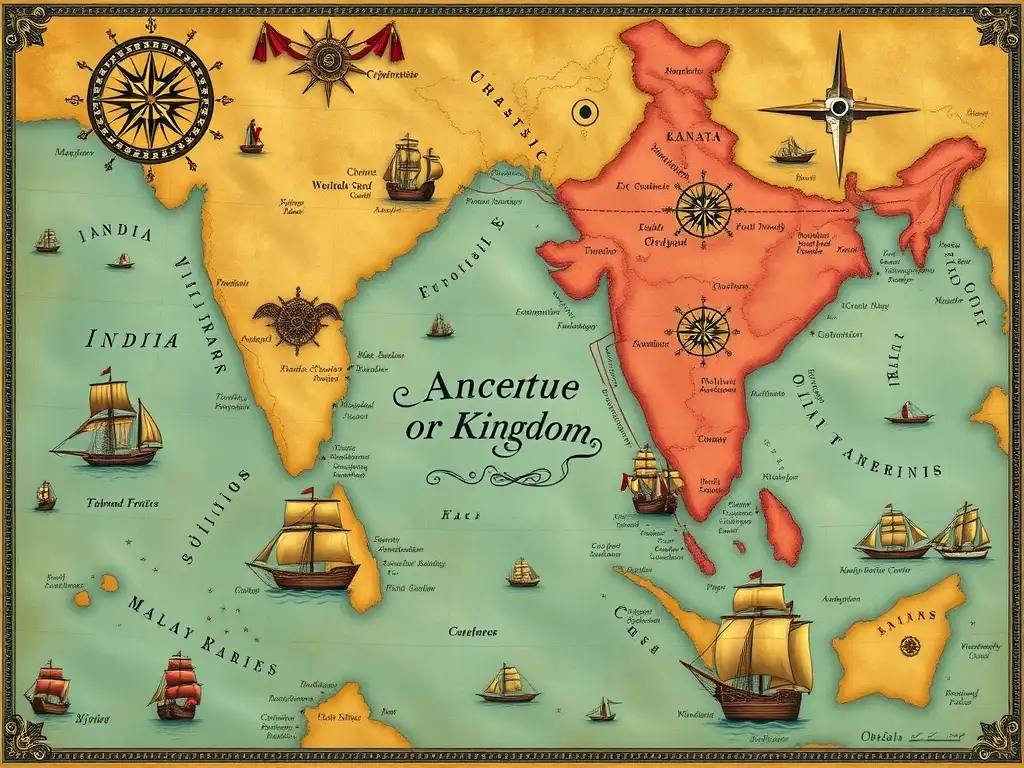
Throughout ancient Indian history, several kingdoms undertook significant maritime expeditions that shaped trade, cultural exchanges, and military engagements across the seas. These kingdoms recognized the strategic importance of naval power, which allowed them to extend their influence beyond the subcontinent. Notably, the Maurya Empire, Chola Dynasty, and Gupta Empire are among the most prominent ancient Indian kingdoms that engaged in maritime activities. Each of these empires harnessed naval capabilities to establish trade routes, engage in warfare, and promote cultural exchanges with other civilizations.
These maritime expeditions not only facilitated the growth of trade but also fostered diplomatic relations with various regional powers. By exploring the seas, these kingdoms were able to access valuable resources, spread their culture, and assert their dominance in the Indian Ocean and beyond.
The Maurya Empire and Naval Power
The Maurya Empire, which flourished from 322 to 185 BCE, is often noted for its political and military prowess under the reign of Emperor Chandragupta Maurya and his grandson Ashoka. Although primarily known for their land-based conquests, the Mauryas also recognized the importance of naval power. Historical texts suggest that the Maurya Empire maintained a fleet to protect its trade routes and to facilitate commerce across the Arabian Sea and the Bay of Bengal.
Ashoka, in particular, is known to have focused on expanding trade relations with Southeast Asia and beyond, which likely involved naval expeditions. The Mauryan navy played a crucial role in securing the empire’s trade interests, enabling the movement of goods such as spices, textiles, and other commodities. Additionally, the empire's maritime activities contributed to the spread of Buddhism, as missionaries traveled by sea to promote the religion in foreign lands.
The Chola Dynasty: Masters of the Sea
The Chola Dynasty, reigning from approximately 300 BCE to 1279 CE, is renowned for its exceptional naval capabilities and maritime expeditions. The Cholas established a powerful navy that allowed them to dominate the Indian Ocean and conduct extensive trade with Southeast Asia, particularly during the reign of Rajaraja Chola I and his son Rajendra Chola I.
Under Rajendra Chola I, the Chola navy undertook remarkable expeditions to places such as the Malay Archipelago, the Maldives, and parts of China. These expeditions not only aimed to expand territorial influence but also facilitated trade and cultural exchanges. The Cholas' mastery of shipbuilding and navigation enabled them to engage in lengthy maritime campaigns, establishing trade routes that connected India with distant lands.
The Chola expeditions were characterized by their military prowess, as they often engaged in naval battles to assert control over coastal regions and to protect their trade interests. The legacy of the Chola navy is evident in the extensive trade networks established during their reign, which significantly contributed to the economic prosperity of ancient India.
The Gupta Empire’s Contributions to Maritime Activities
The Gupta Empire, which thrived from approximately 240 to 550 CE, is often referred to as a golden age of Indian culture, science, and trade. While the Gupta Empire is primarily recognized for its achievements in art, literature, and science, it also played a significant role in maritime activities.
During this period, maritime trade flourished, with Gupta merchants actively engaging in commerce with regions such as Southeast Asia, the Mediterranean, and East Africa. The Guptas improved upon existing trade routes and established new ones, facilitating the exchange of goods like silk, spices, and precious stones. The empire's strategic location along major sea routes contributed to its economic success.
Furthermore, the Guptas are believed to have maintained a naval presence to protect their trade interests and to ensure safe passage for merchants traveling across the seas. Although specific naval expeditions are less documented compared to those of the Mauryas and Cholas, the Gupta Empire's contributions to maritime activities were instrumental in enhancing trade relations and cultural exchanges with foreign lands.
Notable Maritime Expeditions and Encounters
The maritime expeditions of ancient Indian kingdoms not only facilitated trade but also led to significant encounters and exchanges with various cultures and civilizations. These expeditions were marked by notable events that helped shape the geopolitical landscape of the Indian Ocean and beyond.
The Chola Expeditions to Southeast Asia
The Chola expeditions to Southeast Asia are among the most notable maritime endeavors in ancient Indian history. Under the leadership of Rajendra Chola I, the Chola navy conducted military campaigns to secure trade routes and assert control over key regions in the Malay Peninsula and the Indonesian archipelago.
One of the most significant expeditions occurred around the early 11th century when the Cholas launched a successful invasion of Srivijaya, a powerful maritime kingdom located in present-day Indonesia. This campaign not only demonstrated the Chola navy's strength but also facilitated the establishment of trade links, leading to cultural exchanges that influenced local societies.
The Chola expeditions resulted in the spread of Indian culture, art, and religion, particularly Hinduism and Buddhism, throughout Southeast Asia, leaving a lasting impact on the region.
Trade Relations with the Roman Empire
Ancient Indian maritime expeditions also played a crucial role in establishing trade relations with the Roman Empire. From the 1st century BCE to the 3rd century CE, Indian merchants actively engaged in trade with Roman traders, exchanging valuable commodities such as silk, spices, and gemstones.
The port city of Muziris, located on the southwestern coast of India, served as a prominent trading hub where Indian goods were exported to Rome. In return, Romans traded wine, olive oil, and other luxury items. The maritime routes between India and Rome were vital for both economies, fostering cultural exchanges and enhancing diplomatic relations.
The evidence of trade relations is found in Roman texts and archaeological discoveries, highlighting the significance of these maritime expeditions in connecting two great civilizations of the ancient world.
Naval Conflicts and Alliances in the Indian Ocean
Naval conflicts and alliances in the Indian Ocean were critical to the power dynamics of ancient Indian kingdoms. These maritime engagements often involved disputes over trade routes, territorial claims, and control of strategic ports.
The Chola Dynasty, for instance, not only engaged in battles to assert dominance over Southeast Asia but also formed alliances with local powers to protect their maritime interests. The naval conflicts during this period were characterized by the use of advanced naval technology and tactics, showcasing the military ingenuity of ancient Indian mariners.
Furthermore, these conflicts paved the way for diplomatic relations, with kingdoms negotiating treaties and alliances to ensure safe passage for trade ships. The complex interplay of military and diplomatic strategies in the Indian Ocean reflects the importance of maritime expeditions in shaping the historical narratives of ancient Indian kingdoms.
Cultural Exchange Through Maritime Expeditions
Ancient Indian maritime expeditions played a pivotal role in fostering cultural exchange across vast regions. As Indian traders and seafarers ventured into distant waters, they not only engaged in commerce but also shared ideas, beliefs, and traditions with the peoples they encountered. This dynamic interchange significantly influenced the cultures of both India and the societies they interacted with, creating a rich tapestry of mutual enrichment.
The Spread of Indian Culture Across Seas
The expansive voyages of ancient Indian kingdoms, particularly during the Maurya and Gupta empires, facilitated a remarkable dissemination of Indian culture. Indian merchants traversed across the Indian Ocean, reaching as far as Southeast Asia, Africa, and the Arabian Peninsula. As they settled in foreign lands, they introduced various aspects of Indian culture, including:
- Religious Beliefs: Hinduism and Buddhism spread to Southeast Asia, with temples like Angkor Wat in Cambodia showcasing architectural styles and iconography rooted in Indian traditions.
- Art and Architecture: The influence of Indian artistic techniques can be seen in sculpture and painting throughout Asia, where local artists adopted Indian motifs.
- Language and Literature: Indian languages and scripts influenced many regional dialects, while literary works were translated and adapted in various cultures.
This cultural diffusion not only enriched the local customs of these regions but also helped in establishing a shared identity that resonated with Indian philosophies and practices.
Influence of Indian Maritime Expeditions on Neighboring Civilizations
The maritime expeditions of ancient India had a profound impact on neighboring civilizations, shaping their development in various spheres. Notable influences included:
- Trade Networks: Indian traders established extensive trade routes that connected the Indian subcontinent with regions such as the Middle East and East Africa, facilitating the exchange of goods like spices, textiles, and precious stones. This commerce helped boost local economies and fostered interdependence.
- Cultural Syncretism: The interactions between Indian merchants and local populations often led to a blending of cultural practices. This syncretism is evident in religious practices, culinary traditions, and local art forms, which incorporated diverse elements from Indian culture.
- Political Alliances: Maritime expeditions often led to the forging of political alliances. As Indian kingdoms sought to expand their influence, they engaged in diplomatic relations with local rulers, establishing treaties that promoted stability and mutual cooperation.
The Decline of Ancient Indian Maritime Expeditions
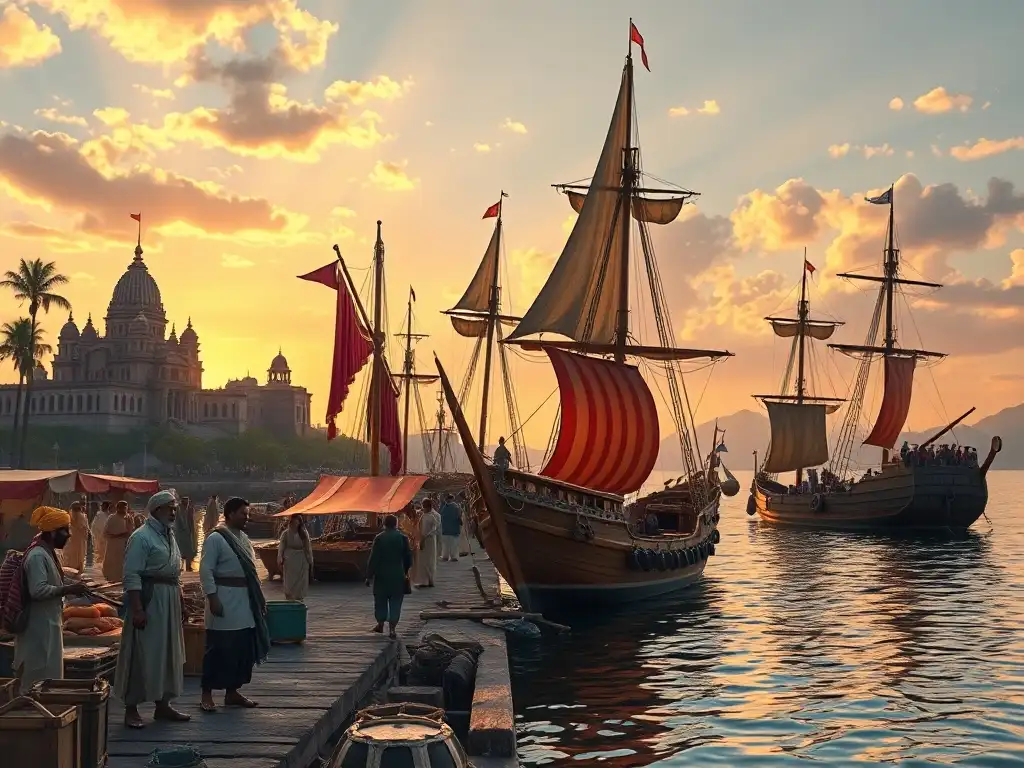
Despite the initial flourishing of maritime activity, the decline of ancient Indian maritime expeditions became evident over time. Several factors contributed to this downturn, leading to a gradual loss of naval dominance that had once characterized Indian maritime prowess.
Factors Leading to the Decline of Naval Dominance
Several interrelated factors contributed to the decline of ancient Indian maritime expeditions:
- Internal Political Instability: During the later periods of the Gupta Empire and subsequent kingdoms, internal strife and fragmentation weakened centralized authority. This instability hindered the ability to maintain a robust naval fleet and secure trade routes.
- Competition from Other Powers: The emergence of powerful maritime empires, such as the Chola dynasty and later the Islamic Sultanates, shifted the balance of power. These new players brought advanced naval strategies and technologies, making it increasingly difficult for traditional Indian kingdoms to compete.
- Economic Shifts: Changes in trade patterns, particularly with the rise of overland routes, diminished the economic viability of maritime trade. The focus on land-based commerce reduced emphasis on naval expeditions.
The Impact of Colonialism on Maritime Traditions
The arrival of European colonial powers marked a significant turning point for ancient Indian maritime traditions. Colonialism had profound ramifications, including:
- Disruption of Trade Networks: European powers, notably the Portuguese, Dutch, and British, monopolized maritime trade routes, effectively sidelining Indian merchants. This disruption not only affected the economy but also diminished the cultural exchanges that had previously flourished.
- Suppression of Indigenous Practices: Colonial authorities often suppressed indigenous maritime knowledge and practices, replacing them with European systems. This led to a gradual erosion of traditional shipbuilding techniques and navigational skills that had been passed down through generations.
- Cultural Alienation: The colonial era fostered cultural alienation, as European powers imposed their values and traditions, further distancing Indian societies from their rich maritime heritage. This legacy of colonialism continues to impact the maritime traditions of India today, with a need to revive and celebrate the ancient practices that once thrived.
Conclusion: Legacy of Ancient Indian Maritime Expeditions
The maritime expeditions of ancient Indian kingdoms represent a significant chapter in the history of naval activities and trade in the Indian subcontinent. These expeditions not only facilitated trade across the oceans but also contributed to cultural exchanges that shaped the civilizations of both India and its trading partners. The legacy of these maritime endeavors is evident in the way they laid the groundwork for future naval advancements and the growth of coastal cities that flourished along the Indian coastline.
The rich history of ancient Indian maritime expeditions underscores the importance of seafaring in establishing connections with distant lands, promoting economic prosperity, and expanding political influence. As we reflect on this legacy, it becomes clear that the skills and knowledge acquired by ancient maritime navigators not only enriched their own societies but also left an indelible mark on the maritime practices of subsequent generations.
Lasting Impact on Modern Indian Maritime Practices
The influence of ancient Indian maritime expeditions is still felt in contemporary maritime practices in India. Modern Indian naval strategies and maritime trade routes can trace their origins back to the sophisticated navigation techniques and shipbuilding skills developed by ancient mariners. For instance, the understanding of monsoon winds, which was leveraged by ancient sailors for efficient voyages, continues to inform seasonal maritime activities today.
Furthermore, the historical significance of coastal cities that thrived due to maritime trade has led to the development of modern ports that facilitate global trade. The preservation of traditional fishing practices and maritime folklore also highlights the cultural continuity from ancient times to the present, showcasing how these practices have evolved yet remain rooted in a rich heritage.
Reflection on the Importance of Naval History in Ancient India
Reflecting on the naval history of ancient India reveals a narrative of innovation, resilience, and cultural exchange. The naval expeditions are not merely historical events; they are a testament to the ingenuity of ancient Indian civilizations and their ability to adapt to the challenges of seafaring. Understanding this history is crucial for recognizing the integral role that maritime activities played in shaping the socio-economic landscape of ancient India.
Additionally, the study of ancient naval history fosters a greater appreciation of India's maritime heritage, encouraging contemporary society to draw lessons from the past. By learning from the successes and challenges faced by ancient mariners, modern India can strengthen its maritime capabilities and enhance its role in global maritime affairs.
References and Further Reading on Ancient Indian Maritime Expeditions
For those interested in delving deeper into the maritime history of ancient India, a wealth of resources is available that explore various aspects of this fascinating subject. From scholarly articles to books, the following sections offer a selection of valuable references.
Suggested Books and Articles on Ancient Indian Naval History
-
"The Sea in History: India" by R. M. B. Choudhury
This book presents a comprehensive account of India's maritime history, detailing the trade routes and naval expeditions of ancient Indian civilizations.
-
"Maritime India: Trade, Religion and Polity in the Indian Ocean" by R. C. Sharma
A critical examination of the influence of maritime trade on Indian culture and politics throughout history.
-
"The Maritime History of India: From the Earliest Times to the Present" by K. R. N. Iyer
This work provides an overview of the evolution of maritime practices and the significance of naval expeditions in ancient India.
-
"Ancient Indian Shipbuilding" by A. P. Das
An insightful study of the techniques and materials used in shipbuilding during ancient times, highlighting the innovation of Indian craftsmen.
Online Resources for Additional Research on Maritime Expeditions
-
The Indian National Shipowners' Association (INSA)
A resource for contemporary maritime practices in India, offering insights into the ongoing legacy of ancient maritime traditions.
-
Digital South Asia Library
This online archive provides access to a range of historical texts and documents related to ancient Indian maritime history.
-
The Indian Council of Historical Research (ICHR)
A repository of research papers and articles focused on various aspects of Indian history, including its maritime heritage.
-
The Archaeological Survey of India (ASI)
The ASI offers reports and findings related to underwater archaeology, shedding light on ancient shipwrecks and maritime artifacts.
By exploring these resources, readers can gain a deeper understanding of the ancient Indian maritime expeditions and their enduring impact on India's cultural and historical landscape.
- Introduction to Ancient Indian Maritime Expeditions
- Overview of Maritime Activities in Ancient India
- Significance of Maritime Expeditions in Indian History
- Historical Context of Ancient Indian Maritime Expeditions
- Key Ancient Indian Kingdoms and Their Maritime Expeditions
- Notable Maritime Expeditions and Encounters
- Cultural Exchange Through Maritime Expeditions
- The Decline of Ancient Indian Maritime Expeditions
- Conclusion: Legacy of Ancient Indian Maritime Expeditions
- References and Further Reading on Ancient Indian Maritime Expeditions
- What were the key maritime expeditions of ancient Indian kingdoms?
- How did ancient Indian maritime expeditions impact trade routes?
- Which ancient Indian civilization is known for its naval prowess?
- What were the primary goods traded during these maritime expeditions?
- How did these expeditions contribute to the cultural exchange?
Frequently Asked Questions
What were the key maritime expeditions of ancient Indian kingdoms?
Ancient Indian kingdoms, particularly during the Maurya and Gupta periods, engaged in significant maritime expeditions, primarily for trade and cultural exchange with regions like Southeast Asia and the Arabian Peninsula.
How did ancient Indian maritime expeditions impact trade routes?
These expeditions helped establish and expand trade routes across the Indian Ocean, facilitating the exchange of goods, ideas, and cultures, which contributed to the economic growth of ancient Indian civilizations.
The Chola dynasty is particularly noted for its naval prowess, successfully conducting expeditions that reached as far as Southeast Asia, thereby enhancing their influence and control over extensive trade networks.
What were the primary goods traded during these maritime expeditions?
Ancient Indian merchants traded spices, textiles, and precious stones, while also bringing back valuable items such as gold, silver, and exotic materials from distant lands, enriching both their economy and culture.
How did these expeditions contribute to the cultural exchange?
The maritime expeditions facilitated cultural exchange, introducing religions, languages, and artistic influences between India and other cultures, leading to a diverse and enriched cultural landscape in ancient India.
Final Reflection: The Enduring Legacy of Ancient Indian Maritime Expeditions
The maritime expeditions of ancient Indian kingdoms were not merely voyages across the seas; they were bold assertions of cultural exchange, economic ambition, and navigational prowess. Today, as we navigate an increasingly interconnected world, the significance of these expeditions resonates more than ever. The ability of ancient civilizations to traverse vast oceans and establish trade routes highlights the timeless human spirit of exploration and connection, reminding us that our shared histories can bridge divides and foster understanding.
The influence of these maritime endeavors is evident in the rich tapestry of cultural exchanges that have shaped societies across the globe. From the spices of Kerala to the textiles of Gujarat, the legacies of these expeditions continue to enrich our lives and inform our identities. As historian Romila Thapar once said, History is not just about the past; it is a dialogue between the past and the present.
This dialogue is crucial as we reflect on how ancient maritime routes have paved the way for modern trade and cultural interactions, underscoring the importance of recognizing our interconnected heritage.
As we conclude this exploration of ancient Indian maritime expeditions, I invite you to reflect on your own journeys—both literal and metaphorical. Consider how the spirit of exploration and connection can inspire you in your daily life. Whether through learning about different cultures, engaging in meaningful conversations, or embarking on your own adventures, let the legacy of these ancient navigators guide you toward a future where curiosity and collaboration reign supreme. Embrace the call to adventure, for the seas of opportunity are vast, and your journey is just beginning.
Set Sail on Your Own Exploration of Ancient Maritime History!
Thank you for diving into the fascinating world of maritime expeditions from ancient Indian kingdoms! We hope you've uncovered a rich tapestry of exploration, trade, and culture that shaped these remarkable journeys. Now, it's time to take action and immerse yourself even further in this captivating history.
- Join a discussion on our community forum to share your thoughts and insights about ancient maritime history.
- Explore related articles on our website to broaden your understanding of ancient trade routes and maritime conquests.
- Recreate an ancient trade route in your own city—discover local markets that echo the spirit of ancient trade and engage with local merchants.
If you could sail back in time, what ancient maritime adventure would you choose? We invite you to share your thoughts below!