
The Maurya Empire's Military Might: How Chandragupta Built an Army

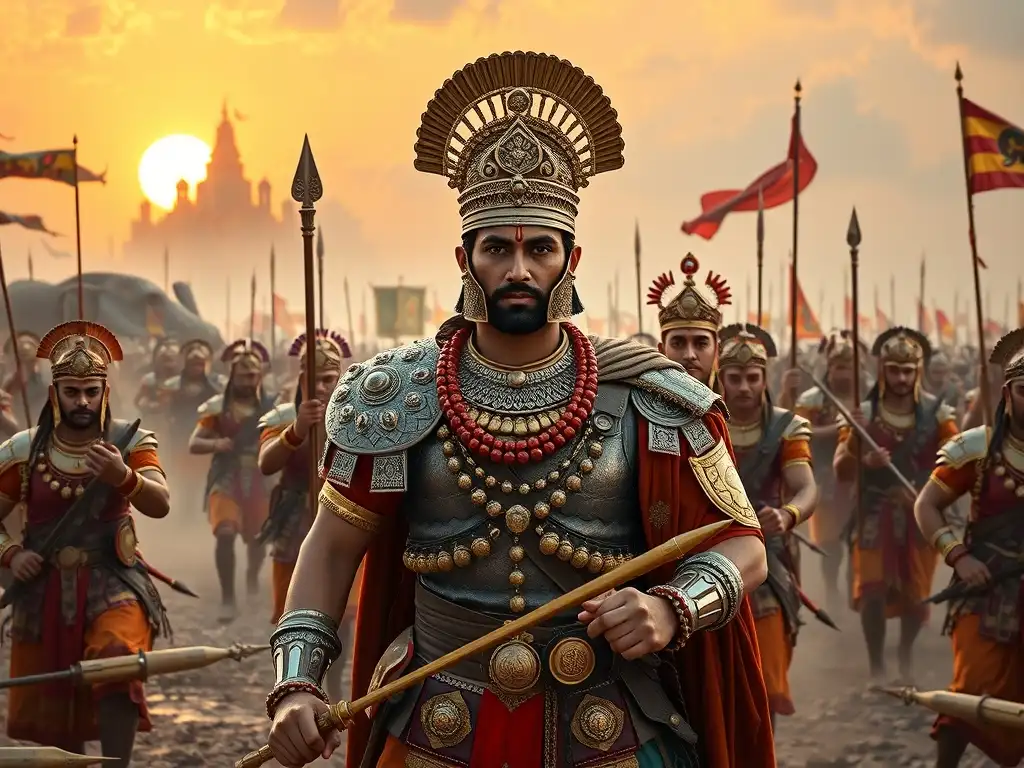
Welcome to Ancient India History, where we embark on a fascinating journey through the rich tapestry of ancient Indian civilizations. Today, we delve into the intricacies of military strategy during one of India's most formidable periods—the Maurya Empire. Discover how Chandragupta Maurya not only built a powerful army but also laid the groundwork for a legacy that would shape the subcontinent for centuries. Are you ready to uncover the secrets behind the Maurya Empire's military might? Let's dive deeper into this captivating chapter of history!
Introduction to the Maurya Empire Military Strategy
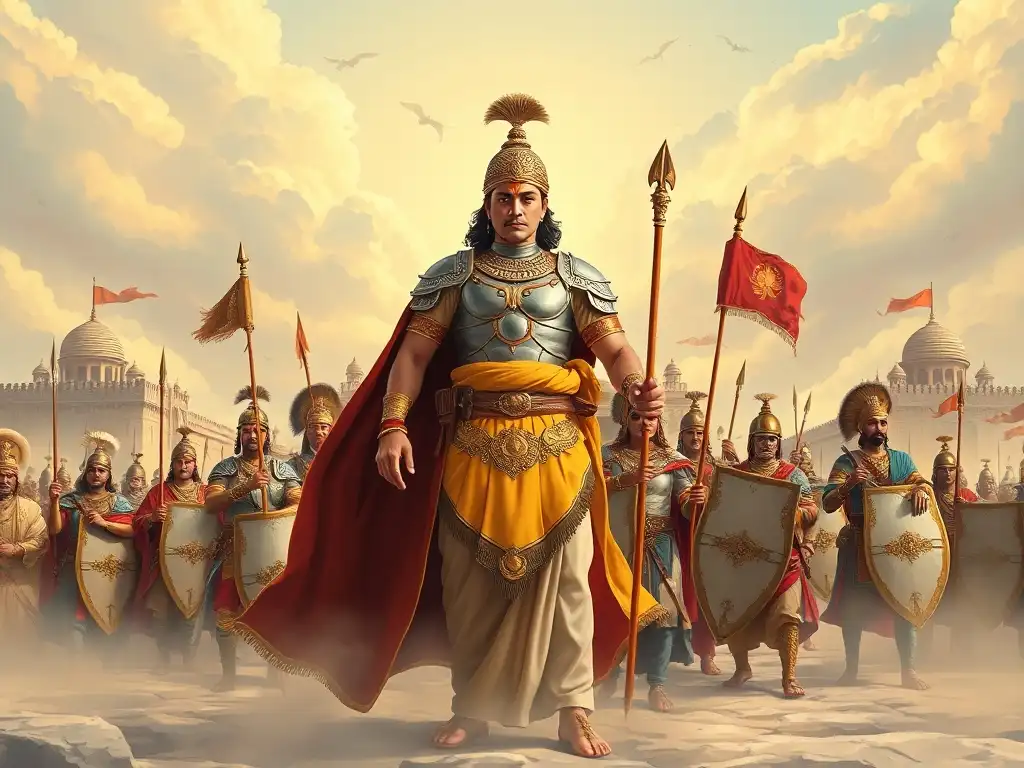
The Maurya Empire, one of the largest and most powerful empires in ancient India, is renowned for its exceptional military organization and strategic prowess. Founded by Chandragupta Maurya in 321 BCE, this empire laid the foundations of a centralized and efficient governance system that not only expanded its territorial boundaries but also solidified its military dominance in the region.
Understanding the military strategy of the Maurya Empire is pivotal for grasping how Chandragupta built a formidable army that played a crucial role in the empire's expansion and stability. The military strategies employed during this era were not merely about brute force; they encompassed aspects such as logistics, training, and innovative warfare techniques, setting a precedent for future Indian military tactics.
Overview of the Maurya Empire
The Maurya Empire emerged after the fall of the Nanda Dynasty, and under Chandragupta's leadership, it swiftly grew to encompass a vast territory across northern and central India. The empire reached its zenith under Chandragupta's grandson, Ashoka, who transformed it into a powerful political entity that extended its influence beyond Indian borders.
- Key Features of the Maurya Empire:
- Centralized Administration: The Mauryan governance structure allowed for efficient tax collection and law enforcement.
- Cultural Flourishing: The empire was not just a military powerhouse; it also promoted arts, architecture, and philosophy, which thrived under its reign.
- Diplomatic Relations: The Maurya Empire engaged in diplomacy with various kingdoms, enhancing its political leverage.
Importance of Military Might in Ancient India
In ancient India, military strength was directly correlated with political power and territorial control. The Maurya Empire exemplified this concept, as its military prowess was vital for:
- Defense Against Invasions: Protecting the empire from external threats was a primary concern, necessitating a well-trained and strategically positioned military.
- Expansion of Territory: A strong military enabled the Mauryas to conquer neighboring states and extend their influence across the subcontinent.
- Maintaining Internal Order: The ability to quell rebellions and maintain peace within the vast empire was essential for stability, relying heavily on military presence.
Chandragupta Maurya: The Architect of Power
Chandragupta Maurya's rise to power was not an accident; it was the culmination of strategic planning, alliances, and an understanding of military dynamics. His leadership style and military innovations laid the groundwork for one of the most significant empires in Indian history.
Early Life and Rise to Power
Born into a humble family, Chandragupta's early life was marked by challenges that shaped his character and ambitions. With a desire to overthrow the Nanda Dynasty, he sought the guidance of Chanakya (Kautilya), a brilliant strategist who played a pivotal role in his ascent.
- Key Events in His Rise:
- Alliance with Chanakya: Together, they devised a plan to dethrone the Nandas, utilizing both guerrilla tactics and conventional warfare.
- Consolidation of Power: After defeating the Nandas, Chandragupta focused on strengthening his military and administrative systems to ensure the empire's longevity.
Influences and Mentors in Military Strategy
Chandragupta's military strategies were significantly influenced by his mentor, Chanakya, whose treatise, the Arthashastra, provided comprehensive insights into statecraft, economics, and military tactics. This text emphasized:
- Guerrilla Warfare: Utilizing the element of surprise and local knowledge to outmaneuver larger armies.
- Intelligence Gathering: The importance of espionage in understanding enemy movements and strategies.
- Logistics and Supply Chains: Ensuring that troops were well-supplied and maintained for prolonged campaigns.
The combination of these teachings and Chandragupta's natural leadership abilities forged a military legacy that would endure throughout the Maurya Empire and influence future generations in the realm of warfare.
Formation of the Maurya Empire Army
The formation of the Maurya Empire's army marked a significant evolution in ancient Indian military organization. Under Chandragupta Maurya, the army was not merely a collection of warriors but a highly structured and disciplined force. The empire's military was essential in unifying the fragmented states of Northern India, establishing a dominant power that could withstand external threats and internal rebellions. Chandragupta's military reforms were influenced by the teachings of Kautilya, his advisor, whose treatise, Arthashastra, provided comprehensive strategies on statecraft and warfare.
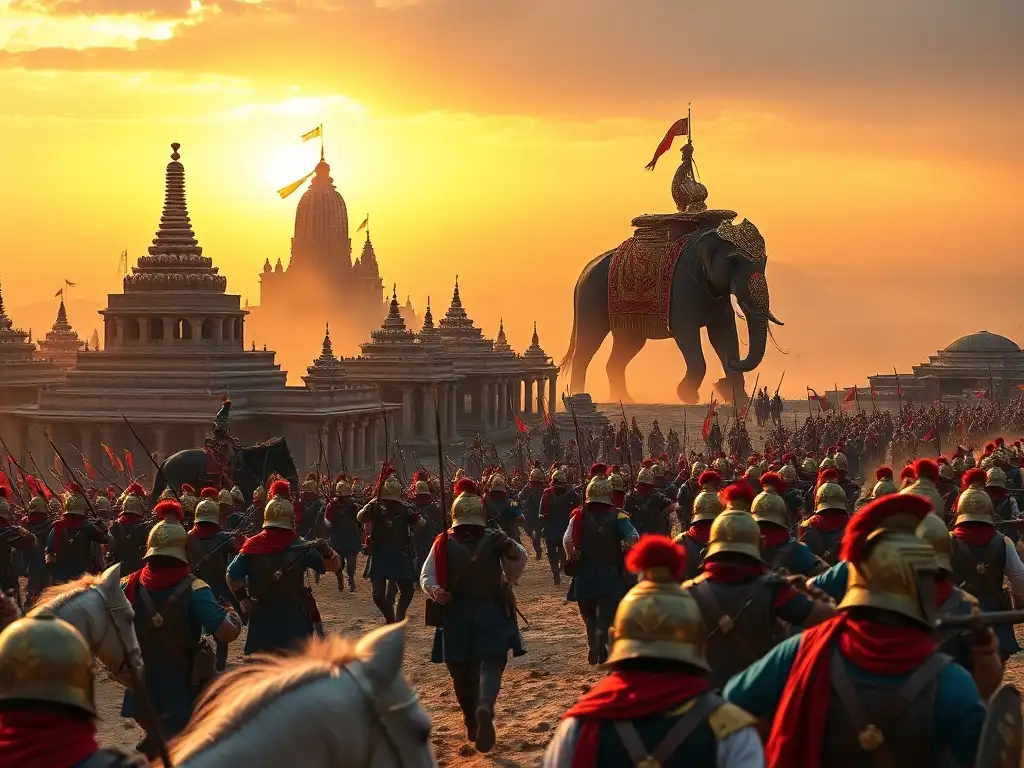
The Maurya army was primarily composed of infantry, cavalry, and war elephants, with each unit playing a critical role in the battlefield. The integration of elephants, for instance, was a game-changer, as they could instill fear in enemy ranks and serve as mobile platforms for archers. Additionally, the army was organized into various divisions, each specializing in specific combat roles, which allowed for greater tactical flexibility during engagements.
Structure of the Maurya Empire Military
The military structure of the Maurya Empire was hierarchical and systematic, designed to ensure effective command and control. At the top was the emperor, who served as the supreme commander. Below him were several high-ranking generals and commanders responsible for different divisions of the army.
- Infantry: The backbone of the army, comprising foot soldiers armed with various weapons such as swords, spears, and bows. They were trained for both melee and ranged combat, allowing for versatile tactical deployment.
- Cavalry: This unit consisted of horse-mounted soldiers who excelled in speed and mobility. They were crucial for flanking maneuvers and rapid assaults, often used to chase down retreating enemies.
- War Elephants: An iconic feature of the Maurya military, these elephants were used in direct combat, as well as for transport and logistics. Their sheer size and strength made them formidable opponents on the battlefield.
- Naval Forces: While not as emphasized as land forces, the Maurya Empire also maintained a naval presence to protect trade routes and engage in maritime conflicts, particularly along the coasts of the Indian subcontinent.
Recruitment and Training Methods
The recruitment and training processes within the Maurya Empire were meticulous and strategic, reflecting the empire's need for a capable fighting force. Recruitment was often based on voluntary enlistment, but it also included conscription, especially during times of war. The appeal of joining the military was enhanced by the promise of land grants and social mobility for soldiers' families.
Training methods were rigorous and comprehensive, focusing not only on physical fitness and combat skills but also on discipline and loyalty. Recruits underwent various forms of training, including:
- Combat Drills: Soldiers practiced maneuvers and formations repeatedly to ensure cohesion in battle.
- Weapon Proficiency: Training included mastering various weapons, from swords to bows, emphasizing the importance of versatility among soldiers.
- Tactical Exercises: Units engaged in simulated battles to develop strategic thinking and adaptability in changing combat scenarios.
Military Tactics and Strategies of the Maurya Empire
Chandragupta's military strategies were characterized by innovation and adaptability, allowing the Maurya Empire to achieve significant victories against rivals such as the Nanda Dynasty and foreign invaders like Alexander the Great. His approach to warfare combined traditional Indian military practices with new tactics learned from encounters with diverse cultures.
Key Military Strategies Employed by Chandragupta
Among the most notable strategies employed by Chandragupta were:
- Guerrilla Warfare: Utilizing the terrain to his advantage, Chandragupta employed hit-and-run tactics to disrupt larger enemy forces, making it difficult for them to maintain cohesion.
- Psychological Warfare: The use of war elephants and intimidating battle formations aimed to demoralize opponents before battles even began. The sheer spectacle of the Maurya army was often enough to instill fear.
- Siege Warfare: Chandragupta demonstrated proficiency in laying sieges, effectively cutting off cities from supplies and reinforcements, leading to their eventual capitulation without extensive bloodshed.
The Role of Intelligence and Espionage
Intelligence and espionage played a crucial role in the military success of the Maurya Empire. Chandragupta recognized the importance of information in warfare, ensuring that his forces were always one step ahead of their adversaries. This strategic emphasis on intelligence included:
- Spying Networks: Employing spies to gather information about enemy movements, strengths, and weaknesses. This allowed for timely responses to threats and opportunities.
- Diplomatic Relations: Establishing alliances with local rulers and tribes to gain insights into rival factions, thereby creating a web of information that enhanced the Maurya military’s strategic planning.
- Counterintelligence: Maintaining rigorous measures to protect sensitive information from enemy agents, ensuring that plans and strategies remained undisclosed.
Through these tactics and strategies, the Maurya Empire not only built a formidable military force but also solidified its reputation as a dominant power in ancient India.
Key Battles and Campaigns of the Maurya Empire
The Maurya Empire, under the leadership of Chandragupta Maurya, is renowned for its strategic military campaigns that not only expanded its territory but also solidified its power in ancient India. The empire's military might was demonstrated through a series of key battles and campaigns, each marked by strategic brilliance and innovative tactics. These military engagements paved the way for the establishment of one of the largest empires in Indian history.
The Conquest of Magadha
The conquest of Magadha marks the beginning of Chandragupta's ambitious military endeavors. Magadha was a powerful kingdom ruled by the Nanda Dynasty, known for its wealth and strong military. Chandragupta, with his mentor Chanakya, devised a plan to overthrow the Nandas.
- Strategic Alliances: Chandragupta formed alliances with local chieftains and disgruntled factions within the Nanda Kingdom to weaken the Nanda’s hold on power.
- Guerrilla Tactics: Using guerrilla warfare, Chandragupta engaged in surprise attacks and ambushes, capitalizing on the element of surprise to destabilize Nanda forces.
- Siege Warfare: The final assault involved a prolonged siege of the Nanda capital, Pataliputra, which eventually led to the Nanda king's surrender. This victory marked the establishment of the Maurya Empire, with Chandragupta as its ruler.
The War Against Nanda Dynasty
The war against the Nanda Dynasty was pivotal in establishing Chandragupta as a formidable power in India. The Nandas had a well-equipped army and significant resources, presenting a substantial challenge.
- Military Organization: Chandragupta's forces were well-organized, consisting of infantry, cavalry, and war elephants. This diverse military structure provided tactical flexibility in engagements.
- Psychological Warfare: Chandragupta employed psychological tactics by spreading discontent among the Nanda troops, which led to defections that weakened the Nanda's overall strength.
- Decisive Victory: The culmination of this conflict resulted in a decisive victory for Chandragupta, effectively dismantling the Nanda Dynasty and laying the foundation for the Maurya Empire.
Expansion into Northwest India
Following the conquest of Magadha, the Maurya Empire sought to expand its territories into Northwest India, which was home to various tribal kingdoms and the Persian Empire's remnants.
- Campaigns Against the Greeks: Chandragupta faced the armies of Alexander the Great's successors in the region. His strategic engagement in battles against these forces highlighted the Mauryan military's resilience.
- Diplomacy and Warfare: Chandragupta utilized a combination of diplomacy and military might to absorb the territories, securing alliances with local rulers and tribes.
- Cultural Exchange: The expansion into Northwest India facilitated cultural exchanges and trade, further enriching the Maurya Empire.
The Impact of Chandragupta's Military Strategy
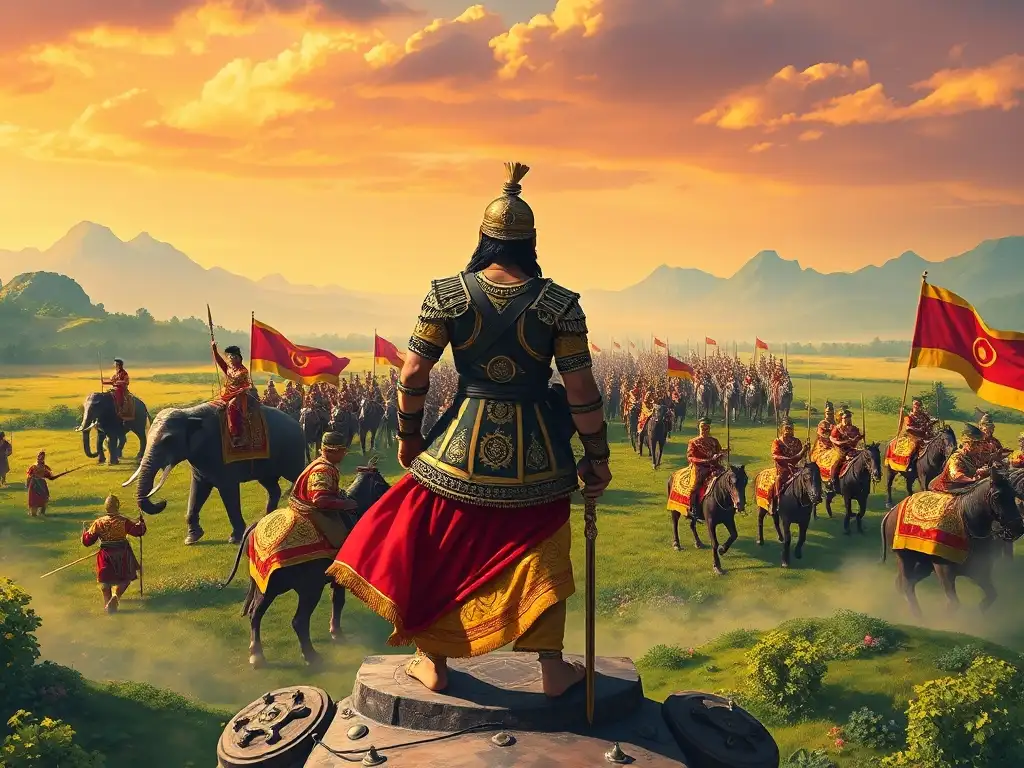
Chandragupta Maurya's military strategy had far-reaching implications, not just for his empire but also for the future of Indian warfare and governance.
Consolidation of Power in Ancient India
Chandragupta's military prowess allowed for the consolidation of power across much of ancient India. His strategies included:
- Centralized Military Command: Establishing a centralized command structure enabled efficient mobilization and coordination of forces across vast territories.
- Integration of Territories: The integration of conquered regions into the Maurya administration ensured stability and loyalty, reducing the likelihood of rebellion.
- Territorial Expansion: The military conquests facilitated the Maurya Empire's rapid expansion, resulting in a unified political landscape that had not been seen before in Indian history.
Influence on Future Indian Dynasties
The military strategies employed by Chandragupta set a precedent for future Indian dynasties.
- Military Organization: Subsequent empires, such as the Gupta Empire, adopted similar military organizational structures that emphasized cavalry and war elephants.
- Administrative Framework: The Mauryan model of governance, influenced by military conquests, provided a template for future rulers in managing vast empires.
- Cultural and Trade Networks: The expansionist policies initiated by Chandragupta fostered cultural and trade networks that influenced later dynasties, promoting economic growth and cultural exchange.
Long-term Effects on Indian Warfare
Chandragupta's military strategies significantly impacted the nature of warfare in India.
- Innovative Tactics: The tactics introduced during his campaigns, such as the use of war elephants and combined arms tactics, became standard in Indian warfare.
- Legacy of Unity: The unification of diverse regions under a single empire demonstrated the effectiveness of coordinated military strategy in achieving political goals.
- Evolving Warfare Dynamics: The emphasis on organized military campaigns and strategic alliances influenced the evolution of warfare in India, shaping military doctrines in subsequent centuries.
Through these campaigns and strategies, Chandragupta Maurya established a legacy that would influence Indian history for generations, demonstrating the profound impact of military strategy on the political landscape of ancient India.
Conclusion: Legacy of the Maurya Empire Military Strategy
The military strategy of the Maurya Empire, particularly under the leadership of Chandragupta Maurya, left an indelible mark on the history of ancient India. By effectively consolidating and expanding his territory, Chandragupta set a precedent for military organization, discipline, and innovation that would influence future Indian empires. His strategic alliances, espionage tactics, and emphasis on a strong cavalry and infantry demonstrated a sophisticated understanding of warfare that was unparalleled at the time.
The Maurya military legacy can be seen in the methodologies adopted by later dynasties, as well as in the evolving nature of warfare across the Indian subcontinent. The integration of various military units, the establishment of supply lines, and the use of war elephants became hallmarks of subsequent Indian military strategies, enhancing their effectiveness in both defense and territorial expansion.
Reflection on Chandragupta's Military Genius
Chandragupta's military genius stemmed from his ability to adapt and innovate in response to the challenges posed by rival kingdoms. His early experiences, including mentorship under Chanakya, played a crucial role in shaping his military acumen. Chandragupta employed a combination of guerrilla tactics and conventional warfare, allowing him to confront larger armies with effective strategies that prioritized mobility and surprise.
One notable aspect of his genius was the establishment of a robust administrative and logistical framework to support his military campaigns. This included the organization of troops into distinct units, each specialized in various combat roles, and the implementation of efficient supply chains that ensured his forces remained well-equipped and ready for battle. His strategic foresight not only led to the establishment of the Maurya Empire but also laid the groundwork for a centralized governance system that facilitated greater military coordination.
The Enduring Influence of Maurya Military Tactics
The military tactics developed during the Maurya Empire set a standard for future military leaders in India. The use of combined arms, which integrated infantry, cavalry, and war elephants, became a central feature of Indian warfare. This approach allowed commanders to exploit the strengths of each unit type, creating a more versatile and formidable fighting force.
Moreover, the emphasis on intelligence gathering and espionage established by Chandragupta influenced military strategy across various cultures. The Maurya Empire’s focus on psychological warfare and the use of strategic deception became key components in the arsenal of future Indian rulers, significantly shaping the dynamics of warfare in the region.
The principles behind the Maurya military strategy, particularly the importance of adaptability and innovation in response to evolving battlefield conditions, continue to resonate in modern military thought and strategy.
References and Further Reading on Maurya Empire Military Strategy
Suggested Books and Articles
- "The History of Ancient India" by R. C. Majumdar - A comprehensive resource detailing the political, economic, and military developments during ancient Indian empires, including the Maurya period.
- "Maurya Empire: A Historical Overview" by R. S. Sharma: - This book provides an in-depth analysis of the Maurya Empire, focusing on its military strategies and administrative efficiency.
- "The Art of War in Ancient India" by K. S. Shukla - A scholarly work that explores the various warfare techniques used throughout ancient Indian history, with a focus on the Maurya Empire.
- "Chandragupta Maurya: A Historical Biography" by R. P. Tripathi: - This biography examines the life of Chandragupta and the military strategies that contributed to his success.
Online Resources for Further Exploration
- Digital South Asia Library - A valuable repository of texts, maps, and images related to ancient Indian history, including information on the Maurya Empire.
- Internet Archive - Offers free access to a variety of historical texts and documents that cover the military strategies and tactics of the Maurya Empire.
- World History Encyclopedia - Provides articles and resources focusing on the Maurya Empire's history and military strategies, making it accessible for both students and enthusiasts.
- YouTube Channels on Ancient History - Channels like "History Time" and "Kings and Generals" often feature detailed documentaries and analyses of ancient Indian warfare, including segments on the Maurya Empire.
- Introduction to the Maurya Empire Military Strategy
- Chandragupta Maurya: The Architect of Power
- Formation of the Maurya Empire Army
- Structure of the Maurya Empire Military
- Recruitment and Training Methods
- Military Tactics and Strategies of the Maurya Empire
- Key Battles and Campaigns of the Maurya Empire
- The Impact of Chandragupta's Military Strategy
- Conclusion: Legacy of the Maurya Empire Military Strategy
- References and Further Reading on Maurya Empire Military Strategy
Frequently Asked Questions
What was the Maurya Empire's military strategy?
The Maurya Empire's military strategy focused on centralized command, innovative tactics, and the use of war elephants, which provided a significant advantage in battles.
Who was Chandragupta Maurya?
Chandragupta Maurya was the founder of the Maurya Empire and is known for his strategic brilliance in building a powerful army that enabled him to conquer vast territories in ancient India.
How did Chandragupta manage to build such a strong army?
Chandragupta utilized effective recruitment, training, and logistics, along with forming alliances, to create a formidable military force that could expand and defend the empire.
What role did Kautilya play in the military success of the Maurya Empire?
Kautilya, also known as Chanakya, was a key advisor to Chandragupta and contributed significantly to the empire's military strategies through his writings in the Arthashastra, which emphasized diplomacy and intelligence gathering.
What were the key contributions of the Maurya Empire to military history?
The Maurya Empire is notable for its advanced military organization, the incorporation of war elephants, and the development of fortifications, which influenced military tactics in subsequent Indian kingdoms.
Final Reflection: The Enduring Legacy of Maurya Empire Military Strategy
The military strategies employed by the Maurya Empire, particularly under the leadership of Chandragupta, resonate profoundly in today's context of global defense and strategic planning. As we navigate an increasingly complex world, the lessons drawn from the Maurya Empire's approach to military organization and tactics remind us that effective leadership and strategic foresight are timeless virtues that can shape the course of history. The ingenuity and discipline of Chandragupta's army not only secured the empire's dominance but also laid the groundwork for future military innovations.
The influence of the Maurya Empire's military might extends beyond mere historical significance; it continues to inspire contemporary military and political leaders. The principles of unity, strategic alliances, and adaptability that characterized Chandragupta's reign are echoed in modern military doctrines around the globe. As noted by historian Romila Thapar, "> The Maurya Empire exemplifies how a well-structured military can unify diverse regions and cultures under a single banner." This observation underscores the importance of military strategy in fostering cohesion and stability, a lesson that remains relevant in our current geopolitical climate.
As you reflect on the lessons of the Maurya Empire's military strategy, consider how these principles can be applied in your own life. Think about the importance of strategic planning, teamwork, and adaptability in your personal and professional endeavors. Embrace the challenge of uniting diverse perspectives and skills to achieve common goals, just as Chandragupta did. In doing so, you not only honor the legacy of a great empire but also empower yourself to forge a path of strength and resilience in the face of modern challenges.
Unleash Your Curiosity: Explore the Legacy of the Maurya Empire!
Thank you for taking the time to dive into the fascinating world of the Maurya Empire and its powerful military under Chandragupta! We hope you gained insight into how strategic brilliance forged an exceptional army that shaped ancient India. Now, it's your turn to engage with this rich history!
- Explore further by delving into the innovative strategies and tactics employed by Chandragupta that defined his reign!
- Share your thoughts on social media or with friends—start a conversation about the valuable lessons we can learn from ancient leadership!
- Join our community! Subscribe to our newsletter for more intriguing articles on ancient history and discover the remarkable stories that have shaped our world.
What aspect of the Maurya Empire’s military strategy do you find most compelling, and how do you think it influences contemporary leadership?