
The Use of Chariots in Ancient Indian Battles: Design and Tactics

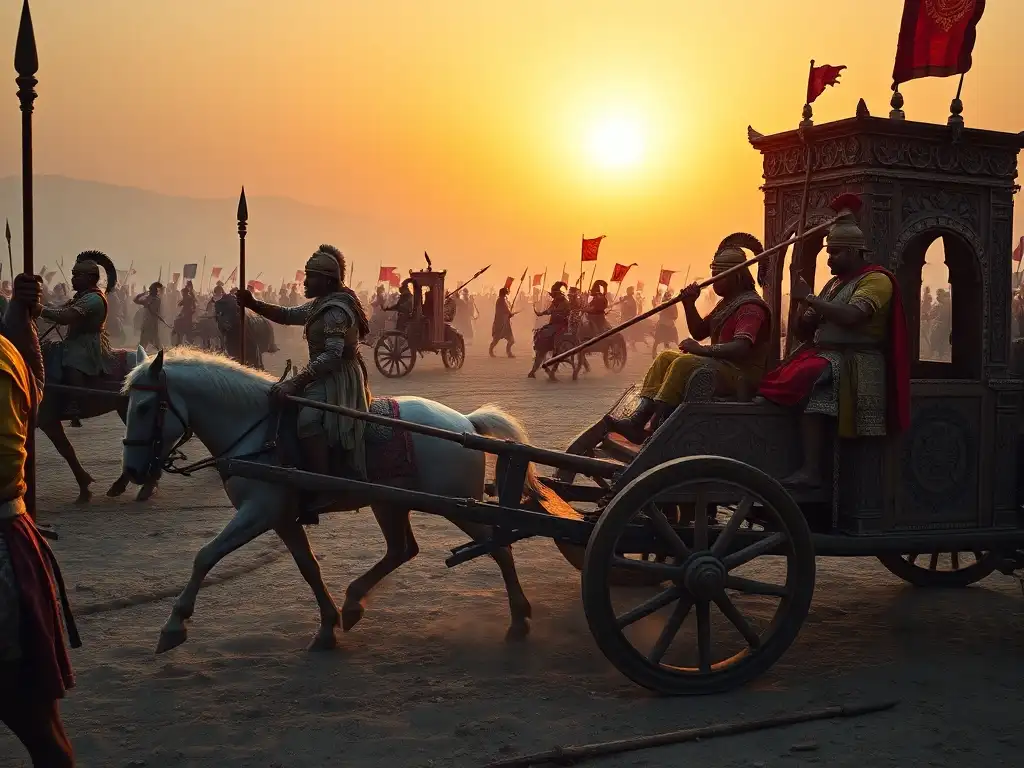
Welcome to Ancient India History, where we embark on a fascinating journey through the intricate tapestry of ancient Indian civilizations. Today, we delve into the dynamic world of ancient Indian chariot warfare tactics, a pivotal aspect of military strategy that shaped the outcomes of countless battles. From the innovative design of chariots to the cunning tactics employed by warriors, this article promises to unveil the secrets of a bygone era.
Curious about how these ancient strategies influenced not just battles, but the very fabric of Indian history? Join us as we explore this captivating topic, shedding light on the remarkable ingenuity of the past.
Introduction to Ancient Indian Chariot Warfare Tactics
Chariots played a crucial role in the military strategies of ancient Indian civilizations, serving as both a powerful weapon and a symbol of status. Used predominantly during the Vedic period and continuing into the age of empires such as the Maurya and Gupta, these two-wheeled vehicles were integral to warfare, greatly influencing the outcomes of battles. The design of chariots and the tactics employed by warriors in their use reflect a sophisticated understanding of both technology and strategy.
The chariot, often pulled by horses or other strong animals, allowed for rapid movement across the battlefield, enabling commanders to execute complex maneuvers that could outflank and surprise the enemy. With the combination of speed and height advantage, charioteers wielded bows, spears, and other weapons, engaging in combat from a relatively safe distance. This dynamic interplay of mobility, firepower, and tactical positioning highlights the significance of chariots in the broader context of ancient Indian warfare.
Importance of Chariots in Ancient Indian Military Strategy
Chariots were not merely vehicles but were pivotal elements in the military framework of ancient India. Their importance can be understood through several key aspects:
- Mobility and Speed:
- Chariots provided a significant advantage in terms of mobility. Troops could be repositioned swiftly, allowing for rapid assaults or retreats as battle conditions changed.
- This speed was critical for executing flanking maneuvers, which could disrupt enemy formations and create openings for attack.
- Height Advantage:
- Elevated positions allowed charioteers to survey the battlefield effectively. They could assess enemy movements and make strategic decisions that would be impossible from the ground.
- The height also provided a tactical advantage in ranged combat, as archers could shoot down at enemies while remaining relatively protected.
- Psychological Impact:
- The presence of chariots in battle often had a demoralizing effect on opposing forces. The sight of a well-equipped chariot, manned by skilled warriors, could instill fear and disrupt the enemy's morale.
- Chariots were often associated with royalty and power, reinforcing the status of the leaders who commanded them.
- Integrated Warfare:
- Chariots were typically part of a larger military strategy that involved infantry and cavalry units. The coordination between these forces was essential for maximizing the effectiveness of chariot tactics.
- For example, while charioteers engaged the enemy from a distance, infantry could hold the line or exploit breaches created by chariot assaults.
Ancient Indian chariot warfare tactics exemplified the intricate relationship between technology and military strategy, showcasing how the design and deployment of chariots shaped the dynamics of warfare in ancient India. Understanding these tactics provides valuable insight into the broader military history and cultural significance of chariots in ancient Indian society.
- Introduction to Ancient Indian Chariot Warfare Tactics
- Importance of Chariots in Ancient Indian Military Strategy
- What were the main features of ancient Indian chariots?
- How did chariot warfare evolve in ancient India?
- What role did chariots play in the strategy of ancient Indian armies?
- Who were some notable figures associated with chariot warfare in ancient India?
- What were the advantages of using chariots in battles?
Historical Context of Chariot Warfare in Ancient India
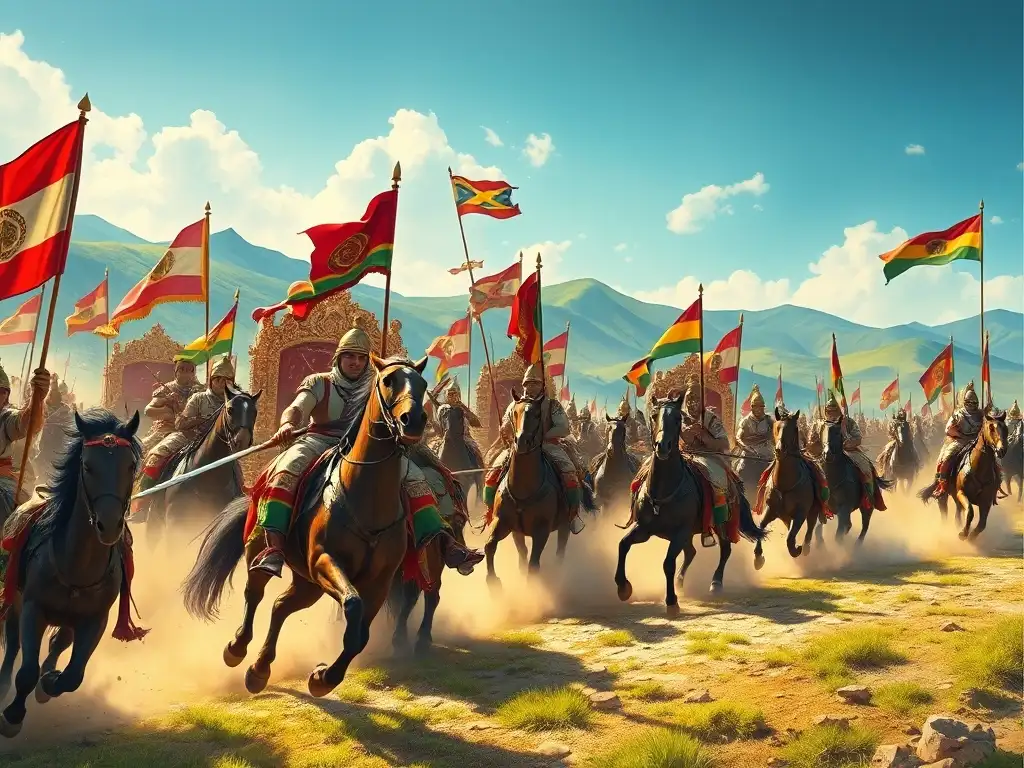
Chariot warfare in ancient India played a pivotal role in shaping military tactics and strategies, significantly influencing the outcomes of battles from the early Vedic period through the height of the Maurya and Gupta Empires. The earliest references to chariots can be traced back to the Rigveda, which describes them as symbols of power and mobility. As societies evolved, so did the design and function of chariots, reflecting the cultural and technological advancements of the time.
Chariots were primarily used by the elite warrior class, serving as a status symbol and a key component in military operations. Their introduction into warfare marked a transition from foot soldier-centric combat to more dynamic and mobile battle strategies. By the time of the Mahabharata, chariots had become integral to the epic's legendary battles, showcasing their significance in ancient Indian warfare.
The strategic use of chariots allowed for rapid troop movements and enabled commanders to execute flanking maneuvers, which were crucial in the dense and varied terrains of the Indian subcontinent. This transformation in warfare tactics not only revolutionized how battles were fought but also contributed to the broader socio-political dynamics of ancient Indian civilizations.
Evolution of Chariot Design in Ancient Indian Warfare
The design of chariots in ancient India underwent significant changes over the centuries, reflecting both technological advancements and evolving warfare tactics. Initially, early chariots were simple two-wheeled carts drawn by cattle. However, as warfare became more sophisticated, the design evolved to include:
- Four-Wheeled Chariots: These provided greater stability and could carry more soldiers and equipment. Four-wheeled chariots became the standard in the later periods, allowing for better maneuverability on the battlefield.
- Materials: Chariots were constructed using wood, leather, and metal fittings, which enhanced their durability. The use of iron components became more prevalent in the later periods, contributing to improved resilience against enemy attacks.
- Decorative Elements: Chariots were often ornately decorated, showcasing the wealth and status of their owners. This not only served a functional purpose but also played a psychological role in warfare, instilling fear in opponents.
- Combat Features: Some chariots were equipped with archers or javelin throwers, allowing for ranged combat while maintaining mobility. This integration of offensive capabilities marked a significant evolution in chariot warfare tactics.
The evolution of chariot design directly influenced the tactics employed during battles, as commanders could now utilize their chariots for swift strikes, reconnaissance, and as platforms for archers, thereby reshaping the battlefield dynamics.
Key Historical Battles Utilizing Chariots
Several pivotal battles in ancient Indian history exemplified the strategic use of chariots. These battles not only highlight the importance of chariot warfare tactics but also illustrate their impact on the course of history:
- Battle of the Ten Kings (Dasarajna):
- This legendary battle, described in the Rigveda, involved a coalition of ten kings against King Sudas of the Bharata tribe. Chariots played a crucial role in the Bharata's victory, showcasing their effectiveness in coordinated attacks and mobility.
- Mahabharata War:
- The Kurukshetra War, as depicted in the Mahabharata, was a monumental conflict featuring extensive use of chariots. Notably, the chariot of Arjuna, driven by Lord Krishna, became a symbol of divine intervention and strategy. The tactics employed during this war, including formations and maneuvering, were highly sophisticated.
- Battle of Chandragupta Maurya against the Nandas:
- Chandragupta Maurya's ascension to power was marked by his strategic use of chariots to overcome the Nanda dynasty. His chariots, combined with infantry and cavalry, allowed him to execute decisive maneuvers that ultimately led to his victory.
- Gupta Empire Campaigns:
- During the Gupta period, chariots continued to be an essential component of military campaigns. Emperors like Samudragupta utilized chariots effectively in his conquests across northern India, demonstrating their enduring importance in ancient Indian warfare.
Through these battles, it becomes evident that ancient Indian chariot warfare tactics were not only about brute force but also involved strategic planning, coordination, and the integration of various combat elements, which together shaped the military landscape of ancient India.
Chariot Design and Construction in Ancient India
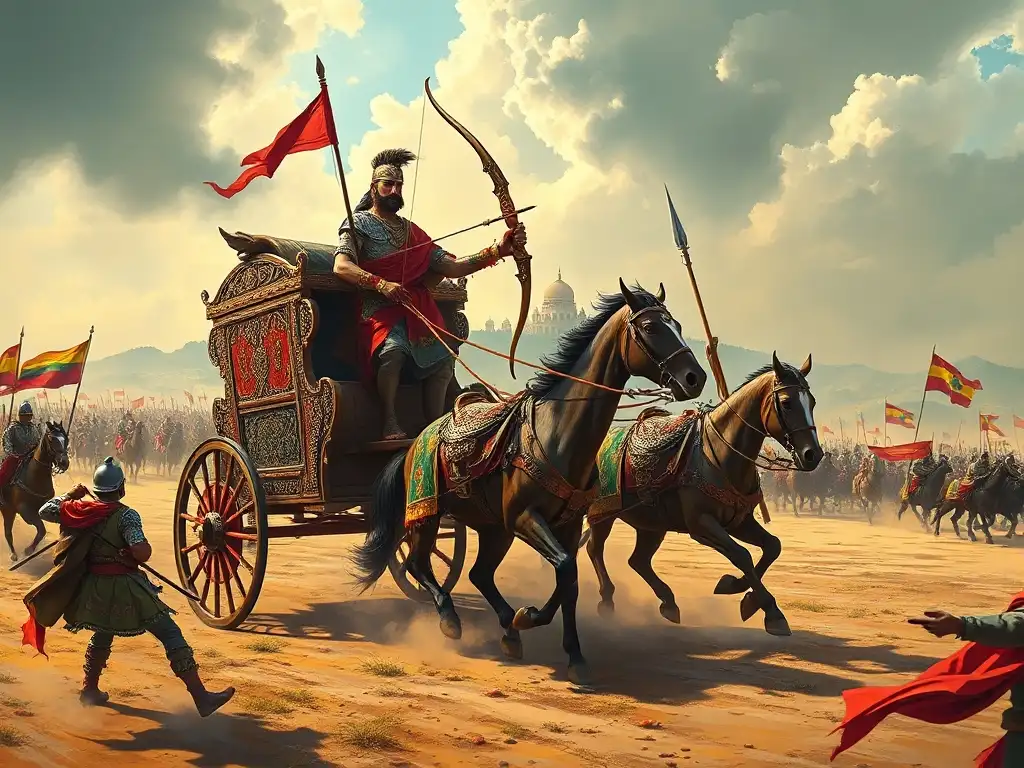
Chariot design and construction in ancient India played a critical role in the military strategies of various civilizations. Chariots were not merely vehicles; they were sophisticated machines that combined technology, artistry, and practical warfare needs. The design of these chariots evolved over centuries, influenced by geography, culture, and the resources available in different regions.
Materials Used in Chariot Construction
The construction of ancient Indian chariots involved a variety of materials, each chosen for its specific properties and availability.
- Wood: The primary material for chariot frames was wood, typically from strong and lightweight trees such as teak, sal, and tamala. These woods provided the necessary durability while keeping the chariot light enough for speed.
- Metal: Iron and bronze were commonly used for the fittings and wheel rims. The use of metal not only enhanced the durability of the chariots but also provided a sharp edge to the wheels, improving their effectiveness in combat.
- Leather: Leather was extensively used for harnesses and protective coverings. It was durable and flexible, allowing for effective movement and control of the horses pulling the chariot.
- Textiles: Decorative elements and banners were often made from intricately woven fabrics, showcasing the culture and wealth of the charioteer or the kingdom. These textiles also served practical purposes, such as providing shade for the warriors during battles.
Structural Features of Ancient Indian Chariots
The structural features of ancient Indian chariots were key to their effectiveness in battle. Several components were meticulously designed to enhance performance:
- Wheels: Chariot wheels were typically large and made of wood, with a diameter ranging from 1.5 to 2 meters. The size allowed for greater stability over uneven terrain, while the metal rims provided durability and reduced wear.
- Chassis: The frame of the chariot was designed to be both sturdy and lightweight. It often featured a box-like structure that could accommodate two or more warriors, along with their weapons.
- Axle: The axle was a crucial component, usually made from a single piece of hardwood. This design minimized friction and allowed for smoother movement across various terrains.
- Seats: The chariots often included raised platforms for the warriors, providing them with a better vantage point during battle. These platforms were sometimes cushioned for comfort during long campaigns.
- Harnessing System: The complex harness system allowed for efficient control of the horses, ensuring that the chariot could maneuver swiftly on the battlefield. This system was often adjustable to accommodate different horse sizes and types.
Variations in Chariot Designs Across Regions
The designs of chariots in ancient India exhibited significant regional variations, reflecting local resources, warfare tactics, and cultural influences:
- Indus Valley Civilization: Early chariots from this civilization featured simple, robust designs. Archaeological findings suggest that they were primarily used for transport and trade, with limited military application.
- Vedic Period: During the Vedic period, chariots became increasingly important in warfare. The design evolved to accommodate multiple warriors and featured more intricate decorations. The Mahabharata, an epic from this period, provides vivid descriptions of chariots used in legendary battles.
- Mauryan Empire: The Mauryan chariots were larger and often drawn by a team of four horses. They were used not only for warfare but also for ceremonial purposes. The emphasis on grandeur reflected the power and sophistication of the Mauryan dynasty.
- Gupta Empire: In the Gupta period, chariots were designed with a focus on speed and agility. The introduction of lighter materials and improved construction techniques led to a new style of warfare that emphasized rapid movement and strategic positioning.
Chariot warfare tactics were deeply intertwined with the design and construction of these vehicles, showcasing the ingenuity and adaptability of ancient Indian civilizations in their military endeavors.
Tactics Employed in Ancient Indian Chariot Warfare
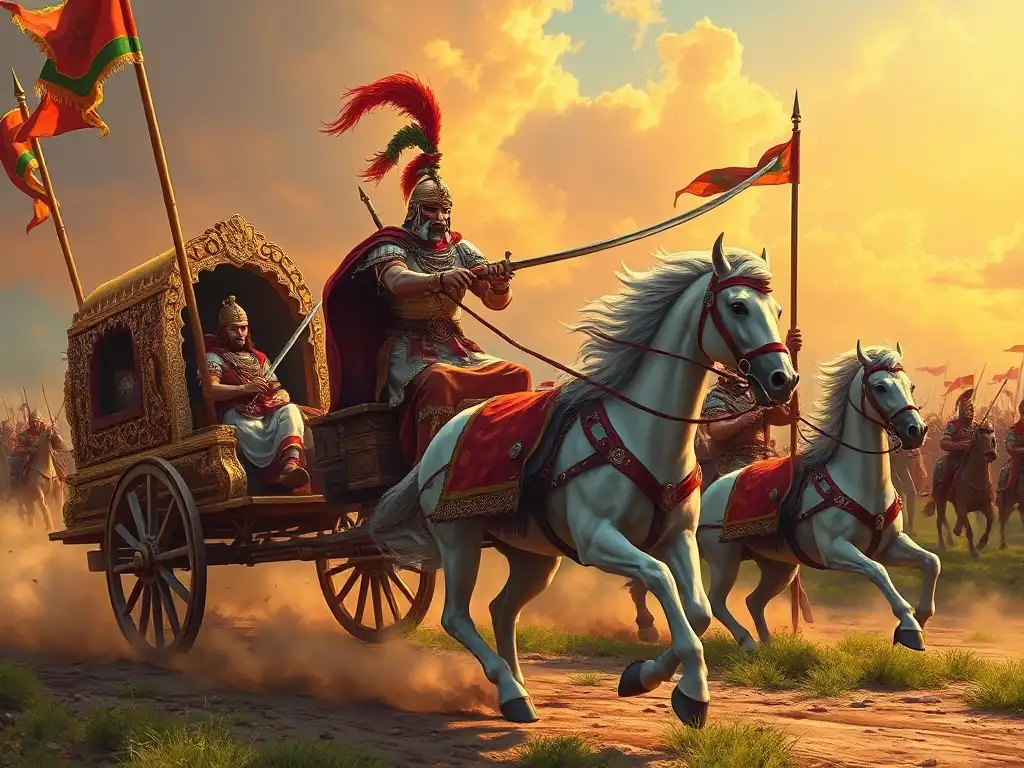
Role of Chariots on the Battlefield
Chariots played a crucial role in ancient Indian warfare, serving as both a platform for archers and a means of rapid movement across the battlefield. Typically drawn by two or more horses, these vehicles allowed warriors to engage the enemy from a distance while remaining mobile. The design of the chariot varied across regions and periods, but common features included:
- Two-wheeled chariots for speed and maneuverability.
- Lightweight construction using materials like wood and animal hides to ensure swift movement.
- Archery platforms, often equipped with bow racks, allowing archers to shoot while on the move.
The strategic placement of chariots allowed ancient Indian generals to implement various tactics, enhancing their battlefield effectiveness. They could create psychological impact, intimidate opponents, and facilitate rapid troop deployment.
Offensive Tactics: Charge and Flanking Maneuvers
In the realm of offensive strategies, ancient Indian chariot warfare was characterized by aggressive tactics, including:
- Direct Charges: Chariots would often be deployed in frontal assaults, charging directly at enemy lines. The speed of the chariot, combined with the element of surprise, was designed to break enemy formations and cause disarray.
- Flanking Maneuvers: Chariots were also utilized to outmaneuver the enemy. By attacking from the sides or rear, they could exploit gaps in the enemy's defenses. This tactic often involved coordinated movements with infantry units, creating a comprehensive assault front.
- Hit-and-Run Tactics: Utilizing their mobility, chariots could engage in hit-and-run tactics, striking quickly before retreating to safety. This method not only inflicted damage but also preserved the charioteers and horses for prolonged engagements.
- Combined Arms Approach: Chariots worked in tandem with infantry and cavalry, creating a multifaceted attack strategy. For example, infantry could provide cover for chariots during an advance, while chariots could disperse enemy formations, making them vulnerable to ground troops.
Defensive Tactics: Mobility and Evasion Strategies
Defensive tactics in ancient Indian chariot warfare emphasized maintaining flexibility and utilizing the terrain:
- Mobility: Ancient Indian charioteers trained to maneuver swiftly, allowing them to evade enemy attacks. This mobility was critical during retreats, where chariots could quickly disengage from a losing battle.
- Use of Terrain: Skilled charioteers would leverage natural landscapes, such as hills and forests, to shield their movements. By navigating through difficult terrain, they could avoid direct confrontations with numerically superior forces.
- Formation Adjustments: Chariots could alter formations rapidly, adapting to changing battlefield conditions. For instance, they could form a defensive circle, providing mutual support against encircling enemies.
- Counter-archery Tactics: When faced with enemy archers, chariot drivers would often use speed to their advantage, swerving and darting to minimize exposure. Additionally, some chariots were equipped with protective shields or coverings to provide defense against projectiles.
The chariot's role in ancient Indian warfare was not limited to mere transportation; it was a vital component of both offensive and defensive tactics. The innovative strategies employed by ancient Indian warriors highlight the sophistication of their military doctrines, setting a foundation for future conflicts.
Notable Chariot Warfare Strategies from Ancient Texts
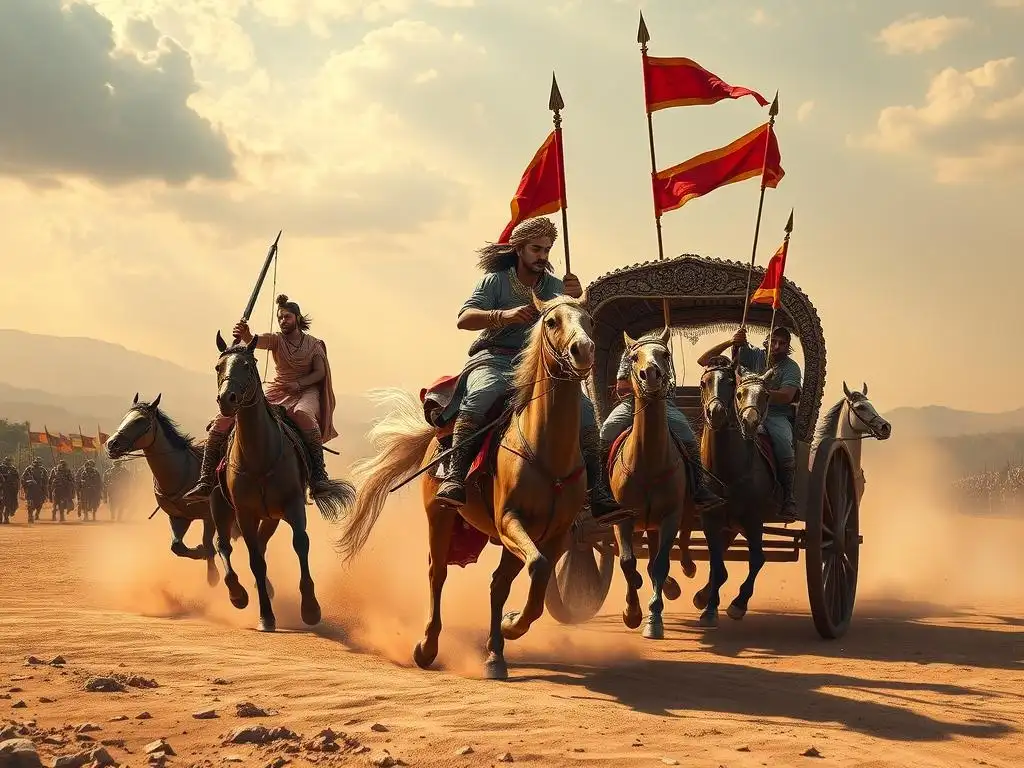
The use of chariots was pivotal in shaping the military strategies of ancient Indian warfare. Chariot warfare tactics, as depicted in various ancient texts, highlight the ingenuity and sophistication of military leaders. The following sections explore key insights from notable texts that provide a deeper understanding of chariot tactics in ancient battles.
Insights from the Mahabharata on Chariot Tactics
The Mahabharata, one of the two major Sanskrit epics of ancient India, serves as a rich source of information on chariot warfare. The epic not only narrates the grand battle of Kurukshetra but also illustrates various tactical approaches utilized by its warriors. Here are some notable tactics derived from the text:
- Chariot Composition: Chariots were typically drawn by two or four horses and were manned by a driver and a warrior. The driver’s role was crucial for mobility and positioning during combat.
- Flanking Movements: The Mahabharata emphasizes the importance of flanking maneuvers. Warriors would attempt to outmaneuver their opponents by attacking from the sides, exploiting the weaknesses in enemy formations.
- Use of Archers: Chariots were often equipped with archers, allowing them to perform ranged attacks while remaining mobile. This tactic provided a strategic advantage, as archers could target enemies from a distance while the chariot shifted positions.
- Psychological Warfare: The epic illustrates how the mere presence of chariots could intimidate the enemy. The sound of chariot wheels and the sight of armored warriors created a psychological edge in battles.
- Formation Strategies: Various formations are described in the Mahabharata, such as the "Chakra" (wheel) formation, which maximized the effectiveness of chariots in battle by creating a unified front.
Incorporating these tactics, warriors like Arjuna and Bhishma executed strategies that showcased the versatility and effectiveness of chariots in battle.
Historical Accounts from Kautilya's Arthashastra
Kautilya's Arthashastra, attributed to the ancient philosopher Chanakya, is a seminal text on statecraft and military strategy. Within its pages, Kautilya provides insights into the tactical deployment of chariots in warfare:
- Strategic Deployment: Kautilya emphasized deploying chariots in a strategic manner, recommending their placement at the front lines to break enemy formations. This allowed for initial assaults that could disrupt enemy cohesion.
- Combined Arms Tactics: The Arthashastra advocates for the integration of infantry, cavalry, and chariots in a combined arms approach. This coordination ensured that chariots could support infantry movements and vice versa, enhancing overall battlefield effectiveness.
- Terrain Utilization: Kautilya discussed the importance of selecting appropriate terrain for chariot warfare. Flat, open areas were ideal for maneuvering chariots, while obstacles could be used to thwart enemy movements.
- Training and Discipline: The text underscores the necessity of rigorous training for charioteers and warriors. Proper training ensured that teams could execute complex maneuvers and respond effectively to battlefield dynamics.
- Intelligence and Deception: Kautilya also highlighted the significance of intelligence gathering and deception in warfare. Chariot movements could be feigned to mislead the enemy, allowing for surprise attacks.
Through the lens of Kautilya's insights, it becomes apparent that chariot warfare in ancient India was not merely about brute strength; it involved a sophisticated understanding of strategy, coordination, and psychological elements that defined the outcomes of battles.
These texts collectively provide a comprehensive understanding of ancient Indian chariot warfare tactics, showcasing how they were integral to military success in the region.
Comparisons with Chariot Warfare in Other Civilizations
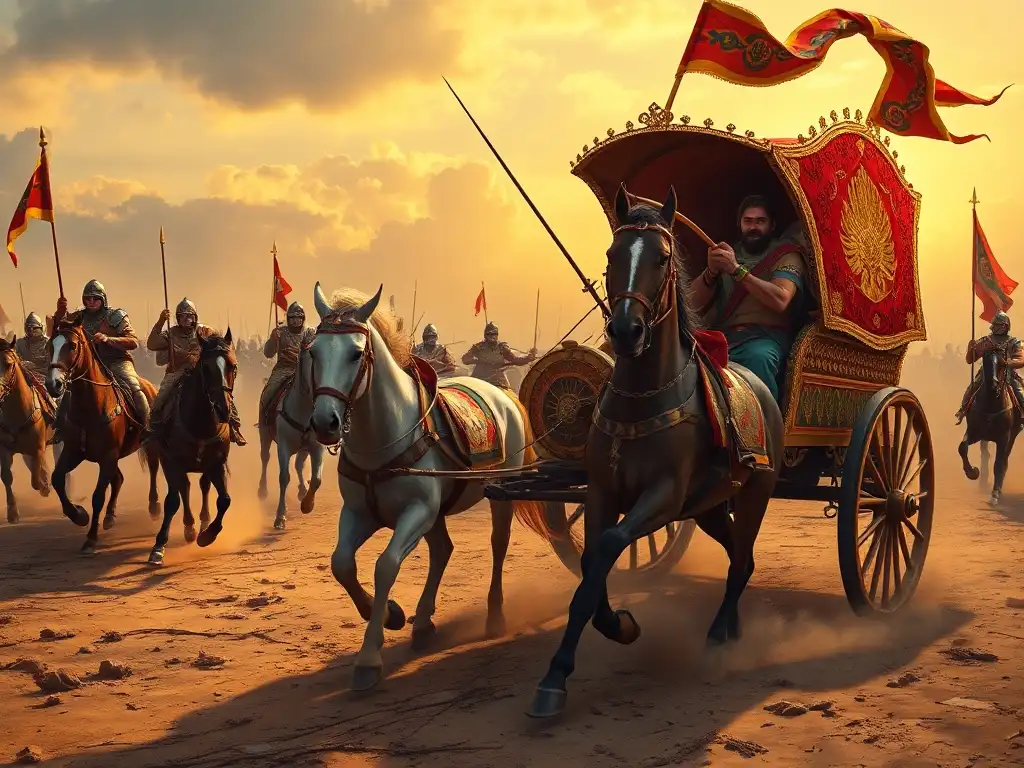
The study of chariot warfare in ancient India reveals not only unique tactics and designs but also fascinating similarities and differences when compared to chariot warfare practices in other ancient civilizations. This comparative analysis provides a deeper understanding of how ancient Indian chariot warfare tactics fit into the broader context of global military history.
Similarities with Egyptian Chariot Warfare Tactics
Ancient Indian chariot warfare shares notable similarities with Egyptian tactics, particularly regarding the strategic use of chariots in battle. Both civilizations recognized the chariot's potential for mobility and speed, which allowed for rapid troop movements and the ability to strike swiftly at enemy formations.
- Design and Construction:
- Both Indian and Egyptian chariots were often light and designed for speed, typically pulled by horses.
- The use of a two-wheeled chariot was common in both cultures, enabling quick maneuvers on the battlefield.
- Tactical Deployment:
- In both ancient India and Egypt, chariots were used as shock troops, intended to break enemy lines and create chaos within opposing ranks.
- Charioteers were skilled fighters, often equipped with bows and spears, allowing them to engage from a distance while remaining mobile.
- Role in Warfare:
- Chariots served a dual purpose: they were weapons of war and platforms for elite warriors. In both cultures, charioteers were often considered prestigious figures, akin to cavalry in later military formations.
The similarities in the tactical use of chariots in ancient India and Egypt highlight a shared appreciation for mobility and shock tactics, emphasizing the importance of the chariot as a military asset.
Differences from Mesopotamian Chariot Strategies
While there are similarities between ancient Indian and other civilizations' chariot warfare, significant differences also emerge, particularly when comparing Indian tactics to those found in Mesopotamia.
- Chariot Design:
- Mesopotamian chariots were generally heavier, often featuring four wheels and built to carry more soldiers or equipment. This design made them more stable but less maneuverable compared to the lighter two-wheeled chariots used in ancient India.
- Tactical Focus:
- In Mesopotamia, the use of chariots was often integrated into a broader combined arms approach, where they supported infantry and archers. The emphasis was placed on creating a sustained assault using multiple types of troops working in unison.
- Conversely, ancient Indian tactics favored the rapid, independent operation of chariots, allowing them to exploit vulnerabilities in enemy formations more flexibly and dynamically.
- Cultural Context:
- The role of chariots in Mesopotamian warfare was heavily influenced by the socio-political structure, where charioteers were often elite warriors serving kings. In contrast, ancient Indian chariotry was more decentralized, often involving local chieftains commanding their own forces.
While ancient Indian chariot warfare tactics share some commonalities with Mesopotamian strategies, they distinctly emphasize mobility and rapid engagement, reflecting the unique cultural and military contexts of ancient India. Understanding these differences enriches our comprehension of how various civilizations approached warfare and the technological innovations they pursued.
The Decline of Chariot Warfare in Ancient India
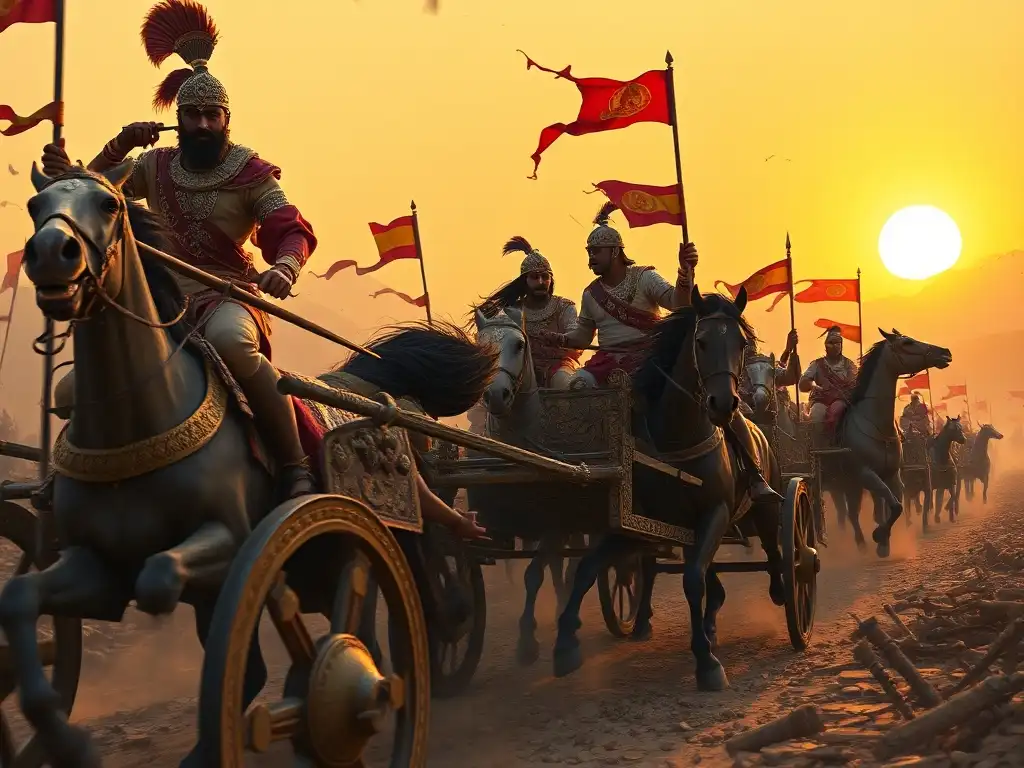
Factors Leading to the Reduced Use of Chariots
The decline of chariot warfare in ancient India can be traced to several interlinked factors that transformed military strategies and battlefield dynamics.
- Technological Advancements:
- As warfare evolved, so did the technology behind weapons and armor. The introduction of more effective projectile weapons, such as the bow and arrow, heavily influenced combat strategies.
- Chariots, while providing mobility, became increasingly vulnerable to these ranged attacks, leading to a tactical shift away from their use.
- Changing Terrain:
- The geographical landscape of India, with its diverse terrains such as dense forests and rugged hills, posed significant challenges for chariot operations.
- Areas that were once conducive to chariot maneuverability became less favorable as battles shifted to more complex terrains where speed and agility of infantry or cavalry became paramount.
- Shift in Military Organization:
- The rise of larger, more organized armies placed a premium on adaptability and versatility. Commanders began to favor troop formations that included a mix of infantry and cavalry over the specialized use of chariots.
- This shift was evident in the way armies began to structure their units, with a focus on cohesion and flexibility rather than the traditional reliance on chariots.
Transition to Cavalry and Infantry Dominance
The transition from chariot-centric warfare to a focus on cavalry and infantry marked a significant evolution in ancient Indian military tactics.
- Rise of Cavalry:
- Cavalry units emerged as a dominant force due to their speed and maneuverability. Mounted troops could execute flanking maneuvers and retreat more effectively, offering a strategic advantage over slower chariots.
- The use of horses also allowed for better mobility across various terrains, contributing to their ascendance in military tactics.
- Enhanced Infantry Tactics:
- Infantry units began to adopt more sophisticated formations and strategies. The use of spearmen, swordsmen, and archers provided a well-rounded approach to combat that chariots could not match.
- Infantry could more easily adapt to the changing dynamics of battle, allowing for the implementation of tactics such as ambushes and defensive stands.
- Integration of Chariots:
- While the chariot's role diminished, it did not disappear entirely. Chariots were still employed in certain ceremonial functions and as mobile platforms for commanders, but their strategic importance in battle waned.
- The integration of chariots into larger units of cavalry and infantry allowed for a more holistic approach to warfare, blending the strengths of each unit type.
Conclusion: The Legacy of Chariot Warfare in Ancient Indian History
The legacy of chariot warfare in ancient India is multifaceted, reflecting both its historical significance and its eventual decline.
- Cultural Significance:
- Chariots were not merely tools of war; they held symbolic importance in ancient Indian culture. They were often associated with royalty and divinity, featuring prominently in epics such as the Mahabharata, where chariots were integral to the narrative of heroism and valor.
- Influence on Military Doctrine:
- Despite their decline, the principles of chariot warfare influenced subsequent military doctrines. The tactical lessons learned from chariot battles informed the organization of later armies, emphasizing the need for coordination between different unit types.
- Historical Reflection:
- The evolution from chariot warfare to the dominance of cavalry and infantry reflects broader changes in ancient Indian society, including technological advancements, shifts in social organization, and the adaptation to diverse battle environments.
- Understanding this transition offers insight into the complexities of ancient Indian warfare, highlighting how military strategies evolved in response to changing conditions.
While ancient Indian chariot warfare tactics played a crucial role in early battles, their decline marked a pivotal point in military history, paving the way for new strategies that would shape the future of warfare in the region.
Reflections on the Impact of Chariot Tactics on Modern Warfare Studies
The study of chariot warfare in ancient India offers invaluable insights into the evolution of military strategy and tactics. Chariotry, which played a pivotal role in battles from the Indus Valley Civilization through to the Maurya and Gupta empires, not only shaped the battlefield dynamics of its time but also serves as a point of reflection for modern warfare studies.
Tactical Innovations
Chariots were not merely transport vehicles; they were platforms for archery and close combat, allowing for a unique combination of mobility and firepower. The tactics employed by ancient Indian generals, such as the use of rapid maneuvering and flanking movements, resonate in contemporary military doctrine. Modern militaries study these ancient tactics to understand how mobility can be leveraged to outmaneuver and outflank opponents.
- Key Tactical Elements:
- Mobility: The ability to move swiftly across the battlefield.
- Coordination: Effective communication between charioteers and foot soldiers.
- Psychological Impact: Chariots often instilled fear in enemy ranks, a principle that remains relevant in modern psychological operations.
Strategic Applications
Ancient Indian chariot warfare exemplifies the significance of logistics and supply lines, vital components in any military campaign. The careful planning required to ensure that chariots were well-maintained and adequately supplied mirrors modern military logistics, emphasizing the need for strategic foresight.
- Strategic Considerations:
- Supply Chain Management: Ensuring resources are available for sustained operations.
- Terrain Utilization: Understanding how different terrains affect chariot mobility, a lesson still applicable in contemporary military strategies.
- Adaptation to Technology: As chariotry declined with the rise of infantry and cavalry, the adaptation to new technologies in warfare remains a constant theme in military history.
Lessons for Modern Military Doctrine
The decline of chariot warfare in ancient India illustrates the shifts in warfare paradigms; as the battlefield evolved, so too did the strategies employed. This historical perspective reminds modern military leaders of the importance of adaptability and innovation in response to changing technologies and combat environments.
- Modern Military Lessons:
- Flexibility in Tactics: The ability to adapt to new forms of warfare, such as mechanized and aerial combat.
- Integration of Forces: The importance of combining different types of units for a cohesive strategy, reminiscent of how chariots worked in conjunction with infantry.
- Historical Contextualization: Understanding the historical context of warfare can aid current military leaders in making informed decisions based on past successes and failures.
The study of ancient Indian chariot warfare tactics not only enriches our understanding of historical combat but also provides a foundational framework for analyzing contemporary military strategies. By examining these ancient practices, modern warfare studies can draw parallels that enhance strategic thinking and operational planning in today’s complex battlefield environments.
Frequently Asked Questions
What were the main features of ancient Indian chariots?
Ancient Indian chariots featured lightweight designs, often crafted from wood and leather, allowing for speed and agility in battles. They were typically drawn by horses or elephants, enhancing mobility on the battlefield.
How did chariot warfare evolve in ancient India?
Chariot warfare in ancient India evolved significantly over time, with tactics becoming more sophisticated. The use of archers and spearmen on chariots allowed for combined arms tactics, enhancing their effectiveness in battle scenarios.
What role did chariots play in the strategy of ancient Indian armies?
Chariots served as a crucial component of ancient Indian military strategy, providing rapid movement across the battlefield and facilitating flanking maneuvers. They were also used for psychological impact on enemy forces.
Who were some notable figures associated with chariot warfare in ancient India?
Notable figures such as Chandragupta Maurya and Ashoka utilized chariots in their military campaigns, showcasing their importance in empire-building and conquest during the ancient period.
What were the advantages of using chariots in battles?
The advantages of using chariots included mobility, the ability to carry multiple warriors, and the capacity to deliver ranged attacks while moving. This made them effective for both offense and defense in ancient warfare.
Final Reflection: The Enduring Legacy of Ancient Indian Chariot Warfare Tactics
The exploration of Ancient Indian chariot warfare tactics reveals not only the ingenuity of military design but also the profound impact these strategies had on the course of history. In a world where the dynamics of warfare continue to evolve, understanding the tactical brilliance of ancient civilizations offers invaluable insights into how past innovations shape modern military practices. The lessons learned from the battlefield strategies of ancient India remain relevant today, reminding us that the art of war is as much about strategy and adaptability as it is about technology.
The influence of chariot warfare extends beyond the battlefield, permeating cultural narratives and shaping societal values. The chariot, as a symbol of power and prestige, played a crucial role in the socio-political landscape of ancient India. Its representation in epics and literature highlights the importance of mobility and strategy in achieving victory. As noted by historian John Keay, The chariot was not merely a vehicle of war; it was a manifestation of the very ethos of a civilization.
This observation underscores how ancient tactics continue to resonate in contemporary discussions about leadership, strategy, and the evolution of warfare.
As we reflect on the significance of ancient Indian chariot warfare, let us consider how these lessons can be applied in our own lives. Whether in personal challenges or professional endeavors, the principles of strategy, adaptability, and foresight are timeless. I invite you to take a moment to reflect on your own experiences—how can the tactics of the past inspire your approach to overcoming obstacles today? Embrace the wisdom of history, and let it guide you toward a future where you, too, can navigate the complexities of your own battles with confidence and skill.
Unleash the Power of Ancient Tactics!
Thank you for diving into the fascinating world of chariots in ancient Indian battles! You've uncovered the intricate designs and tactics that shaped the warfare strategies of the past. Now, it’s time to take this knowledge and apply it in your explorations of history.
Here are some actions you can take to deepen your understanding and share this legacy:
- Explore local museums or exhibitions featuring ancient artifacts, particularly reins or chariot models, to witness history firsthand.
- Participate in online forums or social media groups dedicated to ancient Indian history to share insights and engage with fellow enthusiasts.
- Recreate a chariot design using materials available at home, experimenting with how it could have functioned in battle; share your creations to inspire others!
As you reflect on the role of chariots in shaping ancient warfare, consider: What modern strategies or designs can we learn from these ancient tactics to apply in today's world?