
Cultural Artifacts: What Ancient Trade Routes Revealed About India

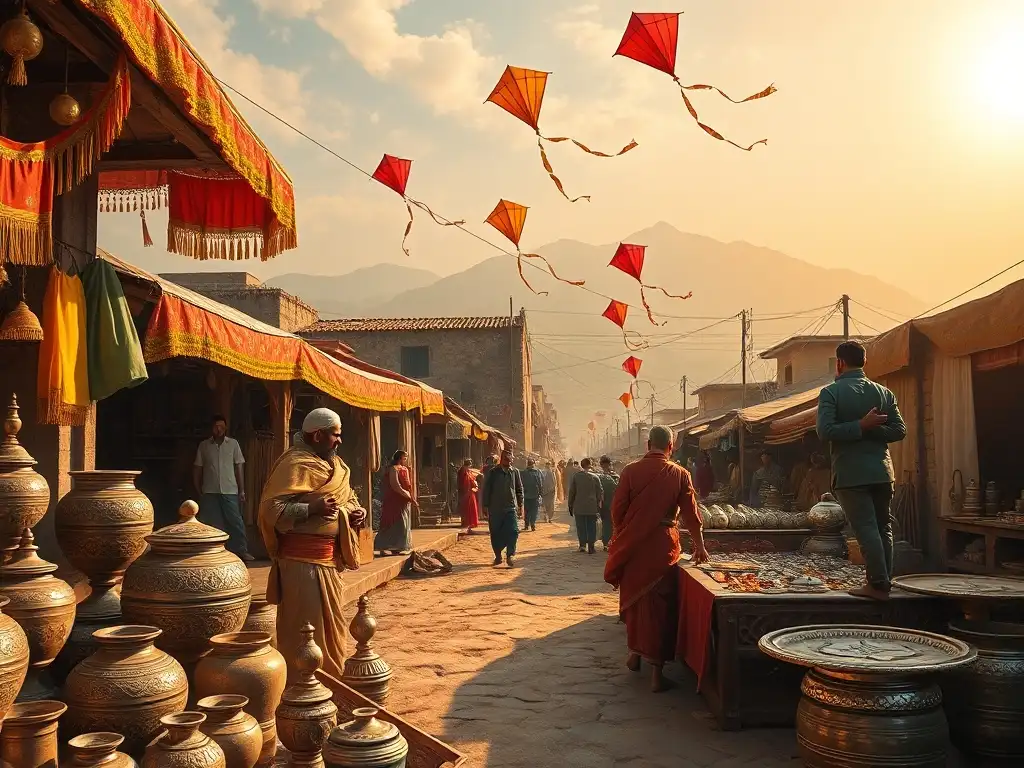
Welcome to Ancient India History, where we embark on a fascinating journey through the rich tapestry of India's past. In our latest article, Cultural Artifacts: What Ancient Trade Routes Revealed About India, we delve into the intriguing world of ancient Indian trade routes artifacts. Discover how these relics not only tell tales of commerce but also illuminate the cultural exchanges that shaped civilizations. What secrets lie within these artifacts? Join us as we unravel the mysteries of ancient trade and its profound impact on Indian heritage. Your exploration of history begins here!
- Introduction to Ancient Indian Trade Routes Artifacts
- Major Ancient Indian Trade Routes
- Key Cultural Artifacts Discovered Along Trade Routes
- The Role of Trade in the Spread of Indian Culture
- Archaeological Discoveries Related to Trade Routes
- Case Studies of Specific Artifacts
- The Impact of Ancient Indian Trade Routes on Modern Understanding
- Conclusion: The Legacy of Ancient Indian Trade Routes Artifacts
- Frequently Asked Questions
- Final Reflection: The Enduring Legacy of Ancient Indian Trade Routes
- Unveil the Secrets of Ancient Trade Routes!
Introduction to Ancient Indian Trade Routes Artifacts
The exploration of ancient Indian trade routes reveals a tapestry of cultural exchange, economic prosperity, and artistic innovation that defined the subcontinent's history. These routes, which connected India to distant lands, played a pivotal role in the dissemination of goods, ideas, and technologies.
The artifacts unearthed along these pathways serve as tangible evidence of India's interactions with various civilizations, ranging from the bustling markets of the Indus Valley to the vibrant exchanges during the Gupta Empire. Understanding the significance of these artifacts not only enhances our knowledge of ancient Indian trade but also sheds light on the rich cultural heritage that emerged from these historical connections.
Overview of Ancient Trade Routes in India
Ancient India was a hub of trade, with well-established routes that facilitated commerce across the continent and beyond. The most notable of these routes included the Silk Road, which connected the East and West, and the Maritime Trade Routes that linked India to Southeast Asia, the Arabian Peninsula, and the East African coast.
- Silk Road: This extensive network of land routes facilitated the exchange of silk, spices, precious stones, and other luxury goods. Indian merchants played a significant role in this trade, introducing their unique products and cultural practices to regions as far as China and the Mediterranean.
- Maritime Trade Routes: The Indian Ocean trade routes were vital for maritime commerce. Ports like Lothal and Kalyan thrived as centers of trade, where goods from India were exchanged for commodities such as gold, ivory, and textiles from Africa and the Middle East.
These trade routes not only fostered economic ties but also led to cultural exchanges that enriched the civilizations involved. The artifacts discovered along these pathways, including pottery, textiles, and jewelry, provide crucial insights into the daily lives, beliefs, and artistic expressions of ancient Indian societies.
Importance of Cultural Artifacts in Understanding Trade
Cultural artifacts are invaluable for reconstructing the history of ancient trade, as they serve as physical manifestations of the interactions between different cultures. These artifacts offer a glimpse into the materials and techniques used by ancient artisans, reflecting their social, economic, and technological contexts.
- Economic Insights: Artifacts like weights and measures indicate the sophisticated trading systems in place. They reveal how goods were valued and exchanged, offering a window into the economic practices of ancient civilizations.
- Cultural Exchange: Items such as coins, pottery, and textiles often exhibit influences from various cultures, demonstrating the interconnectedness of societies through trade. For example, the presence of Roman coins in Indian archaeological sites highlights the extensive trade relations between these regions.
- Artistic Expression: The craftsmanship of artifacts, such as intricate carvings and vibrant textiles, illustrates the artistic achievements of ancient Indian cultures. These works not only served practical purposes but also conveyed cultural narratives and aesthetic values.
The study of cultural artifacts related to ancient Indian trade routes provides a comprehensive understanding of how trade shaped the subcontinent's history and cultural identity. By analyzing these remnants of the past, we gain insight into the rich tapestry of interactions that influenced the evolution of ancient Indian civilizations.
Major Ancient Indian Trade Routes
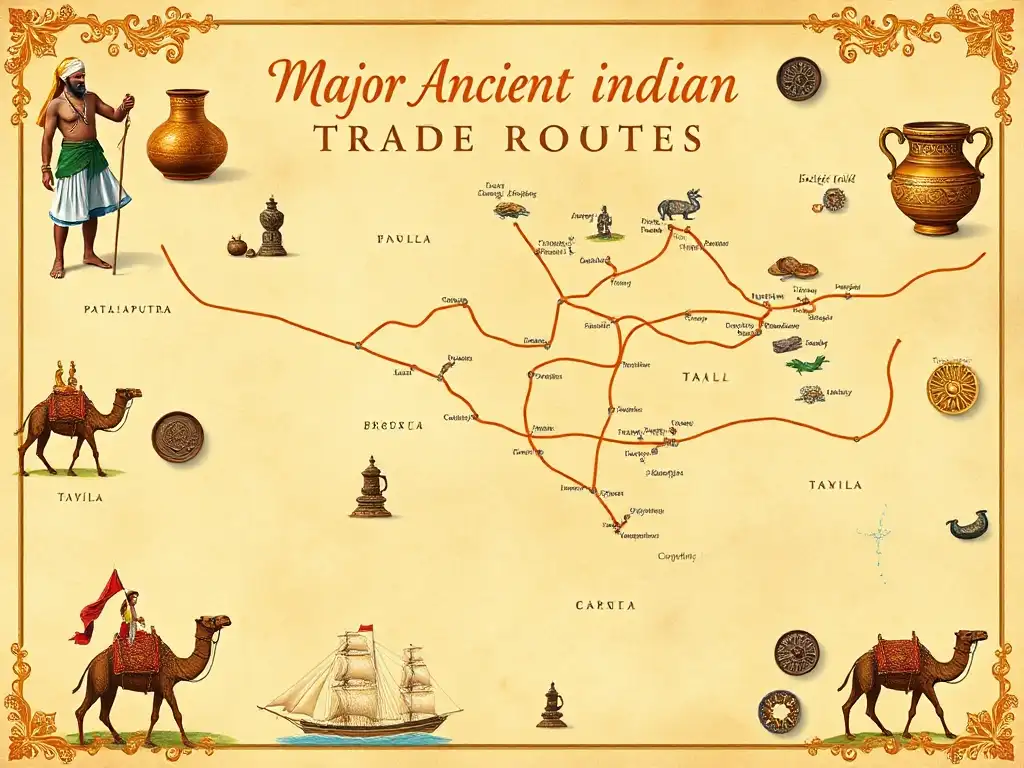
Ancient Indian trade routes were crucial in connecting India to various regions of the world, facilitating not only commerce but also cultural exchange. These routes enabled the movement of goods, ideas, and innovations, contributing significantly to the prosperity of ancient Indian civilizations. Among the most notable routes were the Silk Road, the Spice Route, and the Incense Route, each of which played a vital role in shaping India's historical landscape.
The Silk Road: Connecting India to the World
The Silk Road was one of the most prominent trade networks in history, linking the East and West. Stretching over 4,000 miles, this extensive route connected China to the Mediterranean, passing through Central Asia and the Indian subcontinent.
Key Features of the Silk Road:
- Cultural Exchange: The Silk Road was not only a commercial route but also a conduit for cultural exchange. Ideas, religions, and art traveled along with goods, enriching the societies involved. Buddhism, for example, spread into Central Asia and beyond through these trade routes.
- Trade Goods: Indian merchants played a significant role in the Silk Road trade, exporting textiles, spices, gemstones, and metalwork. The famous Indian cotton textiles, known for their quality and designs, were highly sought after in markets as far away as Rome.
- Artifacts: Artifacts found along the Silk Road, such as coins, pottery, and textiles, provide invaluable insights into ancient Indian trade practices and interactions with other cultures. For instance, the discovery of silk garments in Indian tombs showcases the exchange of luxury goods between India and other civilizations.
The Spice Route: A Gateway to Indian Spices
The Spice Route was another critical trade network, primarily focused on the lucrative spice trade. Spices like pepper, cardamom, and cinnamon were highly valued in ancient times for their culinary and medicinal properties.
Significant Aspects of the Spice Route:
- Economic Impact: The Spice Route significantly contributed to the Indian economy, as spices were in high demand across Europe, the Middle East, and Asia. Indian ports became bustling centers of trade, attracting merchants from various regions.
- Cultural Interactions: The trade of spices also led to cultural interactions, as traders from different backgrounds exchanged not only goods but also customs, languages, and ideas. The integration of various cultural elements enriched Indian society.
- Artifacts: Discoveries of spice-related artifacts, such as storage jars and weighing scales, illustrate the scale and sophistication of spice trade operations in ancient India. These artifacts reveal the methods used in trade and the importance of spices in Indian culture.
The Incense Route: Trade in Aromatic Goods
The Incense Route was crucial for the trade of aromatic substances, including incense, myrrh, and frankincense, which were highly prized in religious and cultural practices across various civilizations.
Essential Elements of the Incense Route:
- Religious Significance: Incense played a vital role in religious rituals in ancient India and beyond. The trade of these aromatic goods facilitated connections with cultures that valued incense for spiritual practices, enhancing India's influence in religious matters.
- Trade Networks: This route connected India to regions such as Arabia and the Mediterranean, allowing for the exchange of not only incense but also other goods, including textiles and precious metals. The trade networks established along this route were instrumental in fostering international relations.
- Artifacts: Archaeological findings, such as incense burners and ceremonial vessels, highlight the importance of incense in ancient Indian society. These artifacts reflect the craftsmanship and cultural significance of aromatic goods in trade.
Ancient Indian trade routes were vital in shaping the economic, cultural, and social landscape of the region. The Silk Road, Spice Route, and Incense Route not only facilitated the exchange of goods but also fostered rich intercultural interactions that have left a lasting legacy in history. The artifacts uncovered along these routes offer a glimpse into the vibrant trade practices and the profound influence of ancient Indian civilization on the global stage.
Key Cultural Artifacts Discovered Along Trade Routes
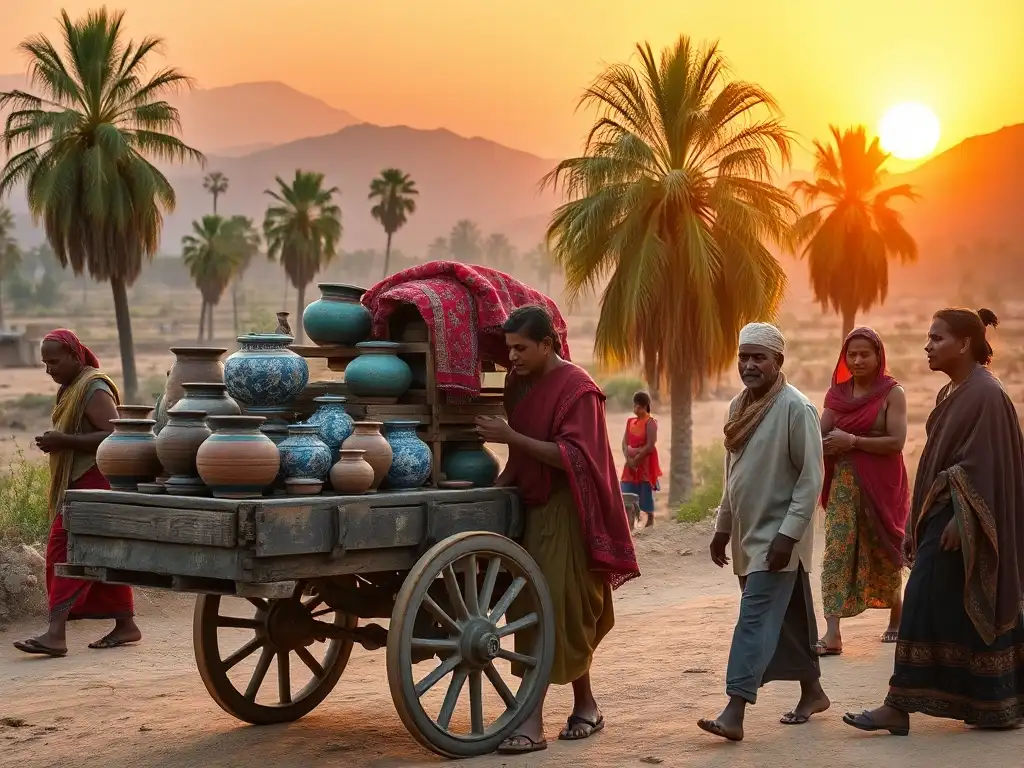
The ancient trade routes of India, particularly the Silk Road and the Spice Route, were vital conduits for commerce and cultural exchange. These routes not only facilitated trade in goods but also led to a rich intermingling of cultures, ideas, and technologies. Among the most significant contributions to our understanding of ancient Indian civilization are the cultural artifacts uncovered along these trade paths. These artifacts provide invaluable insights into the economic, social, and spiritual life of the time.
Terracotta Figurines: Insights into Daily Life
Terracotta figurines, often found in sites associated with the Indus Valley Civilization and later periods, serve as a window into the daily lives and religious practices of ancient Indians.
- Artistic Expression: The craftsmanship exhibited in these figurines highlights the artistic skills prevalent in ancient India. They often depict human figures, animals, and deities, showcasing not only the aesthetics of the time but also the cultural narratives they embodied.
- Religious Significance: Many of these figurines have been linked to fertility rituals and domestic worship. For instance, female figurines with exaggerated features may indicate a reverence for fertility, while various animal representations could point to the significance of certain species in spiritual practices.
- Social Structure: The diversity in the styles and shapes of terracotta figurines offers clues about the social hierarchy and roles within communities. For example, certain figurines might represent laborers, while others depict figures of higher status or specialized roles in society.
Coins and Trade Goods: Economic Indicators of Ancient India
Coins and trade goods discovered along ancient trade routes are crucial for understanding the economic landscape of ancient India. These artifacts reveal the sophistication of trade practices and the extent of commercial networks.
- Standardized Currency: Coins from various dynasties, such as the Mauryan and Gupta Empires, indicate the development of a standardized currency system that facilitated trade both regionally and internationally. The use of metals like silver and gold in coinage reflects the wealth and economic stability of these civilizations.
- Trade Goods: Artifacts like spices, textiles, and precious stones found alongside coins provide tangible evidence of what was traded. For instance, archaeological discoveries have shown that India was a significant source of spices like black pepper and cardamom, which were highly sought after in global markets.
- Cultural Exchange: The presence of foreign coins in Indian markets suggests an interconnectedness with other cultures, indicating not only economic transactions but also the exchange of ideas and customs, which enriched Indian society.
Textiles: The Art of Weaving and Cultural Exchange
Textiles are among the most celebrated artifacts from ancient India, showcasing the country's rich tradition of weaving and its role in trade.
- Diverse Techniques: The discovery of remnants of textiles reveals the variety of weaving techniques employed across different regions. Techniques such as block printing, tie-dye, and embroidery were prevalent, demonstrating a high level of craftsmanship.
- Trade Significance: Indian textiles were in high demand along trade routes, particularly silk and cotton fabrics. These textiles not only served local needs but were also exported to distant lands, influencing global fashion and trade dynamics.
- Cultural Symbolism: Textiles often carried symbolic meanings, reflecting the cultural identity of communities. Specific patterns and colors could denote social status, regional affiliation, or even religious beliefs, thus serving as a means of cultural expression.
The exploration of these artifacts along ancient Indian trade routes offers a comprehensive view of how trade facilitated not just economic growth but also cultural and social interactions that shaped the Indian subcontinent’s rich history.
The Role of Trade in the Spread of Indian Culture
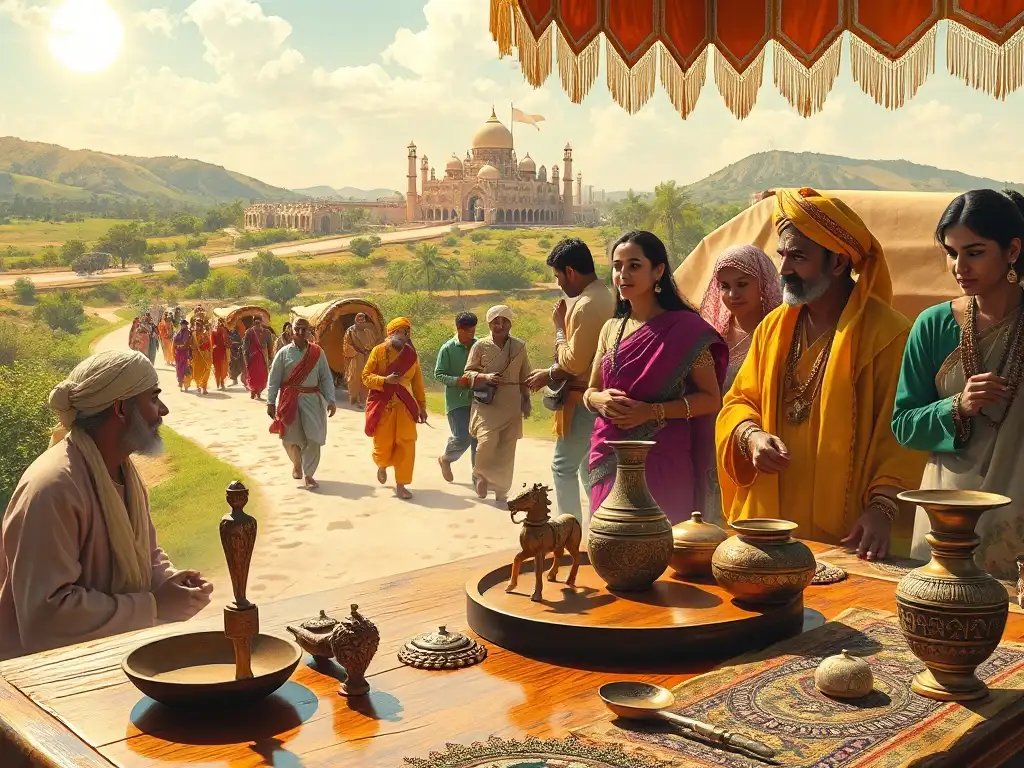
Trade has always been a vital component of the growth and expansion of civilizations, and ancient India was no exception. The intricate networks of trade routes, such as the Silk Road and maritime paths connecting India to the eastern and western worlds, facilitated not only the exchange of goods but also the dissemination of cultural values, beliefs, and artistic expressions. These routes enabled ancient Indian merchants and travelers to interact with diverse cultures, leading to a rich tapestry of cross-cultural influences that shaped India’s identity over centuries.
Traditionally, trade was a vehicle for economic prosperity, but its impact transcended mere commerce. The movement of people along these routes allowed for intercultural dialogues, where ideas and traditions were shared and transformed. As a result, ancient Indian trade routes were catalysts for cultural exchanges that significantly influenced both India and its neighboring civilizations.
Influence of Indian Art on Neighboring Civilizations
Indian art has had a profound influence on neighboring civilizations, largely due to the interactions fostered by ancient trade routes. For instance, the intricate designs of Indian textiles and pottery found their way to regions such as Southeast Asia and the Middle East. Here are some key points regarding this influence:
- Buddhist Art: The spread of Buddhism through trade played a significant role in the dissemination of Indian artistic styles. Stupas and sculptures from India inspired the architectural designs of Buddhist monuments in countries like Sri Lanka, Thailand, and Myanmar.
- Sculptural Techniques: The techniques used in Indian stone carving were adopted and adapted by artists in regions such as Afghanistan and Central Asia. The Gandhara art style, which emerged in the region, showcases a blend of Hellenistic influences with traditional Indian motifs.
- Textiles and Dyes: Indian textiles, particularly cotton and silk, were highly prized in ancient trade. The use of indigo dye, which was prevalent in Indian fabric production, spread to other cultures, influencing their own textile traditions.
- Symbolism and Motifs: Various motifs and designs originating from Indian art, such as the lotus flower and peacock, found their way into the artistic lexicons of neighboring cultures, symbolizing beauty and spirituality.
The transference of artistic styles and techniques not only enriched the artistic landscape of these regions but also fostered a shared cultural heritage that resonates to this day.
Exchange of Ideas and Technologies through Trade
The ancient trade routes were conduits not only for goods but also for the exchange of ideas and technologies that profoundly impacted Indian civilization and its neighbors. Here are some notable aspects of this exchange:
- Mathematics and Astronomy: Indian mathematicians and astronomers were pivotal in developing concepts such as zero and the decimal system. These ideas spread along trade routes to the Middle East and Europe, laying the groundwork for modern mathematics and science.
- Medicine and Ayurveda: The ancient Indian system of medicine, Ayurveda, gained prominence through trade interactions. It influenced medical practices in neighboring regions, including Persia and China, where Ayurvedic texts were translated and incorporated into local medicinal practices.
- Philosophy and Religion: The spread of philosophies such as Buddhism and Jainism along trade routes led to the establishment of monastic communities in various regions. This not only enriched local spiritual practices but also facilitated dialogues between different belief systems.
- Agricultural Techniques: Indian agricultural innovations, such as the cultivation of rice and the use of irrigation systems, were shared with neighboring civilizations. These techniques improved agricultural productivity and sustainability in regions like Southeast Asia.
The exchange of ideas and technologies fostered by ancient trade routes underpinned the development of civilizations, creating a legacy that shaped cultural, scientific, and technological advancements. The artifacts discovered along these routes serve as testaments to this rich history, providing invaluable insights into the interconnectedness of ancient societies.
By exploring the artifacts related to ancient Indian trade routes, we gain a deeper understanding of how trade not only fueled economic growth but also facilitated the cross-cultural interactions that enriched the tapestry of human civilization.

Archaeological discoveries have played a pivotal role in unraveling the intricate web of ancient Indian trade routes. These routes facilitated not only the exchange of goods but also the transfer of culture, ideas, and technologies between civilizations. The findings from various excavations across India have shed light on the extent of trade networks and the kinds of artifacts that were exchanged, illustrating the sophistication of ancient Indian societies.
Major Excavations and Their Findings
Several key archaeological sites have provided invaluable insights into the trade routes of ancient India. Among the most significant are:
- Harappa and Mohenjo-Daro: As prominent cities of the Indus Valley Civilization, these sites revealed a well-planned urban infrastructure, including docks and warehouses, indicating that they were major trade hubs. Excavations uncovered seals, weights, and pottery that reflect extensive trade connections with Mesopotamia and beyond.
- Taxila: This ancient city, located at the crossroads of several trade routes, has yielded a wealth of artifacts, including coins, pottery, and sculptures. The presence of Greek, Persian, and Central Asian elements in the findings highlights Taxila's role as a melting pot of cultures and a significant player in trade during the Mauryan Empire.
- Pataliputra: As the capital of the Mauryan Empire, excavations in Pataliputra have unveiled a variety of artifacts, including trade goods and inscriptions that suggest a vibrant marketplace. The findings indicate that Pataliputra served as a central node in trade networks, especially during the reign of Emperor Ashoka.
- Ajanta and Ellora Caves: While primarily known for their remarkable rock-cut architecture and Buddhist art, these caves also served as rest stops for traders. Artifacts found here, including pottery and coins, suggest that they were frequented by merchants traveling along trade routes connecting India to Central Asia.
These excavations not only provide evidence of ancient Indian trade routes but also demonstrate the economic and cultural exchanges that took place, enriching the heritage of India.
Notable Artifacts from Ancient Indian Civilizations
The artifacts uncovered from these archaeological sites reveal much about the daily lives, beliefs, and artistic expressions of ancient Indian civilizations. Some notable artifacts include:
- Indus Seals: These small, carved seals often depict animals and scripts. They were likely used for trade and administrative purposes. The intricate designs suggest skilled craftsmanship and a connection to trade networks extending to Mesopotamia and the Persian Gulf.
- Coins: Various ancient Indian coins, such as those from the Mauryan and Gupta periods, have been discovered in excavations. These coins not only served as currency but also featured inscriptions and images that reflect the political and cultural milieu of the time. They illustrate the economic sophistication of ancient Indian societies.
- Pottery: The pottery found at trade route sites often exhibits distinct styles and decorations. For instance, the painted pottery from the Indus Valley showcases advanced techniques and indicates trade links with other regions.
- Textiles: Fragments of textiles found in various sites point to the ancient Indian textile industry, which was highly regarded. The presence of dyed and patterned fabrics suggests that textiles were important trade commodities.
- Jewelry and Ornaments: Artifacts such as beads, bangles, and necklaces made from materials like semi-precious stones and metals reflect the artistic skills of artisans and the significance of personal adornment in ancient cultures.
These artifacts not only highlight the rich material culture of ancient India but also underscore the importance of trade routes in facilitating cultural exchanges and economic prosperity. By studying these items, historians and archaeologists can piece together the intricate story of ancient Indian civilizations and their global connections.
Case Studies of Specific Artifacts
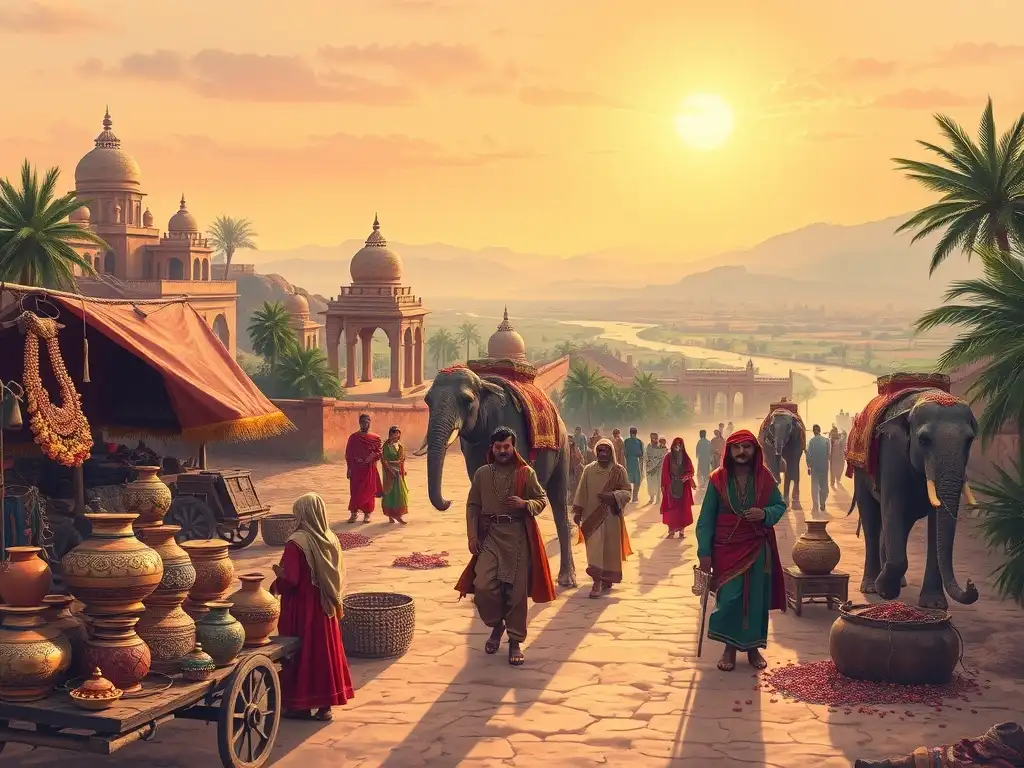
The Indus Valley Civilization: Trade and Artifact Examples
The Indus Valley Civilization (IVC), flourishing from approximately 3300 to 1300 BCE, is notable for its advanced urban planning and extensive trade networks. Archaeological excavations at sites like Mohenjo-Daro and Harappa have unearthed a plethora of artifacts that offer insight into the economic and cultural life of this ancient society.
Key Artifacts and Their Trade Implications
- Weights and Measures:
- The IVC is renowned for its standardized weights and measures, which were typically made from stone and featured precise calibrations.
- This uniformity suggests a sophisticated trade system, indicating that goods were exchanged with accuracy, enhancing trust and reliability in commerce.
- Seals:
- Terracotta seals bearing intricate carvings of animals and script were commonly found in IVC excavations.
- These seals likely served multiple purposes: as identifiers for merchants, as talismans for good fortune, and as a means to communicate with distant traders.
- The discovery of similar seals in Mesopotamia suggests a vibrant trade relationship between these civilizations.
- Pottery and Ceramics:
- The IVC produced distinctive painted pottery, often featuring geometric designs and motifs of flora and fauna.
- Analysis shows that some pottery styles were influenced by neighboring cultures, indicating a blend of ideas through trade.
- Pottery fragments found in distant sites highlight the extensive reach of IVC trade networks, with evidence of goods being transported as far as the Persian Gulf.
Cultural Exchange Through Artifacts
The artifacts recovered from the Indus Valley not only reflect the economic aspects of trade but also signify a cultural exchange. The presence of foreign goods, such as lapis lazuli from Afghanistan and shells from the Arabian Sea, points to an interconnected world where ideas, technologies, and cultural practices were shared.
Gupta Empire Artifacts: Cultural Significance and Trade Impact
The Gupta Empire, which thrived from approximately 320 to 550 CE, is often referred to as the Golden Age of India due to its significant advancements in science, art, and culture. The period was marked by flourishing trade routes that facilitated not only economic prosperity but also cultural exchanges across regions.
Notable Artifacts and Their Significance
- Coins:
- Gupta rulers issued a variety of gold and silver coins, including the famous "dinara" and "karshapana."
- These coins were not merely currency; they featured intricate designs and inscriptions that celebrated the achievements of the Gupta kings, serving as propaganda to convey power and legitimacy.
- The widespread circulation of these coins indicates robust trade networks extending into Central Asia, Southeast Asia, and beyond.
- Sculptures and Statues:
- The Gupta period is renowned for its exquisite stone sculptures, particularly of Hindu deities and Buddhist figures.
- Artisans used techniques that reflected both local traditions and influences from trade interactions, showcasing a synthesis of styles.
- Many of these sculptures were found in temples, indicating the role of trade in promoting religious tourism and cultural exchange.
- Textiles:
- Evidence suggests that the Gupta Empire was a major center for textile production, particularly silk and cotton.
- Artifacts such as spindle whorls and dyeing materials discovered in archaeological sites underscore the importance of textiles in trade, with Indian silk being highly sought after in foreign markets.
- The trade of textiles not only boosted the economy but also facilitated cultural exchanges, as patterns and techniques were shared across borders.
Trade Routes and Their Impact on Culture
The trade routes established during the Gupta Empire were crucial in fostering a climate of cultural exchange. Through these routes, ideas such as Buddhism spread to East Asia, while Indian numerals and mathematics influenced Middle Eastern scholars. The artifacts from this period not only reveal the economic activities of the Gupta Empire but also illustrate the profound cultural impact of ancient Indian trade routes on the broader world.
The study of artifacts from both the Indus Valley Civilization and the Gupta Empire reveals the intricate connections between trade, culture, and society in ancient India. These artifacts serve as a testament to India's historical significance in global trade networks and cultural exchanges.
The Impact of Ancient Indian Trade Routes on Modern Understanding
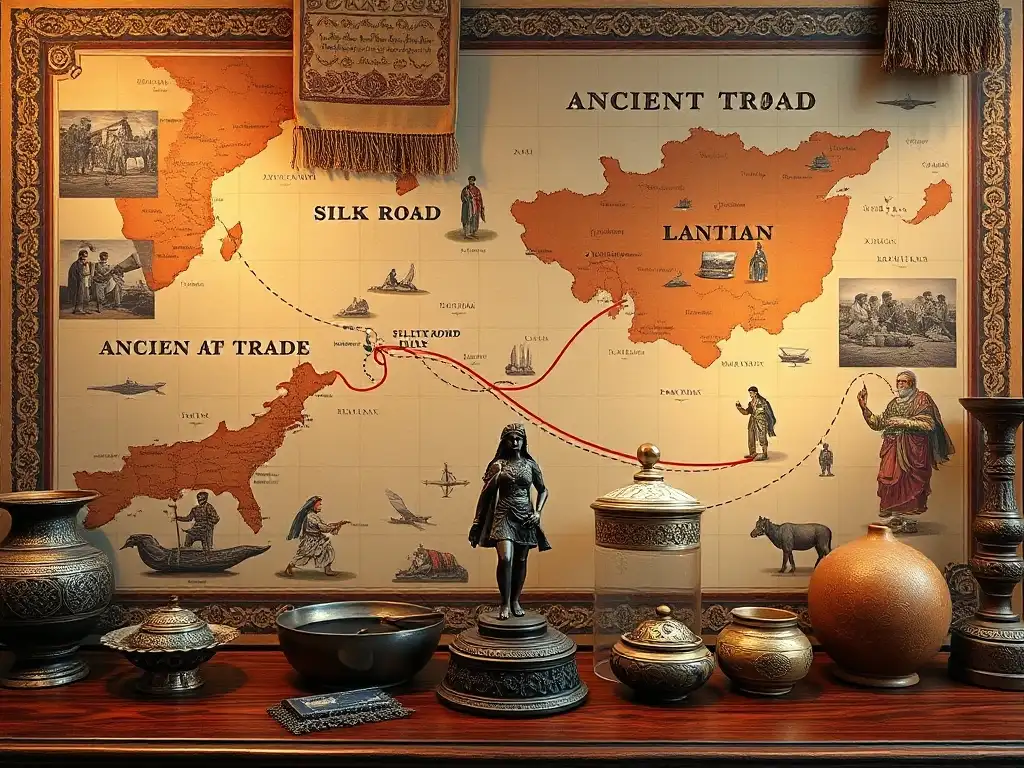
The ancient trade routes of India were pivotal in not only facilitating commerce but also in shaping the cultural and social landscape of the region. These routes, including the famous Silk Road and maritime pathways, connected India with various civilizations across Asia, Africa, and Europe. The artifacts unearthed from these trade routes offer valuable insights into the economic practices, social interactions, and cultural exchanges that occurred over centuries.
Lessons Learned from Ancient Trade Practices
The examination of ancient Indian trade routes has provided us with critical lessons that continue to influence modern economic strategies and cultural interactions.
- Diversity in Trade Goods: Ancient Indian traders were known for a wide array of goods, including textiles, spices, precious stones, and metals. For instance, the popularity of Indian silk and spices in foreign markets illustrates how trade goods can define a region's economic strength.
- Cultural Exchange: These trade routes acted as conduits for cultural interchange. Artifacts such as pottery, sculptures, and inscriptions reveal the syncretism of various artistic styles, symbolizing the blending of ideas and traditions. For example, the influence of Greco-Roman art on Indian sculptures during the Mauryan period showcases this cultural interplay.
- Economic Networks: The establishment of trade partnerships and networks illustrates the importance of collaboration and mutual benefit in commerce. The role of guilds and merchant associations in ancient India highlights organized trade practices that are mirrored in today's business societies.
- Navigational Skills and Technology: Ancient traders developed advanced navigational techniques and tools, which were crucial for maritime routes. Their understanding of monsoon winds played a significant role in establishing efficient sea trade, a practice that continues to be relevant for modern maritime trade.
- Integration of Markets: The connections formed through trade routes fostered market integration across regions. The archaeological evidence of urban centers, such as those found in the Indus Valley, indicates that these locations thrived due to their strategic positions along trade routes, a principle that underpins modern urban economics.
Preservation of Cultural Heritage and Artifacts Today
The artifacts recovered from ancient Indian trade routes serve as crucial links to our heritage and are vital for understanding the historical context of trade practices. The preservation of these artifacts is essential for educational and cultural purposes.
- Archaeological Efforts: Ongoing archaeological research aims to uncover more about the trade routes and the artifacts associated with them. Sites like Taxila and Lothal have revealed a wealth of information about ancient trade practices and the sophisticated craftsmanship of the time.
- Museums and Exhibitions: Various museums in India and abroad curate collections of ancient artifacts, allowing the public to engage with the past. These exhibitions often include examples of items traded along ancient routes, showcasing their historical significance and the craftsmanship involved.
- Digital Preservation: With technological advancements, many artifacts are being digitized, allowing for better preservation and global access. Virtual museums and online databases enable scholars and enthusiasts to study these items without the need for physical interaction, ensuring their protection for future generations.
- Cultural Awareness: The artifacts serve not just as historical objects but also as symbols of cultural identity. They remind modern society of the rich tapestry of interactions that shaped India and its relationships with the world, fostering a sense of pride and continuity.
- Legislation and Protection: Governments and organizations are increasingly recognizing the importance of protecting cultural heritage. Laws and regulations are being enforced to prevent illegal trade and trafficking of artifacts, ensuring that these treasures are preserved for posterity.
The study of ancient Indian trade routes and their artifacts not only enriches our understanding of historical trade practices but also underscores the importance of preserving cultural heritage today. These lessons remain relevant as we navigate the complexities of modern trade and cultural exchange.
Conclusion: The Legacy of Ancient Indian Trade Routes Artifacts
Summarizing the Importance of Trade in Ancient Indian History
The exploration of ancient Indian trade routes artifacts reveals a profound narrative of cultural exchange and economic interaction that shaped the subcontinent's historical landscape. These routes, such as the Silk Road and the Spice Route, were not merely conduits for goods; they were vibrant channels of ideas, beliefs, and innovations. Artifacts recovered from various trading sites provide invaluable insights into the daily lives, social structures, and technological advancements of ancient Indian civilizations.
- Cultural Exchange: The artifacts, ranging from pottery and textiles to coins and religious icons, illustrate the interactions between diverse cultures. For instance, the presence of Roman coins in Indian archaeological sites indicates a thriving trade relationship with the West. Similarly, the adoption of foreign artistic styles in Indian sculptures showcases the synthesis of local and external influences.
- Economic Impact: The wealth generated from trade significantly contributed to the prosperity of ancient Indian kingdoms. Artifacts such as trade seals from the Indus Valley Civilization highlight the organized nature of ancient commerce. The discovery of standardized weights and measures further underscores the sophistication of economic practices.
- Technological Advancements: Ancient Indian traders were instrumental in the dissemination of technologies and innovations. For example, the introduction of the astrolabe and advancements in navigation techniques can be traced back to interactions with other civilizations along these trade routes. Artifacts related to metallurgy, like iron tools and coins, reflect the technological prowess of ancient Indian societies.
Ancient Indian trade routes artifacts serve as crucial evidence of the interconnectedness of cultures and economies, illustrating how trade not only facilitated the exchange of goods but also fostered a rich tapestry of cultural heritage.
Future Research Directions on Trade Routes and Artifacts
As scholars continue to unearth and analyze artifacts from ancient Indian trade routes, several promising avenues for future research emerge:
- Interdisciplinary Approaches: Combining archaeology, anthropology, and history can yield a more holistic understanding of trade dynamics. For instance, integrating climate studies may help explain shifts in trade patterns due to environmental changes.
- Technological Advances in Archaeology: The application of modern technologies such as ground-penetrating radar and isotope analysis can enhance the excavation of sites along ancient trade routes. These techniques may lead to the discovery of previously unknown artifacts and trading hubs.
- Cultural Impact Studies: Further research into the cultural artifacts can elucidate how ancient trade influenced local customs, religious practices, and artistic expressions. This can include a more detailed examination of the spread of Buddhism and Hinduism through trade.
- Regional Studies: Investigating specific regions along the trade routes, such as the Deccan Plateau or coastal ports, can provide insights into localized trade practices and their unique artifacts. This can help compare different trading hubs and their respective contributions to ancient trade.
- Digital Humanities: Utilizing digital platforms to create databases of artifacts and trade routes can facilitate collaborative research and public engagement. This approach could help synthesize data from multiple sources, making it accessible for further analysis and interpretation.
By pursuing these research directions, scholars can deepen our understanding of the ancient Indian trade routes artifacts and their significance in the broader context of global trade history. The legacy of these routes continues to inspire curiosity and scholarship, offering endless possibilities for discovery and learning.
Frequently Asked Questions
What are ancient Indian trade routes?
Ancient Indian trade routes were networks that facilitated the exchange of goods, culture, and ideas. They connected India with neighboring regions, enhancing economic and cultural interactions.
What types of artifacts have been discovered along these trade routes?
Artifacts such as pottery, coins, textiles, and jewelry have been uncovered. These items reveal insights into the daily life, trade practices, and cultural exchanges of ancient Indian civilizations.
How did trade routes influence ancient Indian civilization?
Trade routes played a crucial role in the economic prosperity of ancient India. They helped in the spread of religions, languages, and technologies, making India a melting pot of cultures.
Which civilizations were involved in ancient Indian trade?
Civilizations such as the Indus Valley, Maurya, and Gupta empires actively participated in trade. They traded with regions like Southeast Asia, the Middle East, and East Africa, showcasing their global connections.
What is the significance of studying ancient trade routes in India?
Studying ancient trade routes helps us understand the economic history, cultural exchanges, and social dynamics of ancient India. It sheds light on how these routes shaped the development of Indian civilization over time.
Final Reflection: The Enduring Legacy of Ancient Indian Trade Routes
The exploration of ancient Indian trade routes and their artifacts reveals not only the rich history of commerce but also the profound connections between cultures that continue to shape our world today. As we delve into the intricacies of these trade networks, we uncover a tapestry of interactions that laid the groundwork for cultural exchange, innovation, and mutual understanding. This legacy is a powerful reminder of how interconnected our societies have always been, and it challenges us to appreciate the shared human experience that transcends borders.
The artifacts unearthed from these ancient trade routes serve as a testament to the vibrant cultural exchanges that took place, influencing art, religion, and daily life across regions. The stories embedded in these relics remind us of the importance of preserving our shared history and recognizing the contributions of diverse cultures. History is not just what happened; it is what we make of what happened.
This ongoing dialogue between past and present encourages us to reflect on how the lessons from ancient trade can inform our modern interactions, fostering a spirit of collaboration and respect.
As we conclude this exploration of ancient Indian trade routes and their artifacts, I invite you to reflect on your own connections to the world around you. Consider how you can engage with different cultures in your daily life, embracing the richness of diversity and the shared narratives that unite us. Let the lessons of the past inspire you to build bridges in the present, fostering understanding and appreciation for the myriad cultures that contribute to our global community.
Unveil the Secrets of Ancient Trade Routes!
Thank you for exploring the fascinating world of cultural artifacts and their significance in ancient Indian trade. You've uncovered invaluable insights about how these routes shaped history and culture. Now, it’s time to put this knowledge into action!
Here are a few engaging steps you can take right now:
- Dive Deeper: Visit your local museum to see artifacts that tell the stories of ancient trade. You might discover connections to your own heritage!
- Share the Knowledge: Discuss what you've learned with friends or family and inspire them to join you on this journey through history.
- Join Our Community: Participate in our forum to connect with fellow history enthusiasts and engage in deeper discussions about ancient trade routes!
What aspects of ancient trade routes have sparked your curiosity the most? We would love to hear your thoughts below!