
The Mahabharata's Enduring Legacy in Educational Curricula


Welcome to Ancient India History, where we embark on a journey through the rich tapestry of India’s ancient civilizations. Here, we delve into the profound influence of the Mahabharata—a monumental epic that has shaped not only literature but also the very foundations of education in India and beyond. Have you ever wondered how stories of valor and wisdom have woven themselves into the educational curricula we know today? Join us as we uncover the Mahabharata's enduring legacy and explore the fascinating ways it continues to inspire learners across generations. Your adventure into the depths of ancient wisdom awaits!
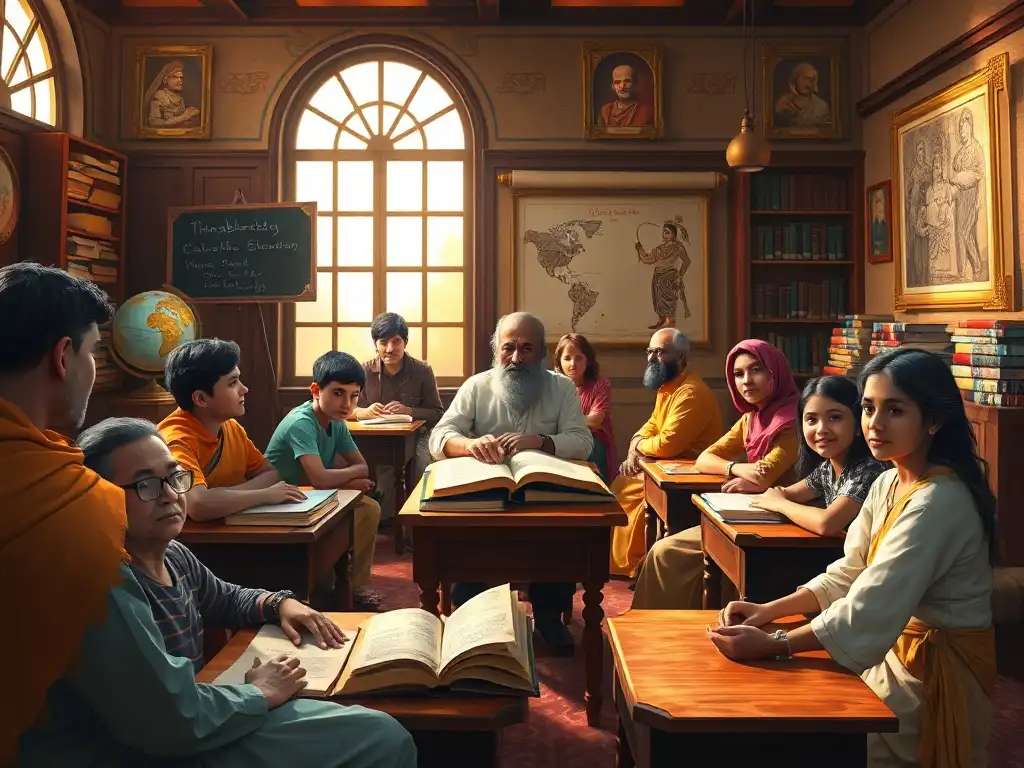
Introduction to the Mahabharata
The Mahabharata, one of the two major Sanskrit epics of ancient Indian literature, holds a unique place in the cultural and educational landscape of India and beyond. Spanning over 100,000 shlokas (verses), it is not just a tale of a dynastic struggle but a profound exploration of themes such as duty (dharma), righteousness, morality, and the complexities of human nature. Its narratives and teachings have transcended time, influencing various aspects of society, including education.
The epic serves as a rich source for moral and ethical lessons, making it a pivotal component of educational curricula throughout history. As we delve into the profound Mahabharata's influence on education, we will explore how this ancient text continues to shape learning and values in contemporary settings.
Overview of the Mahabharata's Historical Significance
The Mahabharata is more than just a story; it is a comprehensive account of ancient Indian civilization, reflecting the social, political, and philosophical landscape of its time. Composed around 400 BCE to 400 CE, it encompasses historical events, cultural practices, and the evolution of societal norms.
- Cultural Reflection: The epic highlights the values and struggles of its characters, providing insight into the human condition. It is a mirror reflecting the ethos of ancient Indian society.
- Political Implications: The narrative delves into themes of governance, duty, and justice, which have influenced rulers and policymakers throughout history. The strategies employed by figures like Krishna and Bhishma offer lessons in diplomacy and leadership.
- Philosophical Depth: The inclusion of the Bhagavad Gita, a philosophical discourse within the Mahabharata, adds layers of existential inquiry and ethical dilemmas, prompting generations to engage with questions of life and purpose.
Through its multifaceted approach, the Mahabharata's teachings have been integrated into educational frameworks, enriching curricula with lessons that resonate with students of all ages. Its enduring legacy continues to inspire educators to draw from its profound insights, ensuring that the Mahabharata's influence on education remains a vital aspect of academic discourse.
Understanding the Concept of Education in Ancient India
Education in ancient India was not just about the acquisition of knowledge; it was a holistic process that encompassed moral, spiritual, and practical dimensions. The ancient Indian educational system was based on the Gurukul model, where students would live with their teacher (guru) and learn various subjects, including philosophy, mathematics, astronomy, and the arts. This system emphasized experiential learning and personal development, ensuring that students not only absorbed knowledge but also applied it in their lives.
The concept of Dharma, or duty, played a pivotal role in shaping the educational philosophies of the time. Education was seen as a means to cultivate virtues such as truthfulness, compassion, and righteousness. Ancient texts, including the Vedas and Upanishads, underscored the importance of education in attaining liberation ( moksha), guiding individuals towards a higher purpose in life. Furthermore, the inclusion of epics like the Mahabharata in educational curricula illustrated the importance of narratives in imparting ethical lessons and cultural values.
The Mahabharata Influence on Education
The Mahabharata, one of the longest epic poems in the world, has had a profound influence on educational practices and philosophies in ancient India. Its rich narrative and complex characters provide invaluable lessons on ethics, leadership, and human behavior, making it a key text in the educational landscape. The epic's stories are not merely tales of war and conflict; they serve as reflections on moral dilemmas and the consequences of one's actions, which are foundational elements in the educational discourse.
Incorporating the Mahabharata into educational curricula allowed for a multidimensional approach to learning. It encouraged critical thinking as students analyzed the actions and motivations of characters like Arjuna, Krishna, and Duryodhana. The epic's teachings about the balance between duty ( dharma) and personal desires continue to resonate in contemporary educational discussions, emphasizing the importance of character development alongside academic achievement.
Historical Context of Educational Practices in Ancient India
The historical context of educational practices in ancient India can be traced back to the Vedic period (1500-500 BCE), where knowledge was primarily transmitted orally. The Brahmanas, texts associated with the Vedas, outlined various rituals, philosophical inquiries, and ethical teachings, forming the basis of early educational frameworks. As civilizations evolved, so did the educational institutions, with the emergence of centers like Nalanda and Takshashila, which attracted students from across Asia.
During the Maurya and Gupta empires, education became more structured. The state began to support educational institutions, leading to a more systematic approach to learning. Subjects such as logic, grammar, medicine, and astronomy gained prominence, reflecting the diverse interests of society. The Mahabharata, along with other epics, was used as a text not only for moral instruction but also for the study of warfare, politics, and statecraft, aligning education with the socio-political realities of the time.
Key Themes of the Mahabharata Relevant to Education
The Mahabharata is rich with themes that are highly relevant to education, encompassing moral dilemmas, the pursuit of knowledge, and the complexities of human relationships. Some of the key themes include:
- Dharma: The concept of duty is central to the epic, teaching students the importance of adhering to ethical principles and responsibilities in various aspects of life.
- Karma: The law of cause and effect underlines the importance of choices and actions, encouraging students to reflect on the implications of their behavior.
- Leadership and Governance: Through characters like Yudhishthira and Krishna, the epic explores the qualities of effective leadership, providing insights into ethical governance and decision-making.
- Conflict Resolution: The epic's portrayal of conflict and its resolution offers valuable lessons in negotiation and diplomacy, essential skills in both personal and professional realms.
These themes not only enrich the educational experience but also prepare students to navigate the complexities of their own lives, making the Mahabharata an enduring legacy in educational curricula.
The Mahabharata as a Tool for Moral and Ethical Education
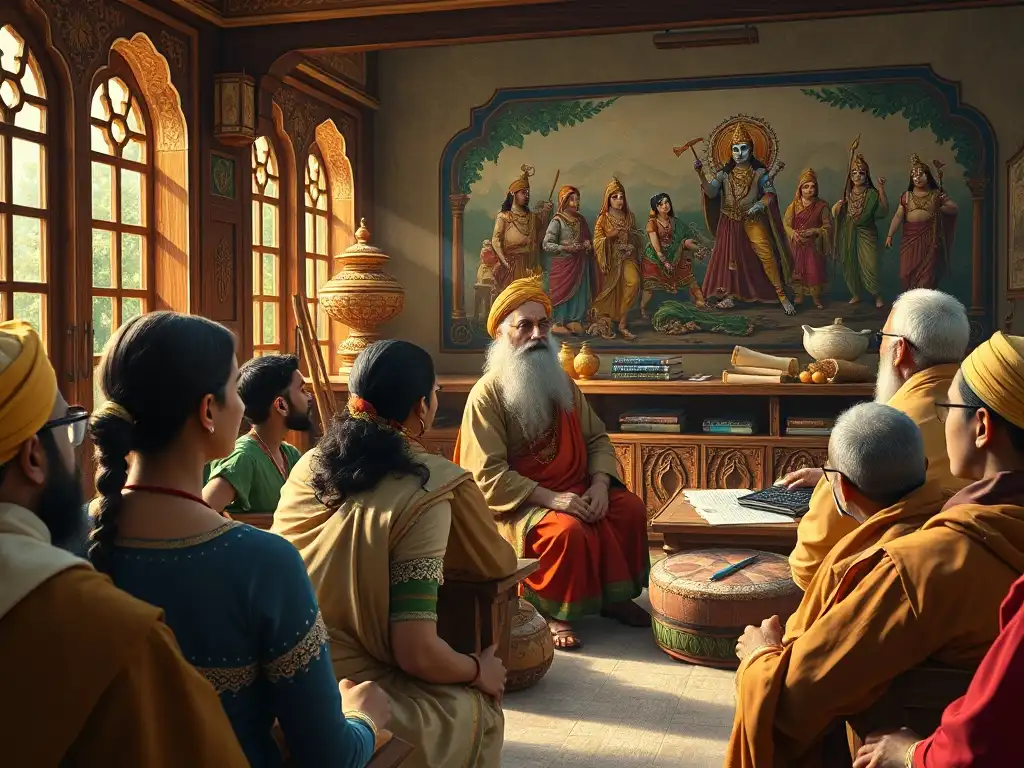
The Mahabharata, one of the greatest epics of ancient India, serves not only as a rich narrative filled with adventure and conflict but also as a profound source of moral and ethical teachings. Its intricate storytelling presents complex characters faced with moral dilemmas that engage readers and encourage reflection on ethical issues. This epic acts as a pivotal tool for instilling values such as righteousness (dharma), justice, and duty among students, fostering a deeper understanding of moral philosophy that transcends time and culture.
Through its multifaceted narrative, the Mahabharata addresses the nuances of human behavior and the consequences of choices made in a moral context. The lessons derived from this epic are relevant across various educational spheres, allowing educators to utilize its themes to explore ethical quandaries and moral reasoning in the classroom. This epic not only enriches one's understanding of historical and cultural contexts but also invites learners to contemplate profound philosophical questions about right and wrong, making it an invaluable asset in moral education.
Lessons on Dharma and Ethics from the Mahabharata
Central to the Mahabharata is the concept of dharma, which serves as a guiding principle for moral decision-making. Different characters in the epic embody various aspects of dharma, illustrating how it can sometimes conflict with personal desires or societal expectations. For instance, Arjuna's struggle in the Bhagavad Gita, a section of the Mahabharata, revolves around his duty as a warrior juxtaposed with his ethical concerns about killing his relatives in battle. This internal conflict highlights the complexities of following one's duty while maintaining ethical integrity.
Moreover, the Mahabharata teaches that ethical actions are often not black and white but rather exist in shades of gray. The diverse scenarios presented within the epic encourage students to think critically about moral dilemmas they may encounter in their own lives. By analyzing these situations, learners can develop a nuanced understanding of ethical principles and apply them to modern-day challenges.
The Role of Characters in Moral Development
The characters within the Mahabharata serve as archetypes for various moral and ethical lessons, each representing different virtues and vices. For instance, Yudhishthira exemplifies truthfulness and righteousness, while Duryodhana embodies ambition and jealousy. Through these characters, readers can learn about the consequences of different moral choices and the importance of virtue in governance and social conduct.
The development of these characters over time allows for a rich exploration of personal growth and moral evolution. By studying the decisions made by these characters, students can reflect on their own values, fostering moral development and critical thinking. The Mahabharata thus becomes a dynamic educational resource, where its characters facilitate discussions around ethics in a relatable manner.
The Influence of the Mahabharata on Modern Educational Curricula
The Mahabharata's profound impact on education continues to resonate in contemporary curricula, where it is often included in literature, philosophy, and ethics courses. Educational systems around the world recognize the epic's relevance in teaching not only literary skills but also critical moral reasoning and cultural diversity. As educators strive to prepare students for a complex world, the inclusion of the Mahabharata provides a valuable framework for understanding ethical principles and human behavior.
Incorporating the Mahabharata into educational settings allows for interdisciplinary learning opportunities, linking literature with ethics, history, and cultural studies. This holistic approach empowers students to engage with the text on multiple levels, promoting a well-rounded educational experience that acknowledges the epic's significance in shaping moral perspectives.
Inclusion of Mahabharata in Contemporary Education Systems
Various educational institutions have recognized the importance of the Mahabharata by integrating it into their curricula. Schools and universities often include the epic in courses related to literature, philosophy, and cultural studies, emphasizing its role as a foundational text in understanding Indian heritage and ethics. By analyzing the themes, characters, and moral conflicts presented in the Mahabharata, students gain insights into the cultural and philosophical underpinnings of ancient Indian society.
Moreover, workshops and discussion forums centered around the Mahabharata are increasingly popular in modern educational settings. These platforms encourage students to engage in dialogue about the ethical dilemmas presented in the epic, fostering critical thinking and moral reasoning skills. As a result, the Mahabharata not only enriches academic curricula but also cultivates ethical awareness and empathy among learners.
Case Studies of Educational Institutions Incorporating the Mahabharata
Several educational institutions have successfully incorporated the Mahabharata into their teaching methodologies, showcasing its adaptability and relevance. For example, certain universities in India offer specialized courses that focus on the epic's themes and its implications for contemporary ethical issues. These programs often include discussions on how the Mahabharata can inform modern moral dilemmas, making it a dynamic part of philosophical education.
Additionally, some schools have developed creative projects that encourage students to interpret and adapt stories from the Mahabharata, promoting engagement and understanding through artistic expression. By encouraging students to reimagine these narratives, educators create a space for personal reflection and moral exploration, demonstrating the epic's enduring influence on education. Such case studies highlight the versatility of the Mahabharata as a pedagogical tool, affirming its significance in shaping ethical and moral consciousness in young minds.
Comparative Analysis of the Mahabharata and Other Epics in Education
The Mahabharata, one of the longest epic poems in the world, offers a rich tapestry of themes, characters, and moral dilemmas that serve as potent educational tools. When compared to other epics, such as the Ramayana or the Iliad, the Mahabharata stands out due to its complex portrayal of human emotions and ethical conflicts.
In educational curricula, the Mahabharata is often utilized to explore themes of duty (dharma), justice, and the consequences of moral choices. This complexity allows educators to create multidimensional discussions, fostering critical thinking among students. The Ramayana, while also rich in moral lessons, tends to focus more on the ideals of virtue and devotion, which can lead to more straightforward interpretations and lessons.
Furthermore, the Mahabharata's extensive character list and subplots provide a broader range of perspectives, making it a valuable resource for comparative literature courses. By examining these epics side by side, students can gain insights into cultural values and the differing approaches to morality and heroism across civilizations.
The Ramayana vs. The Mahabharata in Educational Settings
The Ramayana and the Mahabharata have both played significant roles in shaping educational narratives in Indian culture. The Ramayana often serves as an introduction to the core values of Hindu ethics, emphasizing righteousness and moral living through the life of Lord Rama. In contrast, the Mahabharata delves into the complexities of human nature and moral ambiguity, presenting a more nuanced view of dharma.
In educational settings, the Ramayana is typically taught in primary education, where its straightforward narrative and clear moral lessons resonate well with younger audiences. Conversely, the Mahabharata is more frequently explored in higher education due to its intricate structure and philosophical depth. This differentiation in educational approaches reflects the respective themes: the Ramayana as an idealized moral guide and the Mahabharata as a reflective examination of life's challenges.
Moreover, both epics have inspired various adaptations in literature, theatre, and cinema, which can enhance students' understanding and engagement with the texts. Educators often use these adaptations to highlight the continuing relevance of the themes, bridging ancient narratives with contemporary societal issues.
Global Perspectives on Epic Literature in Education
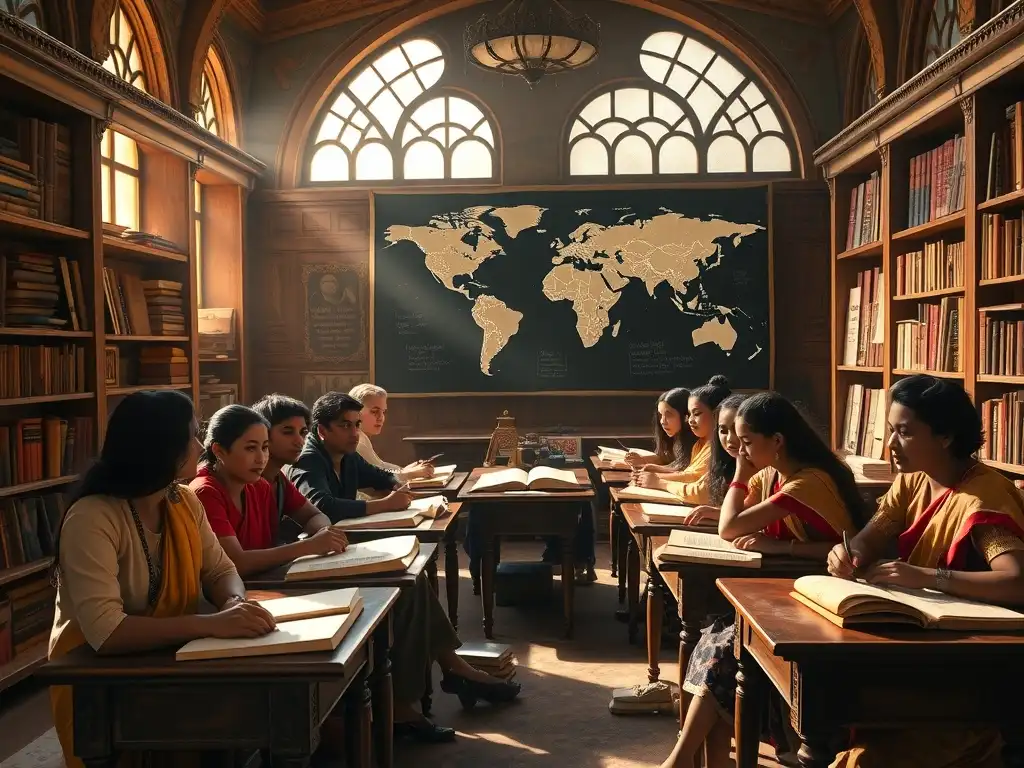
Epic literature, including the Mahabharata, has garnered attention in educational contexts worldwide. Different cultures have their own epic tales, such as Homer's "The Iliad" and "The Odyssey," or Virgil's "Aeneid." These works are often incorporated into curricula to explore universal themes of heroism, conflict, and morality.
In a global context, the Mahabharata's influence extends beyond Indian borders, resonating with audiences interested in comparative literature and cultural studies. Scholars have noted that the epic's exploration of ethical dilemmas and human psychology is particularly relevant in discussions of global citizenship and ethical studies.
Educational institutions are increasingly recognizing the importance of diverse narratives, which include the Mahabharata, to foster a more inclusive understanding of world literature. This approach not only enriches students' knowledge but also encourages empathy and critical analysis of cultural differences.
Challenges in Integrating the Mahabharata into Modern Education
Integrating the Mahabharata into modern educational curricula presents several challenges. One significant hurdle is the complexity of the text itself, which can be daunting for both educators and students. The epic's vast scope, with its myriad characters and interwoven narratives, requires careful selection of passages and themes for effective teaching.
Another challenge lies in cultural perception. In some contexts, the Mahabharata may be viewed through a lens of modern secularism, which can lead to misunderstandings of its spiritual and philosophical underpinnings. Educators must navigate these perceptions delicately, ensuring that students appreciate the epic's historical and cultural significance without imposing contemporary biases.
Additionally, the sheer length of the Mahabharata can deter educators from incorporating it fully into the curriculum. Many programs may opt for abridged versions or summaries, which can dilute the richness of the original text and its lessons. Therefore, finding a balance between accessibility and depth is critical for effective pedagogy.
Misinterpretations and Controversies Surrounding the Mahabharata
The Mahabharata has not been immune to misinterpretations and controversies, particularly in how it is presented in educational settings. Some interpretations may emphasize certain characters or events while downplaying others, leading to skewed understandings of the text. For instance, the portrayal of characters like Draupadi or Karna can vary significantly across different adaptations, influencing students' perceptions of gender roles and loyalty.
Moreover, the epic's complex themes of war, revenge, and justice can provoke debates among students and educators. Some may perceive the text as promoting violence or ethical relativism, while others may argue that it offers profound insights into the human condition. These differing viewpoints can lead to heated discussions, which, while valuable, require careful moderation to ensure constructive dialogue.
Educators must also be aware of the cultural sensitivities surrounding the Mahabharata. In a global classroom, students from diverse backgrounds may bring varying perspectives that can enrich discussions but may also lead to misunderstandings. It is essential to create an inclusive atmosphere where all voices are heard and respected.
Strategies for Effectively Teaching the Mahabharata
To effectively teach the Mahabharata, educators can employ several strategies aimed at enhancing engagement and comprehension.
- Contextualization: Providing historical and cultural context helps students appreciate the epic's significance. Discussing the socio-political landscape of ancient India can illuminate the text's themes and characters.
- Multimedia Resources: Utilizing adaptations in film, theatre, and literature can make the Mahabharata more accessible. These resources can serve as entry points for students unfamiliar with the text, sparking interest and discussion.
- Interactive Learning: Encouraging group discussions, debates, and role-playing can foster deeper engagement with the material. Students can explore different perspectives and interpretations, enhancing their critical thinking skills.
- Comparative Analysis: Encouraging students to compare the Mahabharata with other epics or literary works can enrich their understanding. This approach highlights universal themes while also addressing cultural specificity.
- Focus on Themes: Rather than attempting to cover the entire epic, educators can focus on particular themes, such as justice, duty, or the nature of heroism. This targeted approach allows for a more in-depth exploration of complex issues.
By implementing these strategies, educators can create a dynamic and enriching learning environment that respects the Mahabharata's depth while making it relevant to modern students.
Future Directions for the Mahabharata's Influence on Education
The Mahabharata continues to inspire educational practices and curricula across the globe. As we look to the future, its influence on education can expand through innovative approaches that leverage its rich narrative and ethical teachings. The epic's multifaceted characters and complex moral dilemmas present opportunities for educators to engage students in critical thinking, creativity, and collaboration. By integrating the Mahabharata into modern educational frameworks, we can cultivate a generation that appreciates ancient wisdom while addressing contemporary challenges.
One promising direction involves the incorporation of technology in education. Digital storytelling, interactive apps, and virtual reality experiences could allow students to immerse themselves in the epic's narrative, fostering a deeper connection with its characters and themes. Additionally, online platforms can facilitate global discussions, enabling students from diverse backgrounds to share their interpretations and applications of the Mahabharata’s lessons.
Potential Innovations in Curriculum Design
Innovative curriculum design can play a pivotal role in enhancing the Mahabharata's impact on education. By creating modules that explore the epic's themes—such as dharma (duty), justice, and the complexities of human relationships—educators can promote critical thinking and ethical reasoning among students. For example, educators might develop case studies based on the actions of key characters, encouraging students to analyze choices and consequences within their own lives.
Furthermore, project-based learning can be employed, where students collaborate on projects that reflect the moral lessons of the Mahabharata. Activities could include:
- Creative Writing: Students could craft their own stories inspired by characters from the Mahabharata, exploring modern dilemmas through the lens of ancient wisdom.
- Art Integration: Incorporating visual arts, students might create illustrations or performances that depict significant events from the epic, enhancing their understanding through creative expression.
- Debates and Discussions: Organizing debates on ethical dilemmas faced by characters can deepen students' analytical skills and encourage respectful discourse.
These innovations not only make learning more engaging but also provide students with the tools to apply the epic's teachings to their everyday lives.
Encouraging Interdisciplinary Approaches Using the Mahabharata
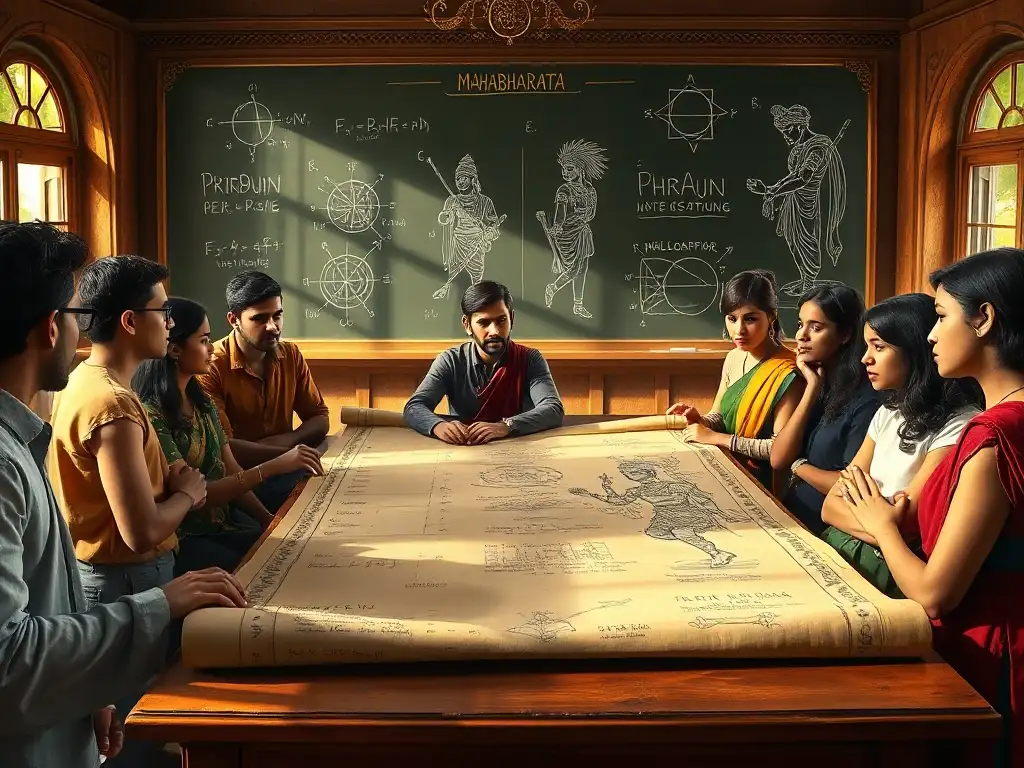
The Mahabharata is not just a literary masterpiece; it is a rich source of knowledge that intersects with various disciplines, making it an ideal candidate for interdisciplinary approaches in education. Subjects such as philosophy, ethics, history, and even psychology can be enriched through the lens of this epic.
For instance, in a philosophy class, students can examine the concept of dharma as presented in the Mahabharata and discuss its relevance in contemporary ethical dilemmas. In history lessons, educators can explore the socio-political contexts of ancient India during the time the Mahabharata was written, drawing parallels to modern governance and leadership challenges.
Moreover, the psychological depth of characters like Arjuna and Krishna offers a unique perspective for psychology students, allowing them to explore themes of conflict, decision-making, and moral struggle. By integrating these interdisciplinary approaches, educators can provide a holistic understanding of the Mahabharata, showcasing its relevance across various fields of study.
Conclusion
The enduring legacy of the Mahabharata in educational curricula underscores its significance as a tool for fostering critical thinking, ethical reasoning, and interdisciplinary learning. As educators continue to explore innovative approaches to teaching this epic, the potential for enriching students' educational experiences remains vast. By embracing the Mahabharata's timeless lessons, we can inspire future generations to engage with its profound insights, ensuring that its influence on education not only persists but evolves in meaningful ways. Through the collaborative efforts of educators, students, and communities, the Mahabharata can continue to illuminate paths of knowledge and wisdom for years to come.
Summary of the Mahabharata's Influence on Education and Society
The Mahabharata, one of the most significant epics in Indian literature, transcends mere storytelling to become a foundational text in shaping educational paradigms and societal values across generations. Its narrative encompasses profound philosophical, ethical, and moral dilemmas, serving not only as a literary masterpiece but also as a vital educational tool.
Historically, the Mahabharata has played a pivotal role in imparting knowledge and wisdom through various educational frameworks. Traditional Indian education systems, particularly during ancient times, integrated stories from the epic into their curricula. This approach allowed students to engage with complex themes such as duty (dharma), righteousness, and the consequences of one's actions. By delving into characters like Arjuna and Krishna, learners were encouraged to reflect on personal and societal responsibilities, fostering critical thinking and ethical reasoning.
Moreover, the Mahabharata's teachings have seeped into various facets of society, influencing not just education but also governance, law, and interpersonal relationships. The principles illustrated in the epic are frequently invoked in discussions about justice, leadership, and moral conduct. For instance, the dialogue between Arjuna and Krishna during the Kurukshetra War serves as a timeless guide for navigating conflicts and making decisions, emphasizing the importance of wisdom over impulsiveness.
In contemporary educational curricula, the Mahabharata remains relevant, being studied not only in Indian schools but also in various global academic institutions. Its rich characters and intricate plots provide fertile ground for interdisciplinary studies, including literature, philosophy, political science, and ethics. By integrating the Mahabharata into modern education, educators aim to cultivate a nuanced understanding of cultural heritage while promoting values that resonate with today's learners.
The Mahabharata's influence on education and society is profound, extending beyond the realm of literature into the very fabric of ethical and moral education. Its enduring legacy continues to inspire and shape the minds of individuals, ensuring that the lessons of the past remain pertinent in addressing the challenges of the present and future.
- Introduction to the Mahabharata
- Overview of the Mahabharata's Historical Significance
- Understanding the Concept of Education in Ancient India
- The Mahabharata Influence on Education
- The Mahabharata as a Tool for Moral and Ethical Education
- The Influence of the Mahabharata on Modern Educational Curricula
- Comparative Analysis of the Mahabharata and Other Epics in Education
- The Ramayana vs. The Mahabharata in Educational Settings
- Global Perspectives on Epic Literature in Education
- Challenges in Integrating the Mahabharata into Modern Education
- Future Directions for the Mahabharata's Influence on Education
- Potential Innovations in Curriculum Design
- Encouraging Interdisciplinary Approaches Using the Mahabharata
- Conclusion
- Summary of the Mahabharata's Influence on Education and Society
- What is the Mahabharata and its significance in education?
- How has the Mahabharata influenced modern educational curricula?
- Are there specific educational institutions that focus on the Mahabharata?
- What role does the Mahabharata play in teaching ethics and morality?
- Can the Mahabharata be used to enhance critical thinking skills?
Frequently Asked Questions
What is the Mahabharata and its significance in education?
The Mahabharata is an ancient Indian epic that not only narrates a grand tale of conflict and morality but also serves as a foundational text in Indian education, influencing ethical and philosophical teachings.
How has the Mahabharata influenced modern educational curricula?
The Mahabharata's themes of duty, righteousness, and justice are integrated into modern curricula to teach values and critical thinking, making it a vital part of educational discourse.
Are there specific educational institutions that focus on the Mahabharata?
Yes, many educational institutions in India and abroad include courses on the Mahabharata, emphasizing its cultural significance and moral lessons in their syllabus.
What role does the Mahabharata play in teaching ethics and morality?
The Mahabharata serves as a rich resource for teaching ethics and morality, providing complex characters and situations that encourage students to explore moral dilemmas and decision-making.
Can the Mahabharata be used to enhance critical thinking skills?
Absolutely! The various interpretations and lessons within the Mahabharata challenge students to engage in critical analysis and develop their reasoning skills through discussions and debates.
Final Reflection: The Mahabharata's Influence on Education Endures
The Mahabharata's profound influence on education continues to resonate in today's academic landscapes, reminding us of the timeless wisdom embedded within its verses. As we navigate an increasingly complex world, the lessons of morality, strategy, and human experience found in this epic serve as a guiding light for educators and students alike. The enduring legacy of the Mahabharata challenges us to rethink our educational frameworks and embrace narratives that foster critical thinking and ethical reasoning.
Culturally and socially, the Mahabharata has shaped educational paradigms, encouraging a holistic approach to learning that transcends mere rote memorization. The epic's rich tapestry of characters and dilemmas invites learners to engage with diverse perspectives and cultivate empathy. As Mahatma Gandhi once said, "> The Mahabharata is a great book that teaches us the art of living." This sentiment underscores the importance of integrating such narratives into our curricula, as they not only enrich our understanding of history and philosophy but also empower us to confront contemporary challenges with wisdom and courage.
As you reflect on the insights gleaned from the Mahabharata, consider how you can incorporate its teachings into your own life and learning journey. Embrace the complexity of human experiences and strive to apply the lessons of this epic in your interactions and decisions. The Mahabharata invites us to be thoughtful, compassionate, and courageous in our pursuits, urging us to carry its legacy forward into the future of education and beyond.
Embrace the Wisdom of the Mahabharata!
Thank you for exploring the profound insights of the Mahabharata and its impact on our educational landscapes. Your engagement with this timeless epic opens the door to rich discussions and learning opportunities that transcend centuries!
Now, it's time to take action and deepen your connection with this extraordinary legacy. Here are a few ways you can actively engage:
- Explore local resources: Visit libraries or museums to access books and exhibits that focus on the Mahabharata.
- Join a discussion group: Connect with fellow enthusiasts online or in your community to share your interpretations and insights.
- Integrate teachings into your learning: Incorporate the lessons of the Mahabharata into your studies or teaching by creating a project that highlights its relevance in today's world.
As you reflect on the themes of the Mahabharata, consider how they can enhance contemporary educational approaches. Share your thoughts below and join the conversation!