
Ashoka the Great and the Concept of Dhamma in Governance

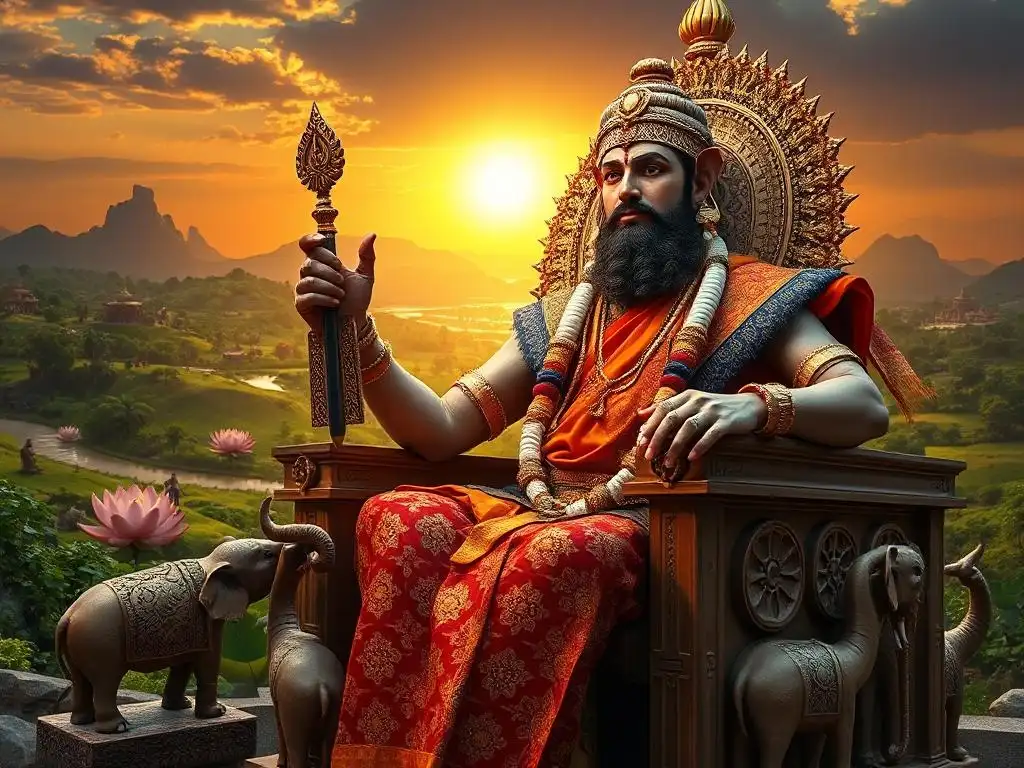
Welcome to Ancient India History, where we invite you to embark on a fascinating journey through the rich tapestry of India's past. Discover the profound impact of Ashoka the Great Dhamma governance, a transformative approach that shaped the moral and ethical landscape of his empire. In our featured article, "Ashoka the Great and the Concept of Dhamma in Governance," you'll delve into how this remarkable ruler championed peace and compassion, leaving an indelible mark on history.
Curious about how his principles resonate in today's world? Join us as we uncover the legacy of Ashoka and explore the intricate connections between ancient wisdom and modern governance.
- Introduction to Ashoka the Great and Dhamma Governance
- Ashoka the Great: A Brief Biography
- Understanding Dhamma: Definition and Context
- Dhamma in Governance: Ashoka’s Principles
- Implementation of Dhamma in Ashoka’s Empire
- The Impact of Dhamma Governance on Ancient Indian Society
- Critiques and Challenges of Dhamma Governance
- Conclusion: The Enduring Legacy of Ashoka the Great and Dhamma
- References and Further Reading
-
Frequently Asked Questions
- What is Dhamma in the context of Ashoka the Great's governance?
- How did Ashoka the Great implement Dhamma governance?
- What were the key features of Ashoka's Dhamma?
- How did Ashoka's concept of Dhamma influence later Indian rulers?
- What are the lasting impacts of Ashoka the Great's Dhamma governance today?
- Final Reflection: The Enduring Legacy of Ashoka's Dhamma in Governance
- Embrace Dhamma: Transform Your Governance Approach!
Introduction to Ashoka the Great and Dhamma Governance
Ashoka the Great, often regarded as one of the most significant rulers in ancient Indian history, reigned during the 3rd century BCE. His legacy is not only defined by military conquests and territorial expansion but also by his profound commitment to the principles of Dhamma, which transformed the governance of his empire.
This article delves into Ashoka's historical significance and how his interpretation of Dhamma influenced his approach to rulership, emphasizing ethical governance and social welfare. By exploring Ashoka's journey from a fierce warrior to a benevolent king, we can better understand the interplay between his governance style and the philosophical underpinnings of Dhamma, which continue to resonate in discussions of leadership and morality today.
Overview of Ashoka the Great's Historical Significance
Ashoka, the third Mauryan emperor, ascended the throne after a notable period of expansion that included the conquest of Kalinga. However, the brutality of this campaign profoundly affected him, prompting a transformation in his approach to governance. Ashoka’s reign (circa 268-232 BCE) marked a turning point in Indian history due to several key factors:
- Territorial Expansion: Under Ashoka, the Mauryan Empire reached its zenith, covering a vast area of the Indian subcontinent, which facilitated trade and cultural exchanges.
- Promotion of Buddhism: After embracing Buddhism, Ashoka became a pivotal figure in the spread of the religion, both within India and beyond. His support helped establish Buddhism as a major religious force in the region.
- Edicts and Inscriptions: He is renowned for his edicts inscribed on pillars and rocks across his empire, which communicated his policies and ethical principles, emphasizing non-violence, compassion, and moral living.
Ashoka’s significance lies not only in his political achievements but also in how he redefined leadership through the lens of ethical governance. His commitment to Dhamma represents a unique model of rulership that prioritizes the welfare of the populace.
Introduction to the Concept of Dhamma in Ancient India
Dhamma, often translated as "righteousness" or "moral law," is a fundamental concept in Indian philosophy, particularly within Buddhism and Jainism. It encompasses a set of ethical principles and values that govern individual conduct and societal norms. Ashoka's interpretation of Dhamma was deeply influenced by Buddhist teachings, which he integrated into the governance of his empire.
Key aspects of Dhamma include:
- Ahimsa (Non-violence): Central to Ashoka’s governance, advocating for non-violence towards all living beings.
- Compassion and Tolerance: Promoting understanding and acceptance among different religions and communities, fostering a sense of unity in diversity.
- Social Welfare: Ashoka’s policies focused on the welfare of his subjects, including the establishment of hospitals, roads, and educational institutions.
By embedding Dhamma into his governance, Ashoka not only aimed to create a just and harmonious society but also set a precedent for ethical leadership that resonates in contemporary discussions about governance and moral responsibility. His legacy remains a testament to the enduring impact of Dhamma on the fabric of Indian civilization.
Ashoka the Great: A Brief Biography
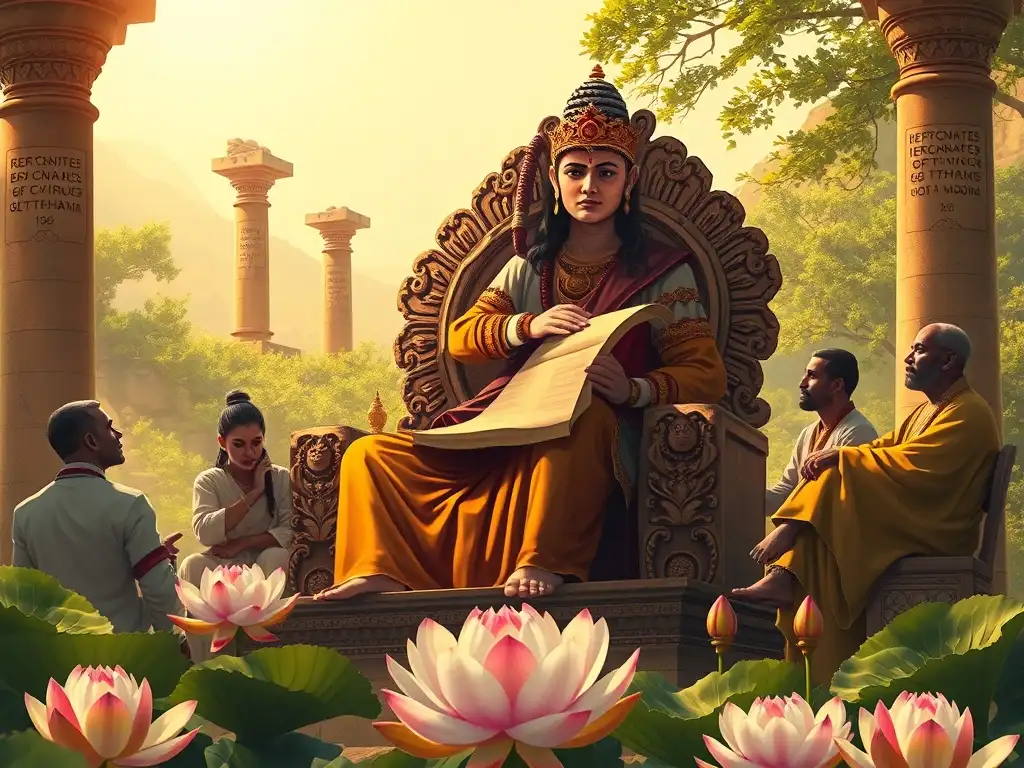
Ashoka the Great, one of the most illustrious emperors in Indian history, ruled from approximately 268 to 232 BCE. He was the third monarch of the Maurya Dynasty and is renowned for his profound impact on governance, ethics, and society through his promotion of Dhamma, a concept rooted in moral and ethical principles. His reign marked a significant turning point in the history of ancient India, characterized by the transition from a militaristic approach to a more humanitarian governance model.
Early Life and Ascension to the Throne
Born in 304 BCE, Ashoka was the son of Emperor Bindusara and his queen, Dharma. He grew up in the royal palace of Pataliputra, receiving an education that equipped him with knowledge of administration, warfare, and philosophy. Historical texts, including the Ashokavadana, suggest that Ashoka was a formidable warrior from a young age. His early military training and experiences shaped his understanding of power and leadership.
Ashoka ascended to the throne following a turbulent succession marked by intrigue and rivalry among his siblings. He is believed to have consolidated power through decisive actions, including the elimination of rivals. His reign began with a strong emphasis on expanding the Mauryan Empire, and he quickly became known for his military prowess.
Major Military Campaigns and the Kalinga War
Ashoka's early years as emperor were dominated by military campaigns aimed at expanding his territory. His most notable conflict was the Kalinga War, fought around 261 BCE against the state of Kalinga, located on the eastern coast of India. This war was not only significant in terms of territorial gains but also had profound implications for Ashoka's philosophy of governance.
- Strategic Importance: Kalinga was a prosperous region, crucial for trade and commerce. Ashoka's ambition to control this area was driven by both economic and strategic interests.
- Brutality of War: The Kalinga War was marked by intense violence and destruction. Historical records estimate that over 100,000 soldiers and civilians lost their lives, leading to widespread suffering.
The aftermath of the Kalinga War left a deep impact on Ashoka. The stark reality of the human cost of his military ambitions prompted a profound transformation in his approach to governance.
Transformation After Kalinga: The Shift to Dhamma
The devastation and loss of life witnessed during the Kalinga War catalyzed Ashoka's conversion to Buddhism and the adoption of Dhamma as a guiding principle for his reign. Dhamma, derived from the Sanskrit word Dharma, embodies a code of ethical conduct, compassion, and moral responsibility.
- Emphasis on Non-Violence: Ashoka renounced further military conquests and advocated for Ahimsa (non-violence), emphasizing the importance of peace and coexistence among different communities.
- Promotion of Welfare: His governance was characterized by initiatives aimed at the welfare of his subjects, such as the establishment of hospitals, planting of trees along roads, and the construction of wells.
- Edicts of Ashoka: Ashoka disseminated his Dhamma principles through a series of edicts inscribed on pillars and rocks across his empire. These edicts communicated messages of morality, ethics, and respect for all forms of life, highlighting his commitment to a just and humane society.
Through his remarkable transformation after the Kalinga War, Ashoka the Great emerged not only as a powerful ruler but also as a pioneering figure in the realm of ethical governance, leaving a lasting legacy that continues to resonate in discussions on leadership and morality in governance today.
Understanding Dhamma: Definition and Context
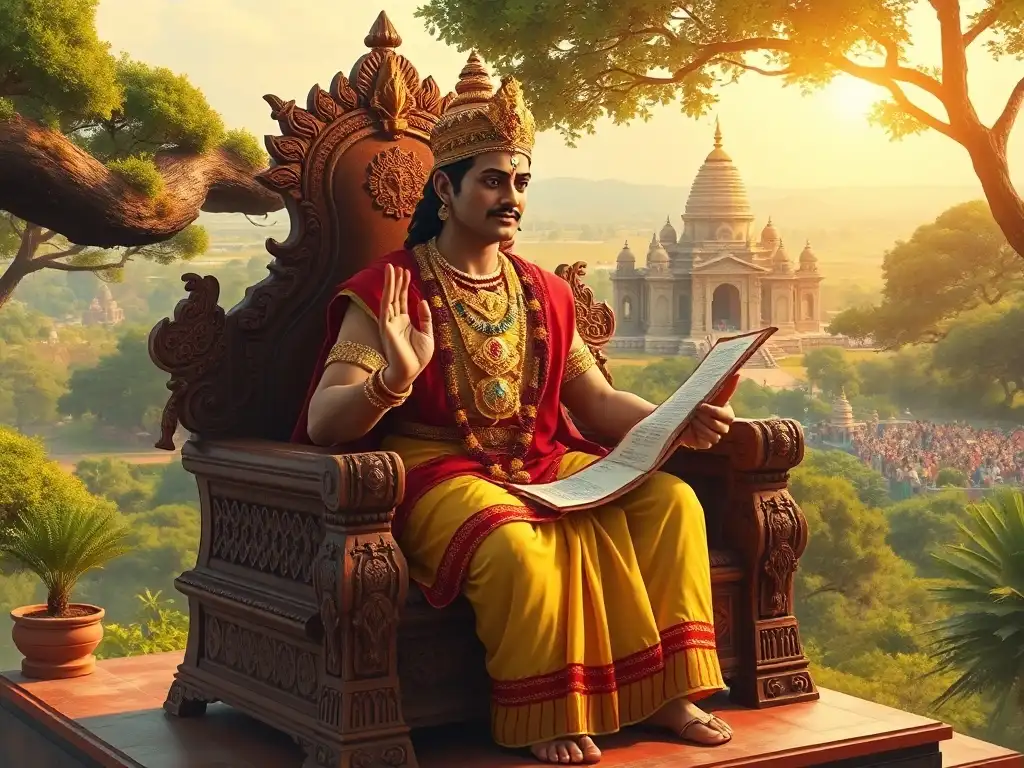
The Meaning of Dhamma in Ancient Indian Philosophy
Dhamma, often translated as "law" or "truth," is a multifaceted concept with deep roots in ancient Indian philosophy. It encompasses a range of meanings, including ethical conduct, moral righteousness, and the inherent order of the universe. In the context of Ashoka the Great, Dhamma signifies not only a personal moral guideline but also a foundational principle for governance.
- Ethical Living: Dhamma encourages individuals to pursue a life of virtue, compassion, and non-violence. These principles were central to Ashoka's rule, as he sought to establish a society where citizens adhered to ethical standards.
- Social Responsibility: Dhamma emphasizes the interconnectedness of all beings. Ashoka understood that a ruler’s duty extends beyond mere governance; it involves nurturing the welfare of the entire society.
- Universal Truth: In ancient Indian thought, Dhamma is often linked to a universal truth that transcends cultural boundaries. Ashoka’s promotion of Dhamma aimed to unify diverse populations under a common moral framework.
Dhamma vs. Dharma: Clarifying the Concepts
While often used interchangeably, Dhamma and Dharma possess distinct meanings within the philosophical landscape of ancient India.
- Dhamma: Focuses on universal principles and moral laws that govern both individual behavior and societal order. In the context of Ashoka, Dhamma serves as a guiding force for just governance and ethical leadership.
- Dharma: More specific to individual duty and ethical obligations based on one’s role in society, such as caste, stage of life, and personal circumstances. Dharma can vary widely among individuals, depending on their social and familial contexts.
| Concept | Definition | Context in Governance |
|---|---|---|
| Dhamma | Universal moral law and truth | Guides ethical governance for all |
| Dharma | Individual duty based on social context | Varies per individual and societal role |
The Role of Dhamma in Buddhist Teachings
Dhamma occupies a central position in Buddhist teachings, particularly within the context of Ashoka the Great’s reign. The principles outlined in Buddhism highlight the significance of Dhamma as a tool for moral and ethical governance.
- Four Noble Truths: The foundation of Buddhist philosophy, these truths advocate for the recognition of suffering and the path to liberation, inherently tied to living in accordance with Dhamma.
- Eightfold Path: This path serves as a practical guide to ethical living, which Ashoka adopted to promote a just society. The Eightfold Path includes right understanding, right intention, right speech, and right action, all echoing the essence of Dhamma.
- Compassion and Non-violence: Buddhist teachings emphasize ahimsa (non-violence) as a crucial aspect of Dhamma. Ashoka famously adopted this principle after the Kalinga War, advocating for peace and harmony among his subjects.
The concept of Dhamma, as championed by Ashoka the Great, represents a profound integration of moral philosophy and governance, underscoring the importance of ethical leadership in ancient India. Through the application of Dhamma, Ashoka aimed to cultivate a just and compassionate society, leaving a legacy that continues to resonate in discussions of governance and ethics today.
Dhamma in Governance: Ashoka’s Principles
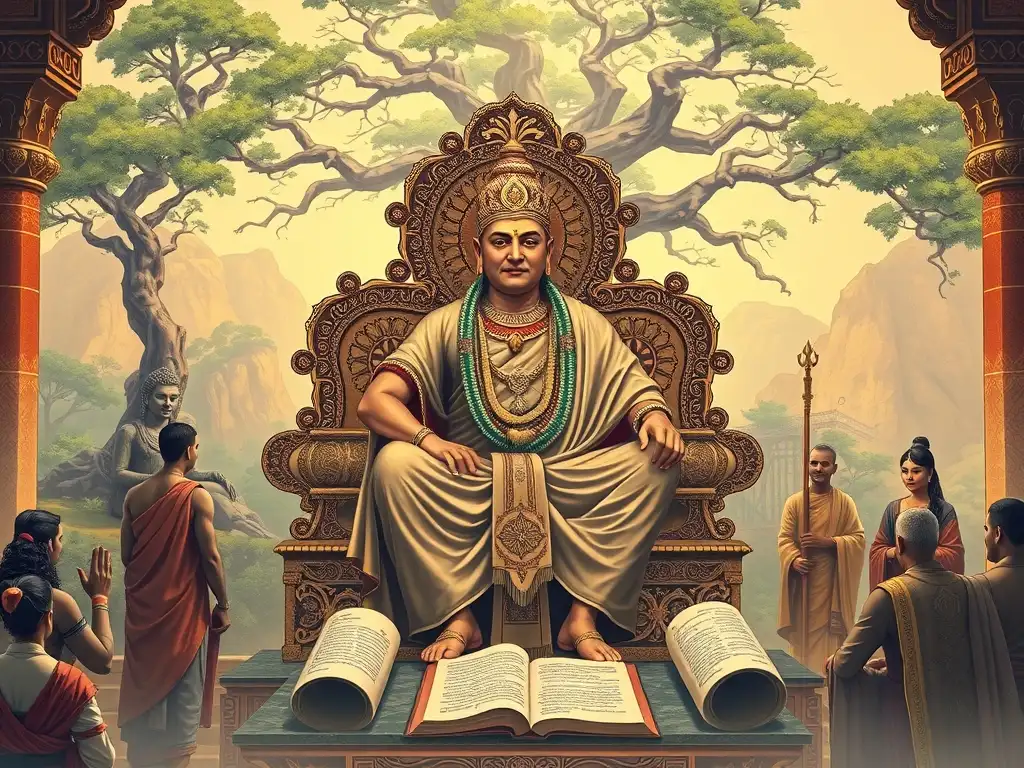
Ashoka the Great, the third Mauryan Emperor, is renowned not only for his expansive empire but also for his innovative approach to governance, encapsulated in the concept of Dhamma. This term, derived from the ancient Indian context, signifies a moral code that emphasizes righteousness, ethical behavior, and social responsibility. Under Ashoka’s reign, Dhamma became a guiding principle for his administration, influencing various aspects of governance and societal interactions.
The integration of Dhamma into governance represented a significant shift from traditional power dynamics, prioritizing the welfare of the people over mere territorial expansion. Ashoka’s commitment to Dhamma is evident in his edicts, which served as public proclamations of his policies and moral philosophy. These inscriptions, scattered across the Indian subcontinent, articulate his vision of a just and compassionate society.
Key Principles of Dhamma in Ashoka’s Rule
Ashoka's interpretation of Dhamma was characterized by several key principles that shaped his governance:
- Ahimsa (Non-violence):
- A cornerstone of Ashoka’s philosophy, Ahimsa extended beyond the prohibition of physical violence to encompass mental and emotional harm. This principle influenced his policies, leading to the cessation of wars of conquest after the Kalinga War, which deeply affected him.
- Tolerance and Respect for All Religions:
- Ashoka promoted religious tolerance, recognizing the diversity of beliefs within his empire. His edicts encouraged respect for different faiths, fostering a sense of unity among diverse communities.
- Compassion and Welfare:
- The welfare of his subjects was paramount. Ashoka established hospitals, built rest houses, and ensured the availability of medical care for both humans and animals, exemplifying his commitment to the well-being of all.
- Moral Conduct and Ethics:
- Ashoka emphasized ethical living and moral conduct among his citizens. His governance was marked by efforts to instill a sense of duty and righteousness among the populace, which he believed was essential for a harmonious society.
- Social Justice:
- He worked towards the upliftment of marginalized sections of society, advocating for the rights and dignity of all individuals, irrespective of their caste or social status.
The Relationship Between Dhamma and Justice
The interplay between Dhamma and justice in Ashoka’s governance system is noteworthy. Ashoka viewed justice not merely as a legalistic concept but as an extension of moral and ethical behavior. His approach can be summarized as follows:
- Restorative Justice:
- Rather than punitive measures, Ashoka favored restorative justice, focusing on reconciliation and rehabilitation. This approach aimed to heal societal wounds rather than exacerbate them through harsh punishments.
- Fairness in Governance:
- Ashoka’s administration sought to ensure fairness in the implementation of laws. He believed that true justice could only be achieved when rulers upheld moral standards and acted in the best interest of their subjects.
- Public Accountability:
- The emperor himself was bound by the principles of Dhamma, emphasizing that rulers should be accountable to their people. This relationship fostered a sense of trust and loyalty between the ruler and the ruled.
- Promotion of Legal Awareness:
- Ashoka encouraged his subjects to understand their rights and responsibilities, thereby empowering them to seek justice when necessary. His edicts served as a medium for educating the populace about ethical conduct and legal norms.
Ashoka's Dhamma was not only a personal code but a comprehensive framework for social welfare and harmony. His initiatives can be categorized as follows:
- Promotion of Education:
- Ashoka advocated for the spread of knowledge and education, believing that an informed citizenry would contribute to a more harmonious society. He supported the establishment of educational institutions and the dissemination of ethical teachings.
- Community Engagement:
- By encouraging community participation in welfare activities, Ashoka fostered a sense of belonging and mutual support among his subjects. His policies promoted collective responsibility for societal well-being.
- Environmental Stewardship:
- Recognizing the importance of nature, Ashoka implemented measures to protect forests and wildlife, ensuring that natural resources were preserved for future generations. His concern for the environment reflected a holistic understanding of welfare.
- Cultural Integration:
- Ashoka’s emphasis on Dhamma facilitated cultural exchange and integration among diverse ethnic groups within his empire. By celebrating various traditions and customs, he promoted social cohesion and harmony.
Ashoka the Great’s concept of Dhamma in governance represented a pioneering approach that intertwined ethical principles with political authority. His legacy continues to resonate, serving as a timeless reminder of the potential for compassionate and just leadership.
Implementation of Dhamma in Ashoka’s Empire
The implementation of Dhamma under Ashoka the Great marked a significant transformation in the governance of the Mauryan Empire. Ashoka, who ruled from approximately 268 to 232 BCE, embraced the principles of Dhamma—rooted in Buddhist philosophy—as the guiding framework for his administration. This approach was revolutionary, aiming not only at political stability but also at the moral and ethical upliftment of society. The essence of Dhamma emphasized values such as non-violence, compassion, and respect for all living beings, which Ashoka integrated into his governance model.
Ashoka's reign is characterized by a concerted effort to promote Dhamma across his vast empire, which extended from the eastern parts of India to parts of present-day Afghanistan. By embedding Dhamma into state policies, Ashoka sought to create a harmonious society where the welfare of the people was paramount. This was particularly important in the aftermath of the Kalinga War, which deeply affected Ashoka and influenced his shift towards a more compassionate form of rule.
Administrative Reforms Promoting Dhamma
Ashoka initiated several administrative reforms that were directly aligned with the principles of Dhamma. These reforms included:
- Creation of Dhamma Mahamatras: Ashoka appointed officials known as Dhamma Mahamatras, whose primary responsibility was to promote Dhamma among the populace. They were tasked with ensuring adherence to moral values and the welfare of the citizens.
- Welfare Programs: The administration under Ashoka organized various welfare programs focused on health, education, and infrastructure, such as the building of hospitals and the establishment of rest houses for travelers. These initiatives were a manifestation of Dhamma’s emphasis on compassion and care.
- Legal Reforms: Ashoka revised the legal codes to reflect Dhamma principles, advocating for justice and fairness. He promoted the idea that laws should not only punish but also rehabilitate and educate offenders.
- Focus on Non-Violence: One of the most significant aspects of Ashoka's governance was his commitment to non-violence. He banned hunting and the slaughter of animals for food, promoting vegetarianism and respect for all living beings.
Through these reforms, Ashoka aimed to create a just and moral society where the values of Dhamma were not just theoretical concepts but practical guidelines for everyday life.
The Edicts of Ashoka: Communication of Dhamma Principles
The Edicts of Ashoka serve as a crucial historical document that outlines the principles of Dhamma as understood by Ashoka. These edicts were inscribed on rocks and pillars throughout his empire, making them accessible to a wide audience. Key features include:
- Public Declarations: The edicts were written in multiple languages, including Brahmi and Kharosthi, ensuring that they reached diverse populations across the empire. This was a strategic move to inform and educate the public about Dhamma.
- Moral Teachings: The edicts emphasized concepts such as truthfulness, tolerance, and non-violence. They encouraged citizens to practice kindness and to uphold ethical standards in their interactions with others.
- Promotion of Religious Tolerance: Ashoka's edicts also advocated for respect towards all religions, recognizing the plurality of beliefs within his empire. This was a significant step toward fostering social harmony.
- Commitment to Social Welfare: Many edicts highlight Ashoka’s commitment to the welfare of his subjects, urging them to help one another and to engage in charitable acts, thereby reinforcing the community's moral fabric.
The wide dissemination of these edicts not only solidified Ashoka’s vision of governance based on Dhamma but also laid the groundwork for future leaders to follow similar paths of ethical governance.
The Role of Monks and Buddhist Institutions in Promoting Dhamma
Monks and Buddhist institutions played an essential role in the dissemination and promotion of Dhamma during Ashoka’s reign. Their influence is evident in several aspects:
- Education and Training: Monastic institutions served as centers of learning, where monks educated the laity about the principles of Dhamma. They taught the importance of ethical conduct, meditation, and mindfulness, which were integral to personal and communal well-being.
- Mediation and Conflict Resolution: Monks acted as mediators in disputes, promoting peaceful resolution methods that aligned with Dhamma principles. Their involvement often helped to maintain social order and harmony.
- Pilgrimages and Dissemination: Ashoka encouraged the establishment of stupas and monasteries, which became pilgrimage sites for devout Buddhists. These sites facilitated the spread of Buddhist teachings and the ideals of Dhamma beyond the borders of the Mauryan Empire.
- Support from the State: Ashoka provided patronage to Buddhist institutions, ensuring their stability and growth. This support enabled monks to focus on their spiritual missions and contributed to the broader acceptance of Dhamma in society.
The integration of Dhamma into Ashoka the Great's governance was a pioneering effort that emphasized ethical leadership and social responsibility. His administrative reforms, the impactful communication of Dhamma principles through edicts, and the active role of monks and institutions collectively fostered a society that valued compassion, non-violence, and harmony, leaving a lasting legacy that resonates in contemporary discussions on governance and ethics.
The Impact of Dhamma Governance on Ancient Indian Society
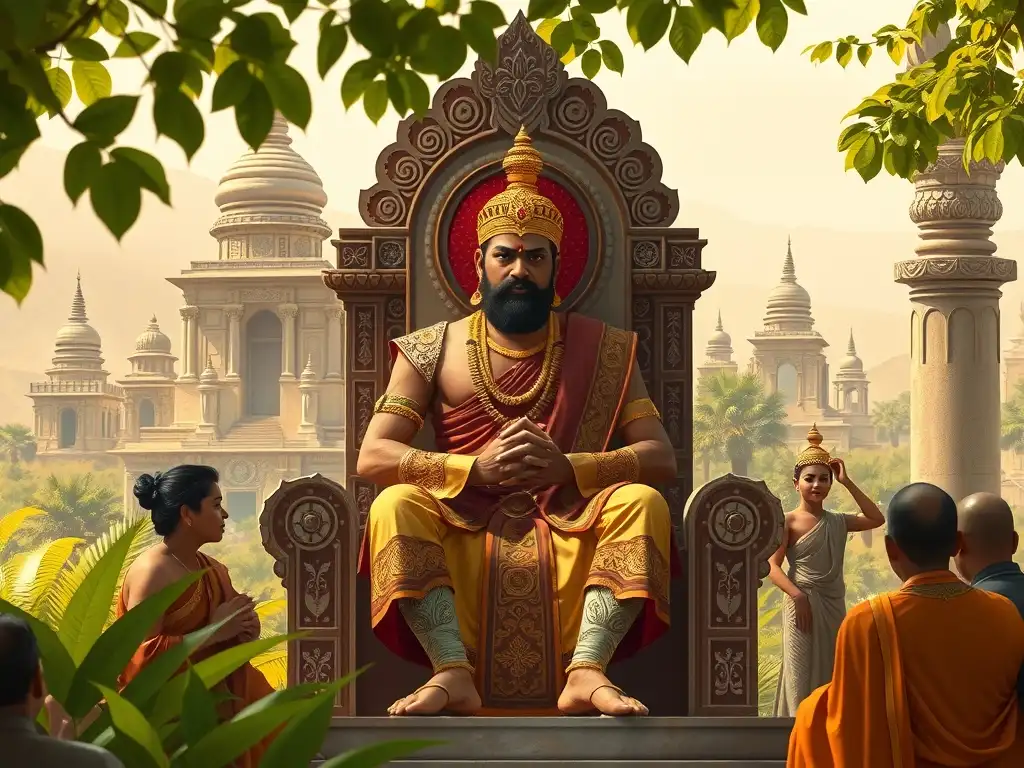
Ashoka the Great, reigning from 268 to 232 BCE, is renowned for his adoption and promotion of Dhamma as a guiding principle for governance. This concept emphasized moral values, compassion, and non-violence, leading to profound social changes within ancient Indian society. Ashoka’s Dhamma policies aimed to unify and uplift his diverse subjects, fostering a sense of community and shared ethical responsibility.
- Promotion of Non-Violence:
- Ashoka's emphasis on ahimsa (non-violence) significantly altered societal attitudes towards violence and warfare. Following the bloody Kalinga War, he renounced military conquest, advocating for peaceful coexistence instead. This marked a shift in societal norms, encouraging conflict resolution through dialogue rather than violence.
- Support for Social Welfare:
- The establishment of hospitals, wells, and rest houses along roads was a direct outcome of Dhamma governance. These initiatives reflected a commitment to public welfare, catering to the needs of travelers and the underprivileged.
- Religious Tolerance:
- Ashoka's Dhamma embraced various religious traditions, promoting tolerance and understanding among different faiths. This inclusivity fostered a more harmonious society, reducing sectarian conflict and encouraging philosophical discourse.
- Moral Education:
- The promotion of ethical conduct through Dhamma led to the establishment of educational institutions focused on moral and civic education. This helped instill a sense of responsibility and discipline in the populace.
Economic and Cultural Developments Under Ashoka
Under Ashoka’s reign, the principles of Dhamma not only reshaped social structures but also catalyzed significant economic and cultural developments across ancient India.
- Infrastructure Improvement:
- The construction of roads and the establishment of trade routes were prioritized to facilitate commerce and communication. This infrastructure boost not only enhanced economic activity but also helped disseminate Dhamma teachings and foster cultural exchange.
- Commerce and Trade:
- Ashoka's policies encouraged trade, leading to increased economic prosperity. The promotion of fair trade practices and ethical business standards aligned with Dhamma principles enhanced trader relations and contributed to a flourishing economy.
- Cultural Flourishing:
- The period of Ashoka saw a remarkable cultural renaissance, characterized by advancements in art, architecture, and literature. The commissioning of stupas and rock edicts illustrated the fusion of religious and artistic expression, serving as both cultural and moral symbols of the empire.
- Buddhism's Growth:
- As a patron of Buddhism, Ashoka's support led to its expansion beyond India. His missionary efforts spread Dhamma, influencing various regions in Asia and fostering a rich cultural exchange that shaped multiple civilizations.
The Legacy of Dhamma in Subsequent Indian Empires
The legacy of Ashoka’s Dhamma governance endured long after his reign, influencing subsequent Indian empires and their approach to governance.
- Continuation of Dhamma Principles:
- Subsequent rulers, such as those from the Mauryan and Gupta empires, adopted elements of Dhamma governance, viewing it as a legitimate means of maintaining order and ensuring the welfare of their subjects.
- Integration into Governance:
- The promotion of justice, ethical conduct, and public welfare became integral aspects of governance in later dynasties. The emphasis on moral leadership inspired rulers to prioritize the well-being of their citizens.
- Cultural Resonance:
- The ideals of Dhamma continued to resonate in Indian culture, influencing literature, philosophy, and religious practices. The notion of ethical governance became a recurring theme in Indian political thought.
- Influence on International Thought:
- Ashoka’s concepts of governance also left a mark beyond Indian borders. The principles of Dhamma influenced various philosophies and governance models in neighboring regions, contributing to the broader discourse on governance ethics and social responsibility.
Ashoka the Great's Dhamma governance profoundly impacted ancient Indian society, laying the groundwork for social, economic, and cultural advancements that would shape the Indian subcontinent for centuries to come. Its enduring legacy serves as a testament to the potential of ethical governance in fostering a just and harmonious society.
Critiques and Challenges of Dhamma Governance

The concept of Dhamma governance, championed by Ashoka the Great, is often lauded for its ethical approach and emphasis on moral values. However, it faced significant critiques and challenges, particularly in its implementation across a vast and diverse empire. Understanding these critiques is crucial to grasp the complexities of Ashoka's governance and the historical context in which it was enacted.
Opposition to Ashoka’s Dhamma Policies
One of the primary criticisms of Ashoka's Dhamma policies was the opposition from various factions within his empire. The Brahmins, who held significant influence in Indian society, were often at odds with Ashoka's emphasis on non-violence and Buddhist principles. They argued that Dhamma governance undermined traditional Vedic values and rituals that were integral to their social standing.
- Key Points of Opposition:
- Cultural Resistance: Many communities were deeply rooted in their traditional practices, making them resistant to the changes proposed by Ashoka.
- Political Rivalries: Regional rulers and local chieftains sometimes viewed Ashoka's Dhamma as a direct challenge to their authority, leading to tensions and conflicts.
- Religious Fanaticism: Certain sects that opposed Buddhism perceived Ashoka’s promotion of Dhamma as an imposition of Buddhist ideals, resulting in hostility against his policies.
The Limits of Dhamma in a Diverse Empire
While the principles of Dhamma aimed to unify the diverse populations of the Maurya Empire, the reality was more complicated. Ashoka's empire encompassed various ethnicities, religions, and cultures, which posed challenges for the universal application of Dhamma.
- Cultural Diversity: The empire included regions with distinct customs and belief systems. The attempt to impose a singular ethical framework often led to misunderstandings and resistance.
- Administrative Pragmatism: Dhamma, while ethically sound, lacked practical mechanisms for enforcement. Officials and administrators sometimes struggled to balance Dhamma with the need for effective governance, leading to inconsistencies in policy implementation.
- Economic Considerations: The focus on moral governance sometimes conflicted with economic interests. For instance, Ashoka's emphasis on non-violence limited military expansion, which some viewed as detrimental to the empire's economic growth and security.
Lessons Learned from Ashoka's Approach to Governance
Despite the critiques and challenges faced by Ashoka's Dhamma governance, there are valuable lessons to be drawn from his approach. These lessons remain relevant in contemporary governance discussions.
- Ethical Leadership: Ashoka's commitment to ethical governance highlights the importance of moral values in leadership. Future leaders can learn from his emphasis on compassion and non-violence as essential qualities for effective governance.
- Inclusivity in Policy-Making: Acknowledging and respecting cultural diversity can lead to more effective governance. Ashoka’s efforts to promote dialogue among different religious and cultural groups serve as a reminder of the need for inclusivity in policy formulation.
- Balancing Ideals with Practicality: While high ideals, such as Dhamma, are essential, they must be balanced with the practical realities of governance. Leaders should aim for policies that are both ethically sound and pragmatically achievable.
While Ashoka the Great's implementation of Dhamma governance faced numerous critiques and challenges, it also provided a framework for ethical leadership and inclusivity that continues to resonate in discussions of governance today.
Conclusion: The Enduring Legacy of Ashoka the Great and Dhamma
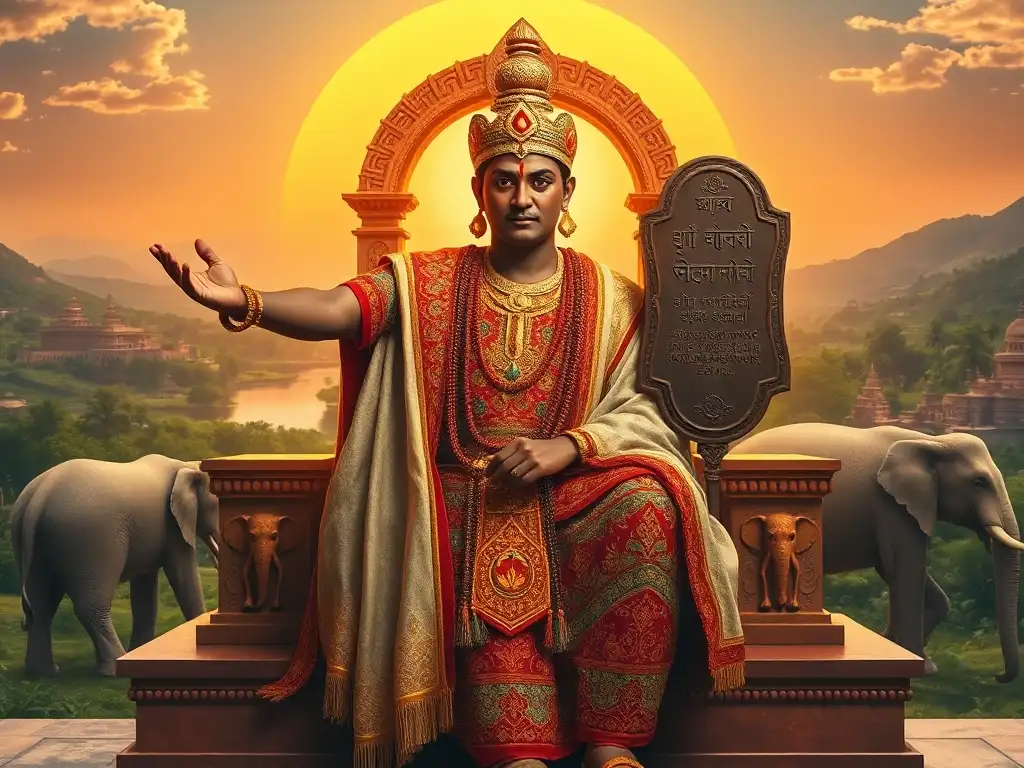
Summary of Ashoka's Contributions to Governance
Ashoka the Great, the third Mauryan emperor reigning from 268 to 232 BCE, is celebrated for his transformative approach to governance, which was deeply influenced by the principles of Dhamma. His reign marked a significant departure from the traditional authoritarian rule of his predecessors, emphasizing moral and ethical values in administration.
- Promotion of Dhamma: Ashoka's commitment to Dhamma, a term that encompasses righteousness, virtue, and moral law, was pivotal in shaping his governance style. He believed that a ruler's legitimacy stems from his ability to govern justly and compassionately, rather than through fear or coercion.
- Edicts and Inscriptions: To disseminate his philosophy, Ashoka issued a series of edicts, inscribed on pillars and rocks across his empire. These inscriptions advocated for non-violence, tolerance, and respect for all living beings, serving as a moral compass for his subjects.
- Social Welfare Initiatives: Under Ashoka's rule, significant emphasis was placed on social welfare. He established hospitals, provided for the poor, and promoted the welfare of animals, demonstrating a holistic approach to governance that integrated social responsibility with statecraft.
- Diplomacy and Cultural Exchange: Ashoka also championed diplomacy over military conquest, fostering cultural exchanges with neighboring regions. This approach not only expanded the Mauryan influence but also facilitated the spread of Buddhism, which became a significant cultural export.
Through these measures, Ashoka the Great not only consolidated his power but also laid down a framework for ethical governance that has inspired leaders throughout history.
The Relevance of Dhamma in Contemporary Governance Discussions
The principles of Dhamma as articulated by Ashoka hold significant relevance in today’s governance discourse, echoing through various political systems and ethical frameworks globally.
- Ethical Leadership: In an era where political cynicism is prevalent, Ashoka's emphasis on ethical leadership resonates with contemporary calls for integrity and accountability in governance. Leaders today are increasingly expected to act in the public's best interest, reflecting the Dhamma-inspired ideal of ruling with compassion and justice.
- Human Rights and Social Justice: The tenets of Dhamma advocate for the respect and dignity of all individuals, paralleling modern human rights discussions. Ashoka's policies can be viewed as early manifestations of social justice movements that prioritize the welfare of marginalized communities.
- Conflict Resolution: In a world rife with conflict, Ashoka's preference for non-violence and dialogue over military engagement provides a framework for resolving disputes peacefully. His governance model encourages modern leaders to seek diplomatic solutions rather than resorting to aggression.
- Sustainable Development: The holistic approach to governance, where the welfare of all beings is considered, is increasingly relevant in discussions around sustainable development. Ashoka’s initiatives can inspire contemporary policies that prioritize environmental stewardship alongside economic growth.
The legacy of Ashoka the Great and the concept of Dhamma in governance continue to provide valuable insights for modern leadership, emphasizing the importance of ethical considerations, social responsibility, and peace in the pursuit of effective governance.
References and Further Reading
Suggested Books on Ashoka the Great and Dhamma Governance
-
Ashoka: The Search for India's Lost Emperor by Charles Allen
This book delves into the life of Ashoka and explores his profound impact on Indian civilization. Allen meticulously narrates Ashoka's journey from a fierce warrior to a proponent of peace and Dhamma governance.
-
The Edicts of Ashoka: An English Translation by N. A. Nikam and R. P. Chanda
This translation provides insights into the original edicts issued by Ashoka, offering a direct glimpse into his governance principles and commitment to Dhamma, underlining his vision for a just society.
-
Ashoka: The Great Buddhist Emperor by S. K. Jain
Jain's work examines Ashoka's role in the spread of Buddhism and the implementation of Dhamma in governance, highlighting the socio-political environment of ancient India during his reign.
-
The Philosophy of Dhamma: An Analysis of Ashoka's Edicts by R. S. Sharma
This book provides an analytical perspective on Ashoka's philosophical approach to Dhamma, exploring how these principles were integrated into his governance style and policies.
-
Ashoka and the Decline of the Mauryas by Romila Thapar
Thapar's scholarly work discusses the political and cultural landscape during Ashoka’s reign, emphasizing the significance of Dhamma in shaping his governance and its long-term effects on Indian society.
Academic Articles and Journals for In-depth Research
-
"Ashoka the Great and His Dhamma: The Foundation of Political Ethics"
This article explores the ethical framework established by Ashoka through Dhamma, examining its relevance in contemporary governance.
-
"The Role of Edicts in Understanding Ashoka's Governance"
A comprehensive study analyzing Ashoka's edicts as primary sources to understand his governance approach and the implementation of Dhamma across his empire.
-
"Religious Tolerance and Dhamma in Ashoka's Reign"
This journal article discusses how Ashoka's commitment to Dhamma fostered an environment of religious tolerance, which was crucial for maintaining peace and stability in a diverse empire.
-
"Ashoka and the Transformation of Indian Society"
A detailed examination of how Ashoka's policies, rooted in Dhamma, transformed the socio-political fabric of ancient India, with implications for future governance models.
-
"The Legacy of Ashoka: Dhamma as a Governance Tool"
This research paper investigates the lasting impact of Ashoka's Dhamma on subsequent Indian rulers and its significance in the broader context of governance throughout history.
By engaging with these resources, readers can gain a deeper understanding of Ashoka the Great and the pivotal role of Dhamma in his approach to governance.
Frequently Asked Questions
What is Dhamma in the context of Ashoka the Great's governance?
Dhamma refers to the moral and ethical principles that Ashoka the Great promoted to ensure justice, compassion, and non-violence in his empire.
How did Ashoka the Great implement Dhamma governance?
Ashoka implemented Dhamma governance through edicts, which were inscribed on pillars and rocks, promoting ethical behavior, tolerance, and social welfare among his subjects.
What were the key features of Ashoka's Dhamma?
The key features of Ashoka's Dhamma included respect for all living beings, support for the poor, encouragement of moral living, and the promotion of religious tolerance.
How did Ashoka's concept of Dhamma influence later Indian rulers?
Ashoka's concept of Dhamma set a precedent for later rulers to adopt similar principles, emphasizing ethical governance and social responsibility, which influenced the political landscape of ancient India.
What are the lasting impacts of Ashoka the Great's Dhamma governance today?
The impacts of Dhamma governance today include the promotion of peaceful coexistence, human rights, and the importance of moral values in politics, which resonate in modern governance practices.
Final Reflection: The Enduring Legacy of Ashoka's Dhamma in Governance
The principles of Dhamma as established by Ashoka the Great resonate profoundly in today's world, where ethical leadership and compassionate governance are more crucial than ever. In a time marked by political strife and moral ambiguity, Ashoka's commitment to justice, non-violence, and the welfare of all beings serves as a powerful reminder of the impact that principled governance can have on society. His legacy challenges us to consider how we can integrate these timeless values into our modern political frameworks.
The concept of Dhamma continues to shape our cultural and social landscapes, inspiring leaders and citizens alike to prioritize the common good over personal gain. As we navigate the complexities of contemporary governance, Ashoka's teachings encourage us to reflect on our responsibilities towards one another and the environment. The greatest victory is that which requires no battle,
Ashoka once proclaimed, underscoring the importance of peaceful coexistence and ethical leadership. This sentiment is increasingly relevant as we seek solutions to global challenges that demand cooperation and understanding.
As we conclude our exploration of Ashoka the Great and the concept of Dhamma in governance, I invite you to reflect on how these principles can be applied in your own life and community. Consider how you can embody the spirit of Dhamma in your actions, advocating for justice, compassion, and integrity.
Whether through civic engagement, community service, or simply fostering kindness in your daily interactions, each of us has the power to contribute to a more harmonious society. Let us carry forward Ashoka's legacy and strive to create a world where governance is rooted in the values of Dhamma, ensuring a brighter future for all.
Embrace Dhamma: Transform Your Governance Approach!
Thank you for diving into the fascinating world of Ashoka the Great and the profound concept of Dhamma in governance! By exploring these timeless principles, you've enriched your understanding of how compassionate leadership can shape societies. Now, let's take this knowledge a step further and apply it to our lives and communities.
Here are some practical actions you can take to embrace the spirit of Dhamma in your governance or leadership approach:
- Reflect on Dhamma: Take a moment to identify a principle of Dhamma that resonates with you. Consider how you can integrate it into your daily decisions—both personally and professionally.
- Share the Wisdom: Discuss Ashoka’s teachings with friends or colleagues and organize a discussion group focused on Dhamma. Together, explore ways to implement these concepts in your community.
- Engage with History: Visit your local library or online archives to read more about historical figures who exemplified Dhamma. Who knew that studying history could inspire modern governance?
What steps will you take today to incorporate the values of Dhamma into your leadership style? Share your thoughts below!