
The Role of Trade and Diplomacy in Ancient Indian Military Alliances

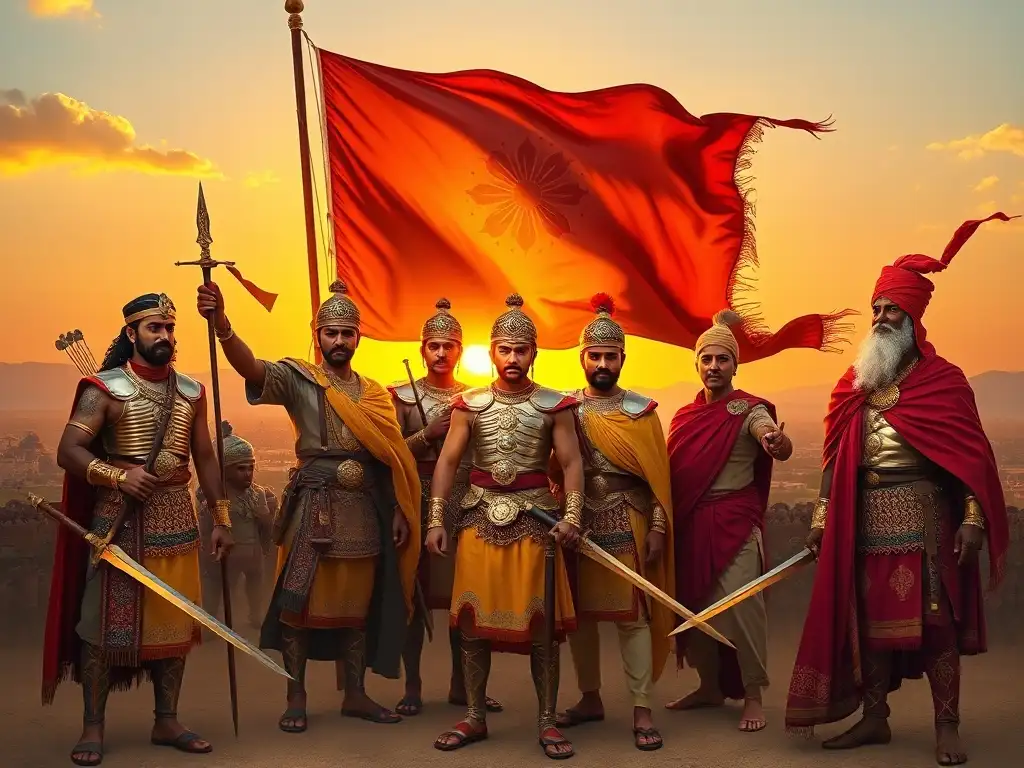
Welcome to Ancient India History, where we embark on a fascinating journey through time, uncovering the rich tapestry of cultures, innovations, and legacies that shaped one of the world's oldest civilizations. In this exploration, we delve into the intriguing world of Ancient Indian military alliances, revealing how trade and diplomacy played pivotal roles in forging powerful bonds between kingdoms.
Prepare to be captivated as we unravel the stories behind these strategic partnerships and their impact on the ancient subcontinent. Join us as we delve deeper into this compelling narrative and discover the intricate connections that defined ancient India's military landscape!
- Introduction to Ancient Indian Military Alliances
- Historical Context of Ancient Indian Military Alliances
- The Role of Trade in Ancient Indian Military Alliances
- The Role of Diplomacy in Ancient Indian Military Alliances
- Interplay Between Trade and Diplomacy in Military Alliances
- Notable Ancient Indian Military Alliances
- The Decline of Ancient Indian Military Alliances
- Conclusion: The Lasting Impact of Trade and Diplomacy on Ancient Indian Military Alliances
-
Frequently Asked Questions
- What were the primary military alliances in ancient India?
- How did trade influence military alliances in ancient India?
- What role did diplomacy play in ancient Indian military alliances?
- Can you provide examples of significant military alliances in ancient India?
- How did the Gupta Empire manage military alliances?
- Final Reflection: The Enduring Legacy of Ancient Indian Military Alliances
- Unveil the Secrets of Ancient Alliances!
Introduction to Ancient Indian Military Alliances
The history of ancient India is a tapestry woven with intricate threads of trade, diplomacy, and military alliances that shaped the subcontinent's socio-political landscape. From the early days of the Indus Valley Civilization to the flourishing realms of the Gupta Empire, strategic partnerships were essential for the survival and expansion of kingdoms.
Ancient Indian military alliances were not merely a function of warfare; they were deeply intertwined with economic relationships and diplomatic negotiations, reflecting the sophistication and complexity of ancient Indian society. Understanding these alliances provides valuable insights into how ancient civilizations navigated challenges, fostered relationships, and influenced regional dynamics through collaboration and conflict.
Overview of Military Alliances in Ancient India
Military alliances in ancient India played a crucial role in the establishment and maintenance of power among various kingdoms and empires. These alliances often formed through marriages, treaties, and mutual agreements aimed at bolstering military strength against common enemies or rival factions.
- Key Features of Military Alliances:
- Political Strategy: Alliances were often formed to consolidate power and deter invasions.
- Cultural Exchange: These partnerships facilitated the exchange of ideas, technologies, and cultural practices.
- Economic Benefits: Alliances frequently involved trade agreements that enriched both parties.
Notable examples include alliances between the Maurya Empire and various regional powers that helped suppress dissent and expand territorial control, and the strategic marriages that linked powerful dynasties, ensuring both military support and political stability.
Importance of Trade and Diplomacy in Military Context
Trade and diplomacy were fundamental to the efficacy of ancient Indian military alliances. The economic interdependence fostered through trade routes not only facilitated the movement of goods but also allowed for the exchange of military technology and intelligence.
- Economic Interdependence:
- Resource Sharing: Alliances often provided access to vital resources, such as weapons, horses, and food supplies.
- Wealth Accumulation: Trade partnerships enhanced the wealth of allied states, allowing for better-funded military campaigns.
- Diplomatic Engagement:
- Negotiation of Peace: Diplomacy played a key role in resolving conflicts and maintaining peace, often through treaties that outlined mutual defense agreements.
- Cultural Diplomacy: Diplomatic missions often included cultural exchanges that fostered goodwill and understanding, paving the way for stronger military alliances.
In this intricate web of relationships, trade and diplomacy not only supported military might but also shaped the very fabric of ancient Indian society, influencing its trajectory through history.
Historical Context of Ancient Indian Military Alliances
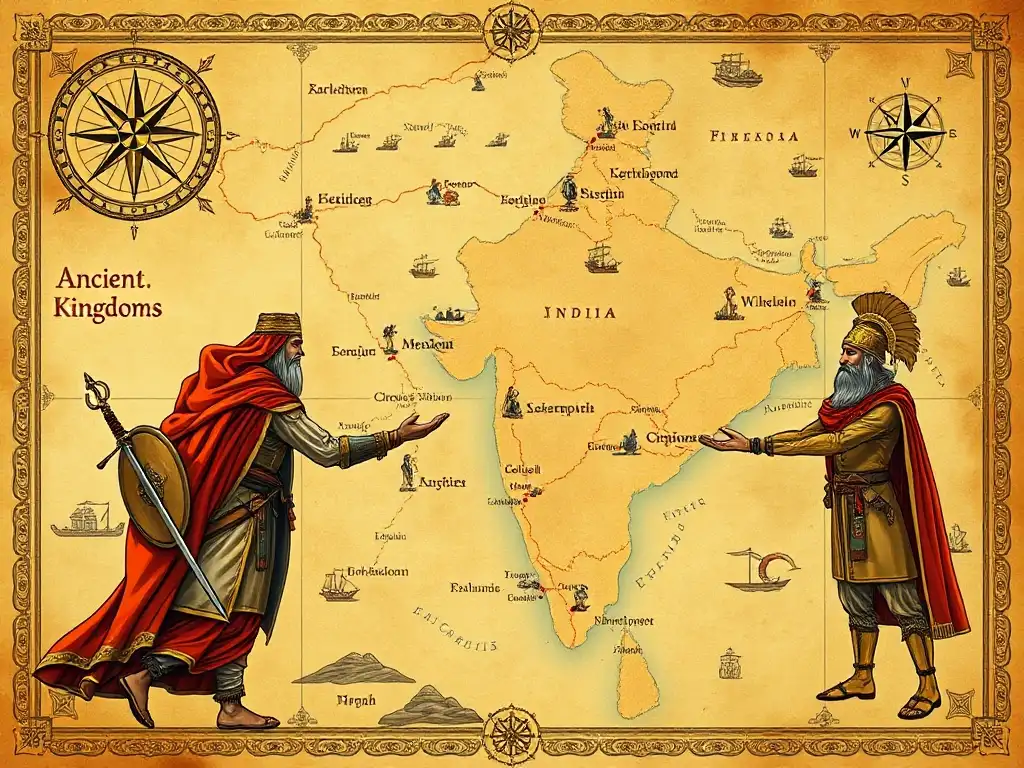
The history of ancient Indian military alliances is deeply intertwined with its trade networks and diplomatic relationships. These alliances were pivotal not only for military strength but also for economic prosperity. Understanding this context requires a look back at the socio-political landscape of ancient India, which was marked by a myriad of kingdoms, each vying for power, resources, and territorial expansion.
The vast subcontinent of India was home to several prominent kingdoms such as the Maurya, Gupta, and the various regional powers during the Vedic age. These polities often found themselves in conflict over territorial disputes, leading to the formation of military alliances. Such alliances were not merely born out of necessity; they were also strategic, aiming to bolster defense against common enemies or to consolidate power through marriage alliances and treaties.
Key Periods in Ancient Indian Military History
- Indus Valley Civilization (c. 3300–1300 BCE)
- The early urban centers of the Indus Valley had relatively stable trade networks, which may have influenced local alliances. However, concrete military alliances are less documented from this period.
- Vedic Period (c. 1500–500 BCE)
- The emergence of powerful clans and tribes led to frequent conflicts. The Rigveda mentions alliances among tribes, often formed to combat rival groups. The concept of Dharma (duty) played a crucial role in legitimizing these alliances.
- Maurya Empire (c. 322–185 BCE)
- Under Chandragupta Maurya and his grandson Ashoka, the Mauryan Empire established extensive diplomatic relations with neighboring kingdoms. Ashoka’s policy of Dhamma promoted peaceful coexistence, yet military alliances were crucial for controlling vast territories and trade routes.
- Gupta Empire (c. 240–550 CE)
- The Gupta period marked a golden age in Indian history. Military alliances were often formed through matrimonial ties between royal families, enhancing both political stability and military prowess. The Gupta rulers maintained a strong military presence, which was vital for protecting trade routes.
- Regional Kingdoms (Post-Gupta Period)
- After the decline of the Gupta Empire, regional powers such as the Chola and Chalukya dynasties emerged. These kingdoms forged alliances through trade agreements and military pacts, adapting to the changing geopolitical landscape.
Influences of Geography on Military Alliances
Geography played a significant role in shaping ancient Indian military alliances. The diverse topography of the Indian subcontinent, ranging from the towering Himalayas to the fertile Gangetic plains and the arid deserts of the west, influenced trade routes and military strategies.
- Natural Barriers: The Himalayas served as a natural defense against invasions from the north, allowing kingdoms in the plains to focus on alliances with neighboring states rather than external threats.
- Trade Routes: Coastal kingdoms, like those in the Tamil region, benefitted from maritime trade, forging alliances with Southeast Asian powers. This not only enhanced their military capabilities but also expanded their influence across the seas.
- Cultural Exchange: Regions along trade routes facilitated cultural and military exchanges, leading to the adoption of new technologies and tactics. For instance, the influence of Hellenistic military strategies after Alexander the Great’s invasion shaped local military practices and alliances.
- Resource Distribution: Access to resources such as iron, salt, and textiles often dictated military power. Kingdoms rich in resources could forge stronger alliances, while those lacking would need to rely on diplomatic ties to secure resources and military support.
The historical context of ancient Indian military alliances reveals a complex interplay of trade, geography, and politics. Understanding these layers is essential for grasping the broader narrative of ancient Indian military history and its contributions to the evolving dynamics of power in the region.
The Role of Trade in Ancient Indian Military Alliances
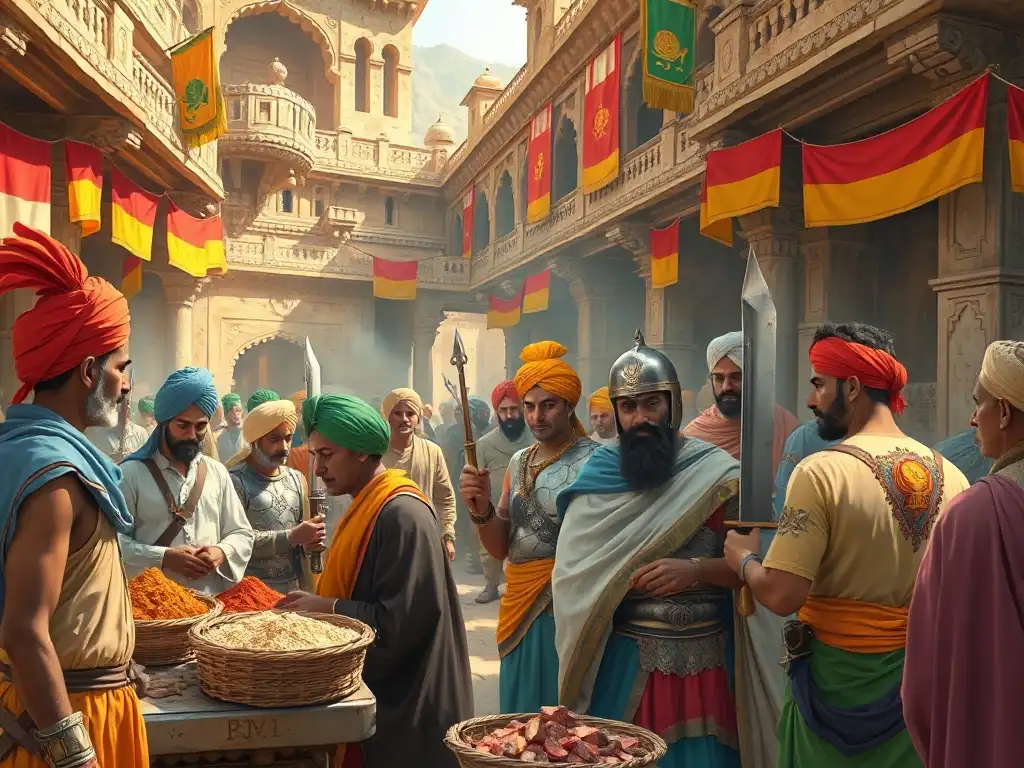
Trade played a crucial role in shaping the military alliances of ancient Indian civilizations. The economic motivations behind these alliances often influenced the political landscape, enabling states to forge connections that enhanced their military capabilities and ensured mutual protection against common threats. By understanding the intricate relationship between trade and military alliances, we can gain insight into how ancient Indian societies navigated the complexities of power dynamics.
Economic Motivations Behind Alliances
Economic benefits were often the primary driving force behind the formation of military alliances in ancient India. Several key factors contributed to these motivations:
- Resource Acquisition: Alliances enabled states to secure access to vital resources that were scarce in their territories. For example, the demand for precious metals, spices, and textiles often led to collaborations between regions rich in these commodities and those that lacked them.
- Market Expansion: Strategic military alliances allowed states to expand their trade networks. By forming coalitions, states could ensure safe passage for traders and reduce the risks associated with commerce, thereby increasing their economic influence and market reach.
- Mutual Defense: Economic interdependence fostered mutual defense agreements. States often recognized that protecting trade routes was essential not only for their economic survival but also for maintaining regional stability. This interdependence often translated into military cooperation, where allied states would support each other in times of conflict.
- Tribute and Taxation: Alliances sometimes involved tribute systems, where allied states received financial support or resources in exchange for military protection. This arrangement ensured that both parties benefited economically, reinforcing their alliance.
Trade Routes as Strategic Assets
The geographic positioning of trade routes made them vital assets for military alliances in ancient India. Control over these routes often dictated political power and military strength. Key aspects include:
- Silk Route and Spice Trade: Major trade routes such as the Silk Route facilitated not only the exchange of goods but also diplomatic relations between kingdoms. Control over these routes allowed states to dominate trade and exert influence over neighboring territories.
- Land and Maritime Routes: Both overland and maritime routes were strategically important. For instance, coastal kingdoms like those in the Tamil region leveraged their maritime trade connections to establish alliances with Southeast Asian states, enhancing their military capabilities through shared resources and manpower.
- Strategic Fortifications: As trade routes became critical for economic prosperity, the establishment of fortified cities along these routes provided military advantages. These fortifications acted as bases for military operations and ensured the protection of trade interests.
Case Studies of Trade-Driven Alliances
Several notable historical examples illustrate the role of trade in shaping ancient Indian military alliances:
- Maurya Empire and the Seleucid Empire: The Mauryan Emperor Chandragupta Maurya established an alliance with the Seleucid Empire in the 4th century BCE. This alliance was partly facilitated by trade agreements that benefited both empires, allowing them to enhance their military capabilities against common rivals.
- Chola Dynasty and Southeast Asia: The Chola dynasty's naval expeditions to Southeast Asia in the 10th century CE were driven by both trade interests and military alliances. By establishing trade connections with various kingdoms in Southeast Asia, the Cholas not only expanded their economic reach but also forged alliances that strengthened their military presence in the region.
- Gupta Empire and Regional Kingdoms: During the Gupta Empire's zenith, trade relations with various regional kingdoms led to strategic alliances that bolstered their military strength. The Gupta rulers utilized trade as a diplomatic tool, ensuring that their allies provided military support during conflicts.
These case studies highlight the intricate connections between trade, diplomacy, and military alliances in ancient India, reinforcing the idea that economic considerations were central to the formation and maintenance of these alliances.
The Role of Diplomacy in Ancient Indian Military Alliances
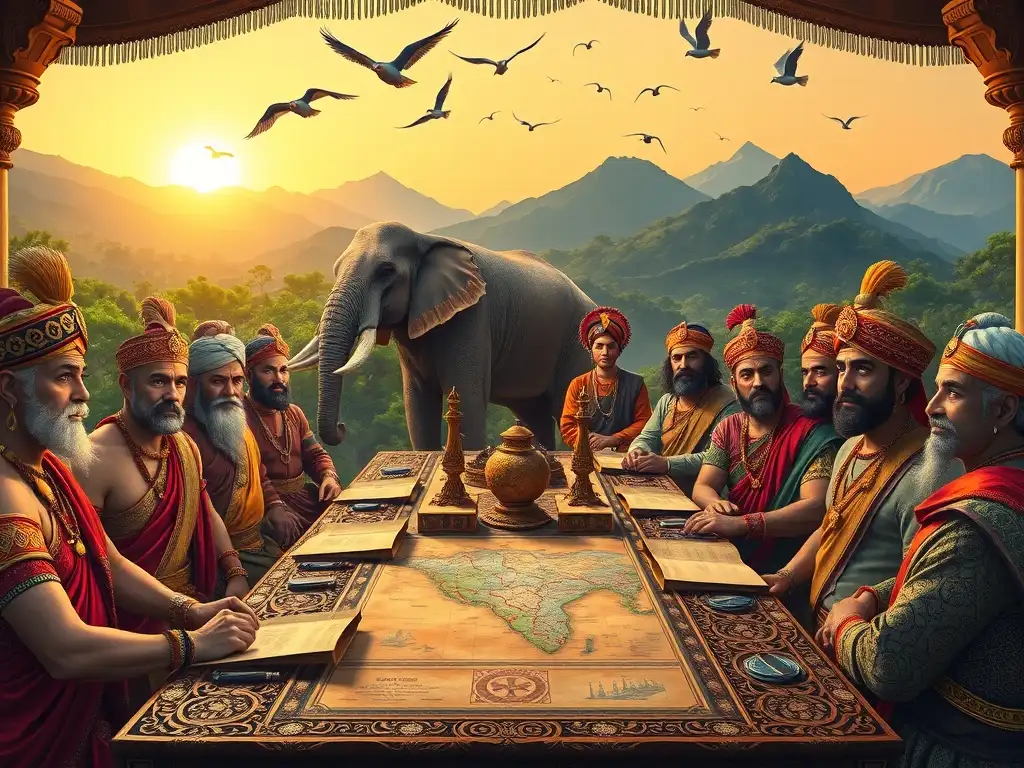
Diplomacy played a crucial role in shaping military alliances in Ancient India, significantly influencing the geopolitical landscape of the subcontinent. As various kingdoms and empires emerged, diplomatic negotiations facilitated the formation of strategic partnerships aimed at mutual defense and expansion. These alliances were not solely based on military strength; rather, they were often bolstered by cultural exchanges, trade relations, and intermarriage among royal families.
Diplomatic Practices in Ancient Indian States
Ancient Indian states employed a variety of diplomatic practices to forge and maintain military alliances. Some of the prominent methods included:
- Envoys and Ambassadors: Kings frequently sent envoys to negotiate terms and maintain communication with allied states. These emissaries were often well-versed in the art of diplomacy and could navigate complex political landscapes.
- Marriage Alliances: Intermarriage between royal families was a common strategy to secure alliances. Notable examples include the marriage of Chandragupta Maurya to a daughter of the Nanda dynasty, which helped consolidate power and foster loyalty.
- Cultural Exchanges: Diplomatic relations often involved exchanges of culture, religion, and art. Such interactions helped to strengthen ties and promote mutual understanding among different kingdoms.
The use of these diplomatic practices allowed ancient Indian states to adapt to changing power dynamics, ensuring their survival and influence in regional affairs.
Key Diplomatic Figures and Their Contributions
Several key figures emerged as prominent diplomats in Ancient India, whose contributions significantly impacted military alliances:
- Kautilya (Chanakya): A brilliant strategist and political philosopher, Kautilya's work, the Arthashastra, outlines various diplomatic strategies. He emphasized the importance of espionage, political intrigue, and military alliances for statecraft, influencing rulers like Chandragupta Maurya.
- Ashoka the Great: Known for his efforts to promote peace through diplomacy after the Kalinga War, Ashoka established a network of alliances through edicts that encouraged non-violence and mutual respect among neighboring states. His diplomatic approach set a precedent for future rulers.
- Harsha Vardhana: The emperor Harsha was known for his diplomatic acumen, forging alliances with various regional powers through marriage and strategic negotiations. His reign exemplified the importance of diplomacy in military alliances, enabling him to consolidate his empire.
These figures illustrate how diplomacy complemented military strength in ancient Indian military alliances, allowing states to navigate complex relationships and achieve strategic goals.
The Impact of Treaties and Agreements
Treaties and agreements were pivotal in solidifying ancient Indian military alliances, shaping the political landscape of the region. Notable impacts include:
- Stability and Peace: Treaties often led to periods of stability, allowing states to focus on internal development and cultural flourishing. For instance, the treaties established between the Mauryan Empire and various regional powers curtailed conflicts and fostered trade.
- Resource Sharing: Alliances facilitated the sharing of resources, including military technology and agricultural products. This sharing not only strengthened military capabilities but also promoted economic growth among allied states.
- Strategic Positioning: Agreements often included provisions for mutual defense, enabling states to respond collectively to external threats. Such collective security arrangements were essential for maintaining sovereignty in a landscape characterized by frequent conflicts.
Diplomacy was integral to the formation and sustenance of ancient Indian military alliances. Through various practices, key diplomatic figures, and impactful treaties, ancient Indian states navigated the complexities of their environment, ensuring their resilience and influence in a dynamic historical context.
Interplay Between Trade and Diplomacy in Military Alliances

The relationship between trade and diplomacy played a pivotal role in shaping military alliances in ancient India. As civilizations flourished, the need for security and mutual defense often led to collaborations that were not only military in nature but were also deeply intertwined with economic and political considerations. Trade routes served as conduits for both goods and diplomatic communications, facilitating the establishment of alliances that were essential for the protection and expansion of territories.
How Trade Enhanced Diplomatic Relations
Trade in ancient India was not merely a means of economic exchange; it was a fundamental aspect of building and maintaining diplomatic relations. The exchange of goods created opportunities for dialogue and negotiation among different kingdoms. Here’s how trade enhanced these relations:
- Economic Reciprocity: Trade fostered a sense of interdependence among states. Kingdoms that engaged in trade often found it beneficial to maintain peaceful relations, as conflicts could disrupt lucrative trade routes.
- Cultural Exchange: Trade facilitated cultural interactions, allowing for the sharing of ideas, customs, and technologies. These interactions often led to stronger diplomatic ties, as shared cultural practices could promote trust and cooperation.
- Strategic Alliances: As kingdoms sought to expand their trade networks, they often formed alliances with other states to secure trade routes against common threats. This strategic cooperation often manifested in military alliances aimed at mutual defense.
For instance, the trade between the Maurya Empire and the regions of Southeast Asia led to significant diplomatic engagements, enhancing military collaborations that were essential for protecting trade interests.
The Influence of Diplomatic Marriages on Military Alliances
Diplomatic marriages were a common practice in ancient India, serving as a tool to solidify alliances between kingdoms. These unions not only ensured peace but also facilitated military cooperation. Here are key aspects of how diplomatic marriages influenced military alliances:
- Strengthening Ties: Marriages between royal families often resulted in stronger bonds between their respective kingdoms. Such unions could deter aggression from external powers, as attacking one kingdom would mean risking conflict with the other.
- Unified Military Efforts: By marrying into allied families, rulers could coordinate military strategies more effectively. This unity was vital in times of war, allowing for combined forces to be deployed against common enemies.
- Political Leverage: Diplomatic marriages often came with political stipulations, such as mutual defense agreements. These stipulations could be effective in forming robust military alliances that were recognized and respected by other states.
A notable example includes the marriage alliance between the Gupta Empire and various regional powers, which not only secured peace but also facilitated joint military campaigns against invasions.
Examples of Successful Trade-Diplomacy Synergy
The interplay of trade and diplomacy in ancient Indian military alliances can be observed through several historical examples that demonstrate their effectiveness:
- Mauryan Empire and the Seleucid Empire: The Mauryan Empire established trade relations with the Seleucid Empire following the conquest of Alexander the Great. This interaction led to a diplomatic marriage that solidified alliances and mutual military support, crucial for maintaining stability in the region.
- Chola Dynasty and Southeast Asia: The Chola Dynasty’s extensive trade networks in Southeast Asia fostered alliances with local kingdoms. These alliances were instrumental during military campaigns, as they provided not only military manpower but also critical knowledge of the terrain and local politics.
- The Vijayanagara Empire: Engaging in trade with Middle Eastern and East African states, the Vijayanagara Empire formed alliances that combined military strength with economic interests. Their ability to secure trade routes often translated into military advantages against rival states, showcasing the synergy between trade and diplomacy.
Ancient Indian military alliances were deeply influenced by the interplay of trade and diplomacy, with trade fostering relationships that were crucial for mutual defense and cooperation. The strategic use of diplomatic marriages further solidified these alliances, creating a framework for successful military collaborations throughout ancient Indian history.
Notable Ancient Indian Military Alliances
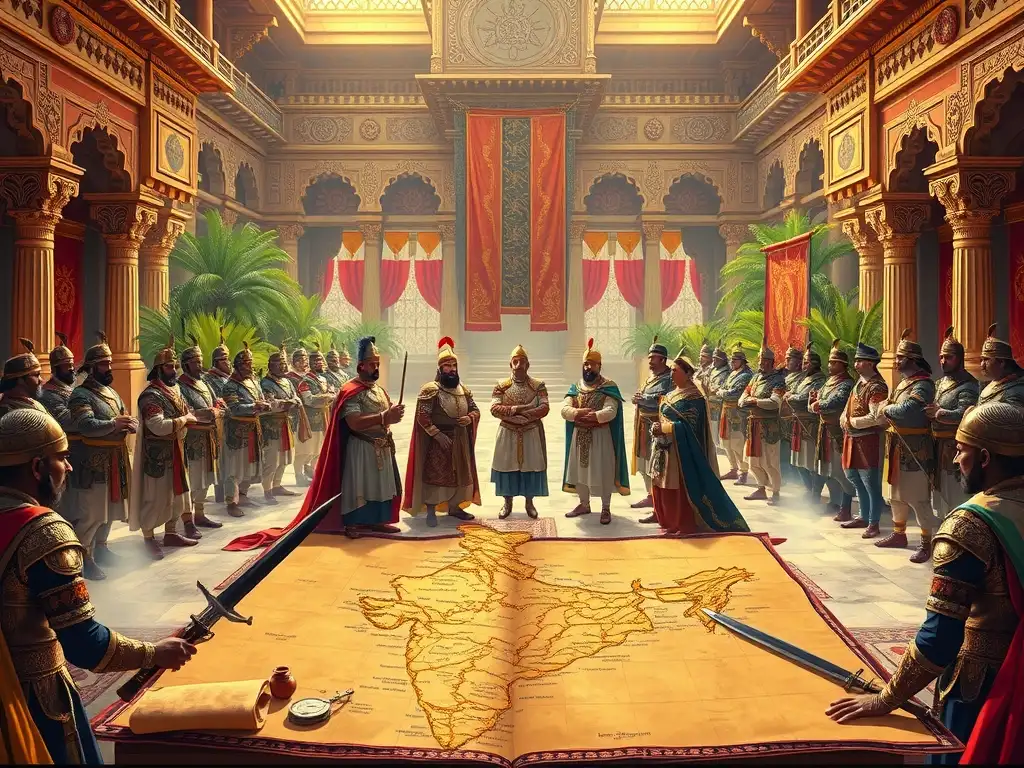
Ancient Indian military alliances were pivotal in shaping the geopolitical landscape of the subcontinent. These alliances often resulted from a combination of trade relations, diplomatic negotiations, and shared military interests. Throughout history, various empires established strategic partnerships to enhance their military strength and territorial influence. Understanding these alliances provides insight into the complex interactions between different kingdoms and empires in ancient India.
The Nanda and Maurya Empires: A Case Study
The Nanda Empire, which thrived in the 4th century BCE, is a prime example of strategic military alliances. Under the leadership of Mahapadma Nanda, the empire expanded its influence through both conquest and diplomacy. The Nandas were known for their substantial wealth and military prowess, which they used to forge alliances with neighboring kingdoms.
- Key Strategies:
- Trade Relations: The Nandas controlled important trade routes, which allowed them to establish economic partnerships that translated into military alliances. The flow of resources, such as textiles and spices, enabled them to sustain their armies.
- Diplomatic Marriages: The Nanda rulers often arranged marriages with local chieftains to solidify alliances. This practice helped integrate different cultures and foster loyalty among vassal states.
The rise of the Maurya Empire, founded by Chandragupta Maurya, further exemplifies the significance of alliances. Chandragupta successfully overthrew the Nandas with the help of strategic allies and military tactics.
- Notable Alliances:
- Kautilya's Influence: Chandragupta’s advisor, Kautilya (Chanakya), emphasized the importance of alliances in his treatise, the Arthashastra. He advocated for a pragmatic approach to diplomacy, suggesting that forming alliances with powerful neighbors could help counterbalance threats.
- Military Campaigns: The Mauryan expansion under Ashoka further illustrates the role of alliances in military strategy. Ashoka's campaigns in Kalinga were supported by pre-existing alliances, which facilitated the consolidation of power across a vast territory.
Alliances during the Gupta Empire
The Gupta Empire (circa 240 to 550 CE) marked a golden age for ancient India, characterized by significant advancements in arts, science, and military organization. The Gupta rulers adeptly utilized military alliances to maintain their dominance and respond to external threats.
- Key Features of Gupta Alliances:
- Defensive Pacts: The Guptas formed alliances with regional powers such as the Maitrakas and the Mukhari dynasty to create a buffer against invasions. These alliances ensured mutual protection and stability in the region.
- Cultural Exchanges: Alliances during the Gupta period were not purely military; they also fostered cultural exchanges. The interactions between different kingdoms led to a flourishing of art, literature, and knowledge.
- Significant Events:
- The Huna Invasions: The Gupta Empire faced threats from the Huna tribes during the 5th century. The Guptas relied on their alliances with neighboring kingdoms to mount a defense, demonstrating the importance of cooperative military strategies in times of crisis.
- Diplomatic Missions: Gupta emperors sent envoys to other kingdoms, such as China and Southeast Asia, to establish diplomatic ties that were beneficial for both trade and military support.
Regional Alliances: South India and Beyond
Apart from the major empires, regional alliances in South India and other areas played a crucial role in shaping military strategies and political landscapes.
- The Chola and Pandya Dynasties:
- Alliances Through Warfare: The Chola dynasty engaged in numerous military campaigns, often allying with the Pandyas to expand their territory. Their naval power allowed them to dominate trade routes across the Indian Ocean, enhancing their military capabilities.
- Cultural and Economic Ties: These alliances were not solely based on military needs; cultural and economic ties also flourished, leading to advancements in architecture and literature.
- The Deccan Plateau:
- Confederations: Regional states in the Deccan often formed confederations to challenge larger empires. The establishment of such alliances allowed smaller kingdoms to pool resources and coordinate military efforts against common foes.
- Trade as a Catalyst: The lucrative trade in spices and textiles facilitated these alliances, as economic interests aligned with military objectives.
Ancient Indian military alliances were multifaceted, driven by a blend of trade, diplomacy, and military strategy. The interplay of these factors not only shaped the history of ancient India but also contributed to the rich tapestry of its cultural and political heritage. Understanding these alliances offers valuable insights into the complexities of ancient Indian military history.
The Decline of Ancient Indian Military Alliances
The decline of ancient Indian military alliances was a complex phenomenon influenced by various internal and external factors. These alliances, which once played a crucial role in shaping the political landscape of ancient India, began to lose their significance over time due to changing dynamics. Understanding the reasons behind this decline provides valuable insights into the historical context of ancient Indian military strategies and statecraft.
Factors Leading to the Dissolution of Alliances
- Shifts in Political Power:
- The rise and fall of powerful kingdoms significantly impacted existing alliances. For instance, as the Maurya and Gupta empires expanded, smaller states often found their interests misaligned, leading to a breakdown of alliances.
- The fragmentation of power among regional kingdoms often resulted in conflicts that undermined previous agreements.
- Economic Instability:
- Trade disruptions caused by invasions or natural disasters led to economic decline, reducing the capacity of states to maintain military alliances.
- The decline of trade routes, such as those during the Gupta period, diminished the economic foundations that supported military partnerships.
- Cultural and Ideological Differences:
- As different regions developed distinct cultural identities, the bonds that had once united them under military alliances weakened.
- Rivalries based on religious or linguistic differences further strained these alliances, leading to mistrust and conflict.
- Interference from External Powers:
- The arrival of foreign invaders such as the Huns and later Islamic conquerors often disrupted established military alliances. These external forces not only threatened the integrity of states but also manipulated local politics to their advantage.
- Diplomatic overtures from foreign powers sometimes led to the formation of new alliances that undermined traditional partnerships.
- Decline of Trade Networks:
- The Interconnectedness that trade provided was vital for sustaining alliances. As trade routes were threatened, the alliances that depended on them also faltered.
- The loss of key trade cities and ports diminished the strategic importance of certain regions, leading to the reevaluation of military partnerships.
Lessons Learned from Historical Alliances
The decline of ancient Indian military alliances offers several critical lessons that remain relevant even today:
-
Importance of Economic Stability:
Understanding that economic strength is fundamental to sustaining military partnerships highlights the necessity of maintaining robust trade networks.
-
Cultural Sensitivity:
Recognizing the significance of cultural and ideological factors in alliance formation can help avoid conflicts rooted in misunderstanding or mistrust.
-
Flexibility in Diplomacy:
The changing nature of political power necessitates adaptable strategies in diplomacy. Alliances should be evaluated and adjusted in response to shifting dynamics.
-
Preparedness Against External Threats:
The historical context underscores the need for vigilance against external threats that can disrupt internal stability and alliances.
-
Holistic Approach to Alliances:
A successful alliance should encompass not just military cooperation but also economic, cultural, and diplomatic ties to reinforce its resilience.
The decline of ancient Indian military alliances serves as a reminder of the intricate interplay between economy, culture, and politics in shaping military strategies. These lessons remain pertinent for contemporary diplomatic and military engagements.
Conclusion: The Lasting Impact of Trade and Diplomacy on Ancient Indian Military Alliances
Reflections on Military Strategies in Ancient India
The military strategies employed in ancient India were greatly influenced by the dynamics of trade and diplomacy. Ancient Indian military alliances were not solely formed for warfare; rather, they were intricate networks that facilitated political stability and economic prosperity. The interactions between various kingdoms often led to the establishment of alliances that were beneficial for defense and trade.
The importance of diplomatic negotiations cannot be overstated. Rulers recognized that forging alliances through marriage, tribute, or trade agreements was a strategic way to enhance their military capabilities without incurring the costs of war. For instance, the Mauryan Empire, under Chandragupta Maurya and later Ashoka, effectively utilized diplomacy to expand their influence across vast territories, often integrating local rulers into their administrative framework. This approach allowed for a multipronged strategy that combined military might with economic leverage.
Military treaties were often accompanied by trade agreements, ensuring that alliances were not only based on mutual defense but also on economic benefits. The exchange of goods like textiles, spices, and precious metals played a crucial role in sustaining these alliances. Such relationships contributed to the stability of kingdoms, allowing them to focus on military advancements and technological innovations.
The Legacy of Ancient Indian Military Alliances in Modern Contexts
The legacy of ancient Indian military alliances continues to resonate in contemporary times, particularly in the realm of international relations and defense strategies. The principles of trade and diplomacy that characterized these alliances can be seen reflected in modern military pacts and treaties among nations.
In today's geopolitical landscape, countries often seek to form alliances based on shared economic interests and mutual defense strategies. The ancient Indian approach to military alliances, which emphasized the importance of economic interdependence, serves as a foundational model for modern diplomatic strategies.
For instance, recent collaborations between countries in South Asia echo the alliances of the past, where economic cooperation is used as a tool for ensuring security and stability. The focus on trade as a means to foster relationships can be traced back to ancient practices, illustrating how historical precedents inform current diplomatic endeavors.
Moreover, the emphasis on cultural exchanges and mutual respect in ancient Indian military alliances provides a framework for contemporary nations aiming for peaceful coexistence and collaboration. The success of ancient Indian military alliances was often predicated on the ability to navigate complex sociopolitical landscapes, a skill that remains vital for modern diplomacy.
The interplay of trade, diplomacy, and military strategy in ancient India has left an indelible mark on contemporary military alliances. By studying these historical frameworks, modern states can draw valuable lessons on the significance of economic ties and diplomatic efforts in establishing robust and resilient alliances.
Frequently Asked Questions
What were the primary military alliances in ancient India?
Ancient Indian military alliances included various regional coalitions formed for defense against common enemies and to strengthen diplomatic ties among kingdoms.
How did trade influence military alliances in ancient India?
Trade played a crucial role in forming military alliances by fostering economic interdependence, which incentivized kingdoms to collaborate for mutual protection and prosperity.
What role did diplomacy play in ancient Indian military alliances?
Diplomacy was essential in negotiating terms of alliances, resolving conflicts, and establishing long-term relationships among kingdoms to enhance their military strength and stability.
Can you provide examples of significant military alliances in ancient India?
Notable alliances included the Kalinga-Maurya alliance and various south Indian coalitions like the Chola and Pandya alliances, which were formed to counter threats and expand influence.
How did the Gupta Empire manage military alliances?
The Gupta Empire excelled in diplomatic strategies, often employing marriage alliances and treaties to maintain peace and secure their borders, effectively enhancing their military posture.
Final Reflection: The Enduring Legacy of Ancient Indian Military Alliances
In exploring the intricate tapestry of Ancient Indian military alliances, we uncover a profound connection between trade, diplomacy, and the art of warfare that resonates even in today's geopolitical landscape. The strategic partnerships forged in ancient times not only shaped the military might of kingdoms but also laid the groundwork for cultural exchanges that enriched civilizations. This historical narrative serves as a striking reminder of how alliances can transcend mere military objectives, fostering cooperation and mutual benefit among diverse groups.
The influence of these alliances extends far beyond their historical context, continuing to shape the cultural and social dynamics of modern India and its neighboring regions. As we reflect on the past, we recognize that the principles of diplomacy and trade are as relevant now as they were centuries ago. The interconnectedness of nations today mirrors the alliances of ancient times, where shared interests and mutual respect were paramount. In the midst of chaos, there is also opportunity.
– Sun Tzu. This quote encapsulates the essence of how ancient leaders navigated challenges through strategic partnerships, a lesson that remains vital in our contemporary world.
As we conclude this exploration, I invite you to reflect on the lessons of collaboration and diplomacy that emerge from the study of ancient Indian military alliances. Consider how these historical precedents can inspire your own interactions, whether in personal relationships or professional endeavors. Embrace the opportunity to build bridges, foster understanding, and create alliances that can lead to a more harmonious and prosperous future. Let the legacy of ancient wisdom guide you as you navigate the complexities of today's interconnected world.
Unveil the Secrets of Ancient Alliances!
Thank you for exploring the intriguing world of trade and diplomacy in ancient Indian military alliances! You've uncovered the complex interplay that shaped relationships during times of conflict and cooperation. Now, it’s time to take that knowledge and put it into action.
Here are some steps you can take to deepen your understanding and engage with this fascinating topic:
- Dive Deeper: Research specific ancient Indian trade texts or diplomatic treaties to understand their impact on military strategies.
- Join the Conversation: Engage with fellow history enthusiasts on our forum and explore diverse perspectives on these alliances.
- Explore Further: Visit local museums or exhibitions dedicated to ancient Indian history; you might be surprised by the insights you gain!
As you embark on this journey of exploration and connection, consider this: How can the lessons from ancient alliances inform our understanding of modern diplomacy and trade today?