
Ancient Indian Governance: How Political Ideas Shaped Southeast Asian Kingdoms


Welcome to Ancient India History, where we embark on a captivating journey through the rich tapestry of ancient Indian civilizations. Here, you will uncover the profound political influence that shaped not only the subcontinent but also the flourishing kingdoms of Southeast Asia. In our featured article, "Ancient Indian Governance: How Political Ideas Shaped Southeast Asian Kingdoms," we delve into the innovative governance structures and philosophies that transcended borders, sparking cultural exchanges that resonate to this day.
Join us as we explore the legacies of the past and uncover the fascinating connections that continue to shape our world. Your adventure into this incredible history starts now!
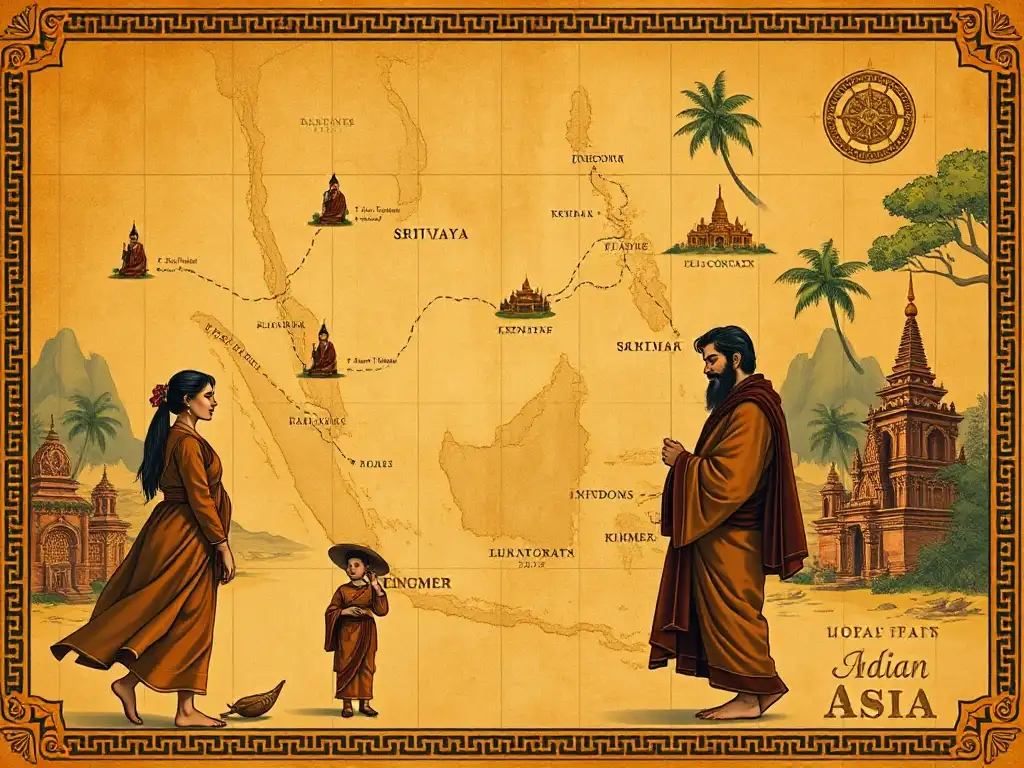
Introduction to Ancient Indian Political Influence
The rich tapestry of Ancient Indian governance has left an indelible mark not only within its own borders but also across Southeast Asia. As trade routes flourished and cultural exchanges took place, the political ideas originating from the Indian subcontinent influenced the formation and evolution of various kingdoms in the region.
This article delves into how these ancient political concepts and philosophies shaped governance structures in Southeast Asian societies, underscoring the profound legacy of Indian political thought on a global scale. By examining the intricate connections between ancient India and Southeast Asia, we can better appreciate how these ideas transcended geographical boundaries and contributed to the development of political systems in neighboring regions.
Overview of Ancient Indian Governance
Ancient Indian governance was characterized by its complexity and diversity, reflecting the pluralistic nature of its society. The foundation of governance in India can be traced back to the Indus Valley Civilization, which showcased advanced urban planning and administrative systems. As time progressed, various dynasties emerged, each contributing unique elements to the political landscape. Notably, the Maurya and Gupta Empires were instrumental in codifying political ideas that would later resonate in Southeast Asia.
Key elements of ancient Indian governance included:
- Monarchical Systems: Most kingdoms operated under a monarchy, where kings wielded supreme power often justified by divine right.
- Council of Ministers: Many rulers employed councils comprising wise advisors to assist in governance.
- Legal Texts: Ancient texts, such as the Arthashastra, offered guidelines on statecraft, economics, and military strategy.
These frameworks laid the groundwork for governance models that were later adopted and adapted by Southeast Asian kingdoms.
Importance of Political Ideas in Southeast Asia
The political ideas from ancient India were pivotal in shaping the governance structures of several Southeast Asian kingdoms. As Indian traders and scholars traveled to the region, they brought with them not only goods but also philosophies that would influence local rulers. The adoption of Indian political concepts facilitated the emergence of more organized and centralized forms of governance, which were essential for managing growing populations and diverse cultures.
Key aspects of this influence include:
- Hindu-Buddhist Political Ideologies: Many Southeast Asian kingdoms embraced Hinduism and Buddhism, which influenced their political legitimacy and governance practices.
- Cultural Exchanges: The incorporation of Indian administrative techniques and legal frameworks helped in the establishment of more efficient governance systems.
- Political Treatises: Texts like the Arthashastra were translated and adapted, providing a reference for statecraft and administration.
As a result, the political landscape of Southeast Asia became a melting pot of indigenous practices and Indian influences, fostering a unique blend of governance strategies.
Historical Context of Ancient Indian Political Influence
To fully grasp the impact of ancient Indian political ideas on Southeast Asia, it is crucial to understand the historical context in which these influences emerged. The interaction between the Indian subcontinent and Southeast Asia was facilitated by trade, cultural exchanges, and the spread of religions, which collectively played a significant role in shaping political thought.
The Emergence of Political Ideas in Ancient India
The roots of political thought in ancient India can be traced back to various significant periods and events. The Vedic period laid the groundwork for social and political organization, emphasizing the role of dharma (duty) and the importance of the ruling class. Subsequently, the rise of powerful empires such as the Maurya and Gupta dynasties further refined these ideas, leading to a more structured approach to governance.
Key developments include:
- The Concept of Dharma: Central to Indian political philosophy, it emphasized moral duty and righteousness in governance.
- Political Unification: Empires like the Maurya Empire under Ashoka promoted a centralized administrative structure.
- Influence of Buddhism: The spread of Buddhism introduced new ideas about governance, focusing on ethical leadership and the welfare of subjects.
These evolving political ideas became a blueprint for governance that would later be embraced by neighboring regions.
Key Political Texts and Philosophies
Several important texts and philosophies emerged from ancient India that significantly contributed to political thought. These works not only provided insights into governance but also served as practical guides for rulers.
Prominent texts include:
- Arthashastra: Attributed to Kautilya (Chanakya), this ancient treatise offers a comprehensive understanding of statecraft, economics, and military tactics.
- Manusmriti: This ancient legal text outlines social order and law, influencing governance and societal norms.
- Kautilya’s Diplomacy: The text emphasizes the importance of strategy in governance, including the use of alliances and warfare.
These foundational texts were instrumental in shaping the political ideologies that would later permeate Southeast Asian governance, illustrating the lasting legacy of ancient Indian political influence.
Mechanisms of Influence on Southeast Asian Kingdoms
The ancient Indian political influence on Southeast Asian kingdoms was multifaceted, manifesting through various mechanisms that facilitated the transfer and adaptation of political ideas and governance models. These mechanisms included trade routes, cultural exchanges, and the establishment of Indianized states, all contributing to the intricate tapestry of governance in the region. By examining these channels, we can gain insight into how Indian political concepts were woven into the fabric of Southeast Asian political systems.
Trade Routes as Channels of Political Ideas
Trade routes were vital arteries of commerce that linked India with Southeast Asia, serving as conduits not only for goods but also for ideas. The maritime trade routes, particularly those connecting the Indian subcontinent with the islands of Indonesia and the Malay Peninsula, facilitated the movement of merchants, scholars, and diplomats.
As traders exchanged commodities like spices, textiles, and precious metals, they also shared knowledge about governance, administration, and legal practices. This exchange of ideas was particularly influential during the early centuries CE, when Indian traders brought with them not just products but also the political philosophies of the time.
Moreover, the establishment of trading ports like Funan and Champa enabled the proliferation of Indian culture and governance models. Local rulers often adopted these ideas to enhance their legitimacy and administrative efficiency, resulting in a blend of indigenous and Indian political practices.
Cultural Exchanges through Political Diplomacy
Cultural exchanges between Indian and Southeast Asian kingdoms were significantly driven by political diplomacy. Diplomatic missions, often initiated through intermarriages among royal families or formal treaties, created pathways for the exchange of political ideas and practices.
For instance, envoys traveled between kingdoms, bringing with them not only gifts and trade goods but also political philosophies and administrative frameworks. The adoption of Indian legal texts, such as the Arthashastra, exemplifies how Southeast Asian rulers sought to implement Indian governance strategies to bolster their own political systems.
Additionally, festivals, rituals, and ceremonies often featured Indian elements, reinforcing the political ties and cultural bonds between these regions. This cultural diplomacy helped solidify the influence of Indian political ideas, as local rulers sought to emulate the grandeur and authority associated with Indian kingship.
The Role of Indianized States in Southeast Asia
The emergence of Indianized states in Southeast Asia played a crucial role in the propagation of ancient Indian political influence. These states, influenced by Indian culture and governance, adopted various aspects of Indian polity, including the concepts of kingship, administration, and law.
Indianized states, such as Srivijaya and the Khmer Empire, were characterized by their incorporation of Hindu and Buddhist elements into their political structures. Rulers of these states often styled themselves as dharmarajas, or righteous kings, reflecting Indian ideals of leadership that emphasized moral governance.
Furthermore, these Indianized states served as models for neighboring regions, spreading Indian political concepts through their own expansionist endeavors. As they interacted with other states, they disseminated Indian political ideas, contributing to a broader regional influence that shaped the political landscape of Southeast Asia.
Case Studies of Southeast Asian Kingdoms
The impact of ancient Indian political influence can be particularly observed in specific Southeast Asian kingdoms. Case studies of the Khmer Empire and Srivijaya reveal how Indian political concepts were not only adopted but also adapted to local contexts, resulting in unique governance structures that reflected both Indian and indigenous traditions.
The Khmer Empire and Indian Political Concepts
The Khmer Empire, flourishing between the 9th and 15th centuries, stands as a testament to the profound influence of Indian political concepts. The ruling elite adopted Hinduism as the state religion, with the king often seen as a divine figure, embodying the principles of dharma and righteousness.
Indian political texts, notably the Arthashastra, influenced the administrative practices of the Khmer rulers, who implemented sophisticated systems of taxation and governance. The construction of monumental temples, such as Angkor Wat, not only reflected religious devotion but also served as symbols of royal power and legitimacy, echoing Indian architectural and political ideals.
Moreover, the Khmer court maintained diplomatic relations with Indian kingdoms, fostering a continuous exchange of political ideas. This engagement helped solidify the Indianized nature of the Khmer state, exemplifying how ancient Indian political influence shaped governance in Southeast Asia.
Srivijaya: A Model of Indian Political Structures
Srivijaya, a maritime kingdom that thrived from the 7th to the 13th centuries, provides another compelling example of ancient Indian political influence. As a hub of trade and cultural exchange, Srivijaya integrated Indian political structures into its governance framework.
The rulers of Srivijaya adopted the title of Maharaja, a designation that underscored their authority and connection to Indian royal traditions. The kingdom's strategic location allowed it to engage with Indian traders and scholars, resulting in the infusion of Indian administrative practices and legal codes.
Furthermore, Srivijaya's embrace of Buddhism, influenced by Indian teachings, led to the establishment of monastic institutions that played a vital role in governance and education. This synthesis of Indian political concepts with local traditions not only solidified Srivijaya's power but also extended its influence throughout Southeast Asia, showcasing the enduring legacy of ancient Indian political thought.
The Legacy of Ancient Indian Political Influence
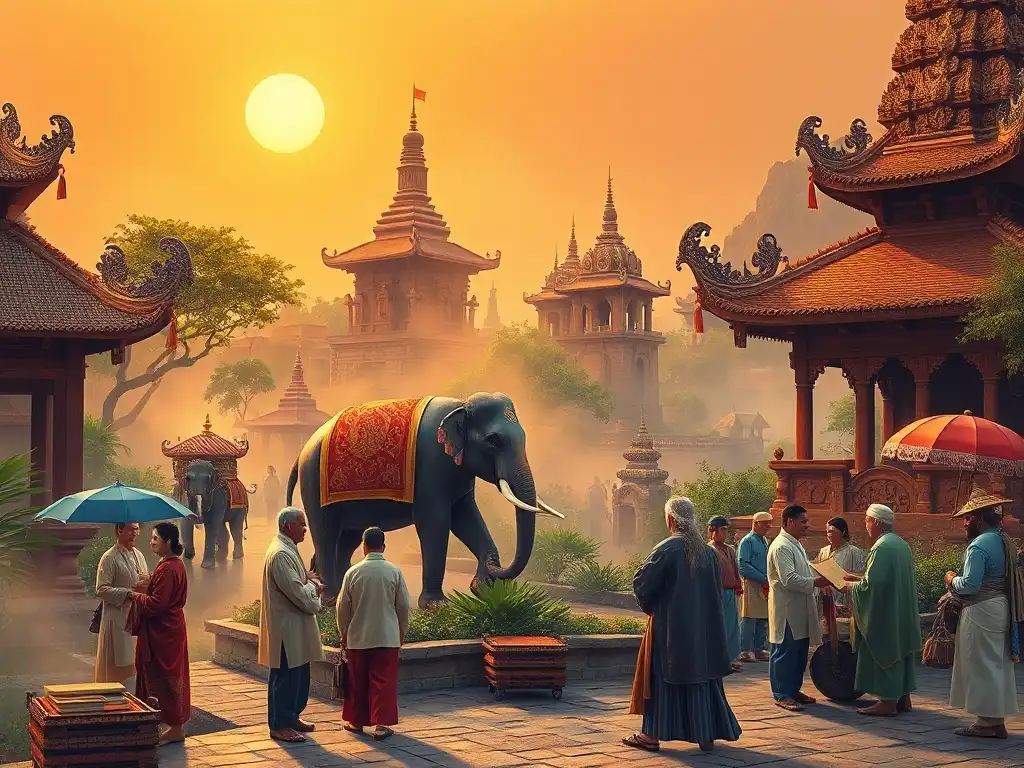
The legacy of ancient Indian political influence extends far beyond the subcontinent, shaping governance structures and political thought in various Southeast Asian kingdoms. This influence can be traced back to the establishment of trade routes and cultural exchanges during the early centuries CE, which facilitated the spread of Indian political texts, such as the Arthashastra, and concepts of statecraft. These texts emphasized the importance of a well-organized state, ethical governance, and the role of a sovereign in maintaining order and justice.
Moreover, the arrival of Indian traders, scholars, and monks played a pivotal role in disseminating these ideas, leading to the adoption of Indian political models in various Southeast Asian polities. The integration of Hindu and Buddhist principles into governance systems not only structured political authority but also influenced cultural practices and societal norms. As a result, the ancient Indian political framework became deeply embedded in the identities of kingdoms such as Srivijaya and Khmer, which echoed these principles in their own governance.
Lasting Impacts on Southeast Asian Governance
The impacts of ancient Indian political influence on Southeast Asian governance are evident in several key areas:
- Political Structure: Many Southeast Asian kingdoms adopted a centralized form of governance reminiscent of Indian models. Rulers often claimed divine authority, paralleling the concept of raja in Indian polity, which emphasized the king's role as a protector and moral leader.
- Legal Systems: Indian texts contributed to the development of legal codes in Southeast Asia, integrating principles of justice and administration. For instance, the Dharmashastra, which outlines laws and ethical conduct, influenced local legal traditions.
- Bureaucratic Practices: The establishment of administrative systems, including the categorization of officials and the implementation of tax systems, drew heavily from Indian governance practices. This bureaucratic organization allowed for efficient management of resources and state affairs.
- Cultural Integration: The fusion of political and cultural elements from India led to the creation of hybrid identities. This is illustrated by the adoption of Sanskrit as a language of administration and scholarship, further solidifying the Indian influence on local governance.
The enduring legacy of these practices illustrates how ancient Indian political thought not only shaped governance in the region but also fostered a rich tapestry of cultural exchange that continues to resonate today.
Conclusion
The exploration of ancient Indian political influence reveals a complex web of interactions that significantly shaped Southeast Asian governance. The philosophical and practical contributions from Indian political texts laid the groundwork for the development of various bureaucratic systems and legal frameworks within Southeast Asian kingdoms.
Summary of Ancient Indian Political Influence
Ancient Indian political influence can be characterized by:
- The dissemination of political texts and ideas through trade and cultural exchanges.
- The adoption of centralized governance models and the notion of divine kingship.
- The development of legal and bureaucratic systems that mirrored Indian practices.
- The integration of cultural elements that created a unique blend of identities across Southeast Asia.
These elements collectively highlight the profound impact that ancient Indian political thought had on the region's governance, demonstrating its significance in shaping the political landscape long after the initial exchanges.
Reflection on Its Relevance Today
Reflecting on the relevance of ancient Indian political influence today, it is essential to recognize how these historical interactions continue to inform contemporary political and cultural frameworks in Southeast Asia. The legacy of centralized governance, ethical leadership, and the importance of cultural identity remains significant in current political discourse.
Moreover, the historical ties established through these ancient exchanges foster a sense of shared heritage among Southeast Asian nations. As countries navigate modern governance challenges, revisiting these ancient principles can offer valuable insights into effective leadership and sustainable governance practices. Understanding this historical context not only enriches our appreciation of Southeast Asian political systems but also emphasizes the need for maintaining cultural connections in an increasingly globalized world.
Further Reading on Ancient Indian Political Influence and Governance
To deepen your understanding of the ancient Indian political influence and its governance structures, several resources are available that provide comprehensive insights into this subject. Below is a curated list of books, articles, and academic papers that explore various facets of ancient Indian governance and its impact on Southeast Asian kingdoms.
Books
-
"The Idea of India" by Sunil Khilnani
This book provides a profound analysis of India's political evolution, touching upon ancient governance systems and their implications for modern political thought. It helps contextualize how ancient Indian political ideas permeated into Southeast Asia.
-
"Ancient Indian History and Culture" by R. C. Majumdar
A classic text that delves into the political structures of ancient India, this book discusses the Mauryan and Gupta empires, highlighting how these systems influenced neighboring regions, especially in Southeast Asia.
-
"The Indian Ocean in World History" by Milo Kearney
This work discusses the broader maritime connections between India and Southeast Asia, illustrating how political ideas traveled alongside trade routes and impacted regional governance.
Academic Articles
-
"Indian Political Influence in Southeast Asia: A Historical Perspective" by R. M. B. Nair
This article provides a scholarly examination of the direct and indirect influences of Indian political systems on the governance frameworks of various Southeast Asian kingdoms.
-
"Cultural Exchanges between India and Southeast Asia" by R. C. Gupta
An insightful piece that explores the cultural and political exchanges between India and Southeast Asia, detailing how these interactions shaped governance practices in the region.
-
"The Legacy of Indian Political Thought in Southeast Asia" by A. P. Sharma
This academic paper discusses the specific political philosophies and ideas that traveled from India to Southeast Asia, focusing on their adaptation and implementation in local governance.
Online Resources
-
The Ancient History Encyclopedia
A wealth of articles and resources that cover various aspects of ancient Indian history, including governance, culture, and their influence on Southeast Asia.
-
JSTOR and Project MUSE
These digital libraries provide access to numerous scholarly articles and papers related to ancient Indian political influence and governance, ideal for those seeking in-depth research material.
Conclusion
Engaging with these resources will provide a more nuanced understanding of how ancient Indian political ideas not only shaped governance in India but also significantly influenced the political landscapes of Southeast Asian kingdoms. Whether through historical texts, scholarly articles, or online databases, each resource offers valuable insights into the complexities of ancient political interactions.
- Introduction to Ancient Indian Political Influence
- Historical Context of Ancient Indian Political Influence
- Mechanisms of Influence on Southeast Asian Kingdoms
- Case Studies of Southeast Asian Kingdoms
- The Legacy of Ancient Indian Political Influence
- Conclusion
- Further Reading on Ancient Indian Political Influence and Governance
- What were the key political ideas of ancient Indian governance?
- How did ancient Indian political influence impact Southeast Asian kingdoms?
- What role did trade play in spreading Indian political doctrines?
- Can you provide examples of Southeast Asian kingdoms influenced by ancient Indian governance?
- How did ancient Indian political philosophy contribute to the governance of its own civilizations?
Frequently Asked Questions
What were the key political ideas of ancient Indian governance?
Ancient Indian governance was characterized by democratic principles, monarchical systems, and centralized administration, influencing political structures beyond its borders.
How did ancient Indian political influence impact Southeast Asian kingdoms?
The political ideas from ancient India, such as statecraft and law, significantly shaped the governance of Southeast Asian kingdoms, promoting centralized rule and cultural exchange.
What role did trade play in spreading Indian political doctrines?
Trade routes facilitated not only the exchange of goods but also the transfer of ideas. Indian merchants and scholars introduced political concepts that influenced local governance in Southeast Asia.
Can you provide examples of Southeast Asian kingdoms influenced by ancient Indian governance?
Kingdoms such as Srivijaya and Cambodia adopted elements of Indian political organization, including the concept of divine kingship, which was a hallmark of Indian governance.
How did ancient Indian political philosophy contribute to the governance of its own civilizations?
Ancient Indian political philosophy emphasized justice, dharma, and the role of the ruler, which helped establish a foundation for governance in civilizations like the Maurya and Gupta Empires.
Final Reflection: The Enduring Legacy of Ancient Indian Political Influence
The political ideas and governance systems of ancient India have not only shaped the subcontinent but have also left an indelible mark on Southeast Asian kingdoms, demonstrating that the influence of political thought transcends geographical boundaries. Today, as we navigate complex political landscapes, understanding these ancient frameworks can provide valuable insights into contemporary governance and diplomacy. The relevance of these ideas in modern political discourse is a testament to their timelessness and adaptability.
The cultural and social landscapes of Southeast Asia continue to reflect the profound impact of ancient Indian governance, from the establishment of legal codes to the promotion of ethical leadership. The principles of dharma and the emphasis on just rule resonate in the political ideologies of many nations in the region. As historian Romila Thapar aptly noted, The past is not just a record of what has been; it is a living force that shapes our present.
This observation underscores the ongoing relevance of ancient Indian political thought in informing current governance practices and cultural identities.
As we reflect on the lessons drawn from ancient Indian governance, let us consider how these principles can inspire our own actions and decisions today. I invite you to explore how the ideals of justice, ethical leadership, and community welfare can be integrated into your personal and professional lives. By embracing the wisdom of the past, we can contribute to a more equitable and harmonious future, ensuring that the legacy of ancient Indian political influence continues to thrive in our modern world.
Unveil the Influence of Ancient Governance on Today’s World!
Thank you for diving into the fascinating insights of how ancient Indian political ideas have shaped the kingdoms of Southeast Asia. Your curiosity about history not only enriches your knowledge but also connects you to a legacy that continues to influence modern governance.
Now, it’s time to explore the impact of these ideas further and take action:
- Dive deeper into history! Read more articles on our website Ancient India History to uncover the intricate threads connecting past governance to present-day politics.
- Engage with fellow history enthusiasts! Join our community forums and share your thoughts, experiences, or questions about the political landscape of ancient civilizations.
- Expand your knowledge through sharing! Discuss what you’ve learned with friends and family, sparking conversations about the importance of historical governance in our current political environment.
What surprising similarities do you see between ancient governance models and today's political systems? Let’s discuss in the comments below!