
The Use of Chariots in Ancient Indian Warfare

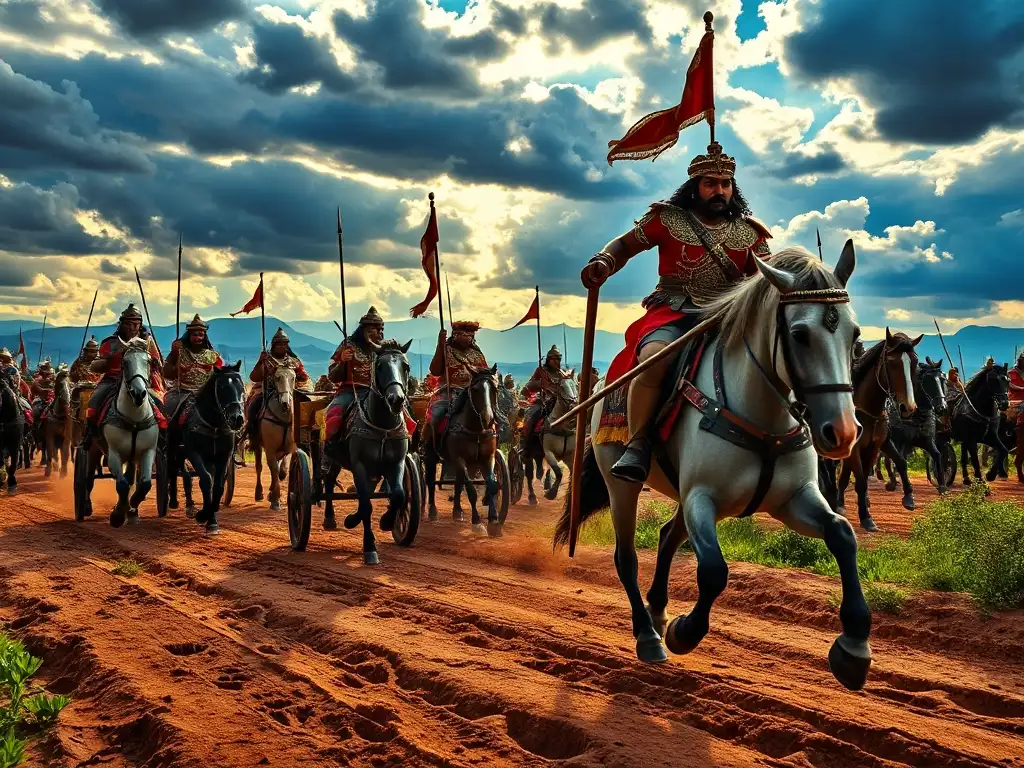
Welcome to Ancient India History, where we embark on a fascinating journey through the rich tapestry of India's past. In this exploration, we delve into an intriguing aspect of military history: the use of chariots in ancient Indian warfare. These remarkable vehicles not only revolutionized battle tactics but also symbolized power and prestige in various ancient civilizations.
Join us as we uncover the pivotal role chariots played on the battlefield and their lasting impact on the cultural and historical landscape of India. Your adventure into the depths of history begins here—are you ready to discover the secrets of the chariot's legacy?
Introduction to Chariots in Ancient Indian Warfare
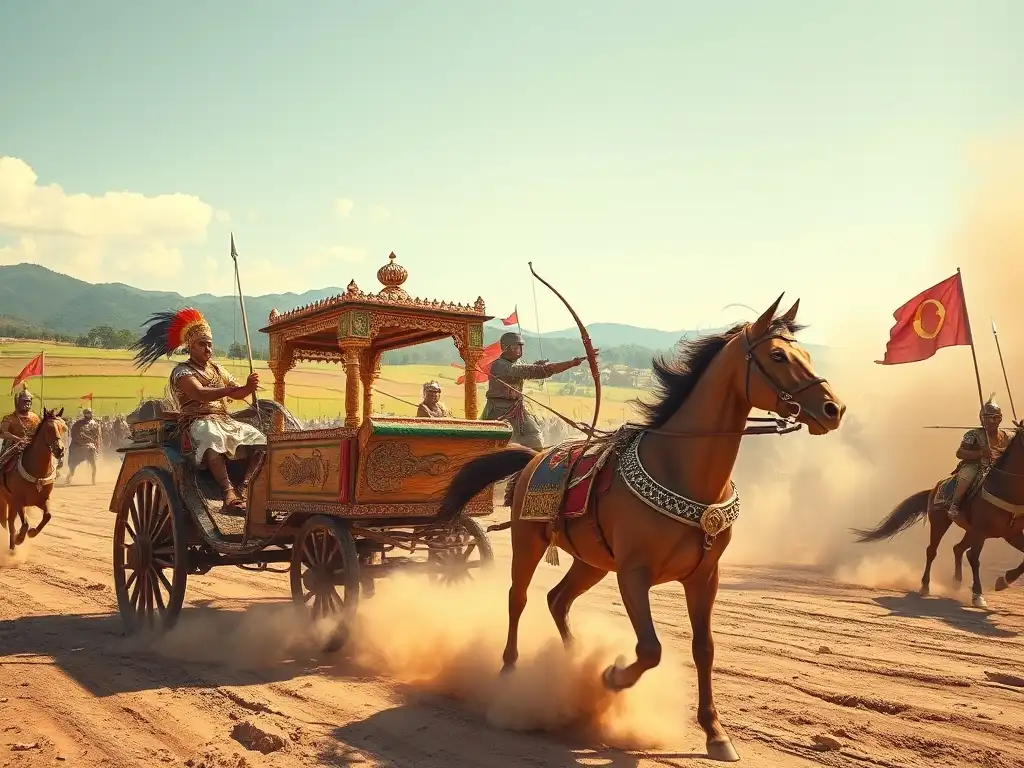
Chariots played a pivotal role in ancient Indian warfare, serving not only as a mode of transportation but also as a formidable platform for archers and infantry. They symbolize the sophistication and complexity of military tactics employed by ancient Indian civilizations.
From the early days of the Indus Valley Civilization to the strategic maneuvers of the Gupta Empire, chariots were integral to the battlefield, influencing the outcomes of numerous notable battles and campaigns. This article delves into the rich history of chariots in ancient Indian warfare, exploring their evolution, significance, and the impact they had on military strategies of the time.
Overview of Chariots in Ancient India
Chariots in ancient India were typically two-wheeled vehicles drawn by horses, although some variations existed with different configurations. These vehicles were crafted with a keen understanding of engineering and design, often adorned with intricate carvings and painted motifs that reflected the cultural ethos of the time.
- Materials Used: Chariots were primarily made from wood, with metal fittings for durability. The wheels were designed for both speed and stability, allowing for quick maneuvers on the battlefield.
- Crew Composition: A typical chariot would carry a driver and one or two warriors, usually armed with bows or spears, ready to engage in combat while on the move.
The use of chariots spanned various regions and periods, adapting to the changing dynamics of warfare and cultural influences across the Indian subcontinent.
Significance of Chariots in Military Strategy
Chariots were not merely vehicles; they represented a significant advancement in military strategy. Their significance can be outlined as follows:
- Mobility and Speed: Chariots allowed armies to move quickly across the battlefield, making it easier to outmaneuver opponents.
- Firepower: With archers positioned on chariots, armies could unleash a barrage of arrows while maintaining a safe distance from enemy combatants.
- Psychological Warfare: The sight of chariots charging into battle instilled fear among enemies, often leading to increased chances of victory even before the first arrows were fired.
This multifaceted role of chariots made them indispensable in the military arsenals of ancient Indian kingdoms.
Historical Context of Chariot Warfare in India
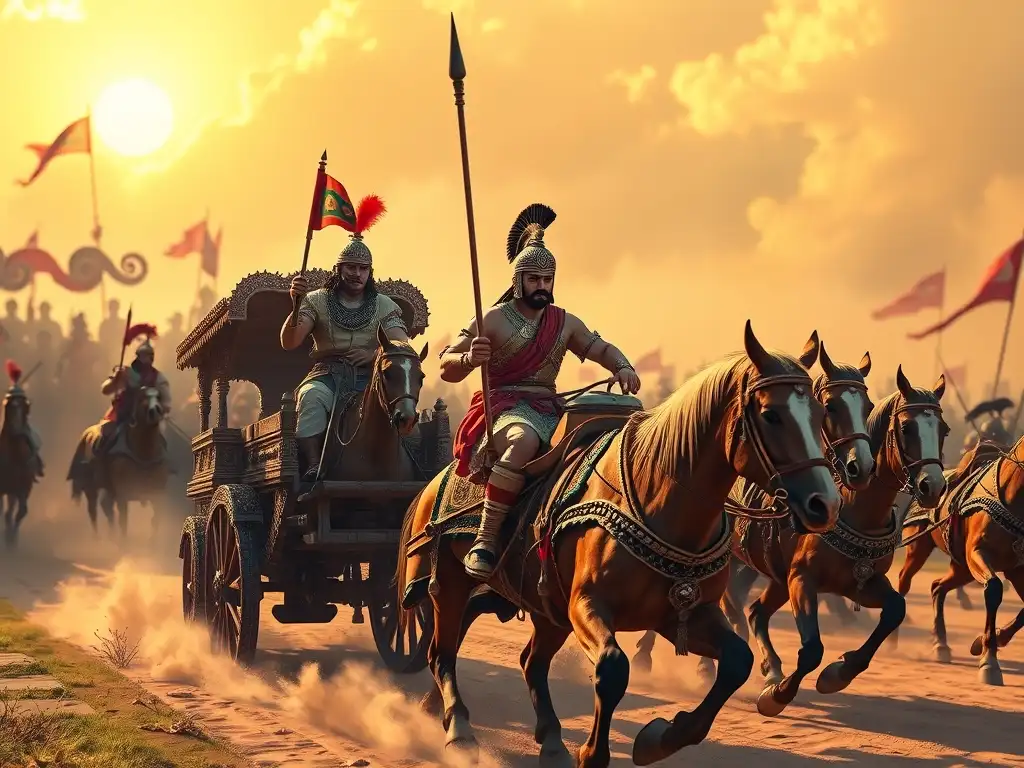
The historical context of chariot warfare in India traces back to the earliest civilizations and extends through various dynastic periods, illustrating a continuous evolution in their use and design.
Early Evidence of Chariot Use in Indian Battles
Archaeological findings and ancient texts provide early evidence of chariot use in battles. The Rigveda, one of the oldest texts in Indian history, references chariots in various hymns, indicating their importance in early Indo-Aryan society.
- Battles and Conflicts: Chariots were integral in conflicts such as the Battle of the Ten Kings, highlighting their role in shaping early military confrontations.
Chariots in the Indus Valley Civilization
The Indus Valley Civilization (c. 3300–1300 BCE) exhibits early instances of chariot-like vehicles, although direct evidence of their use in warfare remains limited.
- Artifacts and Models: Archaeological sites have uncovered terracotta models and seals depicting wheeled vehicles, suggesting that the concept of chariots may have existed even during this period.
Evolution of Chariots through Different Indian Dynasties
As Indian civilizations progressed, so did the design and function of chariots.
- Mauryan Empire: The Mauryan dynasty (c. 322–185 BCE) saw advancements in chariot technology, with increased emphasis on speed and maneuverability, complementing their powerful armies.
- Gupta Empire: The Gupta period (c. 240–550 CE) is noted for its elaborate chariot warfare, which integrated sophisticated tactics and formations, solidifying the chariot's place in military history.
By examining these historical contexts, one can appreciate the evolution and significance of chariots in shaping ancient Indian warfare strategies and their lasting legacy in military history.
Design and Technology of Ancient Indian Chariots
The design and technology of chariots in ancient Indian warfare reflected the ingenuity and craftsmanship of the civilizations that produced them. These vehicles were more than mere modes of transport; they were integral to military strategy and battlefield tactics. The evolution of chariot design showcased advancements in engineering and materials, allowing for increased effectiveness in warfare.
Structural Features of Ancient Indian Chariots
Ancient Indian chariots were typically two-wheeled and drawn by horses, allowing for swift movement across various terrains. The basic structure consisted of a platform or body, supported by a robust axle and two large wheels. The wheels were often constructed with spokes, which reduced weight while maintaining strength.
The charioteers had a seat that was elevated, providing a commanding view of the battlefield. This elevation allowed them to maneuver effectively while offering a strategic advantage in spotting enemy movements. Additionally, the body of the chariot was often decorated, serving both aesthetic purposes and as a means of displaying the status of the charioteer or the commander.
Materials Used in Chariot Construction
The construction of ancient Indian chariots primarily involved materials that were readily available in the region. Wood was the primary material for the body and wheels. Hardwoods such as teak and sal were favored due to their durability and resistance to wear. The axle was often reinforced with metal fittings, enhancing its strength and longevity.
In some cases, leather and animal hides were used for harnesses and coverings, providing flexibility and ease of repair. The use of metal, such as bronze or iron, became more common in later periods, allowing for the creation of more resilient components. The combination of these materials contributed to the overall functionality and efficiency of chariots in warfare.
Innovations in Chariot Design Over Time
Over centuries, the design of chariots in ancient India underwent significant innovations. Early chariots were relatively simple, but as warfare evolved, so did the technology behind chariot construction. The introduction of spoked wheels was a pivotal innovation, as it improved speed and maneuverability.
Furthermore, the incorporation of more complex harnessing systems allowed for better control of the horses, which was crucial during battle. By the time of the Mahabharata, chariots had become elaborate machines equipped with shields and platforms for archers, enhancing their role in combat. This evolution reflected not only technological advancements but also the changing nature of warfare in ancient India.
Roles of Chariots in Ancient Indian Warfare
Chariots played multifaceted roles in ancient Indian warfare, serving as crucial instruments for both mobility and combat effectiveness. Their versatility allowed them to adapt to various battlefield scenarios, making them essential components of military strategy.
Chariots as Platforms for Archers and Warriors
One of the most significant roles of chariots was to serve as mobile platforms for archers and warriors. The elevated position of the charioteer and archers allowed for a wider field of vision and better targeting of enemies. Skilled archers could shoot arrows while the chariot was in motion, providing a tactical advantage.
Moreover, chariots could carry additional warriors, allowing for quick troop deployment during battles. This combination of mobility and firepower made chariots formidable assets on the battlefield, as they could engage enemies from a distance while remaining protected.
Tactical Advantages of Chariotry in Battle
Chariotry offered several tactical advantages during ancient Indian battles. The speed and maneuverability of chariots enabled armies to execute flanking maneuvers and surprise attacks. The ability to move quickly across the battlefield allowed commanders to reposition their forces effectively, responding to changing circumstances in real time.
Additionally, the psychological impact of chariots should not be underestimated. Their imposing presence, often adorned and accompanied by war cries, could intimidate enemy forces, causing panic and disarray. This psychological warfare element was a critical factor in many ancient Indian conflicts.
Psychological Impact of Chariots in Warfare
The psychological impact of chariots in ancient Indian warfare was profound. The sight of well-crafted chariots, often driven by elite warriors, invoked fear and awe among opposing forces. The speed at which they could approach the enemy, combined with the sounds of thundering hooves and clattering wheels, created an atmosphere of intimidation on the battlefield.
This psychological advantage was leveraged by commanders to demoralize the enemy and disrupt their formation. Chariots not only served a functional purpose in warfare but also played a significant role in the overall strategy by influencing the mental state of both armies involved in the conflict.
Notable Battles Involving Chariots in Ancient India
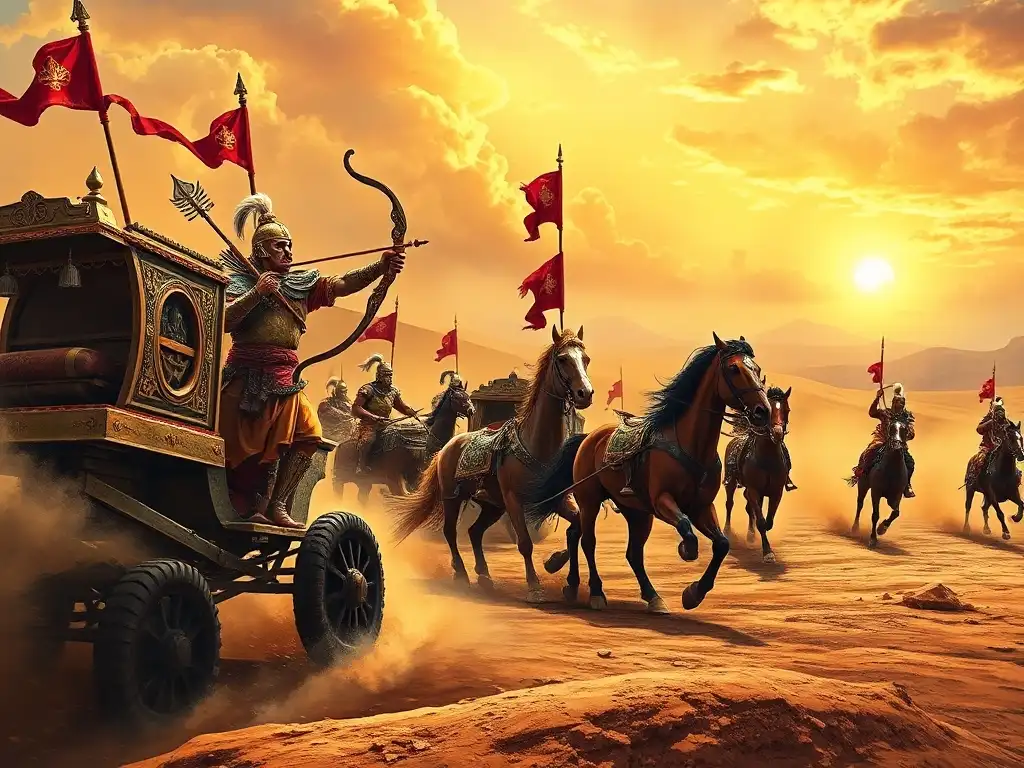
Chariots played a pivotal role in ancient Indian warfare, serving as mobile platforms for archers, infantry, and even command units. Their significance is evident in several notable battles throughout history, where they were utilized not only for their speed and agility but also for their psychological impact on the battlefield.
Among the most significant battles that featured chariots are the Battle of the Ten Kings, various conflicts described in the epic Mahabharata, and numerous battles during the Maurya Empire. Each of these instances provides insight into the strategic importance of chariots as well as their operational effectiveness in ancient military campaigns.
The Battle of the Ten Kings: A Case Study
The Battle of the Ten Kings, detailed in the Rigveda, is one of the earliest recorded examples of chariot warfare in ancient India. This battle took place between the Bharatas, led by King Sudas, and a coalition of ten kings from various tribes, including the Druhyus and the Purus. Chariots were crucial in this conflict, as they allowed for rapid movement across the battlefield and enabled warriors to engage in archery while remaining mobile.
The victory of Sudas, attributed to superior tactics and the effective use of chariots, marked a significant consolidation of power for the Bharata tribe. The battle not only showcased the technological advancements of the time but also highlighted the importance of chariots in shaping political landscapes. The outcome influenced subsequent alliances and rivalries among the tribes, demonstrating the far-reaching implications of chariot warfare in ancient Indian society.
Chariots in the Mahabharata: Historical and Mythological Perspectives
The Mahabharata, one of the two major Sanskrit epics of ancient India, is replete with references to chariots, which are depicted as symbols of power and heroism. The epic's central conflict, the Kurukshetra War, features chariots prominently, with key characters such as Arjuna and Krishna engaging in battles from their chariot platforms.
In this context, chariots served both practical and symbolic roles. They provided strategic advantages during combat, allowing for swift maneuvers and the ability to strike from a distance. Moreover, the chariot is often portrayed as a vehicle of divine favor, with Krishna acting as Arjuna's charioteer, symbolizing guidance and support in warfare.
The Mahabharata's blend of history and mythology further emphasizes the cultural significance of chariots, reflecting their importance in both martial and spiritual realms. This duality contributes to the perception of chariots as more than mere tools of war; they are revered as instruments of fate and destiny.
The Role of Chariots in the Battles of the Maurya Empire
During the Maurya Empire, which flourished from the 4th to the 2nd centuries BCE, chariots continued to play a crucial role in military strategies. Under rulers like Chandragupta Maurya and his grandson Ashoka, the use of chariots was refined and integrated into larger armies.
Chariots were typically manned by skilled drivers and equipped with various weaponry, including bows, spears, and sometimes even cavalry. Their mobility allowed commanders to quickly reposition troops, flank enemy formations, and deliver decisive strikes.
One of the most notable instances of chariot use in the Maurya period was during the Kalinga War, where Ashoka's forces employed chariots effectively in their campaigns. The psychological impact of chariots, combined with their physical prowess, contributed to the Mauryan military's successes and helped establish a vast empire that spanned much of the Indian subcontinent.
Decline of Chariot Warfare in Ancient India
Despite their prominence, the use of chariots in warfare began to decline by the late ancient period. Various factors contributed to this transition, as military strategies evolved and new technologies emerged.
Factors Leading to the Decline of Chariots in Warfare
Several factors contributed to the decline of chariot warfare in ancient India. One major influence was the changing nature of warfare itself, which increasingly favored infantry and cavalry tactics over chariot-based formations. As armies became larger and more organized, the logistical challenges of maintaining chariots—especially in diverse terrains—became apparent.
Additionally, the rise of fortified cities and complex battlefield strategies diminished the effectiveness of chariots. As tactics evolved to include ambushes and guerilla warfare, the vulnerability of chariot units became more pronounced. Furthermore, the introduction of new military technologies, such as crossbows and improved infantry weapons, further challenged the chariot's dominance on the battlefield.
Transition to Other Military Technologies
The transition from chariot warfare to other military technologies involved the increased utilization of cavalry and infantry formations. Cavalry units, known for their speed and adaptability, began to replace chariots as the primary mobile force in armies. This shift was evident in various historical battles where mounted troops were able to outmaneuver traditional chariots, particularly in regions with difficult terrains.
Moreover, the development of more sophisticated siege technologies and fortifications made direct assaults by chariots less viable. Armies began to rely on a combination of infantry, archers, and cavalry, leading to a more integrated approach to warfare that emphasized versatility and strategic planning.
The Legacy of Chariots in Later Indian Armies
Despite their decline, the legacy of chariots in ancient Indian warfare endured. Elements of chariot design and tactics continued to influence military thinking in subsequent centuries. The symbolic representation of chariots persisted in literature and art, reinforcing their status as icons of power and nobility within Indian culture.
In later Indian armies, the principles of chariot warfare were adapted into new forms of combat. For instance, the use of war elephants, which often accompanied cavalry and infantry, can be seen as a direct evolution of the chariot's mobile and intimidating presence on the battlefield.
Chariots also left an indelible mark on the cultural and historical narrative of India, serving as a reminder of a time when they were central to military might and strategy, thus continuing to inspire future generations in their understanding of warfare and heroism.
Conclusion: The Enduring Legacy of Chariots in Ancient Indian Warfare
The use of chariots in ancient Indian warfare represents a significant aspect of military strategy and technology in the Indian subcontinent. Chariots were not merely vehicles for transportation; they transformed the dynamics of battles, enabling greater mobility, tactical versatility, and a platform for archers and warriors to engage the enemy from a distance. Their presence in significant historical texts, such as the Mahabharata, highlights their cultural importance, symbolizing not only martial prowess but also the valor associated with chariot warfare.
The decline of chariots with the advent of new military technologies, such as cavalry and infantry tactics, marked a transition in warfare strategies. However, the legacy of chariots endures in various forms, influencing both historical narratives and modern interpretations of ancient Indian warfare. Their depiction in art, literature, and folklore continues to resonate, illustrating the sophisticated military strategies employed by ancient Indian rulers.
Summary of Key Points
- Chariot Design and Functionality: Chariots were designed for speed and maneuverability, often pulled by horses, and equipped with compartments for archers or spearmen.
- Tactical Advantages: They allowed for rapid movement across the battlefield, providing a strategic edge in both offense and defense during conflicts.
- Cultural Significance: Chariots were emblematic of power and status, often associated with royal figures and depicted in epic narratives, highlighting their role in ancient Indian society.
- Historical Texts and Records: Significant battles, such as those described in the Mahabharata, illustrate the pivotal role of chariots and their operators in ancient military confrontations.
- Transition in Warfare: Over time, the evolution of military strategies led to the decline of chariot warfare, paving the way for more adaptable forms of combat.
Impact on Modern Perceptions of Ancient Indian Warfare
The portrayal of chariots in ancient Indian warfare has significantly shaped contemporary understandings of military history in the region. Modern interpretations often romanticize the chariot as a symbol of heroism and strategic ingenuity, reflecting the complexities of ancient Indian military practices. In literature and cinema, chariots are frequently depicted in large-scale battles, enhancing their status as iconic elements of ancient Indian warfare.
Furthermore, archaeological discoveries and historical studies have contributed to a more nuanced appreciation of chariotry, revealing insights into the technological advancements and tactical innovations of ancient Indian civilizations. This ongoing exploration not only enriches our comprehension of past battles but also fosters a greater respect for the sophisticated military systems that existed long before the modern era.
The enduring legacy of chariots in ancient Indian warfare continues to captivate historians, scholars, and enthusiasts alike, ensuring that their significance remains a vital part of the narrative surrounding India's rich military heritage.
- Introduction to Chariots in Ancient Indian Warfare
- Overview of Chariots in Ancient India
- Significance of Chariots in Military Strategy
- Historical Context of Chariot Warfare in India
- Design and Technology of Ancient Indian Chariots
- Roles of Chariots in Ancient Indian Warfare
- Notable Battles Involving Chariots in Ancient India
- Decline of Chariot Warfare in Ancient India
- Conclusion: The Enduring Legacy of Chariots in Ancient Indian Warfare
Frequently Asked Questions
What role did chariots play in ancient Indian warfare?
Chariots were crucial in ancient Indian warfare, serving as mobile platforms for archers and as a means of rapid troop movement on the battlefield.
How were chariots constructed in ancient India?
Ancient Indian chariots were typically built using lightweight materials like wood, with spoked wheels that enhanced mobility and speed during combat.
Which ancient Indian civilizations prominently used chariots?
The Indus Valley Civilization and later kingdoms like the Maurya and Gupta Empires utilized chariots extensively in their military strategies.
Did chariots influence the outcome of battles in ancient India?
Yes, the speed and strategic advantage provided by chariots often determined the outcome of battles, enabling armies to outmaneuver their opponents.
Are there any famous battles in ancient India that featured chariots?
One notable battle is the Mahabharata, where the epic details the significant role of chariots and their drivers, especially the character Arjuna and his chariot driver, Krishna.
Final Reflection: The Enduring Legacy of Chariots in Ancient Indian Warfare
The significance of chariots in ancient Indian warfare is not merely a relic of the past; it resonates deeply with our understanding of military strategy and cultural identity today. As we explore the intricate designs and tactical innovations of these vehicles, we uncover a narrative that shaped not only the battlefield but also the very fabric of ancient Indian society. The chariot, a symbol of power and prestige, played a pivotal role in defining the dynamics of warfare, and its legacy continues to influence modern interpretations of strategy and valor.
The impact of chariots in ancient Indian warfare extends beyond the historical context; it has woven itself into the cultural and social tapestry of India. From epic tales in the Mahabharata to the artistic representations in temples, the chariot embodies the spirit of heroism and the complexities of conflict. As historian Romila Thapar aptly noted, The chariot was not just a means of transport; it was a manifestation of the socio-political ethos of its time.
This ongoing influence reminds us that the stories of our past continue to shape our present, urging us to reflect on the values and lessons embedded within them.
As we conclude this exploration of chariots in ancient Indian warfare, I invite you to reflect on the broader implications of this topic in your own life. Consider how the strategies, values, and narratives from our history can inform your understanding of conflict and resolution today. Let the legacy of the chariot inspire you to navigate your own battles with wisdom and courage, recognizing that every challenge is an opportunity to learn from the past and forge a brighter future.
Unveil the Secrets of Ancient Indian Warfare!
Thank you for diving into the fascinating world of ancient Indian chariots and their vital role in warfare! By exploring this significant aspect of history, you’ve already taken the first step to deepen your understanding of strategic innovations from ages past.
Now, let’s take action to expand your knowledge and engagement:
- Join a discussion forum on ancient warfare to share insights and ask questions with fellow enthusiasts.
- Explore more articles on ancient Indian military strategies and technologies to broaden your perspective.
- Consider participating in a local history club or online course that focuses on ancient civilizations—these communities often uncover lesser-known yet captivating stories!
What aspects of ancient Indian warfare intrigue you most, and how do you think they have influenced modern tactics?