
The Influence of Empires on Family Dynamics in Ancient India

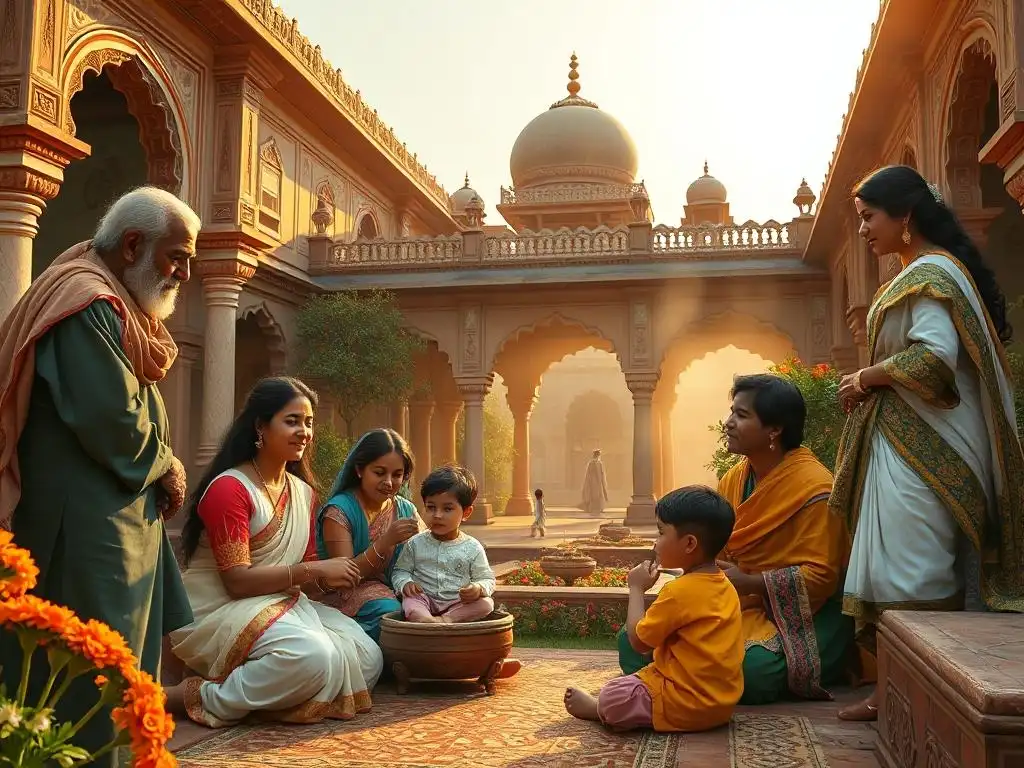
Welcome to Ancient India History, where we embark on an enthralling journey through time to uncover the rich tapestry of ancient Indian civilizations. In our featured article, “The Influence of Empires on Family Dynamics in Ancient India,” we delve into the intricate relationships that shaped daily life and society throughout this remarkable era. What role did powerful empires play in molding family structures? How did cultural shifts influence generational bonds? Prepare to be captivated as we unravel these compelling questions and more, inviting you to explore the profound legacy of ancient India’s family dynamics.
Introduction to Family Dynamics in Ancient India
The concept of family dynamics in ancient India is a multifaceted subject that reflects the intricate interplay between societal structures, cultural practices, and the overarching influence of various empires. As India's ancient civilizations evolved, so did the roles, responsibilities, and relationships within family units.
From the early settlements of the Indus Valley to the flourishing Gupta Empire, the family unit not only served as a foundational social structure but also mirrored the broader socio-political changes of the time. Understanding these dynamics is crucial for grasping how ancient Indian societies functioned and how legacies of these family practices continue to resonate in contemporary India.
Understanding Family Structures in Ancient Indian Societies
Family structures in ancient India were predominantly patriarchal, yet they varied significantly across different regions and time periods.
- Nuclear and Extended Families:
- Nuclear families were common, consisting of parents and their children, often living independently.
- Extended families included additional relatives, such as grandparents, uncles, and cousins, living together or in close proximity, fostering a strong sense of community.
- Kinship Systems:
- Kinship was central to social organization, often determining inheritance, marriage alliances, and social status.
- Different castes and communities had unique kinship practices, which were reinforced by religious and cultural beliefs.
The dynamics within these families were shaped not just by internal relationships but also by external influences, including those from ruling empires that impacted societal norms and practices.
The Role of Empires in Shaping Family Practices
Empires played a pivotal role in defining and transforming family dynamics. The centralization of power and the imposition of administrative systems affected family structures in several ways:
- Legal Frameworks:
- Different empires established legal codes that influenced marriage, inheritance, and familial responsibilities.
- Cultural Exchange:
- The expansion of empires facilitated cultural exchanges that introduced new ideas about family roles, gender relations, and child-rearing practices.
- Economic Factors:
- As empires expanded, economic changes brought about shifts in family roles, often necessitating the participation of women in economic activities outside the home.
Understanding the influence of these empires is crucial for analyzing the evolution of family dynamics in ancient India.
Historical Overview of Empires in Ancient India
Ancient India witnessed the rise and fall of several significant empires, each leaving its mark on the social fabric of the time. Key empires include:
The Indus Valley Civilization and Early Family Units
The Indus Valley Civilization (c. 3300–1300 BCE) is recognized for its advanced urban planning and social organization. Family units during this period were likely nuclear, focusing on agricultural production and trade. Archaeological findings suggest that family dynamics revolved around daily activities, with distinct roles for men, women, and children.
The Maurya Empire: Centralization and Family Roles
The Maurya Empire (c. 322–185 BCE) marked a significant shift towards centralization in governance. This, in turn, influenced family dynamics, as the state began to impose its views on marriage and inheritance. The emergence of legal texts during this period provided frameworks within which families operated, often emphasizing the importance of duty and dharma in familial relationships.
The Gupta Empire: Cultural Renaissance and Family Dynamics
The Gupta Empire (c. 240–550 CE) is often referred to as the Golden Age of India, characterized by significant advancements in arts, science, and literature. This cultural renaissance also impacted family dynamics, as literature from this period reflects a growing emphasis on romantic love, companionship, and the roles of women in society. The Gupta period showcased a more nuanced understanding of family relationships, which were increasingly celebrated in cultural narratives.
By examining these aspects of family dynamics across various empires, we can gain a deeper understanding of how historical contexts shaped the intimate relationships within families in ancient India, providing a rich tapestry of social evolution that continues to influence contemporary practices.
Influence of Political Structures on Family Dynamics
The political structures established by ancient Indian empires had profound effects on family dynamics. The governance systems, whether monarchical or republican, influenced social norms and family roles, shaping how families interacted with each other and with the state. As empires expanded and evolved, so too did the expectations placed on family structures. Political stability or upheaval could dictate family survival strategies, inheritance laws, and even marital alliances, reflecting the intricate relationship between governance and familial organization.
The Impact of Governance on Family Hierarchies
Governance in ancient India often dictated the hierarchy within families. For instance, during the Mauryan Empire, a centralized authority reinforced patriarchal structures, where the male head of the family held significant power and responsibility. Families were often seen as microcosms of the state, mirroring the governance hierarchy. This meant that family members were expected to adhere to the roles assigned to them based on their age, gender, and social status.
In contrast, during periods of regional fragmentation, such as the post-Mauryan era, families gained more autonomy, leading to variations in family hierarchies. Extended families became crucial for survival in uncertain political climates, as alliances among relatives provided mutual support and protection. Thus, the nature of governance significantly influenced family hierarchies, with centralized power often leading to rigid structures, while decentralization allowed for more flexibility.
Class and Caste Systems: Shaping Family Interactions
The class and caste systems, deeply entrenched in ancient Indian society, played a critical role in shaping family interactions. Families were often categorized into specific castes and classes, each with its own norms and expectations. These social divisions dictated everything from marriage practices to inheritance rights, directly impacting family dynamics.
For instance, within the rigid caste hierarchy, inter-caste marriages were largely frowned upon, which maintained the purity of caste lines and reinforced social stratification. Families often negotiated marriages as strategic alliances, reinforcing their status and economic stability. Consequently, the caste system profoundly influenced family structures, determining who could interact with whom and under what circumstances, thereby shaping the overall dynamics of family life across different empires.
Roles of Men and Women within Imperial Frameworks
Under different empires, the roles of men and women were defined by the prevailing political and social ideologies. In many cases, men were primarily seen as providers and protectors, responsible for making decisions that affected the family's welfare. They held the authority in both domestic and public spheres, often serving as intermediaries between the family and the state.
Conversely, women's roles varied significantly depending on the empire and its governance style. In some instances, women enjoyed a degree of autonomy, participating in trade or managing family affairs, especially in matrilineal societies like that of the Nairs in Kerala. However, in more patriarchal systems, women's roles were confined to the domestic sphere, focusing on child-rearing and household management. These dynamics illustrate how imperial frameworks influenced gender roles within families, affecting the broader social fabric of ancient India.
Cultural Practices and Their Effects on Family Life
Cultural practices in ancient India were deeply intertwined with family life, reflecting the values, beliefs, and traditions that shaped familial interactions. As empires rose and fell, these cultural practices evolved, leading to significant changes in family dynamics. Festivals, rituals, and customs played essential roles in maintaining family bonds and reinforcing social cohesion, highlighting the importance of culture in family life.
Marriage Traditions and Their Evolution Across Empires
Marriage traditions in ancient India were pivotal in defining family structures and dynamics. Each empire brought its own customs, with practices evolving over time. For instance, during the Gupta period, love-based marriages began to emerge alongside traditional arranged marriages, indicating a shift in societal values.
The concept of Kanyadaan, or the giving away of the bride, became a significant ritual, symbolizing the union of families rather than just individuals. Furthermore, the practice of dowry, which became more pronounced during certain periods, reflected economic considerations that influenced marital arrangements and family interactions. These evolving marriage traditions reveal how the socio-political landscape of empires directly impacted family dynamics.
Family Rituals: Spirituality and Social Cohesion
Family rituals in ancient India were more than mere traditions; they were central to spiritual life and social cohesion. Rituals such as Puja (worship) and festivals fostered unity within families and reinforced social bonds. The participation of family members in these rituals was crucial, as it provided opportunities for collective expression of faith and identity.
Additionally, these rituals often had deep cultural significance, serving as a means for families to assert their social status and heritage. During the Chola and Gupta empires, for example, elaborate rituals were performed during significant life events such as births, marriages, and deaths, highlighting the importance of family in maintaining cultural continuity. Thus, family rituals were instrumental in shaping not only individual family dynamics but also the broader social structure.
Education and Familial Responsibilities in Different Empires
Education in ancient India was closely tied to family responsibilities and societal expectations. Various empires prioritized education differently, influencing how families approached the education of their children. In the Vedic period, for example, education was primarily the domain of the male elite, with families investing heavily in the education of sons to prepare them for roles as leaders or scholars.
However, during the Gupta Empire, there was a slight shift, as some families began to educate their daughters, particularly in urban centers. This change reflected broader societal changes and a recognition of women's roles beyond the household. Families were thus responsible for instilling values and knowledge in the next generation, shaping future family dynamics and societal structures. The approach to education across different empires illustrates the interplay between familial responsibilities and the socio-political context of the time.
Case Studies: Notable Empires and Their Family Dynamics
The study of family dynamics in ancient India reveals how influential empires shaped societal structures, roles, and practices. By analyzing specific empires such as the Mauryan and Gupta, as well as regional variations, we can understand the intricate relationships between political authority and family life. This section delves into notable case studies that illustrate these dynamics and their lasting impacts.
The Mauryan Era: Case Study on Family Structures
The Mauryan Empire, which flourished from 322 to 185 BCE, is one of the most significant periods in ancient Indian history. Under the rule of Chandragupta Maurya and his grandson Ashoka, the empire established a centralized administration that affected family structures across the region.
- Patriarchal Society: The Mauryan era predominantly featured a patriarchal family system where males held authority, and lineage was traced through the male line. Men were responsible for economic support, while women primarily managed household affairs.
- Marriage Alliances: Marriages were often arranged to strengthen political alliances or consolidate power. This practice ensured that family ties extended beyond immediate kin, linking different clans and regions.
- Role of Women: Although women had limited rights, legal texts from this period, such as the Arthashastra, suggest that they could own property and engage in commerce under certain conditions. This nuance indicates the complexity of women's roles within Mauryan society.
Gupta Empire: Changes in Marriage Practices and Family Roles
The Gupta Empire, which lasted from approximately 240 to 550 CE, marked a period of cultural renaissance. This era saw profound changes in marriage practices and family roles, reflecting broader societal shifts.
- Increased Status of Women: Unlike earlier periods, women in Gupta society experienced a relative increase in status and autonomy. This change is evident in the promotion of education for women, with some texts indicating that women could be learned scholars.
- Marriage Practices: The Gupta period saw a trend towards greater emphasis on monogamous marriages, although polygamy remained practiced by the elite. The concept of swayamvara, where women chose their husbands from a group of suitors, gained popularity, empowering women in the marriage process.
- Family Structure: The Gupta family model began to reflect a more nuclear structure, although extended families still played a significant role in daily life. This transition allowed for more intimate familial bonds, shifting the focus from broader clan affiliations.
Regional Variations: Family Dynamics in South vs. North India
Family dynamics in ancient India were not monolithic; they varied significantly between regions, particularly between North and South India. These differences were influenced by local customs, socio-economic conditions, and cultural practices.
- North India: In Northern regions, the family structure was predominantly patriarchal, with strong emphasis on lineage and caste. Joint family systems were common, where extended families lived together, reinforcing kinship ties and collective decision-making.
- South India: Contrastingly, South Indian families often exhibited a more matrilineal aspect, particularly among certain communities like the Nayars. Here, inheritance was passed through the female line, and women held significant authority in family matters, including property rights.
- Cultural Practices: Rituals and customs surrounding marriage also differed. For instance, North Indian wedding ceremonies often focused on elaborate rituals and the exchange of dowries, while South Indian weddings emphasized community participation and the celebration of cultural heritage.
The Legacy of Empires on Modern Family Dynamics
The influences of ancient empires on family dynamics extend into contemporary society, shaping modern Indian family structures and practices. Understanding this legacy is crucial for contextualizing current family dynamics.
Continuities in Family Practices from Ancient to Modern India
Several core family practices have endured from ancient times to modern India, showcasing a blend of tradition and adaptation:
- Patriarchal Influence: Despite significant progress in gender equality, patriarchal values continue to influence family structures, with men often remaining the primary decision-makers in many households.
- Arranged Marriages: The tradition of arranged marriages persists, reflecting the historical emphasis on family alliances. However, contemporary practices have become more flexible, with increasing acceptance of love marriages and personal choice.
- Joint Family System: While nuclear families are on the rise, the joint family system remains prevalent in many areas, particularly in rural regions. This structure provides emotional and financial support, echoing ancient practices.
How Historical Empires Influence Contemporary Family Structures
The historical contexts of ancient empires have left an indelible mark on modern family structures in India. The following points highlight key influences:
- Caste and Community: The caste system, solidified during the time of empires, continues to affect family dynamics, influencing marriage choices and social interactions within communities.
- Cultural Rituals: Many cultural rituals and ceremonies practiced today have roots in ancient traditions, reflecting the continuity of cultural identity through family practices.
- Gender Roles: Historical gender roles established by empires have evolved but still influence expectations regarding responsibilities and authority within families, shaping contemporary discussions around gender equality.
The legacy of ancient empires is intricately woven into the fabric of modern family dynamics in India. Understanding these historical influences offers valuable insights into contemporary societal structures and practices.
Conclusion: The Enduring Influence of Empires on Family Dynamics in Ancient India
The family dynamics in ancient India were profoundly influenced by the various empires that ruled over the region. From the early Indus Valley civilization to the vast Mauryan and Gupta empires, the structures, roles, and relationships within families evolved in response to political, economic, and cultural shifts. The interplay between imperial power and family life shaped not only individual households but also the broader societal fabric of ancient Indian civilization.
Empires often dictated social norms and expectations, leading to transformations in marriage practices, inheritance rules, and gender roles. For instance, the Mauryan Empire's emphasis on centralized governance and administration influenced the patriarchal family structure, where male authority became more pronounced. Similarly, the Gupta Empire saw a flourishing of arts and literature, which also reflected and reinforced certain family values, particularly in terms of loyalty and honor.
Understanding these dynamics allows us to appreciate the complexities of family life in ancient India, revealing how deeply intertwined personal relationships were with the larger socio-political environment.
Summary of Key Insights on Family and Empire Interconnections
- Patriarchy and Authority: Many ancient Indian empires reinforced patriarchal systems, where men held primary authority in both family and societal structures. This emphasis shaped the roles of women and children within households, often limiting their autonomy.
- Marriage Practices: The nature of marital alliances often reflected imperial interests. Dynastic marriages were strategically used to solidify power, leading to practices such as polygamy among royalty which influenced wider societal norms.
- Cultural Exchange and Adaptation: Empires facilitated cultural exchanges that impacted family dynamics. The spread of new religions, philosophies, and customs influenced marriage rituals, family roles, and social expectations.
- Economic Factors: The economic prosperity or decline of empires directly affected family structures. For instance, during periods of wealth, families might expand and maintain more elaborate household structures, whereas economic hardship could lead to smaller, more nuclear families.
- Legal Frameworks: Each empire contributed to the evolution of legal codes that governed family life, including inheritance laws and familial duties, which shifted over time reflecting the values of the ruling powers.
Reflecting on the Importance of Understanding Family Dynamics in Historical Contexts
Understanding the family dynamics in ancient India is crucial for several reasons. Firstly, it provides insights into the societal values and norms of the time, illuminating how families functioned not just as private units but as integral parts of a larger social system influenced by imperial rule.
Moreover, exploring these dynamics helps contextualize contemporary family structures and practices within India today. Many modern family roles and relationships can trace their origins back to historical precedents set by previous empires.
Finally, studying the intersection of family and empire broadens our comprehension of historical narratives, allowing for a more nuanced view of how empires shaped not just political boundaries but also the intimate lives of individuals. This understanding aids in appreciating the rich tapestry of ancient Indian culture and the enduring impact of these historical dynamics on present-day society.
- Introduction to Family Dynamics in Ancient India
- Understanding Family Structures in Ancient Indian Societies
- The Role of Empires in Shaping Family Practices
- Historical Overview of Empires in Ancient India
- Influence of Political Structures on Family Dynamics
- Cultural Practices and Their Effects on Family Life
- Case Studies: Notable Empires and Their Family Dynamics
- The Legacy of Empires on Modern Family Dynamics
- Conclusion: The Enduring Influence of Empires on Family Dynamics in Ancient India
- What were the family dynamics like in ancient India?
- How did the Indus Valley Civilization influence family structures?
- What role did religion play in family life during ancient Indian empires?
- How did the Gupta Empire impact family roles and responsibilities?
- Were there any notable changes in family dynamics throughout ancient Indian history?
Frequently Asked Questions
What were the family dynamics like in ancient India?
Family dynamics in ancient India were often characterized by joint families, where multiple generations lived together, emphasizing collective responsibility and support.
How did the Indus Valley Civilization influence family structures?
The Indus Valley Civilization showcased evidence of advanced urban planning and social organization, which likely affected family dynamics by promoting community living and shared resources.
What role did religion play in family life during ancient Indian empires?
Religion significantly influenced family life, dictating ritual practices, marriage customs, and the roles of family members, thus shaping the social fabric of ancient Indian society.
How did the Gupta Empire impact family roles and responsibilities?
During the Gupta Empire, the roles within families became more defined, with an emphasis on patriarchy, where men typically held authority and women managed domestic affairs.
Were there any notable changes in family dynamics throughout ancient Indian history?
Yes, family dynamics evolved over time, with shifts influenced by political changes, economic conditions, and cultural interactions, leading to variations in marriage practices and family structures.
Final Reflection: The Enduring Legacy of Family Dynamics in Ancient India
The exploration of family dynamics in ancient India reveals a profound connection between societal structures and personal relationships. As we navigate the complexities of modern life, understanding how empires shaped familial roles and responsibilities offers invaluable insights into our own family dynamics today. The intricate interplay between power, culture, and family in ancient India serves as a reminder that our familial bonds are often influenced by larger societal forces, echoing the sentiment that "history is not just a record of the past, but a guide for the present."
The influence of empires on family structures continues to resonate in contemporary society, shaping our perceptions of kinship, authority, and community. The legacies of ancient practices and beliefs still inform how we view family roles, responsibilities, and relationships in a rapidly changing world. As noted by historian Romila Thapar, "> The past is a living entity, influencing our present and future." This observation underscores the importance of recognizing the historical context of our family dynamics, as it enriches our understanding of the present and informs our future interactions.
As we reflect on the lessons drawn from the family dynamics in ancient India, I invite you to consider how these insights can be applied to your own life. Take a moment to examine your family relationships and the broader societal influences that shape them. By acknowledging the historical context of our familial interactions, we can foster deeper connections, promote understanding, and create a more harmonious family environment. Let us embrace the wisdom of the past as we navigate our present, ensuring that the legacies of ancient empires continue to inspire and guide our family dynamics into the future.
Unveil the Legacy: Transform Your Understanding of Family Dynamics Today!
Thank you for taking the time to explore the fascinating influence of empires on family dynamics in ancient India. Your curiosity is the first step towards deepening your understanding of this rich history. Now, let's take that knowledge further!
Here are some empowering actions you can take to expand your exploration:
- Dive deeper into ancient texts: Visit your local library or online digital archives to read translations of ancient Indian literature that discuss family roles and structures.
- Engage with our community: Share your insights or ask questions in the comments below! Connect with fellow history enthusiasts who share your passion.
- Explore a surprising angle: Research how contemporary family dynamics in India continue to be shaped by ancient influences and consider writing your observations.
What aspect of ancient family life in India resonates with you the most, and how do you believe it has impacted modern relationships?