
The Historical Context of Ashoka’s Reign: Challenges and Triumphs


Welcome to Ancient India History, where we delve into the rich tapestry of civilization that has shaped the Indian subcontinent. In this exploration, we invite you to uncover the historical significance of Ashoka's reign, a period marked by profound challenges and remarkable triumphs. As you venture through the layers of history, prepare to be captivated by the stories of an emperor who transformed his empire through compassion and governance. Discover how Ashoka's legacy continues to resonate today, and let your curiosity lead you deeper into the fascinating narrative of ancient India.
- Introduction to Ashoka's Reign Historical Significance
- The Historical Background of Ashoka's Reign
- Challenges Faced During Ashoka's Reign
- Triumphs of Ashoka’s Reign
- The Historical Significance of Ashoka's Policies
- The Legacy of Ashoka's Reign
- Conclusion: The Lasting Historical Significance of Ashoka's Reign
- Frequently Asked Questions
- Final Reflection: The Enduring Legacy of Ashoka's Reign
- Embrace the Legacy of Ashoka: Take Action Today!
Introduction to Ashoka's Reign Historical Significance
The reign of Ashoka the Great represents a pivotal era in ancient Indian history, characterized by profound transformations in governance, culture, and religious thought. Ashoka, who ruled from approximately 268 to 232 BCE, is best known for his dramatic shift from a warrior king to a proponent of peace and dharma (moral law) following the bloody Kalinga War. His reign not only marked the peak of the Mauryan Empire's territorial expansion but also introduced a unique approach to leadership that emphasized ethical governance and social welfare.
Understanding the historical significance of Ashoka's reign requires delving into the complexities of his rule, including the challenges he faced and the triumphs he achieved. This article aims to explore these aspects in detail, shedding light on how Ashoka’s policies and philosophies have influenced subsequent generations and shaped the cultural and spiritual landscape of India.
Overview of Ashoka the Great
Ashoka the Great, the third ruler of the Mauryan Dynasty, is often hailed as one of India's most illustrious emperors. Born in 304 BCE, he ascended the throne after a tumultuous path that included familial strife and military conquests. His early reign was marked by relentless expansionism, as he sought to consolidate Mauryan power across the Indian subcontinent.
However, the turning point in Ashoka’s life came after the Kalinga War (c. 261 BCE), a conflict that resulted in massive destruction and loss of life. The moral anguish he experienced from witnessing the consequences of his military campaigns led him to embrace Buddhism. This transformation not only altered his personal beliefs but also fundamentally changed his approach to governance:
- Promotion of Buddhism: Ashoka actively disseminated Buddhist teachings, advocating for non-violence, compassion, and moral conduct.
- Edicts of Ashoka: He inscribed edicts on pillars and rocks across his empire, proclaiming his principles and policies aimed at fostering peace and harmony.
- Social Welfare Initiatives: His reign was marked by significant investments in infrastructure, healthcare, and education, reflecting his commitment to the welfare of his subjects.
Importance of Historical Context in Understanding Ashoka
To fully grasp the historical significance of Ashoka's reign, it is essential to consider the broader socio-political and cultural context of ancient India during his time. Ashoka ruled over a vast empire that had to contend with various challenges, including:
- Diverse Populations: The Mauryan Empire encompassed numerous ethnic and cultural groups, necessitating a governance model that could accommodate diversity.
- Political Rivalries: Ashoka faced threats from rival kingdoms and internal dissent, requiring strategic diplomacy and military prowess.
- Cultural Interactions: The period saw increased interactions with neighboring civilizations, leading to a blend of ideas and practices.
By analyzing these contextual elements, we can appreciate how Ashoka's policies were not only a response to his immediate circumstances but also a reflection of his visionary approach to leadership. His reign serves as a significant case study for understanding the interplay between governance, ethics, and cultural identity in ancient Indian history.
Ashoka's reign stands as a testament to the potential for transformation and progress, making the study of its historical significance essential for anyone interested in the rich tapestry of ancient Indian civilization.
The Historical Background of Ashoka's Reign
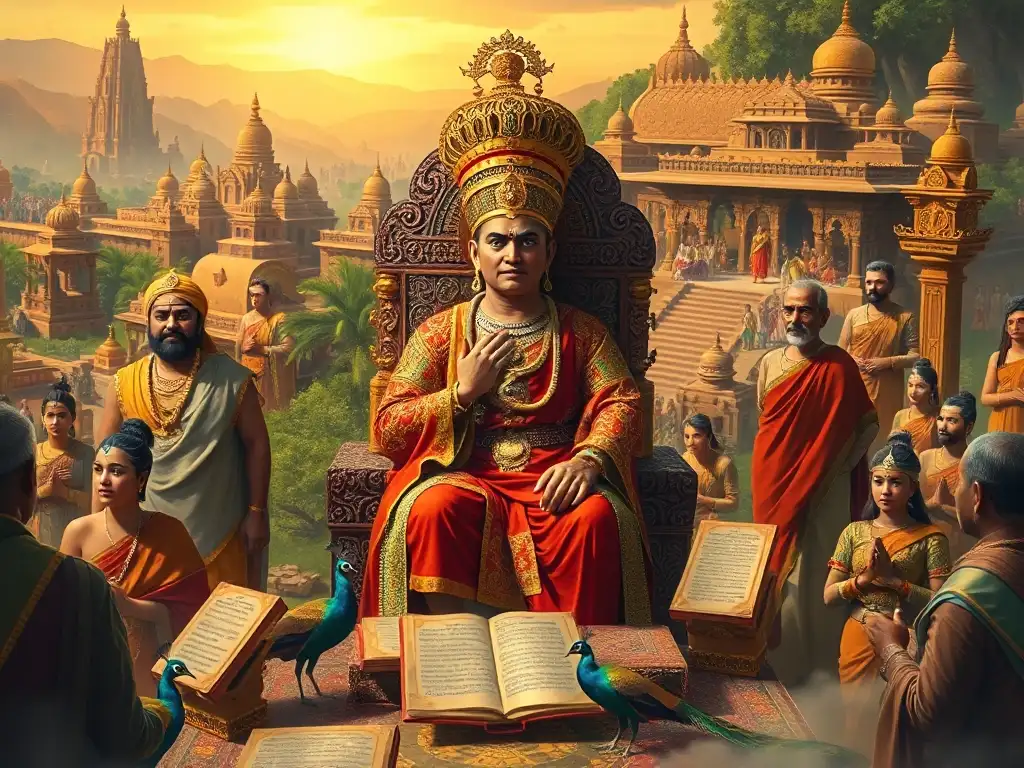
The reign of Ashoka the Great, one of the most celebrated emperors in Indian history, is marked by significant transformations that shaped the trajectory of ancient Indian civilization. Understanding the historical context of Ashoka's reign is crucial to grasping the profound impact he had on the subcontinent, both politically and culturally. His era represents a pivotal moment in the evolution of the Maurya Empire, as well as a unique blend of governance and moral philosophy that resonates through the ages.
The Maurya Empire: Foundation and Expansion
The Maurya Empire was established in 322 BCE by Chandragupta Maurya, who laid the foundation for one of the largest empires in ancient India. Under his leadership, the empire expanded rapidly, absorbing a vast array of territories through conquests and strategic alliances.
- Geographical Extent: At its zenith, the Maurya Empire covered a substantial part of the Indian subcontinent, from present-day Afghanistan in the northwest to Bengal in the east and the southern tip of India.
- Administrative Innovations: The empire was marked by sophisticated administrative systems, including a well-organized bureaucracy and an extensive road network that facilitated trade and communication.
Following Chandragupta, his son Bindusara expanded the empire further, continuing the legacy of conquest and consolidation. The Maurya Empire thus set the stage for Ashoka's future rule, creating a strong political foundation that he would inherit.
Political Landscape Prior to Ashoka's Rule
Before Ashoka ascended to the throne, the political landscape of the Maurya Empire was characterized by both stability and underlying tensions.
- Challenges of Governance: The vastness of the empire posed challenges in governance, necessitating a robust system of administration to manage diverse cultures and languages.
- Military Campaigns: Both Chandragupta and Bindusara engaged in military campaigns to expand their territories. These campaigns, while successful, also sowed the seeds of conflict and resistance among various regional powers.
Ashoka, who became king around 268 BCE, inherited an empire that was both expansive and complex. His reign would be significantly influenced by the dynamics of power established by his predecessors, as well as the societal expectations of a rapidly evolving empire.
The Role of Chandragupta Maurya and Bindusara
The contributions of Chandragupta Maurya and his son Bindusara were instrumental in shaping the empire that Ashoka would eventually lead.
- Chandragupta Maurya:
- Military Acumen: His military strategies and alliances with influential local rulers allowed for the rapid expansion of the Maurya Empire.
- Philosophical Influence: Chandragupta was influenced by Chanakya, a key advisor who authored the Arthashastra, providing a framework for governance, statecraft, and economics that would later influence Ashoka's policies.
- Bindusara:
- Diplomatic Relations: Bindusara continued to strengthen diplomatic ties, notably with the Hellenistic world, which opened avenues for cultural exchanges and trade.
- Consolidation of Power: His reign focused on consolidating the vast territories acquired by his father, ensuring the stability of the empire.
The legacies of Chandragupta and Bindusara were crucial in shaping Ashoka's vision as a ruler. Their military and diplomatic efforts laid the groundwork for a unified empire, which Ashoka would later govern with a focus on dharma and moral leadership, marking a significant shift in the historical significance of Ashoka's reign.
Challenges Faced During Ashoka's Reign
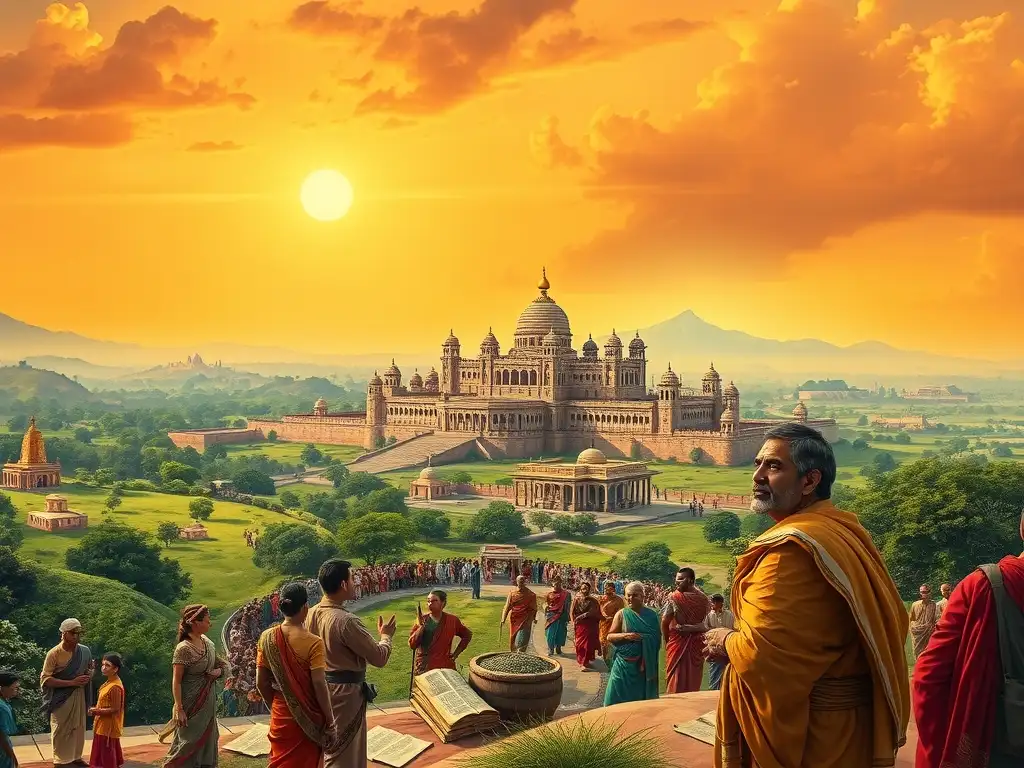
Military Conflicts and the Kalinga War
One of the most defining moments of Ashoka's reign was the Kalinga War, which occurred around 261 BCE. This conflict was not merely a territorial dispute but a significant turning point that shaped Ashoka's policies and perspective on governance. The Kalinga state, located on the eastern coast of India, was prosperous and strategically important, making it a target for expansion under Ashoka's rule.
The Significance of the Kalinga War
The Kalinga War had profound implications for Ashoka's reign and the historical significance of his rule. The battle was marked by unprecedented violence and loss of life, with estimates suggesting that over 100,000 soldiers and civilians perished. The aftermath left a lasting impact on Ashoka, leading him to question the moral and ethical implications of his military conquests.
This conflict prompted a significant shift in Ashoka's approach to governance. The devastation caused by the war highlighted the futility of violence and warfare, ultimately leading to his embrace of Dharma—a principle emphasizing non-violence, compassion, and moral integrity. The Kalinga War thus serves as a critical event that catalyzed Ashoka's transformation from a conqueror to a proponent of peace.
Internal Struggles and Governance Issues
Despite his efforts to promote peace and welfare, Ashoka faced several internal challenges during his reign. As a vast empire, the Mauryan administration had to manage diverse cultures, languages, and traditions. This diversity often led to tensions and conflicts that required careful navigation.
Ashoka introduced a series of reforms aimed at improving governance and ensuring the welfare of his subjects. However, the implementation of these reforms was not without obstacles. There were instances of resistance from local leaders and regional powers who opposed Ashoka's centralized policies. Additionally, the vastness of the empire made it difficult to maintain effective communication and governance across different regions.
To address these issues, Ashoka established a system of officials known as Dhamma Mahamatras, who were responsible for upholding the principles of Dharma and ensuring the welfare of the people. These officials played a crucial role in mediating disputes and promoting Ashoka's vision of a just and equitable society.
While Ashoka's reign is often celebrated for its contributions to culture and governance, it was also marked by significant challenges. The Kalinga War and internal governance issues shaped his policies and ultimately defined the historical significance of his reign. Through these trials, Ashoka emerged as a ruler committed to the principles of peace and morality, leaving a lasting legacy in Indian history.
Religious and Cultural Tensions
During Ashoka's reign, the Indian subcontinent was a tapestry of diverse religions and cultural practices. The primary religious groups included Buddhism, Brahmanism (Hinduism), and Jainism, all of which had their unique philosophies, rituals, and followers. This plurality, while enriching, also led to significant tensions as these groups vied for influence and recognition.
One of the most pronounced challenges was the conflict between Buddhism and Brahmanism. As Ashoka embraced Buddhism after the Kalinga War, his conversion brought about a series of reforms aimed at promoting Buddhist ideals across his empire. This shift was not universally welcomed; Brahmanical leaders and followers often felt threatened by the increasing prominence of Buddhism, which challenged the established social order and the authority of the Brahmins. As Ashoka sought to spread Buddhist teachings, he inadvertently exacerbated these tensions, leading to resistance from traditionalists who viewed the new faith as a rival.
Moreover, Ashoka's efforts to promote religious tolerance through his edicts also highlighted the underlying cultural frictions. His famous edicts, inscribed on rocks and pillars, called for respect towards all religions and encouraged non-violence and compassion. However, the acceptance of these principles was uneven across different regions and communities. In some areas, local customs and religious practices clashed with the Buddhist values promoted by Ashoka, resulting in friction and conflict.
Additionally, the rise of Jainism during this period further complicated the religious landscape. Jainism, with its strict adherence to non-violence and asceticism, gained traction among various social classes. While Ashoka respected Jain beliefs and even sought to incorporate some elements into his governance, the competition for followers created an environment ripe for disputes. The differing views on the nature of the soul, karma, and the path to liberation led to philosophical disagreements that sometimes manifested in social tensions.
To address these challenges, Ashoka implemented policies aimed at fostering harmony among different religious communities. His promotion of the Dharma, or moral law, sought to create a common ethical framework that transcended individual religious doctrines. Despite these efforts, the journey towards a cohesive society remained fraught with challenges, as deep-seated cultural traditions and rivalries continued to influence the dynamics of Ashoka's vast empire.
The religious and cultural tensions during Ashoka's reign were significant hurdles that he had to navigate. His strategies for promoting Buddhism and advocating for tolerance were commendable; however, the resistance from entrenched traditions and competing faiths highlighted the complex and often turbulent nature of religious coexistence in ancient India.
Triumphs of Ashoka’s Reign
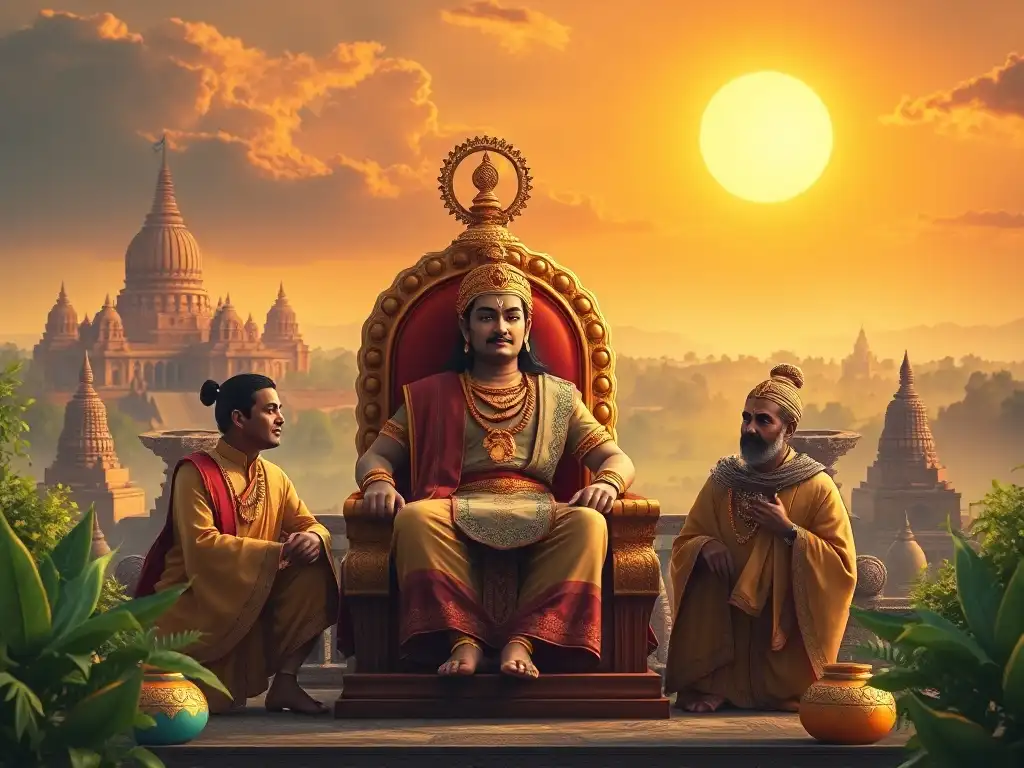
The Transformation of a Warrior into a Peacemaker
Ashoka's reign marked a significant turning point in Indian history, characterized by a profound transformation from a fierce warrior to a proponent of peace and non-violence. Initially, Ashoka was known for his military conquests, particularly during the Kalinga War (circa 261 BCE), where he displayed remarkable military prowess but also witnessed the devastating consequences of war. The bloodshed and suffering caused during this conflict deeply affected him, leading to a pivotal change in his worldview.
This transformation is often encapsulated in the inscription on the pillars of Ashoka, where he expressed remorse over the loss of life during the Kalinga War. He recognized that true power lies not in conquest but in the ability to foster harmony and compassion among people. This shift is essential to understanding Ashoka's reign historical significance, as it laid the groundwork for a new approach to governance based on dharma (moral law) rather than sheer military strength.
Ashoka’s commitment to peace was not merely rhetorical; it resulted in tangible policies that promoted tolerance and understanding among different communities. His emphasis on non-violence and compassion resonated through his edicts, which were disseminated across his vast empire, making him one of the first leaders to advocate for such principles on a grand scale.
Promotion of Buddhism and its Philosophical Impact
Another remarkable aspect of Ashoka's reign was his promotion of Buddhism, which significantly influenced religious and philosophical thought in ancient India and beyond. After embracing Buddhism, Ashoka became a vital figure in its propagation, facilitating its spread not only within India but also into other regions, including Sri Lanka and Southeast Asia.
Ashoka's support for Buddhism involved constructing stupas, monasteries, and educational institutions, which became centers of learning and spiritual development. His edicts, inscribed on rocks and pillars, emphasized ethical conduct, compassion towards all living beings, and the importance of following the Middle Path, a core teaching of Buddhism. This widespread dissemination of Buddhist philosophy contributed to a more humane society, where moral values began to take precedence over brute force.
Moreover, Ashoka's efforts to promote religious tolerance were groundbreaking. He encouraged dialogues among different faiths and supported the coexistence of various religious communities. This aspect of his reign fostered an environment where Buddhism could flourish while simultaneously allowing other religions to thrive, ultimately shaping the cultural and spiritual landscape of ancient India.
Infrastructure Development: Roads, Stupas, and Edicts
Infrastructure development during Ashoka’s reign played a crucial role in enhancing trade, communication, and the overall administration of his empire. His commitment to building an extensive network of roads facilitated not just economic activities but also the movement of ideas and cultures across vast distances.
The construction of stupas, such as the famous Sanchi Stupa, served both religious and communal purposes. These monumental structures were designed to house relics of the Buddha and became pilgrimage sites, attracting followers from various regions. This infrastructure not only contributed to the spread of Buddhism but also helped integrate diverse communities within the empire.
In addition, Ashoka’s edicts were strategically placed along these roads and at significant locations, ensuring that his messages of peace, ethical governance, and religious tolerance reached the populace. The edicts served as a unifying force, reminding citizens of the values that underpinned Ashoka's administration.
Through these initiatives, Ashoka transformed the socio-political landscape of ancient India. His investments in infrastructure not only reflected his vision of a cohesive society rooted in dharma but also significantly contributed to the historical significance of Ashoka's reign, leaving a lasting legacy that would influence future generations.
The Historical Significance of Ashoka's Policies
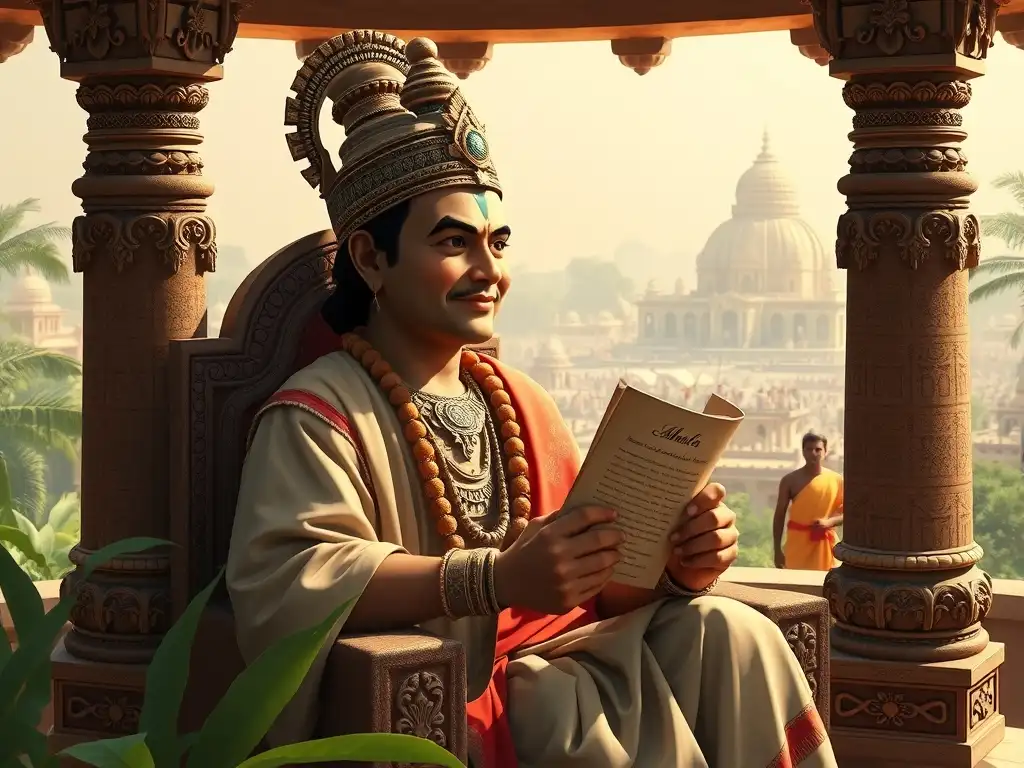
Ashoka's reign is often regarded as a pivotal moment in ancient Indian history, characterized by transformative policies that significantly impacted the socio-political landscape of the time. His approach to governance not only emphasized moral and ethical conduct but also redefined the relationship between the state and its citizens. The historical significance of Ashoka's policies can be explored through various lenses, including his edicts, the role of Dhamma, and his influence on subsequent rulers.
Edicts of Ashoka: Communication of Values
The Edicts of Ashoka serve as a cornerstone for understanding his reign and its historical significance. These inscriptions, engraved on rocks and pillars throughout his empire, communicated Ashoka’s principles, dharma (moral law), and governance strategies.
- Universal Values: Ashoka's edicts emphasized values such as non-violence, compassion, and tolerance. They aimed to promote ethical behavior among his subjects and establish a moral framework for governance.
- Public Accessibility: By inscribing these edicts in local languages, Ashoka ensured that a wide audience could access and understand his messages. This inclusivity marked a significant shift in how rulers communicated with their populations.
- Legal and Social Reforms: The edicts also addressed various social issues, including the treatment of prisoners, animal welfare, and the importance of community service. This demonstrated a proactive approach to governance, where legal and social reforms were intertwined with ethical imperatives.
The widespread dissemination of the edicts not only solidified Ashoka's authority but also contributed to the cultural and ethical unity of his diverse empire, making them a vital element in understanding the historical significance of his reign.
The Role of Dhamma in Statecraft
Dhamma, or the moral law, was central to Ashoka's philosophy and governance, marking a departure from traditional power dynamics based purely on military strength.
- Moral Governance: Ashoka viewed Dhamma as a guiding principle for effective governance. He believed that the welfare of his subjects should be the priority, promoting policies that aimed to improve their quality of life.
- Integration of Religion and Politics: By adopting Buddhist principles, Ashoka exemplified how religion could play a role in statecraft. His emphasis on Dhamma led to a governance model that sought to unify diverse religious communities under a shared ethical framework.
- Promotion of Peace and Stability: Dhamma emphasized non-violence and compassion, which Ashoka actively promoted through policies that discouraged war and encouraged peaceful coexistence. This approach not only reduced conflict but also fostered a sense of loyalty and stability within his empire.
The incorporation of Dhamma into governance not only shaped Ashoka's reign but also laid the groundwork for future rulers who sought to emulate his success in integrating moral values with political authority.
Ashoka's Influence on Future Indian Rulers
Ashoka's reign left an indelible mark on the Indian subcontinent, influencing not just his contemporaries but also future generations of rulers.
- Legacy of Non-Violence: His commitment to non-violence and compassion inspired later rulers, including Emperor Harsha and the Mughal Emperor Akbar, who adopted similar principles in their governance.
- Cultural Integration: Ashoka's policies fostered a sense of cultural unity among the diverse populations of his empire. Future rulers recognized the importance of cultural integration and often implemented policies that mirrored Ashoka's inclusive approach.
- Administrative Reforms: The administrative frameworks established during Ashoka's reign served as a model for later dynasties. His emphasis on ethical governance and public welfare continued to resonate in the policies of subsequent Indian empires.
The historical significance of Ashoka's reign is not only evident in the immediate effects of his policies but also in the enduring influence they had on the trajectory of Indian governance and culture for centuries to come.
The Legacy of Ashoka's Reign

Ashoka's reign is widely recognized as a transformative period in ancient Indian history, marked by significant shifts in governance, culture, and social norms. His legacy endures in various forms, influencing not only the subcontinent but also the broader spectrum of global history. Understanding the historical significance of Ashoka's reign requires an examination of its impact on Indian society, the principles of peace and tolerance that he promoted, and the global reverberations of his policies.
Impact on Indian Culture and Society
Ashoka's reign, which lasted from approximately 268 to 232 BCE, brought about profound changes in Indian culture and society. One of the most notable impacts was the promotion of Buddhism as a state religion, which encouraged the spread of its teachings across the Indian subcontinent and beyond.
- Religious Integration: Ashoka’s edicts emphasized the importance of dharma (moral law) and encouraged the coexistence of various religions. His policies led to a significant increase in religious tolerance, allowing Buddhism, Jainism, and Hinduism to flourish simultaneously.
- Art and Architecture: The period saw the emergence of distinct architectural styles, particularly through the construction of stupas and rock-cut caves, such as those at Sanchi and Ajanta. These structures not only served as religious sites but also as cultural hubs that facilitated artistic expression and community gatherings.
- Social Welfare: Ashoka's administration implemented various social welfare programs, including the establishment of hospitals and the planting of trees along roads to provide shade for travelers. This focus on public health and welfare was revolutionary and set a precedent for future governance in India.
Ashoka as a Symbol of Peace and Tolerance
Ashoka's commitment to peace and tolerance is perhaps one of the most compelling aspects of his legacy. Following his conversion to Buddhism after the Kalinga War—a conflict that resulted in immense suffering—he adopted a policy of non-violence that resonated throughout his rule.
-
Edicts of Ashoka: His edicts, inscribed on pillars and rocks throughout his empire, articulate his vision of a just society characterized by compassion, respect for all living beings, and the renunciation of violence. For instance, one of his edicts states:
All religions should reside everywhere, for all are worthy of respect.
-
Promotion of Dhamma: Ashoka’s concept of Dhamma transcended mere religious adherence; it encompassed ethical behavior, social justice, and environmental stewardship. His approach urged citizens to practice kindness and understanding, fostering a harmonious society.
-
Cultural Exchanges: By advocating for tolerance, Ashoka facilitated cultural exchanges that enriched Indian society. His emissaries traveled as far as Greece and Sri Lanka, spreading not only Buddhist teachings but also Indian cultural practices, influencing societies in profound ways.
Global Influence: Ashoka’s Legacy Beyond India
The historical significance of Ashoka’s reign extends far beyond the borders of ancient India. His ideals and policies have left an indelible mark on global culture and governance.
- Spread of Buddhism: Ashoka is often credited with the global dissemination of Buddhism, which became one of the world's major religions. His support for missionary activities led to the establishment of Buddhist communities in regions such as Southeast Asia, Central Asia, and even as far as the Mediterranean.
- Inspiration for Leaders: Ashoka’s principles of non-violence and tolerance have inspired numerous leaders and movements throughout history. Figures such as Mahatma Gandhi drew upon Ashoka’s teachings in their struggles for justice and peace, highlighting the relevance of his legacy in contemporary contexts.
- Cultural Diplomacy: The diplomatic relations established during Ashoka's reign set a precedent for cultural diplomacy, where ideas and values were exchanged rather than enforced militarily. This approach has influenced modern diplomatic practices, emphasizing dialogue and mutual respect among nations.
Ashoka's reign holds significant historical importance, intricately weaving a legacy of cultural richness, peace, and global influence that continues to resonate today. His contributions not only shaped ancient Indian civilization but also laid the groundwork for important ethical and social principles that remain relevant in contemporary discourse.
Conclusion: The Lasting Historical Significance of Ashoka's Reign
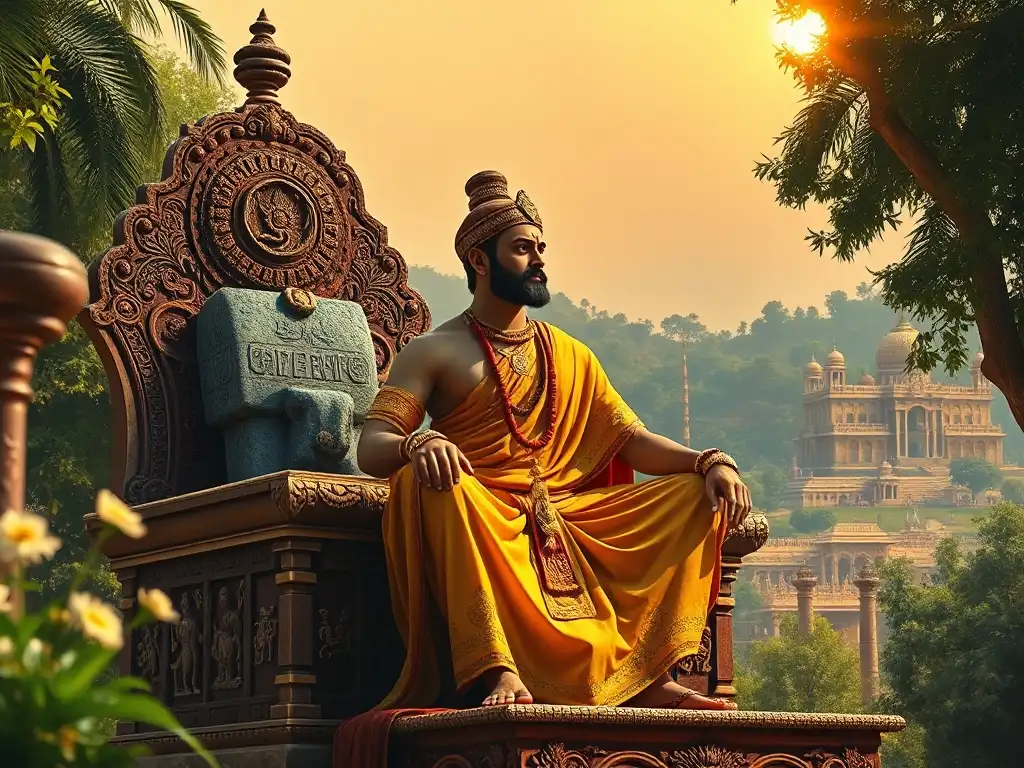
Ashoka's reign represents a pivotal chapter in the history of ancient India, marked by a complex interplay of challenges and triumphs that shaped not only his empire but also the trajectory of Indian civilization. His commitment to the principles of Dhamma, or righteous living, set a precedent for governance that prioritized ethical conduct over mere territorial expansion. This shift in focus is a crucial aspect of Ashoka's reign historical significance, showcasing how his policies transcended traditional military conquests, aiming instead for the welfare of his subjects.
The edicts inscribed across his empire, promoting values such as non-violence, tolerance, and respect for all living beings, reflect a ruler deeply engaged with the moral fabric of society. These inscriptions serve as a testament to his efforts in promoting social harmony and justice, which are particularly significant in the historical context of his time, characterized by warfare and conquest. Ashoka's ability to navigate these challenges and advocate for peace amidst a backdrop of violence illustrates his innovative approach to leadership.
Reflection on Challenges and Triumphs
Ashoka's path to becoming a revered monarch was fraught with significant challenges. Following the bloody conquest of Kalinga, where thousands lost their lives, Ashoka confronted the moral implications of his actions. This pivotal moment catalyzed a profound transformation in his ideology, leading him towards Buddhist teachings and the path of non-violence. The Kalinga War not only exposed the brutal realities of imperial expansion but also prompted Ashoka to reflect on the true nature of power and governance.
In the wake of this transformation, Ashoka faced various administrative and societal challenges. Implementing policies of Dhamma required a delicate balance, as he sought to integrate diverse cultural and religious groups within his empire. His edicts, which emphasized ethical governance, were instrumental in fostering a sense of unity and purpose among his subjects. Each edict represented a triumph of moral philosophy over the traditional might-is-right paradigm of kingship, marking a significant shift in the historical narrative of Indian governance.
The establishment of Dhamma Mahamatras, officials tasked with upholding Dhamma principles, exemplified Ashoka's innovative administrative strategies. These officials were responsible for promoting welfare initiatives, mediating disputes, and ensuring that the tenets of Dhamma were followed throughout the empire. This network of governance not only addressed immediate challenges but also laid the groundwork for a more ethical and compassionate administration.
Ashoka's Relevance in Contemporary Discussions on Governance and Ethics
The legacy of Ashoka's reign extends beyond the confines of ancient history, resonating strongly in contemporary discussions surrounding governance and ethics. His emphasis on moral leadership and public welfare remains relevant in today's socio-political landscape, where leaders are often scrutinized for their ethical standards and the integrity of their actions.
In modern governance, the principles of Dhamma can be seen as a precursor to contemporary ethical frameworks that advocate for transparency, accountability, and service to the public. Ashoka's holistic approach to leadership, which encompassed social justice and environmental stewardship, offers valuable insights for current policymakers grappling with complex issues such as inequality, conflict resolution, and sustainable development.
Furthermore, the global resurgence of interest in Buddhist philosophy and its teachings on compassion and non-violence serves as a reminder of Ashoka's enduring influence. His reign invites reflection on the potential for leaders to effect positive change through ethical governance, rather than through coercive measures. As societies continue to navigate the challenges of modernity, Ashoka's reign historical significance serves as a beacon of hope and a model for future generations striving for a just and equitable world.
Frequently Asked Questions
What were the main challenges during Ashoka's reign?
Ashoka faced significant challenges such as internal strife, external invasions, and the need to unify diverse cultures within his empire, which spanned much of the Indian subcontinent.
How did Ashoka's policies influence his empire?
Ashoka implemented Buddhist principles in governance, promoting non-violence and tolerance, which led to a more harmonious society and helped in solidifying his rule.
What contributions did Ashoka make to Indian culture?
Ashoka is renowned for his edicts, which spread moral teachings and Buddhism across his empire, fostering a cultural renaissance that influenced art, architecture, and philosophy.
What is the historical significance of Ashoka's reign?
Ashoka's reign is marked by the transition to a more humane governance style, which emphasized ethical administration, making it a pivotal moment in Indian history that reshaped future empires.
How did Ashoka's reign impact future Indian empires?
The legacy of Ashoka's policies and Buddhist promotion had a lasting influence on subsequent Indian empires, encouraging rulers to adopt more compassionate and inclusive approaches to governance.
Final Reflection: The Enduring Legacy of Ashoka's Reign
The historical significance of Ashoka's reign resonates profoundly in today's world, as we grapple with the complexities of governance, ethics, and social justice. His transformation from a ruthless conqueror to a benevolent ruler exemplifies the potential for change within leadership and the impact of moral governance on society. In an era where leaders often prioritize power over compassion, Ashoka's journey serves as a powerful reminder of the importance of empathy and ethical responsibility in leadership.
The cultural and social landscape continues to be shaped by the principles that Ashoka championed during his reign. His promotion of Buddhism and the emphasis on non-violence and tolerance have left an indelible mark on various societies, inspiring movements for peace and justice across the globe. In the end, we will remember not the words of our enemies, but the silence of our friends.
This quote by Martin Luther King Jr. echoes Ashoka's call for moral courage and active compassion, urging us to reflect on our roles in advocating for justice and peace in our communities.
As we contemplate the lessons from Ashoka's reign, let us take a moment to reflect on our own lives and the impact we can have on those around us. Consider how you can embody the principles of compassion, tolerance, and ethical leadership in your daily interactions. The legacy of Ashoka is not just a historical narrative; it is a call to action for each of us to strive for a more just and harmonious world. Embrace the opportunity to be a force for positive change, and let the triumphs of Ashoka inspire your journey toward making a difference.
Embrace the Legacy of Ashoka: Take Action Today!
Thank you for joining us on this journey through the remarkable reign of Ashoka! We hope you’ve gained valuable insights into the challenges he faced and the transformative triumphs he achieved. Now, it's time to turn that knowledge into action!
Here are a few steps you can take to keep exploring Ashoka's fascinating world and contribute to the conversation:
- Dive Deeper: Read a book or article about Ashoka's philosophy and governance. Discover how his principles can be applied to modern society!
- Engage with the Community: Share this article with friends or on social media platforms. Start discussions about the impact of history on our values today.
- Explore More: Visit local museums or history exhibits that highlight Ashoka’s legacy. Uncover artifacts that tell his story and connect with history in a meaningful way.
What aspect of Ashoka’s reign resonates with you the most, and how do you believe his experiences can inspire contemporary leaders?