
The Spiritual Legacy of Ashoka: Influencing Generations


Welcome to Ancient India History, where we embark on a captivating journey through the rich tapestry of ancient Indian civilizations. From the enigmatic Indus Valley to the illustrious Gupta Empire, we delve into the culture, achievements, and profound legacies that shaped a nation. In our featured article, “The Spiritual Legacy of Ashoka: Influencing Generations,” we explore how this remarkable emperor’s principles of compassion and non-violence continue to resonate through time.
Join us as we unravel the threads of history and discover how Ashoka's spiritual teachings not only transformed his reign but also left an indelible mark on future generations. Curious to learn more? Dive in and explore the impact of Ashoka’s legacy!
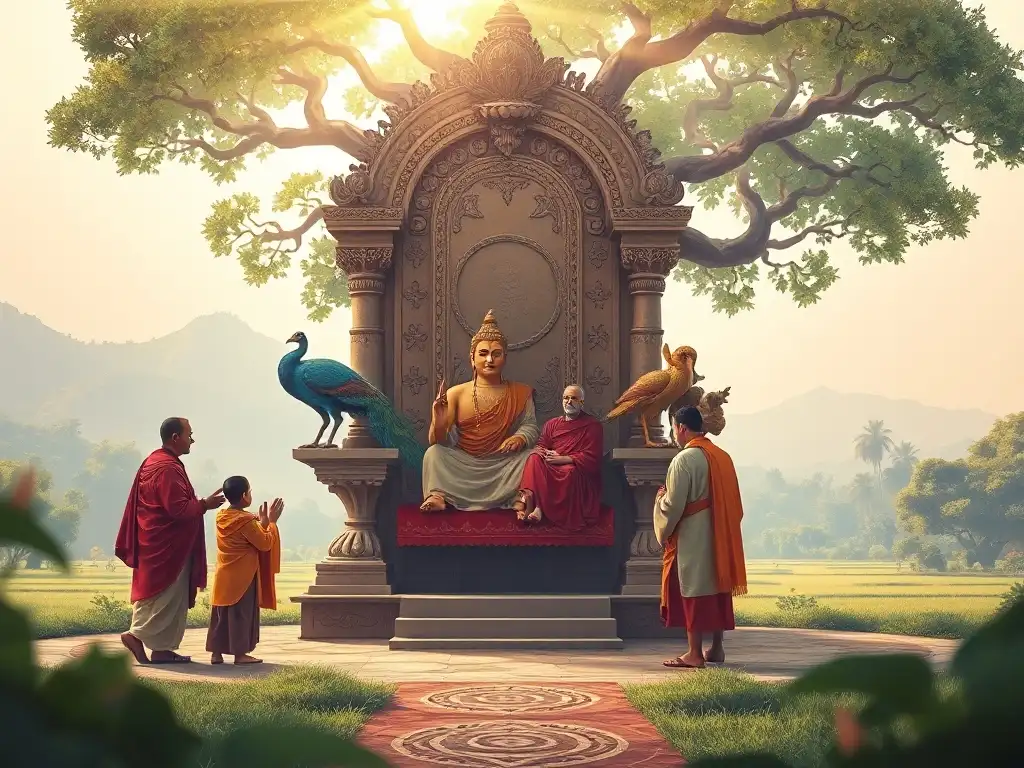
Introduction to the Spiritual Legacy of Ashoka
The spiritual legacy of Ashoka is a profound testament to the enduring influence of his reign on subsequent generations. Ashoka the Great, who ruled during the 3rd century BCE, transformed from a fierce conqueror to a compassionate leader who championed the principles of non-violence, tolerance, and moral governance. His commitment to Dhamma, or righteousness, not only reshaped the political landscape of ancient India but also laid the foundation for spiritual thought that resonates through time. This article delves into the various facets of Ashoka's spiritual contributions, examining how his philosophies and practices continue to inspire people to this day.
Overview of Ashoka the Great
Ashoka, the third ruler of the Maurya Dynasty, reigns as one of the most significant figures in Indian history. Ascending to the throne around 268 BCE, he is often remembered for his dramatic transformation following the Kalinga War, which resulted in massive loss of life. This pivotal event prompted Ashoka to adopt Buddhism, leading him to advocate for peace and humanitarian values. His efforts to spread Buddhist teachings were not just religious but also served to unify diverse cultures across his vast empire, which stretched from present-day Afghanistan to Bangladesh.
- Key Achievements:
- Promoted non-violence and peace through Dhamma.
- Established a network of rock edicts and pillars inscribed with moral directives.
- Supported the spread of Buddhism beyond India, enhancing cultural exchanges.
Importance of Spirituality in Ancient India
In ancient India, spirituality played a central role in shaping societal values and norms. Philosophies rooted in Hinduism, Buddhism, and Jainism emphasized the quest for truth, ethical living, and the interconnectedness of all beings. This spiritual framework influenced governance, art, and daily life, fostering a culture that revered wisdom and morality.
- Spirituality as a Guiding Principle:
- Encouraged ethical governance among rulers.
- Fostered community cohesion and social responsibility.
- Promoted the pursuit of knowledge and enlightenment.
The Philosophy of Ashoka
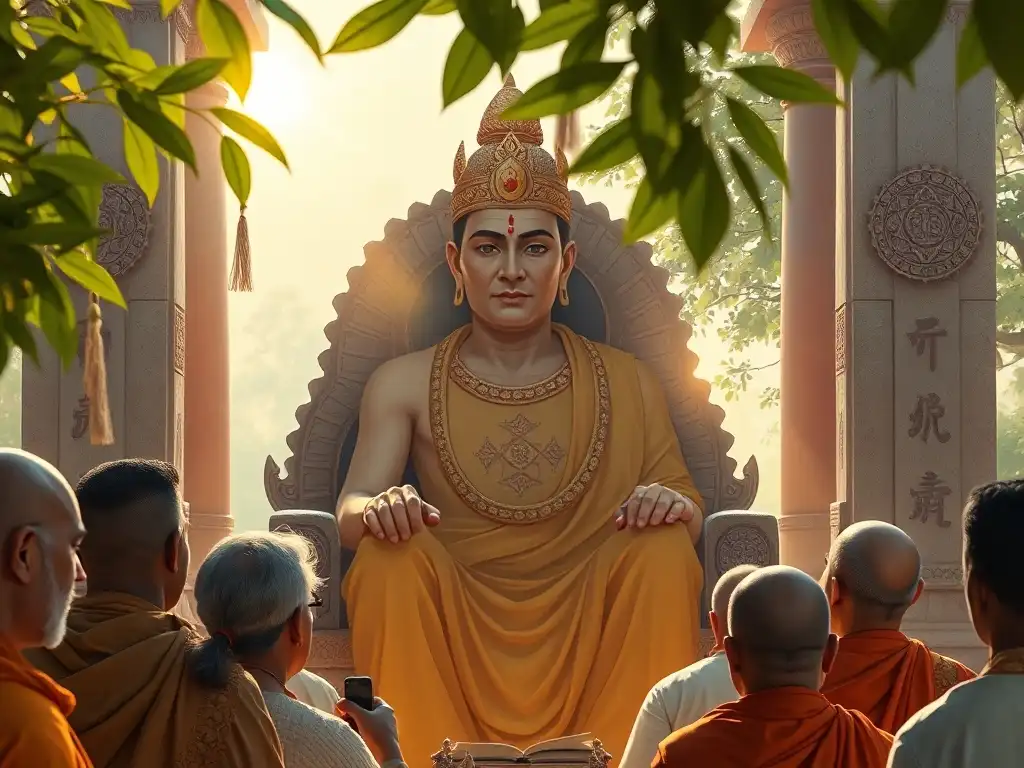
Key Principles of Ashoka's Dhamma
Ashoka's Dhamma was not merely a set of religious beliefs; it was a comprehensive ethical framework aimed at enhancing the welfare of all. The core principles include:
- Ahimsa (Non-violence): Emphasizing compassion towards all living beings.
- Satyam (Truthfulness): Encouraging honesty and integrity in all interactions.
- Daya (Compassion): Cultivating kindness and empathy, especially towards the vulnerable.
- Samyak (Right Conduct): Promoting moral behavior in both personal and societal contexts.
These principles were inscribed on edicts throughout his empire, serving as a guide for citizens and officials alike.
Influence of Buddhism on Ashoka's Governance
Buddhism profoundly shaped Ashoka's approach to governance. After embracing the teachings of the Buddha, he sought to implement them in his administration:
- Promotion of Buddhist Values: Ashoka supported the establishment of monasteries and educational institutions, facilitating the spread of Buddhist teachings.
- Diplomacy and Peace: His emphasis on non-violence led to diplomatic relations with various kingdoms, promoting peace and cultural exchange.
- Social Welfare Initiatives: Ashoka's reign saw the establishment of hospitals, wells, and rest houses, reflecting his commitment to the welfare of his subjects.
The spiritual legacy of Ashoka is a remarkable narrative that encapsulates the transformation of an empire through the lens of compassion and ethical governance. His philosophies continue to inspire generations, underscoring the power of spiritual principles in shaping human civilization.
Ashoka's Edicts: A Testament to His Spiritual Vision
Ashoka the Great, the third Mauryan emperor, is renowned not only for his military conquests but also for his profound spiritual transformation following the Kalinga War. His edicts, inscribed on rocks and pillars throughout his empire, serve as enduring documents of his commitment to spreading the principles of Dharma, or righteous living. These inscriptions reveal Ashoka's deep understanding of ethics, morality, and compassion, reflecting his desire to guide his subjects towards a more harmonious and spiritually enlightened existence.
The edicts encompass a wide range of topics, including governance, social welfare, and individual conduct. They emphasize the importance of moral integrity and the ethical responsibilities of rulers and citizens alike. Ashoka's edicts stand as a testament to his spiritual vision, marking a significant shift from the militaristic values of his early reign to a focus on peace and ethical governance. This shift has left a lasting impact on Indian history, influencing not only contemporary society but also future generations.
The Role of Edicts in Promoting Ethical Conduct
Ashoka's edicts played a crucial role in promoting ethical conduct across his vast empire. By integrating the principles of Dharma into the fabric of governance, he aimed to cultivate a sense of moral responsibility among his subjects. The edicts served as a public declaration of his values, encouraging individuals to embody virtues such as kindness, truthfulness, and non-violence.
One of the most notable aspects of the edicts is their accessibility; they were inscribed in languages and scripts that were easily understood by the common people. This approach ensured that Ashoka's moral teachings reached a wide audience, fostering a culture of ethical awareness and accountability. The edicts also sought to establish a framework for resolving conflicts peacefully, advocating for dialogue and understanding rather than violence.
Through these initiatives, Ashoka not only set a moral standard for his reign but also laid the groundwork for a society that valued ethical conduct and spiritual growth. This legacy has continued to resonate in Indian culture, emphasizing the importance of Dharma in public and private life.
Analysis of Specific Edicts and Their Spiritual Significance
Several specific edicts highlight Ashoka's spiritual ideals and their significance in shaping societal values. For instance, the Rock Edict 1 speaks of the importance of non-violence and respect for all living beings. This edict encapsulates Ashoka's commitment to Ahimsa (non-harm), which became a cornerstone of his spiritual legacy.
Another important edict, Rock Edict 13, addresses the need for compassion towards prisoners and the humane treatment of those who have been affected by war. By advocating for the welfare of all, including animals and the marginalized, Ashoka's edicts reflect a holistic view of spirituality that transcends mere ritualistic practices.
Furthermore, Pillar Edict 5 emphasizes the significance of religious tolerance, urging citizens to respect the beliefs of others. This encouragement of pluralism not only fostered a diverse spiritual landscape but also contributed to the social cohesion of his empire. Each of these edicts serves as a vital link to understanding Ashoka's broader spiritual vision and his aspiration for a just and compassionate society.
The Impact of Ashoka's Spiritual Legacy on Indian Society
The spiritual legacy of Ashoka has profoundly impacted Indian society, influencing cultural, social, and religious practices over centuries. His vision of a moral and ethical society continues to resonate in contemporary India, where his principles of non-violence, tolerance, and compassion are celebrated and upheld.
Transformation of Social Norms and Values
Ashoka's reign marked a transformative period in which social norms and values began to shift towards a more ethical and humane framework. The promotion of Dharma as a guiding principle encouraged individuals to reflect on their actions and their impact on others. This shift led to greater emphasis on community welfare, social justice, and ethical governance.
The incorporation of Buddhist teachings into societal norms also played a significant role in shaping attitudes towards issues such as caste discrimination and gender equality. The emphasis on compassion and non-violence inspired movements advocating for the rights of marginalized communities, promoting a more inclusive society. Ashoka's spiritual legacy thus catalyzed a broader re-evaluation of values that prioritized empathy and justice.
Encouragement of Religious Tolerance and Pluralism
One of the most enduring aspects of Ashoka's spiritual legacy is his unwavering commitment to religious tolerance and pluralism. His edicts explicitly encourage respect for different faiths, reflecting a profound understanding of the diverse beliefs present within his empire. By fostering an environment where various religious practices could coexist harmoniously, Ashoka set a precedent for subsequent rulers and societies.
This commitment to pluralism is particularly relevant in the context of modern India, where multiple religions coexist. Ashoka's legacy serves as a reminder of the importance of dialogue and mutual respect among different religious communities, helping to mitigate conflicts and promote peace. The values he espoused continue to inspire contemporary movements advocating for interfaith harmony and understanding, ensuring that the spiritual legacy of Ashoka remains a guiding force in Indian society.
Ashoka and the Spread of Buddhism
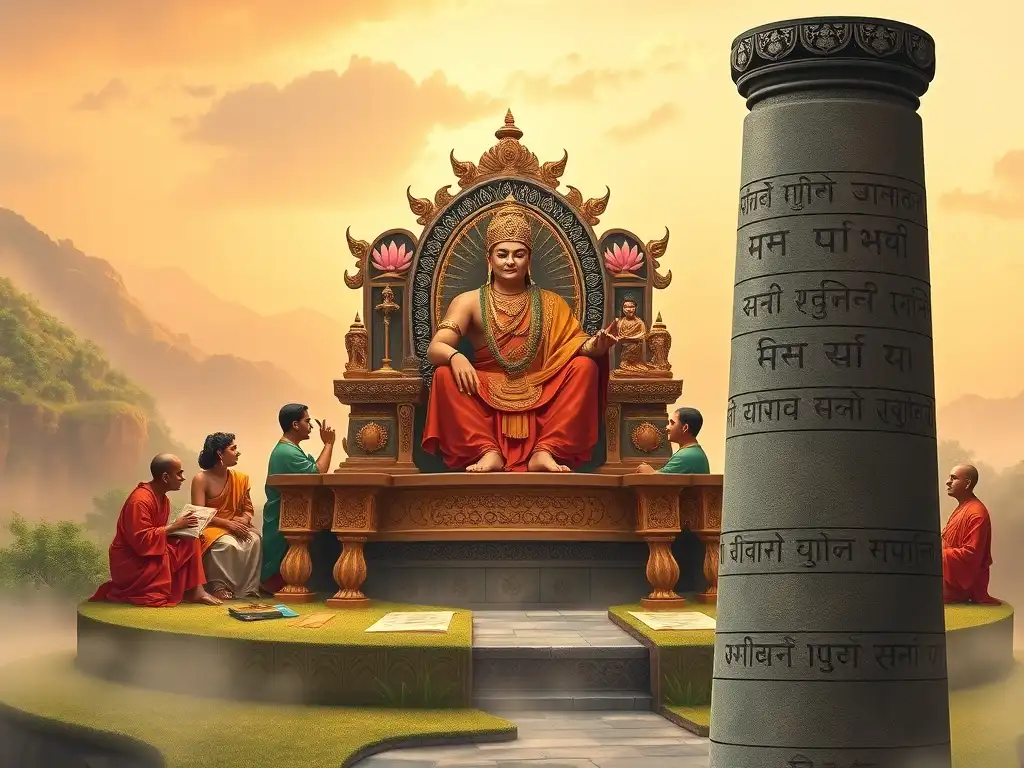
Ashoka the Great, the third emperor of the Maurya Dynasty, is widely recognized for his profound influence on the spread of Buddhism beyond the borders of India. Following his conversion to Buddhism after the bloody Kalinga War, Ashoka adopted a policy of Dhamma (righteousness) that sought to promote peace, non-violence, and compassion among all beings. This pivotal moment marked the beginning of a transformative era not only for Ashoka but for the religion itself. Under his patronage, Buddhism flourished, and its teachings began to permeate various regions, reaching diverse cultures and societies.
Ashoka's commitment to Buddhism was articulated through his edicts, inscribed on pillars and rocks throughout his empire. These edicts emphasized ethical conduct, moral values, and the importance of understanding and compassion. By actively promoting the teachings of the Buddha, Ashoka established a framework that encouraged the acceptance of Buddhism across different populations. His efforts laid the groundwork for the emergence of Buddhism as a major world religion, influencing millions of adherents over the centuries.
Ashoka's Role in Propagating Buddhism Beyond India
Ashoka's influence extended far beyond the Indian subcontinent, as he recognized the potential of Buddhism to foster international peace and harmony. He dispatched missionaries to various regions, including modern-day Nepal, Sri Lanka, and even as far as Greece and Central Asia. These missions were not merely religious expeditions; they were strategic moves aimed at establishing diplomatic ties and promoting a culture of non-violence and mutual respect.
One of the most notable figures in Ashoka's missionary endeavors was the monk Mahinda, who played a key role in bringing Buddhism to Sri Lanka. His efforts resulted in the establishment of Buddhism as the predominant religion in the island nation, which remains a significant stronghold of Buddhist practice to this day. Furthermore, the legacy of Ashoka's missions is evident in the historical accounts of the spread of Buddhism through the Silk Road, where trade routes facilitated cultural exchanges and the dissemination of Buddhist teachings.
Establishment of Monasteries and Educational Institutions
In addition to sending missionaries, Ashoka's contribution to Buddhism included the establishment of monasteries and educational institutions. He recognized the importance of creating centers for learning and spiritual development, which would serve as hubs for teaching Buddhist philosophy and practices. These establishments provided a space for monks to study, meditate, and conduct rituals, while also welcoming lay followers seeking guidance.
The construction of stupas, such as the famous Sanchi Stupa, symbolized the architectural and cultural advancements during Ashoka's reign. These stupas became important pilgrimage sites, attracting devotees from various regions. The educational institutions established during this period not only facilitated religious education but also contributed to the overall intellectual and cultural growth of society. The legacy of these centers of learning continues to influence Buddhist education and practice today.
The Spiritual Legacy of Ashoka in Contemporary India
The spiritual legacy of Ashoka endures in contemporary India, where his teachings and principles continue to resonate in various aspects of society. His emphasis on non-violence, tolerance, and compassion serves as a guiding philosophy for individuals and communities seeking to navigate the complexities of modern life. Ashoka's vision of a just society, rooted in moral values, remains relevant as India grapples with social and political challenges.
Relevance of Ashoka's Teachings in Modern Times
In today's context, Ashoka's teachings offer a framework for addressing contemporary issues such as communal harmony, environmental sustainability, and social justice. His commitment to Dhamma serves as a reminder of the ethical responsibilities individuals and nations hold towards one another and the planet. The principles of non-violence and respect for all living beings are particularly pertinent in an era marked by conflict and division.
Numerous organizations and movements in India draw inspiration from Ashoka's legacy, promoting peace and social cohesion. His approach to governance, which prioritized the welfare of citizens, is mirrored in various initiatives aimed at fostering inclusive development and democratic values. As a symbol of moral leadership, Ashoka's teachings continue to inspire contemporary leaders and activists in their pursuit of a just society.
Influence on Indian Political and Social Movements
Ashoka's legacy has significantly influenced Indian political and social movements throughout history. His ideals of justice, inclusivity, and non-violence have been echoed by numerous leaders, including Mahatma Gandhi, who adopted these principles as foundational tenets of his philosophy of peaceful resistance. Gandhi's interpretation of Ashoka's Dhamma played a crucial role in the Indian independence movement, emphasizing the power of non-violent action in effecting social change.
Moreover, various contemporary movements focused on social reform and environmental conservation draw parallels with Ashoka's vision of a harmonious society. As India navigates the complexities of modernization and globalization, the spiritual legacy of Ashoka serves as a beacon of hope, guiding individuals and communities towards a future rooted in compassion, tolerance, and a profound respect for all forms of life. Through his teachings and actions, Ashoka the Great remains a relevant and inspiring figure in the ongoing journey towards a more just and peaceful world.
Conclusion: The Enduring Influence of Ashoka's Spiritual Legacy
The spiritual legacy of Ashoka the Great continues to resonate through the ages, shaping the moral and ethical frameworks of numerous societies. His commitment to Dharma, rooted in Buddhist principles, served as a foundation for governance that prioritized compassion, tolerance, and non-violence. This legacy is not merely historical; it remains pertinent in contemporary discussions about peace, coexistence, and ethical leadership. Ashoka's edicts, inscribed on pillars and rocks throughout his empire, communicate his vision for a just society, advocating for the welfare of all beings, regardless of caste or creed.
Ashoka's efforts to spread Buddhism both within and beyond the Indian subcontinent laid the groundwork for the religion's global presence. His support for monastic communities and the establishment of stupas facilitated the dissemination of Buddhist teachings. As generations of followers interpreted and adapted these teachings, Ashoka's spiritual philosophy evolved but never lost its core principles of compassion and ethical living. This enduring influence is evident in various cultural practices, festivals, and philosophies across Asia, illustrating how Ashoka's vision transcended time and geography.
Summary of Ashoka's Contributions to Spiritual Thought
Ashoka's contributions to spiritual thought are multifaceted and profound. His conversion to Buddhism following the Kalinga War marked a pivotal shift in his approach to leadership, pivoting from a militaristic ruler to a benevolent monarch. He championed the principles of Ahimsa (non-violence), Satyagraha (truth force), and compassion, which he integrated into the administration of his empire. His edicts emphasized ethical behavior, the importance of community welfare, and respect for all living beings, forming a moral compass for his subjects.
In addition to his promotion of Buddhism, Ashoka facilitated interfaith dialogues, demonstrating a remarkable tolerance for diverse religious practices. He recognized the value of various philosophical systems and encouraged a spirit of inquiry among his subjects. This approach not only enriched spiritual discourse but also fostered a climate of mutual respect and understanding among different faiths, setting a precedent for pluralism in governance.
Furthermore, Ashoka's commitment to the welfare of his people extended to infrastructure development, including hospitals and rest houses, which reflected his belief that spiritual practice should encompass physical well-being. His policies and practices thus laid a foundation for a holistic understanding of spirituality that integrates moral, ethical, and physical dimensions.
The Lasting Impact on Future Generations
The lasting impact of Ashoka's spiritual legacy can be seen in the way his principles continue to inspire both leaders and ordinary individuals around the globe. His edicts have influenced the ethical frameworks of various cultures, promoting ideals of social justice and humanitarianism. In contemporary Buddhism, Ashoka is often revered as a model ruler whose policies align closely with Buddhist teachings on compassion and mindfulness.
Moreover, Ashoka's emphasis on Dharma as a guiding principle for governance has been echoed in various political philosophies, advocating for leadership that prioritizes the common good. His vision has inspired movements for peace and non-violence throughout history, including the likes of Mahatma Gandhi, who drew upon Ashoka's teachings in his struggle for India's independence.
In educational realms, Ashoka's legacy is reflected in curricula that teach the importance of ethical leadership and social responsibility. His story serves as a reminder of the transformative power of compassion and the potential for rulers to enact positive change through spiritual principles. As societies grapple with modern challenges, Ashoka's teachings remain relevant, urging us to consider the moral implications of our actions and the importance of fostering a united, respectful community.
Ashoka the Great's spiritual legacy is a beacon of hope and guidance for future generations, reflecting timeless values that encourage us to strive for a more compassionate and harmonious world.
- Introduction to the Spiritual Legacy of Ashoka
- Overview of Ashoka the Great
- Importance of Spirituality in Ancient India
- The Philosophy of Ashoka
- Ashoka's Edicts: A Testament to His Spiritual Vision
- The Impact of Ashoka's Spiritual Legacy on Indian Society
- Ashoka and the Spread of Buddhism
- The Spiritual Legacy of Ashoka in Contemporary India
- Conclusion: The Enduring Influence of Ashoka's Spiritual Legacy
Frequently Asked Questions
What was the spiritual legacy of Ashoka?
Ashoka's spiritual legacy is characterized by his promotion of Buddhism and the principles of non-violence, leading to a profound impact on Indian culture and ethics.
How did Ashoka's policies influence future generations?
Ashoka's policies emphasized tolerance and compassion, setting a precedent for governance that influenced later rulers and contributed to the cultural harmony of India.
What role did the Edicts of Ashoka play in his spiritual teachings?
The Edicts of Ashoka served as a means to disseminate his spiritual values and moral guidelines, promoting Buddhist teachings and encouraging ethical conduct among his subjects.
How did Ashoka's conversion to Buddhism affect his reign?
Ashoka's conversion to Buddhism marked a significant shift in his reign, as he embraced non-violence and philanthropy, which reflected in his administrative policies and public welfare initiatives.
Why is Ashoka considered a pivotal figure in Indian history?
Ashoka is considered pivotal due to his transformation of India’s moral and ethical landscape, his contributions to Buddhism, and his establishment of a unified and peaceful society that resonated through centuries.
Final Reflection: The Enduring Spiritual Legacy of Ashoka
The spiritual legacy of Ashoka remains profoundly relevant in today's world, where the quest for peace and ethical governance is more critical than ever. As we navigate through a landscape often marred by conflict and division, Ashoka's commitment to non-violence and compassion serves as a powerful reminder of the impact that principled leadership can have on society. His life and teachings resonate with a striking truth: that true strength lies not in power or dominance, but in the ability to foster harmony and understanding among diverse communities.
The influence of Ashoka's spiritual legacy continues to shape cultural and social landscapes across the globe. His principles of tolerance and respect for all living beings have inspired countless movements for justice and peace. As we witness the ongoing struggles for human rights and environmental sustainability, Ashoka's vision of a compassionate society remains a guiding light. It is better to conquer yourself than to win a thousand battles.
This quote encapsulates the essence of Ashoka's teachings, urging us to look inward and cultivate our own virtues as a foundation for broader societal change.
As we reflect on the lessons from Ashoka's life, let us embrace the call to action that his legacy inspires. Consider how you can embody the values of compassion, tolerance, and ethical leadership in your daily life. Whether through small acts of kindness or larger commitments to social justice, every effort counts. Together, we can honor the spiritual legacy of Ashoka by fostering a world where peace and understanding prevail.
Embrace Ashoka's Wisdom and Take Action Today!
Thank you for joining us on this enlightening journey through the spiritual legacy of Ashoka! We hope you gained valuable insights into how his principles can inspire a more compassionate and peaceful world. Now, it’s your turn to embody these teachings and make a difference!
Here’s how you can take immediate action:
- Reflect on your values: Take some time to journal about how Ashoka’s principles of non-violence and tolerance can positively influence your everyday life.
- Engage with your community: Consider organizing a local discussion group dedicated to exploring themes of peace-building and mindfulness.
- Spread the word: Share this article with your friends and family to inspire them to delve into Ashoka's profound impact on spirituality and leadership.
What legacy do you wish to leave behind in your community that reflects Ashoka’s values? We invite you to share your thoughts below!