
The Art of War: The Military Strategies of Samudragupta

Welcome to Ancient India History, where we embark on a fascinating journey through the rich tapestry of ancient Indian civilizations. Today, we delve into the remarkable military strategies of Samudragupta, a key historical figure whose conquests shaped the very fabric of India's past. As we uncover the art of war that defined his reign, you'll discover how his tactical brilliance not only expanded the Gupta Empire but also left an indelible mark on the history of warfare itself.
Curious to learn how these strategies transformed an empire? Join us as we explore the intricate details of Samudragupta's legacy and its lasting impact on ancient India.
Samudragupta, often hailed as one of the most formidable rulers of ancient India, reigned during the Gupta Empire in the 4th century CE. His military strategies and conquests are not only pivotal in understanding Gupta's expansion but also crucial for comprehending the broader canvas of ancient Indian warfare. This article delves into the multifaceted aspects of Samudragupta's military strategies, examining how his innovative tactics and exceptional leadership propelled the Gupta Empire to unprecedented heights.
His reign marked a significant period characterized by a blend of military prowess, strategic alliances, and cultural patronage. By analyzing historical accounts, inscriptions, and archaeological evidence, we aim to reconstruct Samudragupta's approach to warfare and its lasting impact on Indian history. From his legendary campaigns against various kingdoms to his adept use of cavalry and infantry, this exploration will illuminate the essence of his military strategies and their implications on the socio-political landscape of ancient India.
The Context of Samudragupta's Reign
Understanding the political and cultural context of Samudragupta's time is essential to appreciate his military strategies. The Gupta Empire, often referred to as the "Golden Age of India," was a period marked by significant advancements in arts, science, and governance. Samudragupta ascended to the throne after his father, Chandragupta I, and inherited a relatively unified northern India. However, various regional powers and tribal groups posed challenges that required a strategic military response.
Key Political Entities
- The Kushan Empire: Located to the northwest, this empire had been a dominant force but was weakened by internal strife.
- The Vakatakas: A powerful kingdom in central India that played a significant role in regional politics.
- The Western Kshatrapas: A formidable adversary in western India, posing a direct challenge to Gupta expansion.
By positioning himself against these entities, Samudragupta was not only fighting for territorial expansion but also for the assertion of Gupta supremacy in the subcontinent.
Military Innovations and Tactics
Samudragupta's military strategies were characterized by a blend of traditional methods and innovative tactics. His ability to adapt to varying combat scenarios was crucial in his campaigns.
Key Strategies Employed
- Cavalry Dominance: Samudragupta's army notably featured a strong cavalry component, which allowed for rapid movement and surprise attacks.
- Siege Warfare: His adeptness at laying sieges demonstrated a sophisticated understanding of defense mechanisms, often leading to the swift capture of fortified cities.
- Psychological Warfare: By showcasing his power through grand displays and swift victories, he instilled fear in his adversaries, often leading to their surrender without a fight.
Significant Campaigns and Conquests
Samudragupta's military campaigns are well-documented, particularly in the Prayag Prashasti, an inscription that details his achievements. His conquests spanned various regions, each reflecting a unique approach tailored to the local context.
Notable Campaigns
- The Northern Expedition: Involved a series of battles against the kingdoms of the north, showcasing his tactical flexibility and command over different units.
- The Southern Campaigns: His southern expeditions aimed at consolidating power over the Deccan, encountering various local rulers and tribes.
Through these campaigns, Samudragupta not only expanded the Gupta Empire but also fostered integration among diverse cultures, contributing to a legacy of unity in diversity.
Conclusion
The military strategies of Samudragupta were instrumental in shaping the Gupta Empire's historical narrative. His innovative tactics, coupled with a keen understanding of his adversaries, laid the groundwork for an era characterized by unprecedented cultural and political achievements. As we delve deeper into the specifics of his military strategies, we will uncover the intricacies of a leader who not only fought battles but also crafted a legacy that resonated through the ages.
- The Context of Samudragupta's Reign
- Military Innovations and Tactics
- Significant Campaigns and Conquests
- Conclusion
- What were the key military strategies employed by Samudragupta?
- How did Samudragupta's military strategies impact his empire?
- What were some notable battles fought by Samudragupta?
- How does Samudragupta's military history compare to other ancient leaders?
- What sources provide insights into Samudragupta's military strategies?
Introduction to Samudragupta's Military Strategies
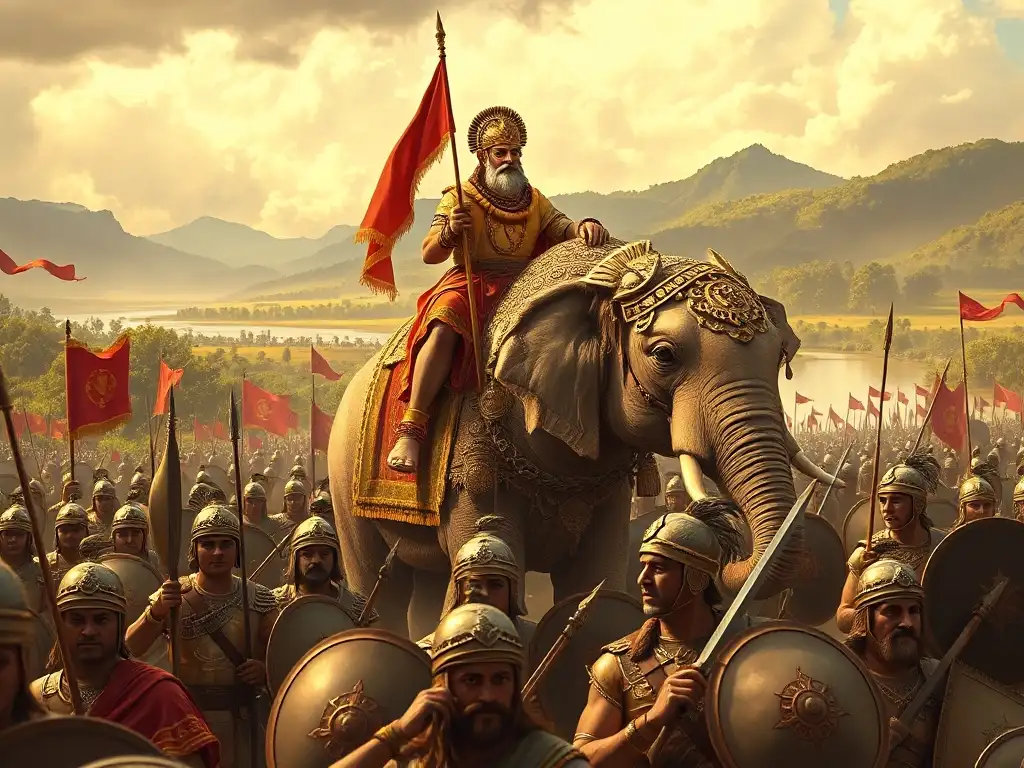
Samudragupta, often celebrated as one of the greatest military leaders of ancient India, reigned during the Gupta Empire from approximately 335 to 375 CE. His military strategies not only expanded the empire's territorial reach but also laid the foundational principles for governance and military organization that would influence subsequent generations. The brilliance of Samudragupta's military tactics is reflected in his campaigns, which incorporated innovative strategies, adaptability, and a deep understanding of the socio-political landscape of his time.
Overview of Samudragupta's Role in Ancient Indian History
Samudragupta's ascendancy to the throne marked a significant turning point in Indian history. He was the son of Chandragupta I, the founder of the Gupta Empire, and his reign is often seen as a golden age of consolidation and expansion. His military prowess is documented in the famous Allahabad Pillar inscription, which provides a detailed account of his conquests and strategies.
- Military Expansion: Samudragupta embarked on extensive campaigns against various kingdoms in Northern India, including the Aryas, the Nagas, and the kingdoms of the Deccan. His ability to subdue diverse adversaries showcased not only his military might but also his diplomatic skills in managing newly acquired territories.
- Tactical Innovations: Unlike many of his contemporaries, Samudragupta employed a combination of cavalry, infantry, and war elephants, allowing for a versatile battlefield presence. His adept use of cavalry enabled rapid maneuvers and surprise attacks, giving him a strategic edge.
- Cultural Integration: Following his military victories, Samudragupta often implemented policies that promoted cultural integration and economic stability in the regions he conquered. This not only solidified his rule but also facilitated the spread of Gupta culture and governance throughout India.
Importance of Military Strategies in the Gupta Empire
The military strategies employed by Samudragupta were crucial in establishing and maintaining the Gupta Empire's dominance in ancient India. These strategies had far-reaching implications, both during his reign and in shaping future military doctrines.
- Unity and Defense: The Gupta Empire faced threats from various external forces, such as the Huns and other nomadic tribes. Samudragupta's military strategies emphasized a united front, focusing on fortifying borders and creating alliances, which were essential for the empire's defense.
- Legacy of Warfare: The tactics and strategies developed during Samudragupta's campaigns became a reference for subsequent rulers. His emphasis on mobility, intelligence gathering, and psychological warfare influenced military practices not only in India but also in other regions.
- Impact on Governance: Military success translated into political legitimacy. By demonstrating effective leadership on the battlefield, Samudragupta reinforced the Gupta dynasty's authority, which enabled further administrative innovations and economic prosperity.
Samudragupta's military strategies not only played a pivotal role in his own successes but also laid the groundwork for the Gupta Empire's expansion and cultural flourishing. His legacy remains a subject of study for historians and military strategists alike, illustrating the interconnectedness of military prowess and statecraft in ancient India.
Historical Context of Samudragupta's Campaigns
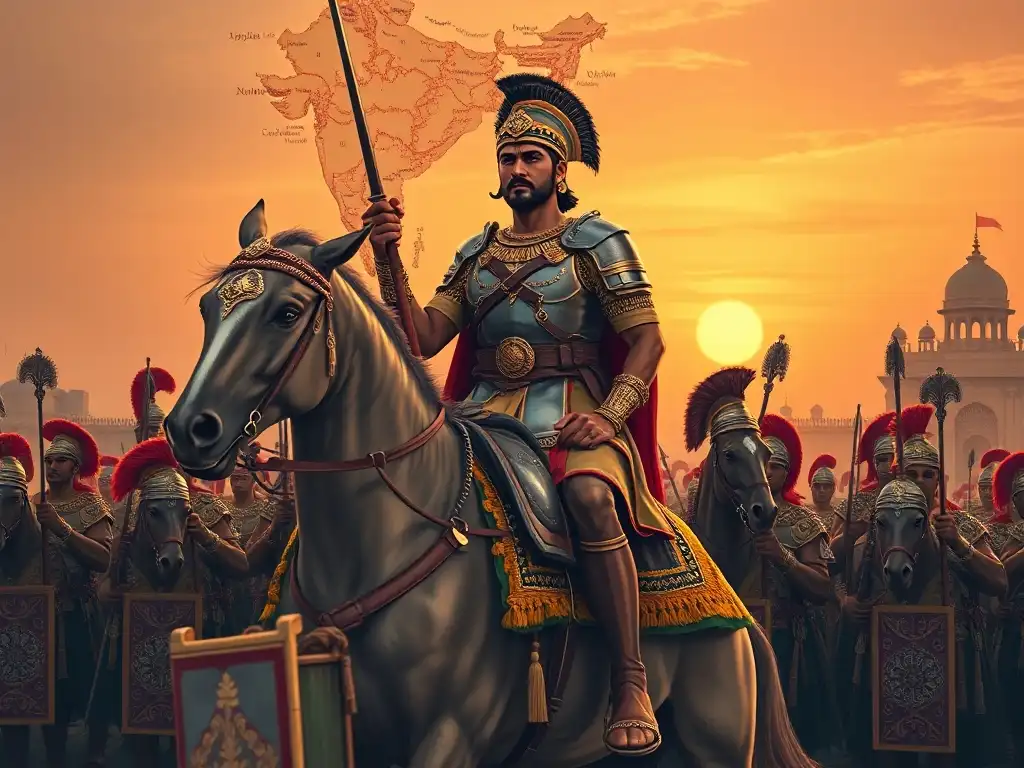
Samudragupta, one of the most celebrated rulers of the Gupta Empire, reigned from approximately 335 to 375 CE. His military campaigns played a pivotal role in expanding the empire, solidifying its power, and establishing a legacy that would influence India for centuries. To understand the significance of his military strategies, it is essential to explore the historical context in which he operated.
The Political Landscape of Ancient India during the Gupta Period
During the Gupta period, ancient India was a mosaic of regional kingdoms and tribal states, each vying for power and influence. This era saw the fragmentation of territories following the decline of the Maurya Empire, leading to a dynamic political environment characterized by both competition and cooperation among various rulers. The Gupta Empire emerged in this context, providing a unifying force that sought to bring stability and prosperity to the region.
- Major Kingdoms: The political landscape was dominated by several key kingdoms, including:
- The Kushan Empire in the northwest, which had lost influence but still controlled strategic trade routes.
- The Vakataka Dynasty in central India, maintaining significant power and territorial claims.
- Various regional rulers in the Deccan and South India, who posed potential threats or opportunities for alliances.
- Diplomatic Relations: The Gupta rulers, particularly Samudragupta, employed diplomacy alongside military might. They formed alliances through marriage and strategic partnerships, which were crucial for consolidating power and securing frontiers. This diplomatic approach allowed Samudragupta to focus on his military campaigns with a degree of stability in the empire.
- Cultural Renaissance: The Gupta period also marked a cultural renaissance, with advancements in literature, science, and the arts. The stability provided by military successes allowed for the flourishing of culture, which was both a product of and a contributor to the empire's strength.
Key Challenges Faced by Samudragupta
Despite his prowess as a military leader, Samudragupta faced several challenges that shaped his strategies and outcomes during his campaigns:
- Diverse Enemies: Samudragupta confronted a variety of adversaries, including:
- Powerful regional kings who resisted Gupta expansion, such as the rulers of the Vakataka and the Naga dynasties.
- Nomadic tribes on the borders of his empire that threatened stability and trade routes.
- Geographical Obstacles: The Indian subcontinent's diverse geography presented significant challenges:
- Mountainous regions in the north, which limited troop movement and posed logistical difficulties.
- Dense forests in central India, making it challenging to deploy large armies effectively.
- Maintaining Morale: As with any military leader, maintaining the morale of his troops was crucial. Samudragupta needed to ensure that his soldiers were well-equipped, well-fed, and motivated, especially during prolonged campaigns.
- Economic Resources: Financing military campaigns required substantial economic resources:
- Taxation and tribute from conquered territories were vital for sustaining his army.
- Control over trade routes enabled the Gupta Empire to enhance its economic base, which in turn supported military endeavors.
- Religious Dynamics: The Gupta period was marked by a variety of religious beliefs, including Hinduism, Buddhism, and Jainism. Navigating these complexities required Samudragupta to be tactful in his approach to governance and military conquests, ensuring that he did not alienate potential allies.
Samudragupta's military strategies were deeply influenced by the political landscape of ancient India and the myriad challenges he faced. His ability to adapt to these circumstances and implement effective strategies not only expanded the Gupta Empire but also established a legacy that would be studied and admired for generations.
Samudragupta's Military Strategies: An In-Depth Analysis
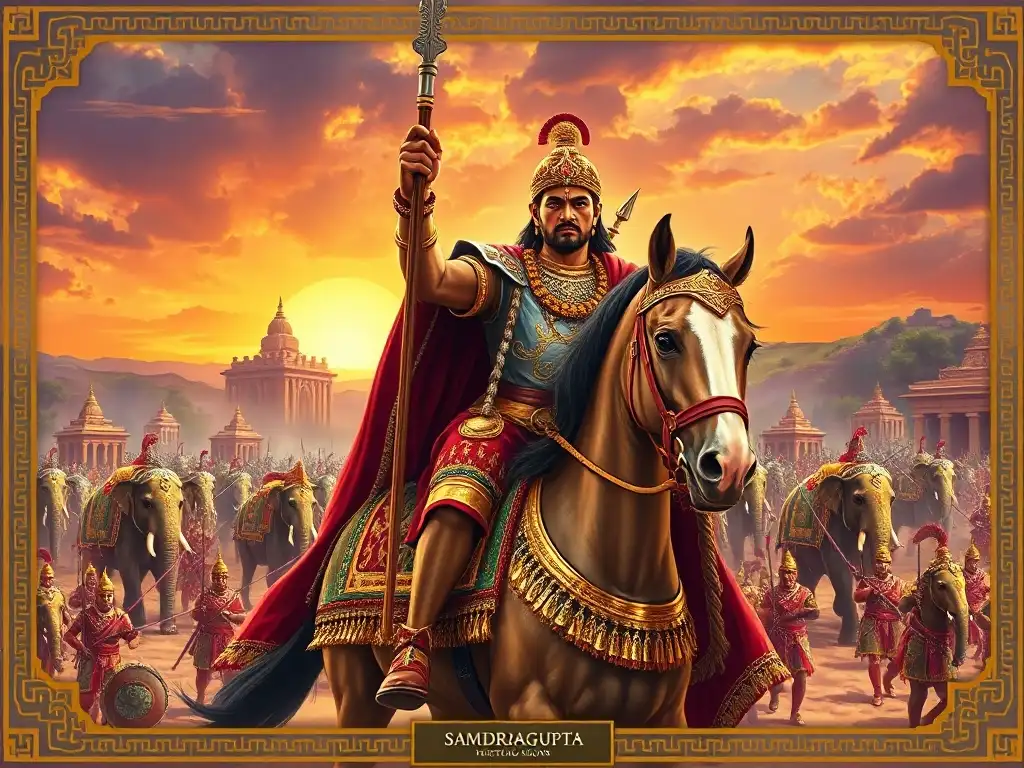
Samudragupta, the illustrious ruler of the Gupta Empire during the 4th century CE, is often celebrated for his exceptional military strategies that significantly shaped the course of Indian history. His campaigns not only expanded the empire's territory but also demonstrated innovative approaches to warfare that are still studied today. This section delves into the core components of Samudragupta's military strategies, examining how strategic planning, innovative tactics, and the effective use of cavalry and elephants contributed to his success on the battlefield.
Strategic Planning and Preparation for Warfare
Samudragupta's military success can largely be attributed to his meticulous strategic planning and preparation. Before engaging in any military campaign, he undertook several crucial steps:
- Intelligence Gathering:
- Samudragupta prioritized acquiring accurate information about his enemies. He utilized scouts and spies to gather data on enemy strengths, weaknesses, and terrain, which allowed for informed decision-making.
- Resource Management:
- Effective logistics played a vital role in Samudragupta's campaigns. He ensured that his troops were well-supplied with food, weapons, and provisions. This focus on resource management allowed his army to operate efficiently over long distances.
- Diplomatic Maneuvers:
- Prior to launching campaigns, Samudragupta often sought to strengthen alliances or neutralize potential threats through diplomacy. By forging alliances with local rulers, he could secure his rear and focus on primary targets.
- Comprehensive Training:
- Samudragupta placed significant emphasis on training his troops. His soldiers underwent rigorous physical training and were well-versed in various combat techniques, enhancing their effectiveness in battle.
The combination of these strategic elements created a solid foundation for successful military campaigns, enabling Samudragupta to consolidate power and expand his empire significantly.
Innovative Tactics Employed by Samudragupta
Samudragupta was not only a strategist but also an innovator on the battlefield. His tactical prowess was evident in several key areas:
- Rapid Mobilization:
- Samudragupta's army was known for its ability to mobilize quickly. This speed allowed him to conduct surprise attacks, catching his enemies off guard and capitalizing on their unpreparedness.
- Flanking Maneuvers:
- He employed flanking tactics to outmaneuver larger enemy forces. By attacking from multiple directions, he was able to disrupt enemy formations and create confusion among their ranks.
- Psychological Warfare:
- Samudragupta understood the importance of morale in warfare. He often used propaganda and displayed the might of his forces to intimidate potential adversaries, leading to pre-emptive surrenders without bloodshed.
- Adaptation to Terrain:
- His campaigns often took place in diverse geographical settings. Samudragupta skillfully adapted his strategies to different terrains, such as utilizing the dense forests of the north or the open plains of the Deccan, to gain a tactical advantage.
These innovative tactics not only showcased his military genius but also contributed to the Gupta Empire’s reputation as a formidable power in ancient India.
Use of Cavalry and Elephants in Battles
The strategic incorporation of cavalry and war elephants was a hallmark of Samudragupta's military strategies. These elements played a crucial role in his campaigns:
- Cavalry Units:
- Samudragupta's cavalry was highly mobile and served as the backbone of his military force. Skilled horsemen could quickly engage the enemy, perform flanking maneuvers, and pursue retreating forces. Their speed and agility were instrumental in securing victories in numerous battles.
- War Elephants:
- The use of elephants in warfare was a significant aspect of Samudragupta's military strategy. Elephants not only served as a psychological weapon, instilling fear in the enemy, but also provided physical power in battles. They could trample over infantry and disrupt enemy formations, creating openings for infantry and cavalry to exploit.
- Combined Arms Approach:
- Samudragupta effectively integrated cavalry, infantry, and elephants into a cohesive fighting force. This combined arms approach allowed for coordinated attacks that maximized the strengths of each unit type, leading to decisive victories.
- Logistical Support for Elephants:
- Understanding the logistical challenges posed by war elephants, Samudragupta ensured that sufficient resources were devoted to their care and maintenance. This attention to detail allowed him to deploy elephants effectively during campaigns without compromising their performance.
Through the innovative use of cavalry and elephants, Samudragupta not only enhanced the effectiveness of his military but also set a precedent for future Indian rulers who recognized the importance of these elements in warfare.
The military strategies of Samudragupta reflect a profound understanding of warfare that combined strategic planning, innovative tactics, and the effective use of cavalry and elephants. His legacy as a military leader continues to influence the study of ancient military history and strategy.
Intelligence and Espionage in Military Operations
In the realm of ancient warfare, intelligence and espionage played crucial roles in determining the outcomes of battles, and Samudragupta was no exception. His adeptness in gathering intelligence and employing espionage tactics significantly enhanced his military strategies, allowing him to outmaneuver and outsmart his adversaries.
The Importance of Intelligence
Samudragupta understood that knowledge about enemy movements, strengths, and weaknesses was vital for successful military campaigns. He established a network of spies and informants that provided him with timely and accurate information. This intelligence enabled him to anticipate enemy actions and make informed decisions on the battlefield. The ability to gather intelligence not only helped him in planning his offensives but also in securing his territories and maintaining control over his vast empire.
Use of Spies
Spies were an integral part of Samudragupta’s military strategy. He would dispatch them to gather information about enemy positions and troop strengths. These spies operated covertly, often posing as traders or travelers to blend in with local populations. By doing so, they could gather critical data without raising suspicion. The intelligence obtained through these means allowed Samudragupta to devise strategies that would exploit the weaknesses of his foes, often leading to swift and decisive victories.
Psychological Warfare
In addition to direct military engagements, Samudragupta's use of intelligence extended to psychological warfare. By spreading misinformation and rumors, he could manipulate enemy perceptions and create confusion among their ranks. This tactic often led to demoralization, making the enemy more susceptible to defeat. The strategic use of espionage not only focused on gathering vital information but also on undermining the enemy's morale, which is a testament to Samudragupta's comprehensive understanding of warfare.
Strategic Alliances
Samudragupta also employed intelligence to form strategic alliances with local rulers and tribes. By understanding the political landscape and leveraging relationships, he could secure support for his campaigns. These alliances often provided him with additional troops and resources, further strengthening his military position. His ability to navigate the complexities of regional politics through intelligence underscored the multifaceted nature of his military strategies.
Conclusion
The integration of intelligence and espionage into Samudragupta's military operations exemplifies his strategic acumen. By prioritizing the gathering of information and employing spies effectively, he not only enhanced his battlefield tactics but also solidified his power across the Indian subcontinent. This emphasis on intelligence highlights the sophisticated nature of ancient Indian warfare and the pivotal role that informed decision-making played in military success.
Notable Campaigns and Their Significance
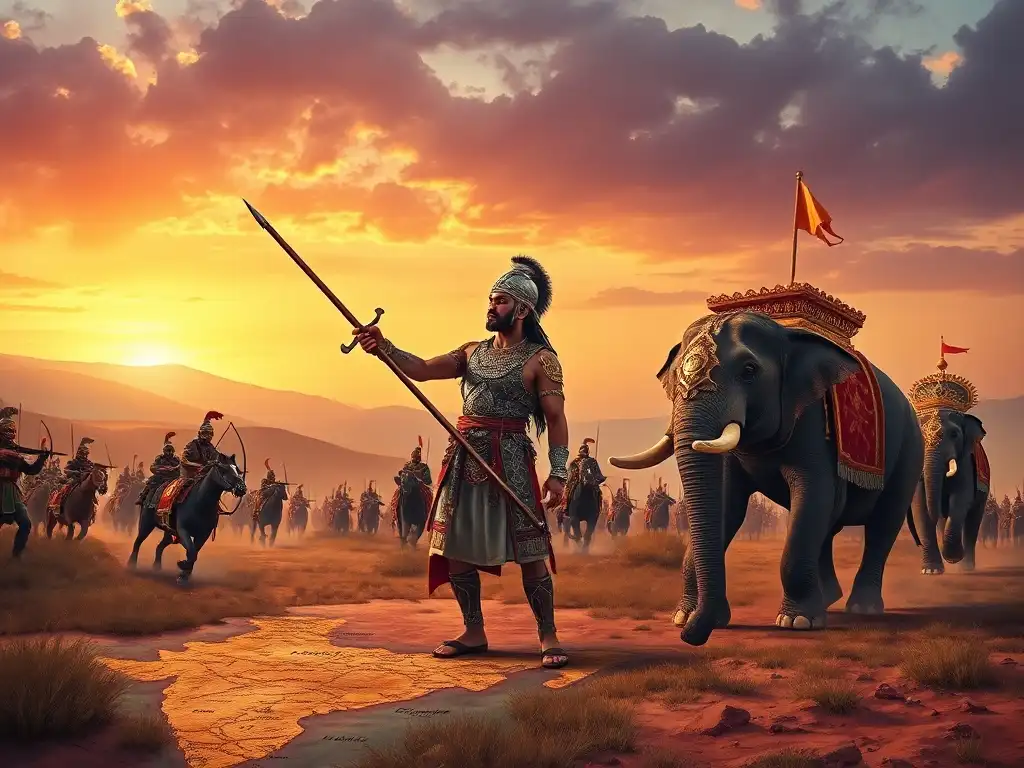
Samudragupta, often hailed as one of the greatest military leaders of ancient India, is renowned for his exceptional military strategies and the significant impact of his campaigns on the subcontinent. His approach to warfare was characterized by both brute force and strategic diplomacy, allowing him to expand the Gupta Empire dramatically during his reign in the 4th century CE. Below, we delve into the notable campaigns that defined his military prowess, focusing on their significance in shaping the history of ancient India.
The Northern Campaigns: Expansion and Control
Samudragupta's northern campaigns were pivotal in establishing the Gupta Empire as a dominant force in India. His victories against various kingdoms not only expanded his territory but also showcased his tactical brilliance.
- Conquest of the Shaka Kingdoms: Samudragupta launched a series of military expeditions against the Shaka kingdoms situated in the northwest. By defeating these formidable foes, he was able to secure crucial trade routes and enhance the economic stability of his empire.
- Subjugation of the Western States: His campaigns against the rulers of the western states, including the regions of present-day Punjab and Rajasthan, demonstrated a blend of military might and diplomacy. Many local rulers were coerced into submission, while others were integrated into the Gupta administration through alliances, showcasing Samudragupta’s strategy of both conquest and consolidation.
- Strategic Use of Cavalry and Elephants: His innovative use of cavalry and war elephants in battle helped him dominate the northern plains. The mobility provided by cavalry units allowed for rapid assaults on enemy positions, while elephants served as both a psychological weapon and a powerful force in direct engagements.
The Eastern Campaigns: Conquest of Bengal
The eastern campaigns of Samudragupta were equally significant in establishing Gupta hegemony over Bengal and the regions beyond.
- Invasion of Bengal: Samudragupta's military expeditions in Bengal were marked by his swift and decisive victories against the rulers of the region. This campaign was crucial for the Gupta Empire as it opened up new territories rich in resources and trade opportunities.
- Integration of Local Governance: Unlike many conquerors, Samudragupta did not impose harsh rule upon the conquered territories. Instead, he installed local governors who were loyal to the Gupta Empire, fostering a sense of stability and continuity. This strategy not only maintained order but also encouraged economic growth in the newly acquired regions.
- Cultural Exchange and Influence: The conquest of Bengal allowed for a significant cultural exchange between the Gupta Empire and the eastern regions. This interaction enriched the cultural tapestry of ancient India, further solidifying the influence of Gupta civilization in areas such as art, architecture, and trade.
The Southern Campaigns: Diplomatic and Military Conquests
Samudragupta’s southern campaigns illustrate his dual approach of military aggression and diplomatic engagement, which enabled him to extend Gupta influence into southern India.
- Military Expeditions into the Deccan: His campaigns in the Deccan region involved confrontations with powerful kingdoms like the Pallavas and the Chalukyas. Although these campaigns were met with resistance, Samudragupta's strategic brilliance allowed him to achieve significant victories that expanded Gupta territory.
- Diplomacy with Southern Kingdoms: In addition to military engagements, Samudragupta recognized the importance of diplomacy. He often sought alliances with local rulers, which helped to mitigate conflicts and secure peace. This approach ensured that the Gupta Empire maintained a favorable standing in the south without the need for constant military intervention.
- Cultural Integration and Economic Ties: The southern campaigns facilitated cultural integration and the establishment of robust trade networks. By fostering relationships with southern kingdoms, Samudragupta not only expanded his empire but also enriched it culturally and economically, paving the way for a prosperous and unified region under Gupta rule.
Samudragupta's military strategies were marked by a combination of aggressive expansion, diplomatic acumen, and effective governance. His campaigns not only expanded the Gupta Empire but also laid the groundwork for a legacy that would influence the Indian subcontinent for centuries to come. The significance of these campaigns is evident in the diverse and prosperous culture that flourished under Gupta rule, making Samudragupta a pivotal figure in the military history of ancient India.
Impact of Samudragupta's Victories on the Gupta Empire
Samudragupta's military conquests had a profound and lasting impact on the Gupta Empire, significantly contributing to its territorial expansion, political stability, and cultural prosperity. His victories not only shaped the immediate landscape of ancient India but also influenced the empire's legacy for centuries.
One of the most notable effects of Samudragupta's victories was the dramatic expansion of the Gupta Empire. Through a series of successful campaigns, Samudragupta annexed numerous regions, including parts of present-day Uttar Pradesh, Madhya Pradesh, Rajasthan, and even territories in the Deccan. This expansion not only increased the empire's geographical footprint but also enhanced its resources, including wealth, manpower, and agricultural output. The newfound territories brought diverse cultures and peoples under Gupta rule, facilitating a rich exchange of ideas and practices.
The military successes of Samudragupta also led to a consolidation of political power within the empire. By defeating rival kingdoms, such as the Shakhas and the Kshatrapas, he established Gupta dominance in northern India. This consolidation allowed for greater centralization of authority and the establishment of a more structured administrative system, which was crucial for maintaining control over the vast territories. The stability that followed enabled subsequent rulers, particularly his son Chandragupta II, to further strengthen and expand the empire.
Moreover, Samudragupta's military prowess and strategic acumen contributed to a cultural renaissance during the Gupta period. The security provided by military conquests allowed for greater patronage of the arts, sciences, and philosophy. Scholars, poets, and artists thrived, giving rise to what is often referred to as the "Golden Age of India." This period saw significant advancements in literature, mathematics, astronomy, and architecture, all of which were underpinned by the stability and wealth brought about by Samudragupta's military campaigns.
In addition, Samudragupta's victories played a crucial role in shaping the dynastic legitimacy of the Gupta rulers. His successful campaigns against formidable opponents reinforced the Gupta claim to power and portrayed them as protectors of dharma (righteousness) and civilization. This perception was vital for maintaining loyalty among his subjects and for the continuation of the Gupta dynasty's rule. The military achievements of Samudragupta became a source of inspiration for future generations of rulers, setting a precedent for the importance of military strength in governance.
The impact of Samudragupta's victories on the Gupta Empire was multifaceted, leading to territorial expansion, political consolidation, cultural flourishing, and the establishment of dynastic legitimacy. His military strategies not only secured the empire's immediate interests but also laid the groundwork for a legacy that would resonate throughout Indian history.
Legacy of Samudragupta's Military Strategies
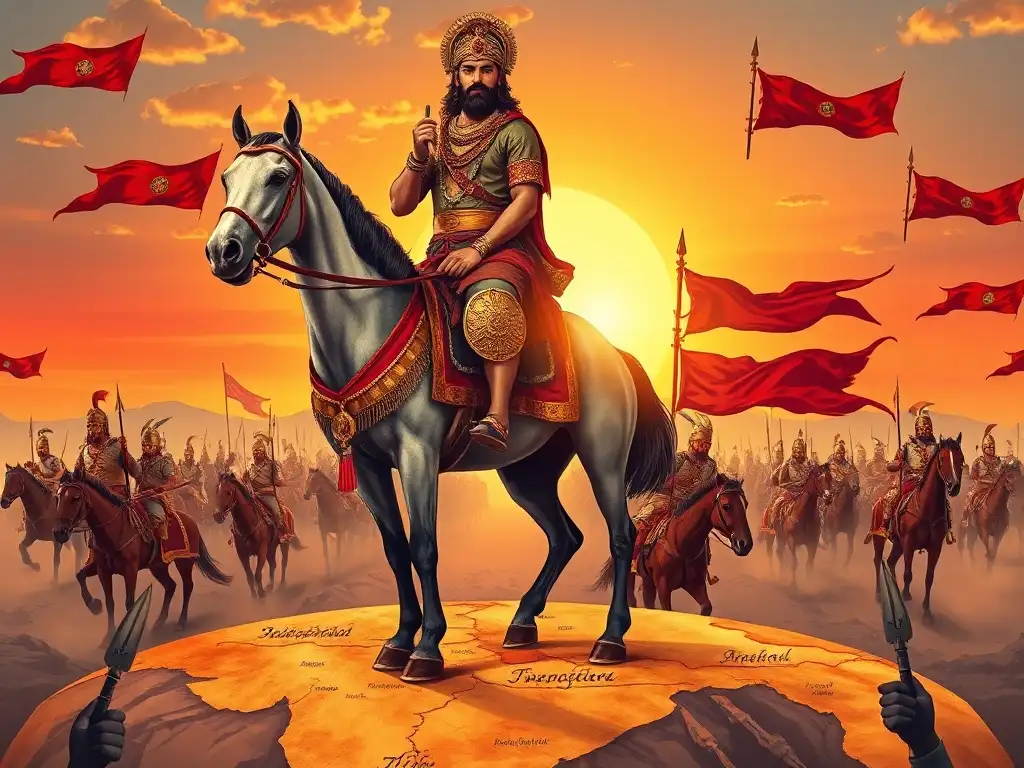
Samudragupta, often hailed as one of the most illustrious rulers of the Gupta Empire, left an indelible mark on the military history of ancient India. His strategies not only ensured the expansion of his empire but also laid the groundwork for military practices that would resonate through subsequent generations. The legacy of his military prowess is characterized by a blend of innovative tactics, strategic diplomacy, and an astute understanding of warfare, all of which contributed to the stability and prosperity of his realm.
Influence on Subsequent Indian Military Leaders
The military strategies employed by Samudragupta had a profound influence on future Indian leaders and their approaches to warfare. His conquests, notably the successful campaigns against various kingdoms in Northern India, served as a blueprint for military operations in the region.
- Adoption of Cavalry Tactics: Samudragupta's effective use of cavalry units showcased the importance of mobility in warfare. Subsequent leaders, including those from the Rajput and Mughal dynasties, would integrate similar tactics into their military formations.
- Diplomatic Engagement: His campaigns often involved not just military might but also strategic alliances. This dual approach influenced leaders to consider diplomacy as a pivotal component of their military campaigns, evident in the tactics of later dynasties.
- Incorporation of War Elephants: The prominence of war elephants in Samudragupta's army illustrated their strategic value in battles. This practice became a hallmark of Indian warfare, influencing military leaders such as Chandragupta II and beyond.
The effective combination of these elements not only established a template for military success but also underscored the significance of versatility in leadership, which many rulers would emulate in their own conquests.
The Role of Samudragupta in Shaping Military Doctrine in Ancient India
Samudragupta's military strategies were pivotal in shaping the military doctrine of ancient India. His campaigns are documented in the Allahabad Pillar Inscription, which highlights not only his victories but also his strategic approach to warfare.
Key Aspects of His Military Doctrine:
- Flexibility in Strategy: Samudragupta demonstrated a remarkable ability to adapt his strategies based on the unique circumstances of each battle. His willingness to shift tactics, whether in open-field battles or sieges, set a precedent for future commanders.
- Intelligence and Reconnaissance: Understanding the importance of information, he prioritized establishing a network for gathering intelligence on enemy movements and strengths, which allowed for well-informed strategic planning.
- Logistical Planning: His campaigns were marked by meticulous logistical arrangements, ensuring that his troops were well-supplied and maintained. This focus on logistics became a critical element in the military doctrine of later rulers.
- Moral and Psychological Warfare: Samudragupta also recognized the psychological aspects of warfare. His reputation as a formidable warrior often preceded him, which served to demoralize opponents even before battles commenced.
By implementing these principles, Samudragupta not only secured his empire but also influenced the military norms that would govern warfare in India for centuries.
Historical Documentation of Samudragupta's Strategies
The strategies of Samudragupta are documented through various historical sources, with the Allahabad Pillar Inscription being the most prominent. This inscription not only recounts his military achievements but also provides insights into his methodologies.
Noteworthy Historical Sources:
- Allahabad Pillar Inscription: This inscription is a crucial primary source detailing Samudragupta's conquests and military strategies. It highlights his campaigns against the Shakas, the Kushanas, and various other regional powers.
- Archaeological Evidence: Excavations in regions that were part of the Gupta Empire have revealed artifacts and remnants that corroborate the accounts of his military strategies, including weaponry and fortifications.
- Contemporary Texts: Works by later historians, such as Kalidasa and other poets, also reference Samudragupta, providing a glimpse into his military reputation and the impact of his strategies on subsequent rulers.
The historical documentation of Samudragupta's military strategies underscores their significance in the broader narrative of ancient Indian military history. His innovative tactics and the systematic approach to warfare not only secured his empire but also set the stage for the military doctrines that would follow, solidifying his legacy as a formidable leader in ancient India.
Conclusion: The Enduring Impact of Samudragupta’s Military Strategies
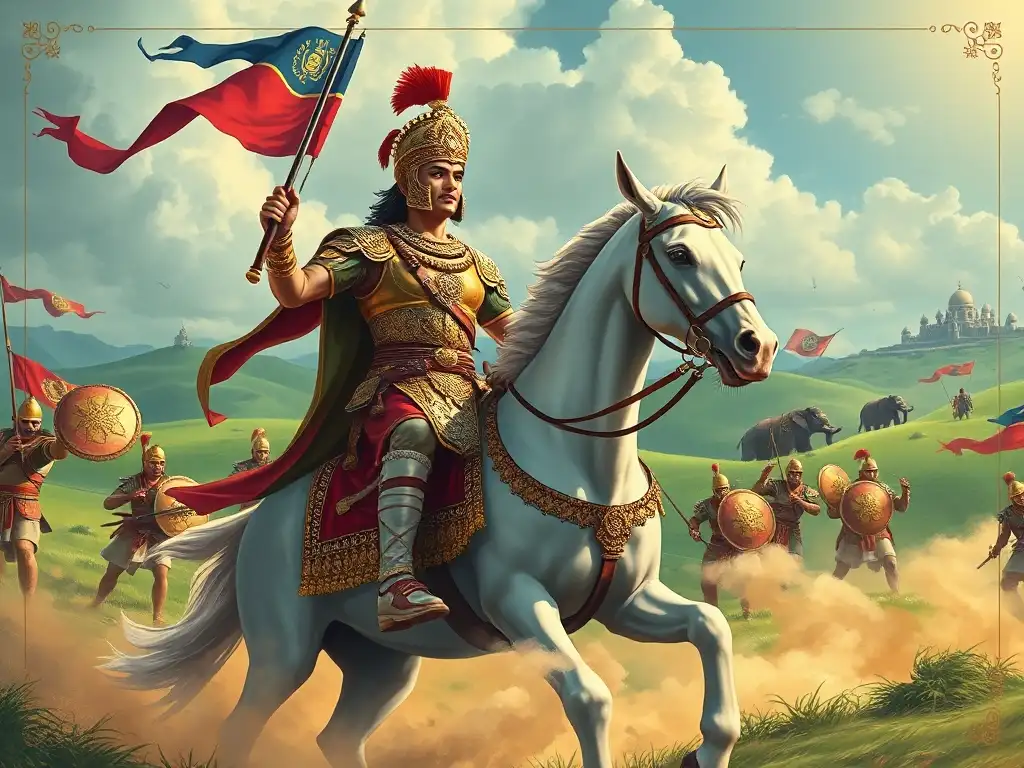
Summary of Key Points on Samudragupta's Military Strategies
Samudragupta, often hailed as one of the most formidable rulers of the Gupta Empire, showcased military strategies that were both innovative and effective. His reign is marked by a series of successful campaigns that expanded the empire's territory and influence. Key points regarding his military strategies include:
- Cavalry Dominance: Samudragupta effectively utilized a strong cavalry, which was crucial in executing rapid attacks and outmaneuvering opponents. His horsemen were well-trained, allowing for flexible tactics in battle.
- War Elephants: The use of war elephants was a hallmark of his military might. These massive creatures created psychological advantages on the battlefield and could disrupt enemy formations, making them a pivotal part of his strategy.
- Diplomatic Alliances: Beyond brute force, Samudragupta skillfully formed alliances with local rulers and tribes, often integrating them into his campaigns. This approach not only reduced resistance but also facilitated smoother governance in newly acquired territories.
- Strategic Raids: His campaigns were characterized by swift and strategic raids on neighboring kingdoms. By targeting weak spots, he minimized resource expenditure while maximizing territorial gains.
- Adaptability: Samudragupta's ability to adapt his strategies according to the nature of his adversaries played a critical role in his success. He employed different tactics based on whether he faced large armies, guerrilla fighters, or fortified cities.
Reflection on Samudragupta's Contribution to Ancient Indian History
Samudragupta's military strategies significantly shaped the course of ancient Indian history, laying the groundwork for the Gupta Empire's golden age. His conquests not only expanded the empire's geographical boundaries but also facilitated cultural exchange and economic prosperity.
The impact of his military prowess can be reflected in several areas:
- Cultural Integration: Through his campaigns, Samudragupta incorporated diverse cultures and communities into the Gupta Empire, fostering a rich tapestry of social and cultural exchange that influenced art, literature, and philosophy.
- Political Stability: By subduing rival kingdoms and establishing a centralized authority, he contributed to a period of relative political stability that allowed for advancements in various fields, including science and the arts.
- Legacy of Leadership: Samudragupta's approach to warfare and governance set a precedent for future rulers. His combination of military strength and diplomatic acumen is studied and admired in military history, influencing subsequent generations of leaders in India and beyond.
The military strategies of Samudragupta not only underscore his tactical brilliance but also exemplify his enduring legacy in shaping ancient Indian history. His ability to blend warfare with diplomacy and cultural integration remains a significant point of study for historians and military strategists alike.
Further Reading on Samudragupta and Military History
Recommended Books and Articles on Gupta Military Strategies
To gain a deeper understanding of Samudragupta's military strategies and the broader context of Gupta military history, the following books and articles are highly recommended:
-
"The Gupta Empire" by Romila Thapar
This book offers a comprehensive overview of the Gupta Empire, including military organization and strategies. Thapar provides insights into the socio-political factors that influenced military decisions during Samudragupta's reign.
-
"War and Society in Ancient India" by K. K. Dutta
Dutta explores the relationship between warfare and society in ancient India, focusing on different rulers, including Samudragupta. The book delves into military tactics, campaign strategies, and the impact of warfare on society.
-
"The Art of War in Ancient India" by R. C. Majumdar
This scholarly work examines military strategies employed across various Indian empires, with a dedicated section on the Gupta period. Majumdar analyzes battles, formations, and logistical aspects that defined warfare during Samudragupta's time.
-
"Samudragupta: The Great Indian Monarch" by C. P. Gupta
Gupta's biography of Samudragupta highlights the king's military campaigns, conquests, and innovative strategies that contributed to the expansion of the Gupta Empire. The text provides a detailed account of his military prowess, supported by historical evidence.
-
"The Gupta Period: A Historical Overview" - Journal of Ancient Indian History
This article reviews the military and political strategies of the Gupta Empire, with a specific focus on Samudragupta's campaigns. It provides an academic perspective on how military strategies were adapted to achieve territorial expansion.
Online Resources for Exploring Ancient Indian Military History
The digital age has made it easier than ever to access information on ancient military history. Here are some valuable online resources to further explore the military strategies of Samudragupta and the Gupta Empire:
-
Digital South Asia Library
This resource provides a wealth of digitized texts, maps, and documents related to South Asian history, including military history during the Gupta period.
-
Ancient India: Military History
A dedicated website that offers articles, research papers, and multimedia content focusing on the military history of ancient India, including specific sections on the Gupta Empire and Samudragupta.
-
The Indian History Congress
This platform hosts a collection of research papers and articles presented at annual conferences, many of which discuss military strategies and campaigns of significant historical figures like Samudragupta.
-
YouTube Channels on Ancient History
Several educational channels provide documentaries and lectures on ancient Indian history, including the military tactics of the Gupta Empire. Channels like "History Time" and "Epic History TV" often feature detailed discussions on influential leaders, including Samudragupta.
-
Online Courses on Ancient Indian History
Platforms such as Coursera and edX offer courses on ancient civilizations, where learners can explore the military strategies of various empires, including the Gupta Empire. These courses often include lectures from leading historians.
By utilizing these resources, readers can enhance their understanding of Samudragupta's military strategies and the intricate military history of ancient India.
Frequently Asked Questions
What were the key military strategies employed by Samudragupta?
Samudragupta utilized innovative tactics such as cavalry maneuvers, flanking, and combined arms approaches that allowed him to successfully expand the Gupta Empire.
How did Samudragupta's military strategies impact his empire?
His effective military strategies not only expanded the empire's territory but also enhanced political stability and economic prosperity, establishing the Gupta Empire as a major power in ancient India.
What were some notable battles fought by Samudragupta?
Samudragupta is renowned for his victories in several key battles, including the Kahkasha and the conquest of the northern territories, which showcased his strategic brilliance and leadership.
How does Samudragupta's military history compare to other ancient leaders?
Samudragupta’s military strategies are often compared with those of leaders like Alexander the Great and Chandragupta Maurya due to their emphasis on mobility and psychological warfare.
What sources provide insights into Samudragupta's military strategies?
Historians rely on ancient texts such as the Prayaga Prasasti and accounts from travelers of the time, which detail his campaigns and tactics, shedding light on his military genius.
Final Reflection: The Enduring Legacy of Samudragupta's Military Strategies
The military strategies of Samudragupta are not just relics of history; they serve as a powerful reminder of the intricate relationship between warfare and statecraft in shaping civilizations. In today's world, where geopolitical tensions and conflicts continue to dominate headlines, understanding the tactical brilliance of historical figures like Samudragupta can provide invaluable insights into modern military and diplomatic strategies. The lessons drawn from his campaigns resonate deeply, illustrating that effective leadership and innovative tactics can alter the course of history.
The influence of Samudragupta's military strategies extends beyond the battlefield and into the very fabric of cultural and social identity. His ability to unify diverse regions under a single banner not only showcased his military prowess but also fostered a sense of shared identity among his subjects. This historical narrative reminds us that the impact of a leader's decisions can echo through generations.
As historian Romila Thapar once said, "> History is not just about the past; it is a lens through which we can understand the present and shape the future." This perspective encourages us to reflect on how the strategies employed by Samudragupta can inform contemporary leadership and governance.
As we contemplate the lessons of Samudragupta's military strategies, let us take a moment to reflect on our own lives and the challenges we face. How can we apply the principles of strategic thinking, adaptability, and unity in our personal and professional endeavors?
Embracing these lessons can empower us to navigate our own battles, whether they be in our careers, communities, or personal relationships. The legacy of Samudragupta is not merely a historical account; it is a call to action for each of us to harness the art of strategy in our lives, ensuring that we too can leave a lasting impact on the world around us.
Unleash Your Inner Strategist!
Thank you for diving into the fascinating world of Samudragupta's military strategies! We hope you found inspiration and valuable insights into the art of war and leadership. Now, let’s put that knowledge into action!
- Study a military strategy today: Choose a historical battle, analyze the tactics used, and reflect on how they can be applied to modern challenges.
- Share your insights: Discuss these strategies with friends or in online forums to explore different perspectives and interpretations.
- Engage with history: Visit a museum or read a book that delves deeper into ancient military tactics to enhance your understanding.
Which military strategy from history resonates with you the most, and how could you incorporate it into your own life?