
Gemstone Trade Routes: How Ancient India Became the Jewel of the East

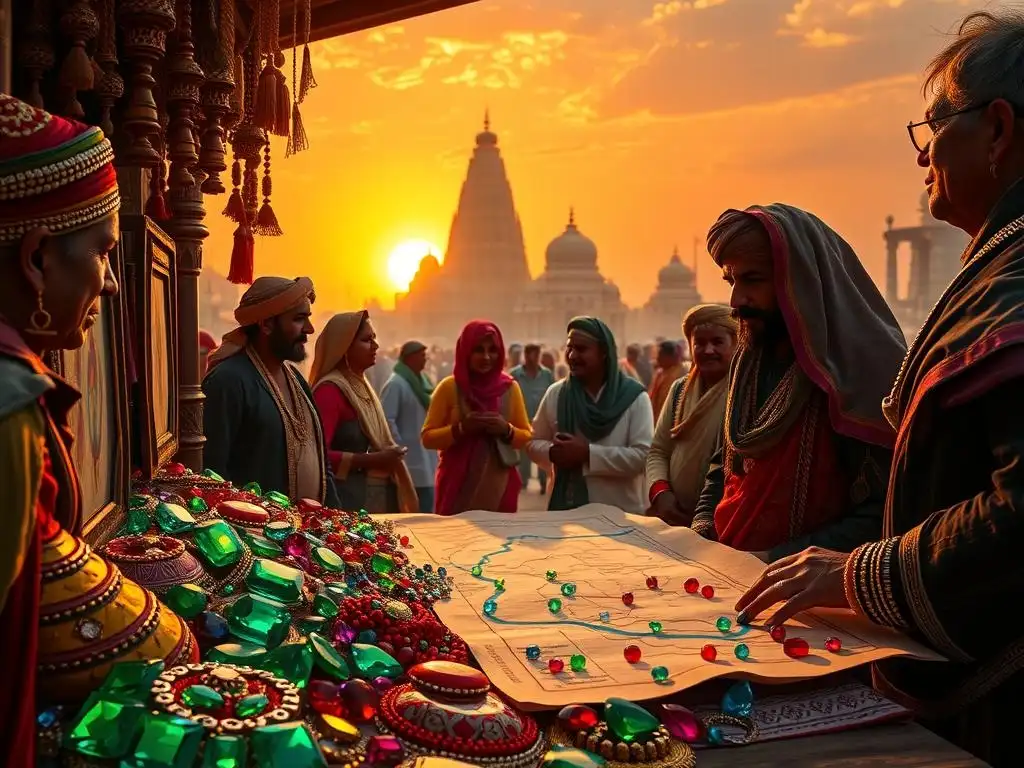
Welcome to Ancient India History, where we embark on a fascinating journey through time, uncovering the rich tapestry of India’s remarkable past. In this article, we delve into the captivating world of the Ancient India gemstone trade routes, revealing how this vibrant network transformed ancient India into the Jewel of the East. Prepare to be enchanted as we explore the intricate connections between trade, culture, and the stunning gemstones that shaped civilizations. Join us as we unravel the secrets of these historical pathways and discover the treasures that lie within!
- Introduction to Ancient India Gemstone Trade Routes
- Historical Context of Gemstone Trade in Ancient India
- Key Gemstones of Ancient India
- Major Trade Routes in Ancient India
- The Influence of Ancient Indian Gemstone Trade on Global Markets
- The Decline and Transformation of Gemstone Trade Routes
- Conclusion: Legacy of Ancient India’s Gemstone Trade Routes
- References and Further Reading on Ancient India Gemstone Trade Routes
-
Frequently Asked Questions
- What were the primary gemstone trade routes of ancient India?
- How did the gemstone trade impact ancient Indian society?
- Which gemstones were most sought after in ancient India?
- How did ancient Indian civilizations influence the gemstone trade?
- What role did the Gupta Empire play in the gemstone trade?
- Final Reflection: The Enduring Legacy of Ancient India's Gemstone Trade Routes
- Unveil the Precious Legacy of India's Gemstone Trade!
Introduction to Ancient India Gemstone Trade Routes
The gemstone trade routes of ancient India played a pivotal role in shaping the economic and cultural landscape of the region. Spanning thousands of years, these routes facilitated the exchange of precious stones not only within the Indian subcontinent but also with distant lands, including Persia, Mesopotamia, and beyond.
The rich deposits of gemstones such as diamonds, rubies, emeralds, and sapphires found in India made it a key player in the global trade network, earning it the moniker of the "Jewel of the East." This article delves into the intricate tapestry of ancient India’s gemstone trade routes, exploring their significance, the economic impact they had on Indian society, and the enduring legacy of these vibrant exchanges.
Overview of Gemstone Significance in Ancient India
Gemstones held immense value in ancient Indian culture, not just as adornments but as symbols of power, status, and spiritual significance. The following points highlight their importance:
- Cultural Symbolism: Gemstones were often associated with deities and considered auspicious. For instance, the ruby symbolized love and passion, while the emerald was linked to wisdom and prosperity.
- Royal Patronage: Kings and emperors adorned themselves with intricate jewelry made from gemstones, showcasing their wealth and power. Notable historical figures, such as the Mauryan and Gupta emperors, were known for their lavish use of gemstones.
- Trade and Craftsmanship: The expertise of Indian artisans in cutting and polishing gemstones made them highly sought after. The techniques developed during this period laid the groundwork for modern gemstone craftsmanship.
Importance of Gemstone Trade in Indian Economy
The gemstone trade was a cornerstone of ancient India's economy, influencing various aspects of society and commerce:
- Economic Prosperity: The lucrative nature of the gemstone trade contributed significantly to the wealth of ancient Indian kingdoms. Cities like Varanasi and Surat became bustling trade hubs, attracting merchants from across the world.
- Cultural Exchange: Trade routes facilitated not only the exchange of gemstones but also ideas, art, and culture. This led to a rich blend of influences, evident in the architecture and literature of the time.
- Employment and Craftsmanship: The demand for gemstones created jobs for miners, traders, and artisans. This skilled workforce contributed to the development of a vibrant economic ecosystem centered around gemstones.
By examining these facets of the gemstone trade, we gain insight into how ancient India became a focal point of trade and culture, ultimately shaping the world’s perception of its rich heritage.
Historical Context of Gemstone Trade in Ancient India
The Indus Valley Civilization: Early Trade Practices
The Indus Valley Civilization (IVC), flourishing between 3300 and 1300 BCE, is one of the earliest urban cultures in the world, located in what is now Pakistan and northwest India. This civilization is notable for its advanced city planning and significant trade networks, including the trade of gemstones.
Gemstone Sources and Local Crafts
The IVC was rich in natural resources, particularly semi-precious stones like carnelian, agate, and lapis lazuli. Craftsmen in cities such as Mohenjo-Daro and Harappa utilized these materials to create intricate jewelry and other ornamental items. The skillful lapidary techniques of IVC artisans allowed them to produce finely polished beads and carvings, which were highly sought after in both local and distant markets.
- Key gemstones traded:
- Carnelian: Known for its vibrant orange hue, it was extensively used for beads and seals.
- Lapis Lazuli: Sourced from Afghanistan, this blue stone was prized for its beauty and rarity.
- Agate: Commonly used for decorative purposes and seals.
Trade Networks
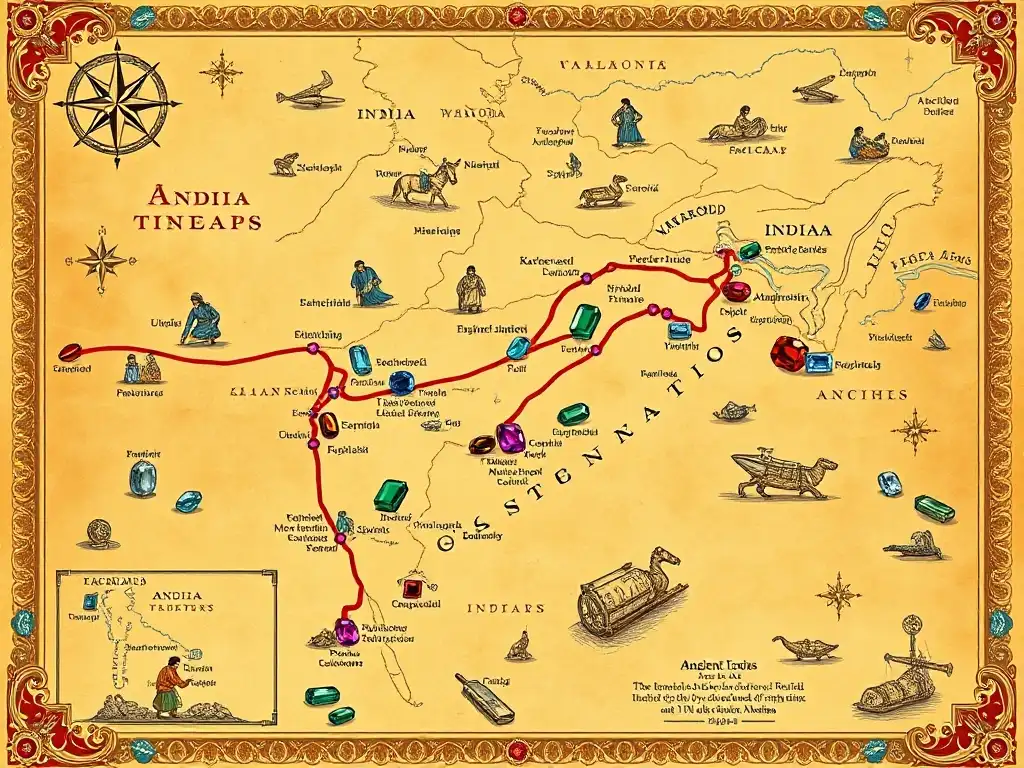
Trade routes established by the IVC facilitated the exchange of gemstones not only within the subcontinent but also with regions as far as Mesopotamia. Archaeological findings, such as seals and weights, indicate a sophisticated system of trade. The presence of IVC artifacts in Mesopotamian sites suggests a vibrant exchange, where gemstones played a crucial role in trade transactions.
- Key trade routes:
- Northwards into the Himalayan regions for jade and other precious materials.
- Westwards towards Persia, establishing early diplomatic and commercial ties.
The Role of the Maurya and Gupta Empires in Gemstone Trade
The Maurya Empire (c. 322-185 BCE) and the Gupta Empire (c. 320-550 CE) were pivotal in expanding and formalizing the gemstone trade in ancient India. Under these empires, India became a hub for both the production and export of gemstones, driven by a combination of political stability and cultural flourishing.
Maurya Empire Contributions
During the Maurya period, particularly under Emperor Ashoka, trade routes were enhanced, and the use of coins in trade became more prevalent. This facilitated a more structured market for gemstones.
- Gemstone production: The Mauryas encouraged local production of gemstones by improving mining techniques and supporting artisans.
- Cultural influence: The Mauryan emphasis on art and culture led to an increase in demand for gemstones in jewelry and religious artifacts.
Gupta Empire Advancements
The Gupta Empire is often referred to as the Golden Age of India, marked by significant advancements in science, art, and commerce, including the gemstone trade.
- Innovation in craftsmanship: Gupta artisans were renowned for their exquisite jewelry, which showcased advanced techniques in engraving and setting gemstones.
- International trade: Trade routes expanded to include connections with Southeast Asia, the Middle East, and even as far as Rome, significantly boosting the export of Indian gemstones.
| Empire | Key Contributions to Gemstone Trade |
|---|---|
| Maurya | Established trade routes; introduced coinage; supported artisans |
| Gupta | Flourished in craftsmanship; expanded international connections |
Trade Connections with Neighboring Regions: Persia and Beyond
Ancient India’s gemstone trade was not isolated; it was part of a larger web of trade connections with neighboring regions, particularly Persia and beyond. These connections were vital for the exchange of goods, culture, and ideas.
Trade with Persia
The relationship between ancient India and Persia was mutually beneficial, with gemstones being one of the main commodities traded. Persian merchants were known to highly value Indian gemstones, particularly diamonds and rubies.
- Cultural exchange: The influx of Persian influence on Indian art and architecture is evident, as seen in the adoption of motifs and styles in jewelry.
- Routes utilized: The Silk Road and maritime routes were crucial for transporting gemstones, leading to significant economic interactions.
Beyond Persia: The Mediterranean and Southeast Asia
India’s gemstone trade extended to the Mediterranean and Southeast Asia, where Indian gemstones were considered luxury items.
- Roman Demand: The Roman Empire's demand for Indian gemstones created a lucrative market. Texts from Roman authors such as Pliny the Elder highlight the fascination with Indian jewels.
- Southeast Asian Trade: The spread of Buddhism facilitated trade routes to Southeast Asia, where Indian artisans shared their skills in gemstone crafting.
The ancient Indian gemstone trade routes were instrumental in establishing India as the "Jewel of the East." The rich historical context of these trade routes showcases the significance of gemstones in ancient Indian civilization, influencing trade practices and cultural exchanges that resonated throughout history.
Key Gemstones of Ancient India
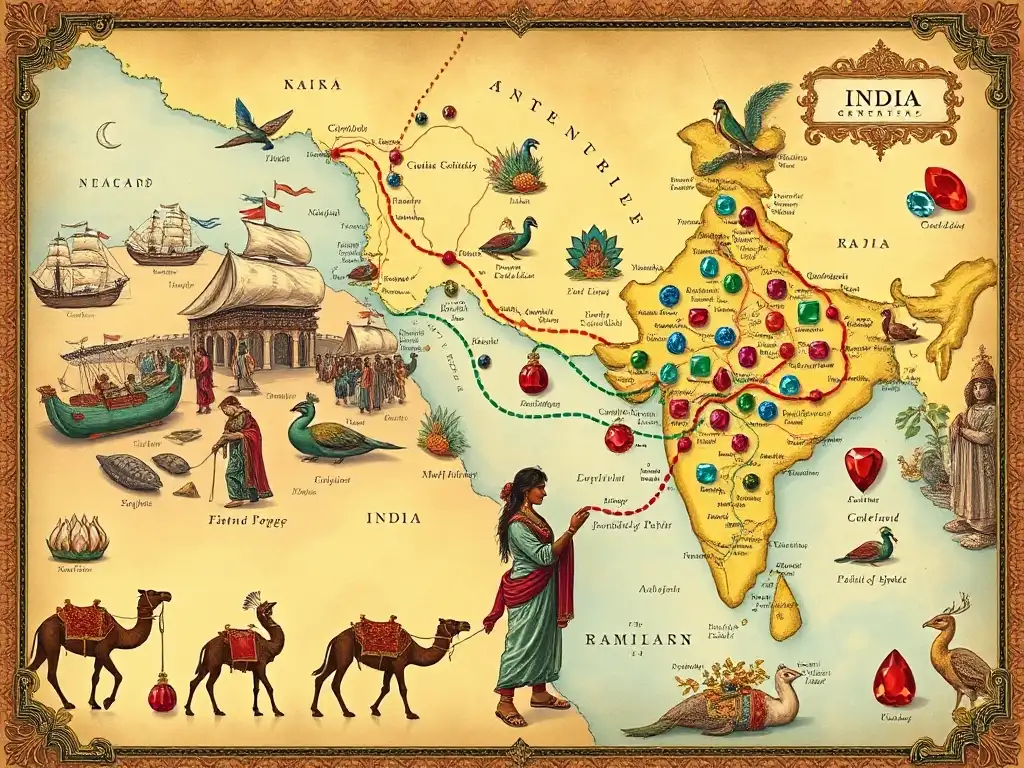
The history of gemstones in ancient India is both rich and intricate, reflecting not only the aesthetic values of the time but also the socio-economic frameworks that facilitated their trade. Among the notable gemstones that shaped this trade were diamonds, rubies, sapphires, emeralds, and topazes. Each of these stones had its unique story and significance in the ancient Indian context, contributing to India's reputation as a hub of gemstone commerce.
Diamonds: The Origins and Trade Centers
Diamonds have held a prestigious place in Indian culture and trade since antiquity. The earliest known diamond mines were located in the Golconda region, particularly around the city of Hyderabad. The diamonds from this area were renowned for their exceptional quality and brilliance.
- Trade Centers: The major trade centers for diamonds included:
- Golconda: Known for the famous Hope Diamond and other legendary stones.
- Kalinga: This region also contributed significantly to the diamond trade, serving as a conduit for gemstones to reach both domestic and international markets.
- Cultural Significance: In ancient texts, diamonds were often associated with virtues such as strength and invincibility. They adorned the crowns of kings and were believed to possess protective qualities against evil.
- International Trade: Diamonds from India reached various parts of the world, including Europe and the Middle East, through complex trade routes. Merchants traveled along the Silk Road and maritime routes, facilitating a vibrant exchange that elevated India's status in the global gemstone market.
Rubies and Sapphires: Their Cultural and Economic Impact
Rubies and sapphires also played a significant role in the gemstone trade of ancient India. These stones were cherished not only for their beauty but also for their perceived mystical properties.
- Cultural Importance:
- Rubies: Known as the "king of gemstones," rubies were symbolic of passion and power. They were often worn by royalty and used in religious ceremonies.
- Sapphires: Associated with wisdom and protection, sapphires were highly sought after by both the elite and commoners. They were believed to bring peace and prosperity to their wearers.
- Economic Impact: The trade of rubies and sapphires contributed significantly to the economy. Trade routes connected India with places such as:
- Southeast Asia: The demand for these gemstones increased through trade with regions like Cambodia and Thailand.
- Arabian Peninsula: Arab traders played a critical role in exporting these precious stones to Europe and beyond.
- Historical References: Ancient texts, including the Arthashastra by Kautilya, highlight the importance of gemstones in trade and governance, underscoring their economic value in ancient Indian society.
Other Precious Stones: Emeralds and Topazes in Ancient Trade
Emeralds and topazes also occupied a significant place in the gemstone trade of ancient India, each with unique characteristics that enhanced their desirability.
- Emeralds:
- Origins: The most famous emerald mines in ancient India were located in the region of present-day Rajasthan. These gems were often linked to the goddess of wealth and were believed to bring good fortune.
- Trade Routes: Emeralds were traded along routes connecting India to Persia and beyond, forming a crucial part of the trade network.
- Topazes:
- Cultural Significance: Topazes were considered symbols of love and affection. They were also believed to have healing properties, making them popular among the elite classes.
- Commercial Value: The trade of topazes flourished with routes extending to the Mediterranean, where they were highly valued.
The gemstone trade routes in ancient India were not merely conduits for commerce but were intertwined with the cultural fabric of society. The significance of diamonds, rubies, sapphires, emeralds, and topazes transcended their material worth, embedding them deeply within the historical narrative of ancient India. The legacy of these gemstones continues to be felt today, as they remain a testament to the country's rich heritage in jewelry and craftsmanship.
Major Trade Routes in Ancient India
The Silk Road: Connecting East and West
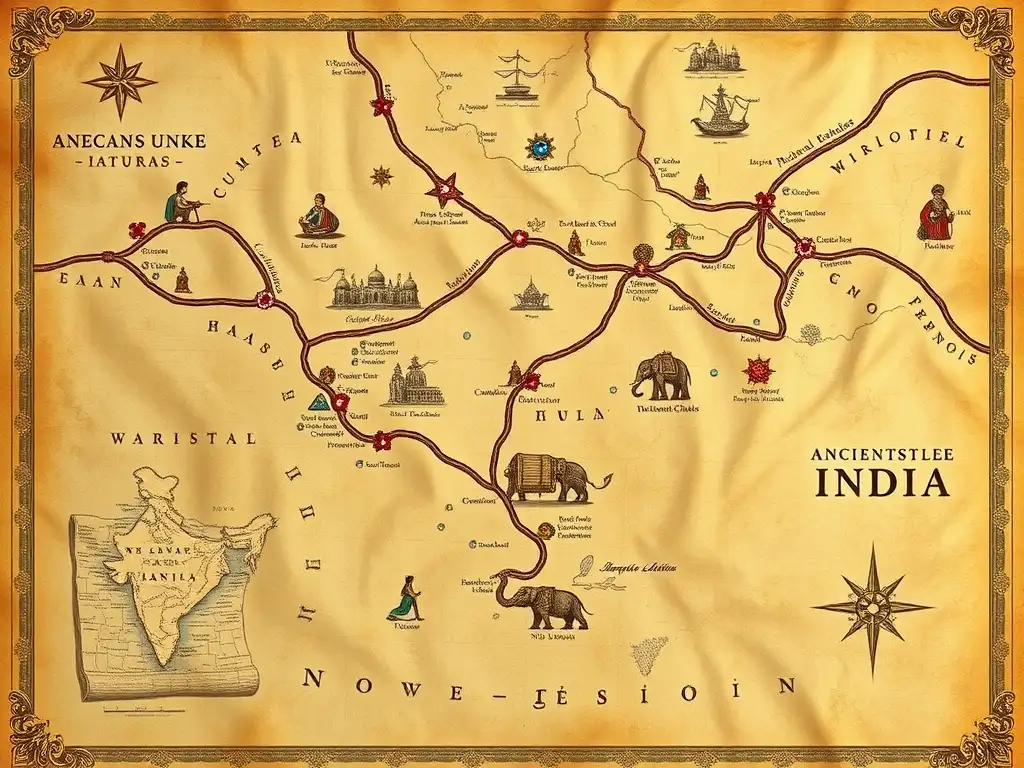
The Silk Road was not merely a singular path but rather a vast network of trade routes that connected the East and West, facilitating not only the exchange of goods but also the transfer of culture, ideas, and technology. Ancient India played a pivotal role in this extensive trade system, particularly in the gemstone sector.
Key Features of the Silk Road:
- Diverse Trade Goods: While silk was the most famous export from China, India was renowned for its precious gemstones, including diamonds, rubies, and sapphires. Indian jewelers and gem traders were highly sought after for their skills in crafting exquisite jewelry.
- Cultural Exchange: The interaction along the Silk Road allowed for a significant cultural exchange. Indian artisans and traders brought their rich heritage and craftsmanship to other regions, influencing local styles and techniques.
- Trade Hubs: Cities like Taxila and Peshawar became important hubs for merchants traveling along the Silk Road. These centers facilitated the trade of not only gemstones but also spices, textiles, and other luxury items.
The Silk Road ultimately contributed to the prosperity of ancient Indian civilizations, establishing them as key players in the global gemstone trade. The interactions along these routes laid the groundwork for later economic and cultural exchanges, solidifying India's reputation as the jewel of the East.
Maritime Trade Routes: The Arabian Sea and Indian Ocean
The maritime trade routes of the Arabian Sea and Indian Ocean were crucial for ancient India's gemstone trade. These routes enabled the transportation of precious gems across vast distances, connecting India to various international markets.
Highlights of Maritime Trade Routes:
- Major Ports: Key ports such as Lothal, Chaul, and Kalyan served as bustling trade centers where gemstones were exchanged for goods from Africa, the Middle East, and Southeast Asia.
- Monsoon Winds: Ancient Indian navigators skillfully utilized monsoon winds to sail across the Indian Ocean, significantly reducing the time taken for trade voyages. This knowledge was instrumental in establishing regular maritime trade.
- Cultural Interactions: The maritime routes not only facilitated trade but also promoted cultural exchanges. Indian gemstones became highly sought after in markets like the Roman Empire, where they were considered symbols of wealth and status.
The maritime trade routes played a significant role in making ancient India a dominant player in the global gemstone market. The exchange of goods and culture through these routes enriched Indian society and helped establish enduring international relationships.
Overland Routes: The Importance of the Grand Trunk Road
The Grand Trunk Road is one of the oldest and longest major roads in Asia, stretching from Bangladesh to Afghanistan. Established during the Maurya Empire and further developed under the Gupta Empire, this overland route was vital for the trade of gemstones and other commodities.
Significance of the Grand Trunk Road:
- Trade Accessibility: The road provided direct access to various regions, facilitating the movement of merchants and goods across northern India. This accessibility was crucial for the distribution of gemstones to local and regional markets.
- Cultural Melting Pot: The Grand Trunk Road served as a melting pot of cultures, allowing for the interaction of various peoples, which in turn fostered the development of a cosmopolitan society known for its craftsmanship in jewelry-making.
- Economic Impact: The trade conducted along this route not only enriched individual traders but also contributed significantly to the economic prosperity of ancient Indian kingdoms. The influx of wealth from gemstone trade helped fund monumental architecture and cultural endeavors.
The Grand Trunk Road was instrumental in establishing and maintaining trade connections, solidifying ancient India's status as a center for gemstone trade. The overland routes complemented maritime routes, creating a robust network that facilitated the flow of precious gems throughout the region and beyond.
The Influence of Ancient Indian Gemstone Trade on Global Markets
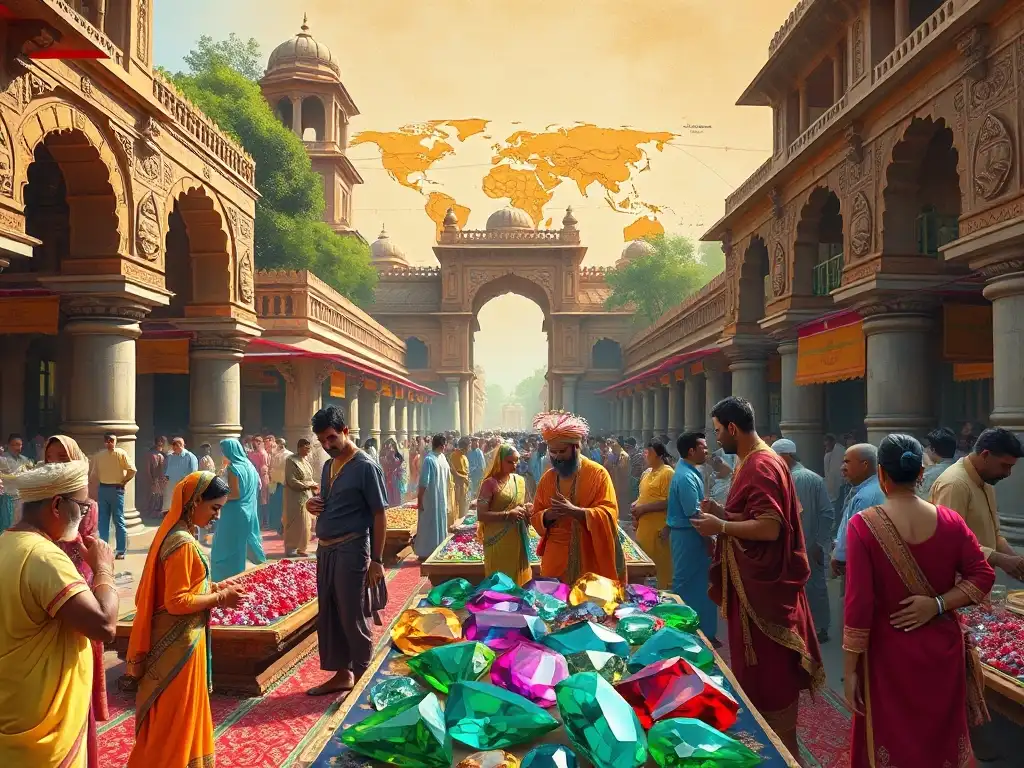
The gemstone trade routes of ancient India played a pivotal role in shaping global markets, influencing economic practices, and establishing cultural connections across continents. India's rich deposits of gemstones, such as diamonds, sapphires, and emeralds, attracted traders from far and wide, making the region a focal point for commerce. The trade not only enriched the Indian economy but also transformed social structures and international relations.
How Ancient India Became a Jewel of the East
The title "Jewel of the East" is not merely a metaphor but a reflection of the significant role ancient India played in the global gemstone trade. By the time of the Indus Valley Civilization (around 2500 BCE), India was already known for its skilled craftsmanship and the quality of its gemstones. The strategic geographical location of India facilitated its emergence as a central hub in the trade routes that connected Africa, the Middle East, and Southeast Asia.
- Trade Routes: The Silk Road and maritime trade routes were instrumental in the exchange of gemstones. The overland Silk Road connected India to Central Asia and beyond, while sea routes linked Indian ports such as Lothal and Bharukachchha to Persian Gulf and Mediterranean markets.
- Gemstone Processing: Indian artisans were renowned for their ability to cut and polish gemstones, which further enhanced their appeal in foreign markets. Techniques such as the cabochon cut were developed, allowing gemstones to be crafted into exquisite pieces, making them highly sought after.
- Cultural Significance: Gems held spiritual and cultural significance in ancient Indian society. They were integral to religious practices and royal adornments, enhancing their desirability in trade. The belief in the astrological powers of gemstones also fueled demand among foreign traders.
The Exchange of Culture and Knowledge through Gemstone Trade
The gemstone trade routes served as conduits for cultural and intellectual exchange, facilitating the mingling of ideas and traditions across civilizations. The interactions between Indian gem traders and foreign merchants led to significant cultural enrichment.
- Cultural Fusion: As gemstones were traded, they carried with them stories, traditions, and art forms from different cultures. For instance, the influence of Persian artistry can be seen in the decorative motifs used in Indian jewelry during the medieval period.
- Technological Advancements: The trade also spurred advancements in gemology and metallurgy. Knowledge of gemstone identification and cutting techniques was exchanged, leading to improved craftsmanship in both India and trading partners.
- Philosophical Exchanges: The presence of foreign traders introduced new philosophies and religious ideas to Indian society. The blending of thoughts and beliefs contributed to the rich tapestry of Indian culture, as seen in the adoption of certain aesthetics and motifs in jewelry design.
Notable Historical Figures in Gemstone Trade
Several historical figures played crucial roles in the development of the ancient Indian gemstone trade, influencing its dynamics and expansion.
- Kautilya (Chanakya): A philosopher and economist, Kautilya's treatise, the Arthashastra, discusses trade practices and the importance of gemstones in the economy. His strategies for trade and statecraft provided a framework that benefitted traders.
- Mughal Emperors: The Mughal Empire (16th to 18th centuries) significantly impacted the gemstone trade in India. Emperors like Akbar and Shah Jahan were not only patrons of the arts but also avid collectors of gemstones. Their royal courts became centers for gem trading, attracting artisans and traders across the continent.
- Indian Gem Traders: Figures such as the diamond merchant Nawab of Arcot and Mirza Muhammad Raza played vital roles in establishing trade networks that extended to Europe and beyond, showcasing India’s gemstone wealth on the global stage.
The gemstone trade routes of ancient India were not just economic pathways; they were vibrant channels of cultural exchange that shaped the historical narrative of the region. Through the interplay of trade, art, and philosophy, ancient India truly earned its title as the "Jewel of the East."
The Decline and Transformation of Gemstone Trade Routes
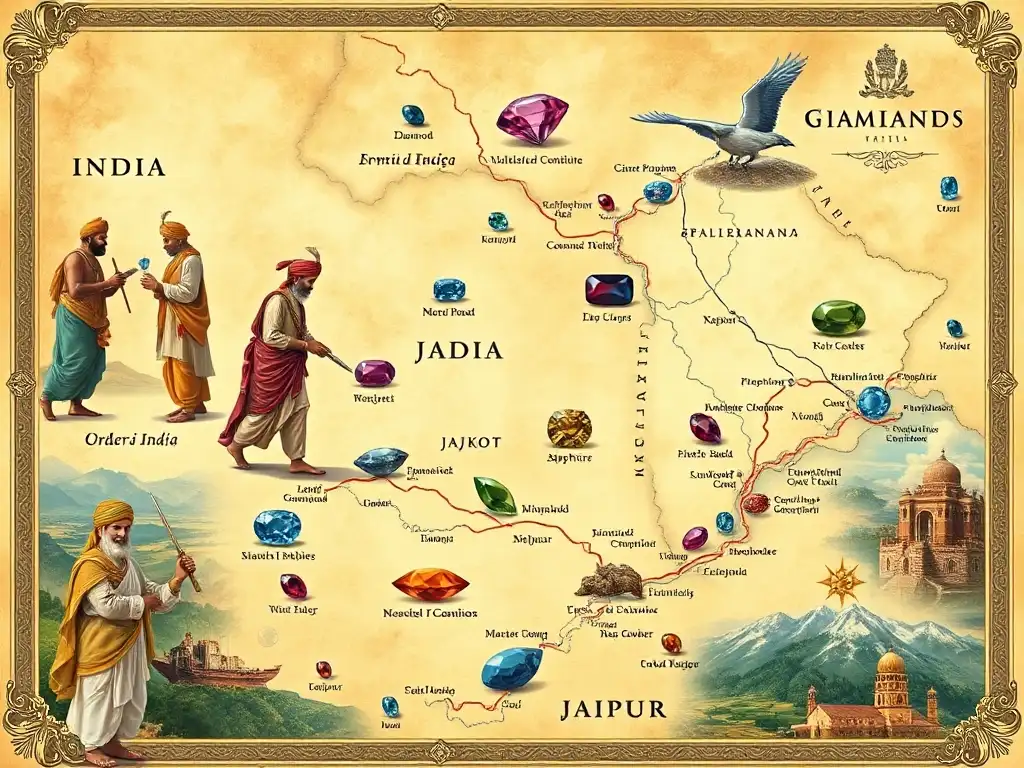
The decline and transformation of the gemstone trade routes in ancient India represent a significant shift in the historical context of commerce and culture. While these trade routes once flourished, connecting Indian artisans and merchants with global markets, various factors contributed to their gradual decline.
Factors Leading to the Decline of Ancient Trade Routes
Several interlinked factors contributed to the decline of ancient India gemstone trade routes, including:
- Political Instability
- The rise and fall of empires, such as the Maurya and Gupta, led to periods of unrest. Frequent invasions and territorial disputes disrupted trade, causing merchants to seek safer routes or abandon trade altogether.
- Changing Trade Practices
- With the advent of new maritime routes in the middle ages, especially after the discovery of the sea routes to India by European powers, land-based trade routes lost their significance. Merchants began to favor sea trade for efficiency and safety.
- Economic Shifts
- The emergence of alternative sources for gemstones, such as those from Africa and the Americas, diluted India's monopoly on gemstone resources. This shift altered demand patterns and reduced the flow of trade through traditional routes.
- Technological Advances
- Innovations in transportation and trade logistics, such as the development of steam-powered ships in the 19th century, made older trade routes less viable. Changes in technology favored faster and more reliable means of transport.
The Impact of Colonialism on Indian Gemstone Trade
Colonialism had a profound impact on the gemstone trade in India, fundamentally altering its landscape:
- Exploitation of Resources
- British colonial powers focused on extracting India's natural resources, including gemstones, primarily for export. This led to a depletion of local supplies and a shift in production methods to meet colonial demands.
- Market Control
- The introduction of Western trading companies resulted in the monopolization of the gemstone market. Indian artisans and traders found themselves sidelined, often receiving minimal compensation for their labor.
- Cultural Changes
- The colonial influence also altered the cultural significance of gemstones. Once deeply integrated into Indian traditions and religious practices, gemstones began to be perceived through a Western lens, leading to a decline in their traditional value.
Revival of Interest in Indian Gemstones in Modern Times
In recent decades, there has been a notable revival of interest in Indian gemstones, driven by various factors:
- Globalization
- Increased global connectivity has led to a resurgence in the appreciation for Indian gemstones. International markets now recognize the unique qualities and historical significance of these stones, leading to renewed demand.
- Cultural Heritage
- There is a growing movement focused on preserving and celebrating traditional Indian craftsmanship. Artisans and jewelers are reviving ancient techniques, attracting attention from collectors and enthusiasts worldwide.
- Sustainability and Ethical Sourcing
- Modern consumers are increasingly concerned with sustainability and ethical sourcing. Indian gemstones, when sourced responsibly, offer a compelling narrative of cultural heritage and artisanal skill, appealing to conscious consumers.
While the gemstone trade routes of ancient India faced decline due to various factors, their transformation has paved the way for a resurgence in interest that honors the rich legacy of Indian craftsmanship and cultural significance. The exploration of these historical trade routes continues to shed light on India's vital role in the global gemstone market.
Conclusion: Legacy of Ancient India’s Gemstone Trade Routes
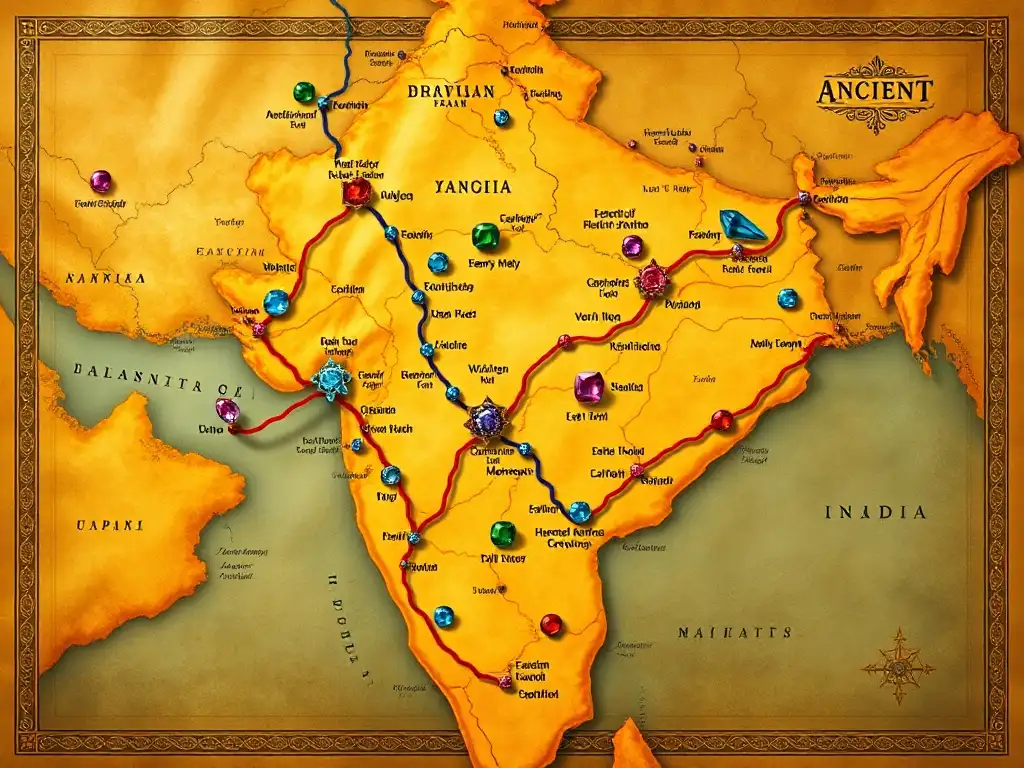
The legacy of ancient India’s gemstone trade routes is a testament to the country's rich history and its pivotal role in global commerce. These trade routes, which flourished from the Indus Valley civilization through the Gupta Empire, not only facilitated the exchange of precious stones but also influenced cultural interactions, technological advancements, and economic growth. As these routes expanded, they attracted traders from diverse regions, including the Middle East, Southeast Asia, and beyond, establishing India as a focal point of the global gemstone market.
The expertise in gemology developed during these times laid the groundwork for modern practices in gemstone cutting, polishing, and trading. Techniques honed by artisans along these routes set benchmarks that are still admired and sought after today. Furthermore, the cultural significance attributed to gemstones in ancient texts and practices has ensured that their allure endures, making them a perpetual symbol of beauty and wealth.
The Lasting Impact on Today’s Jewelry and Gemstone Market
The impact of ancient India’s gemstone trade routes is profoundly evident in today's jewelry and gemstone market. India remains one of the largest producers and exporters of gemstones, with a significant share of the global market.
- Historical Techniques: Modern gem-cutting techniques can trace their origins back to the methods practiced by ancient Indian artisans. The artistry and craftsmanship developed during ancient times continue to influence contemporary styles.
- Cultural Significance: Gemstones in India are not merely decorative; they hold cultural and spiritual significance. For instance, the use of gemstones in traditional Indian jewelry often reflects the wearer’s social status, beliefs, and regional identity.
- Market Trends: The demand for ethically sourced gemstones is rising, echoing the ancient practices that emphasized the importance of sourcing materials responsibly. Modern consumers are increasingly aware of the origins of their jewelry, leading to a resurgence in interest in traditional practices that align with sustainable sourcing.
| Aspect | Impact |
|---|---|
| Historical Techniques | Influences modern gem-cutting practices |
| Cultural Significance | Reflects social status and spiritual beliefs |
| Market Trends | Shift towards ethical sourcing of gemstones |
The historical framework established by ancient India's gemstone trade routes continues to shape contemporary jewelry design, market dynamics, and consumer preferences.
Future of Gemstone Trade in India: Opportunities and Challenges
As the gemstone trade in India evolves, it faces a landscape filled with both opportunities and challenges.
Opportunities
- Global Demand: The increasing global demand for unique and ethically sourced gemstones provides Indian artisans and traders with a significant opportunity to expand their markets.
- Technological Advancements: Innovations in technology, such as 3D printing and artificial intelligence, can enhance the efficiency of gemstone processing and marketing, allowing for more intricate designs and broader reach in the market.
- Sustainable Practices: There is a growing trend towards sustainability, which Indian gem traders can capitalize on by promoting eco-friendly mining practices and transparency in the supply chain.
Challenges
- Competition: India faces stiff competition from other gemstone-producing countries like Brazil, Sri Lanka, and Thailand, which may impact its market share.
- Regulatory Hurdles: Navigating the complex regulatory framework for gemstone trading, both locally and internationally, can pose challenges for traders looking to expand their reach.
- Market Fluctuations: Economic instability and fluctuating market demands can impact pricing and availability, making it essential for traders to remain agile and informed about global market trends.
While the ancient routes that once made India the jewel of the East may have changed, their legacy continues to influence the present and future of the gemstone trade in India. By harnessing opportunities and addressing challenges, the country can maintain its position as a key player in the global gemstone market.
References and Further Reading on Ancient India Gemstone Trade Routes
Recommended Books and Articles
-
"The Gemstone Trade in Ancient India" by R. K. Sharma
This comprehensive book explores the intricacies of the gemstone trade in ancient India, detailing the specific routes, trading practices, and cultural significance. Sharma delves into historical records and archaeological findings to present a vivid picture of how gemstones shaped the economy and society of ancient civilizations.
-
"The Indus Valley and the Trade of Precious Stones" by Anjali Gupta
Gupta's work focuses on the Indus Valley Civilization, highlighting archaeological evidence that suggests a thriving trade network for gemstones. This book provides insights into the types of gemstones that were traded and their significance in ancient rituals and daily life.
-
"Gemstones: A Historical Overview" by P. S. Rao
This article reviews the history of gemstones in various cultures, with a significant emphasis on ancient India. Rao examines the socio-economic impact of gemstone trade routes and their role in establishing trade relationships between India and other civilizations.
-
"Trade Routes of Ancient India: A Cultural Exchange" by Deepak Mehta
Mehta investigates the broader context of trade routes in ancient India, including gemstones. The book discusses how these trade routes facilitated cultural exchange, leading to mutual influences among different civilizations.
Online Resources for Gemstone History and Trade
-
The Ancient India Database
This online resource offers a plethora of scholarly articles, archaeological reports, and historical documents regarding ancient Indian trade, including gemstones. It provides researchers with access to primary sources and detailed analyses of historical trade routes.
-
Gemstones of India: A Historical Overview (Website)
This dedicated website provides a comprehensive overview of the history of gemstones in India, covering everything from mining to trade routes. It features articles, maps, and timelines that illustrate the significance of gemstones in ancient Indian culture.
-
The Archaeological Survey of India (ASI)
The ASI website contains a variety of reports and publications on archaeological findings related to gemstone trade in ancient India. Researchers can find valuable information about excavation sites and artifacts that shed light on the trade practices of the time.
-
Indian Gemstone Commission
This online platform offers resources related to the contemporary gemstone trade in India, but it also includes sections on the historical aspects of gemstones and trade routes that have evolved over centuries. It's a useful resource for understanding how ancient practices influence modern trade.
By exploring these references and resources, readers can gain a deeper understanding of the ancient India gemstone trade routes and their importance in shaping the cultural and economic landscape of ancient Indian civilizations.
Frequently Asked Questions
What were the primary gemstone trade routes of ancient India?
Ancient India had several important trade routes, including the Silk Road and maritime paths connecting to Southeast Asia and the Middle East, facilitating the exchange of precious gemstones.
How did the gemstone trade impact ancient Indian society?
The gemstone trade significantly contributed to economic prosperity, enhanced cultural exchanges, and established India as a prominent player in international trade, attracting merchants and artisans.
Which gemstones were most sought after in ancient India?
Rubies, sapphires, emeralds, and diamonds were among the most sought after gemstones, with India being known for its high-quality stones that were traded globally.
How did ancient Indian civilizations influence the gemstone trade?
Ancient Indian civilizations developed advanced mining techniques and craftsmanship, which not only improved the quality of gemstones but also set the standards for gemstone cutting and jewelry design.
What role did the Gupta Empire play in the gemstone trade?
The Gupta Empire (circa 320-550 CE) served as a cultural and commercial hub, promoting the gemstone trade through improved trade routes and stability, which facilitated the exchange of goods across regions.
Final Reflection: The Enduring Legacy of Ancient India's Gemstone Trade Routes
The intricate web of ancient India's gemstone trade routes not only shaped the economy of the region but also established a cultural exchange that resonates in today's global marketplace. The significance of these routes transcends mere commerce; they symbolize the interconnectedness of civilizations and the timeless allure of precious stones. As we navigate a world increasingly defined by globalization, the lessons from these ancient pathways remind us of the importance of trade in fostering relationships and cultural appreciation.
The influence of ancient India's gemstone trade routes is palpable in our modern society, where the beauty of gemstones continues to captivate hearts and minds across the globe. The exchange of not just goods but ideas, art, and culture along these routes laid the foundation for a rich tapestry of heritage that we still celebrate today. Trade is not just about goods; it is about the stories we share and the connections we forge.
This ongoing legacy invites us to reflect on how trade can serve as a bridge between diverse cultures, enriching our lives and broadening our perspectives.
As we contemplate the lessons from ancient India's gemstone trade routes, I encourage you to consider how you can apply these insights in your own life. Reflect on the connections you make daily—whether through commerce, conversation, or shared experiences—and recognize the potential for growth and understanding that lies within them. Embrace the spirit of trade not just as a transaction, but as an opportunity to build relationships and celebrate the diversity that enriches our world. Let us honor the past by fostering connections that shine as brightly as the gems that once traveled those ancient routes.
Unveil the Precious Legacy of India's Gemstone Trade!
Thank you for taking the time to explore the fascinating world of ancient India’s gemstone trade routes! You've gained insights into how this vibrant exchange transformed India into the Jewel of the East. Now, it’s time to take your newfound knowledge and put it into action!
Here are some steps you can take to deepen your understanding and appreciation for this rich history:
- Dive Deeper: Explore the practices of gemstone mining in India today and discover how ancient techniques continue to influence modern trades.
- Share the Knowledge: Engage in discussions about this intriguing topic with friends or participate in online forums to exchange thoughts and learn from others.
- Explore Local Markets: Visit a nearby gem or antique store to connect with the history of gemstones in your region. You might uncover stories as rich as those from ancient trade routes!
What surprises you most about the enduring legacy of India’s gemstone trade, and how do you think it influences our culture today? We'd love to hear your thoughts!