
The Mahabharata: A Reflection of Ancient Indian Governance and Politics

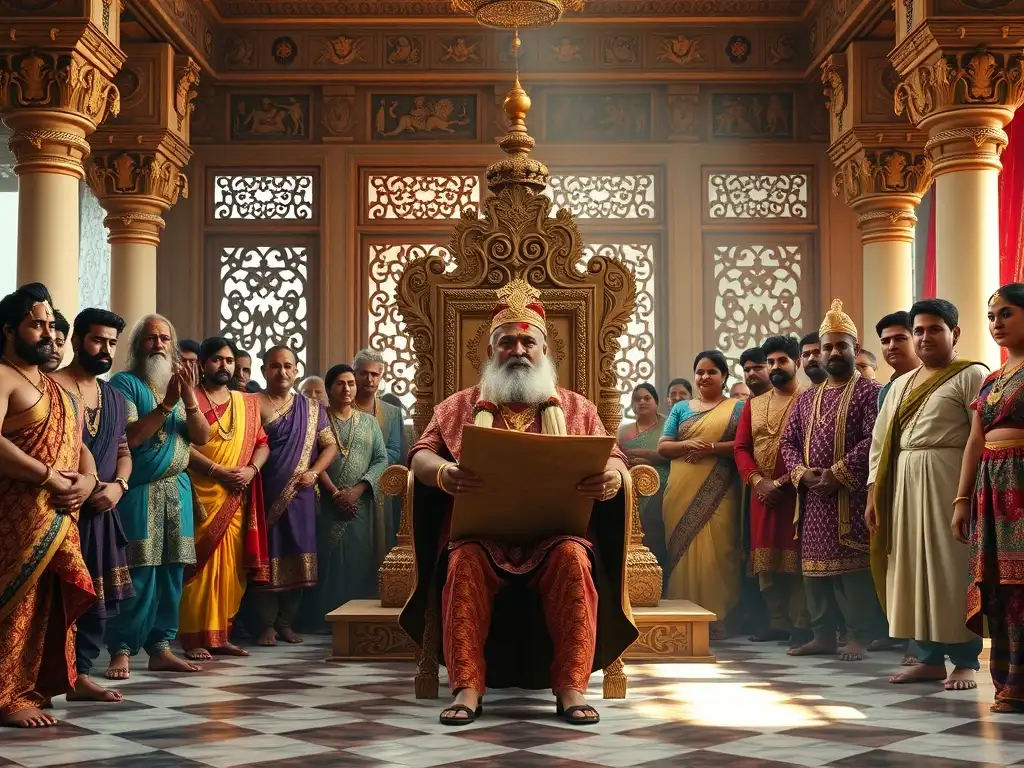
Welcome to Ancient India History, where we embark on a captivating journey through the rich tapestry of India's past! Delve into the depths of epic literature as we explore how the legendary Mahabharata not only serves as a timeless tale of valor and intrigue but also offers profound insights into ancient Indian governance and politics. What secrets lie within its verses that shaped the political landscape of an entire civilization?
Join us as we uncover the intricate connections between myth and governance, inviting you to unravel the mysteries that continue to influence our understanding of this remarkable era. Let's delve deeper and discover the monumental legacies left by our ancestors!
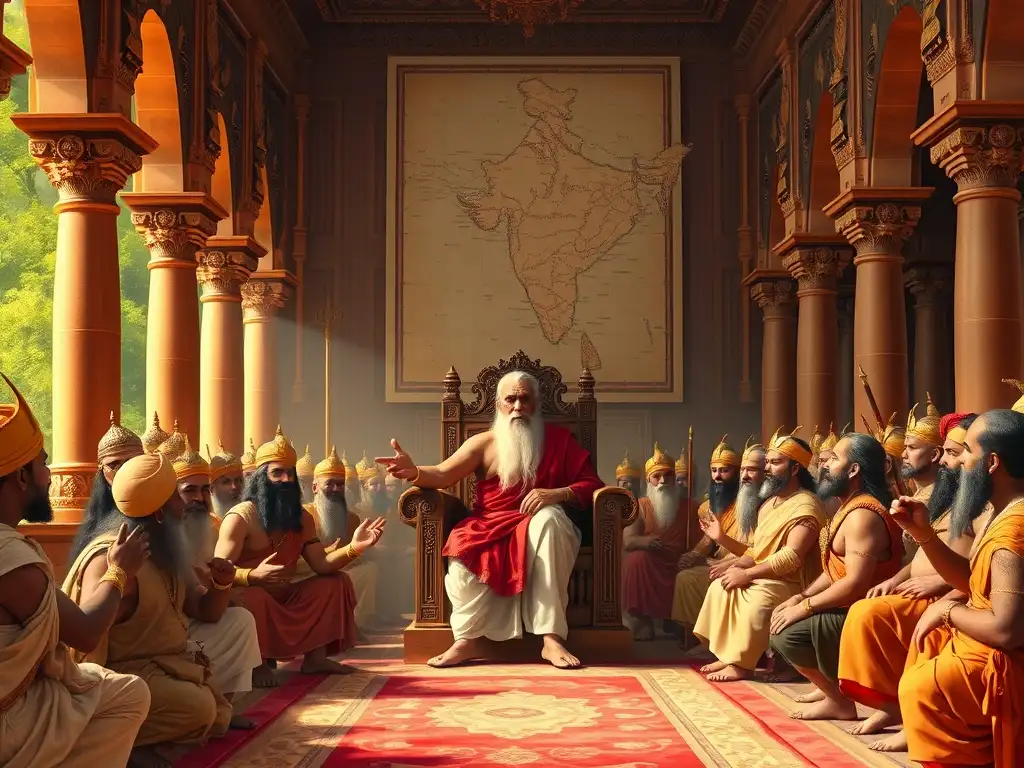
The Mahabharata, one of the two major Sanskrit epics of ancient India, serves as a monumental reflection of ancient Indian governance and politics. This epic not only narrates the story of the Kurukshetra War but also encapsulates the political ideologies, ethical dilemmas, and governance structures of its time.
Through its myriad characters and narratives, the Mahabharata offers profound insights into the complexities of leadership, justice, and the moral responsibilities of rulers, making it an essential text for understanding ancient Indian political thought. As we delve into the themes of governance and politics within this epic, we uncover the intricate tapestry of values and principles that shaped ancient Indian civilization, thus highlighting its enduring relevance in contemporary political discourse.
Introduction to Ancient Indian Governance and Politics
Ancient Indian governance and politics were characterized by a rich and diverse array of systems, philosophies, and practices that evolved over millennia. The political landscape was not only influenced by various kingdoms and empires but also by prevailing socio-cultural norms and philosophical teachings. Rulers were often seen as custodians of dharma (righteousness), and their governance was deeply intertwined with religious and ethical considerations.
Overview of Ancient Indian Political Systems
The political systems of ancient India can be categorized into several forms:
- Janapadas and Mahajanapadas: These were the early republics and kingdoms, where local governance was primarily managed by assemblies or councils.
- Monarchical Systems: With the rise of powerful dynasties, such as the Mauryas and the Guptas, centralized authority became more pronounced, often with divine sanction.
- Councils and Assemblies: Important decisions were often made in the presence of wise advisors, emphasizing collective governance alongside monarchical rule.
Each system had its own nuances and contributed to the diverse tapestry of governance in ancient India.
Significance of the Mahabharata in Political Discourse
The Mahabharata is not just a narrative of conflict; it is a profound commentary on governance and politics. Key themes include:
- Dharma and Ethics: The conflict between right and wrong, and the responsibilities of leaders.
- Justice and Retribution: The epic explores the consequences of political decisions and their moral implications.
- Role of Advisors: The importance of wise counsel in governance is exemplified through characters like Krishna and Bhishma.
These themes continue to resonate in modern political thought, making the Mahabharata an enduring text for understanding governance.
Historical Context of the Mahabharata
To fully appreciate the lessons of governance presented in the Mahabharata, it is crucial to understand the historical context in which it was composed.
The Era of the Mahabharata: Timeframe and Relevance
The Mahabharata is believed to have been composed over several centuries, with its roots tracing back to the Vedic period (circa 1500-500 BCE). The epic reflects the transition from tribal confederations to more structured political entities, capturing the evolving nature of governance during this transformative era.
Influence of Ancient Indian Society on Governance
The societal structure of ancient India, characterized by its caste system and family lineage, played a significant role in shaping governance. Key influences included:
- Caste and Duty: Each caste had specific duties, affecting political power dynamics and governance.
- Patriarchal Leadership: The male-centric leadership roles often dominated political landscapes, as depicted in the Mahabharata.
These societal elements provided a framework within which political authority was exercised, further enriching the narrative and implications of governance found in the epic.
As we explore the Mahabharata in detail, we will uncover how these historical contexts and political themes continue to influence our understanding of governance today.
Key Themes of Governance in the Mahabharata
The Mahabharata, one of the greatest epics of ancient India, serves as a profound reflection of governance and politics during its time. The narrative not only tells the tale of the Kurukshetra War but also delves into the intricate workings of political authority, ethical dilemmas, and the responsibilities of leadership.
Central to this epic are several key themes that resonate with the principles of governance. These themes encompass the importance of dharma (duty), the qualities of effective leadership, and the ethical frameworks that guide decision-making. Through the actions and decisions of its characters, the Mahabharata illustrates how governance is intertwined with morality and the well-being of society, showcasing an intricate balance between power and ethics.
Dharma: The Concept of Duty in Governance
Dharma, or duty, is a pivotal concept that underlies the political philosophy depicted in the Mahabharata. It emphasizes the importance of righteousness and moral obligations in governance. Characters such as Yudhishthira embody this principle, often faced with challenging decisions that test their adherence to dharma.
In the context of governance, the Mahabharata posits that rulers must prioritize their duties towards their subjects, ensuring justice, prosperity, and stability. The epic highlights the consequences when dharma is neglected, illustrated vividly through the downfall of characters who fail to uphold their responsibilities. This stance on duty emphasizes that effective governance is not merely about power but also about moral integrity and accountability.
Leadership Qualities Exemplified by Characters
The Mahabharata presents a range of characters, each illustrating different leadership qualities essential for effective governance. For instance, Krishna stands out as a paragon of wisdom and strategic thinking, guiding Arjuna with profound philosophical insights during the battle. His role reflects the importance of advisors in political leadership, showcasing how wise counsel can influence critical decisions.
Conversely, characters like Duryodhana represent the pitfalls of ambition unchecked by morality. His desire for power leads to conflict and destruction, serving as a cautionary tale about the dangers of unethical leadership. Through these portrayals, the Mahabharata conveys that effective leaders must combine strength with wisdom, empathy, and a dedication to the greater good of the society they govern.
Justice and Ethics in Decision-Making
Justice and ethical considerations play a pivotal role in the decision-making processes depicted in the Mahabharata. The epic raises important questions about the nature of justice, often through the moral dilemmas faced by its characters. For example, Yudhishthira's adherence to truth and justice, even in the face of personal loss, underscores the significance of ethical governance.
Moreover, the narrative illustrates the repercussions of unjust actions. The catastrophic results of the Kurukshetra War serve as a reminder that decisions made without ethical considerations can lead to widespread suffering and chaos. The Mahabharata advocates for a governance model where justice is not only a legal concept but also a moral imperative, reinforcing the idea that ethical governance is essential for societal harmony.
Political Structures Depicted in the Mahabharata
The Mahabharata goes beyond individual characters to explore the broader political structures that define governance in ancient India. The epic presents a complex tapestry of kingdoms, councils, and military strategies, providing insights into the political landscape of the time.
Kingdoms and Their Governance Models
The epic features various kingdoms, each with its governance model, reflecting diverse political systems of ancient India. For instance, the Kauravas and Pandavas represent contrasting styles of leadership and governance. The Kauravas, led by Duryodhana, often resort to deceit and manipulation, while the Pandavas, especially Yudhishthira, emphasize righteousness and justice.
These differing approaches to governance highlight the significance of ethical leadership and the impact of rulers' choices on their kingdoms. The governance models depicted in the Mahabharata serve as valuable lessons on the effectiveness of principled leadership versus tyrannical rule, influencing modern interpretations of political authority.
Role of Councils and Assemblies in Decision-Making
Councils and assemblies play a crucial role in the political dynamics of the Mahabharata. The epic illustrates how decisions are often made through collective deliberation, emphasizing the importance of diverse perspectives in governance. For instance, the Rajasuya Yagna, a grand sacrifice performed by Yudhishthira, involves consultations with various kings and wise men, illustrating the collaborative nature of political decision-making.
These assemblies serve as platforms for dialogue, negotiation, and consensus-building, highlighting the democratic elements in ancient Indian governance. The Mahabharata showcases that effective governance is not solely about the authority of a ruler but also about engaging with advisors and stakeholders to make informed and ethical decisions.
Military Strategies and Political Alliances
Military strategies and political alliances are central themes in the Mahabharata, reflecting the intricate relationship between warfare and governance. The epic details various military tactics employed by both the Pandavas and Kauravas, emphasizing the importance of strategy in achieving political objectives.
Moreover, the formation of alliances is depicted as a critical aspect of securing power and legitimacy. Characters like Krishna and Bhishma navigate the complex web of alliances, showcasing the art of diplomacy in governance. The Mahabharata illustrates that successful political leadership often involves not only military prowess but also the ability to forge strategic partnerships, underscoring the multifaceted nature of ancient Indian governance and politics.
Lessons on Governance from the Mahabharata
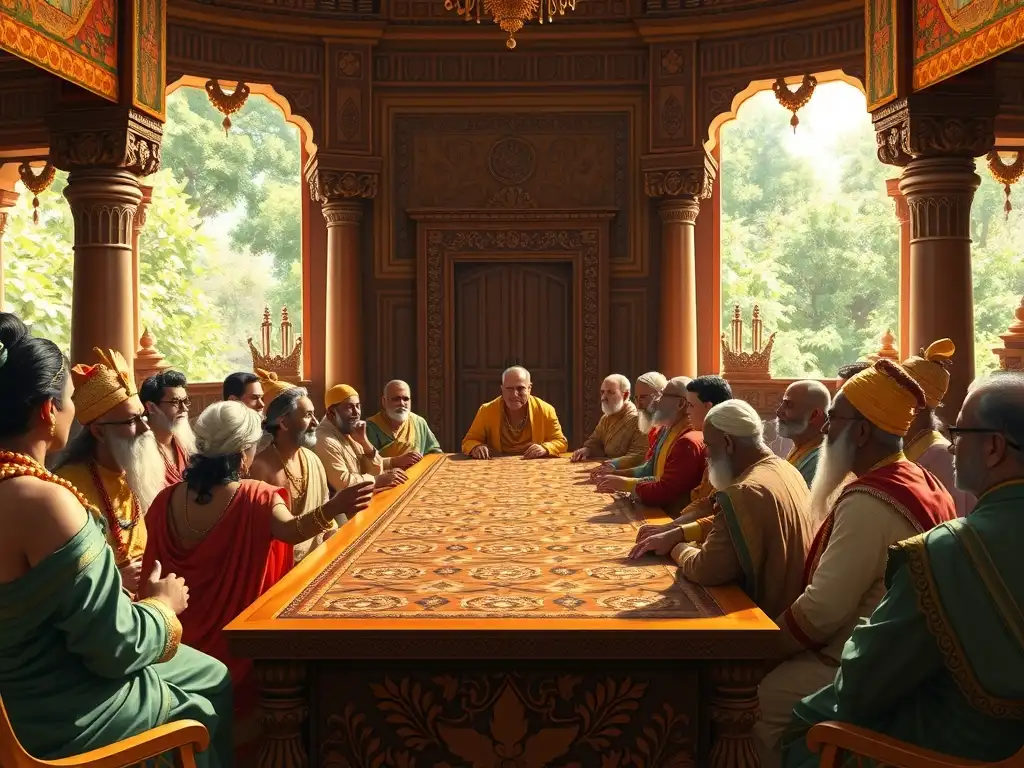
The Mahabharata, one of the longest epic poems in the world, is not merely a tale of war and rivalry; it is also a profound treatise on governance and politics. Throughout its narrative, it explores various themes that resonate with the principles of effective leadership and statecraft. The lessons derived from this epic have been influential in shaping the understanding of governance in ancient India and continue to be relevant today. Key lessons include the importance of ethical leadership, the necessity of justice, the complexity of human motivations, and the intricate balance between duty (dharma) and power.
Conflict Resolution and Diplomacy
Conflict resolution and diplomacy are central themes in the Mahabharata, particularly illustrated through the interactions between the Kauravas and Pandavas. The epic demonstrates the critical importance of dialogue and negotiation in the face of escalating tensions. Characters such as Krishna embody the role of a mediator, advocating for peaceful resolutions and emphasizing the need for understanding and compromise.
The failure to resolve conflicts through diplomacy ultimately leads to the catastrophic Kurukshetra War, highlighting the consequences of disregarding diplomatic efforts. The narrative teaches that effective governance requires leaders to prioritize dialogue over aggression and to seek peaceful solutions whenever possible. Furthermore, the Mahabharata underscores the significance of maintaining integrity and honor in diplomatic dealings, which serves as a model for contemporary governance practices.
The Role of Advisors and Counselors
In the Mahabharata, the role of advisors and counselors is pivotal to the decision-making processes of leaders. Key figures such as Vidura and Drona illustrate the necessity of having wise and knowledgeable advisors who can provide guidance based on experience and moral principles. Their counsel often shapes the course of events, demonstrating that leaders must surround themselves with trustworthy and competent advisors.
The dynamic between the rulers and their advisors highlights the importance of listening to diverse perspectives and integrating them into governance. Moreover, the epic reveals that the effectiveness of governance is not solely dependent on the ruler's capabilities but also on the quality of counsel they receive. This emphasizes a crucial aspect of ancient Indian governance: the idea that collaboration and consultation are essential for sound political decisions.
The Impact of Personal Relationships on Political Decisions
The Mahabharata intricately weaves personal relationships into the fabric of political decisions, illustrating how familial ties, friendships, and rivalries can profoundly influence governance. The relationships between characters such as Bhishma, Duryodhana, and Arjuna reveal how personal loyalties can overshadow ethical considerations, leading to complex moral dilemmas.
The epic teaches that while personal relationships can provide support and strength, they can also lead to bias and partiality in political decision-making. This duality serves as a cautionary tale for leaders, emphasizing the need for objectivity and the ability to separate personal emotions from state affairs. The Mahabharata ultimately suggests that effective governance must navigate the complexities of human relationships while remaining committed to justice and the greater good.
Comparative Analysis of Ancient Indian Governance
The Mahabharata offers a rich context for examining ancient Indian governance, particularly in comparison with other civilizations. The lessons derived from its narratives reveal distinctive features of Indian political philosophy and statecraft that set it apart from its contemporaries.
Comparison with Other Ancient Civilizations
When compared to other ancient civilizations, such as Mesopotamia, Egypt, or Greece, ancient Indian governance as depicted in the Mahabharata emphasizes a unique blend of moral duty and political power. While many ancient societies often prioritized the ruler's absolute authority or divine right to rule, the Mahabharata places a significant focus on dharma, or righteousness, as the cornerstone of governance.
In contrast to the more militaristic approaches seen in other civilizations, the Mahabharata advocates for diplomacy, ethical conduct, and the welfare of the people as fundamental aspects of governance. This philosophical foundation fosters a more nuanced understanding of leadership that values justice and moral integrity over mere conquest.
Unique Aspects of Ancient Indian Political Philosophy
Ancient Indian political philosophy, as reflected in the Mahabharata, is characterized by several unique aspects. Central to this philosophy is the concept of dharma, which dictates that rulers must act in accordance with moral and ethical principles. This contrasts sharply with the often pragmatic and utilitarian approaches seen in other ancient political thought.
Additionally, the Mahabharata emphasizes the interconnectedness of personal and public life, suggesting that the ruler's character directly impacts the state’s stability and prosperity. The significance of collective decision-making, as demonstrated through the assembly of elders and advisors, highlights the importance of community involvement in governance, a notion less emphasized in other cultures.
Overall, the Mahabharata serves as a vital historical document that encapsulates the complexities of ancient Indian governance, offering timeless insights into the principles of leadership, ethics, and political philosophy.
Conclusion: The Mahabharata's Legacy on Modern Governance
The Mahabharata, one of the longest epic poems in the world, serves as an invaluable repository of ancient Indian governance and political thought. Its narratives and characters reflect complex political dynamics, ethical dilemmas, and the intricate balance of power that characterized ancient Indian society. Through tales of statesmanship, warfare, and diplomacy, the Mahabharata provides timeless lessons on leadership, justice, and the responsibilities of rulers. The principles embedded in its verses continue to resonate in contemporary governance, offering insights into the nature of power and the moral imperatives that should guide leaders.
The epic illustrates the importance of dharma (righteousness) in governance, emphasizing that the legitimacy of power stems from ethical conduct and the welfare of the people. As modern societies grapple with issues of corruption, inequality, and governance, the Mahabharata's teachings remind us that effective leadership is not merely about authority but also about accountability and moral integrity. Thus, its legacy endures, influencing not only political thought but also ethical frameworks within which leaders operate today.
Relevance of Ancient Indian Governance Principles Today
Ancient Indian governance principles, as depicted in the Mahabharata, remain profoundly relevant in today's political landscape. Themes such as the importance of justice, the role of advisors, and the need for a ruler to embody virtues resonate strongly with modern democratic ideals. The concept of "Raj Dharma," or the duty of a king, highlights the expectation that leaders prioritize the welfare of their citizens, a principle echoed in contemporary governance models worldwide.
Moreover, the Mahabharata underscores the significance of dialogue and negotiation in resolving conflicts. In an era where political polarization often stifles constructive discourse, the epic's emphasis on diplomacy and moral reasoning offers a pathway to effective conflict resolution. The lessons drawn from the Mahabharata encourage current leaders to embrace collaborative governance, ensuring that diverse voices are heard and respected.
Final Thoughts on the Mahabharata as a Political Text
While often celebrated for its literary grandeur and mythological richness, the Mahabharata is equally a profound political text that invites critical analysis of governance structures and ethical leadership. Its characters, from the virtuous Yudhishthira to the cunning Duryodhana, embody various facets of human nature and political behavior, allowing readers to explore the complexities of power dynamics. The epic serves as a case study in the consequences of ambition, loyalty, betrayal, and the pursuit of justice.
In understanding the Mahabharata as a political text, one appreciates its layered narratives that challenge simplistic notions of right and wrong. It encourages readers to engage with the moral ambiguities of leadership and governance, thus fostering a nuanced understanding of political responsibility. The Mahabharata's exploration of these themes ensures its place not only in the realm of epic literature but also in the discourse on ancient Indian governance and politics.
Further Reading on Ancient Indian Governance and Politics
Recommended Texts and Resources on the Mahabharata
- The Mahabharata by C. Rajagopalachari: This retelling of the epic provides a concise yet insightful overview of its major themes and characters, particularly those related to governance.
- Mahabharata: An Inquiry in the Human Condition: by Ramesh Menon: This book delves into the moral and ethical dilemmas faced by its characters, offering a contemporary interpretation of its teachings.
- The Mahabharata: A Shortened Modern Prose Version of the Indian Epic: by Ramesh Menon: This adaptation makes the epic accessible to modern readers while preserving its core themes.
Additional Scholarly Articles on Ancient Indian Political Systems
- "The Politics of Dharma: The Mahabharata's Contribution to Political Theory": This scholarly article explores the concept of dharma within the epic and its implications for political theory in ancient and modern contexts.
- "Rulers and their Responsibilities: Insights from the Mahabharata": This research paper examines the ethical duties of rulers as depicted in the Mahabharata and how these principles can inform contemporary governance.
- "War and Peace in the Mahabharata: A Study of Political Dynamics": This article analyzes the conflict resolution strategies presented in the epic and their relevance to modern political conflicts.
- Introduction to Ancient Indian Governance and Politics
- Historical Context of the Mahabharata
- Key Themes of Governance in the Mahabharata
- Political Structures Depicted in the Mahabharata
- Lessons on Governance from the Mahabharata
- Comparative Analysis of Ancient Indian Governance
- Conclusion: The Mahabharata's Legacy on Modern Governance
- Further Reading on Ancient Indian Governance and Politics
- What is the significance of the Mahabharata in understanding ancient Indian governance and politics?
- How does the Mahabharata depict the concept of dharma in politics?
- What role did councils and assemblies play in ancient Indian governance as depicted in the Mahabharata?
- How are leaders and rulers portrayed in the Mahabharata concerning their governance styles?
- What lessons can modern governance learn from the political themes in the Mahabharata?
Frequently Asked Questions
What is the significance of the Mahabharata in understanding ancient Indian governance and politics?
The Mahabharata provides valuable insights into the political structures, diplomacy, and ethical dilemmas faced by rulers in ancient India, reflecting the complexities of governance during that era.
How does the Mahabharata depict the concept of dharma in politics?
The epic emphasizes the importance of dharma, or righteousness, suggesting that effective governance must align with moral principles and the well-being of society, influencing political decisions.
What role did councils and assemblies play in ancient Indian governance as depicted in the Mahabharata?
The Mahabharata illustrates the use of councils and assemblies for decision-making, highlighting the importance of consultation and collective wisdom in political governance.
How are leaders and rulers portrayed in the Mahabharata concerning their governance styles?
Leaders in the Mahabharata display a range of governance styles, from just and benevolent to tyrannical, showcasing the impact of personal character and ethics on political effectiveness.
What lessons can modern governance learn from the political themes in the Mahabharata?
Modern governance can derive lessons on the significance of moral leadership, the importance of justice, and the balance between power and responsibility, as emphasized throughout the epic.
Final Reflection: The Enduring Legacy of Ancient Indian Governance and Politics
The Mahabharata serves as a profound lens through which we can examine the complexities of ancient Indian governance and politics. Its narratives not only reflect the political dilemmas of its time but also resonate with contemporary issues, reminding us that the struggles for justice, power, and moral integrity are timeless. As we navigate our own political landscapes today, the lessons embedded in this epic remain strikingly relevant, urging us to reflect on the ethical dimensions of leadership and governance.
The influence of the Mahabharata extends far beyond its literary merit; it has shaped the cultural and social fabric of India for centuries. The epic's exploration of dharma (duty/righteousness) and the consequences of political decisions continues to inspire discussions around governance and ethical leadership in modern society. The Mahabharata is not just a story; it is a guide to understanding the human condition and the intricacies of power.
This ongoing dialogue underscores the importance of historical narratives in shaping our understanding of governance, reminding us that the past is a vital teacher for the present and future.
As we conclude this exploration of ancient Indian governance and politics, I invite you to reflect on the lessons of the Mahabharata in your own life. Consider how the principles of justice, duty, and ethical leadership can inform your decisions and actions today. Let the wisdom of this ancient text inspire you to engage thoughtfully with the political and social challenges we face, fostering a commitment to integrity and responsibility in your own sphere of influence.
Unveil the Wisdom of Ancient Governance!
Thank you for diving into the fascinating world of the Mahabharata and exploring its insights on ancient Indian governance and politics. Your curiosity about this epic reflects a desire to understand the depth of history and its relevance today.
Now, it’s time to take your learning a step further! Here are some actionable steps you can take:
- Engage with the Text: Dive deeper into the Mahabharata by reading various translations and interpretations. Discover how these ancient ideas can still apply to contemporary society.
- Join the Discussion: Share your thoughts and insights on the themes of governance in our community forum. What lessons do you think modern leaders can learn from this epic?
- Explore Related Topics: Visit our website to uncover more about the nuances of ancient Indian governance. Which other historical texts or figures have shaped Indian political thought?
As you reflect on these themes, consider this question: How can the lessons from the Mahabharata influence the future of governance in our modern world?