
From Arjuna to Ashoka: The Evolution of Warrior Ideals in Ancient India

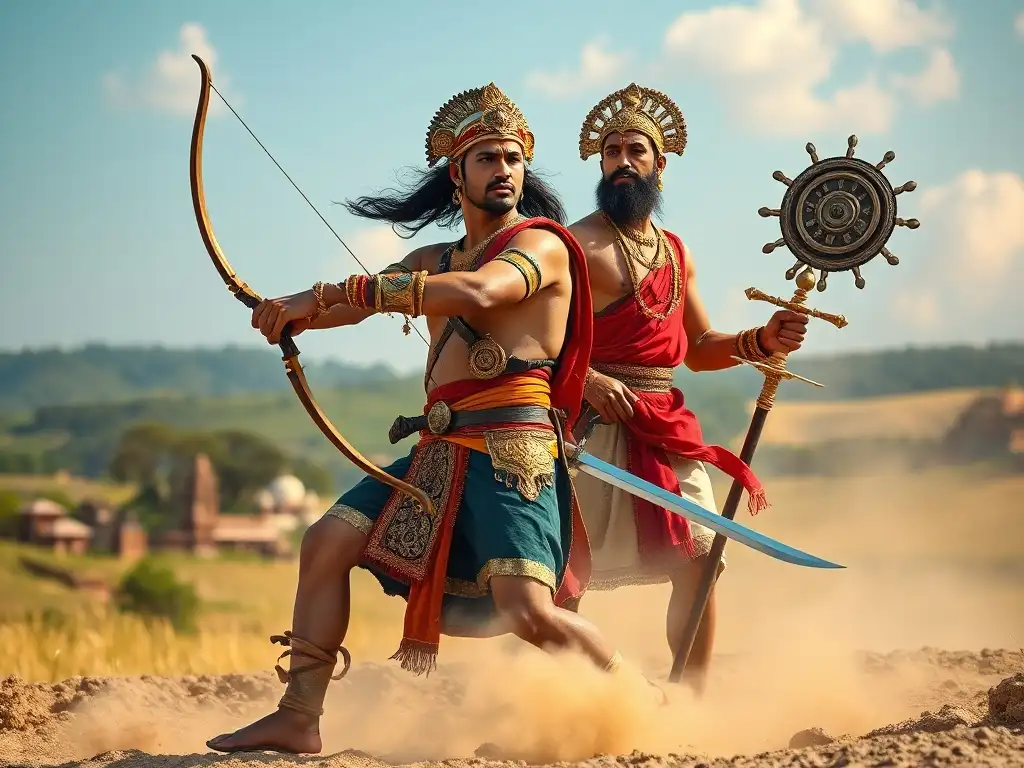
Welcome to Ancient India History, where we embark on a fascinating journey through the rich tapestry of ancient civilizations that shaped one of the world's oldest cultures. In our featured article, "From Arjuna to Ashoka: The Evolution of Warrior Ideals in Ancient India," we delve into the intricate warrior ideals that defined the ethos of past societies, exploring how legendary figures influenced the moral and martial codes of their times. What drove these warriors?
How did their values evolve across centuries? Prepare to discover the answers as you navigate through the captivating stories of courage, honor, and transformation that echo through the ages. Your exploration of ancient India's military legacy starts here!
- Introduction to Warrior Ideals in Ancient India
- The Epic of Mahabharata: Arjuna as the Ideal Warrior
- The Transition from Epic Warrior to Historical Kings
- Ashoka the Great: Redefining Warrior Ideals
- Comparing Warrior Ideals: Arjuna vs. Ashoka
- Influence of Religion and Philosophy on Warrior Ideals
- The Legacy of Warrior Ideals in Ancient Indian Society
- Conclusion: The Journey of Warrior Ideals in Ancient India
- References and Further Reading on Warrior Ideals in Ancient India
- Frequently Asked Questions
- Final Reflection: The Enduring Legacy of Warrior Ideals in Ancient India
- Unveil the Legacy of Warrior Ideals!
Introduction to Warrior Ideals in Ancient India
The evolution of warrior ideals in Ancient India is a compelling narrative that encapsulates the principles, values, and codes of conduct that governed the lives of its martial classes. From the valiant heroics of Arjuna in the Mahabharata to the transformative reign of Ashoka, these ideals were not only pivotal in shaping military strategies but also influenced the broader socio-political landscape of the time.
Understanding these warrior ideals provides insight into the rich tapestry of ancient Indian civilization, revealing how the notions of honor, duty, and righteousness intertwined with the art of warfare. This exploration delves into the significant aspects of warrior culture and the enduring impact of these ideals on India's historical trajectory.
Overview of Warrior Culture in Ancient India
Warrior culture in Ancient India was marked by a complex interplay of social, religious, and political elements. This culture was deeply rooted in the Kshatriya class, traditionally tasked with governance and protection. The warrior's role extended beyond mere combat; it encompassed a set of ethical principles and responsibilities. Key aspects of this culture included:
- Heroic Literature: Epics like the Mahabharata and Ramayana glorified warrior valor, emphasizing dharma (duty) and the moral dilemmas faced by warriors.
- Code of Conduct: Warriors adhered to a strict code of ethics, valorizing bravery, loyalty, and honor in battle. This code often dictated their actions in both warfare and personal conduct.
- Rituals and Symbolism: Warfare was often accompanied by rituals, invoking divine favor. Symbols like the sword and shield were not just weapons but were laden with spiritual significance.
These elements collectively forged a robust warrior ethos that defined not only the military practices but also the societal norms of ancient India.
Importance of Warrior Ideals in Historical Context
The warrior ideals of ancient India were instrumental in shaping not only the military framework but also the broader historical context. They influenced:
- Political Structures: The valor and authority of warriors often translated into political power. Many kingdoms were established and maintained by the martial prowess of Kshatriyas, leading to the rise of dynasties that shaped the subcontinent.
- Cultural Legacy: The ideals of bravery and sacrifice became embedded in Indian culture, influencing art, literature, and folklore. This cultural legacy continues to resonate in modern India, reflecting a deep-rooted respect for martial values.
- Philosophical Discourse: Texts like the Bhagavad Gita, which emerged from the epic narratives, provided philosophical insights into the ethics of warfare, duty, and righteousness, shaping the spiritual and moral compass of future generations.
The warrior ideals in Ancient India were not merely a reflection of military prowess but a crucial element of the civilization's identity, influencing its culture, politics, and philosophy profoundly. Understanding these ideals offers a window into the complexities of ancient Indian society and its enduring legacy in the present day.
The Epic of Mahabharata: Arjuna as the Ideal Warrior
Arjuna's Role in the Mahabharata
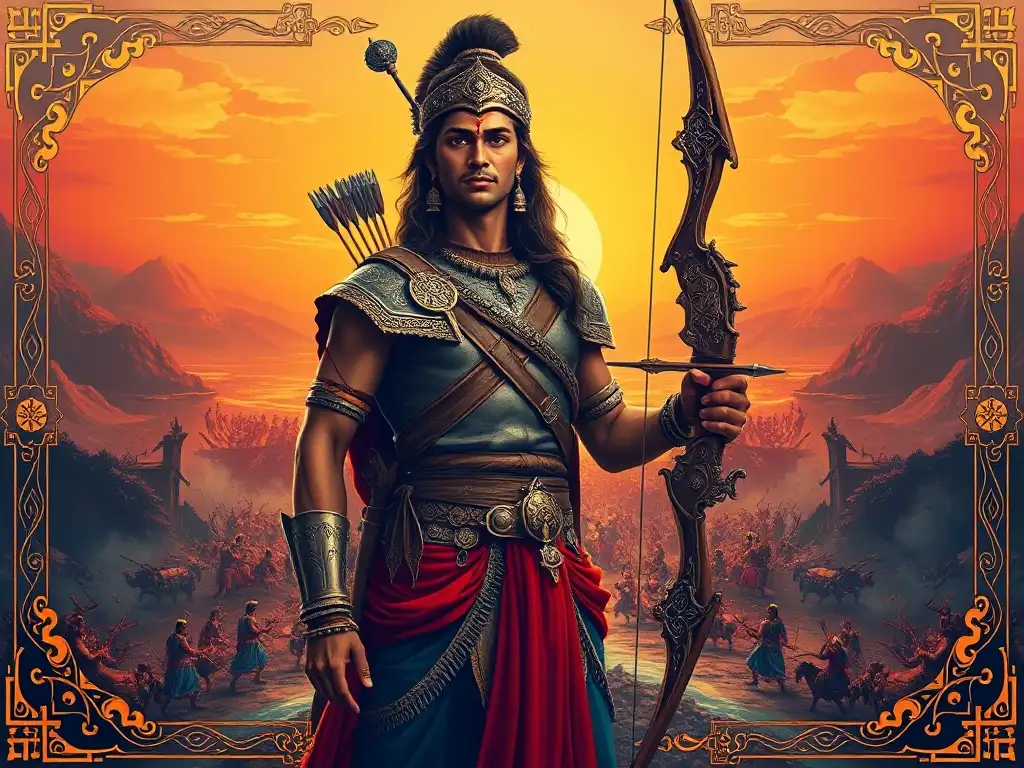
Arjuna, one of the principal characters in the Mahabharata, epitomizes the warrior ideals in ancient India. As a member of the Pandava dynasty, Arjuna's journey is not merely a tale of valor but a profound exploration of duty, morality, and the complexities of dharma (righteousness). His role becomes especially significant during the Kurukshetra War, where he faces the moral dilemma of fighting against his own kin. This internal conflict highlights the intricate balance between personal desires and societal obligations that ancient Indian warriors were expected to navigate.
Arjuna's prowess as an archer is unparalleled, and he is often referred to as the "best of archers" (Partha). His skills are not just a testament to his physical abilities but also symbolize the ideal of a warrior who is trained, disciplined, and dedicated to his craft. Throughout the epic, Arjuna's character serves as a catalyst for discussions about ethics in warfare, illustrating how ancient Indian culture revered the warrior not only for his martial skills but also for his moral integrity.
Qualities of Arjuna as a Warrior
Arjuna's character embodies several essential qualities that define the ideal warrior in ancient India:
- Courage: Arjuna displays exceptional bravery throughout the Mahabharata. His willingness to confront formidable opponents, including his own relatives, showcases the valor expected of a warrior.
- Skill and Mastery: Trained under the tutelage of Drona, Arjuna's expertise in archery and combat is exemplary. His ability to wield various weapons and strategies sets a standard for warrior training in ancient Indian society.
- Commitment to Dharma: Arjuna's journey is fundamentally about understanding and adhering to his dharma as a warrior. His initial reluctance to fight reflects the inner turmoil that warriors faced, balancing personal emotions with societal duties.
- Devotion and Loyalty: Arjuna's unwavering loyalty to his brothers and adherence to his commitments highlights the importance of camaraderie and allegiance among warriors, reinforcing the values of brotherhood in battle.
These qualities not only define Arjuna's character but also serve as a template for the ideals that warriors strived to embody in ancient Indian warfare.
Symbolism of Dharma in Arjuna's Character
Dharma plays a pivotal role in shaping Arjuna's character and actions throughout the Mahabharata. It represents more than just duty; it encompasses moral righteousness, ethical conduct, and the larger cosmic order. Arjuna's struggles with his dharma illustrate the complexities of moral choices faced by warriors.
- Conflict of Duty: Arjuna's initial refusal to fight against his kin showcases the profound ethical dilemma faced by warriors. This internal struggle reflects the broader theme of dharma, where the righteous path is not always clear-cut.
- Krishna's Guidance: The Bhagavad Gita, a dialogue between Arjuna and Lord Krishna, serves as a philosophical cornerstone that elucidates the concept of dharma. Krishna imparts wisdom that emphasizes the importance of fulfilling one's duty without attachment to the results, a critical lesson for warriors.
- Representation of the Warrior Class: Arjuna symbolizes the kshatriya (warrior) class, who were expected to uphold justice and protect the social order. His journey encapsulates the ideals of sacrifice, valor, and moral obligation, which were fundamental to the identity of warriors in ancient India.
Arjuna’s character in the Mahabharata serves as a significant embodiment of the warrior ideals in ancient India. His journey reflects the complex interplay of duty, skill, and moral choices, establishing a narrative that resonates through centuries, influencing the perception of warriors in Indian culture.
The Transition from Epic Warrior to Historical Kings
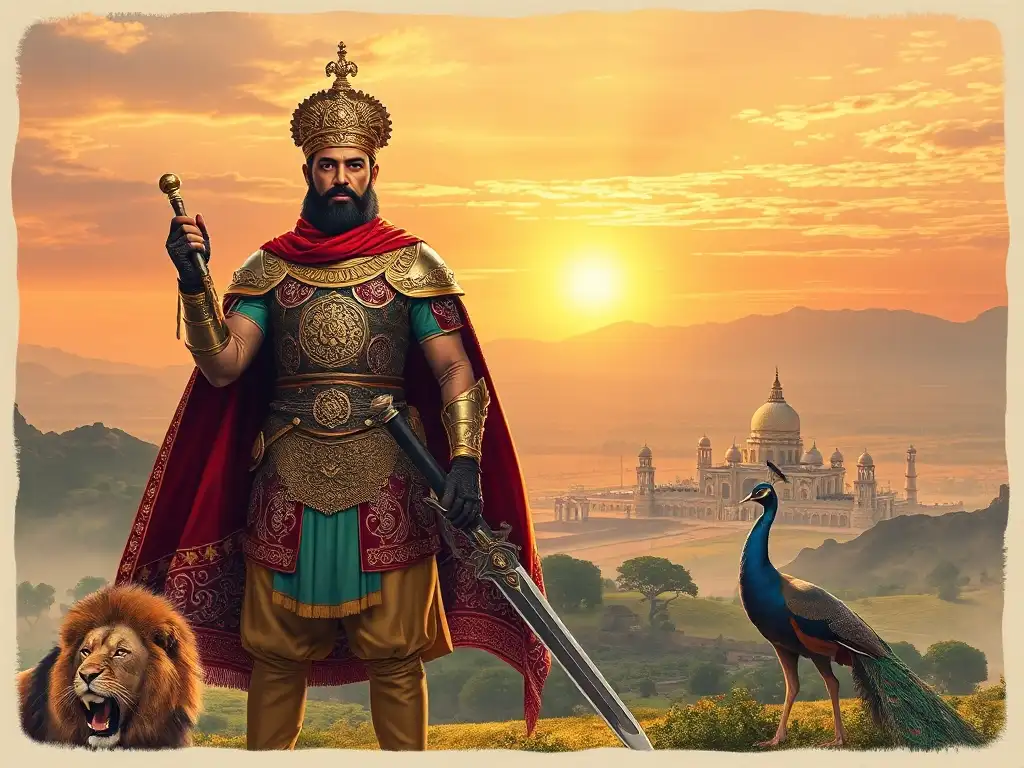
The evolution of warrior ideals in ancient India marked a significant transition from the epic narratives found in texts such as the Mahabharata to the historical realities of kingship during the subsequent centuries. This transition reflects not only changes in military strategies and technologies but also shifts in societal values and the role of warriors within the broader context of governance and culture.
The Shift in Warrior Ideals Post-Mahabharata
The Mahabharata, an epic that encapsulates the ideals of heroism, valor, and righteousness, set a high standard for what it meant to be a warrior in ancient India. Characters like Arjuna exemplified the archetype of the noble warrior, grappling with moral dilemmas yet unwavering in their duty. However, post-Mahabharata, the warrior ideal began to shift due to several factors:
- Emergence of New Political Structures: The decline of the epic age saw the rise of more structured kingdoms, which required a different kind of warrior. The transition to historical kings such as the Mauryas and Guptas marked a move towards a bureaucratic state where military leaders were also administrators.
- Integration of Diverse Cultures: As different regions and cultures came into contact through trade and conquest, the warrior ideal began to absorb elements from various traditions. This amalgamation led to a more complex view of warriors, incorporating aspects of diplomacy and statecraft along with martial prowess.
- Religious and Philosophical Changes: The post-Mahabharata period also witnessed the rise of Buddhism and Jainism, which introduced new ideologies regarding violence, duty, and ethics. These philosophies began to influence how warriors perceived their roles in society, leading to a more nuanced interpretation of honor and valor.
This shift is evident in historical records where warriors began to be depicted not just as fierce fighters but also as wise rulers who upheld dharma (righteousness) and justice.
Historical Context: Rise of Warrior Kings
The rise of warrior kings in ancient India can be traced back to the consolidation of power among regional dynasties that sought to establish their authority through military means. The following factors contributed to this phenomenon:
- Formation of Kingdoms: With the disintegration of larger empires, smaller kingdoms began to emerge, each led by warrior kings who relied on military strength to protect their territories. This period saw the establishment of dynasties such as the Mauryas and later the Guptas, who exemplified the warrior ideal through their conquests and governance.
- Military Innovations: Advances in military technology and warfare tactics played a crucial role in shaping the capabilities of these warrior kings. The introduction of cavalry units, improved weaponry, and fortified structures enabled these rulers to expand their dominions effectively.
- Cultural Patronage: Warrior kings often acted as patrons of culture and religion, distinguishing themselves through their contributions to art, literature, and philosophy. This dual role further solidified their status as ideal warriors and rulers. For instance, Ashoka, a prominent Mauryan emperor, is remembered not only for his military conquests but also for his promotion of Buddhism and the spread of dharma.
- Codification of Warrior Codes: With the rise of these kings came the formalization of codes that governed warrior conduct. Texts such as the Arthashastra by Kautilya provided guidelines on governance, warfare, and diplomacy, emphasizing the importance of strategy and ethics in leadership.
The transition from epic warriors to historical kings in ancient India reflects a profound evolution in the ideals that defined warrior culture. As the socio-political landscape changed, so too did the attributes associated with valor, duty, and leadership, paving the way for a new era in India's military history.
Ashoka the Great: Redefining Warrior Ideals
Ashoka's Early Life as a Warrior
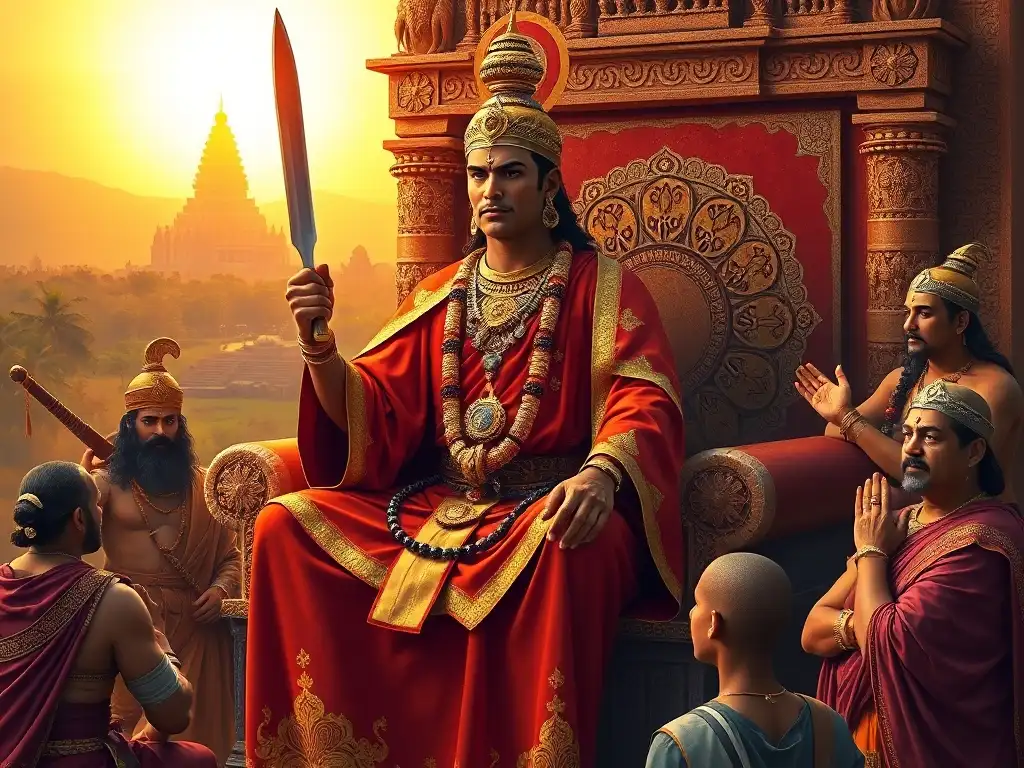
Ashoka the Great, one of the most prominent emperors of ancient India, was born into the Maurya dynasty around 304 BCE. His early life was steeped in the ideals of a warrior, shaped by the expectations of royal lineage and the fierce competition of the time. Raised in a milieu where military prowess equated to power, Ashoka received extensive training in warfare and governance.
His early experiences included:
- Military Campaigns: Ashoka actively participated in several military campaigns, notably his conquest of Kalinga. This campaign not only showcased his skills as a strategist and leader but also set the stage for his transformation later in life.
- Courage and Strategy: Accounts suggest that Ashoka was renowned for his bravery on the battlefield, often leading his troops into combat. His abilities in warfare were complemented by a keen strategic mind, allowing him to successfully expand the Mauryan Empire.
Despite his accomplishments as a warrior, the brutality of the Kalinga War would significantly influence his later ideals.
Conversion to Buddhism and Its Impact on Warrior Ideals
The turning point in Ashoka's life came after witnessing the immense suffering caused by the Kalinga War, where hundreds of thousands lost their lives. This pivotal moment led to his conversion to Buddhism, which profoundly reshaped his understanding of warrior ideals.
- Embracing Non-violence: Ashoka's conversion to Buddhism marked a stark departure from traditional warrior values. He adopted the principle of ahimsa, or non-violence, fundamentally altering the perception of what it meant to be a warrior in ancient India.
- Promotion of Dharma: Ashoka emphasized the importance of Dharma (moral law) over military conquest. He advocated for the moral and ethical treatment of all beings, positioning the warrior as a protector rather than a destroyer. His edicts, inscribed on pillars across the empire, encouraged compassion and respect for life.
- Cultural Integration: This shift in ideals also fostered a new cultural narrative where the archetype of the warrior evolved into that of a benevolent ruler. Ashoka's reign became synonymous with peace, tolerance, and the promotion of Buddhist values, illustrating how a warrior could embody spiritual ideals.
The Legacy of Ashoka's Non-violence and Governance
Ashoka's commitment to non-violence and ethical governance left an indelible mark on the fabric of Indian history. His reign is often cited as a prime example of how warrior ideals can be redefined to encompass peace and moral responsibility.
- Influence on Future Leaders: The principles established by Ashoka influenced subsequent leaders and empires in India. His ideas about governance—centering on welfare, justice, and compassion—served as a model for rulers in the centuries that followed.
- Cultural Flourishing: The promotion of Buddhism under Ashoka not only transformed warrior ideals but also led to a flourishing of arts, education, and architecture. The construction of stupas and monasteries during his reign reflected this cultural renaissance, with warriors being seen as patrons of the arts rather than mere combatants.
- Historical Significance: Ashoka's legacy continues to resonate today, serving as a reminder of the potential for transformation within the warrior ethos. His ability to transition from a conqueror to a compassionate ruler underscores the dynamic nature of warrior ideals in ancient India, illustrating that true strength lies in the capacity for peace and governance rooted in moral values.
Ashoka the Great's journey from warrior to a proponent of non-violence highlights a significant evolution in the ideals of warriors in ancient India, shifting the focus from violence to benevolence and ethical governance.
Comparing Warrior Ideals: Arjuna vs. Ashoka
The warrior ideals in ancient India evolved significantly over time, showcasing a transformation from the epic narratives of heroism to the philosophical underpinnings of governance and morality. This section delves into the warrior ideals represented by two prominent figures: Arjuna, the legendary hero of the Mahabharata, and Ashoka, the Mauryan emperor known for his advocacy of peace and non-violence.
Similarities in Leadership and Valor
Both Arjuna and Ashoka exemplify leadership qualities that resonate with the ideals of courage and valor.
- Courage in Battle:
- Arjuna demonstrates extraordinary bravery on the battlefield of Kurukshetra, where he grapples with the moral dilemmas of fighting against his kin. His resolve to fight for justice and dharma (righteousness) positions him as a quintessential warrior.
- Ashoka, though not primarily a warrior in the traditional sense, displayed valor in his early conquests. His successful campaigns expanded the Mauryan Empire, establishing him as a powerful ruler.
- Commitment to Dharma:
- Arjuna's internal conflict regarding duty reflects a deep engagement with the concept of dharma. He ultimately chooses to fulfill his kshatriya (warrior) duty in alignment with cosmic order.
- Ashoka’s later commitment to dharma reflects a transformation from a conqueror to a ruler who sought the well-being of his subjects, emphasizing moral governance.
- Inspirational Figures:
- Both leaders serve as symbols of inspiration. Arjuna is revered for his valor and moral introspection, while Ashoka is celebrated for his philosophical approach to leadership and governance, especially following the Kalinga War.
Contrasts in Ideals of Warfare and Peace
While Arjuna and Ashoka share similarities in leadership, their approaches to warfare and peace present a stark contrast.
- Arjuna's Emphasis on Warfare:
- Arjuna epitomizes the warrior ideal rooted in martial prowess and valor. His actions are driven by a sense of duty towards his family and the greater good, showcasing the glorification of warfare as a means to achieve justice.
- The Bhagavad Gita, a dialogue between Arjuna and Lord Krishna, illustrates Arjuna's initial hesitance, but ultimately reinforces the importance of fulfilling one's warrior duties without attachment to the outcomes.
- Ashoka's Advocacy for Peace:
- In contrast, Ashoka’s transformation post-Kalinga War marks a significant shift from martial ideals to a philosophy centered on peace and non-violence. The bloodshed he witnessed led him to embrace Buddhism, promoting a doctrine that emphasized compassion and ethical governance over warfare.
- His edicts reflect this change, advocating for non-violence (ahimsa) and the welfare of all beings, contrasting sharply with the heroic martial ideals of Arjuna.
- Legacy of Ideals:
- Arjuna's legacy is one of valor and the complexities of duty, often romanticized in epic literature. His ideals inspire martial traditions and valorous conduct in warriors.
- Ashoka, on the other hand, represents a legacy of peace and ethical leadership, influencing future generations to consider the moral implications of warfare and governance.
The Evolution of Warrior Ethics through Time
The evolution of warrior ethics in ancient India can be traced through the contrasting ideals embodied by Arjuna and Ashoka, revealing a significant transformation in the perception of warfare.
- From Valor to Ethics:
- Initially, warrior ethics were predominantly centered around valor, duty, and the righteous conduct of warfare as exemplified by Arjuna. The Mahabharata emphasizes the significance of the warrior's role in preserving dharma through combat.
- Over time, particularly during Ashoka’s reign, these ideals shifted towards a more comprehensive understanding of ethics, where the consequences of warfare were critically evaluated in light of moral responsibility.
- Philosophical Underpinnings:
- The philosophical discourse initiated by Arjuna’s dilemmas paved the way for deeper reflections on the ethics of combat. The teachings of the Gita explore the responsibilities of rulers and warriors, providing a foundation for later ethical considerations in governance.
- Ashoka’s policies and his embrace of Buddhist principles highlight a significant shift from the glorification of conquest to the prioritization of peace and the welfare of the state.
- Cultural Impact:
- The contrasting ideals have influenced various cultural narratives in India, from literature to art, shaping the perception of warriors in society. Arjuna's image remains that of an archetypal hero, while Ashoka symbolizes the ideal ruler who prioritizes peace over aggression.
The warrior ideals in ancient India, epitomized by figures like Arjuna and Ashoka, reflect a dynamic interplay between valor and ethical governance. Their legacies continue to resonate, offering insights into the complexities of leadership, duty, and the moral responsibilities of power.
Influence of Religion and Philosophy on Warrior Ideals
The Role of Hinduism in Shaping Warrior Values
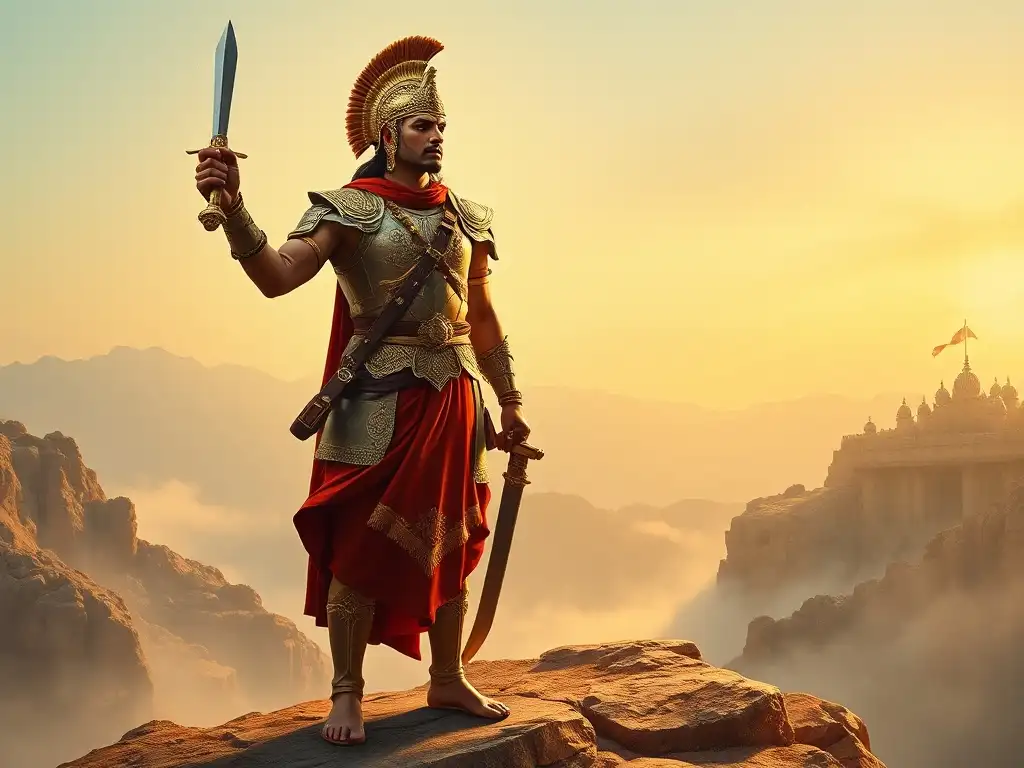
Hinduism has played a significant role in the formulation of warrior ideals in ancient India, shaping the ethical framework and moral codes that governed the conduct of warriors. Central to Hindu philosophy is the concept of Dharma, which refers to the moral duties and responsibilities one must uphold in life. For warriors, adhering to their Kshatriya Dharma was paramount. This duty involved protecting the realm, upholding justice, and engaging in righteous warfare.
The Mahabharata, an epic that epitomizes the complexities of dharma, illustrates the dilemmas faced by warriors such as Arjuna. In the Bhagavad Gita, Lord Krishna advises Arjuna to fulfill his Kshatriya duty despite his moral apprehensions about fighting against his own kin. This dialogue emphasizes the ideal of valor and righteousness in warfare. The teachings from the Gita have since been influential, encouraging warriors to approach battle with a sense of duty rather than personal conflict.
Key Concepts in Hindu Warrior Ideals:
- Kshatriya Dharma: Emphasizes duty, honor, and valor in battle.
- Righteous Warfare: Warfare conducted for just causes, adhering to ethical principles.
- Consequences of Inaction: The belief that failing to act in accordance with dharma can lead to greater moral decay.
Buddhism's Impact on the Concept of Warfare
Buddhism introduced a contrasting perspective on warfare, emphasizing non-violence and compassion. The teachings of the Buddha advocated for peace and the reduction of suffering, which influenced the warrior ideals in regions where Buddhism flourished. However, the relationship between Buddhism and warfare is complex; while the core tenets discourage violence, historical contexts saw rulers and warriors who were Buddhists engaging in conflicts.
The Ashoka Revolution serves as a pivotal example. After his extensive campaigns, particularly the Kalinga War, Emperor Ashoka converted to Buddhism and renounced violence. He propagated the Dhamma, a set of ethical guidelines promoting non-violence, tolerance, and moral governance. His edicts reflect a transformation in warrior ideals, promoting the idea that true strength lies in compassion rather than conquest.
Influential Aspects of Buddhism on Warriors:
- Non-violence (Ahimsa): Encourages minimizing harm in any form, impacting military conduct.
- Moral Leadership: Leaders inspired by Buddhist teachings often sought to govern with justice and compassion.
- Post-War Reflection: Emphasis on reflecting upon the consequences of conflict and striving for peace.
The Integration of Jain Principles in Military Conduct
Jainism, with its strict adherence to non-violence and asceticism, also influenced warrior ideals, albeit in a more nuanced manner. Jain principles emphasize Ahimsa, which permeates all aspects of life, including warfare. Jains believe that even the act of war can lead to unnecessary suffering, which poses ethical dilemmas for warriors.
Despite this, historical accounts reveal that Jain merchants and rulers sometimes supported militaristic endeavors, albeit with caution. The Jains' influence can be seen in the way they approached governance, often advocating for non-violent resolutions and promoting peace over conflict. The Jain concept of Syadvada (the theory of relativity) encourages a multifaceted view of truth, which can help in mediating conflicts and finding harmonious solutions.
Jain Contributions to Warrior Ideals:
- Emphasis on Non-Violence: A stringent code that warriors had to navigate.
- Mediation and Diplomacy: Encouraging peaceful resolutions rather than combat.
- Ethical Warfare: Promoting the importance of minimizing harm and preserving life, even in times of conflict.
The interplay of religion and philosophy profoundly shaped the warrior ideals in ancient India, creating a complex tapestry where duty, ethical conduct, and the pursuit of righteousness were paramount. Understanding these influences provides a deeper insight into the evolution of warrior culture and the multifaceted nature of warfare in ancient Indian society.
The Legacy of Warrior Ideals in Ancient Indian Society
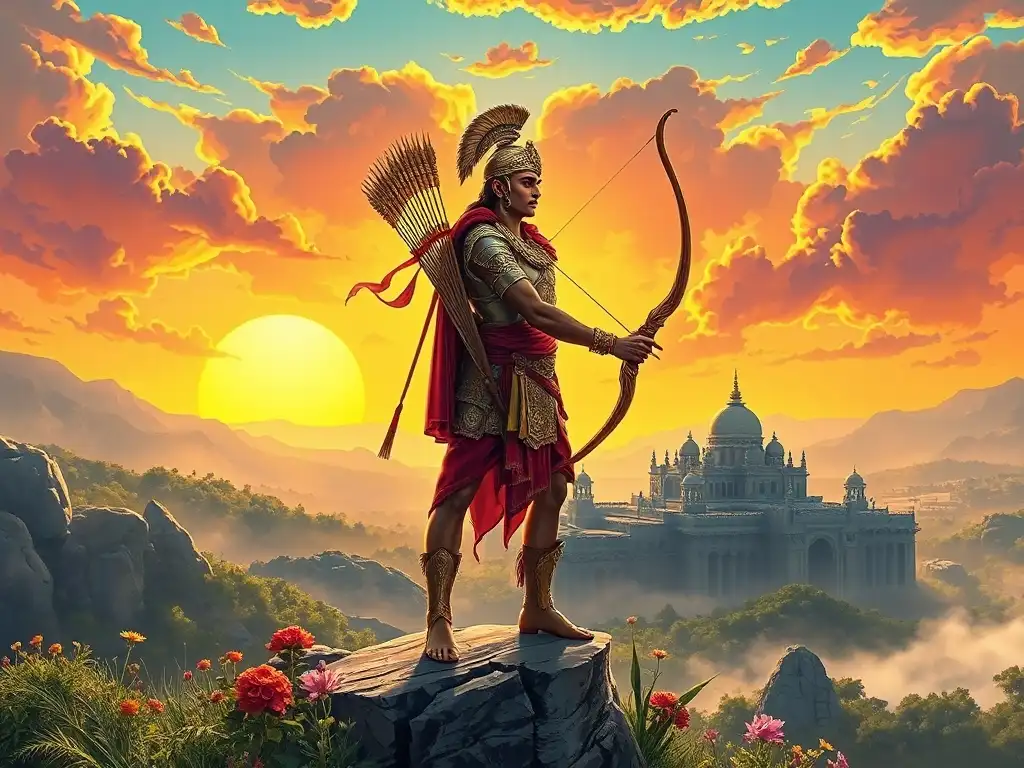
The legacy of warrior ideals in ancient Indian society is a multifaceted tapestry woven from historical narratives, religious texts, and cultural practices. These ideals not only shaped the lives of individuals but also influenced the socio-political landscape of ancient India. Central to this legacy is the concept of Dharma, which emphasizes duty, righteousness, and moral conduct.
The warrior ethos was primarily embodied by the Kshatriyas, one of the four varnas (social classes) in Vedic society. This class was tasked with the protection and governance of the realm, establishing a strong connection between martial prowess and moral integrity. The Mahabharata, an epic poem, serves as a crucial source that illustrates these ideals, primarily through the character of Arjuna, a paragon of virtue and skilled warrior. His internal struggles and adherence to Dharma highlight the ethical frameworks that guided warriors in their pursuits.
Moreover, the ancient Indian texts, such as the Arthashastra by Kautilya, provide insights into the strategic and tactical aspects of warfare, emphasizing the importance of not only physical strength but also wisdom and diplomacy. This blend of martial skills with ethical considerations created a unique warrior ideal that has resonated through centuries, influencing the behavior and aspirations of subsequent generations.
The Role of Kshatriyas in Ancient Indian Culture
The Kshatriyas played a pivotal role in shaping the cultural and political dynamics of ancient India. They were not merely warriors; they were also rulers, protectors, and patrons of the arts and sciences. This duality in their identity is crucial for understanding the broader implications of warrior ideals in society.
- Social Structure:
- Kshatriyas occupied the second tier in the varna hierarchy, directly beneath the Brahmins (priests and scholars). Their status was both respected and feared, as they were responsible for maintaining order and executing justice.
- This social prominence allowed Kshatriyas to engage in various cultural and religious activities, often leading to the establishment of numerous dynasties that contributed to the richness of Indian culture.
- Cultural Contributions:
- Many Kshatriya rulers were patrons of literature, philosophy, and art. For example, the Maurya Dynasty, led by Emperor Ashoka, is known for its monumental contributions to art and architecture, including the famous Ashoka Pillars.
- Warrior ideals also permeated the realm of mythology, with tales of valor and honor becoming integral to cultural narratives.
- Ethos of Valor:
- The warrior ethos instilled a sense of duty among Kshatriyas, which was often reflected in their engagement in battles to protect their kingdom and uphold righteousness.
- The ideals of bravery, honor, and sacrifice were celebrated in various forms, from folk songs to classical dances, ensuring that these values were passed down through generations.
Lasting Influence of Warrior Ideals on Modern India
The warrior ideals that flourished in ancient India continue to resonate in modern Indian society, influencing various aspects of cultural identity and national pride. Their legacy can be observed in several key areas:
- Cultural Identity:
- The glorification of warrior figures from ancient texts, like Arjuna and Ashoka, continues to inspire contemporary narratives around heroism and duty. Festivals, literature, and cinema often draw upon these archetypes, reinforcing the cultural significance of valor and righteousness.
- Military Tradition:
- The ideals of bravery and sacrifice are ingrained in the Indian Armed Forces, which often draw on the historical legacy of Kshatriyas to instill a sense of pride and duty among soldiers. The emphasis on honor in battle reflects a continuity of ancient warrior values.
- Political Discourse:
- Political leaders and parties sometimes invoke the warrior ethos to rally support, tapping into the historical narrative of strength and governance associated with Kshatriyas. This connection underscores the ongoing relevance of ancient ideals in contemporary governance.
The warrior ideals in ancient India, primarily exemplified by the Kshatriyas, have left an indelible mark on modern Indian culture, identity, and military traditions. These ideals serve as a testament to the enduring legacy of ancient Indian civilization, echoing through time and continuing to influence the socio-political landscape today.
Conclusion: The Journey of Warrior Ideals in Ancient India
Summary of Key Points
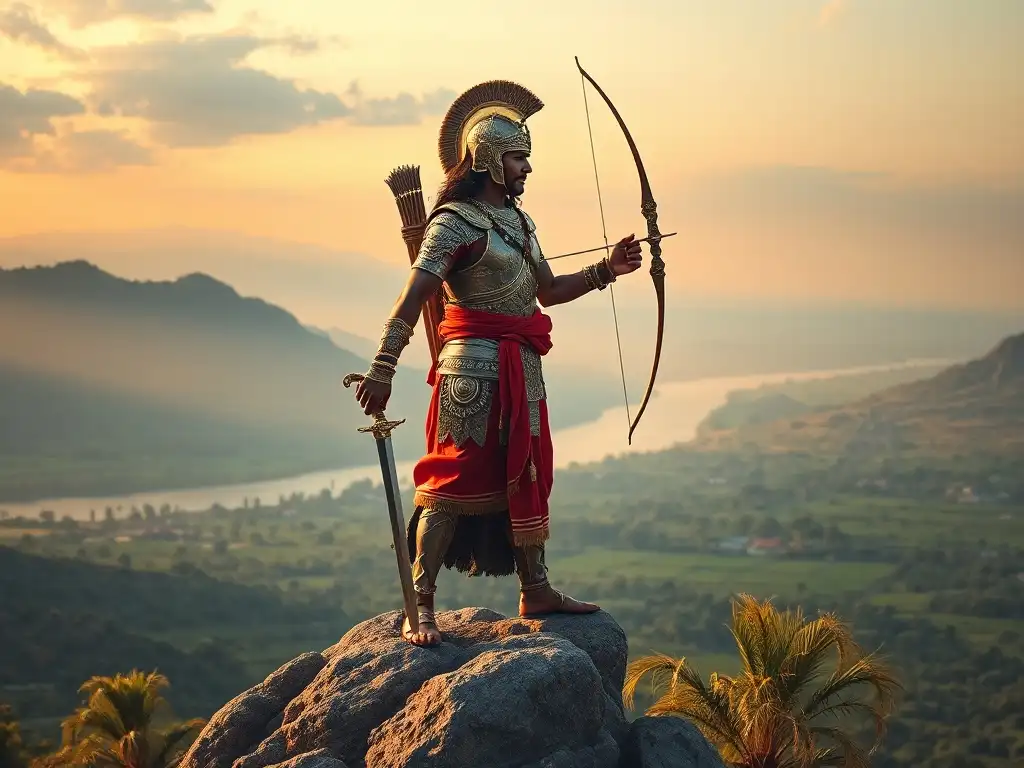
The evolution of Warrior Ideals in Ancient India reflects a complex tapestry woven through various historical epochs, cultural influences, and philosophical doctrines. Key points of this journey include:
- Indus Valley Civilization: Early representations of warriors in seals indicate a society with organized defense mechanisms, emphasizing strength and strategic prowess.
- Epic Narratives: Texts like the Mahabharata and Ramayana shaped the ideals of valor, duty (dharma), and righteousness in warfare, showcasing heroes like Arjuna who embodied these virtues.
- Buddhism and Jainism: The rise of these religions introduced a paradigm shift, where non-violence and compassion began to counterbalance the aggressive warrior ethos, leading to a duality in warrior ideals.
- Mauryan Empire: Under rulers like Ashoka, the principles of governance evolved, promoting ethical warfare and the protection of subjects, reflecting a significant transformation in the perception of warriors not just as conquerors, but as guardians of peace.
- Gupta Empire: The resurgence of martial prowess during this period highlighted the balance between military might and cultural achievements, with warriors also emerging as patrons of art and learning.
Reflection on the Evolution of Warrior Ideals through History
The Warrior Ideals in Ancient India have undergone substantial transformations, influenced by changing sociopolitical landscapes, philosophical shifts, and cultural exchanges. Initially, the focus was on physical strength and martial skills, as seen in depictions of warriors in art and literature. However, as philosophical currents began to permeate society, the warrior's role evolved from mere combatant to a figure embodying ethical and moral responsibilities.
The interplay between dharma (duty) and karma (action) in ancient texts provided a framework for warriors, urging them to consider the broader implications of their actions. This duality is best exemplified in the Bhagavad Gita, where Arjuna's moral dilemma on the battlefield reflects the inner conflict between duty and morality.
As Buddhism and Jainism gained prominence, a significant transformation occurred. The introduction of non-violence as a core principle challenged the traditional warrior ethos, leading to a more nuanced understanding of strength. Warriors began to embody not only martial prowess but also virtues such as wisdom, compassion, and benevolence.
The Mauryan Empire, particularly under Ashoka, marked a pivotal moment in this evolution. Ashoka’s commitment to Dhamma (moral law) redefined what it meant to be a warrior, emphasizing the protection of life and the promotion of peace rather than mere conquest. This shift laid the groundwork for future generations to view warriors as protectors of civilization rather than mere agents of violence.
The journey of warrior ideals in ancient India is a testament to the dynamic interplay of culture, philosophy, and history. From the fierce combatants of the Indus Valley to the principled rulers of the Gupta Empire, these ideals have continually adapted, reflecting the changing values and aspirations of Indian society. The legacy of these transformations continues to resonate in contemporary discussions on ethics in warfare and the role of military leaders in society.
References and Further Reading on Warrior Ideals in Ancient India
Suggested Books and Articles
-
"The Art of War in Ancient India" by S. R. Sharma
This book delves into the strategic military philosophies of ancient Indian texts, examining how warrior ideals were shaped by cultural and religious influences.
-
"Warriors of Ancient India: An Illustrated History" by R. K. Gupta
This richly illustrated work provides insights into various martial traditions, equipment, and the societal role of warriors across different periods.
-
"Epic Battles: The Mahabharata and Its Lessons on Warfare" by M. S. Rao
Analyzing the epic Mahabharata, this book explores the moral and ethical dilemmas faced by warriors, highlighting how these narratives influenced warrior ideals.
-
"Ashoka: The Great Indian Emperor" by A. D. Chandra
While primarily focused on Emperor Ashoka, this book provides context on the evolution of warrior ideals from conquest to compassion during his reign.
-
"The Kshatriya Code: Warrior Ethics in Ancient Indian Society" by V. S. Menon
This scholarly article discusses the ethical framework guiding warriors in ancient India, emphasizing the balance between duty and morality.
Additional Resources for Exploring Ancient Indian Warfare
-
Online Lectures and Webinars:
Platforms like Coursera and edX often feature courses on Indian history that include modules on ancient warfare and warrior cultures.
-
Documentaries:
Documentaries such as "The Battles of Ancient India" provide visual representations and narratives that bring to life the various conflicts and the ideals that motivated warriors.
-
Academic Journals:
Journals like the Journal of Ancient Indian History often publish articles and papers focused on aspects of ancient warfare, providing in-depth research and analysis.
-
Museums and Archaeological Sites:
Visiting museums that feature ancient artifacts, or archaeological sites like the ruins of the Indus Valley Civilization and Gupta-era temples, can offer tangible insights into the martial culture of ancient India.
-
Podcasts:
Several history-focused podcasts discuss themes related to ancient Indian warfare, providing a modern medium to explore historical narratives and warrior ideals.
By engaging with these resources, readers can deepen their understanding of the complex and rich tapestry of warrior ideals in ancient India, further enriching their knowledge of this fascinating aspect of military history.
Frequently Asked Questions
What are the key warrior ideals discussed in the article?
The article explores courage, honor, and duty as central to the warrior ideals of ancient India, tracing their evolution from the Indus Valley civilization through to the Gupta Empire.
How did Arjuna represent ancient warrior ideals?
Arjuna, a key figure in the Mahabharata, exemplified the struggle between duty and morality, showcasing the complex nature of warrior ethics in ancient Indian society.
What role did Ashoka play in shaping warrior ideals?
Ashoka transformed the concept of warfare by promoting non-violence and dharma, illustrating a significant shift in the perception of a warrior's role in society.
How did the Indus Valley civilization influence warrior culture?
The Indus Valley civilization laid the groundwork for military organization and societal structure, which would later be reflected in the warrior codes of subsequent Indian empires.
What impact did the Gupta Empire have on warrior traditions?
The Gupta Empire is known for its patronage of arts and literature, which celebrated warrior ideals, thus reinforcing the importance of valor and heroism in ancient Indian culture.
Final Reflection: The Enduring Legacy of Warrior Ideals in Ancient India
The evolution of warrior ideals in ancient India is not merely a historical narrative; it resonates profoundly with contemporary values and challenges. As we navigate a world rife with conflict and moral dilemmas, the ideals embodied by figures like Arjuna and Ashoka remind us of the complexities of duty, righteousness, and leadership. The lessons drawn from their journeys are not confined to the pages of history but serve as guiding principles for our modern lives, urging us to reflect on our own roles as warriors of justice and peace.
Cultural narratives surrounding warrior ideals continue to shape our social fabric, influencing everything from literature to political discourse. The transformation from Arjuna's internal struggle to Ashoka's commitment to non-violence illustrates a profound shift in the understanding of power and responsibility. As we grapple with the consequences of our actions, we can find wisdom in the words of Ashoka: Conquest through dharma is the greatest conquest.
This perspective invites us to reconsider what it means to be a warrior—not just in battle, but in our everyday interactions and decisions.
As you reflect on the ideals presented in this article, I encourage you to embrace the lessons of ancient warriors in your own life. Consider how you can embody the principles of courage, compassion, and ethical leadership in your daily actions. Whether in your personal relationships, community involvement, or professional endeavors, strive to be a warrior for positive change. Let the legacy of Arjuna and Ashoka inspire you to navigate your own path with integrity and purpose, fostering a world where ideals of justice and peace prevail.
Unveil the Legacy of Warrior Ideals!
Thank you for taking the time to explore the profound evolution of warrior ideals in ancient India. You’ve uncovered the rich tapestry of values and philosophies that shaped legendary figures from Arjuna to Ashoka. Now, let’s take this knowledge further and turn it into action!
- Dive deeper into the history: Explore more articles on our website to discover how these ideals resonate with modern values.
- Join the conversation: Share your insights in the comments below about which warrior ideal speaks to you the most.
- Connect with fellow history enthusiasts: Participate in our online forum to discuss and exchange thoughts on the evolution of warrior principles.
Which warrior ideal do you think holds the most significance in today's world?