
From Brahmins to Shudras: The Complex Hierarchy of Ancient Indian Society

Welcome to Ancient India History, where we embark on a fascinating journey through the rich tapestry of ancient Indian civilizations. Delve into the intricate layers of culture, society, and contributions that have shaped this vibrant heritage. In our featured article, " From Brahmins to Shudras: The Complex Hierarchy of Ancient Indian Society," we unravel the enigmatic structure of the ancient Indian social hierarchy.
What roles did these social classes play in everyday life, and how did they influence the course of history? Prepare to uncover the answers as you explore the complexities and nuances of a society that laid the foundation for modern India. Your adventure through time begins now!
- Introduction to Ancient Indian Social Hierarchy
- The Caste System: An Overview
- The Four Main Varnas in Ancient Indian Society
- Regional Variations in the Social Hierarchy
- The Impact of Religion on Ancient Indian Social Hierarchy
- Social Mobility and Changes in the Caste System
- The Legacy of Ancient Indian Social Hierarchy
- How Ancient Indian Social Hierarchy Influences Modern India
- Reflections on the Caste System in Contemporary Society
- Conclusion
- Frequently Asked Questions
- Final Reflection: Understanding the Layers of Ancient Indian Social Hierarchy
- Unveil the Rich Tapestry of Ancient Indian Society!
The social hierarchy of ancient India is a complex and multifaceted system that has played a crucial role in shaping the cultural, political, and economic landscape of the region. Spanning thousands of years, this hierarchy was not merely a set of rigid classes but rather a dynamic framework that influenced daily life, relationships, and societal norms.
From the esteemed Brahmins, who were revered as the spiritual leaders and scholars, to the Shudras, who formed the laboring class, the layers of this hierarchy were deeply interwoven with the religious, philosophical, and historical contexts of the time. Understanding the nuances of this social structure offers valuable insights into the functioning of ancient Indian civilizations and their enduring legacies.
Overview of Ancient Indian Society
Ancient Indian society was characterized by a diverse array of cultures, languages, and traditions, evolving significantly from the early Indus Valley Civilization through to the later Gupta Empire. The social framework was primarily based on the varna system, which categorized individuals into four main groups:
- Brahmins: The priestly class responsible for religious rituals and the preservation of sacred texts.
- Kshatriyas: The warrior and ruling class tasked with protecting and governing the realm.
- Vaishyas: The merchant and agricultural class engaged in trade and commerce.
- Shudras: The laboring class, often responsible for serving the other three varnas.
Within these broad categories, there emerged numerous sub-castes or jatis, which further defined social interactions and occupational roles. This intricate web of hierarchy was not stagnant; it evolved with time, adapting to changing socio-political landscapes and cultural influences.
Grasping the intricacies of the ancient Indian social hierarchy is essential for several reasons:
- Cultural Insights: The hierarchy provides a window into the values, beliefs, and social norms that governed daily life in ancient India.
- Historical Context: Understanding these social structures helps to contextualize significant historical events, such as the rise and fall of empires, reform movements, and the interactions between different cultures.
- Sociological Implications: The patterns of social stratification can inform contemporary discussions on caste dynamics, social mobility, and inequality in modern India.
- Legacy and Influence: Many aspects of the ancient social hierarchy have continued to influence Indian society today, making it vital to trace their origins and transformations.
The ancient Indian social hierarchy is not just a relic of the past but a critical lens through which we can explore the complexities of human society, culture, and governance. Understanding this hierarchy enables us to appreciate the rich tapestry of ancient Indian civilization and its lasting impact on contemporary society.
The Caste System: An Overview
The caste system in ancient India is a complex social hierarchy that has evolved over millennia, deeply influencing the social fabric of Indian society. This system is characterized by the division of society into distinct groups, primarily based on occupational roles, social status, and ritual purity. Understanding the caste system provides insight into the dynamics of ancient Indian civilization and its enduring legacy in contemporary society.
Definition and Origins of the Caste System
The term "caste" is derived from the Portuguese word casta, which means "race" or "lineage." In the context of ancient India, the caste system refers to the rigid social stratification that categorized individuals into hierarchical groups. The foundational texts of Hinduism, particularly the Vedas, contain references to social divisions, though the system as we recognize it today was not fully articulated until later texts, such as the Manusmriti.
The origins of the caste system can be traced back to the arrival of the Aryans in India around 1500 BCE. They introduced a new social order that distinguished people primarily based on their roles within society. This initial framework was based on four primary categories, known as Varna:
- Brahmins: Priests and scholars responsible for religious rituals and the preservation of sacred knowledge.
- Kshatriyas: Warriors and rulers tasked with governance and protection of the realm.
- Vaishyas: Merchants and agriculturalists engaged in trade and commerce.
- Shudras: Laborers and service providers who performed tasks for the other three varnas.
Over time, these broad categories became more intricate, leading to the emergence of countless sub-groups known as Jati, further complicating the social hierarchy.
Historical Context of the Caste System in Ancient India
The caste system's evolution was significantly influenced by historical events, including invasions, migrations, and the spread of religions. During the Maurya and Gupta empires, for instance, the caste system became more rigid, with social mobility increasingly restricted. The Ashoka Rock Edicts (circa 3rd century BCE) highlight the shift towards a more inclusive society, yet the caste divisions remained prevalent.
The interaction between different cultures, especially during the period of the Islamic conquests and later colonial rule, introduced new dynamics to the caste system. The British colonial administration, in particular, codified caste identities for administrative purposes, which inadvertently reinforced social divisions. This historical context illustrates how the caste system was not only a product of religious and cultural beliefs but also a response to socio-political changes over time.
Key Concepts: Varna and Jati
To understand the intricacies of ancient Indian social hierarchy, it is crucial to differentiate between Varna and Jati.
- Varna: The four primary divisions (Brahmins, Kshatriyas, Vaishyas, and Shudras) represent broad categories that encapsulate the fundamental roles within society. Each varna has its own set of duties (dharma) and privileges, which were believed to be divinely ordained.
- Jati: This term refers to the numerous sub-groups that emerged within each varna, often based on specific occupations, regional identities, and cultural practices. For example, within the Vaishya varna, there could be separate jatis for traders, farmers, and artisans. The jati system introduced a more localized and nuanced understanding of social identity, where individuals often identified more closely with their jati than with the broader varna classification.
The interplay between varna and jati created a multi-layered social structure that defined an individual's status, rights, and responsibilities within ancient Indian society. This complex hierarchy not only shaped personal identities but also influenced the broader societal interactions and economic systems of the time.
This intricate exploration of the ancient Indian social hierarchy sheds light on how historical, cultural, and economic factors intertwined to form a unique societal framework, the legacy of which continues to resonate in modern India.
The Four Main Varnas in Ancient Indian Society
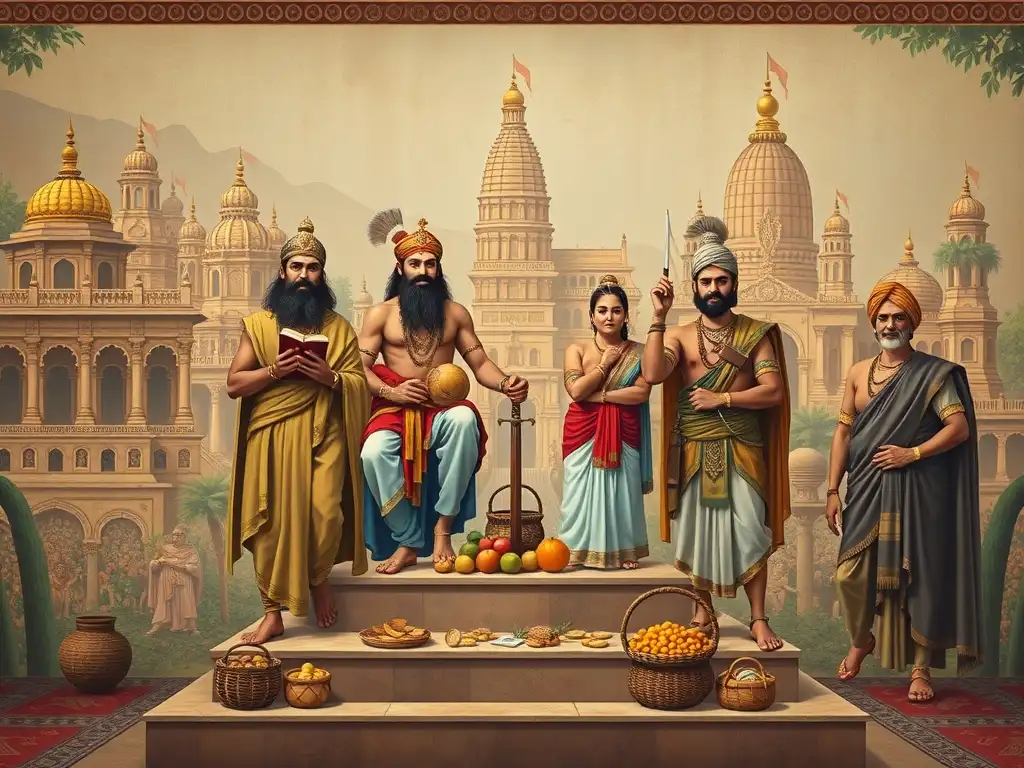
The social structure of ancient India was characterized by a complex hierarchy that primarily revolved around four main varnas: Brahmins, Kshatriyas, Vaishyas, and Shudras. These varnas formed the foundation of the ancient Indian social hierarchy, influencing the occupation, status, and roles within society. Each varna had its own distinct responsibilities and cultural significance, shaping the dynamics of daily life and governance throughout ancient Indian history.
Brahmins: The Priestly Class
Brahmins held the highest position within the varna system and were primarily responsible for religious rituals, education, and the preservation of sacred texts. This priestly class was seen as the custodians of knowledge and spiritual wisdom, playing a crucial role in guiding the moral and ethical standards of society.
Roles and Responsibilities of Brahmins
Brahmins were tasked with various significant roles, including:
- Performing Rituals: They conducted religious ceremonies and sacrifices, ensuring that the rituals were performed according to the prescribed Vedic texts.
- Teaching and Learning: Brahmins were responsible for the education of the young, passing down knowledge of scriptures, philosophy, and sciences. They often established gurukuls (traditional schools) where students lived and learned.
- Counseling Rulers: They served as advisors to kings and rulers, providing insights on governance, ethics, and law, which were deemed essential for righteous rule (Dharma).
Influence of Brahmins in Ancient Indian Society
The influence of Brahmins extended beyond religious duties. They played a pivotal role in shaping societal norms and values. Their status conferred them considerable power, allowing them to influence political decisions and social practices. The respect commanded by Brahmins established them as cultural leaders, and their interpretations of texts and rituals significantly impacted the development of religious traditions in India.
The Brahminical texts, such as the Manusmriti, laid down laws that governed various aspects of life, including marriage, inheritance, and conduct, reinforcing their authority within the social hierarchy.
Kshatriyas: The Warrior Class
Kshatriyas were the warrior class in ancient Indian society, responsible for governance, protection, and upholding justice. They were tasked with defending the realm and maintaining order, often taking on roles of leadership in both military and political spheres.
Roles of Kshatriyas in Governance and Protection
Kshatriyas held several critical responsibilities, including:
- Military Leadership: They were trained warriors who led armies into battle, showcasing valor and bravery. Their primary duty was to protect their kingdom from invasions and internal strife.
- Administration: Kshatriyas often governed territories, managing resources, and ensuring the welfare of their subjects. They were responsible for implementing laws and maintaining order.
- Judicial Authority: In many instances, Kshatriyas served as judges, settling disputes among the populace and upholding the principles of justice.
The Importance of Kshatriyas in Military and Political Affairs
The Kshatriya class was vital in shaping the political landscape of ancient India. Their military prowess and strategic skills were essential for expanding empires and defending territories. Kshatriyas engaged in various alliances and wars, showcasing the importance of martial skills in maintaining sovereignty.
Moreover, the relationship between Kshatriyas and Brahmins was significant; while Brahmins provided spiritual guidance, Kshatriyas ensured the implementation of dharma through their governance and military actions. This interdependence fostered a complex relationship that was foundational to the ancient Indian social hierarchy, where the balance of power was crucial for stability and prosperity.
The varna system, particularly the roles of Brahmins and Kshatriyas, played an essential part in structuring ancient Indian society, influencing everything from governance to social norms and cultural practices. Understanding these dynamics is key to appreciating the rich tapestry of ancient Indian history.
Vaishyas: The Merchant Class
The Vaishyas, traditionally known as the merchant class, played a vital role in the economic and social fabric of ancient Indian society. They were primarily engaged in agriculture, trade, and commerce, which positioned them as one of the key contributors to the wealth and prosperity of the Indian subcontinent. Originating from the ancient Vedic texts, the Vaishyas were considered the third varna in the social hierarchy, below the Brahmins and Kshatriyas but above the Shudras.
The classification of the Vaishyas was not merely occupational; it encapsulated a way of life that involved both economic responsibility and social engagement. Their activities ranged from farming the land to engaging in trade with distant regions, facilitating the flow of goods, ideas, and culture throughout ancient India and beyond. The Vaishyas were instrumental in establishing the market systems that enabled commerce to flourish.
Economic Contributions of Vaishyas in Ancient India
The economic contributions of the Vaishyas were multi-faceted. They were pivotal in the agrarian economy, cultivating crops and managing agricultural production. This involvement ensured food security and sustenance for the population. Additionally, the Vaishyas participated in trade, both domestic and international, which was crucial for the exchange of goods such as textiles, spices, and precious metals.
- Trade Networks: The Vaishyas established extensive trade networks that connected local markets to larger regional and international trade routes. They utilized rivers and overland paths to transport goods, significantly enhancing economic activity.
- Banking and Commerce: Many Vaishyas took on roles as moneylenders and bankers, providing financial services that facilitated trade. This practice not only boosted their economic standing but also contributed to the overall economic development of ancient India.
- Artisanship and Craftsmanship: The Vaishyas also supported various artisans and craftsmen, ensuring the production of high-quality goods that were sought after in the markets. Their patronage allowed for the flourishing of arts and crafts, contributing to a rich cultural heritage.
Social Status and Responsibilities of Vaishyas
In the social hierarchy of ancient India, Vaishyas held a respectable position. Their contributions to the economy earned them a degree of prestige and influence, albeit not as high as that of the Brahmins or Kshatriyas. The responsibilities of the Vaishyas extended beyond mere economic participation; they were also expected to uphold societal values and engage in philanthropy.
- Community Leaders: Often serving as community leaders and mediators, Vaishyas played a crucial role in local governance and decision-making processes, influencing societal norms and practices.
- Cultural Patrons: They were known to patronize religious and cultural activities, contributing to the construction of temples and sponsoring festivals, which helped forge communal bonds.
- Education and Knowledge: Although primarily focused on commerce and agriculture, many Vaishyas valued education and learning, leading to a blend of practical knowledge with traditional wisdom, which was passed down through generations.
Shudras: The Laboring Class
The Shudras, the laboring class in ancient Indian society, represented the bottom tier of the social hierarchy. Their primary role was to serve the needs of the other three varnas: Brahmins, Kshatriyas, and Vaishyas. While often overlooked in historical narratives, the Shudras were essential to the functioning of society, providing the labor force necessary for agriculture, craftsmanship, and various services.
Despite their lower social status, the Shudras played a crucial role in the economy and daily life of ancient India. Their work supported the agricultural base and the rich cultural traditions that characterized the civilization.
Role of Shudras in Society and Economy
The role of the Shudras in society was primarily focused on labor and service. They were engaged in various occupations, many of which were essential for the sustenance of the community.
- Agricultural Laborers: A significant portion of the Shudra population worked as agricultural laborers, tilling the land and supporting the agrarian economy that was the backbone of ancient Indian society.
- Artisans and Craftsmen: Some Shudras were skilled artisans and craftsmen, specializing in trades such as pottery, weaving, and blacksmithing. Their craftsmanship contributed to the local economies and cultural expressions of the time.
- Service Providers: Shudras often served as domestic workers, providing essential services that supported households, including cooking, cleaning, and maintenance.
Perceptions and Treatment of Shudras in Ancient India
The perceptions and treatment of Shudras in ancient India were complex and varied significantly across different regions and periods. Generally, they were viewed as a subordinate class, and their social status was often associated with servitude.
- Social Stigma: The Shudras faced social stigma and discrimination, which were institutionalized in various texts and practices. Their lower status often relegated them to menial jobs, limiting their opportunities for upward mobility.
- Cultural Contributions: Despite their marginalized position, Shudras contributed significantly to the cultural and social landscape of ancient India. Their traditions, music, and arts enriched the cultural tapestry of the civilization.
- Resistance and Agency: Throughout history, there were instances of resistance among Shudras against their treatment. They formed communities and sought to assert their rights, challenging the rigid social norms imposed upon them.
Both the Vaishyas and Shudras played pivotal roles in ancient Indian society, each contributing uniquely to the economy and culture. Understanding their positions within the ancient Indian social hierarchy provides insight into the complexities of social dynamics and the evolution of societal norms.
The ancient Indian social hierarchy was not a monolithic structure; rather, it exhibited significant regional variations shaped by local customs, geography, and historical interactions. This diversity is crucial for understanding how the caste system evolved and functioned across different parts of the subcontinent.
Differences in Caste Practices Across Regions
The caste system's implementation varied greatly from one region to another, influenced by factors such as local economies, cultural practices, and historical developments.
- North India: In regions such as Punjab and Uttar Pradesh, the caste system was heavily influenced by agricultural practices. The Kshatriyas, traditionally warriors, often became landowners, while Vaishyas engaged in trade. The Brahmins held significant religious authority, but their influence could vary based on local rulers' patronage.
- South India: The social structure in South India, particularly in Tamil Nadu, showcased a different configuration. Here, the Brahmins were not the sole custodians of religious practices; the Shaivite and Vaishnavite movements saw the rise of non-Brahmin sects that challenged traditional hierarchies. The Nadar and Paraiyar communities, for instance, resisted caste oppression and played vital roles in social reform movements.
- East India: In Bengal, the social hierarchy was more fluid, with vaishnavism creating a space for Brahmins and non-Brahmins alike in devotional practices. The influence of local deities and folk traditions led to a blending of caste practices with more egalitarian aspects.
- West India: In Maharashtra and Gujarat, the emergence of the Bhakti movement brought about significant changes in the caste dynamics. Figures like Sant Tukaram and Namdev promoted equality and questioned the rigid caste boundaries, which influenced the perception and practice of caste in these regions.
| Region | Key Characteristics of Caste Practices |
|---|---|
| North India | Rigid caste roles, significant Brahmin influence, landownership by Kshatriyas |
| South India | Diverse religious practices, challenges to Brahmin supremacy, active social reform movements |
| East India | Fluid caste roles, integration of folk traditions into caste dynamics |
| West India | Bhakti movement promoting egalitarianism, questioning of caste barriers |
This regional diversity illustrates that the ancient Indian social hierarchy was not simply a rigid structure but rather a complex and dynamic system that adapted to local contexts.
Influence of Local Cultures on the Caste System
The interplay between local cultures and the caste system significantly shaped social hierarchies in ancient India. Local traditions, beliefs, and economic conditions often dictated the nuances of caste relations.
- Cultural Practices: In many regions, local festivals and rituals played a pivotal role in reinforcing or challenging caste boundaries. For example, in the Gujarat region, community festivals allowed for interactions across caste lines, temporarily blurring the rigid distinctions of everyday life.
- Economics and Occupation: The economic base of each region influenced the caste system's structure. In coastal regions where fishing and trade were predominant, castes related to these occupations often gained prominence, altering the traditional hierarchy. The Shudras, often laborers, could attain higher status in such economies by controlling trade routes or fishing resources.
- Historical Interactions: The arrival of foreign influences, such as the Mughals and later colonial powers, introduced new dynamics to the caste system. In regions heavily influenced by Islamic rule, some castes experienced shifts in status, often gaining new roles in administration and trade, which could elevate their social standing.
- Religious Syncretism: In regions like Karnataka, the blending of Hindu and Muslim practices led to the emergence of communities that transcended traditional caste roles, thus influencing how caste was practiced and perceived.
The influence of local cultures on the caste system highlights the adaptability and complexity of the ancient Indian social hierarchy. Understanding these variations is essential to grasping the broader narrative of ancient Indian society and its evolving dynamics over time.
Hinduism played a pivotal role in shaping the ancient Indian social hierarchy, intricately linking religious beliefs with social stratification. The caste system, or varna system, which categorized society into four primary groups—Brahmins, Kshatriyas, Vaishyas, and Shudras—was deeply rooted in Hindu scriptures and teachings. This classification was not merely a social construct but rather reflected a divine order believed to be ordained by the gods.
- Scriptural Foundations: The Rigveda, one of the oldest sacred texts, contains hymns that reference the origin of the varna system. The famous Purusha Sukta hymn narrates how the cosmic being (Purusha) was sacrificed, and from his body, the four varnas emerged:
- Brahmins (priests and scholars) from the mouth
- Kshatriyas (warriors and rulers) from the arms
- Vaishyas (traders and agriculturists) from the thighs
- Shudras (laborers and service providers) from the feet
- Dharma and Caste: Each varna was associated with specific duties or dharma which reinforced societal roles and responsibilities. Brahmins, for instance, were tasked with performing rituals and preserving sacred knowledge, while Kshatriyas were responsible for protection and governance. This division justified the social hierarchy as a means to maintain cosmic order and societal stability.
- Religious Rituals and Social Status: Religious practices further cemented the hierarchy. The performance of rituals was predominantly in the hands of Brahmins, and their interpretations of sacred texts often placed them at the top of the social order. The belief that one's caste was determined by birth added to the rigidity of the system, leading to a cycle of privilege and subordination that was perceived as divinely sanctioned.
Influence of Other Religions on the Caste System
While Hinduism significantly contributed to the establishment of the ancient Indian social hierarchy, other religions also influenced the dynamics of the caste system, resulting in a complex interplay of beliefs and practices.
- Buddhism and Its Challenge to Caste: Founded in the 6th century BCE, Buddhism emerged as a reform movement against the rigidities of the Brahmanical order. Siddhartha Gautama, known as the Buddha, preached the principles of equality and the potential for enlightenment irrespective of caste. His teachings attracted followers from all strata of society, including the lower castes, thereby challenging the legitimacy of the caste system.
- Jainism and Social Equity: Similarly, Jainism advocated for equality among all beings and emphasized non-violence and truth. Jains rejected the caste system's hierarchy, promoting a lifestyle that allowed individuals to pursue spiritual liberation free from caste-based constraints. The community's emphasis on meritocratic principles contributed to a gradual questioning of caste divisions.
- Islam and the Blurring of Caste Lines: The arrival of Islam in India during the 7th century CE further transformed social hierarchies. Islamic teachings emphasized the oneness of humanity and discouraged discrimination based on social status. Many individuals from lower castes were drawn to Islam, seeking social mobility and equality, which led to a gradual erosion of rigid caste barriers in certain regions.
- Syncretism and the Evolving Caste System: As these religions spread, they interacted with Hindu beliefs, leading to a syncretic culture where caste identities began to evolve. The emergence of new sects and communities, such as the Bhakti movement, further blurred the lines of caste, advocating for devotion over birthright.
While Hinduism laid the foundational structure of the ancient Indian social hierarchy, the influence of Buddhism, Jainism, and Islam introduced new perspectives that challenged and reshaped caste dynamics. This interplay of beliefs not only reflects the complexity of ancient Indian society but also highlights the ongoing evolution of social structures in response to changing religious ideologies.
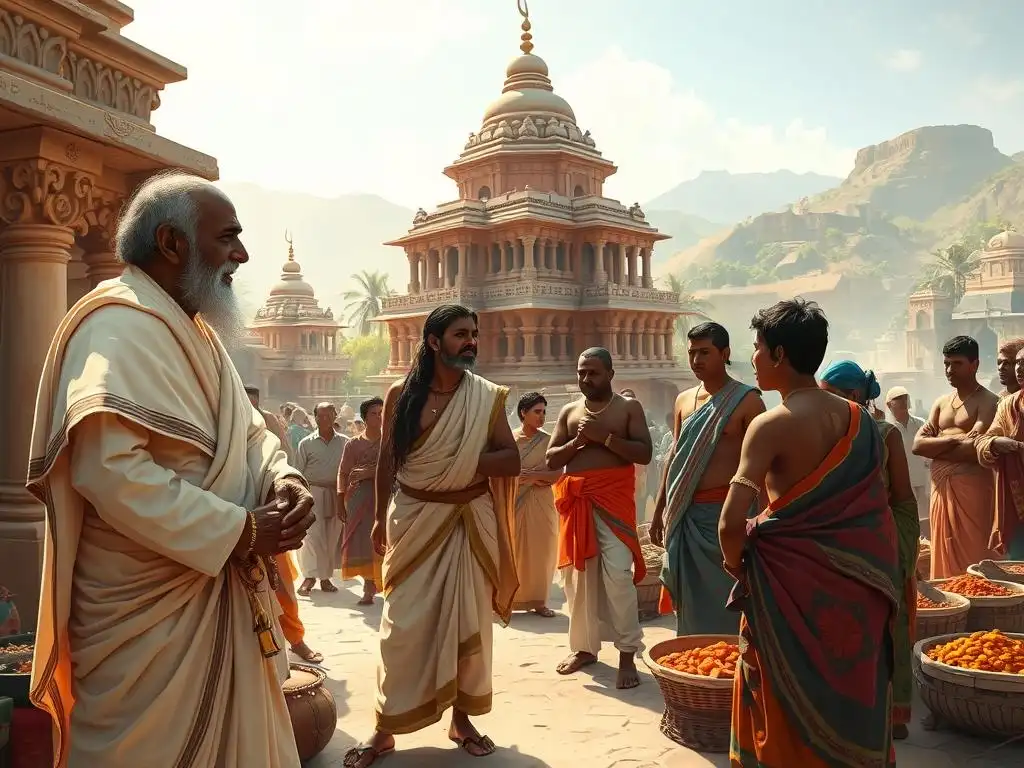
Social mobility in ancient India was a complex phenomenon influenced by various factors, which created opportunities for individuals to transcend their prescribed caste boundaries. Understanding these factors provides insight into the dynamics of the ancient Indian social hierarchy.
- Economic Prosperity:
- Economic growth often led to shifts in social structures. As trade flourished, especially during the Maurya and Gupta empires, individuals from lower castes could amass wealth through commerce and entrepreneurship. This newfound wealth could elevate their social standing and allow them to gain respect within society.
- Education and Knowledge:
- Access to education was pivotal in altering caste perceptions. Brahmins, as the priestly caste, traditionally held the knowledge of the Vedas and other texts. However, as educational institutions like Nalanda and Takshashila emerged, individuals from various backgrounds could seek knowledge. This led to instances where talented individuals from lower castes became scholars and teachers, altering the rigid caste norms.
- Religious Movements:
- Various religious movements challenged the established caste system. For instance, Buddhism and Jainism advocated for equality and rejected the caste hierarchies. Figures like Buddha, who attracted a diverse following, encouraged a sense of community beyond caste lines, allowing for greater social mobility.
- Political Changes:
- The rise and fall of dynasties also impacted social mobility. Leaders from lower castes, such as the Maurya dynasty's Chandragupta Maurya, broke traditional barriers by rising to power. These changes encouraged individuals to aspire for roles in governance and administration, irrespective of their caste.
- Inter-caste Marriages:
- Inter-caste marriages, although often met with resistance, were a means through which social mobility occurred. Such unions could blur the rigid boundaries of the caste system, allowing for the emergence of new social groups and identities.
Case Studies of Individuals Who Transcended Caste Boundaries
Examining specific individuals who broke through the constraints of the ancient Indian caste system illustrates the possibilities of social mobility.
- Chandragupta Maurya: Born into a lower caste, Chandragupta is a prominent example of social ascent. He founded the Maurya Empire after overthrowing the Nanda dynasty. His rise to power demonstrated that ambition and strategy could defy caste limitations, establishing him as a revered ruler in Indian history.
- Kshatriya Kings: Some Kshatriya kings, like King Ashoka, promoted merit-based appointments in administration. Ashoka’s embrace of Buddhism led him to appoint individuals based on their capabilities rather than caste, allowing talented people from lower castes to hold significant positions.
- Buddhist Monks: Many Buddhist monks came from lower castes, gaining respect and status through their spiritual contributions. Figures such as Upagupta, who was of a lower caste, became influential Buddhist leaders, highlighting how religious devotion could lead to elevated social standing.
- Dharma and Social Responsibility: The concept of Dharma, which emphasized righteousness and duty, allowed individuals to gain social recognition through virtuous actions. This enabled some individuals to gain respect and social mobility, even if they belonged to a lower caste.
While the ancient Indian social hierarchy was predominantly rigid, numerous factors contributed to social mobility, allowing certain individuals to transcend caste boundaries. These case studies exemplify how personal agency, combined with broader socio-economic and political changes, could challenge the established norms of the caste system.
The social hierarchy of ancient India, often referred to as the caste system, has left a profound legacy that continues to influence various aspects of Indian society today. This system, which categorized individuals into distinct social groups based on their birth and occupation, was not merely a social construct but a complex framework that governed the interactions, rights, and duties of people across the subcontinent.
The Four Primary Varnas
At the core of the ancient Indian social hierarchy were the four primary varnas:
- Brahmins: The priestly class, responsible for religious rituals, teaching, and preserving sacred texts.
- Kshatriyas: Warriors and rulers tasked with protecting the realm and upholding justice.
- Vaishyas: The merchant and agricultural class, responsible for trade, agriculture, and commerce.
- Shudras: The labor class, serving the other three varnas and involved in various forms of manual labor.
These varnas were further divided into numerous jatis (sub-castes), creating a complex web of social stratification that dictated not only occupational roles but also social interactions and marital choices.
Cultural and Religious Justifications
The caste system was often justified through religious texts such as the Rigveda and the Manusmriti, which provided divine sanction to the social order. Such texts articulated the roles and responsibilities associated with each varna, embedding the caste system deeply into the cultural and spiritual fabric of ancient Indian society.
The legacy of this hierarchy can be seen in various cultural practices, festivals, and rituals that are still prevalent in modern India, where caste affiliations often play a role in communal identities.
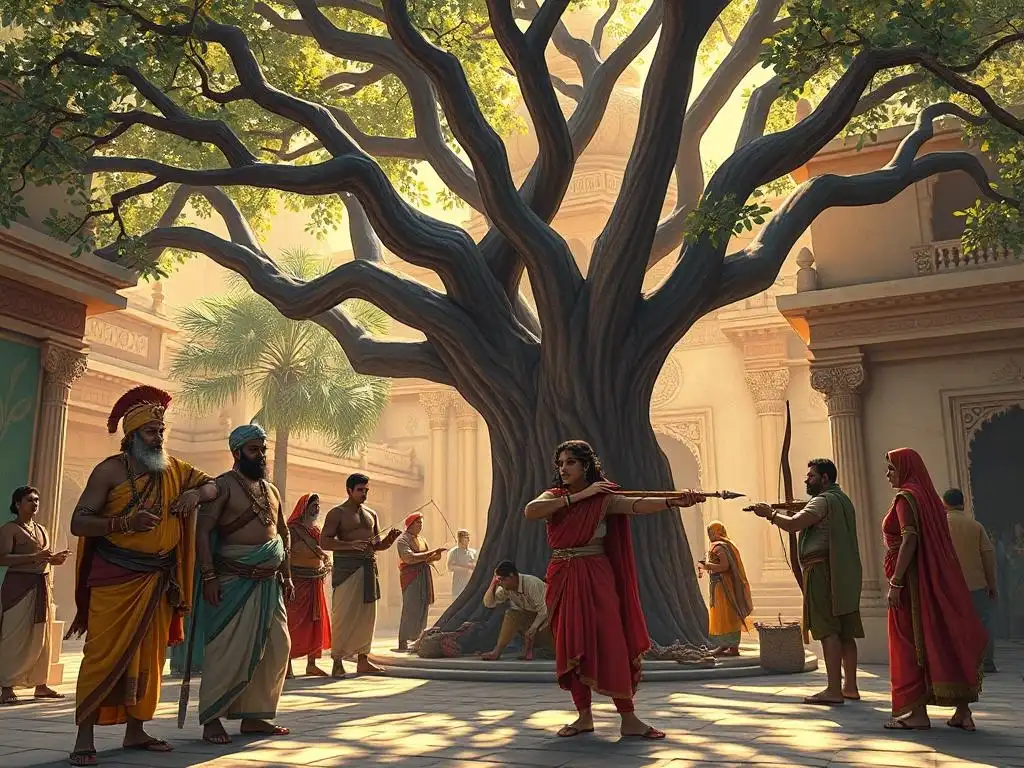
The influence of ancient Indian social hierarchy on contemporary society is significant and multifaceted. Although the Constitution of India abolished untouchability and outlawed caste-based discrimination, remnants of the caste system persist in various forms.
Socioeconomic Implications
The caste system has led to entrenched socioeconomic disparities. Certain castes, particularly those historically categorized as "Scheduled Castes" and "Scheduled Tribes," continue to face challenges in terms of education, employment, and social mobility. Government initiatives like affirmative action, known as reservations, aim to uplift these marginalized communities, but the effectiveness of these measures is often debated.
Political Dynamics
Caste plays a crucial role in the political landscape of India. Political parties frequently mobilize support based on caste identities, leading to the emergence of caste-based politics. This can create both opportunities for representation and divisions within society, making it imperative to navigate these dynamics carefully.
Cultural Identity
Many individuals still identify strongly with their caste, influencing social interactions, marriage choices, and even friendships. This cultural identity reinforces the social hierarchies established in ancient times, reflecting how deeply rooted these structures are in the socio-cultural psyche of the nation.
Reflections on the Caste System in Contemporary Society
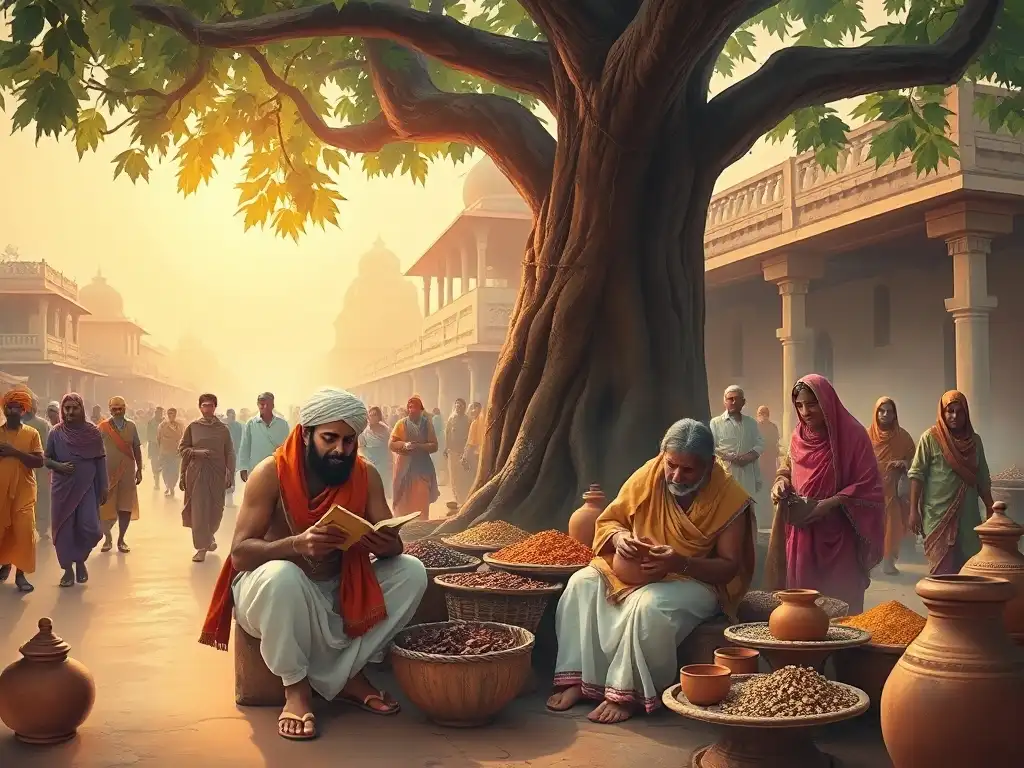
In contemporary society, the caste system is a subject of intense debate and reflection. While legal frameworks have been established to promote equality, social attitudes and practices often lag behind.
Changing Perspectives
There is a noticeable shift in the perceptions of caste, especially among the younger generation. Increased educational opportunities and globalization have fostered a more egalitarian mindset, challenging traditional norms and practices.
Activism and Awareness
Movements advocating for the rights of marginalized communities are gaining momentum. Activists and organizations are working tirelessly to dismantle caste-based discrimination and promote awareness about social equity.
The Path Forward
The journey toward a caste-free society is complex and multifaceted. It requires not only legal reforms but also a cultural shift in how individuals perceive and interact with one another, transcending caste identities.
The legacy of ancient Indian social hierarchy continues to shape modern India, influencing social dynamics, cultural practices, and political landscapes. Acknowledging this legacy and actively working towards equity and inclusion will be crucial for the future of Indian society.
Conclusion
The ancient Indian social hierarchy, defined primarily by the caste system, was intricate and multifaceted. Here are some of the essential points to consider:
- Four Main Varna Groups: The hierarchy was divided into four main varnas - Brahmins (priests and scholars), Kshatriyas (warriors and rulers), Vaishyas (traders and agriculturists), and Shudras (laborers and service providers). Each group had specific roles that contributed to the overall functioning of society.
- Jati System: Beyond the four varnas, the jati system introduced further complexity, with thousands of sub-castes forming based on profession, region, and community. This system governed social interactions, marriages, and occupations.
- Social Mobility: While the caste system is often viewed as rigid, there were instances of social mobility, particularly through occupational changes, marriages, or royal favor. However, such instances were limited and often dependent on various socio-political factors.
- Cultural Contributions: Each group within the hierarchy contributed uniquely to ancient Indian civilization, from religious texts by Brahmins to military strategies by Kshatriyas, and economic systems established by Vaishyas. Shudras, despite their lower status, played a vital role in agriculture and craftsmanship.
- Influence of Religion: The caste system was deeply intertwined with religious beliefs and practices, with many texts, such as the Manusmriti, outlining the duties and responsibilities of each varna. This religious sanctioning reinforced the social order.
In essence, the ancient Indian social hierarchy was not merely a system of division but a complex structure that shaped daily life, governance, and cultural practices throughout ancient India.
Understanding the social structures of ancient civilizations, such as the ancient Indian social hierarchy, is crucial for several reasons:
- Cultural Context: It provides a framework for interpreting historical events, literature, and cultural practices. The caste system influenced everything from art and architecture to rituals and festivals.
- Socio-Economic Insights: Analyzing the hierarchical divisions helps us understand the economic transactions and labor dynamics of ancient societies. For instance, the roles of various varnas contributed to the economic stability and growth of ancient India.
- Political Dynamics: Social hierarchies often dictated political power and governance structures. Knowledge of these systems illuminates how power was distributed and contested within ancient Indian states.
- Modern Relevance: Studying these ancient structures allows us to reflect on contemporary issues related to caste and social stratification. Understanding the historical context can inform discussions about social justice and equality today.
- Interdisciplinary Connections: The exploration of ancient social hierarchies fosters connections between history, anthropology, sociology, and religious studies, enriching our understanding of human civilization as a whole.
The ancient Indian social hierarchy is not just a relic of the past; it is a key to deciphering the complexities of ancient societies and their lasting impact on modern India and beyond.
Frequently Asked Questions
The social hierarchy in ancient India was structured into four main groups known as varnas: Brahmins, Kshatriyas, Vaishyas, and Shudras, with Brahmins at the top as priests and scholars.
How did the caste system develop in ancient India?
The caste system evolved over centuries, influenced by economic, social, and cultural factors, leading to a more rigid structure where individuals were born into their caste with specific roles.
What role did the Brahmins play in ancient Indian society?
Brahmins were the highest caste, serving as priests, teachers, and scholars. They were responsible for performing rituals and preserving sacred knowledge.
Yes, while the social hierarchy was rigid, there were instances of mobility through marriage and patronage, allowing some individuals to rise in status or change their caste.
The Gupta Empire reinforced and codified the social hierarchy, promoting the Brahminical tradition and establishing a more formalized caste system that significantly impacted society and governance.
The exploration of the ancient Indian social hierarchy reveals not only the complexities of caste dynamics but also their enduring influence on contemporary society. As we navigate the intricacies of social stratification today, it becomes increasingly clear that the historical roots of these divisions still resonate within our modern frameworks. The caste system, with its rigid boundaries and prescribed roles, serves as a reminder of how deeply entrenched social hierarchies can shape human interactions and societal structures.
The legacy of this ancient hierarchy continues to permeate our cultural and social landscape, influencing everything from politics to personal relationships. The understanding of caste as a social construct invites us to reflect on our own biases and the systems that perpetuate inequality. As Mahatma Gandhi once said, The true measure of any society can be found in how it treats its most vulnerable members.
This quote underscores the importance of recognizing and addressing the remnants of these historical divisions in our quest for a more equitable society.
As we reflect on the lessons from ancient Indian social hierarchy, let us challenge ourselves to dismantle the barriers that divide us today. Consider how you can contribute to a more inclusive society by embracing diversity and advocating for equality. Each of us has the power to influence change, and by understanding the past, we can pave the way for a future where social hierarchies no longer dictate our worth or potential.
Unveil the Rich Tapestry of Ancient Indian Society!
Thank you for taking the time to explore the intricate layers of hierarchy within ancient Indian society. Your curiosity has equipped you with a deeper understanding of how the social fabric of that time shaped identities and roles, enriching our historical perspective.
Now, it's time to take action! Consider the following steps to further your exploration and engage with this fascinating subject:
- Dive Deeper: Research a specific caste or community from ancient India that intrigues you and discover its unique contributions to society.
- Share Your Insights: Discuss this topic with friends or on social media to spark conversations about how history influences our present.
- Join a Community: Seek out local or online forums dedicated to ancient history to exchange knowledge and gain new perspectives.
Which aspect of the ancient caste system fascinates you the most, and how do you believe it has influenced contemporary society?