
The Interplay of Religion and Caste in Ancient Indian Culture

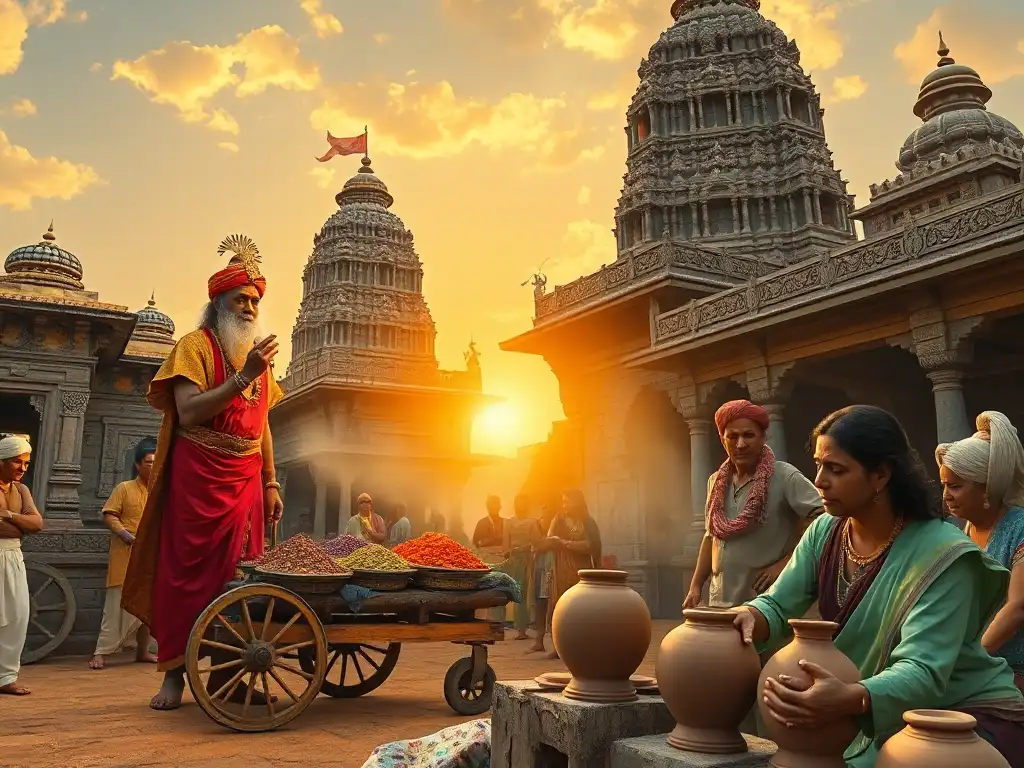
Welcome to Ancient India History, where we embark on a fascinating journey through the intricate tapestry of ancient Indian civilizations. Delve into the interplay of religion and caste in ancient Indian culture, a topic that reveals the profound impact these elements had on daily life and societal structures. As we unravel the complexities of belief systems and social stratification, prepare to discover how these aspects shaped the lives of millions and influenced the course of history. Ready to explore the depths of this rich heritage? Join us as we uncover the hidden narratives that continue to resonate today!
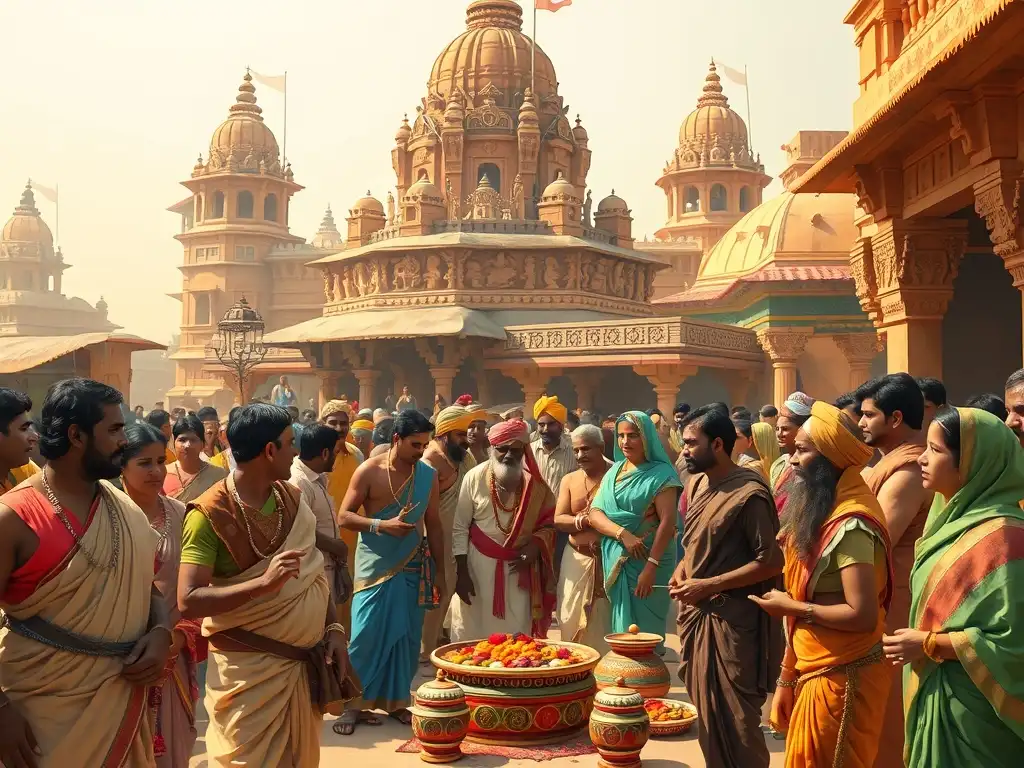
The intricate relationship between religion and caste is a defining feature of ancient Indian culture, shaping social dynamics and influencing daily life throughout the subcontinent's history. From the foundational texts of the Vedas to the philosophical musings of the Upanishads, the interplay of these two aspects has not only defined individual identities but has also constructed the societal framework within which ancient Indian civilizations operated.
Understanding how religion and caste intertwined offers valuable insights into the complexities of social organization, belief systems, and cultural practices that characterized ancient India. This article delves into these themes, providing a comprehensive exploration of the roles that religion and caste played in shaping the lives of individuals and communities, as well as their broader implications on ancient Indian society.
Understanding Religion and Caste in Ancient India
Definition of Religion in Ancient Indian Context
In ancient India, religion was not merely a system of beliefs or practices; it was a comprehensive worldview that encompassed various aspects of life, including morality, philosophy, and social order. The primary religions during this period included Hinduism, Buddhism, and Jainism, each contributing to a rich tapestry of spiritual thought. Key elements of religion in ancient India included:
- Rituals and Sacrifices: Religious practices often involved elaborate rituals, ceremonies, and sacrifices aimed at appeasing deities and ensuring cosmic harmony.
- Sacred Texts: Texts such as the Vedas, Upanishads, and later, the Puranas, served as foundational documents that guided spiritual and social conduct.
- Philosophical Inquiry: Schools of thought like Vedanta and Sankhya explored fundamental questions about existence, consciousness, and the nature of the divine.
These elements illustrate how religion was deeply ingrained in the fabric of daily life, influencing everything from governance to personal relationships.
Overview of the Caste System in Ancient India
The caste system, or varna system, was a hierarchical social structure that categorized individuals into distinct groups based on their occupation and social roles. Traditionally divided into four main varnas—Brahmins (priests and scholars), Kshatriyas (warriors and rulers), Vaishyas (traders and agriculturists), and Shudras (laborers and service providers)—this system determined not only employment opportunities but also social interactions and marriage prospects.
Key characteristics of the caste system included:
- Hereditary Occupations: Caste was largely determined by birth, with individuals typically inheriting the occupation of their parents.
- Social Mobility: Mobility between castes was generally restricted, although certain historical events and movements, such as the rise of Buddhism, challenged these norms.
- Religious Justification: The caste system was often justified through religious texts, which portrayed the varna system as divinely ordained.
Understanding the nuances of the caste system is essential to grasping its profound impact on social structure and individual identity in ancient India.
Historical Background of Religion and Caste
Evolution of Religious Practices in Ancient India
Religious practices in ancient India evolved significantly over time, influenced by various socio-political factors and interactions with neighboring cultures. The Indus Valley Civilization (c. 2500–1900 BCE) showcased early forms of spiritual expression, although much about their belief systems remains enigmatic due to the lack of decipherable texts. With the advent of the Vedic period (c. 1500–500 BCE), a more structured form of religion emerged, characterized by ritualistic worship, the recitation of hymns, and the establishment of priestly classes.
As Buddhism and Jainism arose around the 6th century BCE, they introduced new philosophical perspectives that often challenged orthodox practices, advocating for a more egalitarian approach to spirituality. This period marked a significant turning point in the religious landscape of ancient India, fostering a dialogue between established traditions and emerging beliefs.
The Origins and Development of Caste System
The origins of the caste system are complex and multifaceted, with scholars proposing various theories about its development. It is believed that the caste system may have initially stemmed from functional divisions of labor in early agrarian societies. Over time, these divisions became rigidified into a hierarchical structure, supported by religious ideologies.
Key historical developments include:
- Vedic Texts: The early Vedic texts outline the four varnas, cementing the ideological roots of the caste system within religious doctrine.
- Post-Vedic Developments: As society evolved, the caste system became more stratified, with numerous sub-castes (jatis) emerging, further complicating social interactions.
- Regional Variations: The application and interpretation of the caste system varied across different regions, leading to localized practices and beliefs.
This historical context is vital for understanding how the caste system became intertwined with religious practices, ultimately defining social relations in ancient India.
Major Religions Influencing the Caste System
The caste system in ancient India was significantly shaped by the major religions that flourished in the region. Each religion contributed to the understanding, justification, and evolution of caste, influencing societal structures and personal identities. The interplay of beliefs, rituals, and social norms within these religions created a complex framework in which caste found its footing, with Hinduism, Buddhism, and Jainism being the primary influencers.
Hinduism and Its Role in Caste Hierarchy
Hinduism, as the dominant religion in ancient India, played a pivotal role in establishing the caste system. Central to Hindu beliefs is the concept of varna, which categorizes society into four primary groups: Brahmins (priests and scholars), Kshatriyas (warriors and rulers), Vaishyas (traders and agriculturists), and Shudras (laborers and service providers). This categorization was not merely social but also imbued with spiritual significance, as each varna was believed to have distinct duties and responsibilities (known as dharma).
The Rigveda, one of the oldest sacred texts, discusses the origins of these varnas, attributing them to the cosmic sacrifice of the primordial being, Purusha. This divine sanctioning provided a religious justification for the social hierarchy, reinforcing the view that one’s caste was determined by birth and divinely ordained. Over centuries, this rigid structure evolved into the more complex caste system, wherein sub-castes (or jatis) emerged, leading to a myriad of social divisions.
Buddhism's Challenge to Caste Norms
Buddhism emerged as a reformist movement in the 6th century BCE, challenging the established norms of the caste system. Founded by Siddhartha Gautama, known as the Buddha, this religion emphasized the principles of sangha (community) and equality among its followers, irrespective of their caste backgrounds.
Buddhism rejected the hierarchical divisions of society, advocating that spiritual attainment was accessible to all individuals, regardless of their caste. The Buddha's teachings emphasized personal morality, meditation, and enlightenment (Nirvana), which transcended social distinctions. This radical departure from the caste-based social order attracted a diverse following, including many from lower castes who sought spiritual solace outside the constraints of Hindu orthodoxy.
Despite its initial challenge to the caste system, Buddhism faced significant decline in India by the 12th century, partially due to the resurgence of Hinduism, which adapted and incorporated some Buddhist ideas while maintaining the caste hierarchy.
Jainism's Influence on Caste and Ethics
Jainism, another ancient religion that emerged around the same time as Buddhism, also posed a significant challenge to the caste system, though in a different manner. Founded by Mahavira, Jainism emphasizes ahimsa (non-violence) and aparigraha (non-possessiveness), promoting a strict ethical code that transcended social divisions.
While Jainism did not completely reject the caste system, it encouraged the pursuit of spiritual purity over social status. Jains often belonged to the merchant class, yet they distinguished themselves through their commitment to ethical living and ascetic practices. The emphasis on individual merit and moral conduct created a framework where one’s actions could lead to spiritual advancement, irrespective of caste background.
The Jains contributed to the rich tapestry of Indian society, influencing trade, philosophy, and art, and their ethical teachings continue to resonate in contemporary discussions about caste and social justice.
The Interconnection Between Religion and Caste
The relationship between religion and caste in ancient India is intricate and multifaceted. Religions not only shaped the caste system but also drew on it to solidify their doctrines and community dynamics. The intertwining of religious beliefs with social stratification created a system that was both fluid and rigid, allowing for adaptation while maintaining traditional structures.
Religious Justifications for Caste Distinctions
Throughout ancient India, religious texts and doctrines often provided justifications for the caste system. Hindu scriptures such as the Manusmriti codified caste distinctions, asserting that adherence to one’s prescribed duties was crucial for societal harmony and spiritual progress. These texts reinforced the idea that social order was divinely sanctioned, making it difficult to challenge or abolish caste distinctions.
In contrast, religions like Buddhism and Jainism questioned these justifications, promoting a more egalitarian approach to spirituality and social organization. Despite their challenges, however, the underlying societal structures persisted, often leading to a complex interplay where religious beliefs and caste norms coexisted, sometimes in conflict.
Caste as a Social Organization in Religious Contexts
Caste functioned as a social organization within religious contexts, providing a framework for community identity and social interaction. In Hindu society, caste dictated various aspects of daily life, including marriage, food practices, and religious observances. The rituals and customs associated with each caste contributed to a collective identity, reinforcing social bonds within the group.
In religious gatherings, caste often influenced participation and roles, with higher castes typically assuming leadership positions. However, the influence of Buddhism and Jainism fostered a sense of community that transcended caste lines, emphasizing collective identity based on shared beliefs and values rather than social stratification.
This interplay of caste and religion shaped ancient Indian society, laying the groundwork for the complexities of social organization that would evolve over the centuries, impacting modern India’s social fabric.
Impact of Religion and Caste on Daily Life
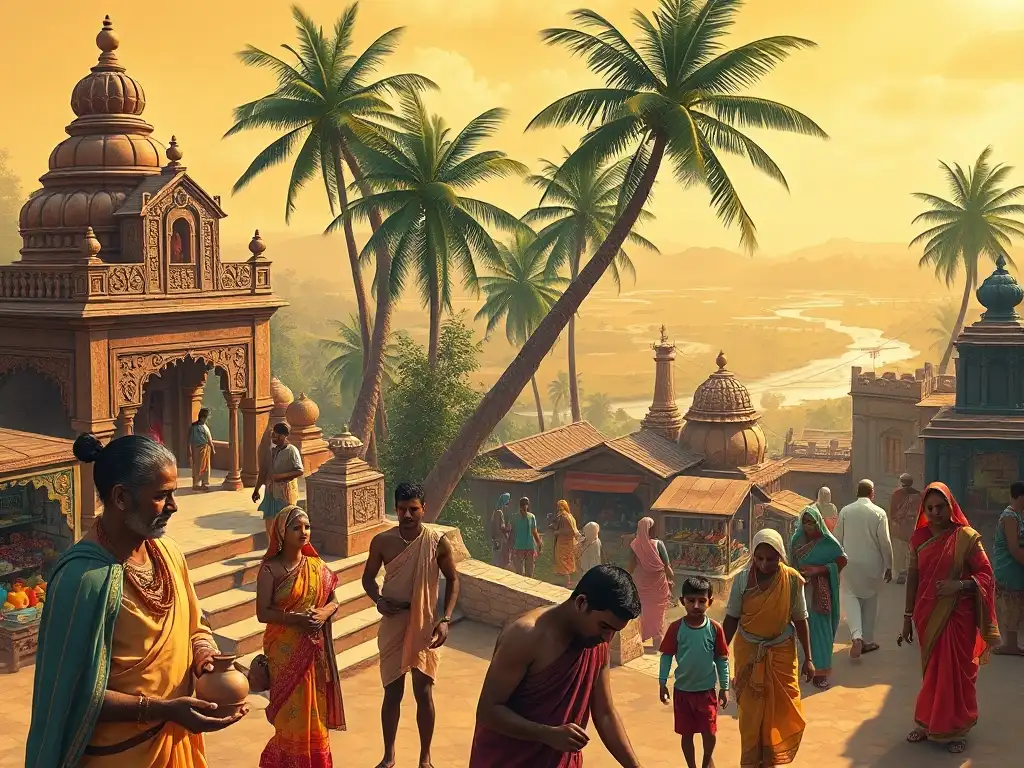
The interplay of religion and caste significantly influenced daily life in ancient India, shaping social interactions, occupational roles, and cultural practices. The caste system, known as "varna," categorized individuals into specific groups based on their birth, which directly affected their access to resources, education, and social privileges. Each caste had its own set of duties and responsibilities, often dictated by religious texts like the Vedas and Manusmriti.
Daily life was also deeply intertwined with religious practices. Rituals, festivals, and ceremonies were often caste-specific and reflected the underlying social hierarchy. For instance, higher castes were allowed to participate in elaborate rituals and temple worship, while lower castes faced restrictions, which reinforced their subordinate status. This stratification created a society where religious observance was both a source of identity and a means of social regulation, affecting everything from marriage and occupation to dietary restrictions and social gatherings.
Moreover, the norms established by religious beliefs often dictated interpersonal relationships and community interactions. Individuals were expected to adhere to strict codes of conduct based on their caste, which shaped their behavior in both public and private spheres. Religious festivals could either reinforce caste divisions or provide a platform for social interaction, depending on local customs and the prevailing attitudes towards caste at the time.
Caste Regulations in Religious Rituals and Practices
Caste regulations played a crucial role in religious rituals and practices throughout ancient India. These regulations were often dictated by ancient texts and traditions, which prescribed specific rituals for different castes. For instance, the Brahmins, as the priestly class, were exclusively responsible for conducting religious sacrifices and rituals, and their knowledge of sacred texts positioned them at the top of the caste hierarchy.
In contrast, the lower castes, such as the Shudras, were often excluded from participating in major religious ceremonies. This exclusion not only limited their spiritual engagement but also reinforced the social barriers that defined caste interactions. The restrictions placed on certain castes included prohibitions against entering temples, performing specific rituals, or even touching sacred objects.
These caste-based regulations shaped the religious landscape of ancient India, creating a system where spiritual authority and social status were closely linked. Certain rituals, like the Upanayana (sacred thread ceremony), were reserved for the higher castes, symbolizing their initiation into religious life and their privileged position within society. Such practices codified the connection between caste and religion, embedding these distinctions deeply into the cultural fabric of ancient Indian civilization.
The Role of Religion in Caste Mobility and Social Status
While the caste system was largely rigid, religion offered pathways for some degree of mobility and change in social status. Certain religious movements and philosophies, such as Buddhism and Jainism, emerged as reactions to the strictures of the caste system. These religions advocated for spiritual equality and often attracted followers from lower castes who sought to escape oppressive social hierarchies.
Moreover, the concept of karma and the belief in rebirth provided a framework for understanding one's current social status. Individuals believed that their actions in previous lives determined their caste in the current life, creating a sense of fatalism. However, these beliefs also inspired some to aspire for better karma through pious living, which in some cases allowed for upward mobility within the caste system.
Religious reform movements, particularly during the medieval period, also played a significant role in challenging caste norms. Saints and reformers like Kabir and Ravidas emphasized the importance of devotion over caste identity, thereby promoting the idea that spiritual merit could transcend social standings. Such movements began to blur the rigid boundaries of caste, although complete mobility remained elusive for many.
Case Studies of Religion and Caste Interplay
Regional Variations in Religion and Caste
The interplay between religion and caste exhibited significant regional variations across ancient India. In some areas, local customs and traditions influenced how caste interacted with religious practices. For instance, in South India, the temple system was central to community life and often allowed for a more fluid interaction between castes during festivals and communal worship.
Conversely, in the Northern regions, the caste system was more rigidly defined, with strict adherence to caste regulations in religious practices. In some instances, local deities and folk religions emerged, challenging the dominance of the Vedic traditions and allowing lower castes to participate in religious activities that were previously restricted.
These regional differences highlight the adaptability of the caste system in response to local cultural influences and religious practices. They also demonstrate how the dynamics of religion and caste could vary significantly based on geographical and cultural contexts, leading to unique social structures in different parts of ancient India.
Historical Figures and Their Influence on Religion and Caste Dynamics
Throughout ancient Indian history, several influential figures shaped the dynamics of religion and caste. For example, Siddhartha Gautama, known as the Buddha, challenged the existing caste system and promoted ideas of equality and compassion. His teachings attracted a diverse following, including individuals from the lower castes, which marked a significant shift in the religious landscape of ancient India.
Similarly, social reformers like Mahavira, the founder of Jainism, emphasized non-violence and truth, advocating for a life that transcended caste distinctions. The spread of these philosophies prompted a reevaluation of caste roles and provided alternative paths for spiritual fulfillment beyond the traditional Vedic rituals associated with the higher castes.
In addition, rulers and patrons often played a role in influencing the interplay between religion and caste. Kings who supported particular religious sects could elevate the status of certain castes, while simultaneously reinforcing the hierarchy by designating roles for different groups in society. Such figures not only shaped religious practices but also affected the socio-political landscape, intertwining caste dynamics with governance and authority.
These historical figures and movements illustrate the complex and evolving relationship between religion and caste in ancient India, highlighting the ongoing negotiations of power, identity, and belief within society.
Conclusion: The Legacy of Religion and Caste in Ancient Indian Culture
The interplay of religion and caste in ancient India has forged a complex social fabric that continues to influence contemporary society. Understanding the historical nuances of this relationship provides insight into the evolution of social structures and cultural norms in India. This legacy is characterized by a system that was not only a means of organizing society but also a reflection of the spiritual, philosophical, and cultural ideologies of the time.
Summary of Key Interrelations
The relationship between religion and caste in ancient India is multifaceted. The origins of the caste system can be traced back to the Vedic texts, which categorize society into four main varnas: Brahmins (priests), Kshatriyas (warriors), Vaishyas (traders), and Shudras (laborers). This stratification was deeply intertwined with religious duties and social obligations, where each caste had specific roles and responsibilities linked to religious practices.
- Religious Endorsement: The caste system was often justified through religious texts, giving it a divine sanction which made it difficult to challenge or change. The belief in karma and dharma reinforced the notion that one's caste was a result of past actions, influencing societal attitudes toward mobility across caste lines.
- Rituals and Practices: Caste dictated participation in various religious rituals, affecting everything from temple access to the performance of sacred rites. The higher castes often held religious authority, which further entrenched social hierarchies.
- Social Identity: Religion and caste together shaped personal identity and community belonging. People found a sense of security and community within their caste groups, often leading to a strong adherence to the customs and practices that defined their social standing.
Lasting Impacts on Modern Indian Society
The legacy of religion and caste extends beyond ancient history into the fabric of modern Indian society. While contemporary India has seen movements aimed at reducing caste-based discrimination, the historical foundations of the caste system continue to influence social interactions, politics, and economic opportunities.
- Social Stratification: Despite legal measures to combat caste discrimination, social stratification remains prevalent. Many communities still identify strongly with their caste, affecting marriage, community interactions, and even political affiliations.
- Political Dynamics: Caste identity plays a significant role in Indian politics, with political parties often mobilizing voter bases along caste lines. This has led to the reservation system, where certain castes are provided with affirmative action in education and employment to address historical injustices.
- Cultural Practices: Many cultural practices, festivals, and rituals retain their caste-based origin, influencing how communities celebrate their heritage. This continuity of tradition perpetuates the relevance of caste in daily life.
The interplay of religion and caste in ancient India has left a profound impact on the social landscape of modern India. Understanding this complex relationship is essential for comprehending the challenges and dynamics of contemporary Indian society.
- Understanding Religion and Caste in Ancient India
- Historical Background of Religion and Caste
- Major Religions Influencing the Caste System
- The Interconnection Between Religion and Caste
- Impact of Religion and Caste on Daily Life
- Case Studies of Religion and Caste Interplay
- Conclusion: The Legacy of Religion and Caste in Ancient Indian Culture
- What role did religion play in ancient Indian society?
- How did the caste system develop in ancient India?
- What were the major religions practiced in ancient India?
- How did caste affect individuals' lives in ancient India?
- What contributions did ancient Indian civilizations make to religious thought?
Frequently Asked Questions
What role did religion play in ancient Indian society?
Religion was a central aspect of daily life, influencing various cultural practices, social norms, and government policies. Major religions like Hinduism, Buddhism, and Jainism shaped the moral and ethical framework of ancient India.
How did the caste system develop in ancient India?
The caste system evolved from social and economic divisions within society, with roots in ancient texts like the Vedas. It became more rigid over time, influencing people's occupations and social interactions.
What were the major religions practiced in ancient India?
The major religions included Hinduism, Buddhism, and Jainism, each contributing to the rich tapestry of spiritual beliefs and practices. These religions often coexisted, influencing each other and the broader culture.
How did caste affect individuals' lives in ancient India?
Caste determined an individual's social status, occupation, and even marriage prospects. It created a structured society but also led to discrimination and social stratification.
What contributions did ancient Indian civilizations make to religious thought?
Ancient Indian civilizations contributed significantly to philosophy, spirituality, and ethics through texts like the Upanishads and the Bhagavad Gita. These works laid the foundation for many contemporary religious beliefs and practices.
Final Reflection: The Enduring Legacy of Religion and Caste in Ancient India
The interplay of religion and caste in ancient India remains a crucial lens through which we can understand contemporary societal structures. As we delve into the complexities of this relationship, it becomes evident that the foundations laid in ancient times continue to shape modern social dynamics. The intricate tapestry of beliefs and hierarchies established centuries ago still resonates today, influencing everything from personal identities to community interactions.
Culture is a living entity, constantly evolving yet deeply rooted in its past. The historical context of religion and caste has not only informed social stratification but has also sparked ongoing dialogues about equality and justice in contemporary society. As we reflect on these themes, we are reminded of the words of Mahatma Gandhi: The true measure of any society can be found in how it treats its most vulnerable members.
This quote encapsulates the enduring influence of ancient systems on modern values and the urgent need to address the disparities that persist.
As we conclude this exploration, I invite you to reflect on your own beliefs and actions in relation to the themes of religion and caste. Consider how the lessons from ancient India can inspire you to foster inclusivity and understanding in your own community. Each of us has the power to challenge inherited biases and contribute to a more equitable society. Let us carry forward the wisdom of the past, not as a burden, but as a beacon guiding us toward a future where diversity is celebrated and every individual is valued.
Unveil the Rich Tapestry of Ancient Indian Culture Today!
Thank you for exploring the fascinating interplay of religion and caste in ancient Indian culture! Your interest unlocks a wealth of knowledge that beautifully illustrates the complexities of this era. Now, let’s take that curiosity further and dive deeper into this captivating subject.
Here are some actionable steps you can take to enhance your understanding and engagement:
- Join our vibrant community online: Connect with fellow history enthusiasts by sharing your thoughts and insights in the comments below or on our social media platforms.
- Explore further: Read our in-depth articles covering specific religions and their influences on ancient Indian society—each piece will enrich your perspective!
- Reflect on your own heritage: Consider how the themes of caste and religion might relate to your own background. This reflection can offer unique insights and foster deeper personal connections to history.
What aspect of ancient Indian culture are you most curious to explore further, and how do you believe it shapes our understanding of modern society?