
The Mughals and Their Military Innovations: A Blend of Cultures

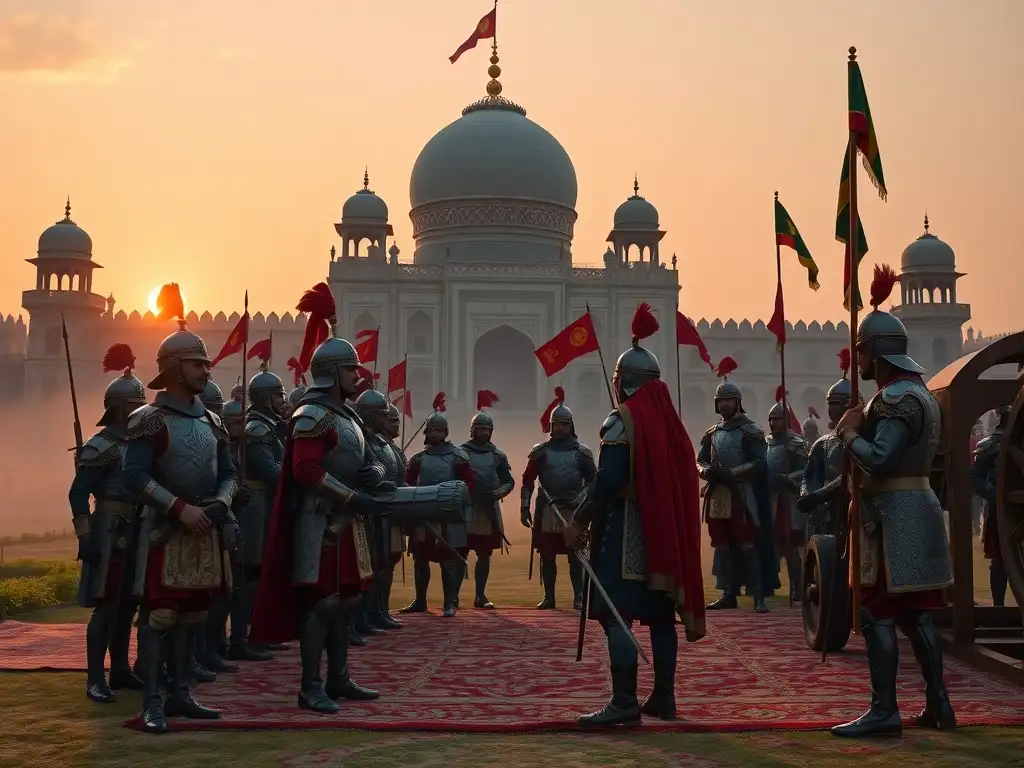
Welcome to Ancient India History, where we invite you to embark on a captivating journey through the rich tapestry of India’s past. In this exploration, we delve into the intriguing Mughal military innovations history that not only revolutionized warfare but also showcased a remarkable blend of diverse cultures. From the strategic brilliance of the Mughal Empire to the profound impacts of their military advancements, this article promises to illuminate the complexities and innovations that shaped ancient India.
Are you ready to uncover the secrets of a bygone era? Continue reading to discover how these innovations influenced the course of history!
The Mughal Empire, which flourished from the early 16th to the 19th century, stands as a remarkable testament to the fusion of diverse cultural influences in India. Renowned for its opulent architecture, rich art, and profound literature, the Mughals also made significant strides in military innovations that would reshape warfare in the region.
This article delves into the Mughal military innovations history, highlighting how these advancements not only enhanced their military prowess but also reflected the empire's unique blend of indigenous and foreign influences. By exploring the evolution of weaponry, tactics, and technologies employed by the Mughals, we will uncover the intricate ways in which their military strategies contributed to the empire's expansion and longevity.
Introduction to Mughal Military Innovations History
The history of Mughal military innovations is a fascinating narrative that intertwines technological advancements with the socio-political landscapes of the time. The Mughals, primarily of Turko-Mongol descent, brought with them a rich heritage of military knowledge, which they adeptly combined with local Indian practices. This synthesis led to the development of a sophisticated military system characterized by:
- Advanced weaponry: The Mughals were pioneers in the use of artillery, including cannons and matchlocks, which played a critical role in their conquests.
- Tactical formations: The introduction of organized infantry, cavalry, and artillery units allowed for more effective battlefield strategies.
- Fortification techniques: The construction of robust forts and defensive structures reflected the Mughals' understanding of military architecture.
By integrating various military practices and technologies, the Mughals not only enhanced their combat effectiveness but also laid the groundwork for future military developments in India.
The Significance of Military Innovations in Mughal Empire
The military innovations of the Mughal Empire were pivotal in establishing and maintaining its dominance over the Indian subcontinent. These innovations had far-reaching implications, including:
- Expansion of Territory:
- The use of artillery allowed the Mughals to breach formidable fortifications, facilitating the conquest of key territories.
- Strategic alliances with local rulers often leveraged their superior military technology.
- Centralized Control:
- The structured military hierarchy enabled effective governance and control over vast regions.
- The Mughals could quickly mobilize forces to suppress rebellions and maintain order.
- Cultural Synthesis:
- Military innovations fostered interactions between diverse cultures and communities.
- Techniques and tactics were exchanged with local chieftains and foreign emissaries, enriching the Mughal military tradition.
In essence, the military innovations of the Mughal Empire were not merely tools of warfare; they represented a confluence of cultures and ideas that shaped the historical landscape of India. Understanding this blend of military prowess and cultural integration provides valuable insights into the legacy of the Mughals, making their history a compelling area of study for enthusiasts and scholars alike.
- Introduction to Mughal Military Innovations History
- The Significance of Military Innovations in Mughal Empire
- What were the key military innovations introduced by the Mughals?
- How did the Mughal military innovations influence warfare in ancient India?
- What role did cultural blending play in Mughal military strategies?
- How did the Mughal Empire manage its military resources?
- Can you provide an example of a significant battle where Mughal military innovations were showcased?
Historical Context of the Mughal Empire
Overview of the Mughal Empire (1526-1857)
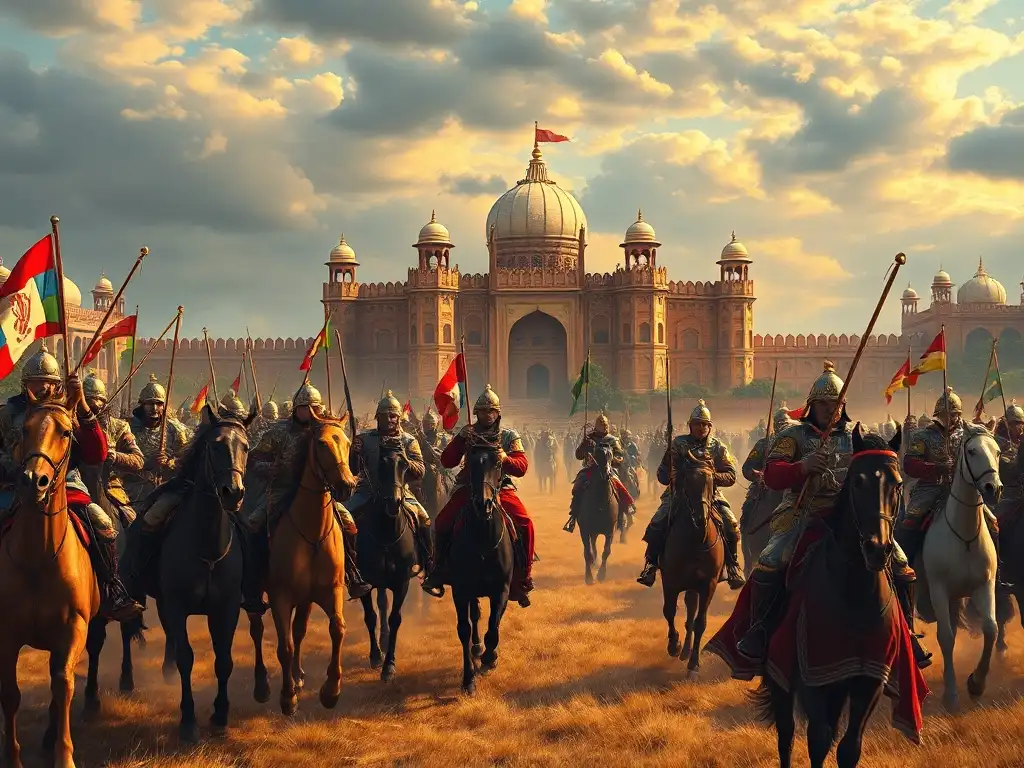
The Mughal Empire, founded in 1526 by Babur, marked a significant chapter in India's history, characterized by remarkable military innovations and cultural advancements. Spanning over three centuries, the empire thrived through its conquests, governance, and rich cultural tapestry. At its zenith, the Mughal Empire encompassed most of the Indian subcontinent, showcasing a blend of various traditions and influences.
- Key Figures:
- Babur (1526-1530): Established the empire after defeating Ibrahim Lodi at the First Battle of Panipat.
- Akbar (1556-1605): Known for consolidating Mughal power and promoting a policy of religious tolerance.
- Shah Jahan (1628-1658): Famous for architectural achievements, including the Taj Mahal, while also maintaining military strength.
- Aurangzeb (1658-1707): Expanded the empire to its greatest territorial extent but faced challenges that led to its decline.
The Mughal military system was notable for its organization and strategic innovations. The use of heavy cavalry, artillery, and advanced fortifications enabled the Mughals to dominate their adversaries. The Mughal military innovations history reflects a combination of traditional Indian warfare techniques and the advanced military practices adopted from Persian and Central Asian influences.
Cultural Fusion: The Blend of Indian and Persian Traditions
The Mughal Empire is often celebrated for its profound cultural fusion, a result of the synthesis between Indian and Persian traditions. This amalgamation influenced various aspects of life, from language and art to military practices.
Key Aspects of Cultural Fusion:
- Language and Literature:
- The emergence of Urdu, a language that combined elements of Persian, Arabic, and local dialects, exemplifies this cultural exchange.
- Mughal court literature flourished with poets like Mirza Ghalib and Siraj-ud-Din Ali Khan Arzu, who blended Persian poetic forms with Indian themes.
- Art and Architecture:
- Mughal architecture, characterized by grand structures such as the Red Fort and the Taj Mahal, showcases intricate designs that merge Persian aesthetics with Indian motifs.
- Miniature paintings flourished under Mughal patronage, often depicting scenes of court life, battles, and nature, reflecting both Persian influence and Indian themes.
- Military Tactics:
- The introduction of gunpowder technology and artillery in the Mughal army was heavily influenced by Persian military practices.
- Mughals effectively utilized war elephants and cavalry, adapted from Indian traditions, enhancing their battlefield tactics.
- Religion and Philosophy:
- Akbar's Din-i Ilahi was an attempt to create a syncretic religion that incorporated elements from Hinduism, Islam, and other faiths, promoting cultural harmony and reducing sectarian conflict.
- The Sufism of the time further bridged the gap between Indian and Persian cultural practices, emphasizing spiritual unity and communal peace.
The blend of Indian and Persian traditions during the Mughal era not only shaped the empire's military innovations but also left an indelible mark on India's cultural heritage. This rich tapestry of influences continues to resonate in modern Indian society, showcasing the enduring legacy of the Mughal Empire.
Key Mughal Military Innovations
Introduction of Gunpowder and Firearms
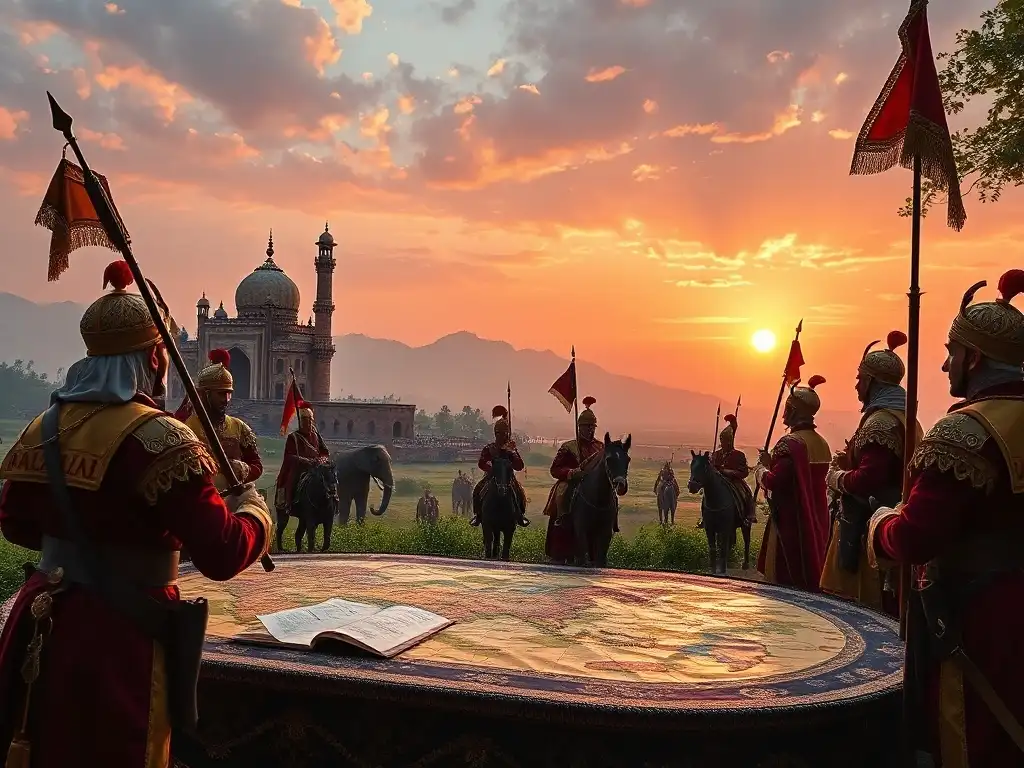
The Mughal Empire, which thrived from the early 16th century to the 19th century, was instrumental in the introduction and evolution of gunpowder and firearms in India. This era marked a significant shift in the military landscape, as traditional warfare techniques began to blend with new technologies, leading to innovative combat strategies. The integration of gunpowder into warfare not only enhanced the effectiveness of the Mughal army but also transformed the nature of conflicts throughout the subcontinent.
Mughal rulers such as Babur, the founder of the dynasty, recognized the potential of gunpowder weapons during their initial conquests. The use of cannons, matchlocks, and muskets became pivotal in their military campaigns, allowing them to secure victories against rival kingdoms. The Mughals adeptly combined these advanced weaponry with traditional Indian military tactics, creating a unique blend that marked their military innovations history.
Development and Use of Cannons
Cannons emerged as one of the most formidable innovations in Mughal military technology. The Mughals developed large, powerful cannons known as "zeers" and "culverins." These artillery pieces were crucial in siege warfare, allowing Mughal armies to breach the walls of heavily fortified cities.
- The famous Darya-i-Noor, a massive cannon, was cast in the early 17th century and exemplified the Mughal's commitment to artillery.
- By employing skilled artisans from various regions, the Mughals enhanced the quality and effectiveness of their cannons, achieving impressive range and firepower.
The strategic placement of cannons in battle formations allowed Mughal forces to dominate open fields and defend their territories effectively. Notably, in the Battle of Panipat (1526), Babur's use of cannons played a decisive role in his victory against Ibrahim Lodi, showcasing the effectiveness of artillery in establishing Mughal supremacy.
The Role of Matchlocks and Muskets
In addition to cannons, matchlocks and muskets became integral components of the Mughal military arsenal. These firearms were easier to maneuver than cannons, providing infantry units with a significant advantage on the battlefield.
- The "matchlock musket," known as "tufang," allowed soldiers to fire at enemies from a distance, enhancing their combat effectiveness.
- The Mughals effectively trained their soldiers in the use of these firearms, ensuring a rapid and efficient deployment during engagements.
The combination of matchlocks and muskets with traditional archery created a diverse range of tactics, enabling Mughal forces to adapt to various combat scenarios. This innovation not only improved the firepower of the Mughal army but also instilled a sense of discipline and coordination among troops, contributing to their military successes.
Advancements in Cavalry Tactics
Mughal military innovations extended beyond firearms to include advancements in cavalry tactics, which were crucial to their battlefield success. The Mughal cavalry was known for its speed, maneuverability, and ability to execute complex formations.
The Integration of War Elephants
One of the most distinctive features of Mughal warfare was the utilization of war elephants. These majestic animals were not only symbols of power but also served practical purposes in battle.
- War elephants were armored and trained to charge into enemy lines, causing chaos and disruption among opposing forces.
- The Mughals integrated elephants into their cavalry units, using them to carry soldiers and artillery, enhancing mobility on the battlefield.
The psychological impact of elephants in combat was significant, as their sheer size and presence often intimidated opponents. The Mughals' strategic deployment of war elephants exemplified their innovative approach to warfare, blending traditional Indian practices with advanced military tactics.
Use of Mobility and Speed in Warfare
Mughal cavalry was characterized by its exceptional mobility and speed, which played a crucial role in their military operations. The ability to rapidly maneuver across diverse terrains allowed Mughal forces to engage or retreat effectively, adapting to changing battlefield dynamics.
- The use of light cavalry units, equipped with firearms and traditional weapons, enabled swift attacks and quick withdrawals, making it challenging for enemies to predict their movements.
- Notably, the tactic of "hit-and-run" became a hallmark of Mughal warfare, allowing them to exploit weaknesses in enemy formations.
The emphasis on mobility and speed, coupled with the technological advancements in firearms, positioned the Mughal Empire as a formidable military power in the region. This blend of cultures and innovations in military strategy not only defined the Mughal military innovations history but also left a lasting legacy on the subcontinent's warfare practices.
Fortification Techniques and Architecture
Mughal military innovations are not only evident in their weaponry but also prominently featured in their fortification techniques and architectural designs. The Mughal Empire, spanning from the early 16th to the 19th century, showcased a remarkable blend of Persian, Indian, and Islamic architectural styles. The fortifications were critical in enhancing the defense mechanisms of their military campaigns and served as vital strongholds in various regions.
Mughal forts were strategically located to monitor and control key trade routes and territories. Their design encompassed high walls, bastions, and intricate gateways, combining aesthetics with functionality. The use of red sandstone and marble in construction not only provided durability but also symbolized the grandeur of the empire. The architectural prowess of the Mughals facilitated the creation of expansive fort complexes, which included residential quarters for soldiers, administrative offices, and storage facilities for weapons and supplies.
Design of Mughal Forts

The design of Mughal forts reflects a sophisticated understanding of military architecture, where beauty and practicality coalesce. Key features of these forts include:
- High Walls and Bastions: The walls were often several meters thick, designed to withstand cannon fire. Bastions provided vantage points for archers and artillery, allowing for effective defense against attackers.
- Moats: Many forts were surrounded by wide moats filled with water, serving as an additional barrier to prevent enemy advances. This feature was particularly evident in the fortifications of Agra and Delhi.
- Gates and Entrances: The gates were ingeniously designed to limit access and enhance security. They often included multiple turns and narrow passages, making it challenging for intruders to enter.
- Palaces and Gardens: Inside the forts, luxurious palaces and gardens were constructed, showcasing the Mughal emphasis on aesthetics. These spaces not only provided a sense of comfort for the rulers but also served as a demonstration of power and wealth.
A prime example of Mughal fort architecture is the Red Fort in Delhi, which combines impressive walls with intricate carvings and sprawling gardens, epitomizing the empire's architectural legacy.
Innovations in Defensive Strategies
Mughal military innovations extended beyond physical structures to encompass advanced defensive strategies that were crucial during warfare. The Mughals employed several tactics to enhance their defensive capabilities, including:
- Use of Artillery: The integration of cannons and gunpowder weapons transformed traditional warfare. The Mughals were pioneers in incorporating heavy artillery in their defenses, which allowed them to repel enemy assaults effectively.
- Intelligence and Surveillance: The Mughals utilized a network of spies and scouts to gather intelligence about enemy movements. This information was critical for planning defensive strategies and anticipating attacks.
- Flexible Military Formations: The Mughals adapted their formations based on the terrain and enemy tactics. This flexibility allowed them to maximize their defensive strengths while minimizing vulnerabilities.
- Cooperation with Local Rulers: In many instances, the Mughals formed alliances with local chieftains, integrating their forces and resources to bolster defenses. This collaboration often resulted in a more robust military presence in contested regions.
By employing these innovative defensive strategies, the Mughal Empire not only secured its territories but also demonstrated a sophisticated understanding of military dynamics, which contributed to its longevity and dominance in the subcontinent.
Influences on Military Innovations
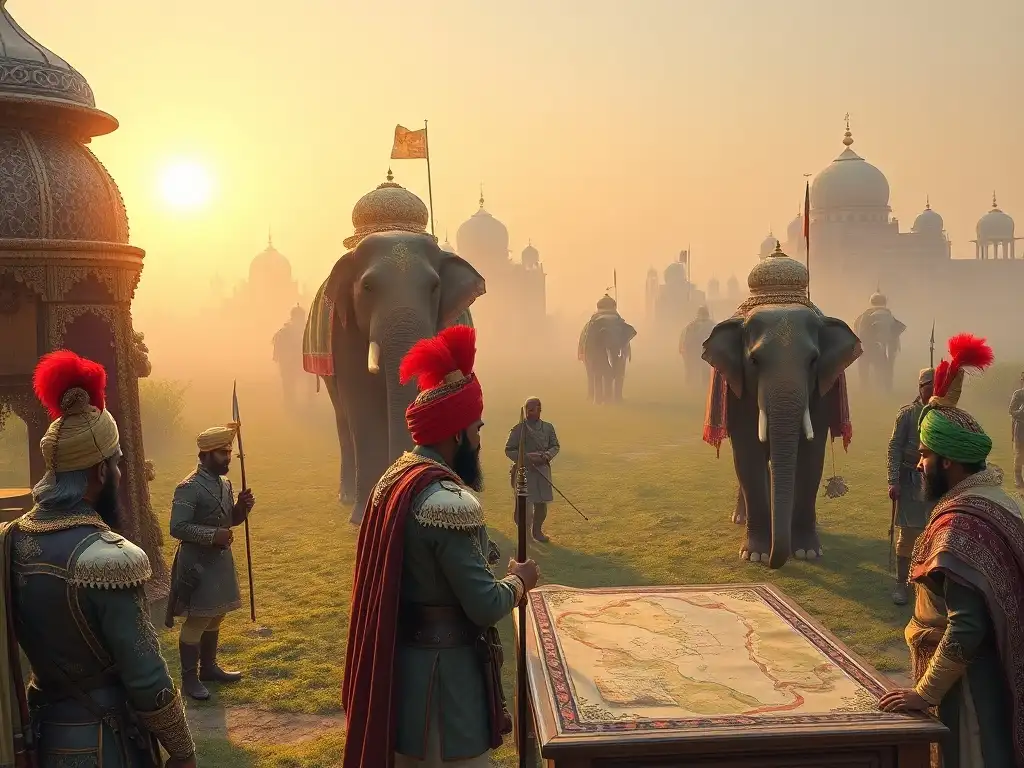
The Mughal Empire, which reigned from the early 16th to the 19th century, was distinguished by its remarkable military innovations that were significantly influenced by various cultures and practices. This blending of influences not only shaped the Mughal military strategies but also left a lasting impact on the subcontinent's military history. The Mughals adeptly integrated elements from Persian warfare, as well as local technologies and strategies, to enhance their military capabilities.
Persian Influence on Mughal Warfare
The Persian influence on Mughal military innovations is profound and multifaceted. With the rise of the Mughal Empire, particularly under Babur, the founder of the dynasty, Persian practices were assimilated into the military framework.
-
Artillery Advancements:
The Mughals adopted advanced artillery techniques from Persian warfare. The use of large cannons like the Zamzama became a hallmark of Mughal military strategy. These cannons were not only devastating on the battlefield but also a symbol of power and technological prowess.
-
Cavalry Tactics:
The Persian cavalry model, famed for its speed and maneuverability, was embraced by the Mughals. Horse archers and heavily armored cavalry units were integral to their military formations, enabling rapid strikes against enemies.
-
Military Hierarchy and Organization:
The Mughal military structure mirrored that of the Persian model, emphasizing a centralized command with a clearly defined hierarchy. This organization allowed for efficient communication and control during warfare.
Indigenous Contributions to Military Technology
While Persian influences were crucial, indigenous contributions also played a vital role in shaping Mughal military innovations.
The Role of Local Artisans and Craftsmen
Local artisans and craftsmen in India were instrumental in developing military technologies that catered to the unique needs of the Mughal army.
-
Weaponry Manufacturing:
Skilled blacksmiths produced high-quality weapons, including swords, daggers, and bows. The famous Dhal shields, often made from layers of metal and leather, provided excellent protection while maintaining mobility.
-
Siege Technologies:
Indian craftsmen innovated in siege tactics, creating specialized equipment such as battering rams and siege towers. These technologies were crucial during protracted conflicts and played a significant role in Mughal expansions.
Adoption of Regional Warfare Strategies
The Mughals were astute in adopting regional warfare strategies that suited the diverse terrains of the Indian subcontinent.
-
Guerilla Warfare Techniques:
In regions like the Deccan, the Mughals incorporated guerilla tactics, learning from local resistance movements. Such techniques allowed them to engage effectively with enemies who utilized knowledge of the terrain to their advantage.
-
Naval Innovations:
The Mughals also invested in naval capabilities, especially in coastal regions. They adopted shipbuilding techniques from local traditions, enhancing their ability to control trade routes and conduct amphibious operations.
The Mughal military innovations were a remarkable synthesis of Persian influences and indigenous contributions. This hybrid approach not only defined their military prowess but also contributed to the rich tapestry of military history in ancient India.
Case Studies of Notable Battles
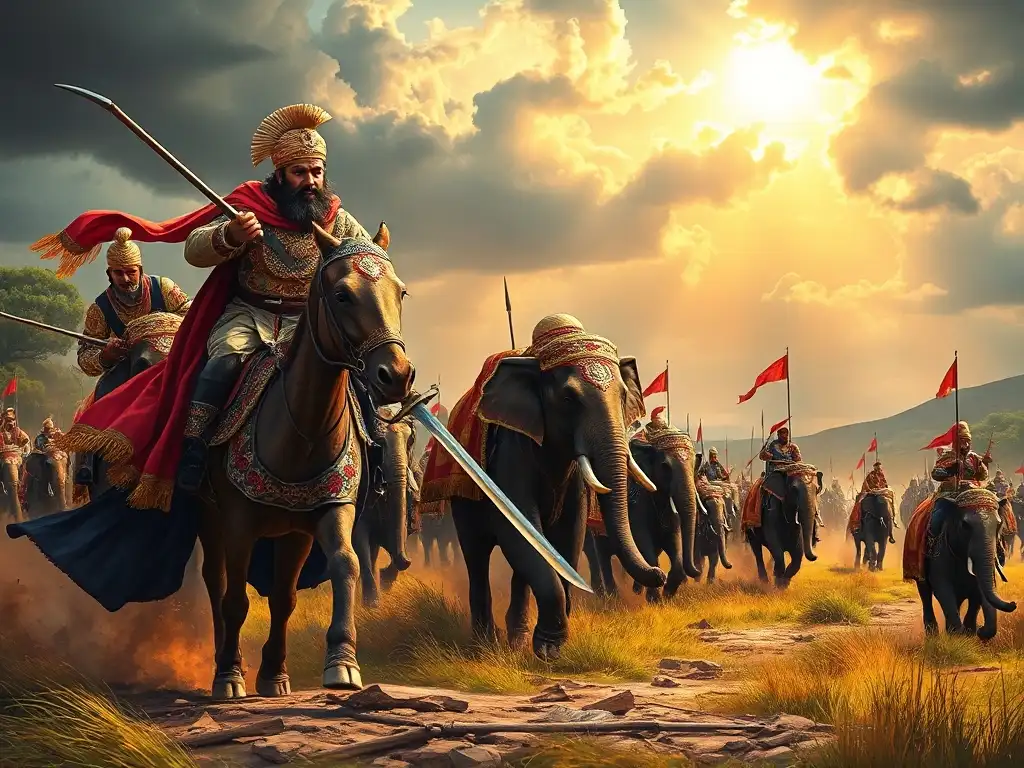
The Mughal Empire is renowned for its military innovations that not only transformed warfare in India but also reflected a blend of various cultural influences. By examining key battles, we gain insight into the specific military strategies and innovations that defined Mughal military history.
The Battle of Panipat (1526)
The Battle of Panipat marked the beginning of the Mughal Empire in India. Fought on April 20, 1526, between the forces of Babur and Ibrahim Lodi, this battle is a significant event in Mughal military innovations history.
Military Strategies and Innovations Used
The victory at Panipat was largely attributed to Babur's adoption of advanced military tactics and weaponry. Key innovations included:
- Artillery Usage: Babur effectively utilized cannons, which were a relatively new technology in Indian warfare. The deployment of large artillery pieces, known as zamburaks, allowed him to inflict significant damage on Lodi's forces from a distance.
- Tactical Mobility: Babur employed a strategy known as the "Tulughma", which involved dividing his army into three distinct groups to encircle and confuse the enemy. This maneuverability was crucial in counteracting the larger forces of Ibrahim Lodi.
- Cavalry Charges: The Mughal cavalry, consisting of heavily armored horsemen, executed coordinated charges that broke the enemy lines. The use of composite bows and lances by skilled horsemen was instrumental in maintaining pressure on Lodi's troops.
- Psychological Warfare: Babur also understood the importance of morale. He made use of war cries and banners, which inspired his troops while demoralizing the enemy.
The tactics used in the Battle of Panipat set a precedent for future Mughal military campaigns, showcasing the effectiveness of integrating technology with traditional strategies.
The Siege of Chittorgarh (1567-68)
The Siege of Chittorgarh represents another pivotal moment in Mughal military history, highlighting the evolution of siege warfare under Akbar's reign. The siege lasted from 1567 to 1568 and was a critical confrontation against the Rajput kingdom.
Tactical Innovations in Siege Warfare
Akbar's approach to the siege involved several tactical innovations that reflected the growing sophistication of Mughal military strategies:
- Extended Siege Tactics: Unlike earlier sieges that relied on quick assaults, the Mughal forces employed a strategy of prolonged engagement. This method aimed to exhaust the defenders and cut off supplies, ultimately leading to surrender.
- Use of Heavy Artillery: Akbar's army brought in massive siege cannons, which were positioned strategically to breach the fort's walls. The development of new artillery pieces like the "Dhal" cannon was crucial in creating breaches in the fortifications.
- Engineering Innovations: The Mughal engineers constructed elaborate siege works, including trenches and platforms, to protect their troops while they advanced. This engineering prowess allowed for a systematic approach to dismantling the Rajput defenses.
- Psychological Operations: The Mughals initiated psychological warfare by spreading rumors and propaganda to demoralize the defenders. This was coupled with attempts to persuade some Rajput factions to defect.
The Siege of Chittorgarh exemplified the Mughal Empire's ability to adapt and innovate in military tactics, effectively blending traditional siege methods with new technologies and strategies to achieve their objectives.
Through these case studies, it becomes clear that Mughal military innovations were not just a matter of adopting new technologies; they were also about understanding the dynamics of warfare and leveraging cultural insights from various Indian and foreign influences. The legacy of these battles continues to shape the understanding of military history in India.
Legacy of Mughal Military Innovations
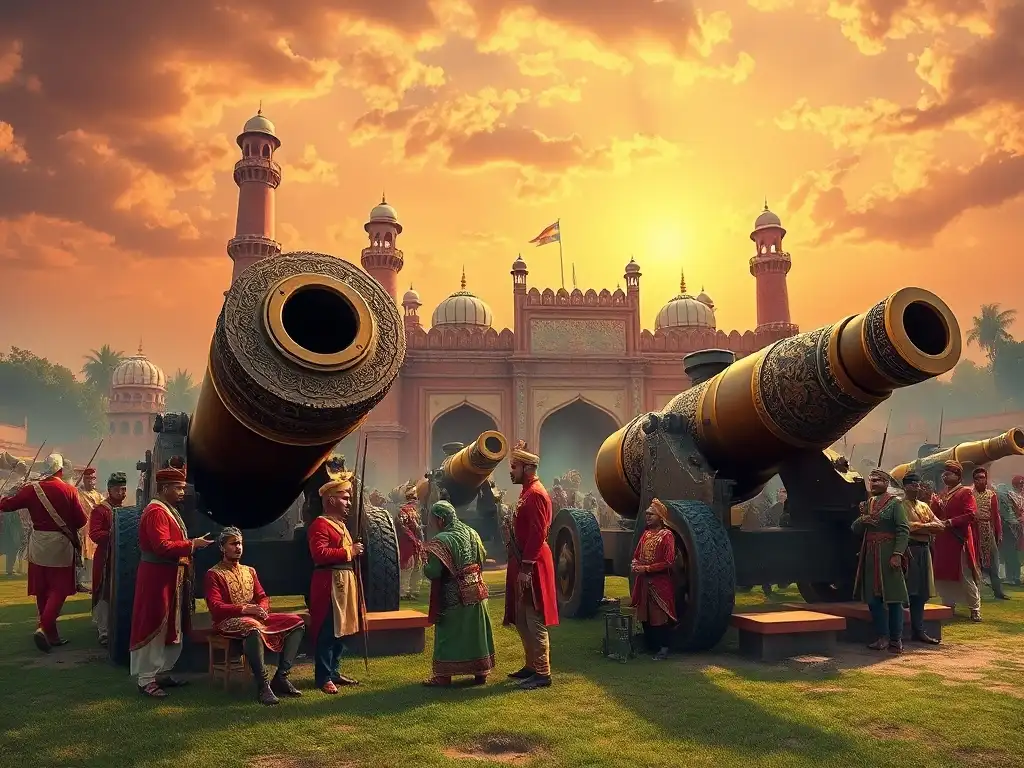
The Mughal Empire, which reigned from the early 16th to the late 17th century, left an indelible mark on the military landscape of India. Their military innovations were not just technological advancements; they represented a synthesis of diverse cultural influences and practices, significantly impacting the nature of warfare in the region. The Mughals effectively combined traditional Indian warfare techniques with advanced military technologies from their Persian and Central Asian roots, creating a unique military framework that would shape the future of Indian warfare.
Among the hallmark innovations of the Mughal military was the incorporation of heavy artillery, which played a crucial role in sieges and battlefield engagements. The Mughals were among the first in India to effectively utilize cannons, introducing large-scale gunpowder artillery that was pivotal in their conquests. This heavy artillery not only influenced Mughal strategies but also altered the dynamics of warfare across the subcontinent.
Moreover, the Mughals emphasized the importance of well-structured military organization. They developed a system of military ranks and promoted the concept of a professional army, which was a departure from the feudal levies that characterized pre-Mughal warfare. The introduction of the mansabdari system, where officers were granted ranks (mansabs) based on their military capabilities and loyalty, ensured a reliable and effective military force. This organizational structure would influence military practices in subsequent Indian states.
Impact on Future Indian Warfare
The legacy of Mughal military innovations can be seen in the evolution of warfare in India long after the decline of the Mughal Empire. With their emphasis on artillery and organized military structures, Mughal practices influenced later kingdoms, including the Marathas and Sikhs, who adopted and adapted these innovations to suit their own military strategies.
- Artillery Advancements: The use of cannons and gunpowder weaponry became a staple in Indian warfare. Subsequent empires incorporated these technologies, leading to more dynamic and effective siege tactics. For example, the Marathas were known for their adept use of artillery, which they learned from the Mughals.
- Military Organization: The concept of a standing army, supported by a structured command hierarchy, took root in Indian military culture. This professionalization of the military was evident in the later states, where effective leadership and organization became critical to military success.
- Cavalry Tactics: The Mughals were renowned for their cavalry, which combined speed with the use of firearms. This tactical innovation was adopted by various Indian states, enhancing mobility on the battlefield and allowing for more flexible strategies.
Influence on Subsequent Empires and Military Tactics
The influence of Mughal military innovations extended beyond the borders of India, impacting other empires and their military tactics. The adaptability and integration of Mughal strategies played a crucial role in shaping the military doctrines of subsequent powers.
- The British East India Company: The British, upon their arrival in India, observed the effectiveness of Mughal military practices, particularly the use of artillery and organized infantry. They adapted these methods to their own military campaigns, which significantly aided in their conquest of India.
- Regional Powers: Not only did the Mughal innovations reach the British, but they also influenced regional powers such as the Rajputs and the Nawabs of Bengal. These entities adopted Mughal artillery techniques and the systematic approach to military organization, which improved their defensive and offensive capabilities.
- Cultural Exchange: The Mughal Empire's military practices facilitated a cultural exchange that enriched the martial traditions of various groups within India. This blend of cultures fostered unique military styles that combined Indian and Islamic elements, evidenced in the diverse armies that emerged in the 18th century.
The Mughal military innovations history is characterized by a profound legacy that transformed Indian warfare and influenced a multitude of subsequent empires. The synthesis of technology, organization, and tactical ingenuity set a precedent that can still be traced in modern military practices across the Indian subcontinent.
Conclusion: The Enduring Legacy of Mughal Military Innovations
The Mughal Empire, flourishing from the early 16th to the late 17th centuries, left an indelible mark on the military history of India through its innovative strategies and technologies. The legacy of Mughal military innovations is not just a reflection of their tactical prowess but also a testament to the cultural syncretism that characterized this era.
Mughal military innovations encompassed a range of advancements, including the use of gunpowder, sophisticated artillery, and the integration of diverse military techniques from various cultures, such as Persian, Central Asian, and indigenous Indian practices. This blend of methodologies enabled the Mughals to establish and maintain a vast empire, influencing military practices in the region long after their decline.
The adaptability and evolution of these innovations can be seen in the way the Mughals utilized war elephants, cavalry, and infantry formations, ensuring they remained a formidable force in the face of changing warfare dynamics. Moreover, their architectural contributions, such as forts and palaces designed with military strategy in mind, further illustrate their commitment to blending culture with military strength.
Reflection on the Blend of Cultures in Military History
The Mughals' military innovations serve as a fascinating example of how cultures can intermingle to enhance military effectiveness. The Mughals were known for their ability to assimilate various influences, which can be seen in their adoption and adaptation of military techniques from different regions.
- Persian Influence: The Mughals brought with them Persian techniques of warfare, including the use of heavy cavalry and intricate battle tactics.
- Indian Influence: They also incorporated local practices, such as the use of war elephants—an ancient Indian tradition that proved invaluable in battlefield dynamics.
- Central Asian Influence: The nomadic warrior traditions from Central Asia influenced Mughal cavalry tactics, especially in mobility and speed.
This blend not only improved their military efficiency but also fostered a unique cultural identity that was reflective of the diverse populations within the empire. The synthesis of these elements allowed for a more robust military organization, which was crucial for the administration and control of their vast territories.
The Importance of Studying Mughal Military Innovations History for Understanding Ancient India
Understanding Mughal military innovations history is essential for several reasons:
- Cultural Insights: Studying these innovations provides insight into the cultural exchanges that occurred during the Mughal period, highlighting how various influences shaped military practices.
- Strategic Developments: The evolution of military technology and strategy during the Mughal era illustrates the progression of warfare in ancient India, marking a shift towards more organized and technologically advanced military campaigns.
- Historical Context: Analyzing the military innovations of the Mughals allows historians to better understand the dynamics of power, territorial expansion, and governance in ancient India.
- Legacy of Warfare: The techniques and technologies developed during this period had lasting impacts on subsequent Indian empires and influenced military practices in the region for centuries.
By examining Mughal military innovations, scholars can appreciate the complexities of ancient Indian history and the significant role that military power played in shaping the subcontinent's cultural and political landscape. This study not only enriches our understanding of the Mughals themselves but also contributes to a broader comprehension of the historical forces that have shaped modern India.
Frequently Asked Questions
What were the key military innovations introduced by the Mughals?
The Mughals introduced advanced artillery, war elephants, and tactical formations that combined Persian and Indian military strategies, enhancing their battlefield effectiveness.
How did the Mughal military innovations influence warfare in ancient India?
Mughal military innovations significantly transformed Indian warfare by integrating gunpowder technology and siege tactics, setting a new standard for future military campaigns in the region.
What role did cultural blending play in Mughal military strategies?
The Mughals effectively merged Persian, Turko-Mongol, and Indian military practices, which fostered innovative strategies and enhanced their overall military strength.
How did the Mughal Empire manage its military resources?
The Mughal Empire employed a sophisticated system of land revenue and military patronage, ensuring that their armies were well-equipped and efficiently managed for sustained campaigns.
Can you provide an example of a significant battle where Mughal military innovations were showcased?
The Battle of Panipat (1526) is a prime example, where Babur’s use of artillery and innovative tactics led to a decisive victory, marking the beginning of Mughal dominance in India.
Final Reflection: The Enduring Legacy of Mughal Military Innovations
The Mughal Empire's military innovations not only shaped the course of history but also resonate profoundly in today's world. As we explore the intricate blend of cultures that defined their strategies and technologies, it becomes evident that these advancements were not merely tools of conquest but also vehicles of cultural exchange and integration. The lessons learned from the Mughal military innovations remind us of the power of collaboration and adaptation in overcoming challenges, a notion that remains strikingly relevant in our contemporary global landscape.
The impact of Mughal military innovations extends far beyond the battlefield; it has influenced art, architecture, and governance, weaving a rich tapestry of cultural heritage. The synthesis of diverse traditions and practices during the Mughal era serves as a testament to the strength found in diversity. As historian John F. Richards aptly noted, The Mughal Empire was a remarkable fusion of cultures, where military prowess met artistic expression, creating a legacy that continues to inspire.
This ongoing influence invites us to reflect on how the past can inform our present and future, encouraging a deeper appreciation for the interconnectedness of our global society.
As we conclude our exploration of Mughal military innovations, I invite you to reflect on how these historical lessons can be applied in your own life. Consider the ways in which collaboration and cultural exchange can enhance your personal and professional endeavors. Embrace the spirit of innovation that characterized the Mughal Empire, and let it inspire you to seek out new perspectives and partnerships. In a world that often feels divided, the Mughal legacy reminds us that unity in diversity can lead to remarkable achievements.
Unveil the Legacy of Mughal Innovations!
Thank you for diving into the fascinating world of the Mughals and their groundbreaking military innovations! You’ve explored the rich tapestry of culture and strategy that shaped ancient India. Now, it's time to take your understanding to the next level.
Here’s how you can continue your journey:
- Explore More: Delve deeper into the stories behind specific military tactics or inventions. Read additional articles on our site that focus on the lives of influential Mughal leaders.
- Join the Conversation: Share your thoughts on social media! Tag a friend who loves history and discuss how these innovations continue to influence modern military strategies.
- Become a Contributor: Do you have a unique perspective? Consider sharing your insights on the Mughal Empire with our community! We would love to hear from you.
What aspect of Mughal military innovation intrigues you the most, and how do you think it has shaped contemporary history? Let's discuss it in the comments below!