
Ashoka’s Missionary Work: Spreading Buddhism Beyond Borders


Welcome to Ancient India History, where we invite you to journey through the vibrant tapestry of India's past! In today’s exploration, we delve into the remarkable Ashoka's Buddhist missionary efforts, a defining chapter that transcended borders and reshaped the spiritual landscape of Asia. What drove this powerful emperor to champion the teachings of Buddhism, and how did his influence ripple across continents? Join us as we unravel the legacy of Ashoka and discover the profound impact of his mission on cultures far and wide.
- Introduction to Ashoka's Buddhist Missionary Efforts
- Historical Context of Ashoka's Reign
- Ashoka's Buddhist Missionary Efforts
- Regions Impacted by Ashoka's Missionary Activities
- The Role of Edicts in Ashoka's Missionary Work
- Legacy of Ashoka's Buddhist Missionary Efforts
- Conclusion
- Frequently Asked Questions
- Final Reflection: The Enduring Legacy of Ashoka's Buddhist Missionary Efforts
- Join the Journey of Discovery!
Introduction to Ashoka's Buddhist Missionary Efforts
The legacy of Ashoka the Great, one of India's most revered emperors, extends far beyond his reign in the 3rd century BCE. His transformative approach to governance and spirituality reshaped the cultural and religious landscape of ancient India and beyond. Ashoka's Buddhist missionary efforts played a pivotal role in promoting Buddhism as a major world religion, establishing it not only within the Indian subcontinent but also across Asia.
By embracing the principles of non-violence, compassion, and dharma (moral law), Ashoka set forth a mission to spread these ideals, fostering a deeper understanding of Buddhism and its teachings among diverse populations. This article delves into Ashoka's life, his dedication to missionary work, and the profound impact he had on the dissemination of Buddhism.
Overview of Ashoka the Great
Ashoka, born into the Maurya dynasty around 304 BCE, ascended to the throne after a series of power struggles within the royal family. Initially known for his military conquests and expansionist policies, his transformation into a proponent of Buddhism came after witnessing the devastating effects of the Kalinga War. The immense suffering caused by this conflict led him to embrace the teachings of Buddha, prompting a profound change in both his personal beliefs and his approach to governance.
Ashoka's reign marked the zenith of the Mauryan Empire, characterized by territorial expansion, administrative innovations, and a unique blend of cultural influences. His dedication to Buddhism was not merely a personal conviction; it became a cornerstone of his administration. He established the Rock Edicts, inscriptions that communicated his ideals of peace, tolerance, and moral conduct. These edicts served as a testament to his commitment to spreading Buddhism and principles of welfare across his empire.
Importance of Missionary Work in Buddhism
Missionary work in Buddhism is crucial for the religion's expansion and adaptation to various cultures and societies. Ashoka recognized that in order to ensure the survival and growth of Buddhism, it was essential to reach out to people beyond the borders of his empire. His efforts catalyzed the spread of Buddhist teachings through several key initiatives:
- Sending Missionaries: Ashoka dispatched monks and missionaries to various regions, including present-day Sri Lanka, Southeast Asia, and even as far as the Mediterranean. Notable figures, such as Mahinda and Sanghamitra, played significant roles in establishing Buddhist communities and translating texts into local languages.
- Establishment of Monasteries: By founding monasteries along trade routes, Ashoka facilitated the exchange of ideas and cultural practices, making Buddhism more accessible to diverse populations. These monasteries became centers for learning and spiritual growth.
- Integration with Local Cultures: Ashoka's approach emphasized respect for local customs and traditions, allowing Buddhism to adapt and flourish in different regions. This integration was key to its acceptance and long-term sustainability.
Ashoka's Buddhist missionary efforts not only transformed his empire but also laid the groundwork for Buddhism's spread across Asia. His vision of a world united by compassion and moral conduct continues to resonate in contemporary discussions about the relevance of ancient teachings in modern society.
Historical Context of Ashoka's Reign

The reign of Ashoka, also known as Ashoka the Great, marked a transformative period in ancient Indian history. Ascending to the throne around 268 BCE, Ashoka ruled over the Mauryan Empire, which was one of the largest empires in Indian history. The empire covered vast territories, including present-day India, Pakistan, and parts of Afghanistan and Bangladesh. This extensive reach provided a fertile ground for cultural, religious, and economic exchanges.
The Mauryan Empire's influence on Buddhism was profound. Prior to Ashoka's reign, Buddhism was primarily a localized faith, concentrated in the northeastern regions of India. However, Ashoka’s policies and initiatives significantly contributed to the propagation of Buddhism across the subcontinent and beyond. His commitment to Buddhist principles and the establishment of a centralized administration facilitated the spread of these teachings among diverse populations.
The Mauryan Empire's Influence on Buddhism
The Mauryan Empire played a crucial role in the establishment and dissemination of Buddhism. Ashoka's reign is often considered a golden age for the religion, as he adopted it as a state-sponsored faith, thereby elevating its status and visibility. Here are some key ways in which the Mauryan Empire influenced Buddhism:
- State Patronage: Ashoka was a fervent supporter of Buddhism, providing it with royal patronage that helped establish monasteries and stupas. This support enabled the construction of important Buddhist sites, such as the Sanchi and Bharhut stupas, which became pilgrimage centers.
- Edicts and Inscriptions: Ashoka’s edicts, inscribed on pillars and rocks throughout the empire, served as a means of disseminating Buddhist teachings. These inscriptions promoted moral values, ethical conduct, and the principles of Dharma. They not only conveyed religious messages but also reinforced his image as a benevolent ruler committed to the welfare of his subjects.
- Cultural Exchange: The Mauryan Empire’s extensive trade networks facilitated cultural interactions between diverse groups. Ashoka’s promotion of Buddhism attracted followers from various backgrounds, leading to the fusion of local traditions with Buddhist practices. This amalgamation enriched the religion, allowing it to adapt to different cultural contexts.
- International Outreach: Ashoka’s vision extended beyond the Indian subcontinent. His missionary efforts aimed to spread Buddhism to other regions, such as Sri Lanka and Central Asia. The establishment of diplomatic ties with foreign kingdoms allowed for the transmission of Buddhist ideas and texts, leading to the religion's growth beyond India’s borders.
Ashoka's Conversion to Buddhism
Ashoka's conversion to Buddhism was a pivotal moment in his life and had lasting implications for the religion and the Mauryan Empire. Initially, Ashoka was known for his military conquests, including the brutal Kalinga War. The devastation caused by this conflict deeply affected him and prompted a profound transformation in his worldview.
- The Impact of the Kalinga War: The Kalinga War, fought around 261 BCE, was a significant turning point for Ashoka. The immense loss of life and suffering he witnessed led him to reflect on the consequences of violence and the need for a more compassionate approach to governance. This experience catalyzed his embrace of Buddhist teachings, which emphasized non-violence (ahimsa) and compassion (karuna).
- Adoption of Buddhist Principles: Following his conversion, Ashoka actively sought to embody and promote the core tenets of Buddhism. He adopted the title "Devānām Piyadassi," meaning "Beloved of the Gods," indicating his commitment to leading a just and ethical rule based on Buddhist values. Ashoka prioritized the welfare of his subjects and aimed to create a harmonious society founded on understanding and mutual respect.
- Promotion of Dharma: Ashoka's dedication to Dharma became a hallmark of his reign. He implemented policies that encouraged moral living, social welfare, and respect for all living beings. The establishment of hospitals, rest houses, and water wells demonstrated his commitment to improving the quality of life for his subjects.
- Legacy of Ashoka's Conversion: Ashoka's transformation and his subsequent missionary efforts had a lasting impact on Buddhism. His reign not only solidified Buddhism’s place within Indian culture but also laid the groundwork for its spread throughout Asia. Ashoka’s legacy continues to resonate in the core principles of Buddhism practiced today.
Ashoka's conversion to Buddhism and his efforts to promote the religion fundamentally changed the trajectory of Buddhism, allowing it to flourish within the Mauryan Empire and beyond. His reign remains a testament to the power of transformation and the enduring influence of compassionate leadership.
Ashoka's Buddhist Missionary Efforts
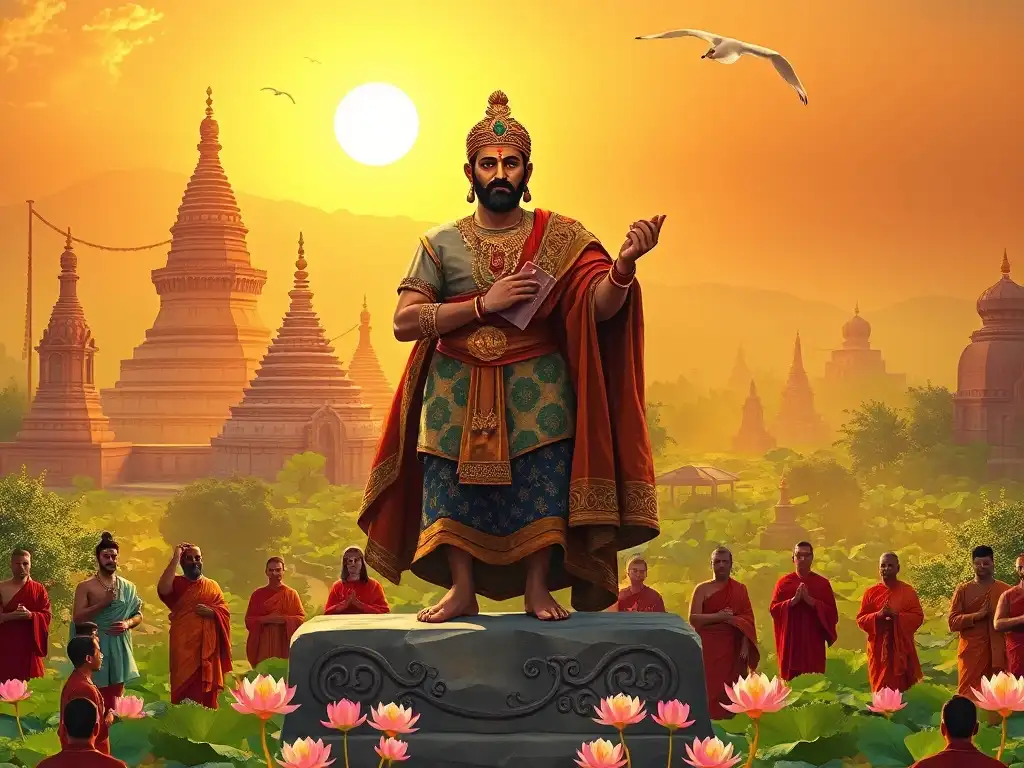
The Objectives of Ashoka's Missionary Work
Ashoka's Buddhist missionary efforts were fundamentally driven by a set of objectives that reflected his profound commitment to the principles of Buddhism. These objectives not only sought to spread the teachings of the Buddha but also aimed to foster a culture of peace, tolerance, and moral governance. Below are the primary goals that underscored Ashoka's mission:
- Propagation of Dharma: At the core of Ashoka's mission was the desire to disseminate the Dharma, or the teachings of the Buddha, which emphasized ethical living, compassion, and non-violence. By promoting these values, Ashoka aimed to create a harmonious society.
- Cultural Integration: Ashoka sought to bridge cultural divides by promoting Buddhist philosophy as a universal truth that transcends regional and ethnic boundaries. This approach was vital in unifying diverse populations under a common moral framework.
- Moral Governance: Ashoka believed that rulers should govern with compassion and justice. His mission included establishing a model of governance where Buddhist principles would influence political decisions, thus leading to a more ethical society.
- International Relations: By sending missionaries beyond the borders of his empire, Ashoka aimed to foster diplomatic relations grounded in mutual respect and shared values. This was essential in promoting peace and avoiding conflicts among neighboring states.
- Personal Transformation: Ashoka’s own spiritual journey following the Kalinga War was a driving force behind his missionary efforts. He sought to inspire personal transformation in others, encouraging them to adopt a lifestyle rooted in Buddhist ethics.
Key Strategies Employed in Spreading Buddhism
To achieve his objectives, Ashoka implemented several key strategies that were instrumental in the successful spread of Buddhism both within and outside his empire. These strategies were characterized by their innovative approaches and effective outreach. Here are the main tactics Ashoka employed:
- Establishment of Monastic Orders: Ashoka supported the establishment of monasteries and nunneries, providing a structured environment for monks and nuns to live, study, and propagate Buddhist teachings. This created hubs of learning and spiritual practice that attracted followers.
- Sending Missionaries: Ashoka dispatched skilled missionaries, such as his own son Mahinda and daughter Sanghamitta, to distant lands, including Sri Lanka. These missionaries played crucial roles in establishing Buddhist communities and integrating local cultures with Buddhist teachings.
- Edicts and Inscriptions: Ashoka utilized stone inscriptions and edicts, known as the Edicts of Ashoka, to communicate his messages and promote Buddhist values. These inscriptions were placed in key locations throughout his empire and beyond, ensuring that a wide audience could access his teachings.
- Cultural Adaptation: Recognizing the importance of local customs and traditions, Ashoka encouraged the adaptation of Buddhist teachings to resonate with diverse cultures. This flexibility allowed Buddhism to flourish in various regions, making it more approachable for different populations.
- Support for Pilgrimages: Ashoka actively promoted pilgrimage to sacred Buddhist sites, which not only reinforced the faith of existing followers but also attracted new adherents. By developing infrastructure around these sites, he facilitated easier access for pilgrims.
- Interfaith Dialogues: Ashoka was open to engaging with followers of other faiths, promoting dialogues to foster understanding and respect. This approach not only helped in spreading Buddhism but also contributed to a climate of tolerance within his empire.
Through these strategic efforts, Ashoka's Buddhist missionary work left a lasting impact on the spread of Buddhism, creating a legacy that transcended borders and influenced countless generations.
Regions Impacted by Ashoka's Missionary Activities
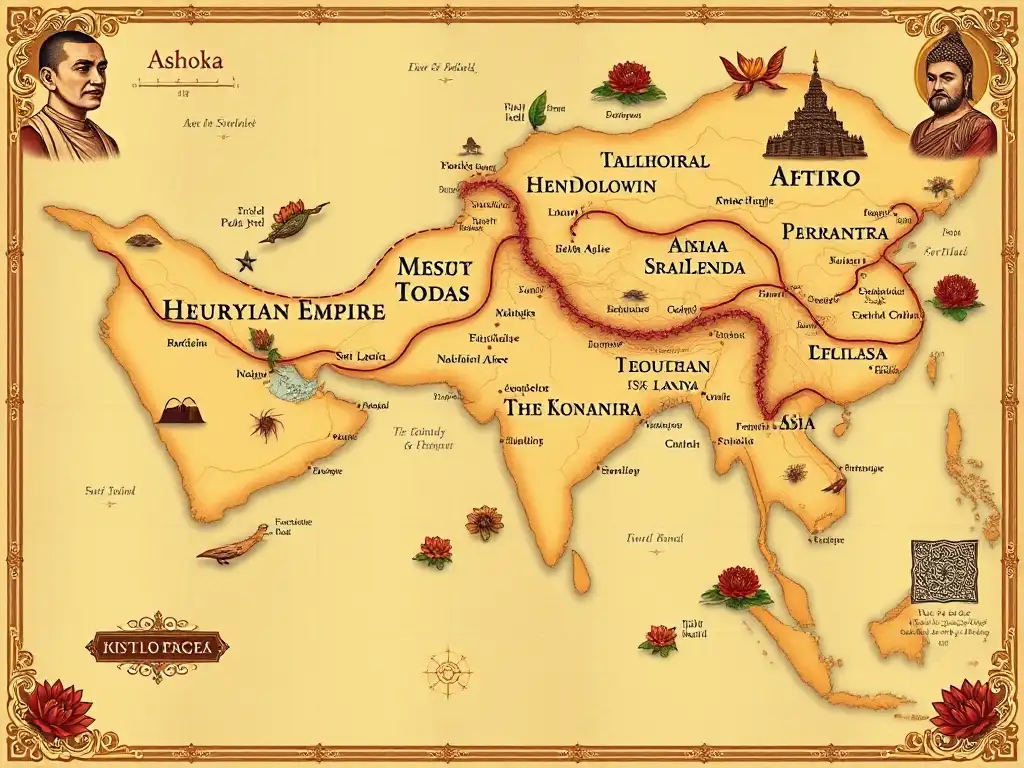
Buddhism's Expansion in South Asia
Ashoka's Buddhist missionary efforts primarily aimed to spread the teachings of Buddhism throughout South Asia, significantly transforming the region's religious landscape. Following his conversion to Buddhism after the Kalinga War, Ashoka recognized the need to promote peace, non-violence, and compassion. To achieve this, he dispatched missionaries across various territories within his empire, which included modern-day India, Nepal, and parts of Pakistan and Bangladesh.
Key Strategies for Expansion
- Royal Endorsement: Ashoka utilized his royal authority to legitimize the missionary activities, ensuring that local rulers and populations were more receptive to Buddhist teachings.
- Establishment of Monasteries: By founding monasteries and stupas, Ashoka provided physical spaces for education and meditation, which served as centers for spreading Buddhist ideology.
- Integration with Local Cultures: Missionaries adapted Buddhist teachings to resonate with local customs and beliefs, facilitating a smoother integration of Buddhism into existing cultural frameworks.
Impact on Local Populations
The influence of Ashoka’s missionaries was profound, leading to:
- Enhanced Literacy: The spread of Buddhist texts contributed to increased literacy rates as scriptures were translated into local languages.
- Promotion of Ethical Values: The moral teachings of Buddhism encouraged social harmony and ethical living, which had a lasting impact on societal norms across South Asia.
Influence on Southeast Asia and Beyond
Ashoka's Buddhist missionary efforts did not stop at the borders of South Asia; they extended into Southeast Asia and beyond, marking the beginning of Buddhism’s international journey. Historical records suggest that Ashoka sent envoys and missionaries to regions such as Sri Lanka, Myanmar, and even further afield.
Noteworthy Missions
- Sri Lanka: The most famous mission was led by Mahinda, Ashoka's son, who converted King Devanampiya Tissa of Sri Lanka to Buddhism around 247 BCE. This establishment of Buddhism in Sri Lanka served as a crucial hub for further dissemination in Southeast Asia.
- Myanmar and Thailand: Ashoka’s influence reached as far as the coastal regions of Myanmar and Thailand, where local leaders adopted Buddhism, integrating it with indigenous beliefs.
Cultural Exchange
The missionary efforts facilitated a rich cultural exchange, resulting in:
- Artistic Expressions: The introduction of Buddhist art and architecture, such as stupas and rock-cut caves, which blended local artistic traditions with Buddhist iconography.
- Trade Routes: The establishment of trade routes further enabled the spread of Buddhist philosophy, as merchants and travelers carried ideas alongside goods.
Notable Success Stories of Ashoka's Missionaries
Ashoka's Buddhist missionary efforts resulted in several notable success stories that exemplified the profound impact of his campaigns across various regions.
Prominent Figures and Their Contributions
- Mahinda: As mentioned previously, Mahinda's mission to Sri Lanka was not only successful in converting the king but also in establishing a monastic community that flourished and spread Buddhism throughout the island.
- Sanghamitra: Mahinda’s sister, Sanghamitra, played a pivotal role in introducing the Bodhi tree sapling to Sri Lanka, symbolizing the connection to the sacred site of Bodh Gaya and serving as a focal point for Buddhist worship.
Lasting Legacy
- Sri Lankan Buddhism: The establishment of Buddhism in Sri Lanka led to the development of a unique form of Theravada Buddhism, which continues to thrive today.
- Pan-Asian Influence: The missions initiated by Ashoka set the stage for the further spread of Buddhism throughout Asia, influencing cultures as far as Japan and China in subsequent centuries.
Ashoka's Buddhist missionary efforts were instrumental in shaping not only the religious landscape of South Asia but also in fostering cultural exchanges that would resonate across borders and centuries. His legacy remains a testament to the enduring power of compassion and enlightenment that Buddhism advocates.
The Role of Edicts in Ashoka's Missionary Work

Overview of Ashoka's Edicts
Ashoka the Great, the third Mauryan emperor, is renowned not only for his military conquests but also for his profound transformation following his conversion to Buddhism. Central to his missionary efforts were the Edicts of Ashoka, a series of inscriptions carved on pillars, rocks, and cave walls across his empire. These edicts serve as a testament to his commitment to spreading Buddhist principles and ethical governance.
The edicts, written in Brahmi and Kharosthi scripts, primarily communicate Ashoka's vision of a moral and just society. They are divided into two main categories: Major Rock Edicts and Minor Rock Edicts. The Major Edicts focus on broad governance principles, while the Minor Edicts provide specific instructions and guidelines for local officials and the general populace. The language used is straightforward, reflecting Ashoka's desire for clarity and accessibility.
The geographical reach of these edicts is significant. They were strategically placed in key locations, such as trade routes, to ensure maximum visibility among travelers and merchants. This not only facilitated the dissemination of Buddhist teachings but also promoted the values of compassion and non-violence, which were central to Ashoka's reign.
Messages Promoting Buddhism in the Edicts
The Edicts of Ashoka convey various messages that reflect his commitment to Buddhism and its teachings. Among the most notable themes are:
- Ahimsa (Non-violence): Ashoka's edicts emphasize the importance of non-violence towards all living beings. He advocates for compassion and kindness, urging his subjects to practice these virtues in their daily lives.
- Dharma (Moral Law): The promotion of dharma is a recurring theme in the edicts. Ashoka encourages the pursuit of righteousness and ethical conduct, framing it as a duty for both rulers and subjects.
- Religious Tolerance: Ashoka's writings exhibit a remarkable level of religious tolerance. He acknowledges the diversity of beliefs within his empire and promotes dialogue among different religious communities, advocating for respect and understanding.
- Social Welfare: The edicts also highlight Ashoka's concern for the welfare of his people. He initiated various public works, such as the construction of hospitals, wells, and rest houses, reflecting his belief in the well-being of all citizens.
These messages were integral to Ashoka's Buddhist missionary efforts, as they not only aimed to convert people to Buddhism but also sought to instill a sense of moral responsibility and community among his subjects.
Impact of Edicts on Local Populations
The impact of Ashoka's edicts on local populations was profound and far-reaching. By integrating Buddhist concepts into governance, Ashoka laid the groundwork for a society built on ethical principles. Some key effects include:
- Cultural Exchange: The widespread dissemination of the edicts facilitated cultural exchanges between various regions. As traders and travelers encountered these inscriptions, they were introduced to Buddhist ideas and practices, leading to a gradual spread of Buddhism beyond India's borders.
- Social Reform: The edicts inspired local leaders to adopt similar ethical practices, fostering social reform at various levels. Communities began to prioritize welfare initiatives, reflecting Ashoka's vision of a compassionate society.
- Religious Conversion: While not all individuals converted to Buddhism, the edicts undoubtedly piqued interest in the religion. Over time, many local populations embraced Buddhist teachings, leading to the establishment of Buddhist communities and monasteries across the region.
- Legacy of Governance: Ashoka's emphasis on dharma and ethical governance influenced subsequent rulers in India and beyond. His model of leadership, which combined political authority with moral responsibility, left a lasting legacy that resonated through centuries.
The Edicts of Ashoka were not merely inscriptions; they were pivotal instruments in Ashoka's Buddhist missionary efforts, shaping the moral landscape of ancient India and facilitating the spread of Buddhism across borders.
Legacy of Ashoka's Buddhist Missionary Efforts

Ashoka's Buddhist missionary efforts left a profound impact on the proliferation of Buddhism, shaping its trajectory for centuries to come. The legacy of his initiatives is not merely confined to geographical boundaries; it extends to cultural, spiritual, and philosophical realms that continue to resonate today.
Long-term Effects on Buddhism's Global Reach
Ashoka's reign marked a pivotal moment in the history of Buddhism, transforming it from a localized belief system into a global religion. His commitment to spreading Buddhist teachings resulted in the establishment of numerous stupas, monasteries, and educational institutions that served as hubs for learning and dissemination of Buddhist philosophy.
- Establishment of Edicts:
- Ashoka inscribed his edicts on stone pillars across his empire, articulating his vision of Dharma (moral law) and promoting Buddhist values such as non-violence and compassion. These edicts not only served as ethical guidelines but also as a means to communicate Buddhist teachings to a diverse populace.
- The Rock Edicts and Pillar Edicts are prime examples, with inscriptions in multiple languages, making them accessible to various ethnic groups.
- Diplomatic Missions:
- Ashoka sent envoys to foreign lands, including regions such as Sri Lanka, Egypt, and Greece. He notably dispatched his son, Mahinda, and daughter, Sanghamitta, to Sri Lanka, where they played a key role in establishing Buddhism as a significant religion.
- These diplomatic missions laid the groundwork for the establishment of Buddhism in various cultures, leading to the formation of different schools and practices.
- Cultural Exchange:
- The establishment of trade routes, such as the Silk Road, facilitated not just commerce but also a significant cultural exchange between India and other regions. Buddhism traveled along these routes, influencing local traditions and practices in places such as Central Asia and China.
- The adaptability of Buddhism allowed it to merge with local beliefs, leading to a rich tapestry of Buddhist practices worldwide.
Influence on Later Buddhist Missionaries
The impact of Ashoka's missionary efforts can be seen in the activities of subsequent Buddhist missionaries who followed in his footsteps. His pioneering work set a precedent for how Buddhism would be propagated beyond Indian borders.
- Development of Monastic Orders:
- Ashoka's support for monastic communities fostered a structured approach to missionary work. The establishment of monastic orders created a network of monks who were dedicated to spreading Buddhist teachings.
- As a result, many monks traveled to foreign lands, armed with the teachings of the Buddha and the ethical framework established by Ashoka, thus continuing the mission of spreading Buddhism.
- Examples of Notable Missionaries:
- Following Ashoka, figures such as Bodhidharma and Xuanzang emerged as prominent missionaries who played pivotal roles in spreading Buddhism to China and beyond. Their travels and teachings further cemented the foundations laid by Ashoka.
- These later missionaries adapted Buddhist teachings to resonate with local cultures, ensuring the religion's relevance and endurance.
- Institutional Support:
- Buddhist institutions established during Ashoka's reign provided the necessary support for future missionaries. The preservation of texts, training of monks, and organization of pilgrimages were critical in maintaining the continuity of Ashoka's vision.
- Many of these institutions would later evolve into major centers of learning, such as Nalanda, which attracted scholars from around the world, further disseminating Buddhist thought.
Ashoka's Buddhist missionary efforts not only expanded the reach of Buddhism across Asia but also set a framework that would guide future generations of missionaries. His legacy is a testament to the enduring power of ethical governance and the universal appeal of Buddhist teachings.
Conclusion

Summary of Ashoka's Contributions to Buddhism
Ashoka the Great, the third Mauryan emperor, is revered not only for his governance but also for his profound contributions to Buddhism. After the Kalinga War, which had devastating effects on his kingdom and its people, Ashoka experienced a significant transformation. This pivotal moment led him to embrace Buddhism, and he subsequently dedicated his reign to the promotion of its principles.
Ashoka's Buddhist missionary efforts were marked by several key initiatives:
- Edicts of Ashoka: He inscribed his beliefs and teachings on rocks and pillars throughout his empire. These edicts promoted ethical conduct, non-violence, and compassion, serving as a moral guide for his subjects.
- Promotion of Dharma: Ashoka emphasized the importance of Dharma (moral law) in governance. He believed that a ruler's legitimacy came from their commitment to ethical leadership and the welfare of the people.
- Sending Missionaries: Ashoka is credited with sending missionaries to various regions, including present-day Sri Lanka, Nepal, and parts of Central Asia. Notable figures such as Mahinda, his son, played a crucial role in establishing Buddhism in these areas.
- Support for Buddhist Institutions: He funded the construction of stupas, monasteries, and viharas, facilitating the growth of Buddhist communities and providing spaces for the practice of Buddhism.
These contributions significantly shaped the spread of Buddhism, allowing it to transcend geographical boundaries and cultural barriers.
Reflection on the Significance of Ashoka's Missionary Work in Ancient History
Ashoka's Buddhist missionary efforts hold immense significance in the context of ancient history for several reasons.
- Cultural Exchange: Ashoka's initiatives fostered cultural exchange between India and other regions. The missionaries he sent out became conduits of not only religious teachings but also art, philosophy, and social practices. This exchange enriched the cultures of the regions they reached.
- Foundation of International Buddhism: By establishing a framework for Buddhist diplomacy and inter-state relations based on ethical principles, Ashoka laid the groundwork for Buddhism to evolve into a global religion. His model of non-violence and compassion resonated with diverse populations, facilitating the religion's acceptance beyond India.
- Legacy of Non-Violence: Ashoka's emphasis on non-violence (ahimsa) as a core principle of Buddhism influenced later leaders and movements. His approach advocated for peace and mutual respect, ideals that continue to resonate in modern discussions on conflict resolution and human rights.
- Historical Documentation: The edicts and inscriptions left by Ashoka serve as crucial historical documents, providing insights into the socio-political landscape of ancient India. They reflect the interplay between religion and governance, illustrating how a ruler can utilize spiritual teachings to foster societal harmony.
Ashoka's missionary work not only transformed the religious landscape of his time but also left an enduring legacy that shaped the course of history, making him a pivotal figure in the spread of Buddhism across Asia and beyond. His life and actions serve as a testament to the power of compassion and ethical governance in effecting change.
Frequently Asked Questions
What were Ashoka's Buddhist missionary efforts?
Ashoka's Buddhist missionary efforts involved sending monks to various regions to promote Buddhism, including Sri Lanka and parts of Southeast Asia.
How did Ashoka's reign influence Buddhism?
During Ashoka's reign, Buddhism became a dominant religion in India, thanks to his extensive patronage and support for the spread of Buddhist teachings.
What impact did Ashoka's missionaries have on neighboring regions?
Ashoka's missionaries played a crucial role in spreading Buddhism beyond India, leading to its establishment in countries like Nepal, Bhutan, and Thailand.
How did Ashoka communicate his messages?
Ashoka used rock edicts and inscriptions to convey his messages about Buddhism, ethics, and governance, making his teachings accessible to the public.
What legacy did Ashoka leave regarding religious tolerance?
Ashoka is noted for promoting religious tolerance, encouraging respect for all faiths, which contributed to a more harmonious society and influenced future rulers.
Final Reflection: The Enduring Legacy of Ashoka's Buddhist Missionary Efforts
Ashoka's Buddhist missionary efforts continue to resonate profoundly in our modern world, illustrating the timeless power of compassion and understanding. In an era marked by division and conflict, Ashoka's commitment to spreading the teachings of Buddhism across borders serves as a poignant reminder of the potential for peace and unity. His legacy challenges us to consider how we can foster dialogue and connection in our own communities, transcending cultural and geographical boundaries.
Cultural and social landscapes have been irrevocably shaped by Ashoka's vision. His missionary work not only established Buddhism as a major world religion but also laid the groundwork for intercultural exchange and mutual respect among diverse societies. As we navigate today's globalized world, the principles of tolerance and empathy that Ashoka championed remain crucial. The greatest victory is the victory over oneself.
This quote encapsulates the essence of Ashoka's teachings, urging us to look inward and cultivate peace within ourselves as a precursor to fostering harmony in the world around us.
As we reflect on Ashoka's profound impact, let us take inspiration from his mission and strive to embody the values he espoused. I invite you to consider how you can contribute to a more compassionate world, whether through small acts of kindness or larger efforts to promote understanding. Embrace the spirit of Ashoka's Buddhist missionary efforts in your daily life, and together, we can create a ripple effect of positive change that transcends borders and unites us all.
Join the Journey of Discovery!
Thank you for diving into the inspiring story of Ashoka's transformative missionary work and its profound impact on Buddhism! You've explored how one ruler’s vision crossed borders and changed lives. Now, it’s time to take that inspiration and turn it into action.
Here's how you can get involved and deepen your understanding:
- Visit local Buddhist temples or communities to engage with teachings and traditions firsthand.
- Share your insights from this article with friends or on social media to spark discussions about the global influence of various cultures.
- Consider reading more about other influential figures in history who have shaped religions and global thought.
What action will you take today to broaden your understanding of different cultures and their teachings?