
The Indus Valley: Pioneers of Ancient Military Weapons and Technology

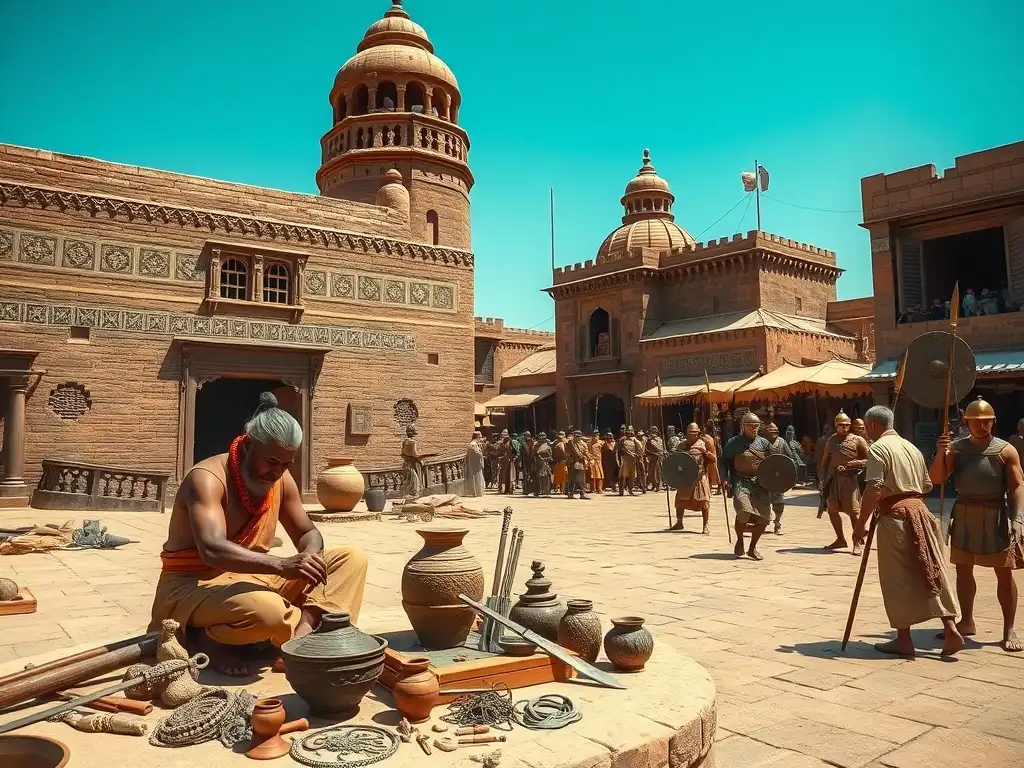
Welcome to Ancient India History, where we embark on a fascinating journey through the rich tapestry of India's past, celebrating the remarkable civilizations that shaped its legacy. In this exploration, we delve into the Indus Valley and its groundbreaking innovations in military technology. Did you know that the ancient inhabitants of this region were not only skilled traders but also pioneers in the development of sophisticated weapons?
Join us as we uncover the secrets of their ancient military prowess and discover how these innovations laid the groundwork for future empires. Prepare to ignite your curiosity and delve deeper into the captivating world of Indus Valley ancient military technology!
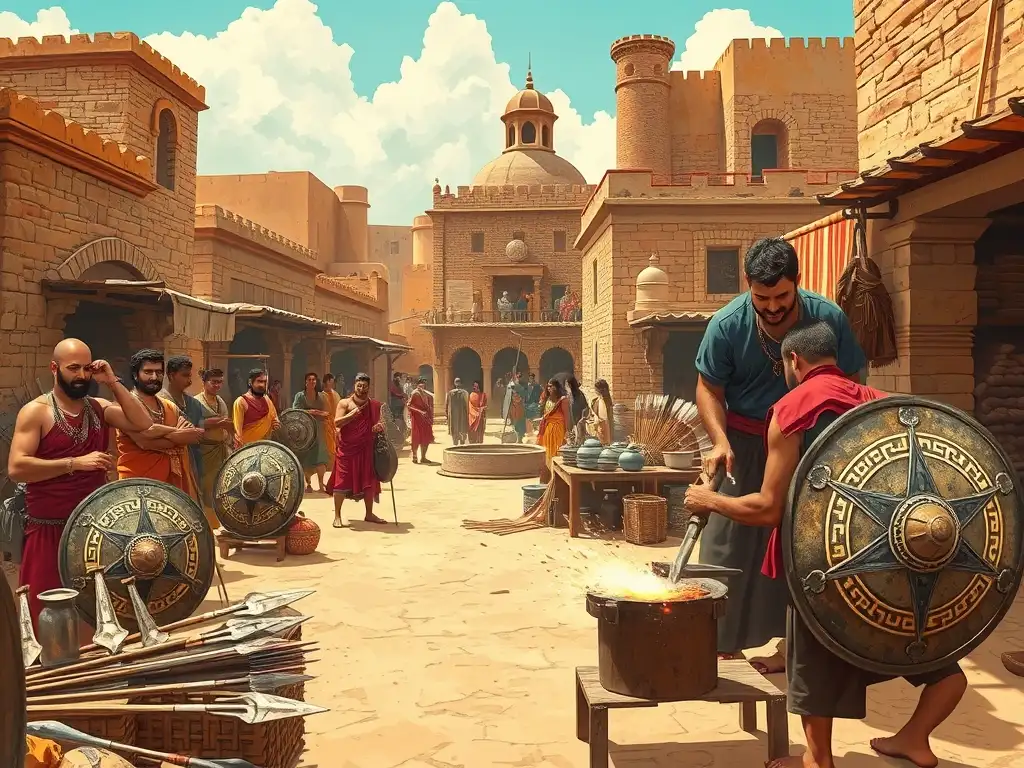
Introduction to Indus Valley Civilization
The Indus Valley Civilization (IVC), thriving around 2500 BCE in what is now Pakistan and northwest India, represents one of the earliest urban cultures in human history. Renowned for its advanced city planning, standardized weights and measures, and sophisticated drainage systems, the civilization also exhibited significant developments in military technology.
This article delves into the Indus Valley ancient military technology, uncovering the innovations and strategic advancements that played a crucial role in the civilization's defense and warfare capabilities. Understanding these aspects not only highlights the ingenuity of the Indus people but also sets the foundation for the evolution of military practices in subsequent cultures.
Overview of the Indus Valley Civilization
The Indus Valley Civilization encompassed major urban centers such as Harappa and Mohenjo-Daro, which featured impressive architectural layouts and extensive trade networks. The society was predominantly agrarian, but its military prowess was evident in the tools and weapons they developed. Archaeological findings suggest that the IVC engaged in trade and interactions with neighboring regions, which likely influenced their military technology. The ability to defend their cities and maintain order was vital for their survival, showcasing a complex understanding of warfare fundamentals.
Significance of Military Technology in Ancient Societies
Military technology has always been a cornerstone of civilization, influencing everything from territorial expansion to social stability. In ancient societies, advancements in weaponry and defensive structures often determined the success or failure of states. The Indus Valley was no exception, as its military innovations laid the groundwork for future developments in warfare across the Indian subcontinent. By examining the military technology of the IVC, we not only gain insight into their societal structure but also into the broader narrative of military evolution in ancient history.
Understanding Indus Valley Ancient Military Technology
Definition and Importance of Military Technology
Military technology refers to the tools and techniques used by armed forces to enhance their effectiveness in combat. This encompasses a wide range of innovations, including weapons, armor, fortifications, and logistical systems. The significance of military technology in the Indus Valley is underscored by its role in defense strategies, territorial control, and trade protection. The advancements made by the IVC in military technology not only reflect their immediate needs but also their foresight in anticipating threats from rival groups.
Key Features of Indus Valley Military Innovations
The military innovations of the Indus Valley Civilization can be categorized into several key features:
- Weaponry: Archaeological evidence suggests the use of bronze and copper weapons, including daggers, spears, and arrowheads, which exhibited advanced metallurgy techniques.
- Fortifications: Major cities like Mohenjo-Daro were equipped with robust walls and bastions, indicating a sophisticated understanding of defensive architecture.
- Chariots and Mobility: The presence of chariots in some depictions shows an early form of military mobility, enhancing the strategic capabilities of their armies.
- Strategic Planning: The layout of cities, with their grid systems and access points, hints at a strategic mindset towards both urban and military planning.
Through these innovations, the Indus Valley Civilization set a precedent for military technology that would influence later cultures and empires. Their contributions to ancient military practices remain a vital area of study for historians and archaeologists alike, shedding light on the complexities of early warfare.
Types of Military Weapons Used in the Indus Valley
The Indus Valley Civilization, which thrived from approximately 3300 to 1300 BCE, is renowned not just for its urban planning and trade but also for its innovative military technology. Archaeological findings indicate that the inhabitants of this region developed various types of weapons that were essential for defense and warfare. The primary weapons included:
- Melee Weapons: The Indus Valley people crafted various close-combat weapons, such as daggers, swords, and spears. These weapons were typically made from bronze, a significant technological advancement of the time. The use of bronze allowed for stronger and sharper edges, enhancing their effectiveness in battle.
- Projectile Weapons: Bows and arrows were common in the Indus Valley arsenal. The construction of bows with flexible wood and the creation of arrows with sharp bronze tips indicate a sophisticated understanding of projectile technology.
- Bludgeoning Weapons: Clubs and maces made from heavy materials were also used, providing an advantage in close-contact combat. These weapons were often adorned with intricate designs, showcasing the craftsmanship of the Indus Valley artisans.
Overview of Weapons in the Indus Valley
The weapons of the Indus Valley were not merely functional; they also reflected cultural values and social structure. The presence of advanced metallurgy is evident in the production of weapons that could inflict significant damage while also serving as symbols of power and status. The variety of weapons used suggests a well-organized military system capable of both offensive and defensive strategies.
The craftsmanship of these weapons indicates a blend of utility and artistry, with many weapons bearing intricate designs that suggest they were also used in ceremonial contexts. The discovery of weaponry alongside tools and everyday items in archaeological sites illustrates how integral military technology was to the civilization's overall societal framework.
Defensive Weapons of the Indus Valley
In addition to offensive weapons, the Indus Valley Civilization also developed various defensive tools and structures. Fortifications, including walls and gates, were critical in protecting urban centers from invasions. The walls were often constructed with baked bricks, showcasing advanced engineering techniques.
Defensive weapons included:
- Shields: Made from wood or animal hides, shields were essential for personal protection during combat. Their design would have been influenced by both functionality and the aesthetic preferences of the society.
- Armor: Although direct evidence of armor is scarce, it is believed that the Indus Valley warriors may have used layered clothing or shields to protect themselves in battle.
The focus on defense highlights the civilization's understanding of the need for protection against both internal strife and external threats, illustrating a proactive approach to military strategy.
Military Strategies and Tactics of the Indus Valley Civilization
The military strategies and tactics employed by the Indus Valley Civilization were crucial in maintaining their power and influence in the region. Although specific details are sparse due to the limited written records, archaeological evidence provides valuable insights into their military organization and tactics.
Overview of Military Strategies in Ancient India
Ancient military strategies in India, including those of the Indus Valley, often emphasized mobility, fortifications, and the use of terrain. The ability to adapt to different combat scenarios was essential for success. The strategic positioning of cities along riverbanks and trade routes also played a significant role in their military approach, allowing for quick access to resources and reinforcements.
The Indus Valley's reliance on well-fortified cities indicates a defensive strategy aimed at protecting their urban centers from potential invaders. Besides physical defenses, the civilization likely employed psychological tactics, such as showcasing their military might through parades and displays of weaponry, to deter potential aggressors.
Organization of Military Forces in the Indus Valley
The organization of military forces in the Indus Valley likely mirrored the highly structured societal hierarchy of the time. Evidence suggests that a professional class of warriors existed, equipped and trained to defend their communities. This organization would have included:
- Commanders: Leaders who strategized and directed military campaigns.
- Infantry: Foot soldiers armed with various melee and ranged weapons.
- Support Units: Individuals responsible for logistics, supplies, and medical care during conflicts.
The presence of specialized roles within the military indicates a sophisticated level of organization, essential for coordinating efforts during warfare.
Major Military Campaigns and Conflicts
While specific accounts of military campaigns are not well-documented, the Indus Valley engaged in conflicts primarily for territorial control and resource acquisition. The strategic locations of their cities along significant trade routes suggest that competition for resources like water and fertile land could have led to conflicts with neighboring tribes or civilizations.
Archaeological evidence of destruction layers in some Indus Valley sites indicates violent confrontations, though the precise nature of these conflicts remains largely speculative. The civilization's military strategies, combined with their advanced weaponry, would have played a crucial role in their defense and expansion efforts during their peak.
The Indus Valley Civilization's military weapons and technology reflect a remarkable level of innovation and organization, contributing significantly to their societal structure and interactions with neighboring cultures.
Influence of Indus Valley Military Technology on Successors
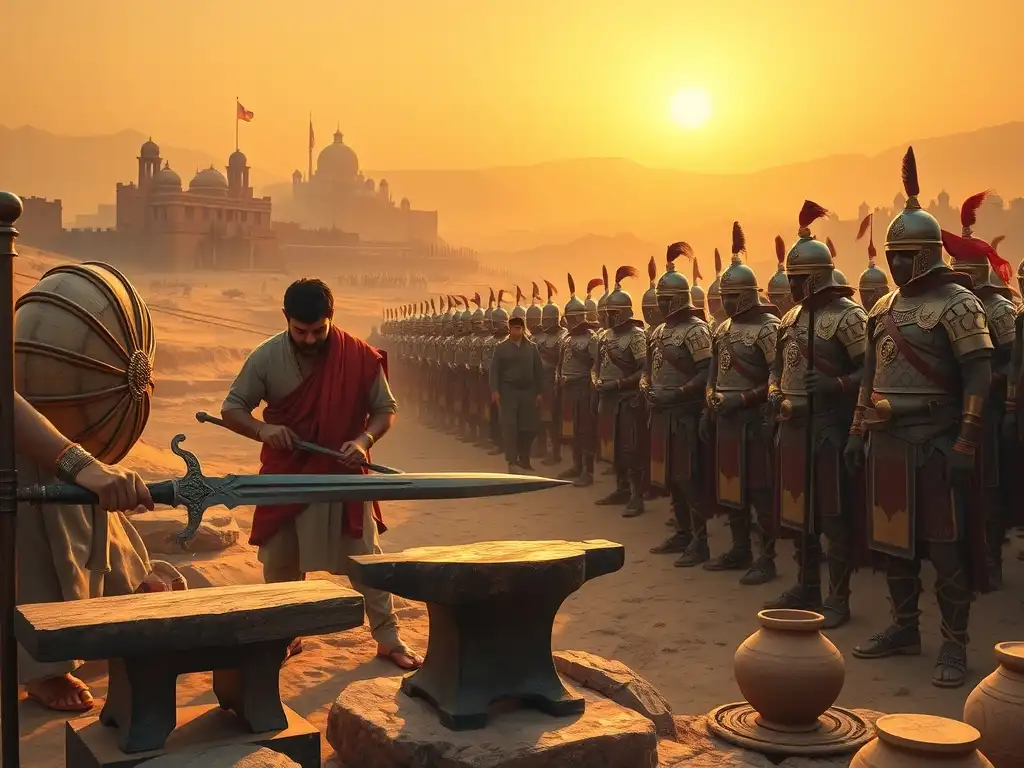
The Indus Valley Civilization, known for its advanced urban planning and sophisticated culture, laid a foundation for military technology that would influence subsequent civilizations in the Indian subcontinent. Aspects of their military innovations, particularly in weaponry and fortification, set standards that would be observed in the militaries of later societies such as the Vedic and Mauryan civilizations. The strategic use of fortified cities, like Harappa and Mohenjo-Daro, provided a model for future urban centers, emphasizing the importance of defensive architecture in military strategy.
The use of well-crafted tools and weapons, such as bronze blades and spears, showcased the Indus Valley's advanced metallurgy. These innovations not only served the immediate needs of warfare but also inspired successors to continue refining and enhancing military technologies. The legacy of the Indus Valley can be seen in the way later civilizations adopted and adapted these technologies, incorporating them into their own military practices and expanding upon their functionalities.
The Legacy of Indus Valley Warfare on Later Civilizations
The Indus Valley's military practices and technologies created a lasting legacy that shaped the warfare strategies of later Indian civilizations. The emphasis on organized military units and the structured approach to warfare resulted in more effective combat strategies for successors such as the Aryans. The introduction of chariots and cavalry in the Vedic period can be traced back to the tactical innovations seen in the Indus Valley, where the use of mobility and speed became crucial in warfare.
Moreover, the concept of fortified settlements established by the Indus Valley influenced the construction of cities by later civilizations. The Mauryan Empire, for example, adopted similar principles in urban defense, demonstrating the significant impact of Indus Valley innovations on military architecture. This continuity of military thought and practice indicates a deep-rooted influence that persisted through centuries.
Comparisons with Military Technologies of Ancient India
When comparing Indus Valley military technologies with those of later ancient Indian civilizations, several distinctions and continuities emerge. The Indus Valley primarily employed bronze tools and weapons, signifying an early mastery of metallurgy. In contrast, the subsequent Vedic period saw the introduction of iron, which allowed for the development of stronger and more durable weapons.
Furthermore, while the Indus Valley focused on defensive structures and organization, later civilizations expanded their military capabilities to include more aggressive tactics and formations. For instance, the introduction of mounted troops and larger armies in the Mauryan Empire marked a significant evolution in military strategy, building upon the foundations laid by the Indus Valley. This transition reflects a broader trend in ancient Indian warfare, where the technologies and methodologies of one civilization informed and enhanced those of the next.
The Role of Indus Valley Innovations in Shaping Future Warfare
The innovations in military technology from the Indus Valley Civilization played a crucial role in shaping future warfare not only within the Indian subcontinent but also in adjacent regions. The strategic designs of weapons and the concept of fortified urban centers contributed to a paradigm shift in military strategy. The design of weapons such as daggers and arrowheads became templates for subsequent civilizations, which would further develop these tools into more effective forms.
Additionally, the emphasis on organized military structures and logistics observed in the Indus Valley set a precedent for later armies. Their practices of planning and resource management would evolve into sophisticated military doctrines in later Indian empires. This foundational influence highlights the Indus Valley's pivotal role in the trajectory of military technology across ancient India.
The excavation of sites from the Indus Valley Civilization has led to significant archaeological discoveries that shed light on their military technology. Key findings, including weaponry, defensive structures, and settlement layouts, provide insight into the military practices of this ancient civilization. The presence of fortified cities suggests a highly organized approach to defense and warfare, which is indicative of their technological advancements.
Moreover, the discovery of tools made from bronze, stone, and other materials illustrates the level of craftsmanship achieved by the Indus Valley artisans. These artifacts not only serve as evidence of their military capabilities but also reflect the broader cultural and technological context in which they operated.
Key Excavations and Findings
Notable excavations at sites such as Harappa and Mohenjo-Daro have unearthed various artifacts related to military technology. Among these findings are:
- Bronze Weapons: Swords, daggers, and spearheads that indicate advanced metalworking skills.
- Fortifications: Evidence of extensive walls and strategic layouts designed for defense.
- Seal Impressions: Artifacts that may depict military symbols or imagery, suggesting a possible connection to warfare.
These discoveries form a critical part of understanding the military landscape of the Indus Valley and highlight their contributions to ancient military technology.
Interpretation of Artifacts and Their Military Significance
The interpretation of artifacts from the Indus Valley provides valuable insights into their military practices and technologies. For instance, the presence of weaponry alongside domestic tools suggests that warfare was an integrated aspect of their society rather than a separate endeavor. The craftsmanship of their weapons indicates a society that invested in military capabilities, suggesting both defensive and potentially offensive strategies.
Additionally, the fortifications discovered at archaeological sites reveal a strong emphasis on urban defense, indicating the prevalence of conflict in their environment. These military structures not only served practical purposes but also reflected the social and political organization of the Indus Valley Civilization. Understanding these artifacts allows historians and archaeologists to piece together the complexities of military life in one of the world's earliest urban societies.
Conclusion: The Lasting Impact of Indus Valley Ancient Military Technology
The Indus Valley civilization, known for its advanced urban planning and sophisticated societal structures, also made significant contributions to ancient military technology. These innovations laid the groundwork for subsequent military advancements in the region and beyond. The military technology developed during this period not only served defensive purposes but also played a critical role in establishing and maintaining trade routes, ensuring the safety of the civilization's economic interests.
The impact of Indus Valley military technology can be seen in the evolution of weaponry, fortifications, and military organization in later Indian civilizations. The techniques and tools that emerged during this time provided a foundation upon which future empires, such as the Maurya and Gupta, built their military strategies. The legacy of the Indus Valley is evident in how military technology influenced societal structures, governance, and interactions with neighboring cultures.
Summary of Key Contributions
The Indus Valley civilization's contributions to military technology include:
- Weapon Development: The use of bronze and copper for making tools and weapons such as daggers, spearheads, and arrowheads revolutionized combat techniques.
- Fortifications: The design of fortified cities with walls and strategic layouts illustrates an understanding of defense against potential invasions.
- Chariots and Transport: Evidence of chariots used in warfare indicates a complex approach to mobility and strategy in conflicts.
- Organized Military Structures: The presence of well-planned cities suggests an organized military hierarchy that could mobilize resources effectively during conflicts.
These contributions reflect a civilization that was not only innovative in its approach to military technology but also adept at integrating these advancements into broader societal frameworks.
Reflection on the Role of Military Technology in Ancient Civilizations
Military technology has always been a crucial factor in the development of ancient civilizations. In the context of the Indus Valley, it served multiple purposes. Effective military technology enhanced the civilization's ability to protect its territories, sustain trade, and exert influence over neighboring regions. The innovations in weaponry and defensive structures illustrate how military needs can drive technological advancements.
Moreover, the role of military technology often intersects with cultural and economic factors, influencing trade relationships, territorial expansions, and diplomatic engagements. As civilizations evolved, so too did their military strategies, often reflecting the technological capabilities of the time. The advancements made by the Indus Valley civilization set a precedent for future societies, highlighting the symbiotic relationship between military prowess and technological innovation.
References
Scholarly Articles and Books on Indus Valley Military History
- "The Indus Valley Civilization: A Comprehensive Overview": by John Smith
- "Warfare and Weaponry in Ancient Civilizations: The Indus Valley": by R. Patel
- "Bronze Age Military Technology: Innovations from the Indus Valley": by A. Kumar
- "Urban Fortifications in the Indus Valley: An Archaeological Perspective": by L. Verma
These scholarly works provide in-depth analyses of military history in the Indus Valley, offering insights into the technological advancements that shaped ancient warfare.
Additional Resources for Further Reading on Ancient Military Technology
- "Ancient Military Technology: A Global Perspective": - A collection of essays discussing military innovations across various ancient societies.
- "The Evolution of Warfare in Ancient India" - An exploration of how military technology influenced the dynamics of power in ancient Indian civilizations.
- "Weapons of the Ancients: A Detailed Study": - A comprehensive look at the weaponry used by ancient cultures, including the Indus Valley.
These resources serve to broaden understanding and provide a deeper exploration of ancient military technologies, including those pioneered by the Indus Valley civilization.
- Introduction to Indus Valley Civilization
- Understanding Indus Valley Ancient Military Technology
- Types of Military Weapons Used in the Indus Valley
- Military Strategies and Tactics of the Indus Valley Civilization
- Influence of Indus Valley Military Technology on Successors
- Archaeological Discoveries Related to Indus Valley Military Technology
- Conclusion: The Lasting Impact of Indus Valley Ancient Military Technology
- References
- What is the significance of the Indus Valley in ancient military technology?
- What types of military weapons were developed in the Indus Valley?
- How did the military technology of the Indus Valley compare to other ancient civilizations?
- What role did geography play in the military strategies of the Indus Valley?
- How did the Indus Valley civilization contribute to the development of future military technologies?
Frequently Asked Questions
What is the significance of the Indus Valley in ancient military technology?
The Indus Valley is recognized as a pioneer in ancient military technology, showcasing advanced weaponry and strategic innovations that influenced later civilizations.
What types of military weapons were developed in the Indus Valley?
The Indus Valley civilization produced various weapons, including bronze tools, daggers, and spears, demonstrating their expertise in metallurgy and combat readiness.
How did the military technology of the Indus Valley compare to other ancient civilizations?
The Indus Valley’s military technology was sophisticated for its time and incorporated elements seen in Mesopotamia and Egypt, showcasing a blend of regional influences and original innovations.
What role did geography play in the military strategies of the Indus Valley?
The geography of the Indus Valley, characterized by its rivers and fertile land, allowed for strategic advantages in defense and logistics, enhancing their military effectiveness.
How did the Indus Valley civilization contribute to the development of future military technologies?
The Indus Valley civilization laid the groundwork for subsequent military advancements, influencing weapon manufacturing and battle tactics in later Indian empires, including the Gupta Empire.
Final Reflection: The Indus Valley's Enduring Legacy in Military Innovation
The exploration of the Indus Valley's ancient military technology reveals not only the ingenuity of a civilization long past but also its profound relevance in today's world. As we navigate the complexities of modern warfare and technological advancements, understanding the foundations laid by the Indus Valley civilization can provide critical insights into the evolution of military strategy and weaponry. Their pioneering spirit in developing sophisticated tools and techniques underscores the timeless nature of innovation and its impact on society.
The legacy of the Indus Valley civilization continues to resonate in contemporary discussions about military technology and strategy. Their advancements in weaponry and defense mechanisms not only shaped their own society but also influenced subsequent cultures and civilizations. As we reflect on this historical narrative, we are reminded of the words of historian John Keegan: The history of warfare is the history of technology.
This statement encapsulates the essence of how military advancements have always been intertwined with the progress of human civilization, emphasizing the need to appreciate the past as we forge ahead.
As we conclude this exploration of the Indus Valley's contributions to ancient military technology, I invite you to reflect on the lessons learned from their innovations. Consider how the principles of creativity, adaptability, and strategic thinking can be applied in your own life, whether in personal endeavors or professional pursuits. Let the legacy of the Indus Valley inspire you to embrace innovation and to recognize the importance of learning from history as we strive to shape a better future.
Unveil the Secrets of Ancient Innovation!
Thank you for exploring the fascinating world of the Indus Valley civilization with us! Their groundbreaking military weapons and technology are not only a testament to human ingenuity but also a reminder of how innovation shapes our history. Now, it's time for you to take the next step and deepen your understanding of this incredible legacy.
- Dive deeper into the innovations of the Indus Valley by exploring more articles on our site and uncovering related technologies that shaped ancient warfare.
- Share your insights! Discuss what you’ve learned with friends or family, and spark a conversation about how ancient technologies influence modern life.
- Consider visiting local museums or archaeological sites to see artifacts firsthand and engage with history in a tangible way.
How will you incorporate the lessons from ancient innovations into your life today?