
Agricultural Practices and Innovations

Agricultural Practices and Innovations
40 articles in this topic
Start here
- Agricultural Practices and InnovationsThe Intersection of Religion and Agriculture in Ancient Indian Culture
- Agricultural Practices and InnovationsThe Impact of Ancient Indian Agriculture on Global Food Systems
- Agricultural Practices and InnovationsThe Evolution of Grain Storage Techniques in Ancient India
Read more about this topic
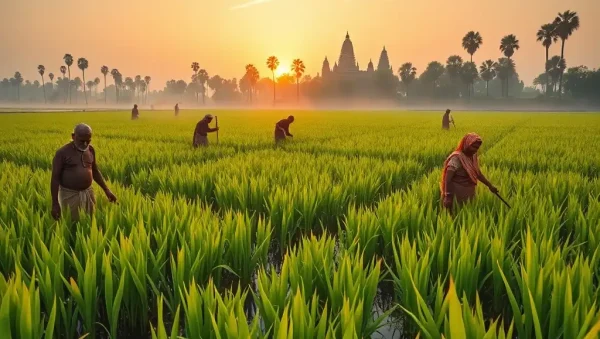
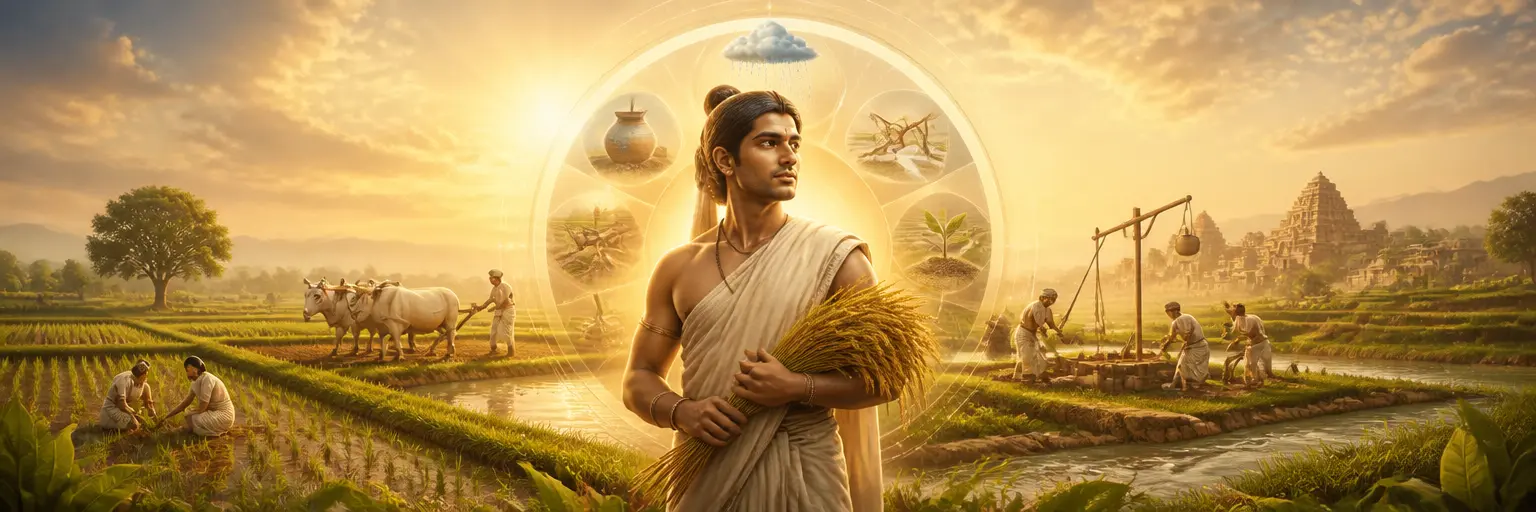
Explore how agricultural practices and innovations shaped ancient India’s economy and civilization 🌾. Discover traditional irrigation systems, advanced farming techniques, crop cultivation, soil management, and indigenous tools that supported thriving communities from the Indus Valley to the Gupta Empire. Learn how farmers adapted to diverse climates, improved food production, and influenced trade, social development, and technological progress across ancient Indian history.
More in Agricultural Practices and Innovations
Agricultural Practices and Innovations
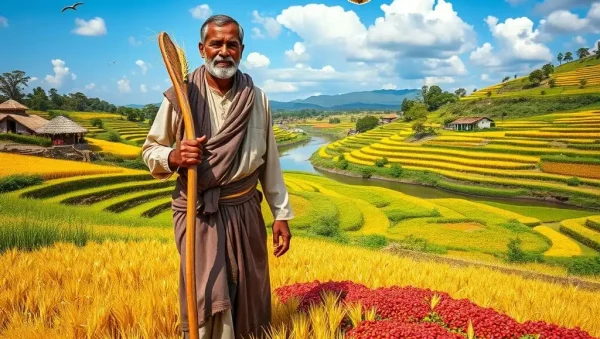
How Ancient Indian Farmers Cultivated Resilience Through Crop Diversity
Agricultural Practices and Innovations
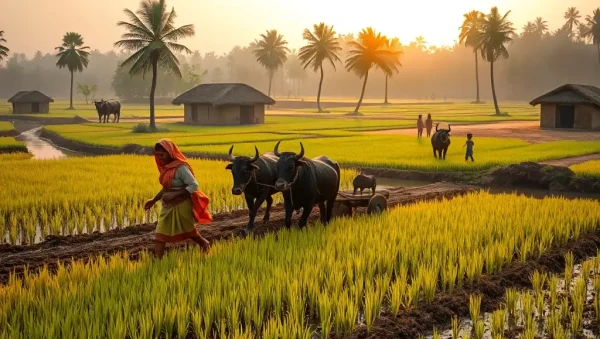
The Transition from Nomadic to Settled Agriculture in Ancient India

Agricultural Practices and Innovations
Ancient Indian Agricultural Festivals: Celebrating Bountiful Harvests
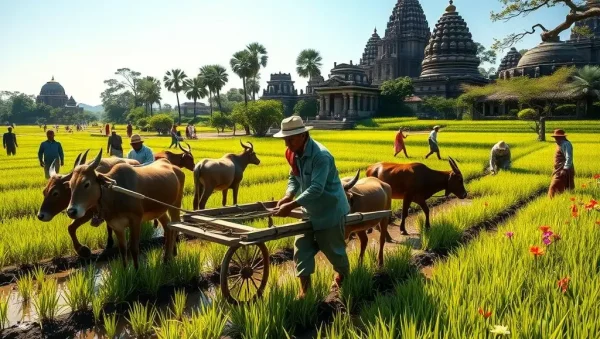
Agricultural Practices and Innovations
The Rediscovery of Ancient Indian Agricultural Practices in Contemporary Farming
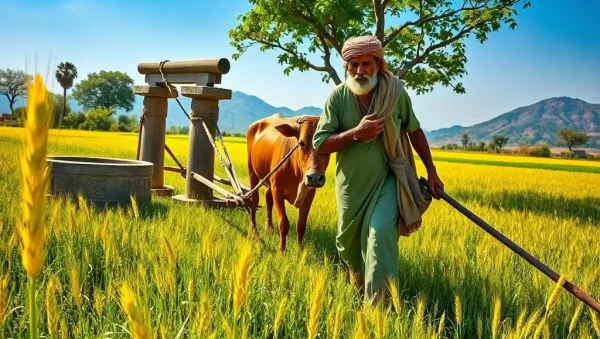
Agricultural Practices and Innovations
Ancient Indian Inventions That Shaped Agricultural Practices
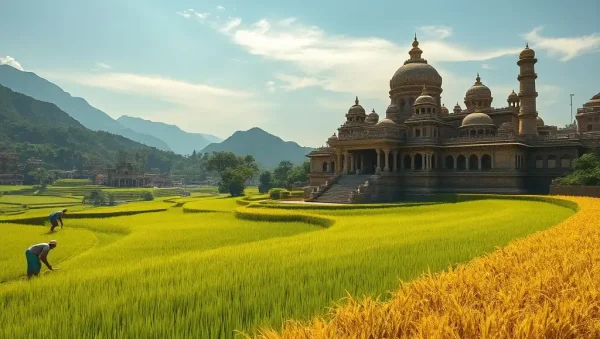
Agricultural Practices and Innovations
The Relationship Between Agriculture and Urbanization in Ancient India
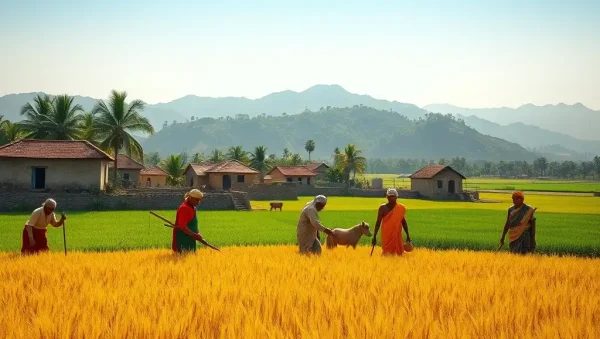
Agricultural Practices and Innovations
The Importance of Agriculture in the Maurya and Gupta Empires
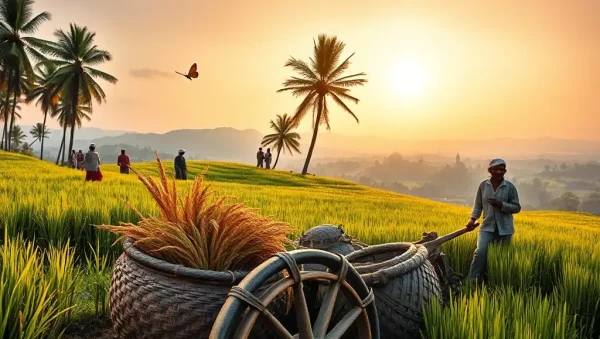
Agricultural Practices and Innovations
The Legacy of Ancient Indian Agriculture: From Past to Present
🌾 Agricultural Practices and Innovations in Ancient India
Explore how agricultural practices and innovations shaped ancient Indian history, strengthened local economies, and supported the growth of remarkable civilizations. This subcategory examines farming methods, irrigation systems, crop cultivation, animal husbandry, agricultural tools, land management, and rural communities from the Indus Valley Civilization to the Gupta Empire. Discover how early Indian societies adapted to monsoon cycles, river valleys, soil conditions, and changing economic needs while developing sustainable techniques that influenced South Asian agriculture for centuries.
🌱 Farming Techniques and Crop Cultivation
Learn about the farming methods used by ancient Indian communities, including plough agriculture, seed selection, crop rotation, mixed farming, and seasonal cultivation. Articles explore the cultivation of wheat, barley, rice, millet, pulses, cotton, sesame, sugarcane, and spices, showing how agricultural diversity supported food security and commercial growth.
Readers can also discover how farmers responded to different geographical regions, from the fertile plains of the Indus and Ganges rivers to the Deccan Plateau and semi-arid areas. These practices reveal the practical knowledge, environmental awareness, and agricultural adaptation that characterized ancient Indian rural life.
💧 Irrigation Systems and Water Management
Ancient Indian agriculture depended heavily on effective water management. This section examines wells, canals, reservoirs, tanks, embankments, dams, drainage systems, and stepwells used to store and distribute water for farming and settlements. Evidence from archaeological sites helps explain how communities managed irrigation before modern engineering.
Explore the relationship between monsoon rainfall, river systems, and agricultural productivity. The content highlights how water conservation encouraged stable harvests, supported population growth, and helped cities and kingdoms develop prosperous economies in ancient India.
🐂 Animal Husbandry and Agricultural Tools
Discover the important role of cattle, oxen, buffalo, horses, sheep, goats, and other domesticated animals in ancient Indian agriculture. Animals provided traction for ploughing, transportation, manure for soil fertility, milk, wool, meat, and other resources. Animal husbandry was closely connected to farming, trade, social organization, and religious traditions.
This section also explores agricultural tools such as wooden ploughs, sickles, hoes, digging sticks, carts, storage vessels, and grinding equipment. Readers will learn how these technologies improved cultivation, harvesting, food processing, and the daily work of farming communities.
🏺 Agriculture in the Indus Valley Civilization
Examine the agricultural foundations of the Indus Valley Civilization, including evidence from Harappa, Mohenjo-daro, Dholavira, Kalibangan, and other archaeological sites. Findings such as charred grains, farming tools, storage facilities, wells, and field patterns provide valuable information about early agricultural production and food distribution.
Learn how Indus communities cultivated crops such as wheat, barley, peas, sesame, and cotton while adapting to riverine and semi-arid environments. Their advanced urban planning, drainage networks, granaries, and water systems demonstrate the connection between agricultural innovation and early city development.
📜 Agriculture in Vedic and Later Ancient India
Explore references to farming, cattle rearing, land ownership, harvests, and rural labor in Vedic literature and later historical sources. Agricultural terms found in texts such as the Rigveda, Atharvaveda, Arthashastra, and Buddhist and Jain writings offer insights into ancient Indian economic life.
Readers can understand how agriculture influenced social structures, taxation, village administration, and political authority. The growth of settled farming communities helped establish kingdoms, expand trade networks, and provide the revenue required by the Mauryan, Satavahana, Kushan, and Gupta states.
⚙️ Agricultural Innovations and Ancient Technology
Ancient Indian farmers developed practical innovations in ploughing, irrigation, crop processing, storage, soil improvement, and water conservation. This section investigates how regional knowledge and experimentation contributed to agricultural technology in ancient India, including techniques suited to wet, dry, mountainous, and river-based landscapes.
Discover how farming innovations supported population expansion, craft production, urbanization, and long-distance trade. The discussion also considers the transmission of agricultural knowledge through families, villages, professional communities, religious institutions, and state administrations.
💰 Agriculture, Trade, and the Ancient Indian Economy
Agriculture formed the economic foundation of ancient Indian society. Learn how surplus crops supplied towns, armies, temples, monasteries, and royal courts while also supporting markets and trade routes. Products such as cotton textiles, rice, spices, sugar, oilseeds, and livestock became important commodities in regional and international exchange.
This section explains the connection between land revenue, taxation, labor, storage, merchants, and political power. By studying farming and commerce together, readers gain a clearer understanding of how agriculture shaped the economy of ancient India and supported the rise of complex states.
🌍 Environment, Sustainability, and Rural Life
Investigate how ancient Indian communities interacted with forests, rivers, grasslands, soils, and seasonal weather. Topics include soil conservation, water harvesting, crop diversity, pastoralism, forest resources, and the ecological challenges faced by early farmers. These examples offer valuable perspectives on sustainable agriculture and traditional environmental knowledge.
Readers will also learn about village organization, agricultural labor, food traditions, seasonal festivals, and the cultural importance of farming. Ancient rural life was not only an economic system but also a foundation of community identity, religious practice, and social continuity.
❓ Frequently Asked Questions About Agricultural Practices and Innovations
🌾 What crops were cultivated in ancient India?
Ancient Indian farmers cultivated wheat, barley, rice, millet, pulses, sesame, cotton, sugarcane, peas, and various fruits and vegetables. Crop selection varied according to climate, soil, rainfall, river access, and regional agricultural traditions.
💧 How did ancient Indians irrigate their fields?
They used wells, canals, reservoirs, tanks, embankments, dams, stepwells, and channels connected to rivers or seasonal water sources. These irrigation methods helped communities manage monsoon rainfall and maintain agricultural production during dry periods.
🐂 Why were cattle important to ancient Indian agriculture?
Cattle and oxen were essential for ploughing fields, transporting goods, producing manure, and providing milk. Their economic, social, and religious importance made animal husbandry a major part of ancient Indian rural life.
🏺 What evidence reveals information about ancient Indian farming?
Archaeologists study excavated seeds, pollen, tools, storage buildings, field layouts, animal remains, irrigation structures, settlement plans, and soil samples. Literary sources, inscriptions, coins, sculptures, and paintings also provide evidence about crops, land use, taxation, and farming communities.
⚙️ How did agricultural innovations affect ancient Indian civilization?
Agricultural innovations increased food production, supported population growth, encouraged urbanization, and supplied resources for trade and state administration. Improved farming and water management helped sustain major civilizations and powerful kingdoms from the Indus Valley period through the Gupta Empire.