

Land Use and Irrigation Systems

Land Use and Irrigation Systems
41 articles in this topic
Start here
Read more about this topic
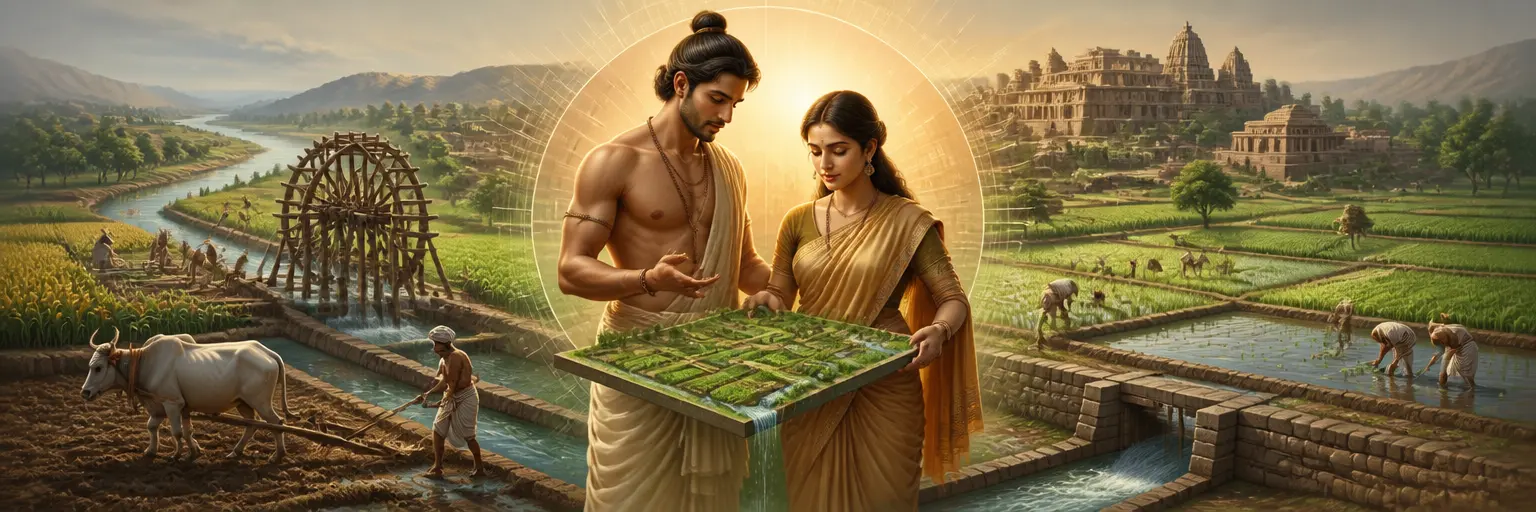
Explore how land use and irrigation systems shaped agriculture and economic growth in ancient India. Discover sophisticated water-management techniques, including wells, tanks, canals, reservoirs, and river-based farming, that supported thriving communities from the Indus Valley to the Gupta Empire. Learn how these innovations improved crop production, strengthened trade, and reflected the remarkable ingenuity of ancient Indian civilizations.
More in Land Use and Irrigation Systems
Land Use and Irrigation Systems
The Art of Crop Rotation in Ancient Indian Farming Techniques
Land Use and Irrigation Systems
The Influence of Ancient Indian Irrigation on Modern Agricultural Practices
Land Use and Irrigation Systems
The Transformation of Agriculture from the Indus Valley to the Gupta Empire
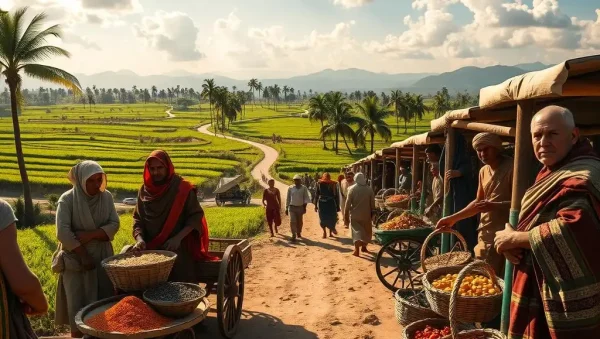
Land Use and Irrigation Systems
How Trade Routes Influenced Agricultural Practices in Ancient India
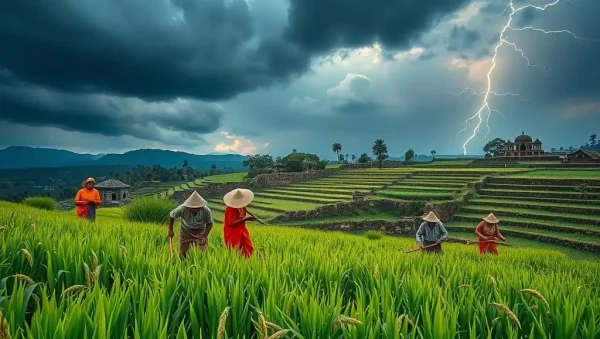
Land Use and Irrigation Systems
The Impact of Seasonal Monsoons on Ancient Indian Farming Systems
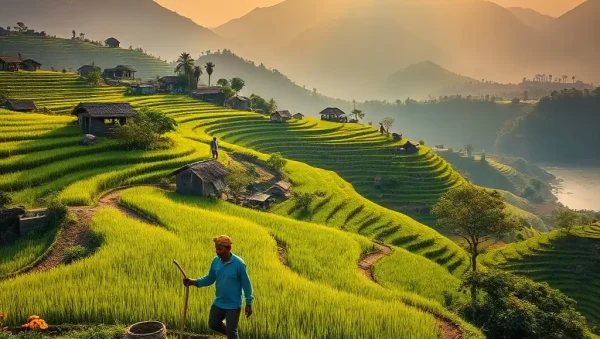
Land Use and Irrigation Systems
Ancient Indian Agricultural Practices: Bridging Tradition and Modernity
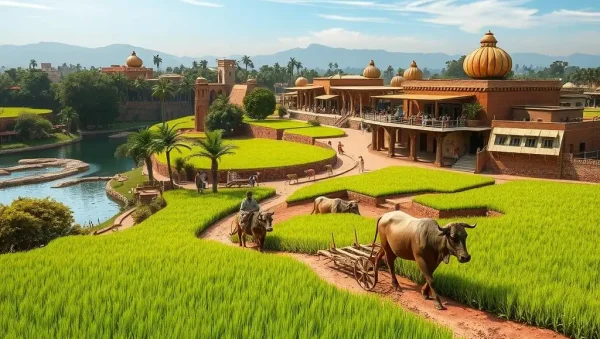
Land Use and Irrigation Systems
The Role of the Indus Valley Civilization in Shaping Agricultural Methods

Land Use and Irrigation Systems
The Role of Monastic Institutions in Promoting Agriculture in Ancient India
🌾 Land Use and Irration Systems in Ancient India
Explore how land use and irrigation systems shaped agriculture and the economy of ancient India. This subcategory examines farming landscapes, water management, cultivation methods, village organization, and the relationship between agricultural production and the growth of early Indian civilizations. From the Indus Valley Civilization to the Mauryan and Gupta periods, discover how communities adapted to rivers, monsoon cycles, arid regions, forests, and fertile plains. Learn how ancient Indian irrigation technology supported food security, trade, taxation, urban development, and the prosperity of kingdoms across the subcontinent.
💧 Ancient Indian Irrigation Technology and Water Management
Discover the engineering knowledge behind irrigation in ancient India, including wells, reservoirs, canals, tanks, dams, embankments, drainage channels, and stepwells. Articles in this section explain how farmers and administrators collected, stored, and distributed water for crops, livestock, households, and growing settlements. Special attention is given to the use of river systems, seasonal rainfall, and groundwater in different geographical regions.
Readers can expect detailed discussions of traditional water-management practices and their importance to the ancient Indian economy. Water conservation, irrigation planning, flood control, and community maintenance helped agricultural societies withstand irregular monsoons and expand cultivation. These systems also reveal the technical skill, social cooperation, and administrative organization of early Indian communities.
🌱 Agricultural Land Use in Ancient India
Learn how ancient Indian societies organized and used land for agriculture, pasture, forests, settlements, roads, and religious purposes. This section explores cultivated fields, crop-growing regions, fallow land, seasonal farming, and the expansion of agricultural settlements. It also considers how geography influenced land use across the Indus basin, Gangetic plain, Deccan Plateau, and southern Indian regions.
Expect insights into ancient Indian farming practices, including the cultivation of rice, wheat, barley, pulses, cotton, sugarcane, oilseeds, and other crops. Articles may also examine plough agriculture, animal power, soil fertility, crop rotation, and the relationship between land productivity and population growth. Together, these topics explain how agricultural land supported villages, cities, armies, markets, and royal institutions.
🏺 Irrigation, Cities, and the Indus Valley Civilization
Explore the relationship between water systems and urban development in the Indus Valley Civilization. The planned cities of Harappa, Mohenjo-daro, Dholavira, and related settlements demonstrate advanced approaches to wells, reservoirs, drainage, water storage, and sanitation. This section investigates how carefully designed urban infrastructure supported daily life and reflected the importance of water in Bronze Age South Asia.
Readers can learn how the Indus people responded to river changes, seasonal rainfall, and regional environmental conditions. Discussions of reservoirs, large public water structures, drainage networks, and agricultural zones reveal how water management influenced trade, settlement planning, public health, and economic organization. These examples provide valuable context for the origins of hydraulic and agricultural traditions in ancient India.
👑 Land Revenue, Administration, and the Mauryan Economy
Understand how land and irrigation were connected to governance during the Mauryan period. Ancient texts and historical evidence offer information about cultivated land, agricultural taxes, village administration, state oversight, and the management of forests and water resources. This section explains how rulers used agricultural production as a foundation for public works, military power, and imperial expansion.
Articles will examine the role of officials, local communities, cultivators, and landholders in maintaining productive fields and irrigation facilities. Land revenue systems and agricultural taxation were not only economic tools; they also shaped relationships between the state and rural society. By studying these systems, readers can better understand the organization of the Mauryan Empire and the development of early Indian political economy.
🌾 Farming Communities, Villages, and Rural Life
Discover how farming communities organized everyday life around land, water, labor, and seasonal agricultural cycles. This section explores village settlements, shared resources, irrigation duties, agricultural tools, animal husbandry, and cooperation among cultivators. It also considers the role of artisans, merchants, laborers, and local leaders in supporting rural economies.
Readers can expect a deeper look at how ancient Indian villages functioned as economic and social units. The availability of water affected settlement patterns, crop choices, social relationships, and local wealth. Through archaeological findings, inscriptions, literary sources, and historical interpretation, this subcategory presents a balanced picture of rural production and community life.
🌧️ Monsoons, Rivers, and Environmental Adaptation
Investigate how ancient Indian farmers adapted to the monsoon climate and the changing behavior of rivers. Reliable rainfall could produce abundant harvests, while droughts, floods, river shifts, and soil erosion created serious challenges. This section explores the environmental factors that influenced agricultural decision-making and the development of different irrigation techniques.
Expect explanations of how communities combined rainfall-based farming with wells, tanks, canals, reservoirs, and other water sources. Climate adaptation and sustainable land use were essential to the survival of ancient settlements. Studying these strategies helps readers understand the environmental knowledge that supported long-term agricultural development in South Asia.
📜 Sources for Studying Ancient Indian Land and Water Systems
Learn how historians reconstruct the history of land use and irrigation through archaeology, inscriptions, ancient literature, coins, settlement remains, botanical evidence, and landscape studies. Sources such as the Arthashastra, Buddhist and Jain texts, royal inscriptions, excavated reservoirs, and ancient agricultural tools provide important clues about farming and water management.
This section also explains why historical evidence must be interpreted carefully. Archaeological remains, literary descriptions, and inscriptions may represent different regions, social groups, or historical periods. By comparing multiple sources, researchers can create a more reliable understanding of agriculture, irrigation, taxation, environmental change, and economic life in ancient India.
❓ Frequently Asked Questions About Land Use and Irrigation Systems
What were the main irrigation methods used in ancient India?
Ancient Indian communities used wells, canals, tanks, reservoirs, dams, embankments, stepwells, and channels to manage water. Techniques varied according to local geography, rainfall, river systems, soil conditions, and available materials. Many irrigation systems combined rainwater harvesting with groundwater or river water.
Why was irrigation important to the ancient Indian economy?
Irrigation helped farmers produce more reliable harvests despite seasonal monsoons and periods of drought. Increased agricultural production supported population growth, urban settlements, taxation, trade, armies, religious institutions, and royal administration. Water management was therefore central to economic stability and political power.
How did land use differ across ancient India?
Land use varied widely between the fertile Gangetic plains, the Indus basin, the Deccan Plateau, coastal regions, forests, and dry zones. Communities cultivated crops, raised animals, gathered forest products, built settlements, and developed irrigation according to their environmental conditions. This regional diversity is a key feature of ancient Indian agriculture.
Did the state control irrigation systems in ancient India?
In some periods, rulers and officials supervised major waterworks, agricultural taxation, land surveys, and the maintenance of canals or reservoirs. However, local villages and farming communities also played an important role in constructing, repairing, and sharing irrigation facilities. Ancient water management often depended on cooperation between government authorities and local society.
What sources reveal information about ancient Indian agriculture?
Information comes from archaeological sites, irrigation structures, ancient tools, seeds and pollen, inscriptions, coins, legal and administrative texts, and religious literature. Important evidence is associated with the Indus Valley Civilization, Mauryan India, early historic kingdoms, and the Gupta period. Comparing these sources helps historians understand land ownership, farming, irrigation, taxation, and rural life.