
Ancient Indian Universities (e.g., Nalanda)

Ancient Indian Universities (e.g., Nalanda)
55 articles in this topic
Start here
- Ancient Indian Universities (e.g., Nalanda)How Ancient Indian Universities Influenced Modern University Structures
- Ancient Indian Universities (e.g., Nalanda)From Nalanda to Takshashila: A Journey Through Ancient Indian Education
- Ancient Indian Universities (e.g., Nalanda)The Survival of Ancient Knowledge: Libraries of Indian Universities
Read more about this topic
Discover the legacy of Ancient Indian Universities 📚 Explore Nalanda and other renowned centers of learning that advanced philosophy, science, medicine, mathematics, and Buddhist studies. Learn how these pioneering institutions shaped education, attracted scholars from across Asia, and influenced the intellectual heritage of ancient India. ✨
More in Ancient Indian Universities (e.g., Nalanda)
Ancient Indian Universities (e.g., Nalanda)
The Role of Ancient Indian Universities in Preserving Oral Traditions
Ancient Indian Universities (e.g., Nalanda)
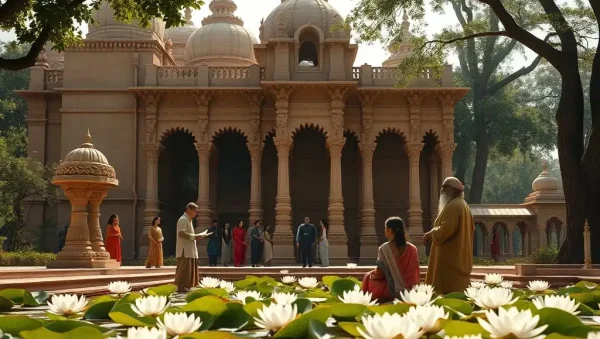
The Architecture of Learning: Ancient Indian Universities Explored
Ancient Indian Universities (e.g., Nalanda)
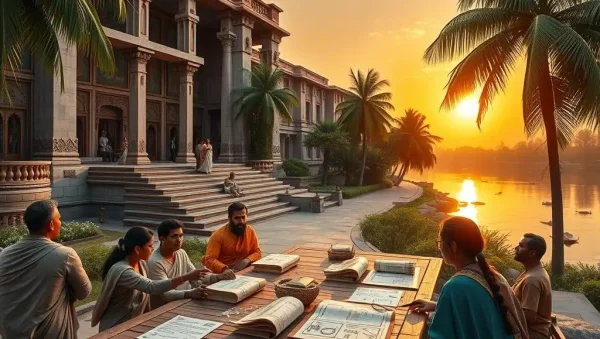
Ancient Indian Universities: A Model for Modern Education Systems
Ancient Indian Universities (e.g., Nalanda)
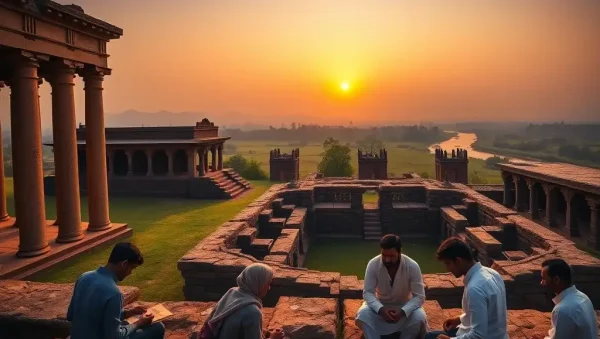
The Importance of Ancient Indian Universities in the Development of Logic
Ancient Indian Universities (e.g., Nalanda)
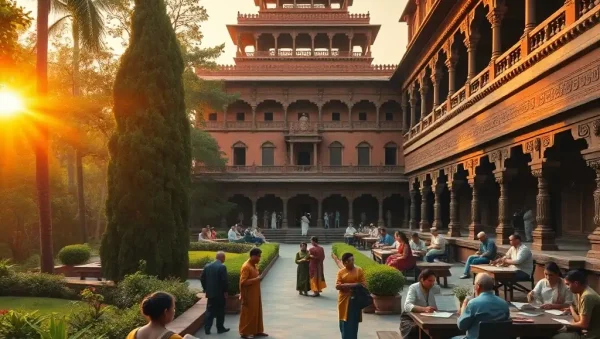
Ancient Indian Universities: Centers of Knowledge and Culture
Ancient Indian Universities (e.g., Nalanda)
Exploring Takshashila: The Cradle of Ancient Indian Learning
Ancient Indian Universities (e.g., Nalanda)
The Integration of Spiritual and Academic Learning in Ancient India
Ancient Indian Universities (e.g., Nalanda)
Ancient Indian Universities: Bridging the Gap Between Science and Spirituality
🏛️ Ancient Indian Universities: Nalanda and the Legacy of Higher Education
Explore the remarkable world of Ancient Indian universities, including Nalanda, Takshashila, Vikramashila, Valabhi, and Odantapuri. This subcategory examines how India developed influential centers of learning, scholarship, debate, and cultural exchange long before the rise of many modern universities. Discover the history of Nalanda University, ancient Indian education systems, Buddhist monastic universities, traditional subjects, teaching methods, international students, and the lasting contributions of Indian scholars to mathematics, medicine, philosophy, astronomy, language, and religion.
📚 Nalanda University: India’s Ancient Center of Learning
Learn about Nalanda Mahavihara, one of the most celebrated ancient universities in India. Articles in this section explore its foundation, development, academic reputation, monastic organization, libraries, residential facilities, and influence during the Gupta and post-Gupta periods. Readers can understand why Nalanda became a major destination for students and scholars from across Asia.
Discover the subjects taught at Nalanda, including Buddhist philosophy, logic, grammar, medicine, astronomy, mathematics, and literature. Content also examines the university’s international connections, its role in the spread of Buddhism, and the accounts of travelers such as Xuanzang and Yijing, whose writings provide valuable information about ancient Indian higher education.
🧭 Takshashila and the Origins of Indian Scholarship
Explore Takshashila, or Taxila, an important ancient learning center associated with the northwestern Indian subcontinent. This section explains its intellectual environment, renowned teachers, scholarly traditions, and connection with major historical kingdoms. Readers will learn how Takshashila supported advanced study in fields such as statecraft, medicine, military science, law, philosophy, and languages.
Articles also distinguish between Takshashila’s organization and the later residential university model represented by Nalanda. By examining teachers, students, professional training, and oral instruction, this content provides a broader understanding of the history of education in ancient India and the evolution of organized knowledge.
🕉️ Buddhist Monastic Universities of Ancient India
Ancient Indian universities were closely connected with Buddhist monasteries, which served as centers for religious study, philosophical debate, manuscript preservation, and international learning. Discover the history of Vikramashila, Odantapuri, Somapura, and other institutions that formed part of a wider network of Buddhist education across India and Asia.
This section explores how monastic universities combined spiritual training with rigorous academic study. Readers can learn about admission traditions, teacher-student relationships, scholarly debates, translation activities, and the movement of ideas between India, Tibet, China, Southeast Asia, and other regions.
🔬 Subjects and Curriculum in Ancient Indian Universities
Discover the wide-ranging curriculum of ancient Indian centers of learning. In addition to Buddhist studies and Hindu philosophy, scholars studied Ayurveda, astronomy, mathematics, grammar, linguistics, logic, political science, law, architecture, literature, and military science. These subjects reveal the advanced and interdisciplinary nature of Indian intellectual traditions.
Articles explain how knowledge was transmitted through lectures, memorization, debate, commentary, observation, apprenticeship, and practical training. This content helps readers understand the depth of ancient Indian education and how specialized learning was connected to ethics, society, religion, governance, and everyday life.
🌏 International Students and Cultural Exchange
Nalanda and other Indian learning centers attracted students, teachers, translators, and pilgrims from many parts of Asia. Explore the journeys of Chinese, Korean, Tibetan, Central Asian, and Southeast Asian scholars who traveled to India to study Buddhism, Sanskrit, philosophy, medicine, and Indian sciences.
This section highlights the role of ancient universities in creating a powerful network of cross-cultural exchange. Readers can discover how Indian texts, ideas, scripts, religious traditions, and scientific knowledge traveled beyond the subcontinent and influenced the intellectual history of Asia.
🔥 Libraries, Manuscripts, and the Destruction of Nalanda
Learn about the famous libraries of Nalanda, including traditional accounts of extensive manuscript collections covering religion, philosophy, science, medicine, grammar, and literature. This section examines the importance of palm-leaf manuscripts, copying traditions, oral preservation, and scholarly commentaries in ancient India.
Readers can also explore the decline and destruction of Nalanda and other Buddhist learning centers amid political upheaval and changing religious landscapes. Carefully presented historical discussions separate documented evidence from later traditions while explaining the enduring significance of Nalanda’s ruins and archaeological remains.
🏺 Archaeology and the Remains of Ancient Universities
Explore the archaeological sites associated with Nalanda, Takshashila, Vikramashila, and other ancient Indian educational institutions. Articles examine monasteries, lecture halls, stupas, temples, residential cells, sculptures, inscriptions, coins, and excavated artifacts that help reconstruct the organization of these historic centers.
This content shows how archaeology, inscriptions, travel accounts, literary sources, and comparative historical research work together to illuminate ancient Indian universities. Readers can gain a clearer picture of campus life, architectural planning, religious practice, and the material culture of learning.
💡 Ancient Indian Education and Its Modern Relevance
Discover how the educational ideals of ancient India continue to influence modern discussions about universities, residential learning, mentorship, ethics, interdisciplinary study, and international collaboration. Nalanda’s legacy remains relevant to conversations about global education, cultural diplomacy, and the preservation of knowledge.
This section presents ancient learning traditions with historical context rather than romanticized claims. Readers can compare ancient Indian education with modern systems while appreciating its emphasis on critical reasoning, debate, character development, scholarship, and the pursuit of knowledge.
❓ Frequently Asked Questions About Ancient Indian Universities
📖 What was Nalanda University?
Nalanda was a major ancient residential center of learning in present-day Bihar, India. It developed into an internationally respected institution where students and scholars studied Buddhism, philosophy, logic, grammar, medicine, astronomy, mathematics, and other subjects. Nalanda is often regarded as one of the earliest large-scale universities in the world.
🗺️ Where was the ancient university of Nalanda located?
Nalanda was located near modern-day Rajgir and Bihar Sharif in the Indian state of Bihar. Its archaeological remains include monasteries, stupas, temples, courtyards, lecture areas, and other structures that reveal the scale and organization of this historic educational complex.
🎓 What subjects were taught at ancient Indian universities?
Ancient Indian universities offered instruction in Buddhist and Hindu philosophy, logic, grammar, Sanskrit, medicine, mathematics, astronomy, literature, law, political science, and other disciplines. The exact curriculum varied by institution, period, teacher, and intellectual tradition.
🌏 Did students from other countries study at Nalanda?
Yes. Students and pilgrims from China, Tibet, Korea, Central Asia, and Southeast Asia traveled to Indian learning centers. Visitors such as Xuanzang and Yijing recorded valuable observations about Nalanda’s teachers, admission practices, academic debates, monastic life, and scholarly traditions.
🏛️ How were Nalanda and Takshashila different?
Takshashila was an earlier and more loosely organized center associated with renowned teachers and specialized instruction in several fields. Nalanda developed later as a large residential monastic university with organized monasteries, extensive libraries, formal scholarly communities, and a strong international reputation. Both played important roles in the history of ancient Indian education.