
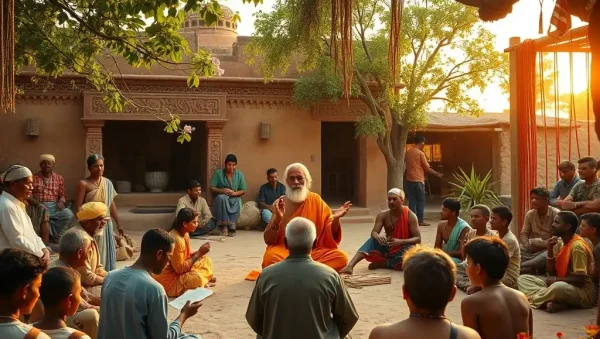
Educational Practices and Curriculum
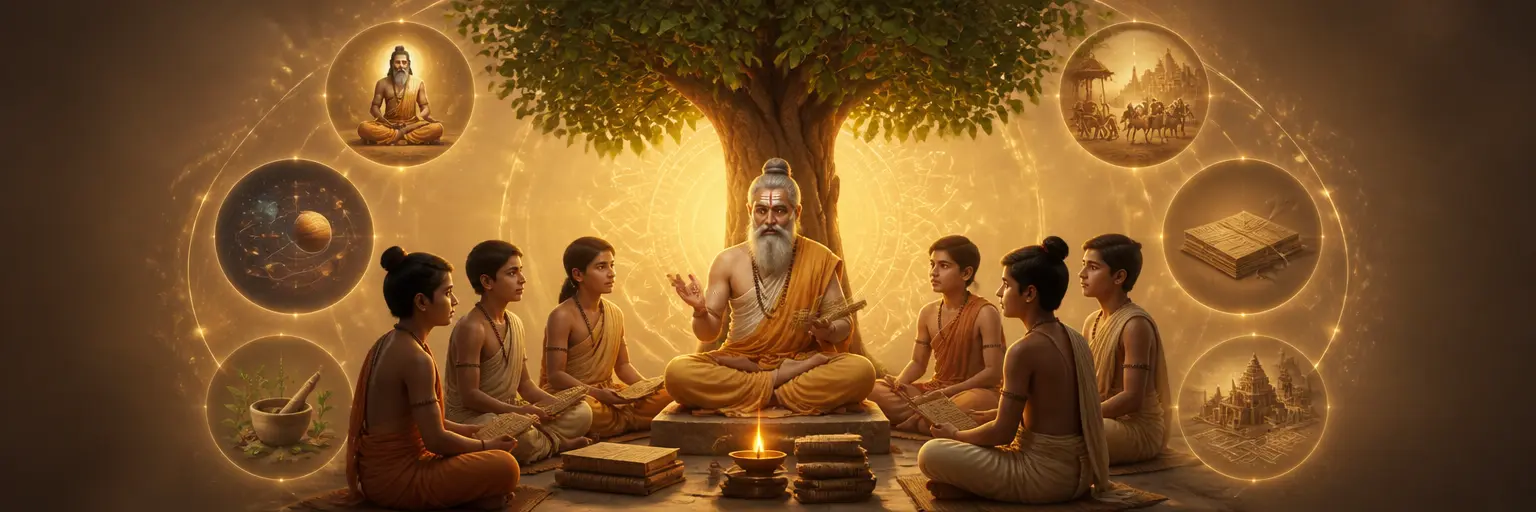

Educational Practices and Curriculum
54 articles in this topic
Start here
- Educational Practices and CurriculumThe Role of Language in Ancient Indian Educational Systems
- Educational Practices and CurriculumThe Impact of Ancient Indian Educational Practices on Neighboring Civilizations
- Educational Practices and CurriculumHow Sanskrit Became the Language of Learning in Ancient India
Read more about this topic
Explore educational practices and curriculum in ancient India 📚—from gurukula learning and oral traditions to subjects such as Vedic studies, philosophy, mathematics, medicine, astronomy, and statecraft. Discover how ancient Indian education shaped knowledge, character, discipline, and intellectual traditions across civilizations, offering valuable insight into the history of Indian education systems and their enduring influence.
More in Educational Practices and Curriculum
Educational Practices and Curriculum
Pedagogical Approaches in Ancient Indian Education: A Comparative Study
Educational Practices and Curriculum
The Legacy of Ancient Indian Philosophers in Contemporary Educational Practices
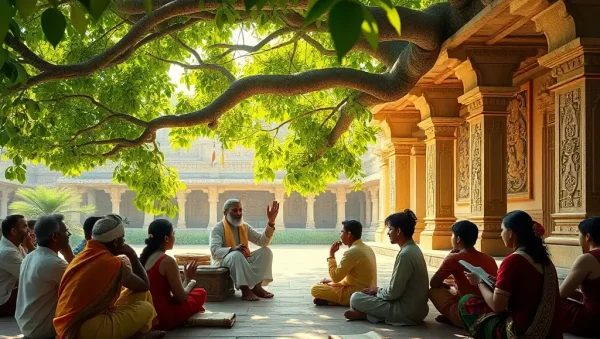
Educational Practices and Curriculum
How Ancient Indian Education Promoted Critical Thinking and Debate
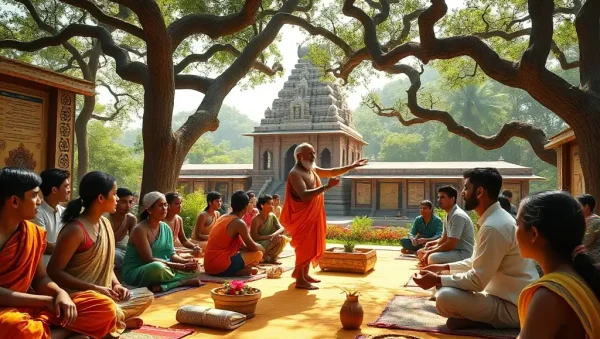
Educational Practices and Curriculum
The Influence of Ancient India on Modern Educational Systems
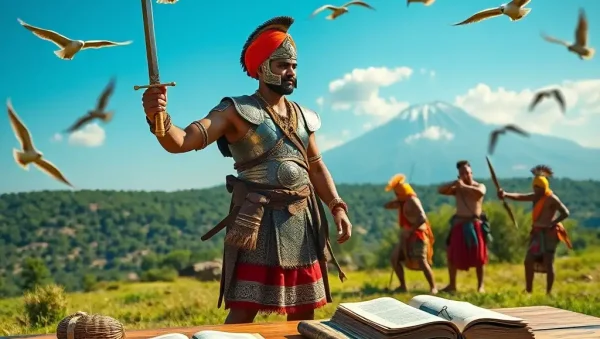
Educational Practices and Curriculum
The Curriculum of Ancient Indian Warriors: Education Beyond the Classroom
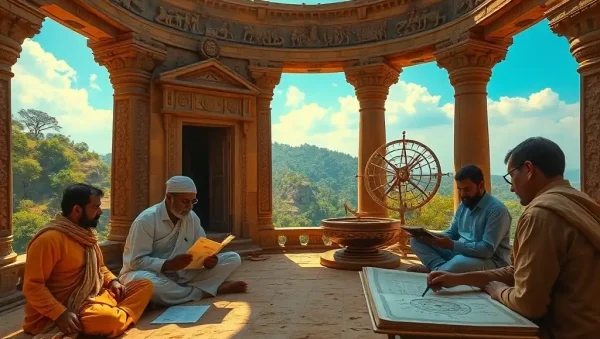
Educational Practices and Curriculum
Exploring the Curriculum of Ancient Indian Astronomers and Mathematicians
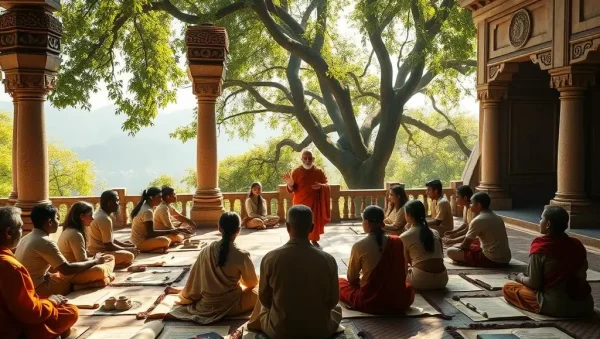
Educational Practices and Curriculum
How Ancient Indian Practices Can Inspire Modern Educational Innovations
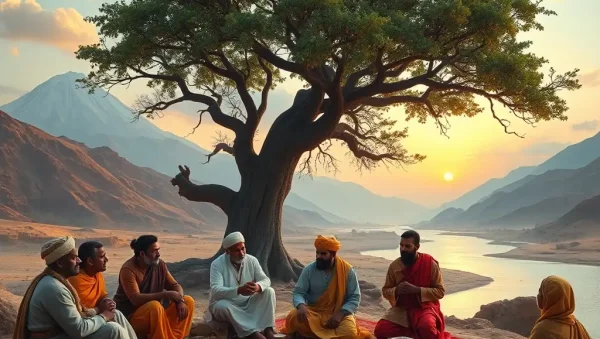
Educational Practices and Curriculum
How Geography Shaped Educational Practices in Different Regions of Ancient India
📚 Educational Practices and Curriculum in Ancient India
Explore how educational practices and curriculum in ancient India shaped intellectual life, social values, scientific discovery, and cultural continuity. This subcategory examines learning systems from the Indus Valley Civilization through the Vedic period, Buddhist and Jain traditions, and the Gupta Empire. Discover the institutions, teachers, subjects, teaching methods, texts, and educational ideals that influenced ancient Indian history and the development of knowledge across South Asia.
🏛️ Ancient Indian Education Systems and Institutions
Learn about the organization of education in ancient India, including the gurukula system, household instruction, temple-based learning, monasteries, and renowned centers of higher education. Articles explore how students lived with teachers, followed disciplined routines, and developed knowledge through direct instruction, discussion, memorization, and practical experience.
This section also examines important educational centers such as Takshashila, Nalanda, Vikramashila, Vallabhi, and Ujjain. Readers can discover how these institutions attracted students and scholars from different regions, supported advanced study, and contributed to the spread of philosophy, medicine, mathematics, astronomy, language, and religious thought.
🪔 Gurukula Traditions and Teacher-Student Relationships
Discover the role of the guru, acharya, and shishya in ancient Indian education. The teacher was not only an instructor but also a moral guide, mentor, and guardian responsible for shaping a student’s character, discipline, memory, conduct, and understanding of dharma.
Content in this area explains daily life within the gurukula, including service to the teacher, oral recitation, debate, meditation, physical training, and the gradual mastery of sacred and secular subjects. These practices reveal how education in ancient India combined intellectual development with ethical and spiritual formation.
📖 Subjects in the Ancient Indian Curriculum
Explore the wide range of subjects included in the ancient Indian curriculum. Depending on the institution and period, learners studied the Vedas, Vedangas, grammar, logic, philosophy, law, statecraft, economics, medicine, astronomy, mathematics, literature, music, military science, and arts.
Readers will also learn how subjects were connected rather than taught in isolation. Sanskrit grammar supported scriptural interpretation, mathematics assisted astronomy and trade, medicine relied on observation and classification, and political education prepared students to understand administration, diplomacy, justice, and public responsibility.
🧠 Teaching Methods, Oral Learning, and Memorization
Ancient Indian education depended heavily on oral transmission. Students listened carefully, repeated lessons, memorized complex passages, and practiced precise pronunciation. This method helped preserve Vedic hymns, philosophical dialogues, grammatical rules, epics, legal traditions, and scientific knowledge across generations.
Teaching also included questioning, debate, interpretation, storytelling, demonstration, and practical training. This subcategory explains how learning through dialogue and intellectual debate encouraged critical thinking while oral techniques protected the accuracy and continuity of important ancient Indian texts.
🔬 Science, Mathematics, Medicine, and Practical Knowledge
Discover the contribution of ancient Indian education to mathematics, astronomy, Ayurveda, metallurgy, architecture, agriculture, and engineering. Educational traditions preserved observations about the natural world and transformed them into systems of calculation, diagnosis, measurement, classification, and prediction.
Articles highlight the relationship between curriculum and practical life, from numerical methods and astronomical calculations to medical training and architectural planning. Readers can better understand how ancient Indian scholars developed knowledge that influenced later scientific and cultural traditions in India and beyond.
🧘 Philosophy, Ethics, and Holistic Education
Ancient Indian education placed strong emphasis on character, self-discipline, duty, truth, compassion, spiritual insight, and social responsibility. Learning was often viewed as a path toward self-knowledge and liberation, not merely as preparation for employment or administrative service.
This section explores the educational ideas found in the Upanishads, Buddhist teachings, Jain traditions, epics, Dharmashastra literature, and classical philosophical schools. Readers will see how curriculum connected personal conduct with broader concepts such as dharma, karma, ahimsa, moksha, and responsible citizenship.
☸️ Buddhist, Jain, and Monastic Education
Study the important role of Buddhist viharas, Jain institutions, and monastic communities in the history of education. These centers offered instruction in religion, philosophy, languages, logic, medicine, debate, ethics, and textual study, often welcoming learners from different parts of India and Asia.
Topics include the educational culture of Nalanda and other learning centers, the use of debate and commentary, and the transmission of Buddhist and Jain knowledge through teachers, manuscripts, pilgrimages, and scholarly networks. This provides a broader view of education beyond exclusively Brahmanical traditions.
👩🎓 Access to Education, Social Groups, and Historical Context
Examine who received education in different periods of ancient Indian history. Access varied according to social status, gender, occupation, religious tradition, region, and historical era. Sources such as literary texts, inscriptions, biographies, and archaeological evidence reveal both opportunities for learning and significant limitations.
This section presents a balanced study of women scholars, royal education, professional training, community knowledge, and the changing role of social institutions. Readers can explore figures such as Gargi and Maitreyi while also considering the wider historical debates surrounding access, exclusion, and educational privilege.
🏺 Archaeology, Texts, and Evidence for Ancient Education
Learn how historians reconstruct ancient Indian educational practices from archaeological remains, inscriptions, manuscripts, religious texts, grammatical works, epics, biographies, and foreign travel accounts. Because direct evidence is limited for some periods, researchers compare multiple sources to identify reliable patterns and historical change.
Articles explain the strengths and limitations of these sources, helping readers distinguish between idealized descriptions and everyday practice. This evidence-based approach supports a deeper understanding of ancient Indian curriculum, learning institutions, literacy, teacher traditions, and intellectual exchange.
❓ Frequently Asked Questions About Educational Practices and Curriculum
What was the gurukula system in ancient India?
The gurukula system was a form of education in which students lived with or near a teacher, known as a guru or acharya. Learning combined academic instruction, discipline, practical responsibilities, ethical training, and spiritual development. Students studied through oral lessons, repetition, questioning, memorization, and daily service.
What subjects were taught in ancient Indian education?
The curriculum varied by period and institution but could include the Vedas, grammar, logic, philosophy, law, medicine, mathematics, astronomy, literature, music, military science, politics, economics, and the arts. Buddhist and Jain centers also emphasized religious philosophy, debate, languages, ethics, and monastic studies.
Which were the major ancient Indian centers of learning?
Important centers included Takshashila, Nalanda, Vikramashila, Vallabhi, and Ujjain. These institutions supported advanced study in subjects such as philosophy, medicine, astronomy, mathematics, grammar, Buddhist thought, law, and political science. Their influence extended across India and into other parts of Asia.
How was knowledge preserved before widespread printing?
Knowledge was preserved through oral recitation, memorization, teacher-to-student transmission, handwritten manuscripts, commentary, and public debate. Precise pronunciation and repeated practice were especially important for preserving Vedic and literary traditions. Monasteries, temples, scholarly communities, and royal institutions also helped protect and transmit knowledge.
Was education available to everyone in ancient India?
Educational access was not equal and changed according to time, place, social group, gender, occupation, and religious tradition. Some women and members of different communities became recognized scholars, while many others faced restrictions. Studying both achievements and limitations provides a more accurate understanding of education and educational systems in ancient India.