
The Influence of Ancient India on Modern Educational Systems


Welcome to Ancient India History, where we embark on a captivating journey through the rich and diverse tapestry of ancient Indian civilizations. In this exploration, we delve into the profound influence of ancient India on modern educational systems, uncovering how the wisdom of the past continues to shape our learning today. Prepare to be intrigued as we unveil the remarkable contributions of the Indus Valley to the Gupta Empire, and discover how these legacies resonate through time. Join us as we dive deeper into the fascinating intersection of history and education—your adventure begins now!

Introduction to Ancient India Education Influence
The educational systems we encounter today are often deeply rooted in historical precedents, one of which is the profound influence of ancient Indian education. This article delves into how ancient Indian civilizations shaped modern educational practices, emphasizing the lasting legacy of their methodologies, philosophies, and societal values. The keyword "Ancient India education influence" serves as a focal point, guiding our exploration of how these early systems contributed to the development of contemporary learning frameworks. By examining the diverse educational practices of ancient India, we can appreciate the rich contributions these civilizations made to the global educational landscape.
Overview of Ancient Indian Educational Practices
Ancient India was home to a variety of educational traditions that catered to different segments of society. Education during this period was not merely a means of acquiring knowledge; it was a holistic process aimed at shaping character and instilling values. Key aspects of ancient Indian educational practices include:
- Curriculum Topics: Subjects ranged from the sciences, mathematics, and philosophy to arts, literature, and spirituality.
- Methodologies: Emphasis on discussion, debate, and practical application of knowledge was prevalent.
- Accessibility: While education was primarily reserved for the upper castes, efforts were made to impart knowledge to all willing learners in certain contexts.
This comprehensive approach laid the groundwork for many educational principles that are still relevant today, demonstrating the lasting impact of ancient Indian education.
Significance of Education in Ancient Indian Society
Education held a place of paramount importance in ancient Indian society, serving as a key pillar for social and cultural development. The significance of education can be understood through various lenses:
- Cultural Transmission: Education was a vital means of passing down cultural heritage, traditions, and religious teachings.
- Social Mobility: It provided avenues for individuals to rise within the social hierarchy, particularly through the pursuit of knowledge and expertise.
- Community Building: Educational institutions fostered a sense of community and collaboration, emphasizing collective progress and mutual support.
The societal value placed on education in ancient India not only shaped individual lives but also contributed to the overall advancement of civilization.
Historical Context of Education in Ancient India
Understanding the historical context of education in ancient India offers insight into the evolution of its educational systems and their influence on modern practices.
The Vedic Period and Early Learning Systems
The Vedic period, dating back to approximately 1500 BCE, marked the beginning of formal education in ancient India. This era was characterized by:
- Oral Tradition: Knowledge was primarily transmitted through oral means, with students memorizing texts such as the Vedas.
- Focus on Spirituality: Education was closely tied to spirituality and philosophy, with an emphasis on understanding one's role in the universe.
- Ritual and Ceremony: Learning was often accompanied by rituals that reinforced the importance of knowledge and wisdom.
This foundational period laid the groundwork for subsequent educational developments.
The Gurukul System: A Model of Teacher-Student Relationship
The Gurukul system emerged as a prominent educational model, characterized by a close-knit relationship between teacher (Guru) and student (Shishya). Key features included:
- Immersive Learning: Students lived with their Gurus, engaging in a holistic learning experience that included both academic and practical skills.
- Moral and Ethical Instruction: The Gurukul emphasized not only knowledge acquisition but also the development of moral character and ethical behavior.
- Life Skills: Education extended beyond traditional subjects, encompassing skills necessary for daily life and community engagement.
This model of education fostered a deep sense of respect and reverence for teachers, influencing modern pedagogical practices.
Influence of Philosophical Schools: Nyaya, Vaisheshika, and others
Various philosophical schools, including Nyaya and Vaisheshika, played a crucial role in shaping educational thought in ancient India. Their contributions can be summarized as follows:
- Critical Thinking: These schools emphasized logical reasoning and critical analysis, laying the groundwork for analytical thinking in education.
- Interdisciplinary Approach: They encouraged the integration of various fields of study, promoting a comprehensive understanding of knowledge.
- Ethical Framework: Philosophical teachings provided an ethical framework that guided educational practices and influenced societal norms.
The legacy of these philosophical schools continues to resonate in modern educational systems, highlighting the timeless relevance of ancient Indian thought.
Key Contributions of Ancient India to Education
Ancient India has played a pivotal role in shaping educational systems that continue to influence modern practices worldwide. The education system in ancient India was characterized by a strong emphasis on holistic learning, which integrated various disciplines such as mathematics, science, literature, philosophy, and ethics. This multifaceted approach laid the groundwork for a comprehensive educational framework that prioritized critical thinking, creativity, and moral values.
Key contributions from ancient Indian educational practices include the establishment of renowned educational institutions, the development of mathematical concepts and scientific methods, and the promotion of philosophical inquiry. These elements not only contributed to the academic landscape of India but also had a lasting impact on educational philosophies in other cultures. The reverence for gurus (teachers) and the role of the student-teacher relationship were integral to the educational ethos, emphasizing mentorship and personalized learning.
Development of Mathematics and Science in Ancient India
The ancient Indian civilization made remarkable strides in mathematics and science, which have profoundly influenced modern educational systems. The concept of zero, the decimal system, and advanced arithmetic operations were developed during this period, fundamentally transforming mathematical thought. Notable scholars such as Aryabhata, Brahmagupta, and Bhaskara contributed significantly to mathematics, introducing concepts like algebra and trigonometry that are still foundational in contemporary education.
In the realm of science, ancient Indians excelled in astronomy, medicine, and metallurgy. Texts like the "Aryabhatiya" laid the groundwork for astronomical calculations, while Ayurveda became a significant system of medicine that emphasized holistic health education. The rigorous scientific inquiry and empirical methods established in ancient India highlight the importance of research and experimentation, which are essential components of modern educational curricula.
The Role of Language and Literature in Education
Language and literature were vital components of ancient Indian education, serving as vehicles for knowledge transmission and cultural preservation. Sanskrit, the classical language, was not only a medium of instruction but also a source of rich literary heritage, including epics like the Mahabharata and Ramayana, which conveyed moral and ethical lessons. The study of grammar and poetics was highly regarded, with figures like Panini setting standards that influenced linguistic studies globally.
Moreover, the oral tradition played a crucial role in education, ensuring that knowledge was passed down through generations. Storytelling, poetry recitation, and philosophical debates were common practices in ancient Indian learning environments, fostering creativity and critical thinking. This emphasis on language and literature continues to resonate in modern educational practices, highlighting the importance of communication skills and literary appreciation.
Ancient Indian Contributions to Philosophy and Ethics in Education
Philosophy and ethics were deeply intertwined with education in ancient India, shaping the moral framework of society. The teachings of influential philosophers such as Gautama Buddha, Mahavira, and Adi Shankaracharya explored fundamental questions about existence, ethics, and the nature of knowledge. Their ideas on morality, duty, and the pursuit of truth were integrated into the educational curriculum, thus promoting a balanced approach to intellectual and character development.
The concept of "Dharma" (righteousness) emphasized the moral responsibilities of individuals, instilling values that are crucial in contemporary education systems. The dialectical method of reasoning, prevalent in ancient Indian philosophical discourse, encouraged students to engage in critical thinking and dialogue. This legacy of philosophical inquiry and ethical considerations continues to inform modern educational practices, emphasizing the need for nurturing well-rounded individuals who contribute positively to society.
Ancient Indian Educational Institutions
Ancient India was home to several prestigious educational institutions that attracted students from various regions, fostering an environment of intellectual exchange and scholarly pursuit. These institutions were characterized by their comprehensive curricula, skilled educators, and a commitment to holistic education.
Nalanda University: A Beacon of Learning
Nalanda University, established in the 5th century CE, is often regarded as one of the first residential universities in the world. It attracted thousands of students and scholars from across Asia, offering diverse subjects ranging from mathematics and astronomy to philosophy and medicine. The university's rigorous academic environment, coupled with its emphasis on debate and discussion, made it a beacon of learning.
Nalanda's influence extended beyond its geographical boundaries, shaping educational practices in various cultures. The institution's commitment to knowledge and inquiry paved the way for modern universities, highlighting the significance of collaborative learning and research in education.
Taxila: The Cradle of Ancient Knowledge
Taxila, another prominent center of learning, thrived from the 6th century BCE to the 5th century CE. This ancient university was known for its comprehensive curriculum, which encompassed subjects such as politics, medicine, and military science. Scholars like Chanakya, who authored the "Arthashastra," studied and taught here, emphasizing practical knowledge alongside theoretical learning.
The multicultural environment of Taxila fostered the exchange of ideas among students from different regions, contributing to a rich tapestry of knowledge. The legacy of Taxila underscores the importance of diverse perspectives in education, a principle that remains relevant in modern academic institutions.
Impact of Monastic Schools on Education Systems
Monastic schools in ancient India played a crucial role in the educational landscape, particularly in the dissemination of Buddhist teachings. These institutions, often located in monasteries, provided a structured environment for learning, emphasizing spiritual education alongside academic subjects.
The monastic education system focused on discipline, meditation, and moral development, creating well-rounded individuals who could contribute to society. The emphasis on community living, shared learning experiences, and mentorship in monastic schools influenced later educational practices, highlighting the importance of holistic development in education. This legacy continues to resonate in various forms within modern educational systems, where character education and communal values are increasingly recognized as vital components of learning.
Modern Educational Systems Inspired by Ancient India
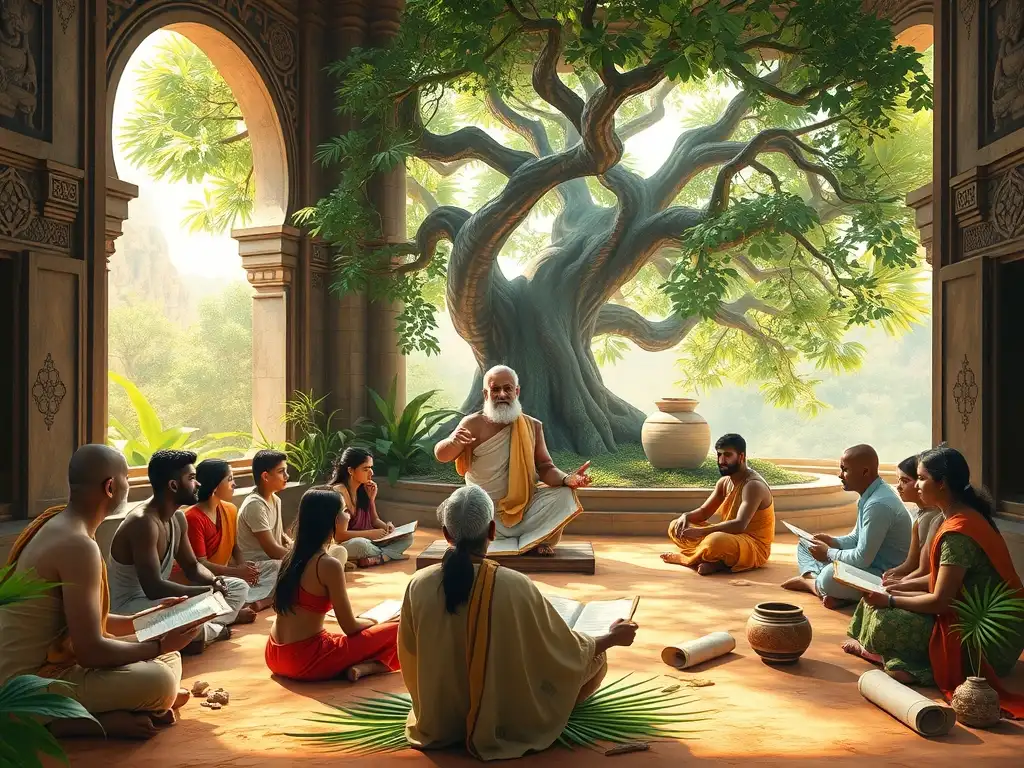
The educational practices of ancient India have left a lasting legacy that continues to influence modern educational systems across the globe. This influence is evident in various aspects, including teaching methodologies, curriculum frameworks, and the overall educational philosophy. By examining the core principles and structures of ancient Indian education, contemporary educators can draw parallels and incorporate time-tested strategies that foster holistic development in students. The emphasis on critical thinking, moral education, and a well-rounded curriculum in ancient India serves as a foundation for modern educational reforms that seek to create more inclusive and effective learning environments.
Adaptation of Gurukul Concepts in Contemporary Education
The Gurukul system, a traditional form of education in ancient India, was characterized by a close teacher-student relationship and an immersive learning experience. In modern educational settings, many institutions have begun to adapt these concepts to enhance student engagement and personal development.
- Personalized Learning: Much like the one-on-one attention given in Gurukuls, contemporary education systems are increasingly recognizing the value of personalized learning experiences tailored to individual student needs.
- Mentorship Programs: Schools are implementing mentorship programs that echo the guru-shishya (teacher-student) bond, providing guidance and support beyond academic instruction, fostering personal growth and character development.
- Holistic Education: The Gurukul's focus on diverse subjects, including arts, sciences, and moral education, is mirrored in modern curricula that aim to cultivate well-rounded individuals.
These adaptations emphasize the importance of nurturing both academic and personal skills, preparing students to become responsible and ethical citizens.
Integration of Ancient Indian Curriculum in Modern Schools
The curriculum of ancient Indian education was rich and diverse, encompassing various disciplines such as mathematics, astronomy, philosophy, and the arts. Today, many modern educational institutions are integrating elements of this ancient curriculum to enrich their teaching frameworks.
- Incorporation of Classical Texts: Schools are increasingly including texts from ancient India, such as the Vedas and Upanishads, in their literature and philosophy courses, exposing students to foundational ideas in ethics and governance.
- Interdisciplinary Learning: By promoting interdisciplinary approaches that combine science, mathematics, and the arts, modern education reflects the integrated learning style of ancient Indian education, fostering critical thinking and creativity.
- Cultural Studies: Modern curricula are recognizing the importance of cultural education, including the study of ancient Indian civilizations, which helps students appreciate their heritage and understand the context of their learning.
This integration not only enriches students' academic experiences but also connects them to their historical roots, fostering a sense of identity and cultural pride.
Influence of Ancient Educational Philosophies on Current Pedagogy
Ancient Indian educational philosophies have significantly shaped contemporary pedagogical approaches. Key concepts such as experiential learning, inquiry-based learning, and the importance of moral and ethical education are evident in today’s teaching practices.
- Experiential Learning: The ancient notion that learning occurs through experience is reflected in modern practices such as project-based learning, where students engage in hands-on activities to deepen their understanding of concepts.
- Inquiry-Based Learning: The Socratic method of questioning and dialogue, prevalent in ancient Indian discourse, has influenced modern inquiry-based learning approaches that encourage students to explore, question, and discover knowledge actively.
- Moral and Ethical Education: The emphasis on dharma (duty/righteousness) in ancient Indian education is mirrored in current educational frameworks that prioritize character education and the development of social responsibility among students.
These philosophies highlight the importance of preparing students not only academically but also as thoughtful and responsible members of society.
Comparative Analysis: Ancient Indian Education vs. Modern Educational Systems
A comparative analysis of ancient Indian education and modern educational systems reveals both similarities and differences that are crucial for understanding the evolution of educational practices.
Similarities in Educational Goals and Approaches
Both ancient Indian education and modern educational systems share several fundamental goals and approaches, emphasizing the development of knowledge, skills, and character.
- Emphasis on Knowledge: Both systems prioritize knowledge acquisition, though the methods may differ. Ancient education focused on oral transmission and memorization, while modern systems utilize diverse teaching methods and technologies.
- Holistic Development: Like ancient Indian education, modern educational frameworks aim for holistic development, encompassing intellectual, emotional, and social growth.
- Community Engagement: Both systems recognize the importance of community involvement in education. In ancient India, education was often a community endeavor, while modern systems are increasingly incorporating community service and engagement into the curriculum.
Differences in Learning Environments and Methodologies
Despite shared goals, there are significant differences in the learning environments and methodologies of ancient Indian education and modern educational systems.
- Learning Environment: Ancient Indian education typically took place in natural settings or informal environments, emphasizing close interactions between students and teachers. In contrast, modern education often occurs in structured classroom settings with a more formal atmosphere.
- Methodologies: Ancient Indian education relied heavily on oral traditions and debates, promoting critical thinking through discourse. Modern education employs a variety of teaching methods, including technology-driven instruction, standardized testing, and collaborative learning.
- Assessment Practices: Assessment in ancient India often focused on oral examinations and demonstrations of knowledge, while modern systems utilize written tests, digital assessments, and continuous evaluations, reflecting a shift towards quantifiable measures of student performance.
These differences highlight the evolution of educational practices, showcasing how modern systems have adapted traditional concepts to meet contemporary needs while maintaining essential educational values.
Challenges in Recognizing Ancient Indian Education Influence
Understanding the influence of ancient Indian education on modern educational systems encounters several challenges. These challenges stem from misconceptions, a lack of comprehensive research, and the need for a nuanced understanding of how ancient practices have evolved over time. The rich tapestry of ancient Indian educational traditions is often overshadowed by contemporary narratives that may not fully appreciate their depth and breadth.
Misconceptions About Ancient Educational Practices
One of the primary misconceptions about ancient Indian education is the belief that it was static and unchanging. Many assume that educational practices were limited to a rigid curriculum focused solely on religious texts. In reality, ancient Indian education was dynamic and diverse, encompassing various subjects such as mathematics, astronomy, medicine, literature, and philosophy. The Gurukul system, where students lived with their teachers, fostered not only academic learning but also character development and social responsibilities.
Another misconception is the idea that ancient Indian education was exclusively elitist, serving only a select few. While it is true that access to education was often restricted based on social stratification, there were also numerous instances of inclusive practices, such as the establishment of institutions like Nalanda and Takshashila, which attracted students from various backgrounds, including those from different regions and cultures.
The Need for Comprehensive Research on Ancient Education History
To fully appreciate the influence of ancient Indian education on modern systems, comprehensive research is essential. Much of the existing literature focuses on specific periods or regions, leading to fragmented understanding. A holistic approach that captures the continuity and change in educational practices over centuries would provide a clearer picture of their influence.
Moreover, interdisciplinary studies that incorporate perspectives from archaeology, anthropology, and comparative education can reveal how ancient Indian educational philosophies have shaped contemporary practices. For example, the emphasis on experiential learning and critical thinking in ancient texts can inform modern pedagogical strategies. Thus, bridging gaps in research and fostering collaboration among scholars from various fields is crucial for a deeper understanding of ancient educational legacies.
Conclusion: The Lasting Legacy of Ancient India on Modern Education
The influence of ancient Indian education on modern educational systems is profound and multifaceted. By recognizing the complexities of these influences, we can appreciate how they have shaped contemporary practices in various ways.
Summarizing the Impact of Ancient Indian Educational Traditions
The educational traditions of ancient India laid the groundwork for several fundamental concepts in modern education. The focus on holistic development, critical inquiry, and the integration of ethics and values into learning reflects the enduring legacy of ancient practices. Additionally, subjects like mathematics and astronomy, which were pioneered in ancient Indian texts, continue to be foundational in today’s curricula.
The concept of lifelong learning and the importance placed on mentorship in ancient systems resonate in modern educational philosophies, emphasizing the teacher-student relationship as a cornerstone of the learning process. Such insights underline the need for educators today to draw inspiration from these ancient traditions to create inclusive and effective learning environments.
Future Directions for Research and Education Inspired by Ancient India
Looking ahead, future research should aim to explore how ancient Indian educational principles can be adapted to address contemporary challenges in education, such as inclusivity, critical thinking, and the integration of technology.
Educational institutions can benefit from incorporating ancient wisdom into modern curricula, fostering a more comprehensive understanding of knowledge that transcends disciplinary boundaries. Moreover, initiatives that celebrate and teach the history of ancient Indian education can inspire a new generation of learners, encouraging them to appreciate the value of diverse educational practices.
By recognizing and embracing the influences of ancient India on modern education, we can cultivate a more enriched and contextualized educational experience for all.
- Introduction to Ancient India Education Influence
- Historical Context of Education in Ancient India
- Key Contributions of Ancient India to Education
- Ancient Indian Educational Institutions
- Modern Educational Systems Inspired by Ancient India
- Comparative Analysis: Ancient Indian Education vs. Modern Educational Systems
- Challenges in Recognizing Ancient Indian Education Influence
- Conclusion: The Lasting Legacy of Ancient India on Modern Education
- What were the key features of education in Ancient India?
- How did Ancient Indian education influence modern systems?
- What role did religion play in Ancient Indian education?
- Were there any notable educational institutions in Ancient India?
- How did Ancient India's educational practices spread globally?
Frequently Asked Questions
What were the key features of education in Ancient India?
Ancient India emphasized holistic education that included subjects like philosophy, mathematics, and astronomy. The Gurukul system fostered a strong teacher-student relationship, emphasizing both academic and moral education.
How did Ancient Indian education influence modern systems?
Ancient Indian education introduced concepts such as curriculum diversity and the importance of critical thinking, which are foundational in today's educational frameworks. Many modern universities still reflect the Gurukul model in their mentorship approaches.
What role did religion play in Ancient Indian education?
Religion significantly influenced education in Ancient India, with Vedic texts being central to learning. Religious institutions often served as educational centers, integrating spiritual and academic teachings.
Were there any notable educational institutions in Ancient India?
Yes, institutions like Nalanda and Takshashila were renowned for their advanced learning and attracted students from across the world. They offered a wide range of subjects and contributed greatly to scholarly advancements.
How did Ancient India's educational practices spread globally?
The trade routes and interactions with other cultures facilitated the exchange of knowledge. Ancient Indian scholars traveled to other regions, spreading ideas about mathematics, science, and philosophy, thereby influencing global educational practices.
Final Reflection: The Enduring Legacy of Ancient India’s Educational Influence
The profound impact of ancient Indian educational systems on contemporary learning frameworks cannot be overstated. From the establishment of institutions like Nalanda and Takshashila to the emphasis on holistic development, the principles laid down centuries ago continue to resonate in today's educational philosophies. As we navigate the complexities of modern education, it is essential to recognize and honor these foundational influences.
The teachings and methodologies of ancient India have shaped not only academic pursuits but also the broader cultural and social landscapes of our time. The emphasis on critical thinking, ethical reasoning, and the pursuit of knowledge for personal and societal betterment remains relevant. Education is the most powerful weapon which you can use to change the world.
— Nelson Mandela. This quote encapsulates the transformative power of education, a sentiment deeply rooted in the traditions of ancient India.
As we reflect on the lessons from ancient Indian education, I invite you to consider how these principles can be integrated into your own learning journey. Embrace the spirit of inquiry, foster a sense of community, and strive for a balanced approach to knowledge. Let us carry forward the legacy of ancient wisdom, ensuring that it continues to inspire and guide future generations in their quest for enlightenment and growth.
Embrace the Wisdom of Ancient India Today!
Thank you for taking the time to explore the profound influence of ancient India on our modern educational systems. You've unearthed valuable insights that can inspire not only your own learning but also the way education shapes our society. Now, let’s turn that knowledge into action!
- Dive deeper into the legacy of ancient Indian scholars by reading a classic text or enrolling in a course that explores their teachings.
- Share your newfound knowledge with friends or peers by hosting a discussion or writing a blog post about how ancient concepts can be integrated into contemporary educational practices.
- Connect with others interested in this topic by joining forums or social media groups that focus on the influence of historical education systems.
How do you believe ancient educational philosophies can transform our current learning processes? We invite you to share your thoughts below!