
Exploring the Curriculum of Ancient Indian Astronomers and Mathematicians

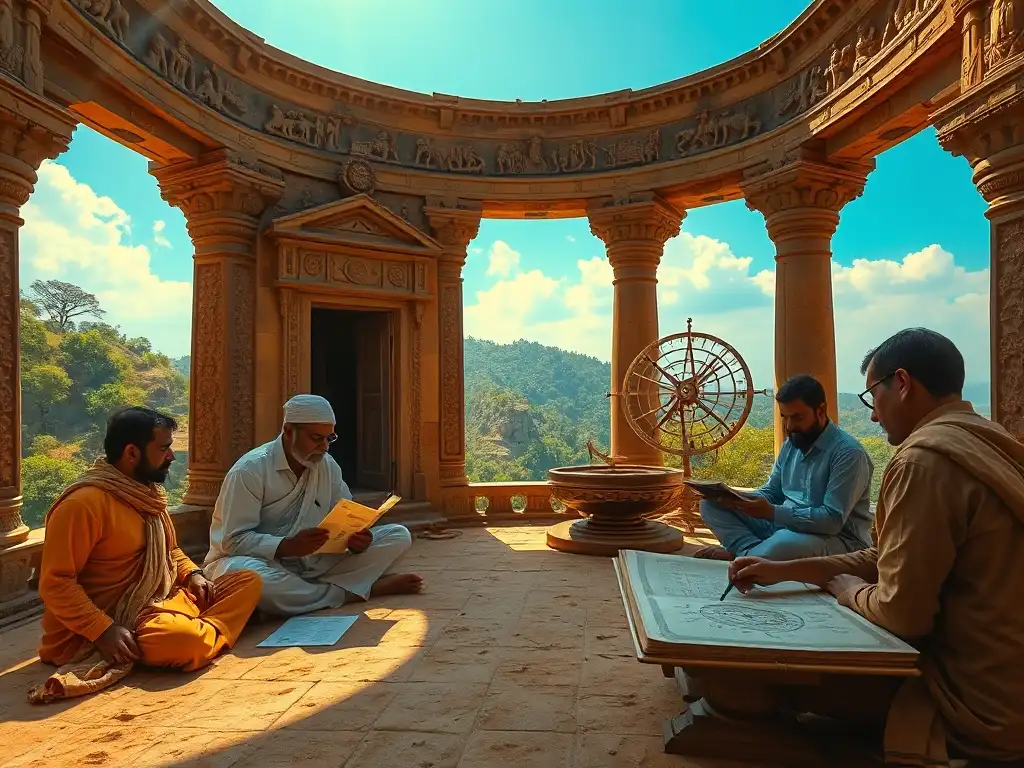
Welcome to Ancient India History, where we embark on a fascinating journey through time to uncover the rich tapestry of ancient Indian civilizations. Have you ever wondered how the stars were mapped by the brilliant minds of ancient Indian astronomers? In our featured article, "Exploring the Curriculum of Ancient Indian Astronomers and Mathematicians," we delve into the intricate educational systems that shaped their groundbreaking contributions to astronomy. Join us as we illuminate the profound knowledge and innovative spirit that defined an era, sparking curiosity and inviting you to explore the depths of ancient wisdom.
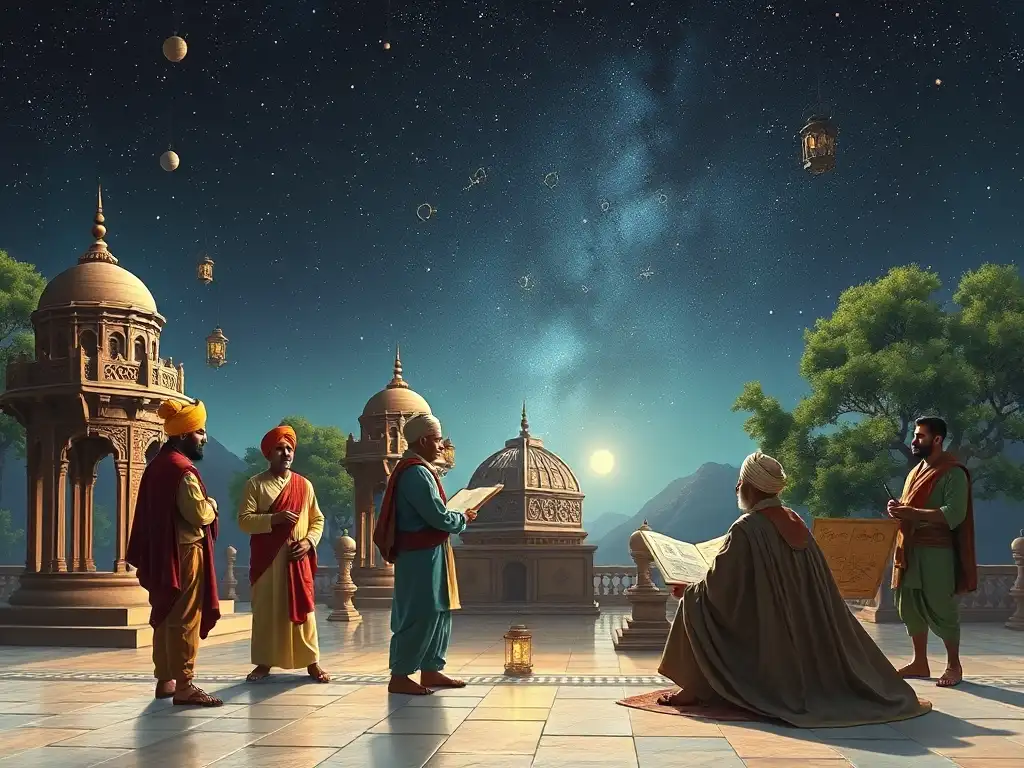
Introduction to Ancient Indian Astronomy Curriculum
The exploration of ancient Indian astronomy and mathematics unveils a rich tapestry of knowledge that has significantly influenced both historical and contemporary scientific thought. The curriculum of ancient Indian astronomers and mathematicians was not merely about celestial observations or numerical calculations; it encompassed a comprehensive understanding of the universe, integrating philosophy, religion, and practical applications. This curriculum reflects the profound intellectual traditions of ancient India, where scholars diligently studied the movements of celestial bodies, developed intricate calendars, and contributed to foundational mathematical concepts that resonate to this day.
Understanding the ancient Indian astronomy curriculum offers insights into how these early scientists approached learning and inquiry, fostering a culture of intellectual curiosity and innovation. This article delves into the historical context of ancient Indian education, exploring the role of astronomy and mathematics within it, as well as the influences from other ancient civilizations that shaped these educational practices.
The Historical Context of Ancient Indian Education
Ancient India boasts a long-standing tradition of education that dates back thousands of years. The earliest educational institutions, known as Gurukuls, were informal schools where students learned under the guidance of a guru, focusing on various subjects, including astronomy and mathematics.
- Key Features of Ancient Indian Education:
- Holistic Learning: Emphasis on a well-rounded education that included arts, sciences, and philosophy.
- Oral Tradition: Knowledge was transmitted orally, preserving complex astronomical concepts and mathematical theories through rigorous memorization and recitation.
- Cultural Integration: Education was closely tied to cultural and religious practices, with astronomy often playing a pivotal role in rituals and calendars.
This educational system provided a fertile ground for the development of astronomy and mathematics, allowing scholars such as Aryabhata, Brahmagupta, and Varahamihira to flourish.
The Role of Astronomy and Mathematics in Ancient India
Astronomy and mathematics were integral to the ancient Indian curriculum, serving both practical and theoretical functions.
- Astronomy:
- Ancient Indians meticulously observed celestial phenomena and created detailed star charts, which were essential for agriculture, navigation, and religious ceremonies.
- The calculation of eclipses, the movements of planets, and the establishment of calendars were significant achievements that required advanced mathematical skills.
- Mathematics:
- The decimal system, the concept of zero, and algebraic principles are among the notable contributions of ancient Indian mathematicians.
- Mathematics was not only a tool for astronomical calculations but also provided the foundation for various fields, including architecture and commerce.
The interplay between astronomy and mathematics in ancient Indian education exemplified a sophisticated understanding of the universe, showcasing the intellectual prowess of its scholars.
Influences on Educational Practices in Ancient Civilizations
The educational practices of ancient India were not developed in isolation; they were influenced by interactions with other ancient civilizations, such as the Greeks and Persians.
- Cultural Exchange:
- Trade routes facilitated the exchange of ideas and knowledge, leading to a fusion of astronomical and mathematical concepts across cultures.
- Ancient texts, such as the Surya Siddhanta, incorporated influences from various civilizations, enriching the Indian curriculum.
- Comparative Systems:
- The structure of ancient Indian education reflected similarities with systems in other cultures, such as the emphasis on mentorship in Greek philosophy and the systematic study of mathematics in Babylonian culture.
By examining these influences, we gain a deeper appreciation for the complexity and richness of the ancient Indian astronomy curriculum, which was a product of both indigenous innovation and external inspiration.
Key Figures in Ancient Indian Astronomy and Mathematics
Ancient Indian astronomy and mathematics were profoundly shaped by several key figures whose contributions laid the foundation for future developments in these fields. These scholars not only advanced theoretical knowledge but also practical applications that influenced both local and global scientific landscapes. Their works often bridged the gap between astronomy and mathematics, showcasing a rich curriculum that emphasized interdisciplinary studies. Here are some of the most significant figures who played a crucial role in this domain.
Aryabhata: The Pioneer of Indian Astronomy
Aryabhata, born in 476 CE, is often recognized as the first significant mathematician and astronomer in ancient India. His seminal work, the Aryabhatiya, composed in Sanskrit, covers a wide array of topics, including arithmetic, algebra, and astronomy. Aryabhata proposed revolutionary ideas, such as the heliocentric model of the solar system, where the Earth rotates on its axis, a concept far ahead of its time.
One of his notable contributions to astronomy is the calculation of the value of π (pi), which he approximated to 3.1416. Aryabhata also introduced the concept of zero as a placeholder, which was pivotal for the advancement of mathematics. His curriculum emphasized the importance of observation and calculation, encouraging students to engage with the celestial bodies and understand their movements through rigorous mathematical frameworks.
Brahmagupta: Contributions to Mathematics and Astronomy
Brahmagupta, who lived during the 7th century CE, made significant strides in both mathematics and astronomy through his influential work, Brahmasphutasiddhanta. This text is among the earliest to systematically address the rules of arithmetic and algebra, including operations involving zero and negative numbers.
In astronomy, Brahmagupta's contributions included methods for determining the positions of planets and eclipses, along with calculations for lunar months. His work laid the groundwork for future astronomers and mathematicians, providing a curriculum that intertwined mathematical rigor with practical astronomical applications. He introduced rules for planetary positions that were remarkably accurate and detailed for their time.
Bhaskara I and II: Advancements in Astronomical Calculations
Bhaskara I (circa 600 CE) and Bhaskara II (1114–1185 CE) were two prominent astronomers who made substantial contributions to the field. Bhaskara I is best known for his translation of Aryabhata's works and for his own texts, which expanded the understanding of sine functions and introduced the concept of trigonometric calculations in astronomy.
Bhaskara II, often referred to as "Bhaskara the Great," is celebrated for his comprehensive treatises, such as Lilavati and Bijaganita, where he explored arithmetic, algebra, and their applications in astronomy. His work provided clear methodologies for calculating the positions of celestial bodies, eclipses, and other astronomical phenomena. The curriculum during Bhaskara II's era emphasized practical applications of mathematics in daily life, which included agricultural calendars based on astronomical observations.
Core Components of the Ancient Indian Astronomy Curriculum
The curriculum of ancient Indian astronomy encompassed a wide range of topics that were critical for understanding the cosmos and its mathematical implications. This curriculum was rich in theoretical knowledge and practical applications, rooted in the teachings of the great astronomers and mathematicians. The core components can be categorized into early texts and manuscripts, as well as mathematical concepts essential for astronomical studies.
Early Texts and Manuscripts on Astronomy
Early texts and manuscripts form the backbone of the ancient Indian astronomy curriculum. Works like the Aryabhatiya, Brahmasphutasiddhanta, and the Surya Siddhanta provided foundational knowledge on celestial phenomena, calculations, and the principles governing the universe. These texts often included detailed tables, diagrams, and models that served as educational tools for students.
The manuscripts were written in Sanskrit and used a variety of poetic meters to make complex ideas more accessible. They covered topics such as planetary motion, eclipses, and timekeeping, emphasizing the observational methods used by ancient astronomers. The educational practices involved rigorous study of these texts, with students engaging in commentary and analysis, fostering a deep understanding of both the mathematical and astronomical principles.
Mathematical Concepts in Astronomy
Mathematics was integral to the study of astronomy in ancient India, with concepts such as geometry, algebra, and trigonometry being pivotal. The curriculum included the study of numerical systems, the calculation of planetary positions, and the understanding of astronomical phenomena through mathematical models.
Key mathematical concepts employed in astronomy included:
- Sine Functions: Used to calculate angles and distances between celestial bodies.
- Quadratic Equations: Essential for solving problems related to planetary motion.
- Arithmetic Operations: Fundamental for keeping records of astronomical observations and calculations.
These mathematical principles were applied not only in theoretical studies but also in practical applications such as agricultural planning and calendar systems, illustrating the interconnectedness of mathematics and astronomy in ancient Indian education.
Educational Practices of Ancient Indian Astronomers
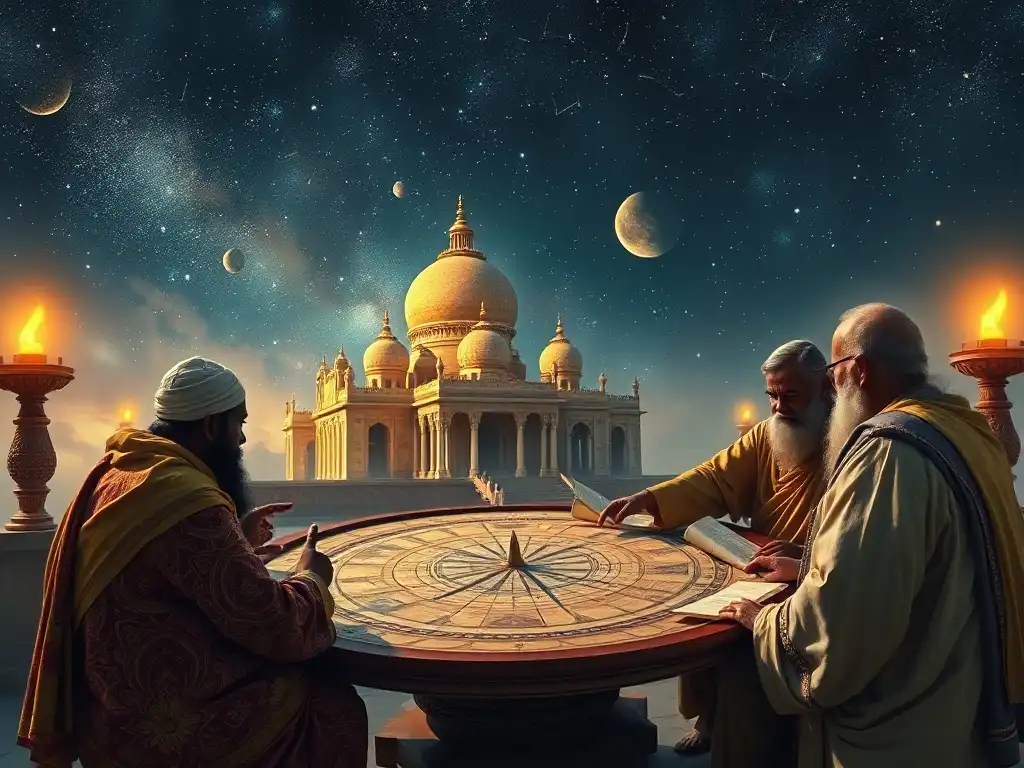
The educational practices of ancient Indian astronomers were deeply intertwined with their cultural and philosophical beliefs. These practices emphasized a holistic understanding of the universe, blending scientific inquiry with spirituality. Ancient texts reveal that astronomy was not merely a field of study but a way to comprehend cosmic order and human existence within it.
Curricular Focus: The curriculum often included subjects such as mathematics, geometry, astrology, and philosophy. Students were trained to observe celestial bodies, calculate time based on lunar and solar cycles, and understand the principles of navigation. This multifaceted approach ensured that learners developed both practical skills and theoretical knowledge.
Use of Texts: Key texts like the "Aryabhatiya" by Aryabhata and the "Surya Siddhanta" outline mathematical techniques and astronomical concepts. These texts served as foundational materials in the curriculum, guiding students through complex calculations and astronomical phenomena.
Methods of Teaching Astronomy and Mathematics
The methods of teaching astronomy and mathematics in ancient India were primarily experiential and interactive. Teachers employed a variety of techniques to engage students in the learning process.
- Observation and Practice:
- Students were encouraged to observe celestial events firsthand, fostering a direct connection with the cosmos.
- Practical exercises included the use of simple instruments like gnomons and water clocks to measure time and celestial movements.
- Oral Tradition:
- Much of the knowledge was transmitted orally, with teachers imparting wisdom through storytelling and discussion. This method reinforced memory and understanding among students.
- Mathematical Techniques:
- Ancient Indian mathematicians developed innovative methods such as the decimal system and zero, which were integral to astronomical calculations.
- Students practiced these techniques through problem-solving sessions, often working in groups to enhance collaborative learning.
The Role of Gurukuls and Learning Centers
Gurukuls and learning centers were pivotal in disseminating knowledge related to astronomy and mathematics. These institutions provided a structured environment where students could immerse themselves in their studies.
- Gurukul System: Students lived with their teachers, forming close-knit communities focused on learning. This system fostered strong mentor-student relationships, allowing for personalized instruction.
- Curriculum Design: The curriculum was comprehensive, often encompassing not only astronomy and mathematics but also philosophy, ethics, and the arts. This interdisciplinary approach reflected the ancient Indian belief in the unity of knowledge.
- Cultural Significance: These learning centers were often located near temples or sacred sites, linking education with spirituality. The environment encouraged students to see their studies as part of a larger cosmic order.
The Impact of Ancient Indian Astronomy on Global Knowledge
The contributions of ancient Indian astronomers significantly enriched global knowledge, influencing various cultures and civilizations. Their advanced understanding of celestial phenomena laid the groundwork for future astronomical developments.
Cross-Cultural Exchanges in Astronomy and Mathematics
Ancient Indian astronomy was characterized by vibrant cross-cultural exchanges. Scholars from different regions interacted, sharing ideas and techniques that enhanced their understanding of the cosmos.
- Silk Road Connections: The Silk Road facilitated the exchange of astronomical texts and ideas between India, Persia, and China. Notable figures like Brahmagupta and Aryabhata had their works translated into Arabic and later into Latin, spreading their teachings across continents.
- Influence on Islamic Astronomy: The transmission of knowledge significantly impacted Islamic scholars during the Golden Age. They adopted and expanded upon Indian astronomical calculations, integrating them into their own systems.
The Legacy of Ancient Indian Astronomers in the Islamic Golden Age
The legacy of ancient Indian astronomers played a crucial role in shaping the Islamic Golden Age's scientific advancements. Their works influenced renowned scholars and institutions throughout the Islamic world, ensuring the preservation and further development of astronomical knowledge.
- Integration of Knowledge: Indian astronomical concepts were integrated into Islamic teachings, with scholars like Al-Khwarizmi and Al-Battani referencing Indian texts in their studies. This integration enriched the mathematical foundations of astronomy.
- Translation Movements: The translation of Indian texts into Arabic facilitated a broader understanding of mathematics and astronomy, leading to significant innovations in navigation, calendar systems, and observational techniques.
The enduring impact of ancient Indian astronomy continues to resonate today, highlighting the importance of cultural exchanges in the development of scientific thought.
Conclusion: The Lasting Influence of the Ancient Indian Astronomy Curriculum
The ancient Indian astronomy curriculum was not merely a collection of teachings but a profound manifestation of the civilization's intellectual rigor and innovation. The structured approach to understanding celestial bodies, timekeeping, and the mathematical principles underlying these observations laid a foundation that influenced subsequent generations of scholars, both in India and beyond.
The contributions of ancient Indian astronomers and mathematicians, such as Aryabhata and Brahmagupta, exemplified the integration of theoretical knowledge with practical applications. Their work on the concepts of zero, decimal systems, and trigonometry shaped not only the field of astronomy but also mathematics as a whole. These advancements were pivotal during a time when many cultures were yet to establish systematic scientific inquiry.
Moreover, the curriculum emphasized the importance of observation and empirical evidence, fostering a spirit of inquiry that resonates with modern scientific methodologies. This legacy continues to inspire contemporary educators and researchers, highlighting the significance of ancient Indian knowledge systems in the broader context of global scientific heritage. The teachings from this curriculum remain relevant today, encouraging a multidisciplinary approach to education that amalgamates science, philosophy, and mathematics.
Further Reading and Resources on Ancient Indian Education Systems
For those interested in delving deeper into the educational practices of ancient India, several resources offer valuable insights into its rich history. Here are some recommended readings and materials:
- Books:
- A History of Indian Astronomy by C. V. Vaidya: This book provides an extensive overview of the development of astronomical practices in India, touching on key figures and concepts.
- The History of Mathematics in India by Kim Plofker: A comprehensive look at mathematical advancements in ancient India, including the curriculum and its implications.
- Research Papers:
- “Mathematics and Astronomy in Ancient India” by R. C. Gupta: This paper explores the interrelationship between mathematics and astronomy, detailing specific curriculum aspects and notable mathematicians.
- “The Role of Education in Ancient Indian Society” by A. K. Sharma: This article discusses the broader educational practices in ancient India, including the significance of astronomy and mathematics.
- Online Resources:
- Digital Archives: Many universities host digital collections of ancient manuscripts and texts, providing primary sources for study.
- Educational Websites: Platforms like Ancient India History offer articles, timelines, and teaching resources focused on the contributions of ancient Indian astronomers and mathematicians.
By exploring these resources, readers can gain a deeper understanding of the educational systems that nurtured some of history's greatest thinkers, further illuminating the enduring impact of the ancient Indian astronomy curriculum.
- Introduction to Ancient Indian Astronomy Curriculum
- The Historical Context of Ancient Indian Education
- Key Figures in Ancient Indian Astronomy and Mathematics
- Core Components of the Ancient Indian Astronomy Curriculum
- Educational Practices of Ancient Indian Astronomers
- The Impact of Ancient Indian Astronomy on Global Knowledge
- Conclusion: The Lasting Influence of the Ancient Indian Astronomy Curriculum
- Further Reading and Resources on Ancient Indian Education Systems
Frequently Asked Questions
What is the ancient Indian astronomy curriculum?
The ancient Indian astronomy curriculum refers to the systematic study and teachings of astronomy and mathematics practiced in ancient India, focusing on key concepts, methods, and notable scholars.
Who were some prominent ancient Indian astronomers?
Notable ancient Indian astronomers include Aryabhata, who introduced the concept of zero, and Brahmagupta, known for his work on arithmetic and astronomy in texts like the Brahmasphutasiddhanta.
How did ancient Indian astronomy influence modern science?
Ancient Indian astronomy laid the groundwork for various mathematical theories and astronomical calculations, influencing not only Indian scholars but also Islamic and European sciences during the Middle Ages.
What were the key contributions of the Gupta Empire to astronomy?
During the Gupta Empire, significant advancements in astronomy included the development of precise calendar systems, the introduction of the spherical model of Earth, and the formulation of trigonometric principles.
How can I learn more about the curriculum of ancient Indian astronomers?
To delve deeper into the curriculum of ancient Indian astronomers, consider exploring historical texts, academic courses on Indian mathematics, or resources that focus on the cultural contributions of ancient Indian civilizations.
Final Reflection: The Enduring Legacy of Ancient Indian Astronomy
The curriculum of ancient Indian astronomers and mathematicians is not merely a relic of the past; it is a profound testament to the intellectual prowess and innovative spirit of a civilization that laid the groundwork for modern science. Today, as we navigate an era dominated by technology and data, the insights gleaned from ancient Indian astronomy remind us of the importance of integrating historical knowledge with contemporary practices. The intricate systems developed by these scholars continue to resonate, challenging us to appreciate the depth of human understanding that has shaped our world.
The influence of ancient Indian astronomy extends far beyond textbooks; it permeates our cultural and social landscapes, inspiring a sense of wonder and curiosity about the universe. The methodologies and philosophies established by these mathematicians and astronomers have not only enriched scientific discourse but have also fostered a greater appreciation for the interconnectedness of knowledge. As Carl Sagan once said, "> We are made of star-stuff.
We are a way for the universe to know itself." This quote encapsulates the essence of our exploration into ancient Indian astronomy, urging us to recognize our place within the cosmos and the legacy of those who sought to understand it.
As we reflect on the teachings of ancient Indian astronomers and mathematicians, I invite you to consider how their insights can inform your own journey of discovery. Embrace the spirit of inquiry that defined these scholars; let their legacy inspire you to explore the mysteries of the universe in your own life. Whether through studying the stars, engaging with mathematical concepts, or simply fostering a sense of curiosity, remember that the pursuit of knowledge is a timeless endeavor that connects us all.
Unleash Your Curiosity: Dive Deeper into Ancient Indian Wisdom!
Thank you for immersing yourself in the fascinating world of ancient Indian astronomers and mathematicians. You've uncovered valuable insights that not only enrich your understanding of history but also inspire a renewed appreciation for the complexities of science from the past. Now, let’s turn that knowledge into meaningful action!
Here are some ways to deepen your exploration and engage with this captivating topic:
- Join a local astronomy club or workshop to connect with others who share your passion. Explore how ancient principles continue to influence modern practices!
- Share this article with friends and family, and discuss the remarkable contributions of these scholars to enhance their understanding as well.
- Read a book or watch a documentary about ancient Indian science that captures your interest. There may be fascinating insights waiting for you!
What aspect of ancient Indian astronomy or mathematics intrigues you the most, and how do you think it has influenced contemporary science?