
The Role of Blacksmiths: Forging Tools and Weapons in Ancient India

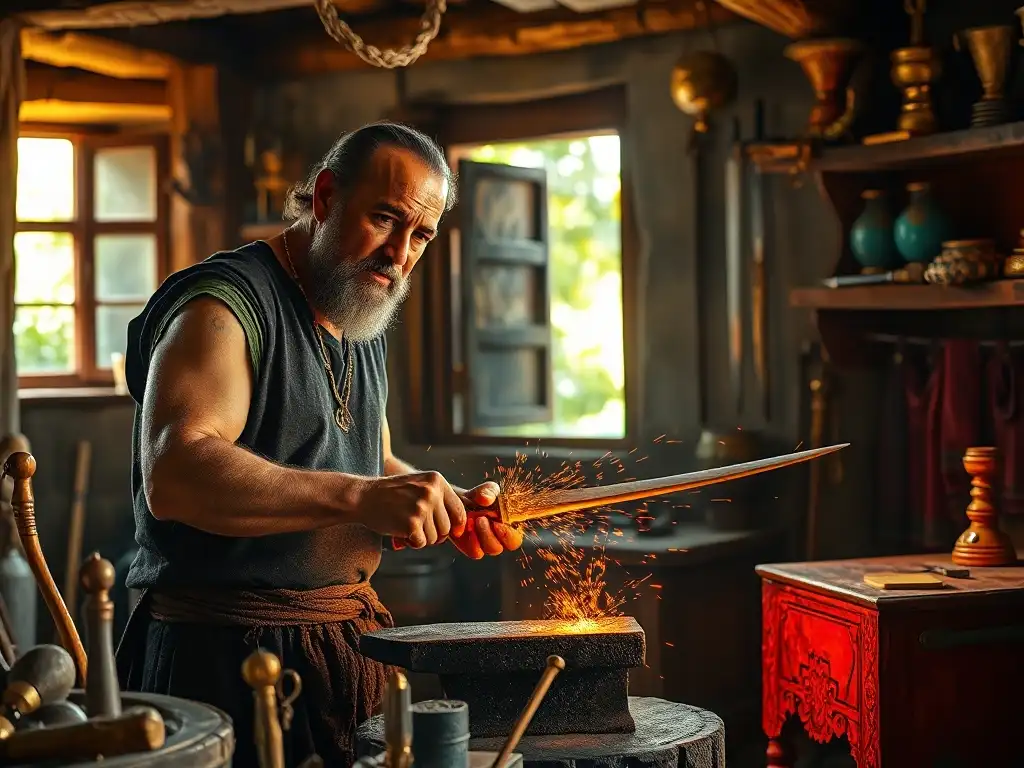
Welcome to Ancient India History, where we invite you to embark on a fascinating journey through the rich tapestry of India's past. In this exploration, we delve into the intricate lives of blacksmiths in ancient India, whose craftsmanship forged not only tools and weapons but also the very foundations of society. Have you ever wondered how these skilled artisans influenced daily life and contributed to the rise of empires?
Join us as we uncover the secrets of their craft and the profound impact they had on civilization. Read on to discover the remarkable legacy of blacksmiths and their vital role in shaping ancient Indian society!
- The Role of Blacksmiths in Ancient India: Forging Tools and Weapons
-
Frequently Asked Questions
- What was the significance of blacksmiths in ancient India?
- How did blacksmiths contribute to the economy of ancient Indian civilizations?
- What materials did ancient Indian blacksmiths typically use?
- Were blacksmiths part of any specific social class in ancient India?
- How did the techniques of blacksmithing evolve in ancient India?
- Final Reflection: The Enduring Legacy of Blacksmiths in Ancient India
- Unleash Your Inner Artisan: Embrace the Craft of Blacksmithing!
The Role of Blacksmiths in Ancient India: Forging Tools and Weapons
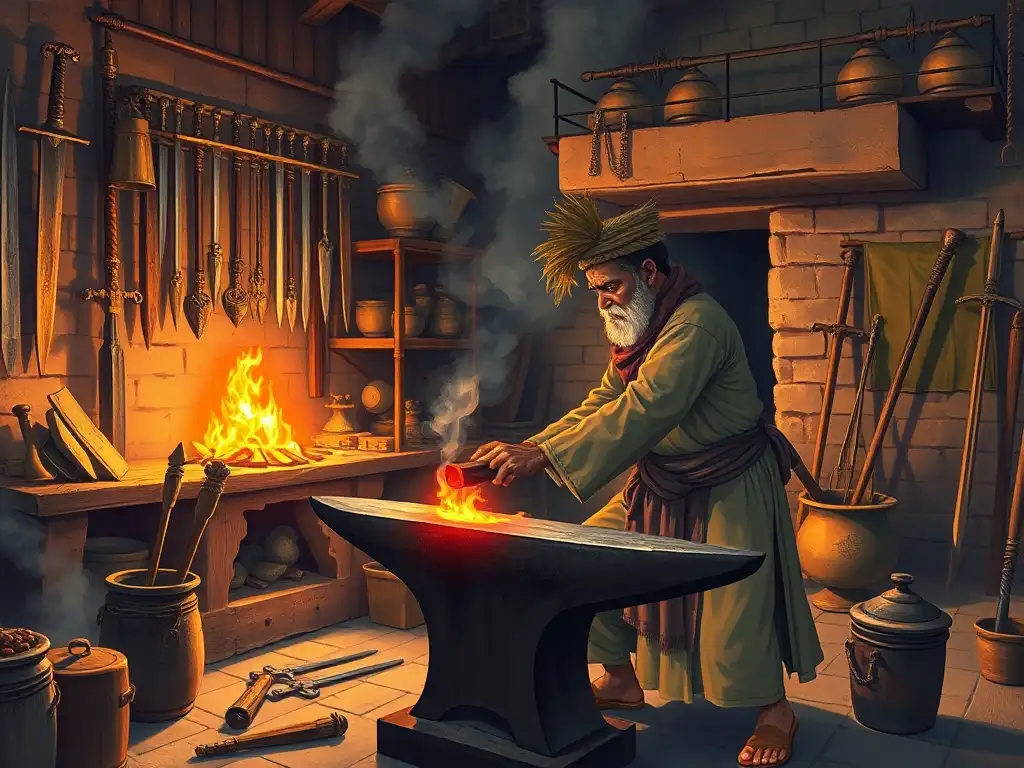
Introduction to Blacksmiths in Ancient India
The art of blacksmithing played a pivotal role in the development of ancient Indian civilizations, shaping not only the tools and weapons of the time but also influencing social structures and economic systems. Blacksmiths in ancient India were skilled artisans, revered for their ability to manipulate metal into essential tools, agricultural implements, and weaponry.
Their craft was not merely a trade; it was an integral element of daily life and warfare, underpinning the advancement of society at large. Understanding the significance of blacksmiths in ancient India allows us to appreciate their contributions to the cultural and technological legacy of the region, as well as the intricate systems of labor that supported these skilled workers.
Overview of Blacksmithing in Ancient Indian Society
Blacksmithing in ancient India was deeply intertwined with various aspects of society, including religion, trade, and agriculture. The blacksmiths were often organized into guilds, known as shrenis, which provided a structured system for the regulation of trade and the passage of skills from one generation to the next. These guilds not only facilitated economic stability but also fostered a sense of community among craftsmen.
The process of forging in ancient India was characterized by a blend of traditional techniques and innovations. Blacksmiths utilized a variety of tools, such as hammers, anvils, and bellows, to create products that were essential for both daily life and warfare. The blacksmith's workshop, often located near villages, became a hub of activity where villagers would gather not only to procure goods but also to share stories, thereby reinforcing social bonds.
Importance of Blacksmiths in Daily Life and Society
Blacksmiths were indispensable to ancient Indian society, serving as the backbone of both agricultural and military advancements. Their ability to forge strong and durable tools allowed for improved agricultural productivity, which in turn supported growing populations. The weapons crafted by blacksmiths were crucial for defense and warfare, enabling kingdoms to protect their territories and assert their power.
The significance of blacksmiths extended beyond their craft. They were often seen as custodians of ancient knowledge and skills, passed down through generations. This position granted them a respected status within the community, and their work was often linked to various rituals and beliefs, further embedding them in the cultural fabric of ancient India.
Historical Context of Blacksmithing in Ancient India
To fully understand the role of blacksmiths, it is essential to examine the historical backdrop against which they operated. The evolution of blacksmithing techniques and the key periods in their history highlight the advancements and transformations that shaped this vital occupation.
Evolution of Metalworking Techniques
The emergence of blacksmithing in ancient India can be traced back to the Indus Valley Civilization (c. 3300–1300 BCE), where early metalworking techniques began to take shape. The use of copper and bronze marked a significant technological leap, allowing for the creation of more sophisticated tools and weapons.
As time progressed, particularly during the Vedic period (c. 1500–500 BCE), iron began to dominate metalworking practices. The invention of the blast furnace and the wrought iron technique revolutionized blacksmithing, enabling the production of stronger and more resilient tools. This evolution not only enhanced agricultural efficiency but also improved military capabilities, as iron weapons became essential for warfare.
Key Periods in Blacksmithing History
Several key periods defined the practice of blacksmithing in ancient India:
- Indus Valley Civilization: Early metalworking practices using copper and bronze.
- Vedic Period: Introduction of iron tools and weapons, marking a shift in technology.
- Mauryan Empire (c. 322–185 BCE): Increased demand for military equipment influenced blacksmithing.
- Gupta Empire (c. 240–550 CE): Height of craftsmanship and innovation in metalworking techniques.
These periods reflect not only the technological advances in blacksmithing but also the socio-political dynamics that influenced the craft and its practitioners. By examining the historical context, we gain a clearer picture of how blacksmiths contributed to the rich tapestry of ancient Indian civilization.
Tools and Weapons Forgged by Blacksmiths
In ancient India, blacksmiths played a crucial role in the development of both tools and weapons that were essential for daily life, agriculture, and warfare. Their craftsmanship not only facilitated advancements in technology but also contributed to social structures and trade systems. The tools crafted by blacksmiths were vital for farmers, artisans, and builders, while their weapons were indispensable for kings and warriors, shaping the military power of various kingdoms throughout history.
Types of Tools Produced by Blacksmiths
Blacksmiths in ancient India were responsible for creating a wide array of tools that catered to different sectors of society. Some of the most common tools included:
- Agricultural Tools:
- Ploughshares: Essential for tilling the land, these tools were often forged with sharp edges for efficient farming.
- Sickles: Used for harvesting crops, sickles were designed for ease of use and effectiveness in cutting.
- Axes: Employed for chopping wood and clearing land, axes varied in size and design based on their intended use.
- Household Tools:
- Cooking Utensils: Items such as pots, pans, and other implements were crafted for daily cooking needs.
- Surgical Instruments: Some blacksmiths specialized in creating tools for medical practitioners, including scalpels and forceps.
- Construction Tools:
- Hammers and Chisels: Vital for shaping and assembling building materials, these tools were essential for masons and carpenters.
Weapons Crafted by Blacksmiths
The weapons produced by blacksmiths were integral to the defense and expansion of ancient Indian kingdoms. Notable weapons included:
- Swords and Daggers:
- Khanda: A double-edged sword known for its strength and effectiveness in combat.
- Kris: An intricately designed dagger that featured wavy blades and was often used in ceremonial contexts.
- Spears and Axes:
- Bows and Arrows: Essential for long-range combat, these weapons were crafted with precision to ensure accuracy and durability.
- Battle Axes: Designed for close combat, these axes were favored for their lethal effectiveness in battle.
- Armor: Blacksmiths also forged protective gear such as shields and helmets, which were crucial for the survival of warriors on the battlefield.
Techniques and Materials Used in Blacksmithing
The art of blacksmithing in ancient India involved a combination of skillful techniques and a deep understanding of materials. The methods employed by blacksmiths were passed down through generations, often through apprenticeship systems.
Common Metals and Alloys in Ancient India
Blacksmiths primarily worked with several metals and alloys that were available in ancient India:
- Iron: The most widely used metal, iron was favored for its strength and malleability. The development of iron metallurgy marked a significant advancement in tool and weapon production.
- Bronze: An alloy of copper and tin, bronze was used for creating tools and weapons before the widespread use of iron. It was particularly valued for its resistance to corrosion.
- Steel: Steel production, particularly the crafting of Wootz steel, was a notable achievement. This form of steel was known for its ability to be tempered, resulting in exceptionally strong blades.
Traditional Blacksmithing Techniques
The techniques employed by blacksmiths in ancient India were diverse and sophisticated:
- Forging: The process of shaping metal by heating it and hammering it into the desired form. This technique allowed for the creation of intricate designs and functional tools.
- Quenching and Tempering: After forging, tools and weapons were often quenched in water or oil to harden the metal, followed by tempering to reduce brittleness and enhance durability.
- Inlay and Decoration: Blacksmiths sometimes used decorative techniques such as inlaying precious metals or engraving designs on their creations, showcasing their artistry and skill.
The role of blacksmiths in ancient India was multifaceted, with their contributions extending far beyond mere tool and weapon production. Their craftsmanship and techniques significantly shaped the technological landscape of ancient Indian civilization.
The Socio-Economic Role of Blacksmiths
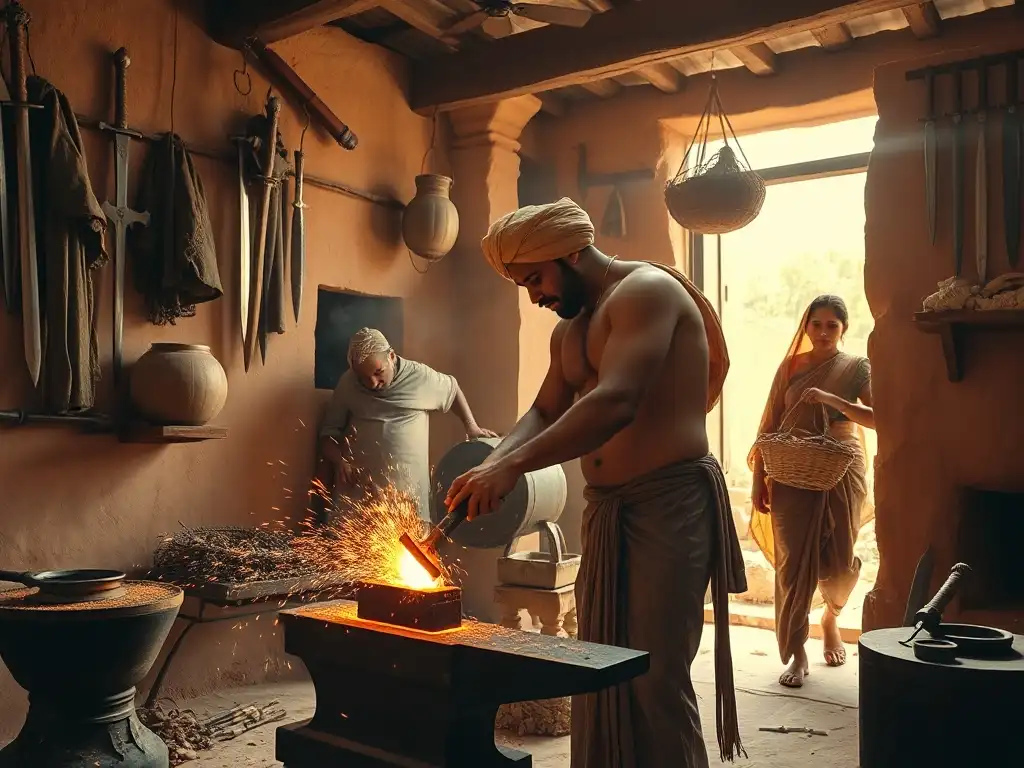
Blacksmiths in ancient India played a crucial socio-economic role, serving as essential artisans within their communities. Their primary function was the production of metal tools and weapons, which were indispensable for agriculture, warfare, and daily activities. The craft of blacksmithing was highly specialized, requiring extensive knowledge of metallurgy, heating techniques, and the skillful manipulation of metal. This expertise allowed blacksmiths to create a variety of items, from plows and sickles to swords and armor, thereby directly contributing to the local economy and the sustenance of society.
The economic impact of blacksmiths extended beyond mere production. They were often involved in trade networks, exchanging their goods with nearby villages and regions. This interaction facilitated not only the movement of goods but also the exchange of ideas and technologies, fostering economic interdependence among different communities. Blacksmiths, therefore, acted as both producers and traders, enhancing their status within the socio-economic fabric of ancient Indian society.
Blacksmiths and Trade Networks
The trade networks established by blacksmiths were vital for the dissemination of their products beyond local boundaries. Blacksmiths often collaborated with merchants and traders, creating a symbiotic relationship that benefited both parties. The ability to forge high-quality tools and weapons made blacksmiths sought after in trade, allowing them to barter their creations for other goods such as grains, textiles, and spices.
These trade routes often extended to significant urban centers, where demand for metal goods was high due to growing populations and militaristic needs. For instance, cities like Pataliputra and Taxila became hubs of trade where blacksmiths could showcase their craftsmanship. The exchange of metal goods through these networks was not only economically beneficial but also contributed to cultural exchanges, as artisans were influenced by techniques and styles from different regions, enriching their own practices.
Social Status and Community Roles
In ancient Indian society, the status of blacksmiths varied depending on the region and the prevailing social structure. Generally, blacksmiths were respected members of their communities, often occupying a position within the artisan caste. Their skills were highly valued, and they were integral to the economic viability of agricultural and military enterprises.
In addition to their craftsmanship, blacksmiths often held community roles, such as mediators during disputes or organizers of local festivals, where their skills were showcased. They were also involved in the training of apprentices, ensuring that the art of blacksmithing was passed down through generations. This mentorship not only helped in preserving the craft but also established a lineage of expertise within families, further solidifying their social standing.
Conclusion: The Legacy of Blacksmiths in Ancient India
The legacy of blacksmiths in ancient India is profound and multifaceted. They were more than mere craftsmen; they were pivotal figures in the socio-economic framework of their communities. Their contributions to agriculture and warfare through the provision of essential tools and weapons were crucial for the survival and progress of ancient Indian civilizations.
Lasting Impact on Indian Culture and Craftsmanship
The influence of blacksmiths extends into modern Indian culture, where traditional practices and techniques in metalworking still thrive. Many regions in India continue to celebrate the skills of blacksmiths, showcasing their work in festivals and local markets. The artistry involved in traditional blacksmithing, such as the creation of intricate jewelry or ceremonial weapons, reflects a cultural heritage that values craftsmanship and innovation.
Moreover, the techniques developed by ancient blacksmiths have laid the groundwork for modern metalworking practices. Today, blacksmithing remains a respected profession, with artisans drawing inspiration from their ancient predecessors, ensuring that the skills and artistry associated with blacksmithing endure.
Preservation of Blacksmithing Traditions in Modern India
In contemporary India, efforts are made to preserve the traditions of blacksmithing through various initiatives. Organizations dedicated to the promotion of traditional crafts work to provide blacksmiths with resources and training, helping them adapt to modern market demands while maintaining their cultural identity.
Additionally, there are educational programs aimed at reviving interest in traditional blacksmithing among younger generations. By integrating blacksmithing into cultural heritage curricula, communities can foster a sense of pride in their historical crafts and encourage the continuation of these valuable skills. The ongoing relevance of blacksmiths in modern India is a testament to their enduring legacy, highlighting their vital role in shaping both the past and present of Indian society.
References
Understanding the role of blacksmiths in ancient India requires delving into a variety of sources that illuminate their contributions to society and craftsmanship. These references encompass historical texts, archaeological studies, and cultural analyses that collectively paint a comprehensive picture of blacksmithing practices and their significance during various periods.
Suggested Reading on Blacksmithing in Ancient India
-
"Iron and Steel in Ancient India" by R. S. Sharma
This book explores the development of metallurgy in ancient India, with a focus on the blacksmith's craft, tools, and the socio-economic impact of ironworking.
-
"The Art of Blacksmithing: A Historical Perspective" by J. S. Mehta
Mehta's work provides an overview of blacksmithing techniques, tools used, and the evolution of the craft from ancient to modern times in India.
-
"Crafts and Craftsmen of Ancient India" by A. K. Sharma
This text highlights various crafts, including blacksmithing, discussing the skills, technologies, and cultural significance of craftsmen in ancient Indian society.
-
"The Indus Valley Civilization: A Historical Overview" by N. S. Ramesh
While primarily focused on the Indus Valley, this book touches on early metalworking practices, laying the groundwork for understanding the blacksmith's role in subsequent cultures.
-
"Metallurgy in Ancient India: A Historical Study" by V. P. Varma
Varma delves deep into the metallurgical advancements made in ancient India, with specific sections dedicated to the practices and innovations of blacksmiths.
Academic Sources and Texts for Further Study
-
"Blacksmithing in Ancient India: Techniques and Technologies" - Journal of Historical Metallurgy
This academic paper discusses specific techniques used by ancient Indian blacksmiths and how these influenced the development of weaponry and tools.
-
"The Role of Artisans in Ancient Indian Society" - Indian Historical Review
This article examines the social status and economic roles that blacksmiths and other artisans held in ancient India, providing context for their contributions to society.
-
"Archaeological Evidence of Blacksmithing in the Subcontinent" - South Asian Archaeology Journal
This study presents archaeological findings that highlight the tools and remnants of blacksmith workshops, offering tangible evidence of their practices.
-
"Cultural Significance of Metalworking in Ancient India" - Journal of Indian History
It provides insights into how blacksmithing influenced cultural practices, rituals, and the economy in ancient Indian civilizations.
-
"Technological Advancements in Ancient Indian Metallurgy" - Journal of the Society for Asian Studies
This article evaluates the innovations in metallurgy, focusing on blacksmiths' contributions to developing sophisticated metal tools and weapons, which shaped warfare and agriculture.
Frequently Asked Questions
What was the significance of blacksmiths in ancient India?
Blacksmiths played a crucial role in ancient Indian society by creating essential tools and weapons that supported agriculture, warfare, and daily life.
How did blacksmiths contribute to the economy of ancient Indian civilizations?
The work of blacksmiths significantly enhanced the economic development by facilitating trade through the production of metal goods, which were valuable commodities in markets.
What materials did ancient Indian blacksmiths typically use?
Ancient blacksmiths primarily worked with iron, bronze, and copper, utilizing these metals to craft a variety of items from agricultural tools to intricate jewelry.
Yes, blacksmiths often belonged to the Shudra class, which was responsible for various manual labor professions, although their skills could elevate their status within certain communities.
How did the techniques of blacksmithing evolve in ancient India?
Blacksmithing techniques evolved through cultural exchanges and innovations, leading to advancements such as metallurgy that improved the quality and durability of the tools and weapons produced.
Final Reflection: The Enduring Legacy of Blacksmiths in Ancient India
The role of blacksmiths in ancient India was not merely about forging tools and weapons; it was a profound expression of craftsmanship that shaped civilizations. Today, as we navigate a world increasingly reliant on technology, the artistry and skill of blacksmiths remind us of the importance of traditional craftsmanship in our lives. The intricate work of these artisans laid the foundation for societal advancement, and their legacy continues to resonate in contemporary discussions about sustainability and the value of handmade goods.
The influence of blacksmiths extends beyond their physical creations; it is woven into the very fabric of our cultural heritage. Their ability to transform raw materials into functional and beautiful objects speaks to a deeper connection between humanity and the environment. As the historian and philosopher Joseph Campbell once said, "> The cave you fear to enter holds the treasure you seek." This quote encapsulates the essence of blacksmithing in ancient India, where the act of creation was both a personal journey and a communal service, fostering a sense of identity and continuity.
As we reflect on the significance of blacksmiths in ancient India, let us consider how we can honor their legacy in our own lives. Take a moment to appreciate the craftsmanship around you, whether it be in tools, art, or everyday objects. Embrace the spirit of creation and skill, and think about how you can contribute to your community through your own talents. By recognizing the past and its impact on the present, we can forge a future that values both innovation and tradition, ensuring that the art of blacksmithing—and the lessons it imparts—continues to inspire generations to come.
Unleash Your Inner Artisan: Embrace the Craft of Blacksmithing!
Thank you for delving into the fascinating world of blacksmiths in ancient India! We hope you gained a deeper appreciation for the intricate artistry and historical significance of their craft. Now, it's time to transform that inspiration into action.
Here’s how you can engage with this captivating tradition:
- Dive into Blacksmithing: Take a workshop or an online course to learn the basics of blacksmithing. Create your own tools or art pieces and connect with this ancient craft!
- Explore Local History: Visit historical museums or local artisans to observe blacksmithing techniques in action. Share your discoveries with friends and family to spark interest in our rich heritage!
- Join a Community: Connect with online forums or local clubs dedicated to metalworking. Share your projects and learn from fellow enthusiasts who share your passion for this craft!
What aspect of blacksmithing captivates you the most – the artistry, the history, or the techniques? We invite you to share your thoughts below!