
Exploring the Global Impact of Ancient Indian Educational Contributions

Welcome to Ancient India History, where we embark on a fascinating journey through time to uncover the rich tapestry of ancient Indian civilizations. In today’s exploration, we delve into the profound educational contributions that have shaped not only India but the world at large. How did the teachings and philosophies of ancient scholars influence global education systems? Join us as we unravel the intricate connections between ancient wisdom and modern learning, igniting your curiosity about the legacies that continue to inspire generations. Let's dive deeper into the impact of Ancient Indian education contributions!

Introduction to Ancient Indian Education Contributions
The contributions of ancient Indian education have left a profound imprint on the global educational landscape, influencing various systems of learning across the world. From the structured methodologies of the Vedic period to the establishment of renowned universities, ancient India fostered a culture of knowledge, inquiry, and intellectual exchange that resonates to this day.
This article aims to delve deep into the rich tapestry of educational practices in ancient India, highlighting their significance and far-reaching impacts on contemporary educational systems. By exploring the evolution of these practices and their foundational philosophies, we can better understand how ancient Indian education has shaped not only local but also global perspectives on learning.
Overview of Ancient Indian Educational Systems
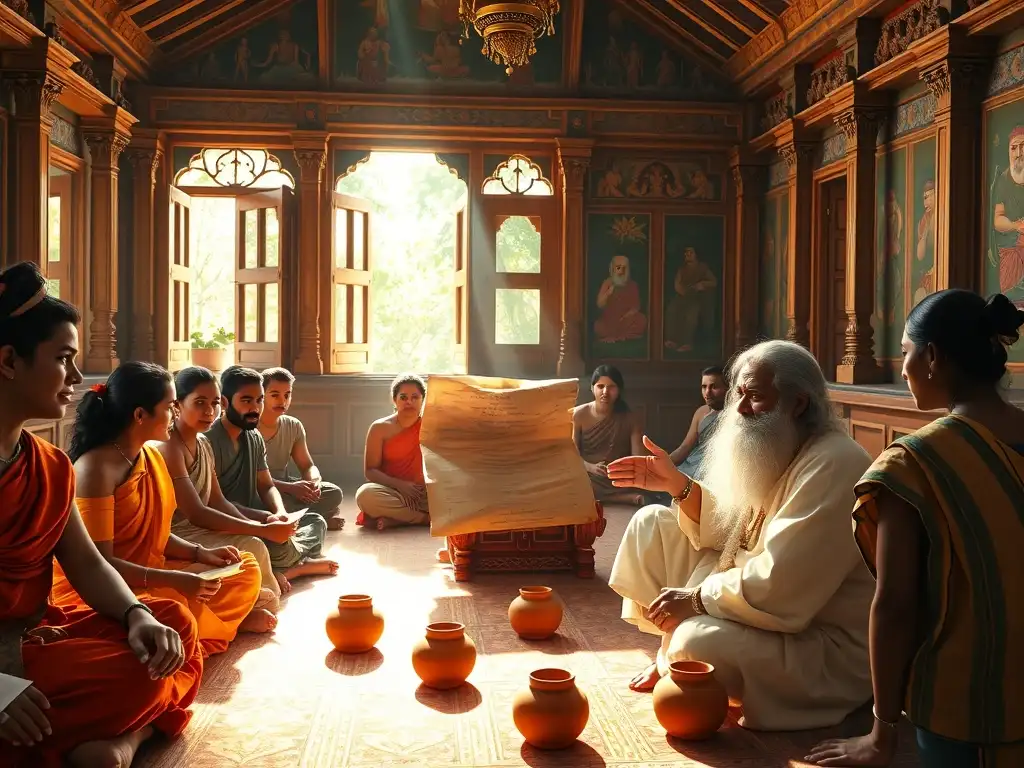
The educational systems in ancient India were characterized by their holistic approach to learning, encompassing a variety of subjects such as philosophy, mathematics, astronomy, and the arts. Central to this educational paradigm were the Gurukuls and Ashrams, where students would engage in immersive learning under the guidance of a guru. This system emphasized not just academic knowledge but also moral and ethical values, fostering a sense of personal responsibility and community engagement.
- Key Features of Ancient Indian Education:
- Personalized Learning: Education was tailored to the individual needs and abilities of students.
- Interdisciplinary Approach: Subjects were interconnected, promoting a comprehensive understanding of the world.
- Moral and Ethical Instruction: Emphasis on character development alongside academic learning.
Importance of Education in Ancient Indian Society
Education in ancient India was not merely a means to acquire knowledge; it was seen as a pathway to achieving personal and societal harmony. The teachings from sacred texts, such as the Vedas and Upanishads, instilled a sense of duty towards society and the cosmos. Education was accessible to various strata of society, although it was predominantly centered around the Brahmin class. The societal respect for learning and scholarship is evident from the patronage offered to scholars and the establishment of educational institutions.
- Social Significance of Education:
- Cultural Transmission: Education played a crucial role in preserving and transmitting cultural heritage.
- Empowerment: It provided individuals, especially those from marginalized communities, with tools for upward mobility.
- Intellectual Exchange: Ancient Indian education facilitated dialogues with other civilizations, enriching global knowledge.
Historical Context of Ancient Indian Education
Understanding the historical backdrop of ancient Indian education is vital to appreciating its contributions. The evolution of educational practices can be traced back to the Vedic period, which laid the groundwork for subsequent developments.
The Vedic Period and Its Influence on Learning
The Vedic period (circa 1500 – 500 BCE) marks a significant milestone in the history of education in India. The texts produced during this era, primarily the Vedas, were not only religious scriptures but also repositories of knowledge in various domains. The oral tradition of reciting and memorizing these texts fostered a unique learning environment that emphasized retention and comprehension.
- Key Contributions of the Vedic Period:
- Sanskrit Language Development: The Vedic texts contributed to the formalization of Sanskrit, enhancing communication and scholarship.
- Philosophical Foundations: The ideas of Dharma (duty/righteousness) and Karma (action) introduced profound ethical dimensions to education.
Educational Institutions in Ancient India: Gurukuls and Ashrams
Gurukuls and Ashrams were pivotal in shaping the educational landscape of ancient India. These institutions provided a nurturing environment where knowledge was imparted through a mentorship model. The relationship between guru and shishya (student) was built on trust and respect, allowing for deep engagement with the material.
- Characteristics of Gurukuls:
- Location: Typically situated in serene rural settings, promoting a focus on learning.
- Subjects Offered: Education encompassed sciences, arts, philosophy, and practical skills.
The Role of Universities like Nalanda and Takshashila
Ancient Indian universities such as Nalanda and Takshashila were remarkable centers of learning, attracting students from diverse regions, including China, Korea, and the Middle East. These institutions not only provided advanced education but also fostered an environment of inquiry, debate, and cross-cultural exchange.
- Highlights of Nalanda and Takshashila:
- Curriculum Diversity: Subjects ranged from astronomy to medicine, reflecting a comprehensive educational approach.
- Global Influence: Scholars from these universities played a vital role in the dissemination of knowledge, influencing educational practices worldwide.
By examining these aspects of ancient Indian education, we can appreciate its lasting legacy and the significant role it played in shaping intellectual traditions both within India and beyond.
Key Contributions of Ancient Indian Education
Ancient India laid the groundwork for numerous educational advancements that have had a lasting impact on global education systems. The educational contributions from this era were not merely limited to rote learning; they were characterized by a holistic approach that emphasized critical thinking, ethics, and experiential learning. Key contributions included the establishment of universities, such as Nalanda and Takshashila, which attracted students from across Asia and created an environment of rigorous academic inquiry.
Moreover, the curriculum was comprehensive, covering subjects ranging from philosophy and mathematics to medicine and arts, reflecting the diverse intellectual pursuits of the time. Ancient Indian education also fostered the concept of guru-shishya (teacher-student) relationships, where knowledge was transmitted through personal mentorship, emphasizing the importance of guidance and moral development in education.
Philosophical Foundations of Education in Ancient India
The philosophical underpinnings of education in ancient India were deeply rooted in spiritual and ethical values. Influential texts like the Vedas, Upanishads, and later, the teachings of philosophers such as Gautama Buddha and Mahavira, laid a strong emphasis on knowledge as a means to achieve liberation (moksha). Education was seen not just as a means to acquire skills but as a pathway to understanding the self and the universe.
The concept of Dharma (righteousness) played a crucial role in shaping educational practices, where the aim was to cultivate moral virtues alongside intellectual abilities. Educational philosophies encouraged inquiry and dialogue, as evidenced in the Nyaya and Vaisheshika schools of thought, which emphasized logic and epistemology as fundamental components of education.
Contributions to Mathematics and Astronomy
Ancient India made significant contributions to the fields of mathematics and astronomy, often regarded as some of the most advanced in the world during their time. The concept of zero, which revolutionized mathematics, originated from Indian mathematicians around the 5th century CE. Notable figures such as Aryabhata and Brahmagupta advanced mathematical principles, including algebra and geometry, contributing to the understanding of mathematical operations that are still foundational today.
In astronomy, Aryabhata's work, particularly the Aryabhatiya, introduced revolutionary ideas about the heliocentric model and the calculation of eclipses. Indian astronomers were adept at observational techniques and documented their findings meticulously, influencing later astronomical studies in various cultures.
Advancements in Medicine and Health Sciences
The ancient Indian education system also placed significant emphasis on medicine and health sciences, leading to the development of texts like the Charaka Samhita and the Sushruta Samhita. These texts compiled extensive knowledge on herbal medicine, surgical techniques, and holistic health practices, laying the groundwork for Ayurveda, a system of medicine that is still practiced today.
Education in medicine was not limited to theoretical knowledge; practical training and apprenticeship were crucial components. Students learned under the guidance of experienced practitioners, which facilitated a rich exchange of knowledge and skills, ensuring the preservation and advancement of medical science in ancient India.
Influence on Language and Literature Education
Language and literature education in ancient India thrived, with Sanskrit being the primary medium of scholarly discourse. The Mahabharata and Ramayana are prime examples of literary achievements that also served educational purposes, imparting moral lessons and cultural values.
The development of grammar and linguistic analysis by Panini in the Ashtadhyayi established a systematic approach to language study that influenced not only Indian linguistic traditions but also laid the foundation for the study of grammar in other cultures. The emphasis on oral traditions, poetry, and storytelling enriched the educational landscape, fostering a love for literature that transcended generations.
Global Influence of Ancient Indian Educational Practices
The educational practices of ancient India extended far beyond its geographic boundaries, influencing various cultures and civilizations across the globe. The methodologies and philosophies developed in India resonated with scholars and educators in different parts of the world, shaping educational systems in profound ways.
The Spread of Indian Educational Concepts to Southeast Asia
As Indian traders and monks traveled to Southeast Asia, they carried with them not only goods but also ideas, including educational philosophies and practices. The establishment of Indian-inspired universities and centers of learning in places like Java, Bali, and Cambodia facilitated the dissemination of knowledge. Local scholars adopted and adapted these educational systems, integrating them into their own cultural contexts.
Institutions such as the University of Nalanda served as a model for later educational establishments in Southeast Asia, emphasizing the study of arts, sciences, and religious texts. This cultural exchange not only enriched local education but also fostered a sense of shared intellectual heritage.
Impact on Islamic Golden Age Scholars
During the Islamic Golden Age, scholars in the Middle East were significantly influenced by ancient Indian educational contributions. Translations of Indian mathematical texts and astronomical treatises into Arabic played a critical role in advancing knowledge in these fields. The Indian numeral system, including the concept of zero, was integrated into Islamic mathematics, which later spread to Europe through translations.
Prominent figures like Al-Khwarizmi acknowledged the contributions of Indian mathematicians, and the synthesis of Indian and Islamic knowledge led to breakthroughs in algebra and trigonometry that shaped modern mathematics.
Contributions to Western Education Systems
The impact of ancient Indian education can also be traced to the evolution of Western education systems. The principles of critical inquiry, holistic education, and moral teaching found in ancient Indian practices influenced Renaissance thinkers and the Enlightenment movement.
The introduction of Indian mathematical concepts into Europe, particularly through translations of Arabic texts, transformed the way mathematics was taught and understood. Furthermore, the emphasis on experiential learning and mentorship in ancient Indian educational practices resonated with the development of modern pedagogical theories, contributing to the diverse educational landscape we see today.
Modern Relevance of Ancient Indian Education Contributions
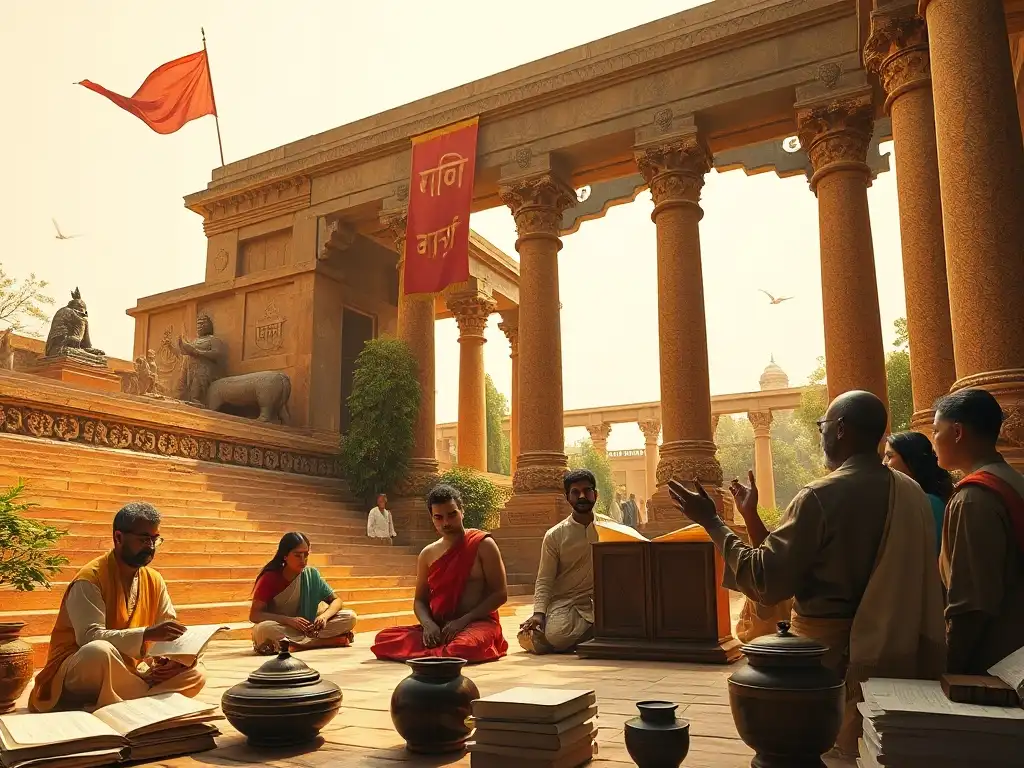
Ancient Indian education contributions have left a profound impact on global educational systems, and their relevance continues to resonate today. The methods and philosophies developed during ancient times, particularly in centers of learning such as Nalanda and Takshashila, emphasized critical thinking, holistic education, and the importance of ethics and values. These principles serve as a foundation for modern educational practices, encouraging a more comprehensive approach to learning that includes emotional and social dimensions alongside academic achievements.
The concept of Guru-Shishya (teacher-student) relationships highlighted the importance of mentorship and personalized learning, which remains crucial in contemporary education. By fostering an environment where students can engage deeply with their subjects and mentors, modern educators can draw inspiration from these ancient practices to cultivate curiosity and innovation. Furthermore, the integration of various disciplines, such as philosophy, science, and arts, within ancient curricula showcases the value of interdisciplinary learning—a principle that is gaining traction in today's educational frameworks.
Lessons from Ancient Indian Educational Practices for Today’s Education
Ancient Indian educational practices offer several valuable lessons that can be adapted for modern contexts:
- Holistic Education: Ancient Indian education emphasized the development of the mind, body, and spirit. This holistic approach can inform modern educational curricula that prioritize emotional intelligence, physical well-being, and ethical grounding alongside academic knowledge.
- Critical Thinking and Inquiry-Based Learning: The Socratic method of questioning and debate prevalent in ancient Indian learning encourages students to think critically and investigate topics deeply. Modern educators can incorporate similar methodologies to enhance analytical skills and foster a culture of inquiry.
- Mentorship: The Guru-Shishya relationship underscores the importance of mentorship in education. Establishing strong mentor-mentee bonds can significantly enhance student engagement and learning outcomes in contemporary settings.
- Inclusivity of Knowledge: Ancient Indian education embraced a broad spectrum of disciplines, allowing students to explore various fields of knowledge. This inclusivity can inspire modern curricula to integrate diverse subjects, promoting well-rounded education.
- Ethics and Values: The focus on moral and ethical education in ancient Indian systems encourages the development of character alongside intellectual growth. Incorporating ethical discussions into modern education can create responsible and compassionate citizens.
Integrating Ancient Wisdom in Contemporary Curriculum
Integrating ancient Indian wisdom into contemporary curricula can be a transformative approach to education. By incorporating elements such as:
- Philosophical Teachings: Understanding the philosophies of figures like Chanakya can provide students with insights into leadership, governance, and personal development.
- Traditional Arts and Sciences: Subjects such as Ayurveda, yoga, and classical arts can be integrated into health and physical education, fostering a deep appreciation for cultural heritage and holistic practices.
- Sanskrit and Language Studies: Reviving interest in ancient languages like Sanskrit can enhance linguistic skills and provide access to a treasure trove of ancient texts, enriching students’ understanding of history and culture.
- Project-Based Learning: Emphasizing collaborative projects that reflect the community and environment can mirror the ancient learning experiences, promoting teamwork and real-world problem-solving.
By thoughtfully incorporating these elements, educators can create a curriculum that honors the rich legacy of ancient Indian education while addressing the needs and realities of contemporary learners.
Conclusion: The Enduring Legacy of Ancient Indian Education
The enduring legacy of ancient Indian education is marked by its profound contributions to knowledge, pedagogy, and cultural values. The principles established in ancient educational institutions continue to influence modern education systems globally, emphasizing the importance of a well-rounded, ethically grounded approach to learning. As educators and policymakers seek to enhance educational frameworks, revisiting these ancient contributions can provide critical insights and innovative strategies.
Summary of Key Contributions
- Innovative Teaching Methods: Ancient Indian education highlighted inquiry-based learning, critical thinking, and the importance of mentorship.
- Holistic Development: Emphasis on the overall development of students, including moral and ethical grounding.
- Interdisciplinary Learning: Integration of various fields of knowledge, fostering a comprehensive educational experience.
- Cultural Heritage: Preservation and promotion of traditional arts, sciences, and philosophies.
Future Perspectives on Ancient Indian Educational Influence
Looking ahead, the influence of ancient Indian education on future educational practices is promising. As global education systems increasingly recognize the value of holistic and inclusive approaches, ancient Indian philosophies can serve as guiding principles. The future of education may see a resurgence of interest in ancient wisdom, encouraging innovations that blend traditional knowledge with modern pedagogical techniques. This synthesis can create learning environments that are not only academically rigorous but also culturally rich and ethically aware, preparing students to navigate the complexities of the modern world with wisdom and integrity.
References and Further Reading
To gain a comprehensive understanding of the contributions of ancient Indian education and its global impact, the following resources are invaluable. They encompass a wide range of perspectives, from historical analyses to contemporary interpretations, providing insights into the educational practices and philosophies that emerged from ancient Indian civilizations.
Suggested Books on Ancient Indian Education
-
"Ancient Indian Education: Brahmanical and Buddhist" by R. S. Sharma
This book delves into the educational systems established during the Brahmanical and Buddhist periods, analyzing their structures, philosophies, and the roles they played in society.
-
"Education in Ancient India" by Satish Chandra
A detailed exploration of the educational methodologies, institutions, and curricula from the Vedic age to the Gupta period, offering insights into how education shaped societal values and practices.
-
"The History of Education in Ancient India" by S. N. Mukherjee
This work provides a thorough historical account of educational practices in ancient India, emphasizing their philosophical foundations and their influence on later educational systems around the world.
-
"The Gurukul System of Education: A Study of the Ancient Indian Education System" by S. P. Gupta
This book focuses on the Gurukul system, discussing its significance, structure, and the role of teachers and students in fostering a unique learning environment that emphasized holistic development.
-
"Philosophy of Education in Ancient India" by R. N. Sharma
This text examines the philosophical underpinnings of ancient Indian education, exploring how concepts such as Dharma, Karma, and Moksha influenced educational goals and practices.
Academic Journals and Articles on Educational Contributions
-
"The Role of Education in Ancient Indian Society" - Journal of Historical Studies
This article investigates the societal roles education played in ancient India, including its impact on social hierarchies, gender roles, and economic development.
-
"Educational Systems in Ancient India: A Comparative Study" - International Journal of Educational Research
A comparative analysis of various educational systems within ancient India, focusing on methodologies, curriculum, and their influence on contemporary educational practices globally.
-
"Buddhist Monastic Education and Its Influence on the Global Educational Landscape" - Journal of Asian Studies
This scholarly article discusses the Buddhist monastic education system, its practices, and how it contributed to the spread of knowledge throughout Asia and beyond.
-
"The Influence of Ancient Indian Mathematics on Global Education" - Mathematics Education Research Journal
This article highlights the mathematical contributions from ancient India, such as the concept of zero and decimal system, and discusses their integration into global educational contexts.
-
"Traditions of Learning: Ancient India and Its Global Impact" - Journal of Educational History
This journal article examines the various traditions of learning in ancient India and their lasting influence on educational systems worldwide, providing a historical context for modern educational practices.
These references and further readings not only enhance understanding but also provide a foundation for exploring how ancient Indian educational contributions have shaped global educational paradigms.
- Introduction to Ancient Indian Education Contributions
- Historical Context of Ancient Indian Education
- Key Contributions of Ancient Indian Education
- Global Influence of Ancient Indian Educational Practices
- Modern Relevance of Ancient Indian Education Contributions
- Conclusion: The Enduring Legacy of Ancient Indian Education
- References and Further Reading
- What were the key contributions of ancient Indian education?
- How did the Gurukul system influence education in ancient India?
- Which texts are considered foundational in ancient Indian education?
- How did ancient Indian universities contribute to global knowledge?
- What was the role of women in ancient Indian education?
Frequently Asked Questions
What were the key contributions of ancient Indian education?
Ancient Indian education contributed significantly to various fields, including mathematics, astronomy, and medicine, laying the groundwork for future advancements worldwide.
How did the Gurukul system influence education in ancient India?
The Gurukul system was pivotal in ancient Indian education, promoting personalized learning and teacher-student relationships, which fostered deep understanding and respect for knowledge.
Which texts are considered foundational in ancient Indian education?
Sanskrit texts like the Vedas, Upanishads, and Mahabharata served as foundational materials, encompassing various disciplines and philosophical teachings essential for education.
How did ancient Indian universities contribute to global knowledge?
Ancient Indian universities, such as Nalanda and Takshashila, attracted students from around the world, facilitating the exchange of knowledge and ideas that influenced educational systems globally.
What was the role of women in ancient Indian education?
While often limited, women in ancient India had access to education in certain contexts, particularly in spiritual and philosophical teachings, contributing to the cultural and intellectual heritage of the time.
Final Reflection: The Enduring Legacy of Ancient Indian Educational Contributions
The contributions of ancient Indian education systems have shaped not only the intellectual landscape of India but also the global pursuit of knowledge. Today, as we navigate an increasingly interconnected world, the principles of holistic learning, critical thinking, and inclusivity that emerged from ancient Indian educational practices remain profoundly relevant. These timeless values continue to inspire modern educational reforms and methodologies, emphasizing the need for a more comprehensive approach to learning.
The influence of ancient Indian education can be seen in various cultural and social contexts, from the emphasis on mathematics and astronomy to the philosophical inquiries that laid the groundwork for modern disciplines. The rich tapestry of knowledge that originated in ancient India has transcended borders, fostering a spirit of inquiry and innovation across civilizations. Education is the most powerful weapon which you can use to change the world.
— Nelson Mandela. This quote resonates deeply with the essence of ancient Indian educational contributions, reminding us that the pursuit of knowledge is a catalyst for transformation.
As we reflect on the profound impact of these ancient teachings, I invite you to consider how you can incorporate the principles of ancient Indian education into your own life. Whether through fostering a love for learning, embracing diverse perspectives, or nurturing a sense of community, each of us has the power to contribute to a brighter future. Let us honor the legacy of ancient Indian education by committing to lifelong learning and sharing knowledge with others, ensuring that its wisdom continues to illuminate paths for generations to come.
Unveil the Legacy: Transform Your Perspective on Ancient Indian Education!
Thank you for dedicating your time to explore the fascinating impact of ancient Indian educational contributions! You've uncovered insights that highlight the profound influence of these systems on global learning and wisdom. Now, it’s time to turn that knowledge into action!
- Dive deeper: Consider reading a book or watching a documentary that delves into ancient educational philosophies to further enrich your understanding.
- Share your insights: Engage with friends and family by discussing the key takeaways from this article—help spread the knowledge!
- Join our community: Connect with like-minded individuals interested in ancient education by sharing your thoughts in the comments or participating in our forums.
What new perspective do you think ancient Indian education could bring to modern learning practices?