
Ashoka the Great: The Unyielding Advocate of NonViolence and Buddhism

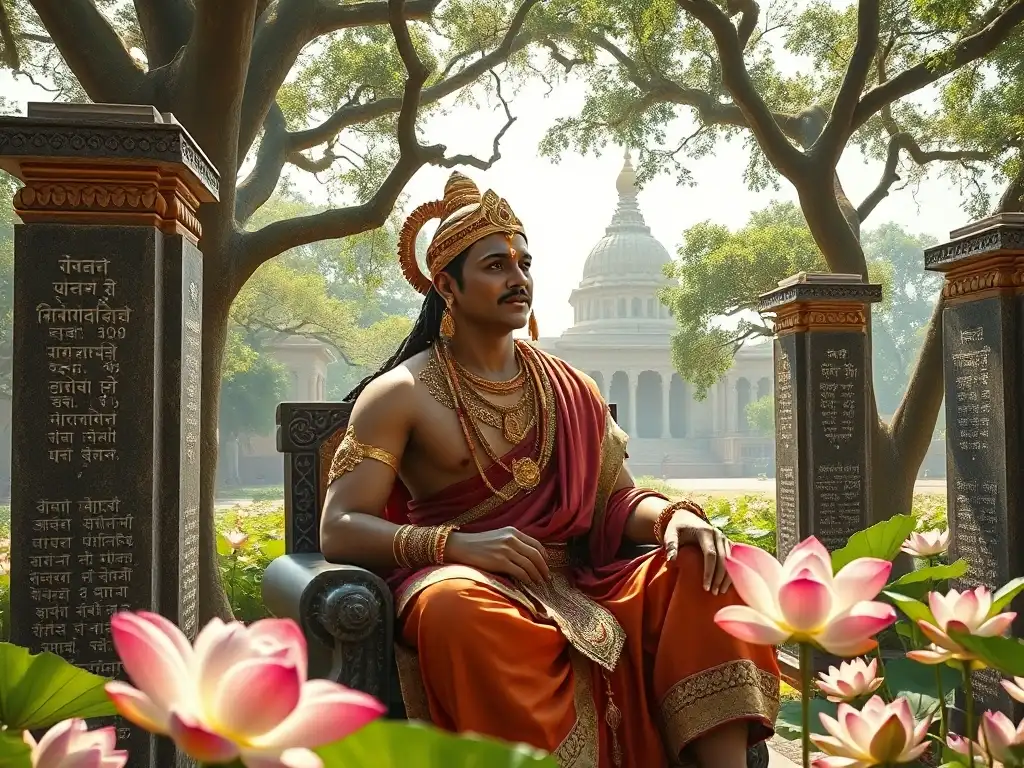
Welcome to Ancient India History, where we invite you to embark on a fascinating journey through time. In this treasure trove of knowledge, you'll uncover the profound impact of ancient Indian civilizations on the world, starting with our featured article on Ashoka the Great. As an unyielding advocate of non-violence and Buddhism, Ashoka's story is not just one of a ruler, but of a transformative leader whose legacy continues to inspire.
Dive deeper as we unravel the intricacies of his life and the remarkable era he shaped, igniting your curiosity about the profound contributions of ancient India. Don't miss the chance to explore more!
Introduction to Ashoka the Great
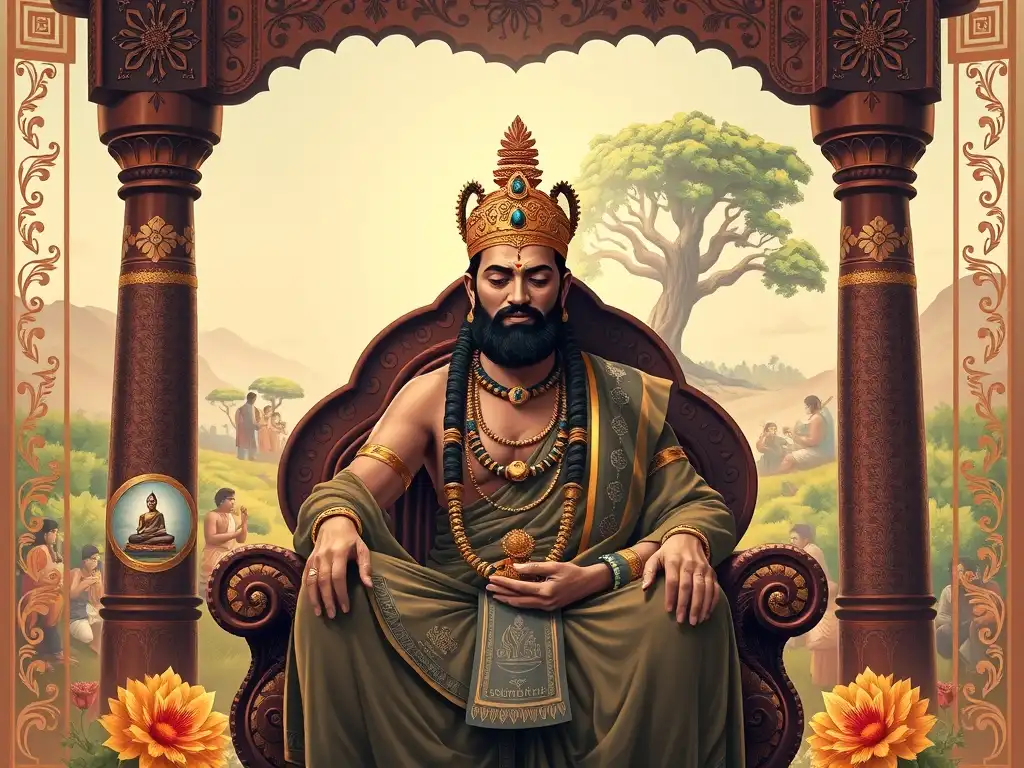
Ashoka the Great stands as one of the most pivotal figures in ancient Indian history, renowned for his transformative role in promoting non-violence and Buddhism. His reign, which lasted from 268 to 232 BCE, marked a significant departure from the militaristic approaches of previous rulers, as he embraced the principles of peace and compassion following the devastating Kalinga War.
Ashoka's legacy is not only defined by his conquests but by his profound commitment to the welfare of his subjects and the spread of Buddhist teachings throughout his empire and beyond. This article delves into the life, significance, and enduring impact of Ashoka the Great, providing a comprehensive understanding of his contributions to Buddhism and his influence on Indian history.
Overview of Ashoka's Life
Ashoka, born into the Maurya dynasty, was the grandson of Chandragupta Maurya, the founder of the Mauryan Empire. His early life was marked by struggle and ambition, which ultimately led him to ascend the throne after a series of power struggles within the royal family. His reign is often characterized by a shift from a warrior king to a benevolent ruler, especially after his personal transformation prompted by the horrors witnessed during the Kalinga War.
- Key Events in Ashoka's Life:
- Birth: Circa 304 BCE
- Ascension to the throne: Circa 268 BCE
- Kalinga War: Circa 261 BCE
- Conversion to Buddhism: Post-Kalinga War
Significance in Indian History
Ashoka's significance in Indian history cannot be overstated. He is often credited with the spread of Buddhism beyond the Indian subcontinent, influencing cultures and societies across Asia. His promotion of the Dhamma, or moral law, emphasized ethical governance and the importance of non-violence, which resonated deeply during his time and continues to be relevant today.
- Contributions:
- Establishment of rock edicts promoting non-violence and moral conduct
- Patronage of Buddhist monastic communities
- Role in the dissemination of Buddhist texts and teachings throughout Asia
Ashoka's Early Life and Ascension to the Throne
Background and Family
Ashoka was born into the Mauryan royal family, which held significant power in ancient India. His father, Emperor Bindusara, ruled over a vast empire, and Ashoka's upbringing was steeped in the political and military strategies of the time. Despite the privileges associated with royalty, Ashoka's early life was fraught with challenges, including sibling rivalry for the throne.
- Family Tree:
- Father: Bindusara
- Grandfather: Chandragupta Maurya
- Notable Siblings: Susima and others who posed threats to his claim to the throne
Path to Becoming Emperor
Ashoka's path to the throne was marked by both ambition and turmoil. After a series of political machinations and conflicts within the royal family, he ultimately emerged as the ruler of the Mauryan Empire. His early reign was characterized by military campaigns aimed at expanding his territory, culminating in the pivotal Kalinga War, which would forever alter his worldview and approach to leadership.
- Key Milestones:
- Military training and early campaigns
- Ascension following the death of Bindusara
- The Kalinga War: A turning point leading to his embrace of Buddhism
Through this exploration of Ashoka's life and his eventual transformation into a proponent of non-violence and Buddhism, we gain deeper insights into the enduring legacy of one of India's most significant historical figures.
The Transformation of Ashoka: From Warrior to Advocate of NonViolence
Ashoka the Great, the third Mauryan emperor, is renowned for his profound transformation from a fierce warrior to a steadfast advocate of non-violence and Buddhism. Initially, Ashoka was a formidable military leader, known for his conquests and expansion of the Mauryan Empire. His reign began with a focus on territorial acquisition, exemplified by his aggressive campaigns and the consolidation of power. However, a pivotal moment in his life redefined his legacy and approach to governance.
The Kalinga War and Its Impact
The Kalinga War, fought around 261 BCE, marked a significant turning point in Ashoka's life. This conflict was not only one of the bloodiest battles in Indian history but also a profound catalyst for Ashoka's introspection. The war resulted in immense loss of life, with estimates suggesting over 100,000 casualties. The overwhelming human suffering and the sight of grief-stricken families deeply affected Ashoka.
In the aftermath, he realized that the cost of victory was far too high, leading him to question the very foundations of his rule. This moment of clarity prompted him to renounce violence and embrace a path of peace. Ashoka’s reflections on the war led him to adopt non-violence as a core principle of his reign, marking the beginning of his transformation into an advocate for compassion and understanding.
Embracing Buddhism: A Turning Point
Following the Kalinga War, Ashoka's spiritual journey led him to Buddhism, which resonated deeply with his newfound principles of non-violence and compassion. He began to study the teachings of the Buddha, finding solace in the concepts of Dharma (moral law) and Ahimsa (non-violence).
Ashoka's conversion to Buddhism was not merely a personal choice; it influenced his policies and governance profoundly. He sought to spread the teachings of Buddhism across his empire and beyond, believing that these teachings could foster harmony and alleviate suffering. His commitment to Buddhism transformed him into one of its most ardent supporters, promoting a vision of a peaceful society grounded in ethical living and respect for all beings.
Ashoka's Contributions to Buddhism and NonViolence
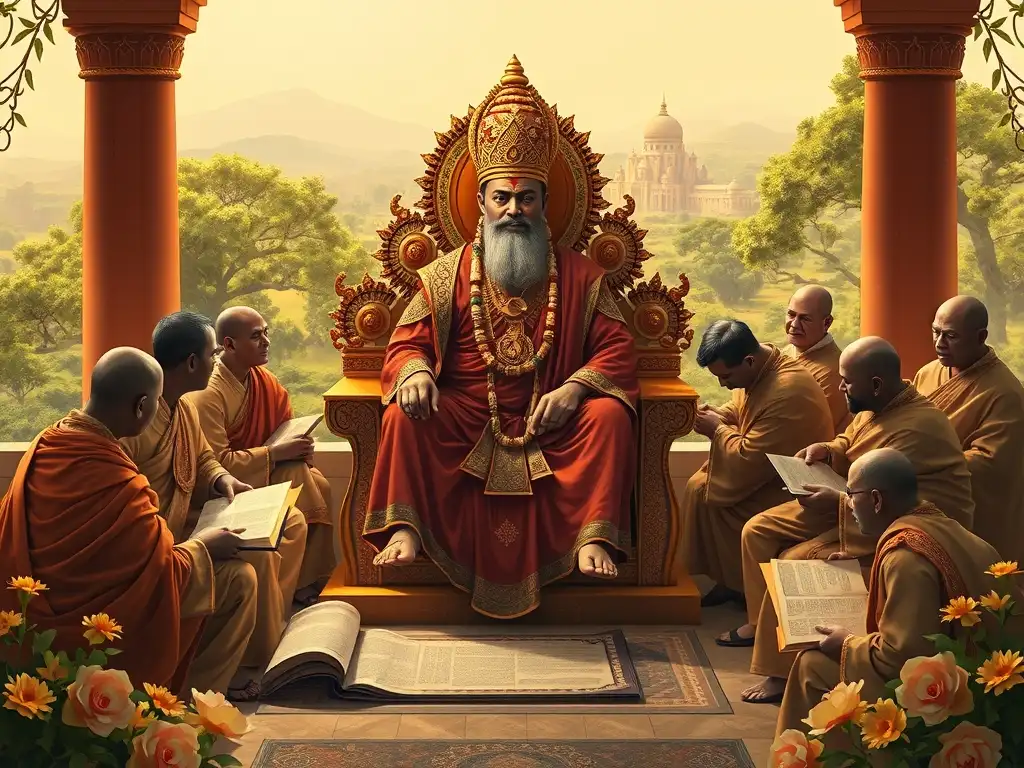
Ashoka's reign is characterized by significant contributions to both Buddhism and the promotion of non-violence, shaping the cultural and spiritual landscape of ancient India.
Promotion of Buddhist Teachings
One of Ashoka's most impactful contributions was the promotion of Buddhist teachings. He commissioned the inscription of the Edicts of Ashoka, which articulated his commitment to Buddhism and non-violence. These edicts were carved on pillars and rocks across his vast empire, making his messages accessible to the populace.
Through these inscriptions, Ashoka emphasized the importance of compassion, tolerance, and moral conduct. He actively supported the monastic community, providing resources to Buddhist monks and facilitating the establishment of stupas and monasteries. Ashoka’s efforts in promoting Buddhism extended beyond his empire; he sent missionaries to various regions, including Sri Lanka and Central Asia, helping to spread the teachings of the Buddha far and wide.
Implementation of NonViolence in Governance
Ashoka's dedication to non-violence also manifested in his governance policies. He established a system that prioritized the welfare of his subjects and encouraged ethical behavior among his officials. Ashoka's administration was marked by a commitment to justice, fairness, and the well-being of all living beings.
He implemented policies that aimed to reduce suffering, such as promoting healthcare, supporting agriculture, and ensuring access to food and resources for the poor. Additionally, Ashoka's edicts urged his subjects to practice kindness and empathy towards one another, fostering a culture of peace in his empire. His governance model became a template for future leaders, demonstrating that power could be wielded through compassion and non-violence rather than through brute force.
Ashoka the Great's legacy as a champion of Buddhism and non-violence continues to inspire generations, reminding us of the enduring power of compassion in leadership.
The Edicts of Ashoka: A Testament to His Beliefs
The Edicts of Ashoka are a remarkable compilation of inscriptions that reflect the philosophical and moral principles of one of ancient India's most influential rulers. Commissioned during his reign in the 3rd century BCE, these edicts were inscribed on rocks and pillars across the vast Mauryan Empire. They serve as a primary source for understanding Ashoka's commitment to non-violence, compassion, and the promotion of Buddhism. The edicts not only reveal Ashoka's personal transformation after the Kalinga War but also his efforts to implement a governance model rooted in ethical standards.
Overview of the Edicts
The Edicts of Ashoka consist of 33 inscriptions, which are categorized into major and minor edicts. The major edicts are written in a more formal style and address a broader audience, while the minor edicts focus on local governance and moral guidance. These inscriptions are primarily written in Brahmi and Kharosthi scripts, making them pivotal in the study of ancient Indian languages and literacy.
The edicts were placed in strategic locations, ensuring that they were accessible to a diverse population. They cover a range of topics, including moral conduct, social justice, animal welfare, and religious tolerance. Ashoka emphasized the importance of dharma (moral law) and encouraged his subjects to adopt ethical behaviors that align with Buddhist teachings.
Key Messages Promoting NonViolence and Compassion
At the heart of the Edicts of Ashoka is a profound advocacy for non-violence (ahimsa) and compassion towards all living beings. One of the key messages is the rejection of warfare and the embrace of peace. In his edicts, Ashoka articulates the devastating consequences of violence, particularly highlighting the suffering caused by the Kalinga War. He expresses remorse for the loss of life and advocates for a society built on mutual respect and harmony.
Furthermore, Ashoka's edicts promote compassion, urging his subjects to treat others with kindness and understanding. He emphasizes the importance of social welfare, encouraging the establishment of hospitals for humans and animals alike, and the provision of food and shelter for the needy. This holistic approach to governance reflects Ashoka's vision of a moral society, where the welfare of all is paramount.
The Spread of Buddhism Under Ashoka's Rule
Ashoka the Great is often credited with the widespread dissemination of Buddhism beyond the borders of India. His reign marked a significant turning point in the history of the religion, transforming it from a localized belief system into a global phenomenon. Ashoka's personal devotion to Buddhism influenced not only his policies but also the cultural landscape of the time.
Ashoka's Role in the Global Expansion of Buddhism
Ashoka's commitment to Buddhism was instrumental in its international expansion. Following his conversion, he actively promoted Buddhist teachings and values throughout his empire and beyond. He sent missionaries to various regions, including Sri Lanka, Egypt, and parts of Central Asia, to share the principles of Buddhism. Notably, his relationship with the Sri Lankan king, Devanampiya Tissa, facilitated the establishment of Buddhism in Sri Lanka, where it took root and flourished.
His edicts also reflect a call for tolerance among different religious communities, encouraging dialogue and respect for diverse beliefs. This approach not only helped Buddhism to thrive within India but also laid the groundwork for its acceptance globally, fostering a legacy that would influence millions over centuries.
Establishing Monasteries and Stupas
To support the growth of Buddhism, Ashoka undertook significant architectural projects, including the construction of monasteries and stupas. These structures served as centers for meditation, learning, and community gatherings. The most famous of these is the Sanchi Stupa, a UNESCO World Heritage site, which exemplifies the artistic and architectural achievements of the period.
Ashoka's efforts also included the establishment of the monastic order, encouraging the formation of communities where monks could practice and propagate Buddhist teachings. By providing patronage to these institutions, he ensured that Buddhism could be studied and practiced widely, promoting its values of peace and compassion throughout his empire.
Ashoka the Great’s legacy as an advocate of non-violence and Buddhism is profoundly reflected in the Edicts of Ashoka, which continue to inspire generations. His role in the spread of Buddhism, supported by the establishment of monasteries and stupas, underscores his commitment to creating a more compassionate world.
Legacy of Ashoka the Great in Buddhism History
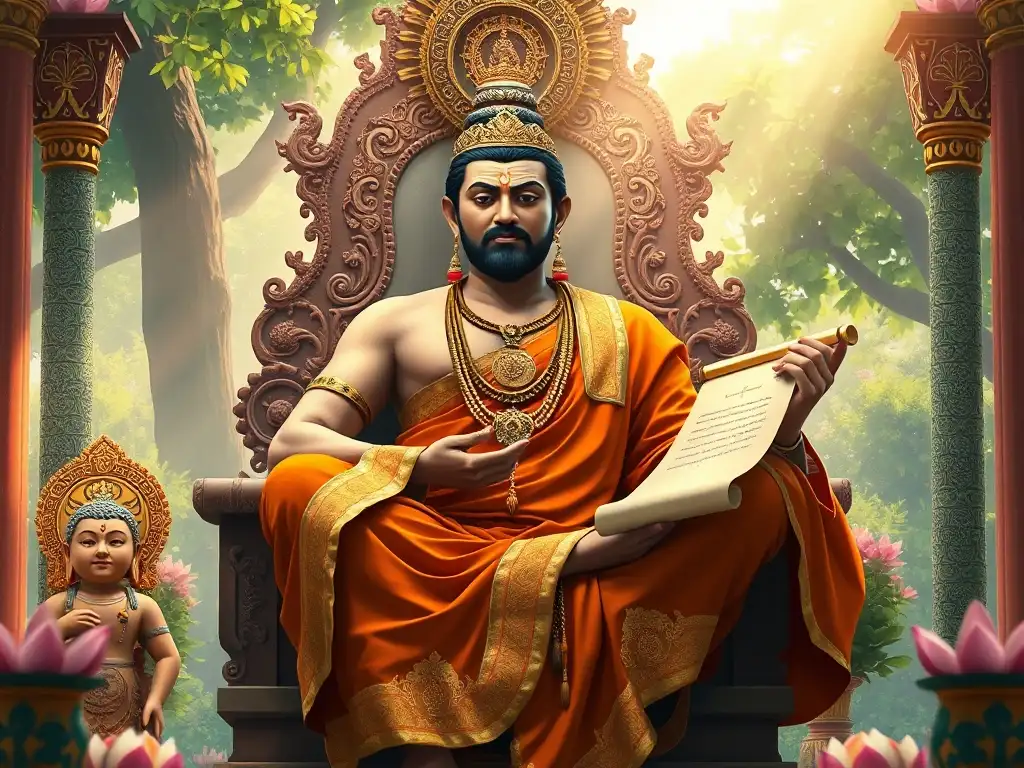
Ashoka the Great, the third Mauryan emperor, is often hailed as one of the most pivotal figures in the history of Buddhism. His legacy is deeply intertwined with the spread and establishment of Buddhist principles across India and beyond.
After his conversion to Buddhism following the gruesome Kalinga War, Ashoka dedicated his reign to promoting non-violence (ahimsa), compassion, and moral governance. He was instrumental in the propagation of Buddhist teachings through various means, including the establishment of stupas, the commissioning of edicts that conveyed moral and ethical guidelines, and the support of missionaries who spread Buddhism to other regions, including Sri Lanka and Central Asia.
Ashoka's edicts, inscribed on rocks and pillars throughout his empire, serve as a testament to his commitment to Buddhist values. These inscriptions not only disseminated the teachings of the Buddha but also emphasized the importance of ethical behavior and social responsibility among his subjects. His reign marked a significant turning point in the acceptance of Buddhism as a dominant cultural and spiritual force in ancient India, solidifying its principles within the fabric of Indian society.
Influence on Subsequent Buddhist Leaders
The influence of Ashoka on subsequent Buddhist leaders cannot be overstated. His vision of an empire governed by dharma (righteousness) inspired future kings and rulers, who looked to his edicts as a model for ethical leadership. Notably, Ashoka's emphasis on non-violence laid the groundwork for the development of the Buddhist concept of peaceful coexistence. This ethos was echoed by later Buddhist leaders such as Emperor Kaniska and King Anawrahta of Burma, who adopted similar policies that promoted Buddhism and non-violent governance.
Moreover, Ashoka's role in convening the Third Buddhist Council facilitated the standardization of Buddhist texts and practices, which helped solidify the teachings of the Buddha for generations to come. His legacy also inspired various Buddhist sects, encouraging the development of diverse interpretations and practices within Buddhism that continue to thrive today.
Lasting Impact on Indian Culture and Philosophy
Ashoka's commitment to Buddhism and non-violence significantly impacted Indian culture and philosophy. His promotion of ethical governance influenced the moral framework of Indian society, steering it towards a more compassionate and just system. The principles of ahimsa and tolerance, which Ashoka championed, became integral to Indian philosophical thought, shaping the moral compass of future generations.
In arts and literature, the influence of Ashoka's reign is evident in the numerous sculptures, paintings, and literary works that reflect Buddhist themes. The architectural marvels of the period, such as the Sanchi Stupa, stand as enduring symbols of Ashoka's dedication to Buddhism. Furthermore, the values he espoused have permeated various aspects of Indian culture, inspiring social movements and philosophical discourses that emphasize peace and non-violence, making them relevant even in contemporary society.
Conclusion
Summary of Ashoka's Contributions to NonViolence and Buddhism
Ashoka the Great's contributions to non-violence and the promotion of Buddhism laid the foundation for the religion's expansion and integration into the cultural and spiritual life of India. His unwavering advocacy for ethical governance, compassion, and moral responsibility transformed the political landscape of his time and established him as a model for future leaders. Through his edicts and support for Buddhist missionaries, Ashoka ensured that the teachings of the Buddha reached far beyond the borders of his empire, leaving an indelible mark on the history of Buddhism.
Reflection on Ashoka's Relevance in Today's World
Ashoka's legacy resonates strongly in today's world, where issues of violence, social injustice, and moral governance remain prevalent. His philosophy of non-violence and compassion provides a timeless framework for addressing contemporary challenges. As societies globally grapple with conflict and division, Ashoka’s teachings serve as a reminder of the power of peace and understanding.
His life and reign offer valuable insights into the importance of ethical leadership and the potential for transformative change through non-violent means. Thus, Ashoka the Great not only shaped the history of Buddhism but continues to inspire individuals and leaders in the pursuit of a more compassionate and just world.
References
Key Texts and Resources on Ashoka and Buddhism
- Edicts of Ashoka: The inscriptions created by Ashoka himself are crucial for understanding his principles and policies regarding Buddhism and non-violence. These edicts, carved on rocks and pillars throughout his empire, provide insight into his thoughts on governance, morality, and the promotion of dharma.
- The Life of the Buddha by Bhikkhu Nanamoli: This text offers a comprehensive view of the life of Siddhartha Gautama (the Buddha), providing context for Ashoka’s embrace of Buddhism and his efforts to propagate its teachings across his empire.
- Ashoka: The Great Buddhist Emperor: by Anirban Chatterjee: A modern analysis that delves into Ashoka’s reign, focusing on his conversion to Buddhism and the subsequent impact on Indian society and culture.
- The Buddhist World edited by John Powers: This anthology includes various scholarly articles that discuss the spread of Buddhism during Ashoka's time and its subsequent influence on Indian civilization.
- The History of Ancient India by Romila Thapar: This comprehensive work provides an overview of ancient Indian history, including a detailed discussion on Ashoka, his policies, and the role of Buddhism in shaping his governance.
Further Reading on Ancient Indian History
- The Indus Civilization by Rita Lucarelli: An insightful exploration of the Indus Valley civilization, offering a backdrop to the rise of later empires like that of Ashoka.
- The Mauryan Empire by R.S. Sharma: This text provides an in-depth examination of the Mauryan dynasty, with a significant focus on Ashoka's contributions and the political and cultural landscape of ancient India.
- India: A History: by John Keay: This book offers a broad perspective on Indian history, including the evolution of religions such as Buddhism and the influence of figures like Ashoka.
- In Search of the Dharma: The Buddhist Worldview: by John S. Strong: This work discusses the philosophical underpinnings of Buddhism and how they were advocated by Ashoka during his reign.
- Buddhism: A Very Short Introduction: by Damien Keown: An accessible overview of Buddhism, its origins, and its teachings, which were pivotal to Ashoka's policies and vision for society.
By engaging with these texts and resources, readers can gain a richer understanding of Ashoka the Great's role in promoting Buddhism and the broader historical context of his reign.
- Introduction to Ashoka the Great
- Ashoka's Early Life and Ascension to the Throne
- The Transformation of Ashoka: From Warrior to Advocate of NonViolence
- Ashoka's Contributions to Buddhism and NonViolence
- The Edicts of Ashoka: A Testament to His Beliefs
- The Spread of Buddhism Under Ashoka's Rule
- Legacy of Ashoka the Great in Buddhism History
- Conclusion
- References
Frequently Asked Questions
What is Ashoka the Great known for?
Ashoka the Great is best known for his transformation into a proponent of Buddhism and non-violence after the Kalinga War, which led him to promote peaceful coexistence and moral governance.
How did Ashoka contribute to the spread of Buddhism?
Ashoka played a pivotal role in the dissemination of Buddhism across Asia by sending missionaries to various regions and establishing Buddhist stupas and monasteries.
What was the significance of the Edicts of Ashoka?
The Edicts of Ashoka are a set of inscriptions that articulate his Buddhist principles and policies on non-violence, tolerance, and moral conduct, serving as a crucial historical source.
How did Ashoka's reign impact ancient Indian civilization?
Ashoka's reign marked a golden age in ancient India, characterized by cultural flourishing, economic prosperity, and the establishment of a unified Buddhist identity across the subcontinent.
What lessons can modern society learn from Ashoka's principles?
Modern society can learn the importance of non-violence, compassion, and ethical governance from Ashoka's teachings, which emphasize the need for peaceful resolution of conflicts and social harmony.
Final Reflection: Embracing Ashoka's Legacy of Nonviolence and Compassion
Ashoka the Great's commitment to nonviolence and Buddhism remains profoundly relevant in today's world, where conflict and division often overshadow the pursuit of peace. His transformative journey from a warrior to a compassionate ruler exemplifies the power of introspection and moral evolution. In a time when the principles of empathy and understanding are desperately needed, Ashoka's legacy serves as a beacon of hope and a reminder of the profound impact one individual can have on the collective consciousness of humanity.
Culture and society continue to be shaped by the ideals that Ashoka championed, particularly in the realms of peace and tolerance. His promotion of Buddhism not only influenced the spiritual landscape of his time but also laid the groundwork for a more compassionate society. As we navigate the complexities of modern life, we can draw inspiration from his words: Happiness is the state of mind that comes from the practice of virtue.
This sentiment resonates deeply today, urging us to reflect on our actions and their implications for the greater good.
As we contemplate Ashoka's teachings, let us take this opportunity to reflect on our own lives and the choices we make daily. How can we embody the principles of nonviolence and compassion in our interactions with others? I invite you to embrace Ashoka’s legacy by fostering understanding, promoting peace, and advocating for a world where kindness prevails. Together, we can honor his memory and contribute to a future that reflects the values he so passionately upheld.
Embrace Peace: Ignite Your Journey Towards Nonviolence!
Thank you for diving into the inspiring legacy of Ashoka the Great! By exploring his unwavering commitment to nonviolence and Buddhism, you've unlocked valuable insights into how these principles can transform our modern lives.
Now, it's time to take action and embody the spirit of Ashoka. Here are some steps you can take to make a meaningful difference:
- Establish a daily practice of mindfulness and compassion. Dedicate a few minutes each day to reflect on your actions and their impact on those around you.
- Discuss the importance of nonviolence with your friends and family. Start conversations about peace, empathy, and understanding within your community.
- Participate in a local or online group dedicated to promoting peace and nonviolence. Connect with others who share your passion for creating a better world.
As you embark on this journey, consider this: How can you weave the values of nonviolence and compassion into your daily interactions? Your insights and experiences could inspire others!