
The Campaign of Alexander in India: Conquest or Collaboration?

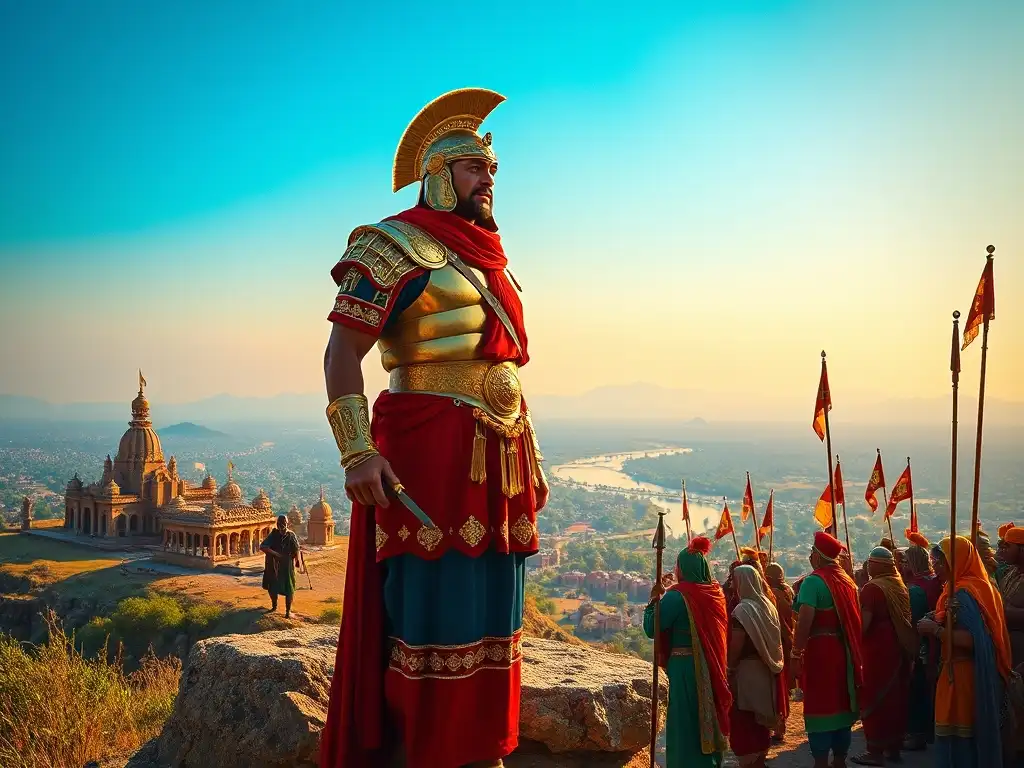
Welcome to Ancient India History, where we embark on a compelling journey through the rich tapestry of India's past. Delve into the intricacies of Alexander's Campaign in India, a pivotal moment that raises intriguing questions about conquest versus collaboration. Was it merely a tale of battle, or did it lay the groundwork for cultural exchanges that shaped the future?
As you explore our content, prepare to uncover the fascinating narratives that define ancient Indian civilizations—from the enigmatic Indus Valley to the illustrious Gupta Empire. Join us as we unravel these stories and ignite your curiosity about a time that continues to influence our world today.
- Introduction to Alexander's Campaign in India
- Prelude to the Campaign of Alexander in India
- The Course of Alexander's Campaign in India
- The Impact of Alexander's Campaign on Indian Society
- Conquest vs. Collaboration: Analyzing Alexander's Intentions
- Conclusion: The Legacy of Alexander's Campaign in India
- Further Reading and Resources on Alexander's Campaign in India
-
Frequently Asked Questions
- What was the primary goal of Alexander's Campaign in India?
- How did Indian rulers respond to Alexander's advances?
- What were the significant battles during Alexander's Campaign in India?
- What impact did Alexander's Campaign have on Indian culture?
- How did Alexander's Campaign in India shape future interactions between East and West?
- Final Reflection: The Legacy of Alexander's Campaign in India
- Unveil Your Perspective on Alexander's Campaign!
Introduction to Alexander's Campaign in India
The campaign of Alexander the Great in India stands as one of the most significant events in ancient military history, intertwining themes of conquest, diplomacy, and cultural exchange. As a figure renowned for his extraordinary military prowess, Alexander’s incursion into the Indian subcontinent raises profound questions: Was it merely a quest for territorial expansion, or did it foster collaboration between diverse cultures?
This article delves into the complexities of Alexander's Campaign in India, exploring the nuances of his military strategies, the historical backdrop of his expedition, and the lasting impact of his encounters with Indian kingdoms. By examining these facets, we aim to provide a comprehensive understanding of how this campaign not only shaped the course of Indian military history but also influenced the broader interactions between the East and West.
Overview of Alexander the Great
Alexander III of Macedon, commonly known as Alexander the Great, is celebrated as one of history's most illustrious conquerors. Born in 356 BCE in Pella, Macedonia, he was tutored by the philosopher Aristotle, who instilled in him a deep appreciation for knowledge and culture.
- Key Achievements:
- Conquered vast territories: By the age of 30, Alexander had created one of the largest empires of the ancient world, stretching from Greece to northwest India.
- Military Innovations: His use of the phalanx and cavalry tactics revolutionized warfare, making him a formidable opponent.
Alexander's ambition led him to embark on a series of military campaigns that would forever alter the political landscape of the known world. His journey into India around 326 BCE marked a pivotal moment in his quest for dominance and for establishing Hellenistic culture.
Historical Context of the Campaign
The campaign in India is deeply rooted in the context of the era, characterized by shifting power dynamics and the emergence of influential kingdoms in the Indian subcontinent.
- Key Factors Influencing the Campaign:
- Decline of the Achaemenid Empire: Following the defeat of Darius III of Persia, Alexander sought to extend his influence further eastward.
- Rise of Local Kingdoms: Kingdoms such as the Nanda Empire and the Porus Kingdom presented both challenges and opportunities for Alexander.
The socio-political landscape of India during this period was marked by a variety of regional powers, each with its unique culture and military capabilities. Alexander's decision to invade was not only a military expedition but also a calculated move to establish dominance over these emerging kingdoms.
Importance of the Campaign in Indian Military History
Alexander's Campaign in India holds a significant place in the annals of Indian military history, not just for its immediate outcomes but for its long-term implications.
- Influence on Military Tactics:
- Introduction of Hellenistic Warfare: Alexander's strategies and formations inspired subsequent Indian military leaders.
- Cultural Exchange: The campaign facilitated the exchange of ideas and military practices between the Greeks and Indians.
- Political Ramifications:
- The encounter with Indian armies, particularly the Battle of the Hydaspes against King Porus, illustrated the resilience of Indian forces and set the stage for future confrontations between Indian kingdoms and foreign invaders.
Alexander's Campaign in India was not merely a series of battles; it was a complex interplay of military strategy, cultural exchange, and political maneuvering that shaped the historical narrative of both Indian and global military history. Through this exploration, we will uncover the layers of this campaign, assessing its impact and legacy in the context of ancient civilizations.
Prelude to the Campaign of Alexander in India
The Persian Expansion and Indian Subcontinent
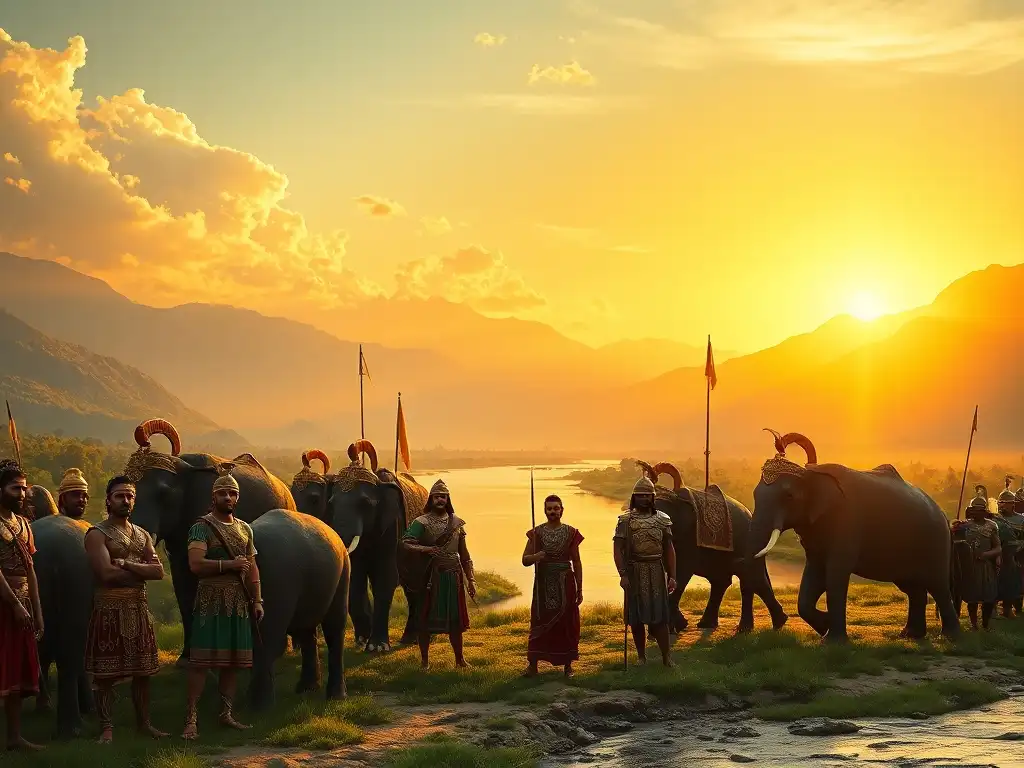
The backdrop to Alexander's Campaign in India is intricately linked to the expansion of the Persian Empire under Cyrus the Great and his successors, particularly Darius I. The Achaemenid Empire extended its reach into the northwestern regions of the Indian subcontinent, notably through the conquest of the Indus Valley territories, which included regions such as Gandhara and parts of Punjab. This expansion facilitated not only trade but also cultural exchanges between Persia and the Indian subcontinent.
By the time Alexander embarked on his campaign in 326 BCE, the Persian Empire had established a foothold in the region, which laid the groundwork for his subsequent military endeavors. The wealth of these territories and their strategic importance made them attractive targets for conquest. Furthermore, the Persian administrative system and infrastructure, such as the Royal Road, had already connected these regions to the broader empire, creating a network that Alexander could utilize for his own logistics and supply lines.
Key Points:
- The Persian Empire's expansion set the stage for Alexander's campaign.
- Persian control over parts of the Indian subcontinent provided both a challenge and an opportunity for Alexander.
- The cultural and economic exchanges initiated by the Persians influenced local dynamics and responses to Alexander's invasion.
Key Events Leading to the Invasion
Several pivotal events culminated in Alexander's decision to invade India. Following the death of Darius III, the Persian Empire was in disarray, and Alexander sought to exploit this weakness. His previous victories in Persia had not only strengthened his military reputation but also provided him with a robust army eager for new conquests.
In 330 BCE, Alexander conquered the Persian heartland, and by 327 BCE, he had turned his attention toward the Indian territories. His campaign was also motivated by reports of wealth and formidable kingdoms in India, particularly the tales of the Nanda Empire and the powerful king, Porus. The geographical proximity of the Indian subcontinent, combined with the ambitions of his father, King Philip II, who had envisioned an invasion of Persia, fueled Alexander's resolve to expand his empire into India.
Timeline of Key Events:
- 330 BCE: Conquest of Persia.
- 327 BCE: Alexander's forces reach the borders of India.
- 326 BCE: The Battle of the Hydaspes marks a significant engagement against King Porus.
Strategic Objectives of Alexander in India
Alexander's Campaign in India was not merely a quest for territorial expansion but also a strategic endeavor to establish his dominance in the region. His objectives can be categorized into several key areas:
- Military Dominance: Alexander aimed to defeat local rulers and establish a reputation that would deter future resistance. His first major encounter was against King Porus at the Battle of the Hydaspes, where he sought to demonstrate the might of his Macedonian army.
- Cultural Integration: Alexander envisioned a fusion of cultures, promoting Hellenistic influences across the regions he conquered. By establishing cities such as Alexandria Nicaea and Alexandria Bucephala, he aimed to spread Greek culture and influence while also integrating local customs.
- Control of Trade Routes: The Indian subcontinent was rich in resources and trade routes, especially those connecting to the Silk Road. By conquering these regions, Alexander sought to control and secure vital trade routes, enhancing the economic prosperity of his empire.
- Political Alliances: To consolidate his power and ensure stability, Alexander was also interested in forming alliances with local rulers. By marrying local princesses and establishing diplomatic ties, he aimed to integrate his rule with the existing political structures.
Alexander's Campaign in India was a multi-faceted endeavor that aimed to establish military supremacy, promote cultural integration, control trade, and forge political alliances, all while navigating the complexities of the diverse Indian landscape.
The Course of Alexander's Campaign in India
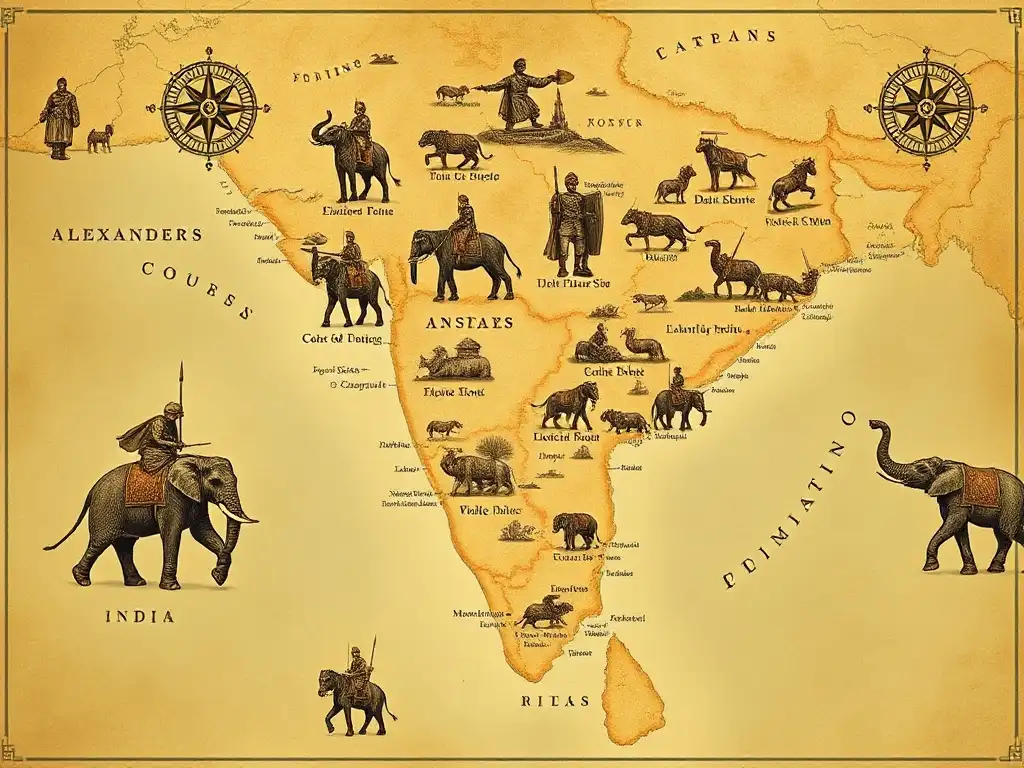
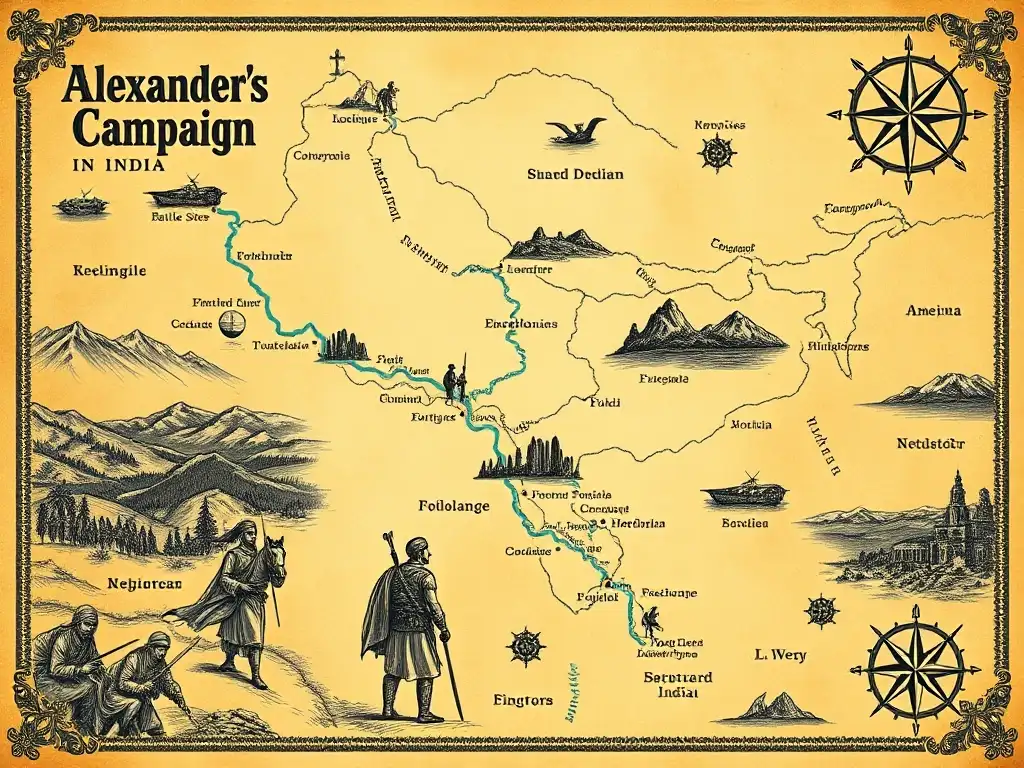
Alexander's campaign in India, which occurred during 326 BCE, marked a significant chapter in the history of ancient military conquests. Following his victories in Persia, Alexander sought to extend his empire into the Indian subcontinent, where he encountered diverse cultures and formidable resistance. His journey through the northwestern regions of India was characterized by a series of major battles that tested his military strategies and adaptability.
Major Battles During the Campaign
The Battle of the Hydaspes River
The Battle of the Hydaspes River, fought against King Porus, was one of the most renowned encounters of Alexander's campaign in India. This battle took place in 326 BCE near the modern-day Jhelum River. Alexander, after crossing the river with a well-coordinated maneuver, faced Porus, who commanded a substantial army, including war elephants.
- Forces Involved:
- Alexander's army consisted of approximately 40,000 men, while Porus's forces were estimated to be around 50,000, bolstered by a significant number of elephants.
- Tactics:
- Alexander employed a strategy of surprise and rapid movement. He utilized his cavalry effectively to outmaneuver Porus's larger forces and targeted the elephants, which were pivotal to Porus's battle strategy.
- Outcome:
- The battle resulted in a decisive victory for Alexander, although he sustained heavy casualties. After the battle, impressed by Porus’s bravery and leadership, Alexander reinstated him as a satrap, allowing him to govern his territory under Macedonian oversight.
The Siege of the Mallian City
Following his victory at the Hydaspes, Alexander advanced into the territory of the Malli, where he faced the Siege of the Mallian City. This encounter was marked by fierce resistance and showcased the determination of the local populace.
- Context:
- The Mallian city was well-fortified, and the inhabitants were prepared to fight to the last man against Alexander's forces. The siege began in the summer of 326 BCE and lasted several weeks.
- Strategies:
- Alexander deployed siege engines and innovative tactics to breach the city's defenses. His personal involvement in the assault, particularly during the final stages, exemplified his leadership and commitment.
- Significance:
- The siege was brutal, resulting in many casualties on both sides. Alexander was wounded during the assault but ultimately succeeded in capturing the city. This victory further solidified his reputation as a formidable conqueror and demonstrated his resolve to subdue all opposition.
Key Strategies Employed by Alexander
Alexander’s military campaigns were characterized by several key strategies that contributed to his success in India:
- Adaptability:
- Alexander was known for his ability to adapt his tactics to the unique challenges posed by different terrains and enemy forces. His approach at the Hydaspes River, for instance, involved utilizing the river to his advantage.
- Use of Cavalry:
- The Macedonian cavalry was a crucial component of Alexander's army. His cavalry charges often broke enemy lines and facilitated the encirclement of opposing forces.
- Psychological Warfare:
- Alexander's reputation as an undefeated general preceded him, often instilling fear in his adversaries. The sight of his elite troops, especially the Companion cavalry, led to psychological advantages before battles even commenced.
- Integration of Local Forces:
- After victories, Alexander often integrated local soldiers into his ranks, which not only bolstered his army’s numbers but also provided valuable local knowledge.
- Logistics and Supply Lines:
- Maintaining robust supply lines was essential for sustaining his campaigns. Alexander ensured his troops were well-supplied, which allowed for prolonged engagements in foreign territories.
Through these strategies, Alexander's campaign in India not only showcased his military prowess but also highlighted the complex interactions between conqueror and conquered, raising questions about the nature of his legacy in the region.
The Role of Indian Allies and Local Rulers
The campaign of Alexander in India was not merely a straightforward military conquest; it was significantly influenced by the interactions he had with local rulers and the alliances he formed with various Indian allies. These relationships played a crucial role in shaping the strategies employed during his campaign and the outcomes of several key battles.
Local Rulers and Their Responses
Upon entering the Indian subcontinent, Alexander encountered a variety of local rulers, each with their own political agendas and military capabilities. Some rulers, perceiving Alexander as a formidable force, chose to resist his invasion, while others sought to collaborate with him, either out of fear or to gain favor. Notable figures include:
- Porus: The king of the Paurava kingdom, Porus famously confronted Alexander at the Battle of the Hydaspes River. His fierce resistance and the use of war elephants showcased the military prowess of Indian forces. Despite his defeat, Alexander was impressed by Porus's bravery and later reinstated him as a ruler, offering him a larger territory.
- Ambhi (or Omphis): The ruler of Taxila, Ambhi initially allied with Alexander, providing him with resources and troops. This partnership allowed Alexander to secure a strategic foothold in the region and facilitated further advances into India.
The Dynamics of Collaboration
The interactions between Alexander and Indian rulers were complex. In many instances, local rulers opted for collaboration to avoid direct confrontation, believing that alliance with the Macedonian king could provide them with advantages against rival factions. This dynamic created a mixed response across the region:
- Protectorate Agreements: Some rulers entered into protectorate agreements with Alexander, seeking his support against common enemies. This not only helped Alexander consolidate his power but also allowed local rulers to maintain a semblance of autonomy while benefiting from Macedonian military strength.
- Cultural Exchange: The alliances also led to a rich cultural exchange. As Alexander’s forces interacted with Indian society, they shared military techniques, knowledge, and even elements of governance, which influenced both Greek and Indian cultures during and after the campaign.
Impact on Alexander's Strategy
The involvement of Indian allies and local rulers significantly influenced Alexander's military strategy. His decisions to engage in certain battles or to adopt specific tactics were often informed by the insights provided by these local leaders. For instance:
- Intelligence Gathering: Local allies provided critical information about the geography, troop movements, and the strengths and weaknesses of opposing forces. This intelligence was vital for planning his military engagements, such as the meticulous preparations for the Battle of the Hydaspes.
- Logistical Support: Indian allies contributed to the logistical aspects of Alexander’s campaign, supplying troops, local knowledge, and provisions. This support was instrumental in sustaining his army as it moved deeper into Indian territory.
The role of Indian allies and local rulers during Alexander's Campaign in India was multifaceted and pivotal. Their alliances, resistance, and interactions not only shaped the course of the campaign but also left a lasting impact on the historical relationship between India and the Hellenistic world. This complex interplay of cooperation and conflict illustrates the nuanced nature of military conquests in ancient history, highlighting the importance of local agency in shaping events.
The Impact of Alexander's Campaign on Indian Society
Cultural Exchange Between Greeks and Indians
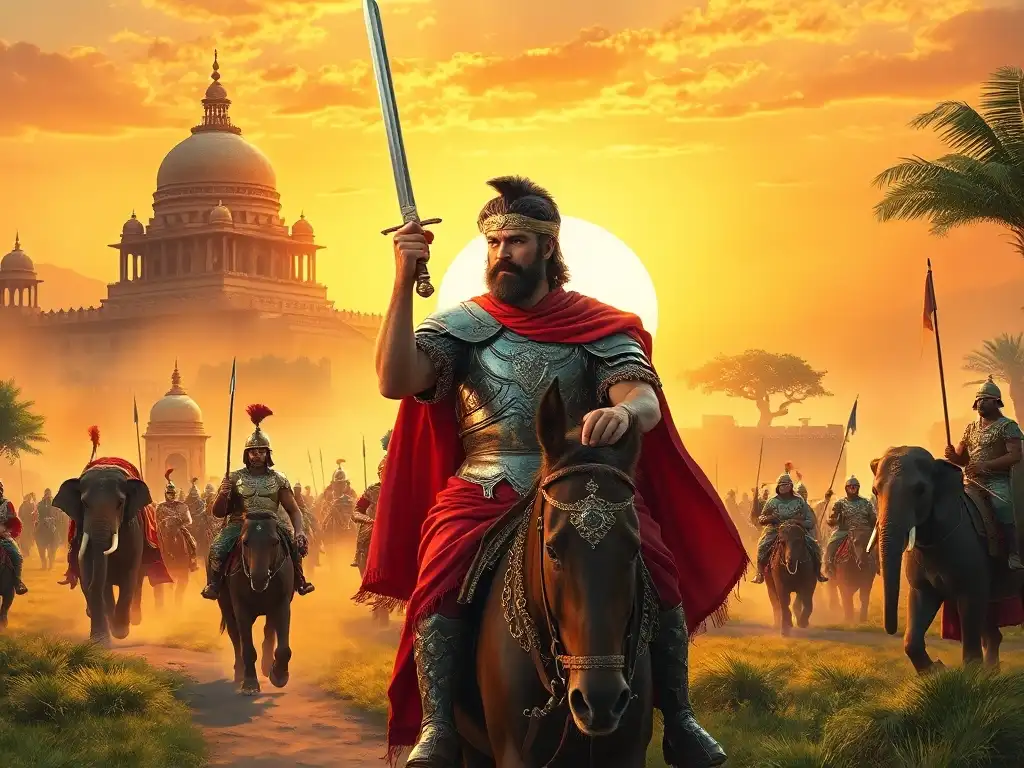
Alexander's Campaign in India was not merely a military endeavor; it facilitated a profound cultural exchange between the Greeks and the Indians. This interaction laid the groundwork for a fusion of ideas, customs, and art forms that would influence both civilizations for centuries.
- Artistic Influence: The arrival of Greek artisans in India led to the development of the Indo-Greek art style, characterized by the blending of Hellenistic and Indian artistic traditions. This is particularly evident in the Gandhara art, which depicted Buddhist themes using Greek techniques, such as realistic human forms and drapery.
- Philosophical Discourses: Greek philosophers accompanied Alexander's forces, igniting discussions with Indian thinkers. The exchange of ideas regarding ethics, governance, and metaphysics enriched both cultures. Notably, the concepts of democracy and citizenship were ideas that found resonance in Indian philosophical texts post-Alexander.
- Language and Literature: The interaction led to a limited but notable influence on language. Greek words and concepts began to be integrated into local dialects, particularly in areas that were under direct Greek influence. This exchange can be seen in the Sanskrit texts that emerged in subsequent centuries.
Influence on Indian Warfare Techniques
The military strategies and technologies introduced by Alexander's Campaign had a significant impact on Indian warfare. Observations from the campaign revealed several adaptations that Indian rulers incorporated into their military tactics.
- Phalanx Formation: The Macedonian phalanx, a tightly packed formation of infantry armed with long spears (sarissas), showcased a highly effective combat strategy. Indian generals began to adopt similar formations, adjusting them to their own contexts and troop compositions.
- Use of Elephants in Warfare: While elephants were already used in Indian battles, Alexander's encounters with them led to refined strategies for their deployment. The Greeks noted the importance of elephants in causing panic among infantry, leading to enhanced training and strategic placement of these beasts in Indian armies.
- Integration of Cavalry Tactics: The mobility and discipline of Alexander's cavalry units influenced Indian tactics. Indian armies began to incorporate more organized cavalry units, which allowed for quicker maneuvers during battles, thus modernizing their approach to warfare.
Long-term Effects on Indian Political Structures
The aftermath of Alexander's Campaign left a lasting imprint on the political landscape of ancient India, fostering changes that reverberated through subsequent centuries.
- Fragmentation of Regional Powers: Alexander's incursions weakened the existing regional powers, leading to a fragmentation of authority. This instability paved the way for the rise of new powers, such as the Maurya Empire, which emerged in the vacuum left by the decline of older kingdoms.
- Diplomatic Relations: The interactions between the Greeks and various Indian states fostered early forms of diplomacy. Indian rulers began to recognize the value of alliances and treaties, leading to more structured political relationships with foreign powers, including those from the Hellenistic world.
- Cultural Integration into Governance: Following Alexander's departure, the merging of Greek administrative practices with Indian governance systems became evident. This integration facilitated more organized bureaucracies, leading to improved tax collection and resource management, which were essential for sustaining larger empires.
Alexander's Campaign in India was a catalyst for significant transformations within Indian society, influencing cultural exchanges, warfare techniques, and political structures that shaped the subcontinent's historical trajectory.
Conquest vs. Collaboration: Analyzing Alexander's Intentions
Arguments for Conquest
Military Achievements and Territories Gained
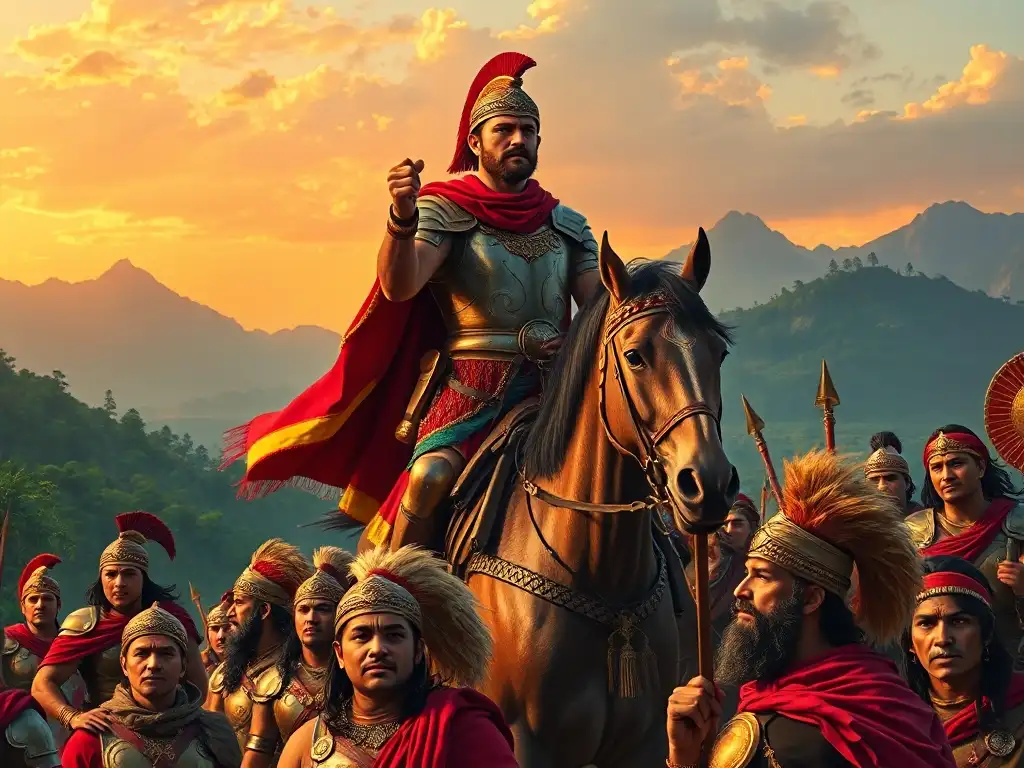
Alexander's Campaign in India is often characterized by its military prowess and the notable victories that paved the way for his expansionist ambitions. His most famous confrontation was the Battle of the Hydaspes in 326 BCE, where he faced King Porus of the Paurava kingdom. Despite facing a formidable opponent equipped with war elephants, Alexander emerged victorious. This battle showcased not only his tactical brilliance but also the effective use of cavalry, which played a crucial role in outmaneuvering Porus's forces.
The aftermath of this victory allowed Alexander to gain significant territories, including parts of what is now Punjab. His campaign extended beyond mere military conquest; it established a series of garrisons and fortified towns, further solidifying his control over the region. As a result, Alexander's military achievements in India were not only about territorial expansion but also about creating a lasting military presence that changed the political landscape of the area.
Impact on Indian Kingdoms
The impact of Alexander's campaign on Indian kingdoms was profound and multifaceted. While some regions experienced direct military conflict, others faced political destabilization. The defeat of King Porus, for instance, sent shockwaves through neighboring kingdoms, leading to shifts in power dynamics. Many local rulers either allied with Alexander out of fear or sought to resist his advances, resulting in a mix of collaboration and conflict across the subcontinent.
Additionally, the campaign influenced the administrative practices of these kingdoms. The introduction of Greek military tactics and governance structures left a lasting imprint on local governance, as some Indian rulers adopted elements of Hellenistic administration in response to the new political realities. This interplay between conquest and local adaptation illustrates how Alexander's military campaigns reshaped the socio-political landscape of ancient India.
Arguments for Collaboration
Diplomatic Relations with Local Rulers
Despite the bloodshed, Alexander's Campaign in India was not solely defined by military conquest; it also featured significant diplomatic engagements with local rulers. After his victory over Porus, Alexander chose to reinstate him as a satrap, recognizing his leadership and maintaining local governance. This decision exemplified a strategic approach to ruling conquered territories, as it fostered stability and reduced resentment among the populace.
Furthermore, Alexander established diplomatic channels with various Indian kingdoms, negotiating alliances and seeking support for his campaigns. His interactions with rulers, such as the Nanda Dynasty, signified an inclination towards collaboration rather than outright domination. By integrating local leaders into his administration, Alexander aimed to consolidate his power while also benefiting from local knowledge and resources.
Cultural Interactions and Syncretism
The cultural interactions during Alexander's Campaign in India led to significant syncretism between Greek and Indian cultures. His presence in the region resulted in the exchange of ideas, customs, and art forms, enriching both cultures. The establishment of Greek settlements, such as Alexandria Nicaea, facilitated the blending of Hellenistic and Indian traditions.
Notably, the arrival of Greek artisans and scholars in India contributed to advancements in various fields, including art, science, and philosophy. This cultural fusion laid the groundwork for a legacy that influenced subsequent empires, such as the Maurya Empire. The coexistence of Greek and Indian elements manifested in art, with the emergence of the Gandhara style, which combined Greek artistic techniques with Indian themes, further exemplifying the collaborative spirit that emerged from Alexander's campaign.
While Alexander's Campaign in India is often perceived through the lens of conquest, a nuanced examination reveals a complex interplay of military might and diplomatic collaboration. The dual nature of his interactions with Indian kingdoms underscores the importance of understanding this historical period as one marked by both conflict and cooperation.
Conclusion: The Legacy of Alexander's Campaign in India
Summary of Key Findings
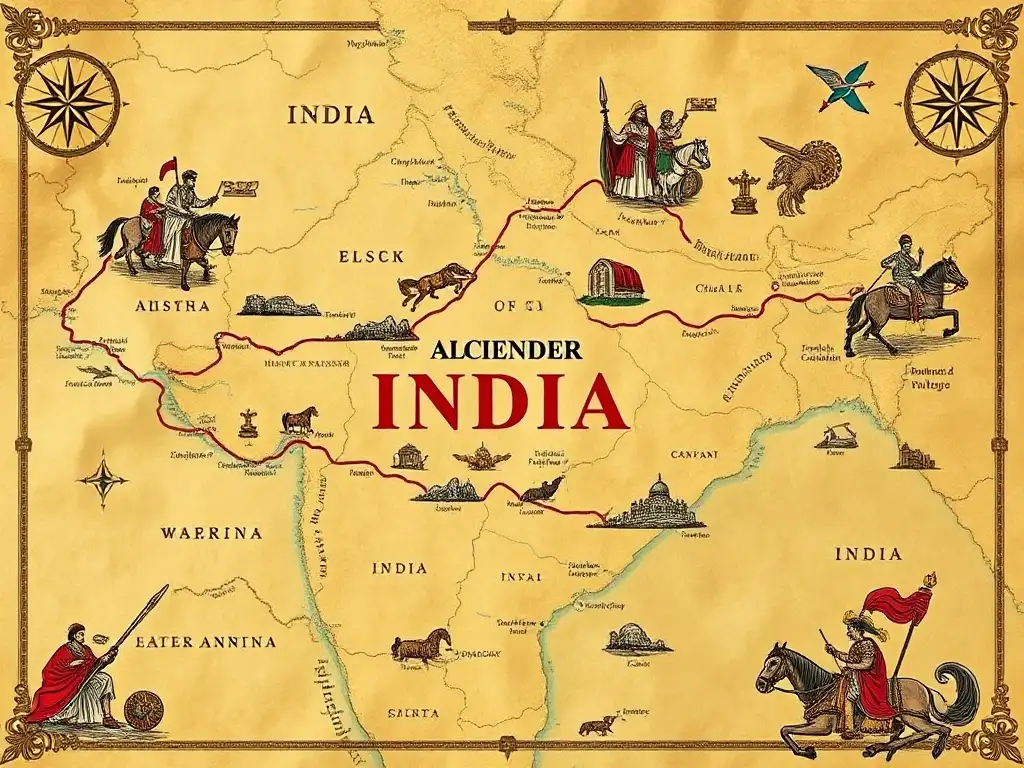
Alexander's Campaign in India, which began in 326 BCE, marked a significant moment in the historical narrative of the region. This military expedition highlighted several key aspects:
- Military Strategy and Tactics: Alexander employed innovative military strategies that were effective against the Indian armies. His use of phalanx formations and cavalry maneuvers set new precedents in warfare.
- Cultural Exchange: The campaign facilitated a cultural exchange between Greek and Indian civilizations. The presence of Greek soldiers and administrators in India led to a blending of cultures, influencing local art, architecture, and philosophy.
- Political Landscape: Alexander's conquests destabilized the existing kingdoms in the northwest of India, such as the Punjab region, leading to the fragmentation of power and the eventual rise of new political entities.
These findings underscore that Alexander's Campaign was not merely a conquest but a complex interaction between cultures, politics, and military practices.
Reflection on the Campaign's Historical Significance
The significance of Alexander's Campaign in India can be seen from multiple perspectives:
- Historical Context: The invasion was part of a broader campaign to expand the Macedonian Empire, yet it marked the first substantial interaction between the Greek world and the Indian subcontinent. This encounter introduced Hellenistic influences that would resonate throughout Indian history.
- Impact on Indian Kingdoms: The campaign exposed Indian kingdoms to foreign military techniques and political structures, which would eventually contribute to shifts in governance and military organization in subsequent centuries.
- Legacy of Leadership: Alexander's leadership style, characterized by personal valor and strategic foresight, became a model for future rulers in both the Indian subcontinent and beyond. His ability to inspire loyalty among his troops is a lesson in leadership that transcends cultural boundaries.
The Lasting Influence on Indo-Greek Relations
The aftermath of Alexander's Campaign in India established a foundation for lasting Indo-Greek relations, which can be summarized as follows:
- Cultural Syncretism: The merging of Greek and Indian cultures led to unique developments, such as the Gandhara art style, which fused Hellenistic and local artistic traditions. The blending of philosophies also paved the way for later exchanges between Buddhism and Greek thought.
- Political Alliances: Following Alexander's departure, his successors in the region, particularly the Greco-Bactrian kings, established political alliances and trade relations with Indian states. This fostered a period of stability and economic growth.
- Historical Narratives: The accounts of Alexander's encounters with Indian rulers, such as King Porus, have become legendary, enriching the historical narratives of both cultures. These stories serve as a reminder of the complex interplay between conquest and collaboration.
The legacy of Alexander's Campaign in India is profound, showcasing a pivotal moment of interaction that shaped the course of history in both the Greek and Indian worlds. The campaign’s influences continue to be a subject of study, revealing the intricate tapestry of cultural, political, and military legacies that define ancient Indian history.
Further Reading and Resources on Alexander's Campaign in India
Recommended Books and Articles
-
"The Campaigns of Alexander" by Arrian
This classical work provides a detailed account of Alexander the Great's campaigns, including his campaigns in India. Arrian, a Greek historian, relied on the accounts of those who accompanied Alexander, offering insights into his military strategies and interactions with Indian kingdoms.
-
"Alexander the Great and the Indian Campaign" by Richard A. Gabriel
Gabriel's book explores the military tactics employed by Alexander during his campaigns in India, analyzing the challenges he faced and the impact of these encounters on both Greek and Indian societies.
-
"The Indian Campaigns of Alexander the Great" by John W. I. Lee
This scholarly article delves into the specific battles fought in India, including the Battle of the Hydaspes. It offers a critical examination of the sources available and discusses the outcomes of these confrontations.
-
"The Maurya Empire and the Campaign of Alexander" by Upinder Singh
Singh provides a comprehensive overview of the political landscape during Alexander’s campaign, discussing how the Maurya Empire emerged in response to his incursions and the subsequent cultural exchanges that occurred.
-
"Alexander's Campaign in India: A Historical Analysis" by N. S. Rajaram
This analysis critically reviews the various historical narratives surrounding Alexander's campaign, comparing them with archaeological findings to present a more nuanced understanding of his impact on Indian civilization.
Online Resources and Documentaries
-
BBC's "The True Story of Alexander the Great"
This documentary presents a visual exploration of Alexander's life, including his campaign in India. It provides historical context and interviews with historians, making it accessible for a general audience.
-
The History Channel's "Alexander the Great: The Man Behind the Myth"
This resource features dramatizations and expert commentary on Alexander's campaigns, emphasizing his strategies and the cultural interactions that occurred during his time in India.
-
Ancient History Encyclopedia: Alexander the Great
This online resource offers a detailed biography of Alexander, including sections dedicated to his campaigns in India, supported by illustrations and scholarly references.
-
YouTube Channel: History Time
The channel provides engaging videos analyzing different aspects of Alexander's campaigns, including discussions on the significant battles fought in India and their implications.
-
Podcasts: "The History of Rome" and "Hardcore History"
Both podcasts have episodes dedicated to Alexander the Great, exploring his military accomplishments, including his ventures into India and their historical significance.
By utilizing these resources, readers can gain deeper insights into Alexander's Campaign in India, enhancing their understanding of this pivotal moment in military history.
Frequently Asked Questions
What was the primary goal of Alexander's Campaign in India?
The primary goal was to expand his empire and spread Hellenistic culture, as well as to challenge the powerful kingdoms of Northwest India.
How did Indian rulers respond to Alexander's advances?
Many Indian rulers initially attempted to resist, but some chose collaboration or negotiation to avoid conflict, showcasing a mix of defiance and diplomacy.
What were the significant battles during Alexander's Campaign in India?
The most notable battles include the Battle of the Hydaspes against King Porus, which demonstrated Alexander's military prowess and strategic abilities.
What impact did Alexander's Campaign have on Indian culture?
Alexander's Campaign facilitated the exchange of ideas, leading to cultural syncretism and influencing art, architecture, and trade in the region.
How did Alexander's Campaign in India shape future interactions between East and West?
It set a precedent for cultural exchange, trade routes, and influenced future military campaigns, establishing a legacy of interaction between Eastern and Western civilizations.
Final Reflection: The Legacy of Alexander's Campaign in India
The exploration of Alexander's Campaign in India reveals a profound duality between conquest and collaboration that remains relevant today. As we examine the historical narratives of this campaign, we uncover the complexities of cultural exchange and the impact of imperial ambitions on local societies. The lessons drawn from this era resonate in our contemporary world, where the dynamics of power and cooperation continue to shape global interactions.
The influence of Alexander's Campaign in India extends beyond mere military achievements; it has left an indelible mark on the cultural and social fabric of the region. The blending of Greek and Indian cultures during this period serves as a reminder of the potential for collaboration amidst conflict. As historian Richard Stoneman aptly noted, Alexander's encounters in India were not just about conquest; they were also about the exchange of ideas, art, and philosophy that enriched both cultures.
This ongoing dialogue between civilizations highlights the importance of understanding history not just as a series of battles, but as a tapestry of human experience.
As we reflect on the implications of Alexander's Campaign in India, I invite you to consider how these historical lessons can be applied to our lives today. How can we foster collaboration in our own communities, even when faced with challenges? Let us strive to embrace the spirit of dialogue and understanding, recognizing that our differences can lead to richer, more vibrant societies. By reflecting on the past, we can inspire a future where cooperation prevails over conflict, echoing the complexities of Alexander's journey in India.
Unveil Your Perspective on Alexander's Campaign!
Thank you for exploring Alexander's campaign in India with us! You've gained insights into the fascinating interplay of conquest and collaboration during this pivotal moment in history. Now, it's time to take that knowledge and transform it into action!
- Join the discussion: Share your thoughts on whether you perceive Alexander’s actions as more of a conquest or a collaboration in our comments section. Your voice matters!
- Explore further: Delve into our additional articles on ancient alliances and military strategies to enhance your understanding of this era.
- Engage with history: Connect with fellow history enthusiasts on our social media platforms and share what intrigued you most about this campaign!
As you reflect on this rich topic, consider: What do you think was the most significant impact of Alexander's campaign on Indian society and culture?