
Chariots of War: The Role of Ancient Indian Chariots in Battle

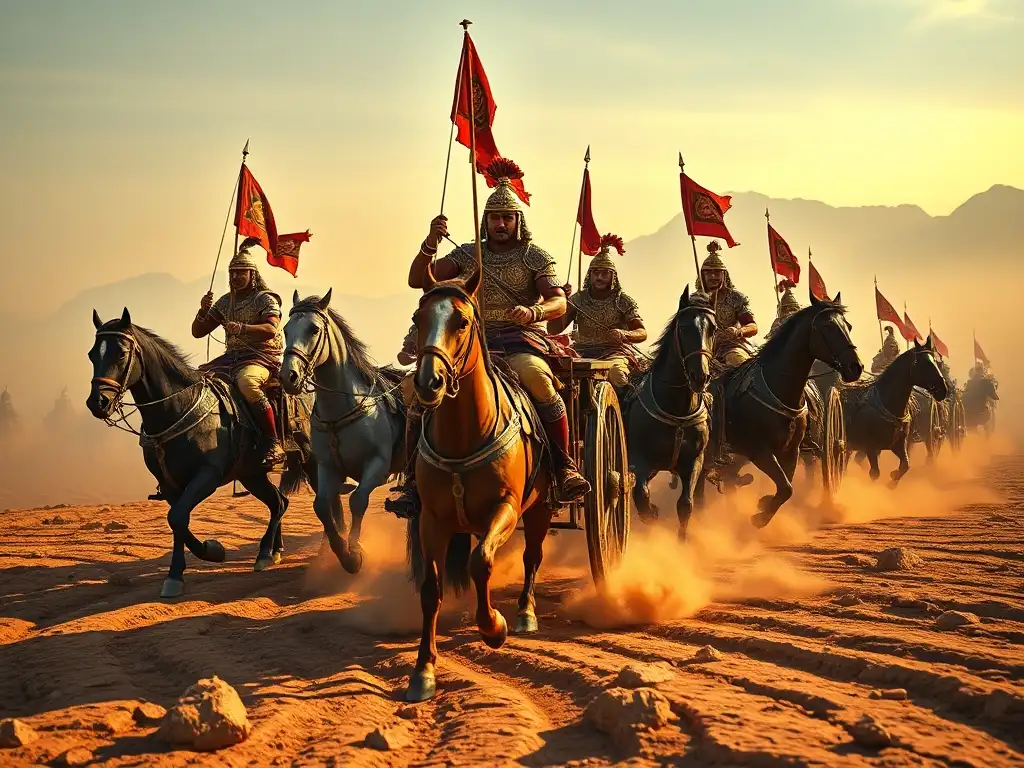
Welcome to Ancient India History, where we embark on a fascinating journey through time to uncover the rich tapestry of ancient Indian civilizations. From the majestic Indus Valley to the illustrious Gupta Empire, each era has woven its unique story into the fabric of history.
In our featured article, “Chariots of War: The Role of Ancient Indian Chariots in Battle,” we will delve into the pivotal role that ancient Indian chariots played on the battlefield, transforming warfare and influencing strategies that echoed through the ages. Prepare to ignite your curiosity as we explore the intricacies of these remarkable war machines and their lasting impact on military history—read on to discover the secrets behind their power and significance!
- Introduction to Ancient Indian Chariots in Battle
- Historical Context of Chariots in Ancient India
- The Role of Ancient Indian Chariots in Battle
- Types of Chariots Used in Ancient Indian Warfare
- Notable Chariot Warriors and Their Impact
- Comparison of Ancient Indian Chariots with Global Chariot Systems
- Decline of Chariots in Military Use
- Conclusion: The Legacy of Ancient Indian Chariots in Battle
- References for Further Reading on Ancient Indian Chariots in Battle
-
Frequently Asked Questions
- What were ancient Indian chariots primarily used for in battle?
- How did chariots influence warfare in ancient India?
- What materials were used in the construction of ancient Indian chariots?
- Who were the primary operators of chariots in ancient Indian battles?
- Did ancient Indian chariots have any unique features compared to those from other cultures?
- Final Reflection: The Enduring Legacy of Ancient Indian Chariots in Battle
- Unleash the Power of Chariots: Take Action Today!
Introduction to Ancient Indian Chariots in Battle
The history of ancient Indian chariots is a fascinating glimpse into the military innovations that shaped warfare in the subcontinent. These remarkable vehicles were not merely modes of transportation; they played a pivotal role in the strategies and tactics employed by various ancient Indian civilizations.
From the well-documented chariots of the Indus Valley Civilization to the sophisticated designs utilized during the Gupta Empire, the evolution of chariots reflects the technological advancements and cultural significance they held in battle. This article delves into the ancient Indian chariots in battle, exploring their design, function, and impact on military engagements, as well as their symbolic representation in the rich tapestry of Indian history.
Overview of Chariots in Ancient Indian Warfare
Chariots in ancient Indian warfare were highly engineered vehicles, usually drawn by two or more horses, designed to enhance the mobility and effectiveness of warriors on the battlefield. They served multiple purposes:
- Combat Platform: Chariots allowed archers and spearmen to engage enemies while remaining mobile, providing a vantage point above foot soldiers.
- Command Center: Commanders often used chariots to oversee troops, directing movements and strategy from a higher position.
- Psychological Warfare: The sight of a chariot could intimidate opposing forces, symbolizing power and prestige.
The design of these chariots varied over time, with notable features including:
- Two-Wheeled vs. Four-Wheeled Designs: Early chariots were typically two-wheeled for speed and agility, while later designs featured four wheels for stability.
- Materials Used: Constructed from wood and reinforced with metal components, they were lightweight yet sturdy, making them suitable for rapid maneuvers.
Importance of Chariots in Military Strategy
The strategic importance of chariots cannot be overstated. In many ancient Indian battles, chariots were integral to the military formations and tactics employed by armies. Their uses included:
- Flanking Movements: Chariots were often used to execute flanking maneuvers, allowing armies to attack the sides of enemy formations, disrupting their lines.
- Rapid Advancement: With their speed, chariots could quickly advance and retreat, making them ideal for hit-and-run tactics.
- Support for Infantry: Chariots provided essential support for infantry units, often charging ahead to sow confusion among enemy ranks before foot soldiers engaged directly.
The effectiveness of chariots in ancient Indian warfare is illustrated by historical accounts, such as those from the Mahabharata, where they played crucial roles in epic battles. The strategic deployment of chariots not only influenced the outcomes of specific conflicts but also shaped the overall dynamics of warfare in ancient India.
The ancient Indian chariots in battle were much more than mere vehicles; they were a cornerstone of military strategy that transformed the landscape of warfare and left an enduring legacy within India's rich historical narrative.
Historical Context of Chariots in Ancient India
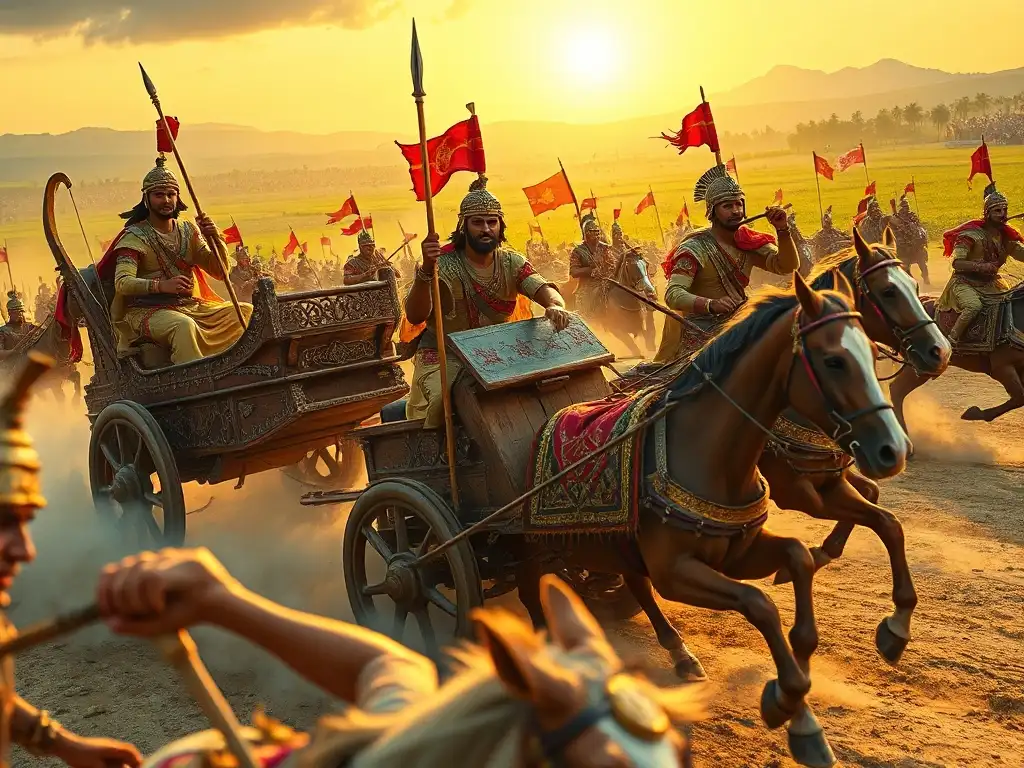
The role of chariots in ancient Indian warfare is deeply rooted in the historical context of the subcontinent, where they were not only instruments of battle but also symbols of power and prestige. Chariots emerged as a crucial component of military strategy around 1500 BCE, coinciding with the arrival of the Indo-Aryans. The Vedic texts, which form the foundation of ancient Indian literature, frequently mention chariots, highlighting their significance in both warfare and ritualistic contexts.
Chariots were typically drawn by horses, and their presence on the battlefield allowed for greater mobility and tactical flexibility. As warfare evolved, so did the design and functionality of chariots, reflecting advancements in technology, materials, and combat strategies. The strategic deployment of chariots allowed armies to execute swift maneuvers, engage in ranged attacks with archers positioned on the moving platforms, and create psychological impacts on opposing forces.
The Evolution of Chariot Technology
The evolution of chariot technology in ancient India can be traced through several key phases, each marked by innovations that enhanced their effectiveness in warfare.
- Early Designs (1500-1000 BCE):
- Initially, chariots were simple two-wheeled vehicles, often made of wood with minimal adornments.
- The use of oxen was common, although the introduction of horses later became a game changer.
- Iron Age Innovations (1000-600 BCE):
- With the advent of iron metallurgy, chariot designs became more sophisticated. Iron fittings and wheels improved durability, while enhanced construction techniques allowed for more complex structures.
- This period also saw the introduction of spoked wheels, which reduced weight and improved speed.
- Mauryan Period (322-185 BCE):
- Chariots reached their zenith during the Mauryan Empire, with elaborate designs that included multiple tiers for archers and soldiers.
- The incorporation of advanced steering mechanisms and reinforced axles made chariots more maneuverable and resilient in battle.
- Gupta Empire (c. 240-550 CE):
- The Gupta period marked a return to the use of chariots as status symbols among royalty and military leaders.
- Chariots became richly adorned, reflecting the wealth and artistic achievements of the time, while retaining their functional role in warfare.
Key Civilizations Utilizing Chariots
Different ancient Indian civilizations utilized chariots in various capacities, each contributing uniquely to military tactics and strategies.
- Indus Valley Civilization (c. 3300-1300 BCE):
- While evidence of chariot use is limited in this civilization, archaeological findings suggest that wheeled vehicles were present, indicating early experimentation with transportation technology.
- Vedic Civilization (c. 1500-500 BCE):
- Chariots were central to the Vedic battles, often described in the epic battles of the Mahabharata. They served both functional and ceremonial purposes, with warriors like Arjuna famously depicted as skilled charioteers.
- Mauryan Empire (c. 322-185 BCE):
- The Mauryan army extensively utilized chariots, particularly during the reign of Ashoka. They were integral to military campaigns, allowing rapid troop movement and strategic advantages in battle.
- Gupta Empire (c. 240-550 CE):
- The Gupta period saw chariots used in both warfare and as symbols of royal power. They were often featured in art and literature, portraying their significance in the culture of the time.
Chariot Designs and Materials Used
The design and construction of ancient Indian chariots varied significantly based on the technological advancements and available materials of the time.
- Materials:
- Wood: The primary material used in chariot construction, often sourced from local trees. Oak and teak were preferred for their strength.
- Iron: Introduced during the Iron Age, iron components such as wheels and fittings enhanced durability and performance.
- Leather: Used for harnessing horses and reinforcing wheels, leather improved the functionality and comfort of chariots.
- Design Features:
- Wheels: Early chariots featured solid wheels, which evolved into spoked designs during the Iron Age. Spoked wheels reduced weight and increased speed.
- Structure: Chariots typically had a platform for archers and soldiers, allowing them to engage enemies while remaining mobile.
- Decoration: Chariots often featured intricate designs and carvings, reflecting the artistic styles of the era. Royal chariots were especially lavish, symbolizing the wealth and power of their owners.
Ancient Indian chariots played a pivotal role in shaping the military landscape of the subcontinent. Their evolution in technology, use by key civilizations, and diverse designs underscore their importance in both warfare and cultural representation throughout ancient Indian history.
The Role of Ancient Indian Chariots in Battle
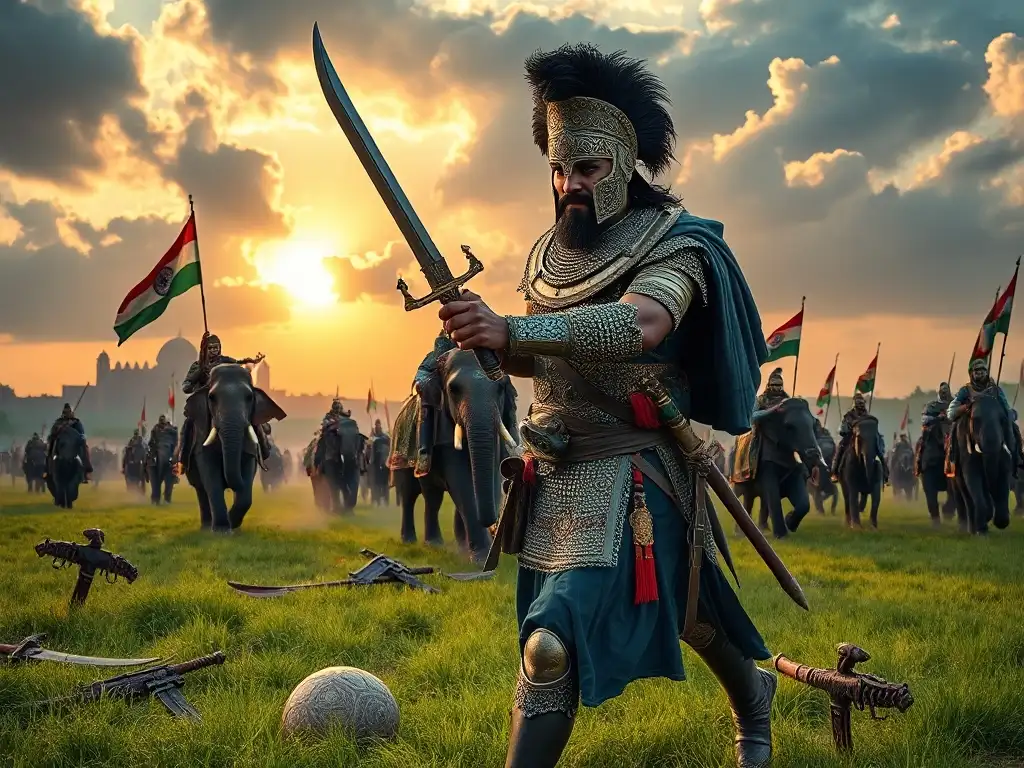
Ancient Indian chariots played a pivotal role in warfare, serving not only as a mode of transportation for warriors but also as platforms for launching attacks and executing strategic maneuvers. The significance of these chariots in battle extends beyond mere functionality; they were integral to the military tactics and social dynamics of ancient Indian civilizations.
Tactical Advantages of Chariots in Warfare
Chariots in ancient India were engineered to maximize mobility and speed on the battlefield. Their design typically included:
- Lightweight Construction: Many chariots were made from wood and animal hides, making them easier to maneuver.
- Horse-Drawn Power: Usually pulled by two or more horses, chariots could reach high speeds, allowing for quick repositioning during conflicts.
- Height Advantage: The elevated position of the charioteer and archer enabled a better vantage point, aiding in target acquisition and strategic oversight.
These tactical advantages translated into several battlefield strategies:
- Flanking Maneuvers: Chariots could swiftly maneuver around enemy flanks, creating chaos and breaking formations.
- Hit-and-Run Tactics: The speed of chariots allowed for quick strikes against enemy units, followed by rapid retreats before a counterattack could be launched.
- Psychological Impact: The sight and sound of chariots charging into battle could instill fear in opposing forces, often leading to a breakdown in morale.
In historical contexts, texts such as the Mahabharata illustrate these tactical advantages, showcasing chariots as central to the strategies employed by legendary warriors like Arjuna.
Chariots as Status Symbols and Their Cultural Significance
Chariots were not merely military tools; they held considerable status and cultural significance in ancient Indian society.
- Symbol of Power: Owning a chariot was often a sign of wealth and nobility. Rulers and high-ranking warriors were frequently depicted in art and literature as riding ornate chariots, which were sometimes gilded and adorned with intricate designs.
- Religious and Ceremonial Importance: Chariots were also used in various religious rituals and ceremonies, symbolizing the connection between the earthly realm and divine forces. The Ratha Yatra, or chariot festival, is a notable example where deities are paraded on chariots, demonstrating their importance in both warfare and spirituality.
The chariot’s design often reflected the cultural aesthetics of the time, and different regions in ancient India had unique styles and functionalities. For instance, the Mahajanapadas (ancient republics) showcased various chariot styles, indicating local traditions and innovations.
Famous Battles Involving Ancient Indian Chariots
Numerous epic battles in ancient India prominently featured chariots, highlighting their integral role in warfare.
- The Kurukshetra War: This legendary conflict from the Mahabharata is perhaps the most famous instance involving chariots. Arjuna's chariot, driven by Lord Krishna, serves not only as a means of transport but also as a pivotal element in the narrative, representing moral dilemmas and divine guidance.
- The Battle of Kalinga: Historical accounts suggest that the Mauryan Emperor Ashoka utilized chariots in this significant battle against the Kalingas. The effectiveness of chariot warfare in this conflict is often credited with shaping Ashoka's subsequent commitment to non-violence.
- The Second Battle of Tarain: Fought between the forces of Prithviraj Chauhan and Muhammad Ghori, chariots were used strategically to enhance mobility and shock tactics, reflecting their continued importance even in medieval warfare.
The legacy of ancient Indian chariots in battle is a testament to their innovative design and profound impact on military tactics, cultural identity, and social hierarchy throughout India's rich history. Their multifaceted roles underscore how ancient Indian chariots in battle were not just vehicles of war, but also instruments of cultural expression and societal power.
Types of Chariots Used in Ancient Indian Warfare
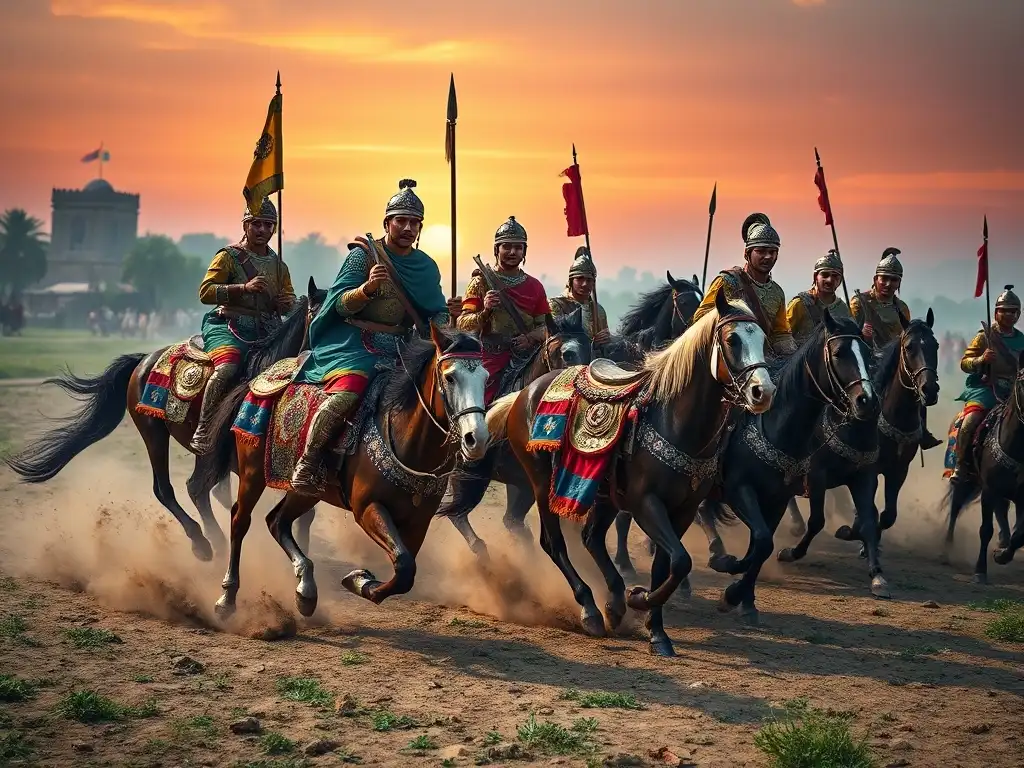
Ancient Indian chariots played a pivotal role in warfare, contributing significantly to military strategies and tactics. As the battlefield evolved, so did the design and functionality of these chariots, catering to various needs of the warriors and rulers. Let's delve into the different types of chariots utilized during this period.
One-Horse Chariots: Speed and Agility
One-horse chariots, known as ekashringa in ancient texts, were designed for rapid movements and tactical maneuverability. Typically lighter and more agile, these chariots allowed a single warrior to navigate through the battlefield swiftly.
Characteristics:
- Speed: With only one horse, these chariots could achieve remarkable speeds, making them ideal for quick strikes and retreats.
- Maneuverability: Their lightweight structure enabled them to weave through enemy lines and evade attacks effectively.
- Combat Role: Primarily used for skirmishing, reconnaissance, and flanking maneuvers, they played a crucial role in disrupting enemy formations.
In ancient texts, such as the Mahabharata, one-horse chariots are often depicted in the hands of skilled archers who could shoot while on the move, maximizing their impact in battle.
Two-Horse Chariots: Power and Stability
Two-horse chariots, or dvishringa, represented the backbone of ancient Indian warfare. These chariots combined speed with strength, allowing for a more balanced and powerful platform during combat.
Characteristics:
- Power: The addition of a second horse provided enhanced pulling power, enabling the chariot to carry heavier loads and more armored warriors.
- Stability: With a broader base, these chariots offered better stability, crucial for archers and spearmen aiming their weapons in the heat of battle.
- Combat Role: Commonly used by higher-ranking warriors, these chariots were essential for direct engagements and charges into enemy lines.
The strategic advantage of two-horse chariots is evident in historical accounts of battles, where formations of these chariots would charge together, creating a formidable front against opposing forces.
Royal Chariots: Design and Functionality
Royal chariots, often elaborately designed, served both practical and ceremonial purposes. These chariots were not only symbols of power but also a critical element in the military campaigns of kings and emperors.
Characteristics:
- Ornate Design: Royal chariots were adorned with intricate carvings, gold plating, and luxurious materials, reflecting the wealth and status of their owners.
- Enhanced Functionality: Equipped with larger wheels and reinforced structures, they could withstand the rigors of battle while providing comfort for the elite warriors.
- Combat Role: While primarily used by kings and high-ranking officials, these chariots also served as command centers during battles, allowing leaders to oversee the battlefield effectively.
The grandeur of royal chariots is illustrated in various historical texts, highlighting the dual role they played in warfare and as status symbols within ancient Indian society.
The evolution of ancient Indian chariots in battle—from one-horse to two-horse and finally to the regal designs—illustrates a sophisticated understanding of military needs and the importance of chariotry in shaping the outcomes of conflicts throughout history.
Notable Chariot Warriors and Their Impact
The role of chariots in ancient Indian warfare was not merely confined to their physical presence on the battlefield; they were often associated with legendary warriors whose skills and strategies shaped military history. These chariot warriors were pivotal in defining military tactics and influencing the outcomes of significant battles. Let's delve into some of the most notable chariot warriors and their enduring legacies.
Legendary Charioteers in Ancient Indian History
- Bhishma: A prominent figure in the Mahabharata, Bhishma was renowned for his exceptional skills as a charioteer. He played a vital role during the Kurukshetra War, commanding the Kaurava forces. His ability to maneuver the chariot with precision and his unparalleled archery skills made him a formidable opponent. Bhishma's strategies and decisions on the battlefield had lasting impacts on the course of the war.
- Arjuna: Another central character from the Mahabharata, Arjuna was not only a master archer but also an adept charioteer. Guided by Lord Krishna, his chariot became a symbol of righteousness and valor. Arjuna’s use of the chariot allowed him to execute complex battle formations and strategies, making him one of the key figures to study in the context of ancient Indian chariots in battle.
- Chandragupta Maurya: The founder of the Maurya Empire, Chandragupta utilized chariots effectively to expand his territory. His strategic use of chariots in conjunction with infantry and cavalry helped him defeat larger armies, demonstrating the importance of integrated military tactics. His reign marked a significant period in ancient Indian history, where chariot warfare reached new heights.
- Ashoka the Great: Although more famous for his later, non-violent principles, Ashoka began his career as a warrior who utilized chariots in battle. His early campaigns relied heavily on the mobility and speed offered by chariots, which were crucial in establishing his dominance over rival kingdoms.
The Influence of Charioteers on Military Tactics
The strategic deployment of chariots in ancient Indian battles significantly influenced military tactics throughout the region. The following aspects highlight how charioteers shaped warfare:
- Mobility and Speed: Chariots provided unparalleled speed and maneuverability on the battlefield. Skilled charioteers could quickly reposition their forces, outflanking opponents and creating tactical advantages. This mobility allowed armies to execute surprise attacks and rapid retreats, altering the dynamics of warfare.
- Combined Arms Approach: Charioteers often worked in conjunction with infantry and archers, creating a multi-dimensional approach to combat. The presence of chariots could intimidate enemies and disrupt their formations. This integration of different units allowed for coordinated attacks that maximized the strengths of each component.
- Psychological Warfare: The sight and sound of chariots charging into battle could instill fear in enemy troops. The strategic use of chariots as a frontline force often served as a psychological weapon, demoralizing opponents before the actual combat began.
- Formation and Strategy: Charioteers developed specific formations that became integral to ancient Indian military strategy. The use of chariots in a wedge formation, for example, could break through enemy lines, while circular formations provided protection for vulnerable units.
The impact of notable chariot warriors on military tactics in ancient India cannot be overstated. Their skills not only influenced the outcomes of key battles but also helped shape the evolution of warfare in the region, leaving a legacy that continues to be studied and revered today.
Comparison of Ancient Indian Chariots with Global Chariot Systems
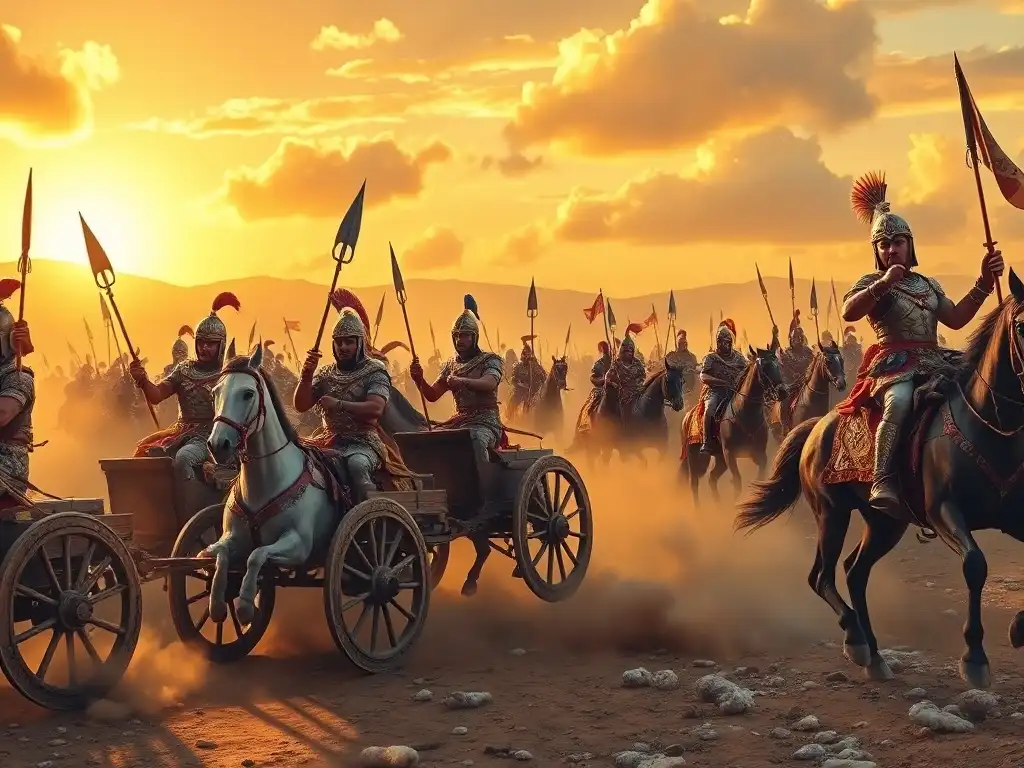
Chariots in Ancient Mesopotamia vs. Ancient India
Ancient Mesopotamia and India both developed sophisticated chariot systems that played crucial roles in their respective military strategies. However, the design, construction, and tactical employment of these chariots exhibited significant differences shaped by the unique geographical and cultural contexts of each civilization.
- Design and Construction:
- Mesopotamian Chariots:
- Typically constructed with a solid frame, Mesopotamian chariots had two wheels and were often pulled by two horses.
- The use of lightweight materials such as wood and leather allowed for speed and maneuverability on the battlefield.
- Indian Chariots:
- Ancient Indian chariots were usually four-wheeled, providing greater stability and capacity to carry multiple warriors or supplies.
- They were crafted using a combination of wood and metal, making them robust and capable of withstanding the rigors of battle.
- Mesopotamian Chariots:
- Tactical Employment:
- Mesopotamian Warfare:
- Chariots were primarily used for hit-and-run tactics and rapid assaults. Their speed allowed them to outmaneuver infantry units.
- Archers often operated from these chariots, providing ranged support while remaining mobile.
- Indian Warfare:
- In ancient Indian battles, chariots served not only as transport for warriors but also as platforms for archers and commanders.
- The chariots played a pivotal role in the formation of battle lines and were often used to break enemy ranks.
- Mesopotamian Warfare:
- Cultural Significance:
- In Mesopotamia, chariots were symbols of power and prestige. They were often depicted in reliefs and art as a representation of the ruling class.
- In India, chariots held a significant place in epics like the Mahabharata, where they symbolized valor and heroism.
Overall, while both civilizations recognized the importance of chariots in warfare, the specific applications and cultural meanings differed significantly, reflecting their unique military doctrines and societal structures.
The Role of Chariots in Ancient Egyptian Warfare
Chariots in ancient Egypt were a formidable element of military strategy, evolving from a luxury item for the elite into a core component of their armed forces. The design and tactical use of these chariots reveal much about the military innovations of the time.
- Construction and Features:
- Egyptian chariots typically featured a lightweight, two-wheeled design, enabling high speed and quick maneuverability.
- They were often constructed from a combination of wood and leather, with bronze fittings that enhanced durability.
- The charioteer would stand, allowing for better balance and control, while an archer or spearman would be seated in the chariot, ready to engage enemies.
- Tactical Use in Battle:
- Chariots were primarily used for shock tactics, where they would charge into enemy formations to cause disarray.
- They served as mobile firing platforms from which archers could rain down arrows on infantry, providing a significant tactical advantage.
- The Egyptian military often utilized chariots in combination with infantry, creating a cohesive force that could execute complex maneuvers during battle.
- Impact on Warfare:
- The introduction of chariots revolutionized Egyptian warfare, allowing for more dynamic and fluid battle strategies.
- Chariots enabled the rapid deployment of troops across the battlefield, making them essential for both offense and defense.
Ancient Egyptian chariots were not merely vehicles of transport; they were pivotal in shaping the tactics and outcomes of battles, reflecting the sophistication of their military technology. The role of chariots in warfare across civilizations, including ancient India, Mesopotamia, and Egypt, highlights the technological innovations that influenced military strategies in the ancient world.
Decline of Chariots in Military Use
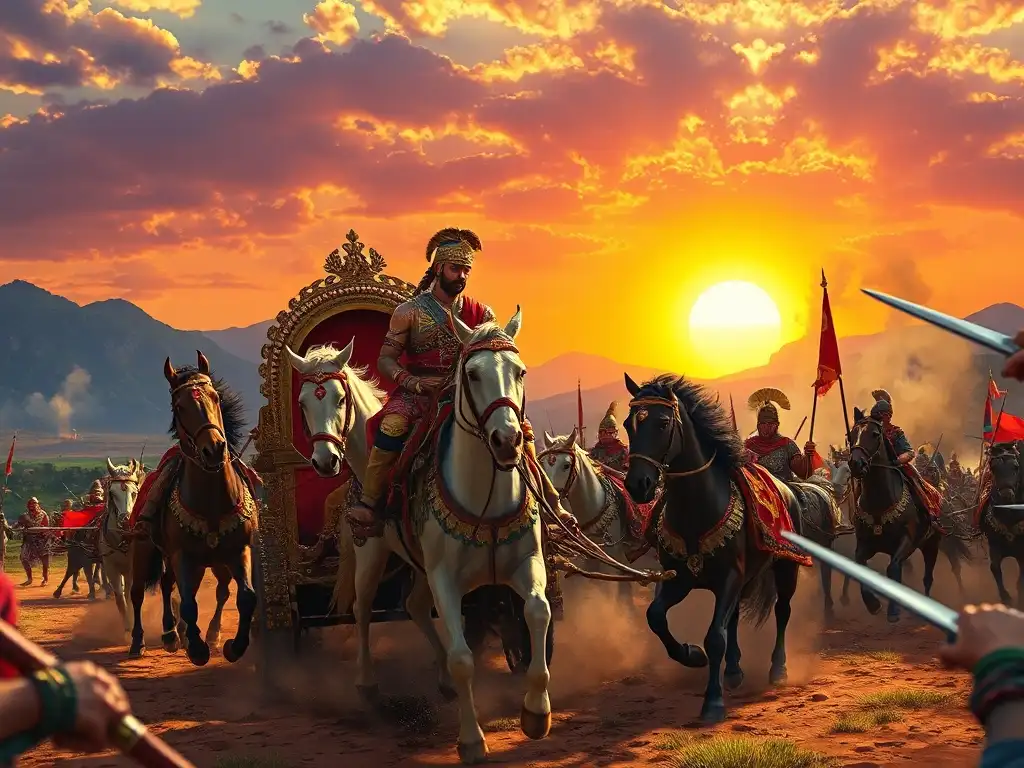
The decline of ancient Indian chariots in battle marked a significant transition in military tactics and technologies. While chariots played a crucial role in the warfare of ancient Indian civilizations, their eventual obsolescence was influenced by a variety of factors that reshaped the battlefield dynamics.
Factors Leading to the Obsolescence of Chariots
The decline of chariots in ancient Indian warfare can be attributed to several interrelated factors:
- Advancements in Infantry Tactics:
- The rise of organized infantry units equipped with advanced weaponry diminished the effectiveness of chariots.
- Foot soldiers, who could maneuver more easily on rugged terrains and in dense formations, became more desirable in battle.
- Changes in Warfare Strategies:
- As warfare evolved, strategies shifted from large, open-field battles to guerrilla tactics and ambushes where chariots were less effective.
- The introduction of fortified positions made it difficult for chariots to charge effectively.
- Technological Innovations:
- The development of new weapons, such as the crossbow and various polearms, provided infantry with the means to counter chariot attacks.
- Additionally, advancements in armor and shields increased the survivability of foot soldiers against chariot charges.
- Geographic Limitations:
- Many regions in ancient India were characterized by difficult terrains, such as jungles and mountains, which limited the mobility of chariots.
- In contrast, foot soldiers could navigate these challenging environments more effectively.
- Economic Factors:
- The maintenance of chariots required significant resources, both in terms of horses and the chariots themselves.
- As resources became strained, armies began to favor more cost-effective infantry units.
Transition to Other Forms of Warfare
As chariots declined in military use, ancient Indian armies adapted to new forms of warfare that emphasized different tactics and technologies:
- Rise of Infantry Dominance:
- Infantry became the backbone of ancient Indian armies, with soldiers trained in various combat skills.
- This shift allowed for more versatile and flexible formations on the battlefield.
- Use of Elephants in Warfare:
- Elephants emerged as a formidable force in battles, often used to charge enemy lines and instill fear.
- Their size and strength allowed them to fulfill roles that chariots once occupied.
- Incorporation of Cavalry Units:
- The development of cavalry provided armies with increased mobility and speed.
- Horse-mounted warriors could maneuver quickly, flank enemy positions, and retreat when necessary, a significant evolution from the rigid structure of chariot warfare.
- Technological Integration:
- The integration of new military technologies, such as fortified structures and siege engines, necessitated a reevaluation of traditional battle tactics.
- Armies began to emphasize strategy and technology over sheer force.
- Shift in Military Organization:
- The organization of armies evolved to include specialized units, such as archers and skirmishers, who could effectively counter various threats.
- This diversification allowed for more complex and adaptive military strategies.
The decline of ancient Indian chariots in battle was driven by a combination of tactical, technological, and economic changes that led to a new era of warfare. As military strategies evolved, ancient Indian armies adapted by transitioning to infantry, cavalry, and the use of elephants, paving the way for new forms of combat that would define the future of warfare in the region.
Conclusion: The Legacy of Ancient Indian Chariots in Battle
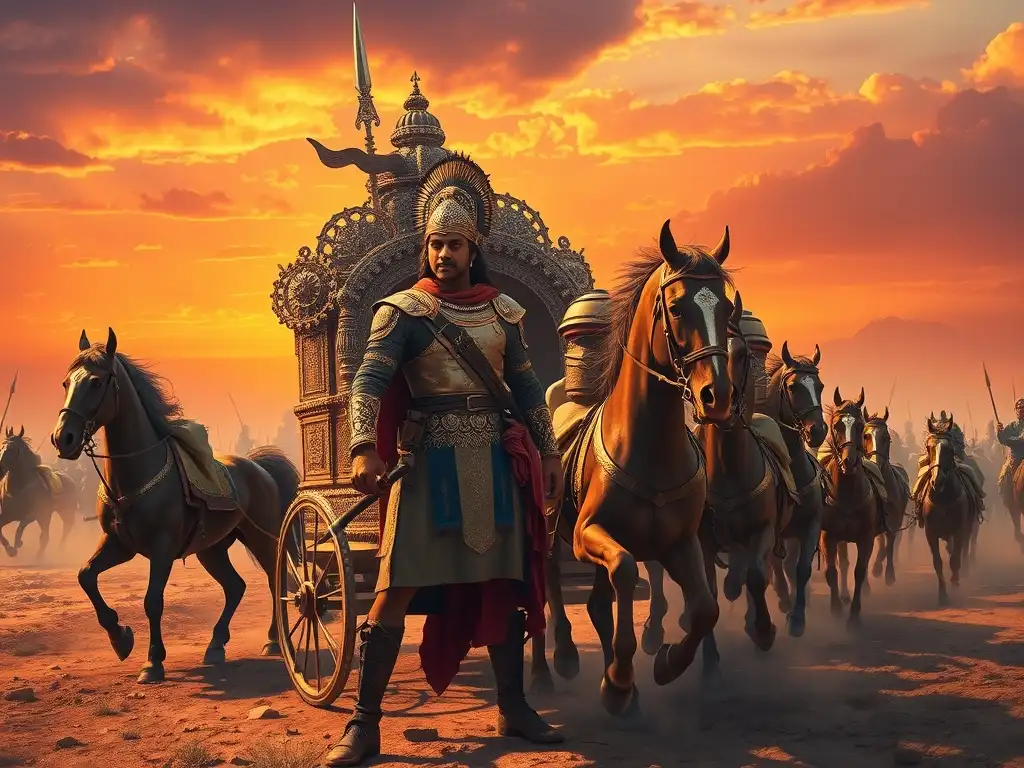
The legacy of ancient Indian chariots in battle is profound, influencing not only the military tactics of their time but also the cultural narrative of subsequent generations. These formidable vehicles, constructed with precision and designed for speed, played a crucial role in the warfare strategies of ancient Indian civilizations. Their significance extended beyond mere transportation; they symbolized power, innovation, and the martial prowess of the societies that wielded them.
Impact on Later Military Strategies
The influence of ancient Indian chariots in battle can be seen in the evolution of military strategies across various cultures. The strategic deployment of chariots allowed for increased mobility and flexibility on the battlefield. This adaptability inspired later military leaders to incorporate similar tactics into their own warfare methodologies.
- Tactical Innovations:
- The use of chariots facilitated the development of flanking maneuvers, allowing armies to outmaneuver their opponents.
- Chariots were often utilized to create disruptions in enemy formations, a tactic that would be replicated in later military engagements.
- Influence on Neighboring Cultures:
- The effectiveness of ancient Indian chariots caught the attention of neighboring civilizations, leading to the adoption of similar technologies and strategies.
- Historical records indicate that empires such as the Persians and Greeks studied Indian warfare techniques, including chariot deployment, during their campaigns.
- Integration into Larger Military Structures:
- As warfare evolved, the integration of chariots into larger military units became common. They were often combined with infantry and cavalry, creating a multi-faceted approach to battle.
- The lessons learned from the utilization of chariots in ancient India helped shape the military doctrines of future empires, notably influencing the formation of cavalry units.
Preservation of Chariot History in Cultural Memory
The legacy of ancient Indian chariots is not only preserved in military history but also deeply ingrained in cultural memory through literature, art, and folklore.
- Literary References:
- Epics such as the Mahabharata and Ramayana feature chariots prominently, showcasing their importance in heroic narratives and moral tales. Notable characters, like Arjuna from the Mahabharata, are often depicted as formidable warriors fighting from their chariots, emphasizing their significance in honor and valor.
- Artistic Representations:
- Sculptures and paintings from ancient Indian civilizations frequently depict chariots and their role in warfare, symbolizing the technological advancements of the time.
- Iconic art pieces, such as those found in the caves of Ajanta and Ellora, illustrate the grandeur of chariots, further entrenching their image in the cultural consciousness.
- Folklore and Traditions:
- Various regional tales and folklore celebrate the prowess of charioteers and their chariots, ensuring that the memory of these war machines continues to be honored.
- Festivals and rituals often incorporate elements of chariot racing and processions, reflecting the enduring legacy of these vehicles beyond their military utility.
The impact of ancient Indian chariots in battle resonates through military strategy and cultural narratives to this day. Their contributions to warfare not only shaped ancient conflicts but also laid the groundwork for future military innovations and inspired cultural expressions that celebrate their legacy.
References for Further Reading on Ancient Indian Chariots in Battle
Suggested Books and Articles
To gain a deeper understanding of the role of ancient Indian chariots in battle, the following books and articles are highly recommended:
-
"The Chariot: A History" by David A. B. Houghton
This comprehensive book explores the development and significance of chariots across various civilizations, including a detailed section on ancient Indian chariots.
-
"Warfare in Ancient India" by N. R. Ray
This article provides an insightful overview of the military strategies employed in ancient India, with a focus on the tactical use of chariots in warfare.
-
"The Art of War in Ancient India" by K. S. Shukla
Shukla's work delves into the military techniques and technologies of ancient Indian armies, highlighting the pivotal role of chariots.
-
"Chariots of the Gods: Indian Mythology and Warfare" by S. R. Sharma
This book examines the connections between mythology and warfare, illustrating how ancient Indian epics influenced the design and use of chariots.
-
"Indian Military History: A Critical Overview" by P. S. Rao
This critical analysis offers a broad perspective on the evolution of military technology in India, including a section dedicated to ancient chariot warfare.
Online Resources for Ancient Indian Military History
For those seeking additional information on ancient Indian chariots in battle, various online resources provide valuable insights:
-
Digital South Asia Library
This online library offers access to a wealth of historical texts and documents related to ancient Indian military history, including detailed accounts of chariot warfare.
-
The Indian History Congress
The proceedings and papers published by this organization often feature research on ancient military practices, including the use of chariots in battles.
-
Ancient India: A Historical Overview
This educational website provides articles and resources focusing specifically on the military technologies employed in ancient Indian civilizations, with a dedicated section on chariots.
-
The Archaeological Survey of India (ASI)
ASI's website features numerous reports and findings on archaeological excavations that have uncovered evidence of chariot use and design in ancient India.
-
YouTube: Ancient Indian Warfare
Several documentaries and lectures available on YouTube explore the military history of ancient India, including the strategic importance of chariots in various battles.
By utilizing these resources, readers can further enhance their understanding of the technological innovations and military strategies that characterized ancient Indian chariots in battle.
Frequently Asked Questions
What were ancient Indian chariots primarily used for in battle?
Ancient Indian chariots were primarily used for mobility and strategic advantage in warfare. They allowed warriors to traverse the battlefield quickly and launch attacks from a distance.
How did chariots influence warfare in ancient India?
Chariots significantly influenced warfare by enhancing tactical maneuvers and allowing for rapid troop movements. Their presence on the battlefield often determined the outcome of battles.
What materials were used in the construction of ancient Indian chariots?
Ancient Indian chariots were typically constructed from wood for the frame, often reinforced with metal fittings for added durability. This combination provided both strength and agility.
Who were the primary operators of chariots in ancient Indian battles?
The primary operators of chariots were usually elite warriors or kings, who were skilled in both driving the chariot and engaging in combat from it, showcasing their status and bravery.
Did ancient Indian chariots have any unique features compared to those from other cultures?
Yes, ancient Indian chariots often featured two or four wheels and were designed for speed and maneuverability. Some also included specialized compartments for archers and other combatants, enhancing their effectiveness in battle.
Final Reflection: The Enduring Legacy of Ancient Indian Chariots in Battle
The significance of ancient Indian chariots in battle transcends their historical context, revealing profound insights into warfare, strategy, and culture that resonate even today. As we explore the intricate designs and tactical applications of these remarkable vehicles, we uncover not just a means of transport but a symbol of innovation and resilience that shaped the very fabric of ancient Indian society. The lessons learned from their use in battle remind us of the importance of adaptability and strategic thinking in our own lives.
The influence of ancient Indian chariots extends beyond the battlefield, permeating cultural narratives and artistic expressions throughout history. These chariots are not merely relics of war; they represent a confluence of engineering prowess and artistic beauty that continues to inspire modern interpretations of valor and strength. As the historian Romila Thapar aptly noted, The chariot was not just a vehicle of war; it was a statement of power and prestige that defined the very essence of ancient Indian civilization.
This enduring legacy invites us to reflect on how our own tools and technologies shape our identities and societal structures.
As we close this exploration of ancient Indian chariots in battle, I invite you to consider how the principles of strategy, innovation, and cultural significance illustrated through these chariots can be applied in your own life. Reflect on the challenges you face and the tools at your disposal—how can you harness them to navigate your own battles? Embrace the spirit of the charioteers, who combined skill with courage, and let it inspire you to forge your path with determination and creativity.
Unleash the Power of Chariots: Take Action Today!
Thank you for diving into the fascinating world of ancient Indian chariots! You've uncovered the pivotal roles these remarkable machines played in warfare and how they shaped battles. Now, it’s time to carry that knowledge forward and make a difference.
Here are some steps you can take to deepen your exploration and share the legacy of these magnificent chariots:
- Visit a local museum or historical site that features exhibits on ancient warfare and chariots. Engage with guides and immerse yourself in the rich history!
- Join online forums or communities focused on ancient history and initiate discussions about the impact of chariots in warfare. Your insights could inspire others!
- Challenge yourself to read books or watch documentaries that delve into ancient Indian history to further enrich your understanding of this incredible era.
What aspect of ancient Indian chariots intrigues you the most, and how do you believe their strategic use has influenced modern warfare?