
The Fall of the Gupta Empire: Military Challenges and Responses

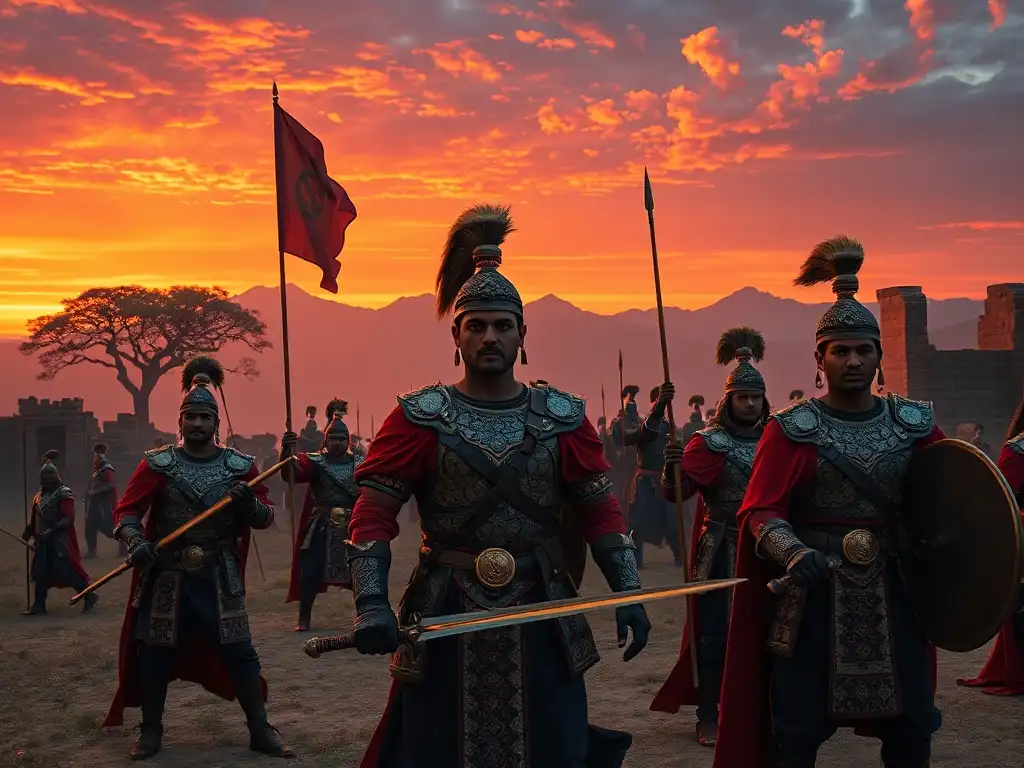
Welcome to Ancient India History, where we embark on a journey through the rich tapestry of India’s past. Today, we delve into the Gupta Empire, a remarkable era that shaped the subcontinent's cultural and military landscape. In our featured article, "The Fall of the Gupta Empire: Military Challenges and Responses," we unravel the intriguing military challenges that led to the decline of this once-mighty empire.
What strategies did they employ in the face of adversity? Join us as we explore these pivotal moments that not only defined a civilization but also laid the groundwork for future empires. Your adventure into the depths of ancient history begins here!

Introduction to the Gupta Empire
The Gupta Empire, often referred to as the "Golden Age of India," flourished from approximately 320 to 550 CE. This period is characterized by remarkable advancements in art, science, mathematics, and literature. However, the very foundations of this prosperous empire were threatened by a series of military challenges, both from within and outside its borders. Understanding the dynamics of these military challenges is essential to comprehending the eventual decline of the Gupta Empire. This article delves into the various military struggles that the Gupta Empire faced, highlighting the responses employed by its rulers to counter these threats.
Overview of the Gupta Empire's History
The Gupta Empire emerged in the early 4th century CE under the leadership of Chandragupta I. It expanded rapidly, encompassing large parts of northern and central India. The empire is celebrated for its patronage of the arts and sciences, with scholars like Aryabhata and Kalidasa contributing to its legacy. The political structure was marked by a decentralized administration, which allowed local rulers considerable autonomy while maintaining allegiance to the Gupta dynasty. However, as the empire expanded, it faced significant military challenges that would ultimately contribute to its decline.
Significance of Military Power in Gupta Rule
Military strength was a cornerstone of Gupta rule, as it enabled the empire to defend its territories and maintain stability. The Gupta military was known for its organization and effectiveness, utilizing a combination of infantry, cavalry, and war elephants. The strategic positioning of fortifications and the establishment of trade routes were crucial in asserting control over vast regions. However, as internal strife and external threats emerged, the Gupta military power faced unprecedented challenges that tested its resilience.
Understanding Gupta Empire Military Challenges
The decline of the Gupta Empire can be attributed to a myriad of military challenges that arose during its later years. These challenges can be broadly categorized into internal military struggles and external military threats, each contributing to the weakening of the empire's authority and territorial integrity.
Internal Military Struggles
Internal conflicts were a significant factor in the destabilization of the Gupta Empire. The decentralization of power, while initially beneficial, led to rivalries among local rulers and governors. This fragmentation weakened the central authority, making it difficult to mount a cohesive military response to threats. Internal strife, including succession disputes and power struggles, further exacerbated the situation, creating opportunities for enemies both within and outside the empire to exploit the weakening military structure.
External Military Threats
The Gupta Empire faced formidable external threats, notably from the Huns and other nomadic tribes. The Huns, in particular, posed a grave danger, launching invasions that tested the Gupta military's capacity to defend its borders. These invasions not only resulted in significant territorial losses but also diminished the empire's resources and morale. The inability to effectively respond to these external military challenges ultimately accelerated the decline of the Gupta Empire, marking the end of a significant chapter in ancient Indian history.
As we explore the intricacies of these military challenges and the Gupta Empire's responses, it becomes evident that the interplay of internal and external forces played a critical role in shaping the fate of this once-mighty empire.
Key Battles and Campaigns Faced by the Gupta Empire
The Gupta Empire, which flourished between the 4th and 6th centuries CE, encountered several significant military challenges that ultimately contributed to its decline. Among these were the invasions by the Huns, a series of conflicts with regional rivals, and internal strife that tested the resilience of Gupta military strategies. The empire's ability to adapt to these challenges was crucial in maintaining its power for as long as it did. Notable battles and military campaigns during this period reflected both the strength and the vulnerabilities of the Gupta military apparatus.
Notable Battles Against the Huns
The Huns, a nomadic group from Central Asia, posed one of the most formidable threats to the Gupta Empire. Their invasions began in the late 5th century, leading to a series of confrontations that tested the Gupta military’s effectiveness. One of the pivotal battles occurred around 510 CE, during which the Gupta forces, under King Skandagupta, faced the Hunnic invaders led by Toramana.
Despite their valiant efforts, the Gupta army struggled against the Huns’ superior cavalry tactics and mobility. The relentless pressure from the Huns forced the Gupta Empire to adopt new military strategies and fortifications. In response, Skandagupta implemented a series of reforms in military organization, focusing on strengthening the cavalry and enhancing logistics to support prolonged campaigns.
The conflict with the Huns not only showcased the Gupta military's initial setbacks but also illustrated their eventual resilience as they managed to repel the invasions temporarily, preserving the empire for a time. However, the ongoing incursions eventually weakened the Gupta’s territorial integrity and contributed to political instability.
Conflicts with Regional Rivals
In addition to external threats, the Gupta Empire faced significant military challenges from regional rivals, including the Maitrakas of Vallabhi and the Mukhara rulers. These conflicts often stemmed from territorial disputes and ambitions to control trade routes.
One notable conflict was with the Maitrakas, who emerged as a powerful force in western India. The Guptas sought to assert their dominance in the region, leading to a series of skirmishes and battles. The ongoing warfare with these rivals strained the Gupta military resources and created opportunities for the Huns and other external forces to exploit the empire's vulnerabilities.
Moreover, the Gupta Empire engaged in diplomatic and military maneuvers to manage these rivalries, including alliances and marriages to secure peace or military support. However, as the Gupta Empire grappled with these regional conflicts, it increasingly found itself stretched thin, compromising its ability to respond effectively to greater threats.
Military Strategies Employed by the Gupta Empire
The Gupta Empire's military strategies were characterized by a combination of defensive and offensive tactics aimed at protecting its vast territories and maintaining its influence. As the empire faced mounting challenges, these strategies evolved to adapt to the changing military landscape.
Defensive Strategies Against Invasions
To counter the increasing threat of invasions, particularly from the Huns, the Gupta Empire implemented several defensive strategies. One significant approach included the fortification of key cities and trade routes. The construction of strongholds and fortified towns allowed for better defense against sudden attacks, while also serving as supply bases for the Gupta army during campaigns.
Additionally, the Gupta military relied on a well-organized army composed of infantry, cavalry, and war elephants. The use of war elephants provided a psychological advantage on the battlefield, as they could instill fear in enemy ranks while also serving as effective platforms for archers.
Another key aspect of their defensive strategy was the establishment of a network of spies and scouts to gather intelligence on enemy movements. This information was crucial for anticipating invasions and preparing adequate responses, allowing the Guptas to mount effective defenses when needed.
Offensive Campaigns to Regain Control
In response to both internal strife and external threats, the Gupta Empire employed aggressive offensive campaigns aimed at reclaiming lost territories and restoring order. These campaigns were characterized by swift, decisive actions, often led by capable generals who utilized the element of surprise to their advantage.
One notable offensive was launched by King Skandagupta against the Huns, as he sought to demonstrate the empire's strength and deter further invasions. The Guptas also mounted campaigns against regional rivals, employing a combination of military prowess and strategic diplomacy to regain control over contested territories.
The Gupta military's offensive strategies often involved the use of coordinated attacks, where multiple units would strike simultaneously to disrupt the enemy's formations. Additionally, the empire leveraged its extensive trade networks to finance military campaigns, ensuring that their armies were well-supplied and equipped for prolonged engagements.
Through these offensive maneuvers, the Gupta Empire sought not only to reclaim lost territories but also to reinforce its status as a dominant power in the region, although these efforts were increasingly challenged as internal factors began to undermine their military effectiveness over time.
The Consequences of Military Challenges on the Gupta Empire

The Gupta Empire, often referred to as a golden age of ancient India, faced significant military challenges that ultimately contributed to its decline. These challenges were not merely isolated incidents; they had profound consequences that reverberated throughout the empire. The inability to effectively address various military threats weakened the Gupta’s political structure and led to a diminishing of centralized power. This decline resulted in the fragmentation of the empire into smaller states, each struggling for power and control.
One of the most notable consequences of these military challenges was the loss of territories. The Gupta Empire, which once spanned large regions of northern India, saw critical areas fall into the hands of rival powers. The incursions by the Huns, in particular, exemplified this trend. Their invasions not only led to the annexation of Gupta territories but also instigated a wave of instability that further weakened the empire's military and administrative capabilities.
The military defeats experienced by the Gupta Empire had profound social and economic repercussions. Economically, the loss of territories resulted in diminished tax revenues and resources. The agrarian economy, which was heavily reliant on stable governance and military protection, suffered as local landlords and farmers were left vulnerable to raiders and rival factions. This instability led to a decline in agricultural productivity, exacerbating food shortages and contributing to social unrest.
Socially, the military challenges fostered a sense of insecurity among the populace. As the Gupta Empire struggled to maintain order, communities faced increased violence and disruption. The traditional social hierarchies began to erode, leading to the rise of local powers and a challenge to the Gupta ruling class. Additionally, the displacement of populations due to warfare created a more diverse but also fragmented society, which struggled to maintain the cultural cohesion that had characterized the Gupta period.
Legacy of Military Struggles in Gupta History
The military struggles faced by the Gupta Empire left an enduring legacy that shaped the historical narrative of ancient India. The failures on the battlefield highlighted the vulnerabilities of even the most prosperous empires. The Gupta's military responses, which included attempts at fortification and alliances, became case studies for future Indian states in their own military strategies.
Moreover, the military challenges faced during the Gupta period influenced subsequent Indian political history. The rise of regional powers and the fragmentation of authority set a precedent for the political landscape of medieval India. The lessons learned from the Gupta’s military engagements informed the strategies of later rulers, demonstrating the importance of adaptability and resilience in the face of external threats.
Conclusion
Summary of Key Military Challenges Faced
The Gupta Empire faced a series of military challenges that included invasions by the Huns and internal rebellions. These challenges not only resulted in territorial losses but also precipitated a decline in the empire's centralized power. The inability to effectively manage these military threats led to significant social and economic consequences, reshaping the fabric of Gupta society.
Reflection on the Gupta Empire's Military Legacy and Its Historical Importance
Reflecting on the Gupta Empire's military legacy reveals a complex interplay between military prowess and the challenges of governance. The empire's military struggles serve as a crucial chapter in the history of ancient India, illustrating the fragility of even the most celebrated civilizations. Understanding these military challenges provides valuable insights into the dynamics of power, conflict, and resilience that have shaped the region's history and continue to influence it today. The Gupta Empire’s experiences remind us of the importance of strategic military planning and the need for adaptability in the face of changing circumstances.
- Introduction to the Gupta Empire
- Understanding Gupta Empire Military Challenges
- Key Battles and Campaigns Faced by the Gupta Empire
- Military Strategies Employed by the Gupta Empire
- The Consequences of Military Challenges on the Gupta Empire
- Social and Economic Impacts of Military Defeats
- Legacy of Military Struggles in Gupta History
- Conclusion
- What were the main military challenges faced by the Gupta Empire?
- How did the Gupta Empire respond to these military challenges?
- What impact did the Huna invasions have on the Gupta Empire?
- Were there any notable military reforms during the Gupta period?
- How did the decline of the Gupta Empire influence later Indian history?
Frequently Asked Questions
What were the main military challenges faced by the Gupta Empire?
The Gupta Empire encountered various military challenges, including invasions by the Huns, internal rebellions, and regional rivalries that strained its military resources.
How did the Gupta Empire respond to these military challenges?
In response, the Gupta rulers implemented strategic alliances, strengthened their military formations, and sought to improve administrative efficiency to better manage resources and manpower.
What impact did the Huna invasions have on the Gupta Empire?
The Huna invasions significantly weakened the Gupta military, leading to territorial losses and contributing to the overall decline of the empire by destabilizing its northern borders.
Were there any notable military reforms during the Gupta period?
Yes, the Gupta Empire saw the introduction of new tactics, improved cavalry units, and a focus on defensive fortifications, which were crucial for responding to external threats.
How did the decline of the Gupta Empire influence later Indian history?
The decline marked a shift in power dynamics, leading to the rise of regional kingdoms and setting the stage for future invasions, which ultimately transformed the political landscape of India.
Final Reflection: Understanding the Gupta Empire's Military Challenges and Their Lasting Impact
The exploration of the military challenges faced by the Gupta Empire reveals not only the complexities of ancient warfare but also the profound lessons that resonate in today’s world. As we examine the multifaceted reasons behind the empire's decline, it becomes clear that the interplay of external pressures and internal strife is a narrative that continues to echo throughout history. The fall of such a once-mighty empire serves as a stark reminder of how vulnerabilities can lead to the downfall of even the most prosperous civilizations.
The Gupta Empire's military challenges have significantly influenced our understanding of governance, strategy, and resilience in the face of adversity. This historical reflection encourages us to consider how societies respond to threats, both internal and external. The lessons learned from the Gupta Empire's military struggles remind us of the importance of adaptability and unity in overcoming challenges. As historian Romila Thapar aptly stated, History is not just about the past; it is a mirror reflecting our present and guiding our future.
This perspective invites us to draw parallels between ancient and modern societies, highlighting the ongoing relevance of military strategy and governance.
As we conclude our exploration of the Gupta Empire's military challenges, I invite you to reflect on your own experiences with adversity and resilience. How can the lessons from this ancient empire inspire you to confront your challenges with courage and strategic thinking? Embrace the opportunity to learn from history, and let it guide you in navigating the complexities of your own journey. Remember, just as the Gupta Empire faced its trials, so too can we rise above our own, forging a path toward strength and unity in the face of adversity.
Unveil the Lessons of History: Take Action Today!
Thank you for exploring the fascinating collapse of the Gupta Empire! You've delved into the military challenges and responses that shaped this pivotal moment in ancient history. Now, it's time to put that knowledge into action.
Here are some meaningful steps you can take to deepen your understanding and engage with the topic further:
- Join a History Forum: Connect with fellow history enthusiasts on platforms like Reddit or specialized history forums to discuss the Gupta Empire and its enduring legacy.
- Read More on Related Topics: Expand your knowledge by picking up books or researching articles about other ancient empires and their military strategies.
- Share What You've Learned: Inspire others by sharing key insights from this discussion on social media or with friends who are interested in history.
What do you believe were the most critical factors that contributed to the fall of the Gupta Empire? Share your thoughts below and join the conversation!